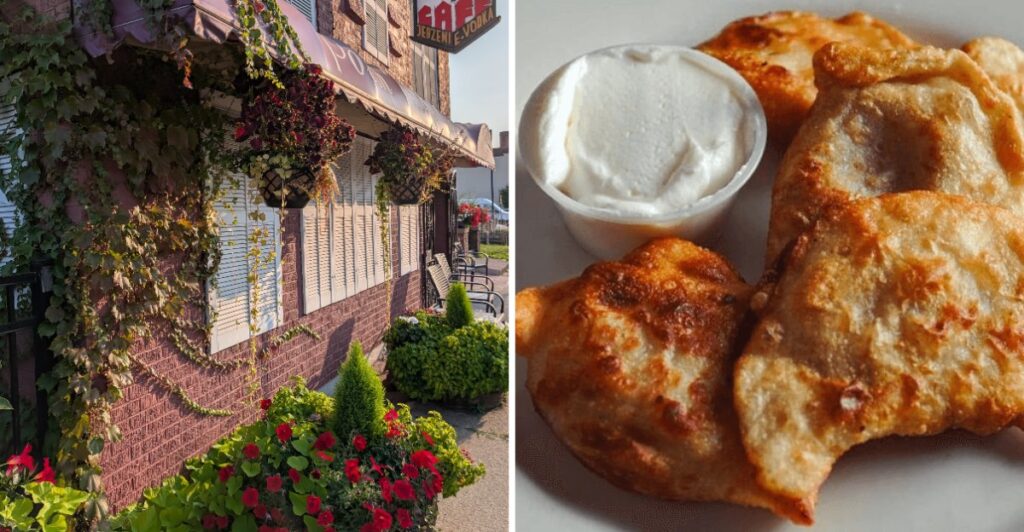
The stairs go down, but your appetite is about to head the other way.
Below street level, this longtime family-run restaurant has been serving Polish comfort food since 1979, and the basement setting gives lunch a slightly secretive start.
Then the pierogi arrive.
Michigan has plenty of Polish food history, but here you can get straight to the classics without turning the meal into homework.
Pierogi can handle the spotlight on their own, or share the plate with stuffed cabbage, kielbasa, and other familiar favorites.
Soup and potato pancakes are waiting if you decide one course was far too sensible.
I would not overthink the first order.
Start with the pierogi and see where hunger takes you.
Getting downstairs is easy.
Getting back up after lunch may require a little more enthusiasm.
The Cafe Has Been Family-Run Since 1979
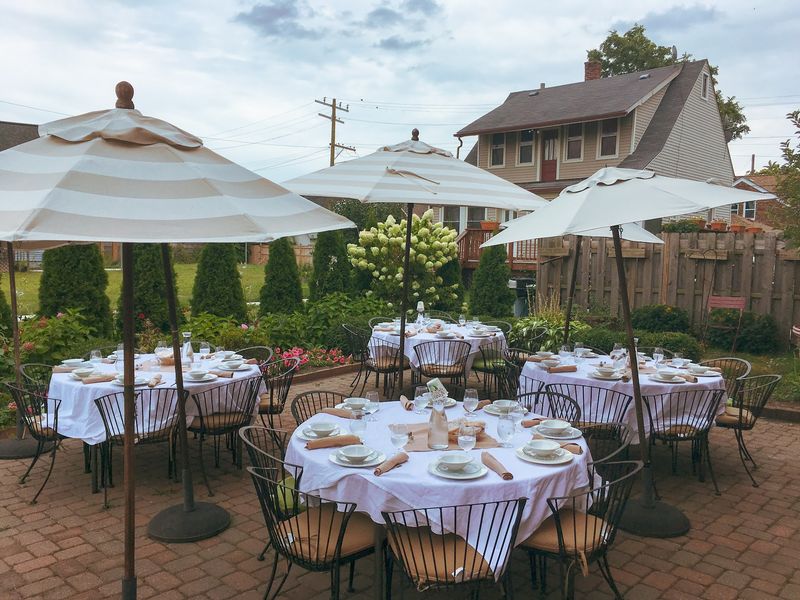
Polish Village Cafe was established in 1979 by Ted Wietrzykowski. The restaurant remains in the Wietrzykowski family today, with Carolyn Wietrzykowski leading the business and other family members still connected to its day-to-day identity.
That timeline matters because the cafe has stayed focused on the same broad style of cooking for decades.
Pierogi, kielbasa, stuffed cabbage, potato pancakes, soups, and combination dinners still shape the menu instead of giving way to a completely different concept.
The restaurant operates from a basement-level space in Hamtramck, a city whose food scene now reflects Polish, Yemeni, Bangladeshi, Balkan, and other communities.
That makes the cafe part of a much broader neighborhood story rather than the only kind of food on the block.
For a first visit, the family history does not need to dictate the order. Start with the choices in front of you. If you want a straightforward introduction, choose one Polish classic and one side.
If curiosity is stronger than restraint, a combination plate gives you more ground to cover.
The point is not to eat through the entire menu at once. Forty-plus years of dishes can wait for another lunch.
Pierogi Still Anchor The Menu

Pierogi remain one of the cafe’s clearest signatures, with several traditional fillings still in regular rotation.
Those choices include potato and cheese, sauerkraut, and sweet cheese. Mixed pierogi are available too, which makes the first decision easier when one filling does not sound like enough.
That flexibility is useful because the fillings move in different directions. Potato and cheese is the easiest place to begin if you want something familiar and mild. Sauerkraut brings more tang.
Sweet cheese changes the pace again and can make the plate feel less savory from one bite to the next.
A mixed order lets you compare without committing the whole meal to a single choice. It also works well for two people who are curious about the same fillings but do not want separate full orders.
If pierogi are the main event, keep the rest of the table simple. Add soup or a side rather than stacking several starch-heavy dishes together.
If they are only one part of the meal, let the combination plates do more of the work. That way the pierogi can sit beside kielbasa, stuffed cabbage, or another Polish main without turning dinner into a plate of dumplings and nothing else.
Traditional Fillings Give You Several Ways To Start
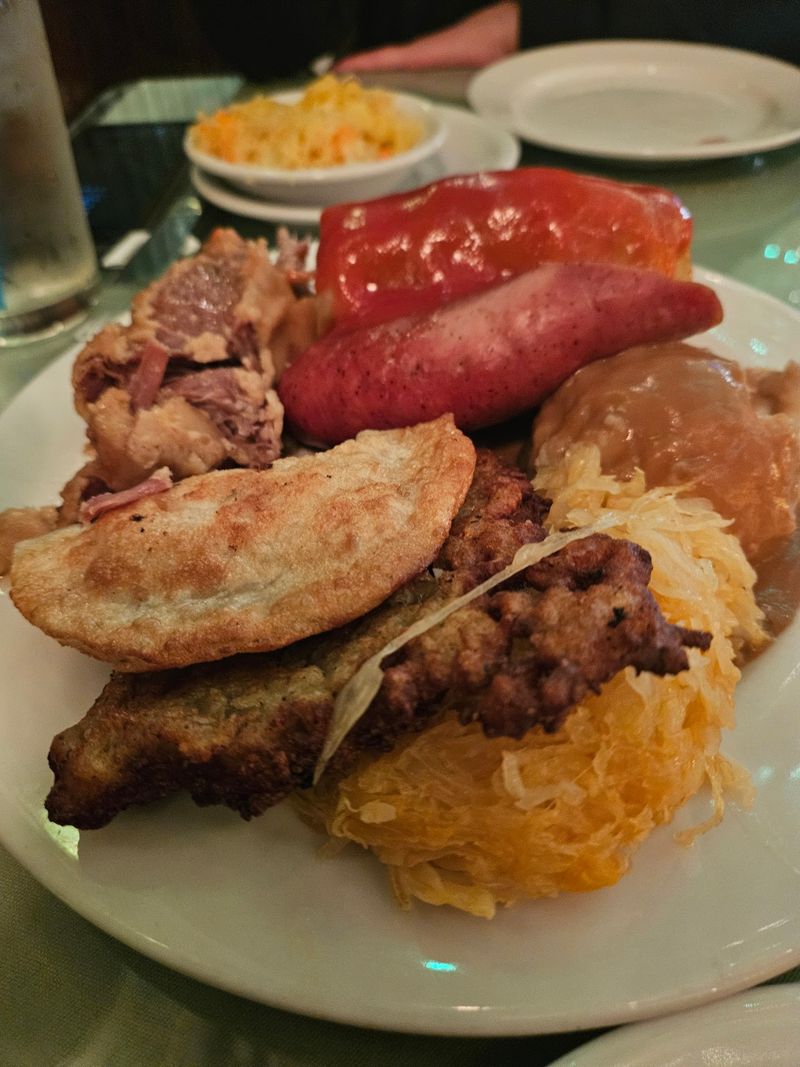
Potato and cheese, sauerkraut, and sweet cheese keep the traditional side of the pierogi lineup covered, while mixed orders let you combine flavors on one plate.
That is useful if you are still learning which filling you prefer. Potato and cheese tends to be the easiest entry point, while sauerkraut gives the meal a sharper edge. Sweet cheese moves in a softer direction and changes the balance of the plate.
Mixed pierogi are also available, giving you an easy way to compare several fillings in one order without turning the table into a stack of separate plates.
Special pierogi varieties can appear too, but those change and should not be treated as permanent fixtures. The simpler move is to choose from the core fillings first, then see what else is available if you want something different.
For a group, mixed pierogi make sharing easy. Everyone can take one or two, compare fillings, and leave the rest of the meal open for other Polish dishes.
That is a better use of the table than ordering five nearly identical plates and discovering halfway through that everyone wanted to try the same sauerkraut one.
The practical choice is simple: decide whether the pierogi are there for comparison, sharing, or a full meal, then order the rest around that answer.
Stuffed Cabbage And Kielbasa Give The Table More Range
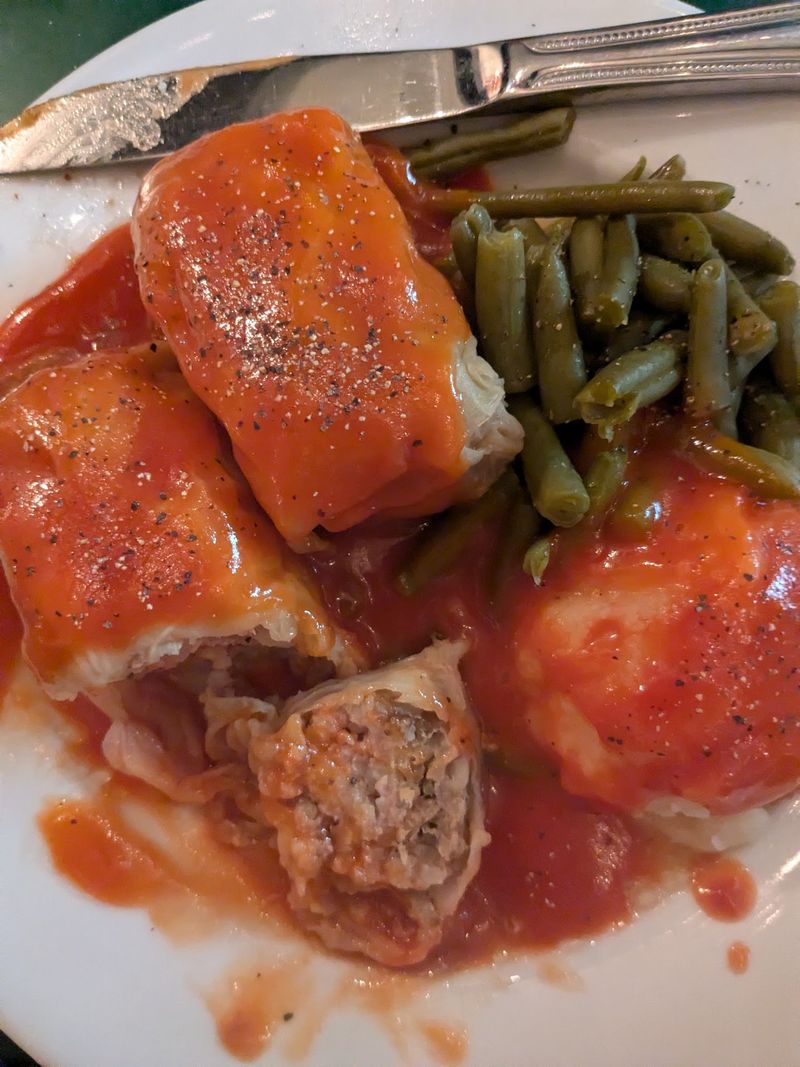
Pierogi may get the most attention, but the food stretches well beyond dumplings. Stuffed cabbage, smoked kielbasa, city chicken, pork chops, potato pancakes, soups, and other Polish favorites give you several ways to build a fuller meal.
Stuffed cabbage is a natural second choice if you want something different in texture from pierogi. The cabbage rolls are filled with ground meat and served with sauce, making them a heavier, fork-and-knife option.
Kielbasa brings another change. The smoked sausage works well beside pierogi or sauerkraut, especially if you want the plate to move back and forth between softer dumplings and something firmer.
The Polish Plate is useful when indecision has already won. It brings several traditional items together, so you can sample more than one part of the kitchen without ordering separate entrées.
Combination dinners work the same way. Pick-two and pick-three formats make sense for groups or first-timers who would rather compare dishes than commit to one large main.
The cafe is at 2990 Yemans St, Hamtramck, MI 48212. Current hours are Monday through Wednesday from 11 a.m. to 9 p.m., Thursday through Saturday from 11 a.m. to 10 p.m., and Sunday from noon to 8 p.m.
Potato Pancakes And Soup Can Change The Shape Of The Meal
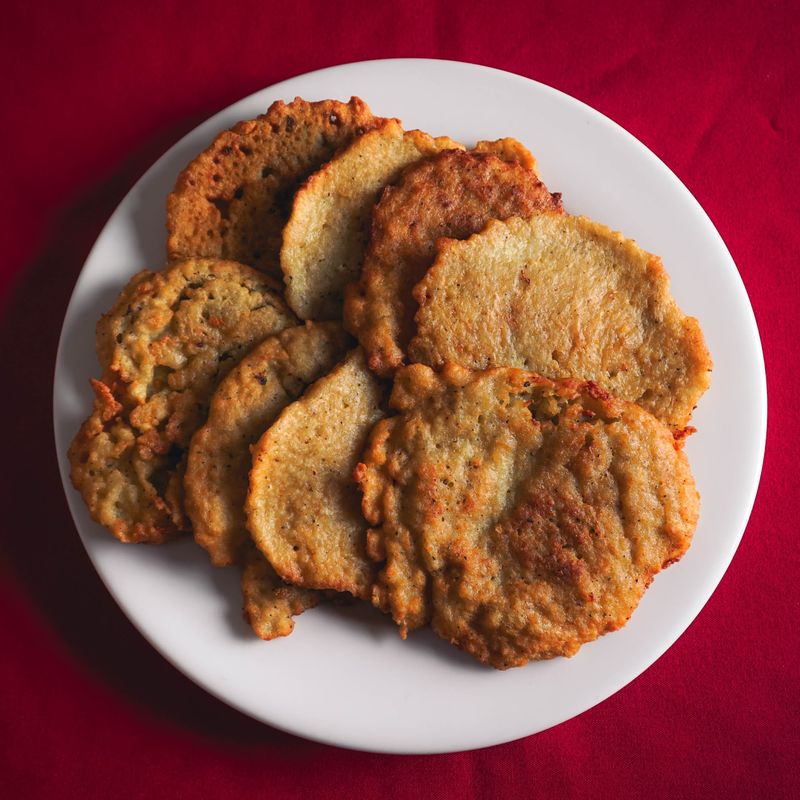
Potato pancakes are another longtime part of the cafe’s Polish lineup. They can work as a side, a shared starter, or the center of the order if pierogi are not calling your name that day.
They also change the texture of the meal. A plate built around soft cabbage, pierogi, or mashed potatoes can benefit from something crisp at the edges.
Soup gives you another route. Dill pickle soup remains one of the available choices, along with other soup options. That makes it useful when the weather calls for something warm before the main plate arrives.
A cup of soup plus a small pierogi order can be enough for lunch. Dinner can go wider with stuffed cabbage, kielbasa, or a combination plate.
The trick is deciding how many heavy items you actually want at once. Potato pancakes, pierogi, mashed potatoes, and other filling sides can all land on the same table very quickly.
Start with one starch-heavy favorite and let the rest of the meal balance around it. If potato pancakes are the priority, keep the side choices simpler. If pierogi are the point, let the pancakes wait for another visit.
That keeps the meal from becoming an accidental tour of every potato preparation in Poland.
The Basement Dining Room Is Part Of The Experience
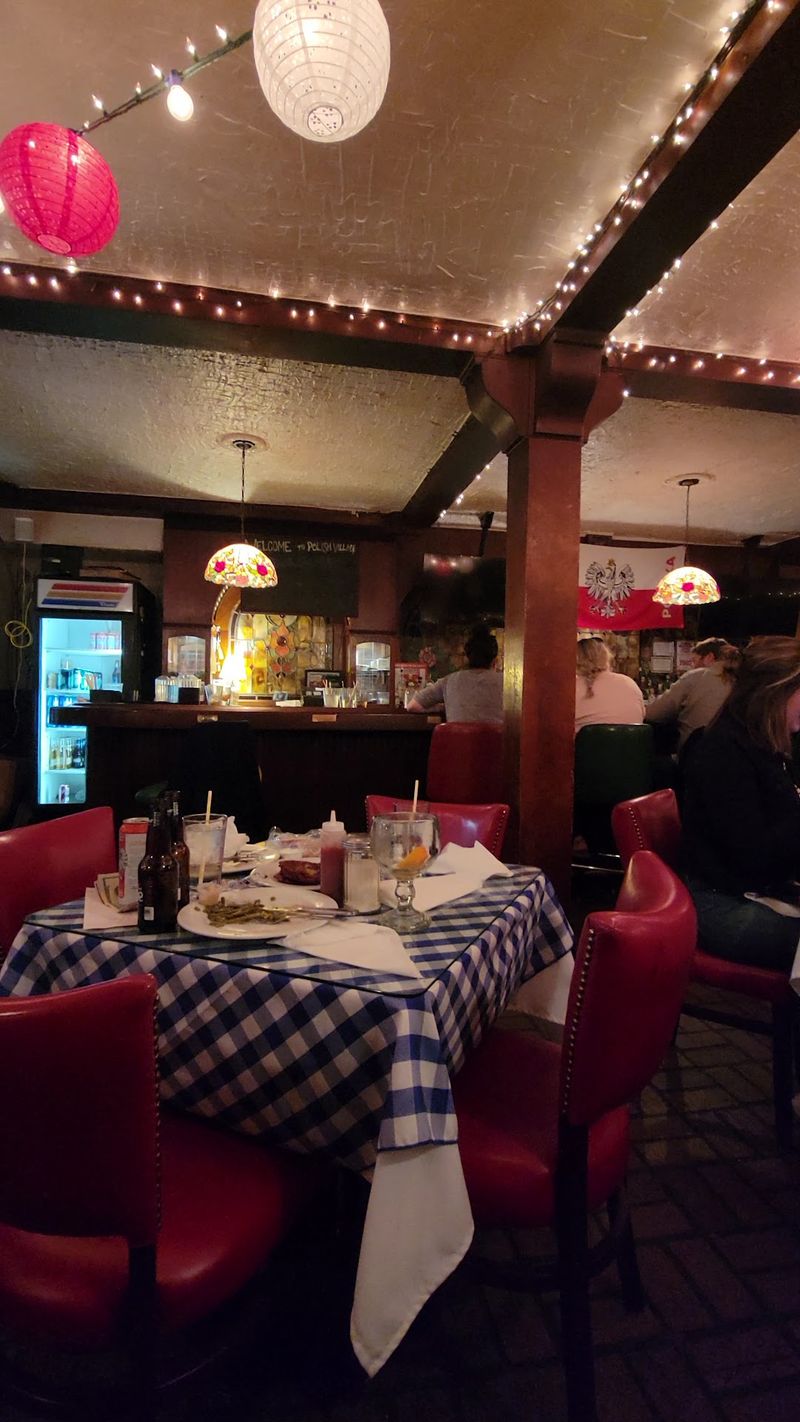
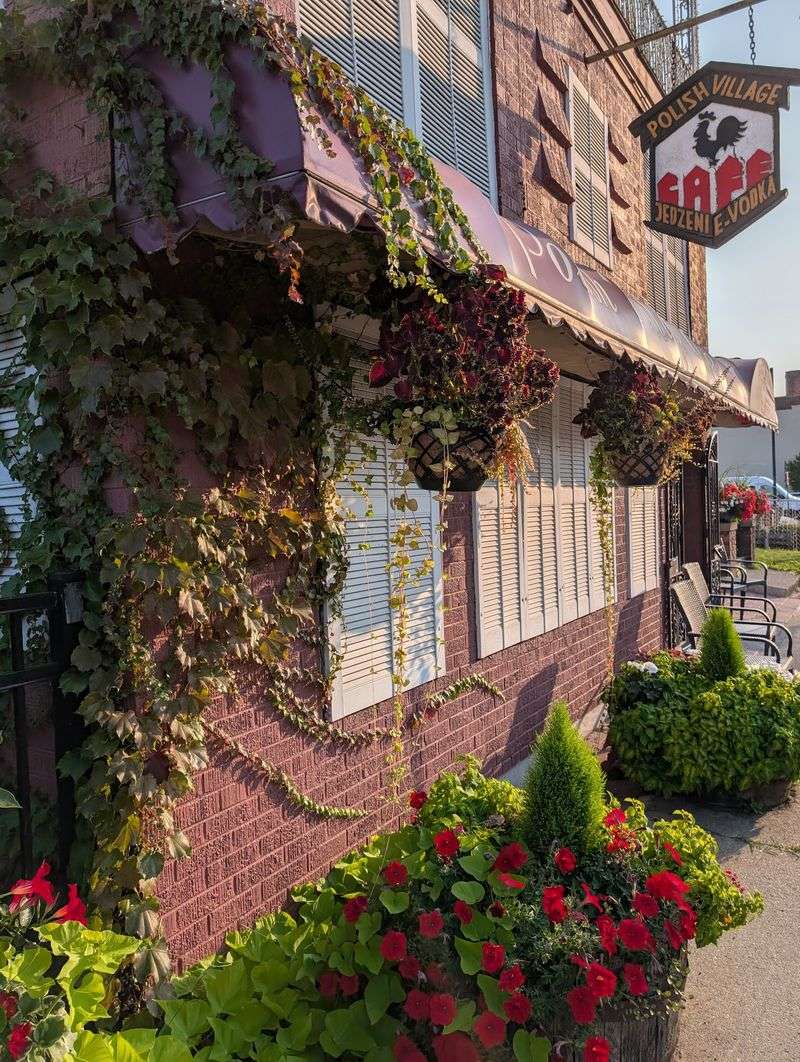
The cafe sits below street level in a former hotel building, so reaching the dining room means heading downstairs rather than walking into a standard storefront space.
That setting gives the restaurant a different feel before the food even arrives. Low ceilings, older finishes, close-set tables, and warm lighting create a compact room that feels separate from the street above.
The space is not huge, which matters when planning around a larger group. Dining-room reservations are available for parties of six or more, while groups over 20 can use the separate party room.
Smaller parties can simply walk in. If you are visiting on a busy weekend or around a holiday, allowing a little flexibility makes more sense than treating the meal like a timed appointment.
The basement setup also means accessibility deserves thought before the visit. If stairs are a concern, contact the restaurant directly about current access arrangements rather than assuming the main dining-room route will work for everyone.
Once you are seated, the room does not need much explanation. The food does the heavy lifting, and the space simply gives pierogi, soup, and stuffed cabbage a setting that fits their old-school character.
Let The First Order Stay Simple
A first visit can get complicated fast if every Polish classic starts competing for plate space. The easiest solution is to pick one anchor and let the rest of the order support it.
If that anchor is pierogi, choose a traditional filling or a mixed order, then add soup or one main. If stuffed cabbage is the priority, use pierogi as a side instead of ordering a second full entrée. If the Polish Plate sounds best, let it do the sampling for you.
Groups have even more flexibility because combination dinners make sharing easy without turning the table into a buffet of half-finished plates.
If dessert is part of the plan, wait until the main dishes arrive before deciding. The cafe offers cheesecake and crepes, but stuffed cabbage, kielbasa, potato pancakes, and pierogi can fill a table quickly.
Polish Village Cafe has been doing this since 1979, so there is no reason to squeeze every dish into one sitting. Pick the pierogi filling that sounds right, add one or two classics around it, and leave something unfinished on the menu for the next trip downstairs.