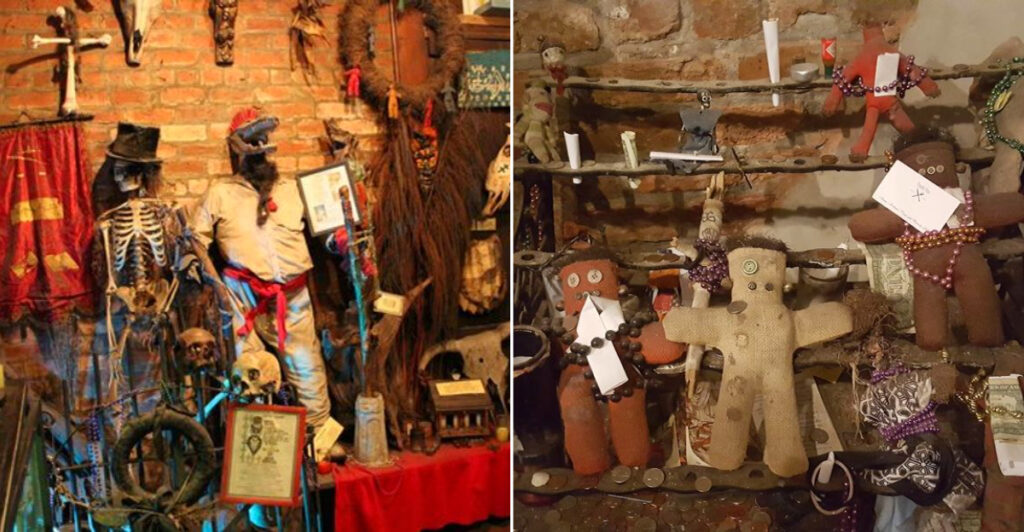
Most visitors to the French Quarter walk right past the door without knowing what is behind it because it looks like every other narrow entrance on that block until you step inside and realize the walls are covered in paintings and artifacts that tell a story the city does not exactly advertise on its tourist maps.
Louisiana has no shortage of haunted buildings and spooky tours but a small gallery that doubles as a living museum of local spiritual tradition hits differently because the art on the walls was not made for decoration, it was made as part of something people still practice.
The air inside is thick with incense and the paintings seem to watch you back and the whole place feels active in a way that is hard to shake. A gallery in Louisiana that hides its strangeness behind an unmarked door is the kind of place you stumble into once and never quite forget.
First Impression: The Snug Doorway
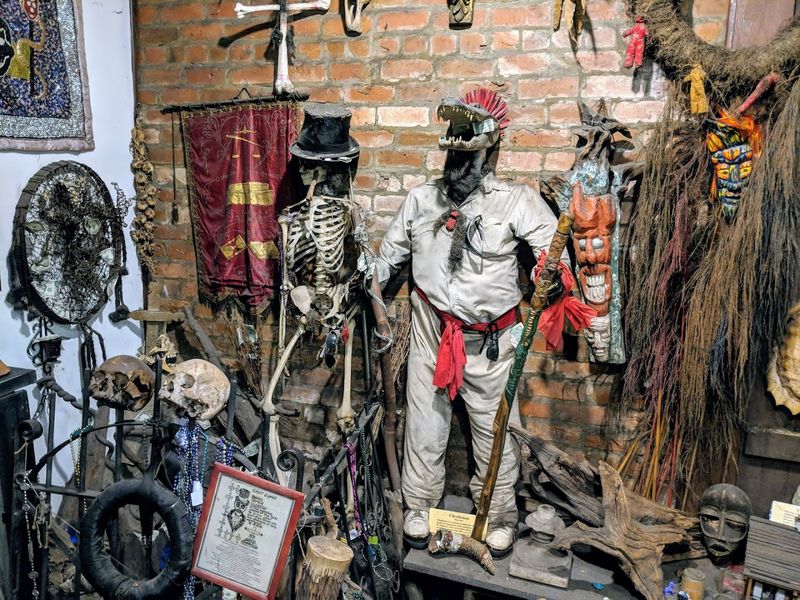
The doorway is a whisper rather than a proclamation, a low frame that asks you to stoop and pay attention. The first glance inside feels intimate: two rooms and a hallway packed with objects that refuse to behave like ordinary museum pieces.
Guests move slowly here because there is nowhere to rush; every shelf and altar holds a story that needs a second look. The tightness fosters closeness to artifacts, pelvic bones sit near painted banners and tiny gris-gris bags, and the effect is quietly powerful and slightly unnerving.
Expect to stand near strangers and share a hush as you read labels and watch light play over talismans. This entry prepares you for a museum that is small in size but enormous in personality and history.
Finding The Museum
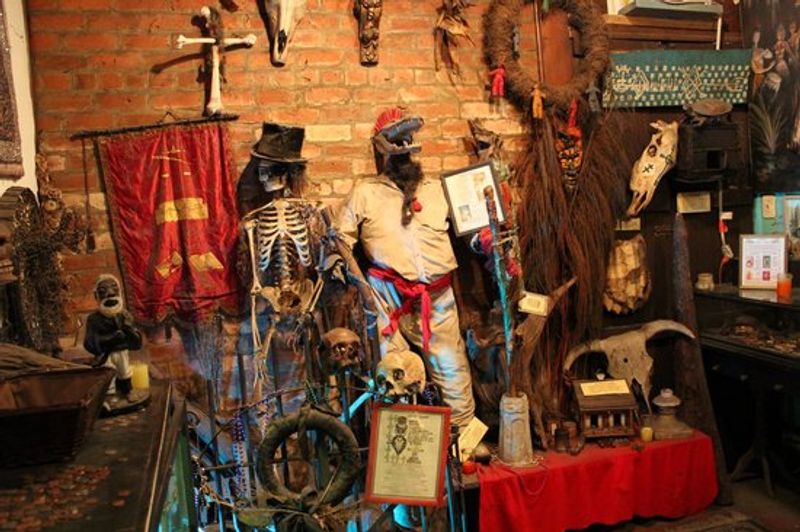
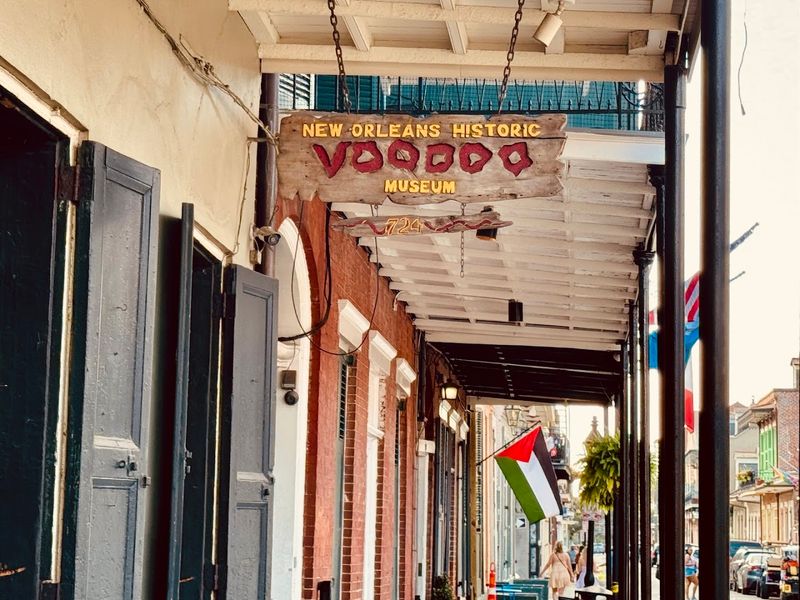
New Orleans Historic Voodoo Museum is the kind of French Quarter stop that makes the walk feel like the city just lowered its voice. Head toward Dumaine Street between the louder tourist currents and let the balconies, old walls, and narrow sidewalks do their best dramatic foreshadowing.
The address is 724 Dumaine St, New Orleans, Louisiana 70116, which places it right in the Quarter without making it feel like another bright, polished attraction trying too hard. Walking is usually the best move here, because parking nearby can turn a mysterious outing into a very ordinary argument with traffic.
Once you are close, do not expect a huge museum entrance with grand institutional manners. Look for the small, curious storefront energy instead, then step inside ready for a compact, strange, history-heavy stop where New Orleans folklore and spiritual tradition share the room without asking your schedule for permission.
Art And Curation – What They Choose To Show
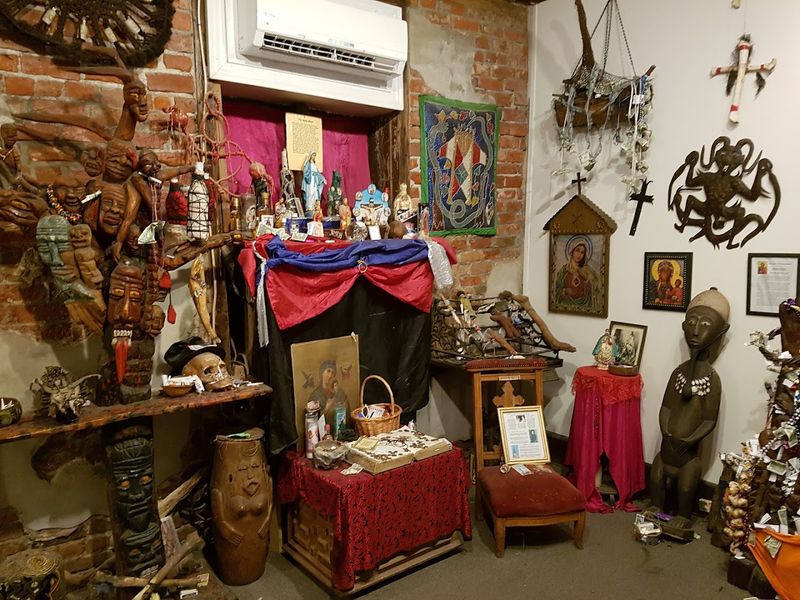
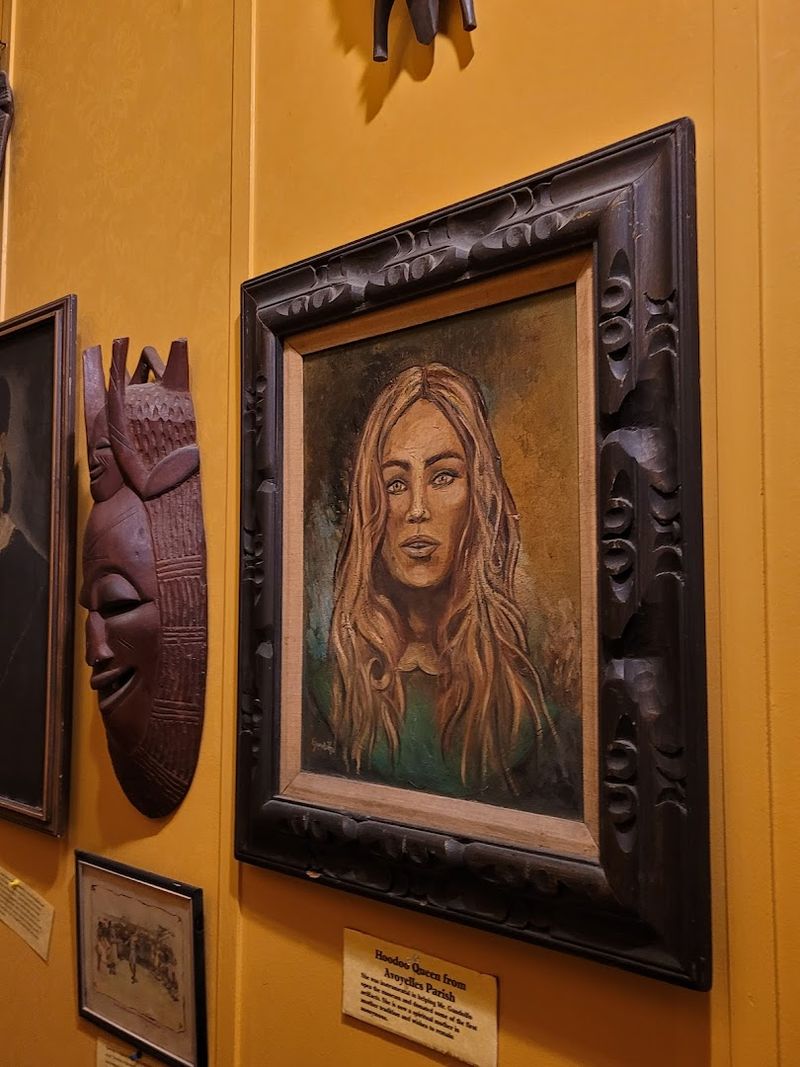
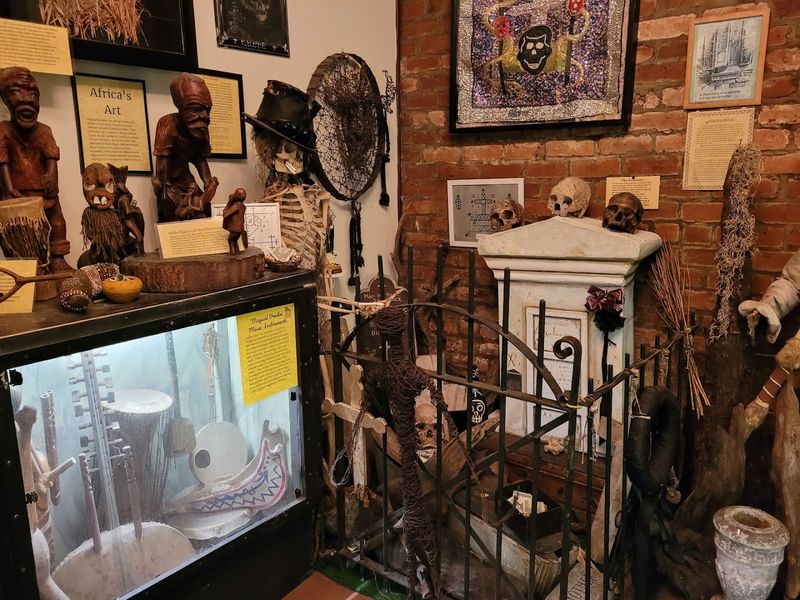
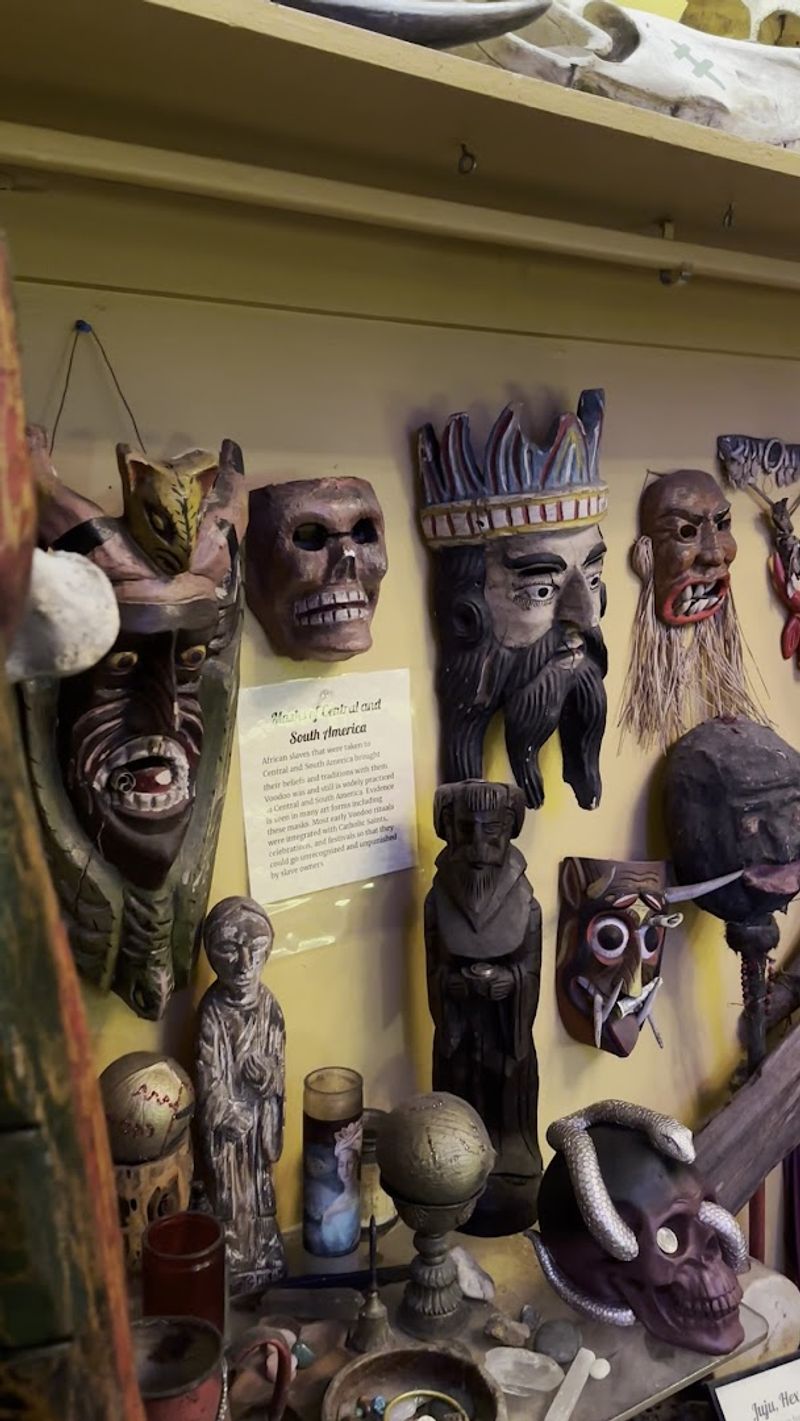
The museum’s curatorial voice leans toward hands-on storytelling rather than minimalist display. Paintings by Voodoo Charlie hang near Haitian flags and masks, and labels provide context that corrects common misunderstandings about Voodoo origins and ritual practice.
Objects are grouped to highlight relationships: altars with offerings face ritual tools and gris-gris bags. The density can feel like a private collection arranged by someone who cares deeply about each item’s life and purpose.
Because the space is so compact, every selection feels deliberate. That makes the museum less about exhaustive coverage and more about close encounters with meaningful pieces of art and devotion, which I found surprisingly generous for such a small place.
History: Roots And The Founding Story
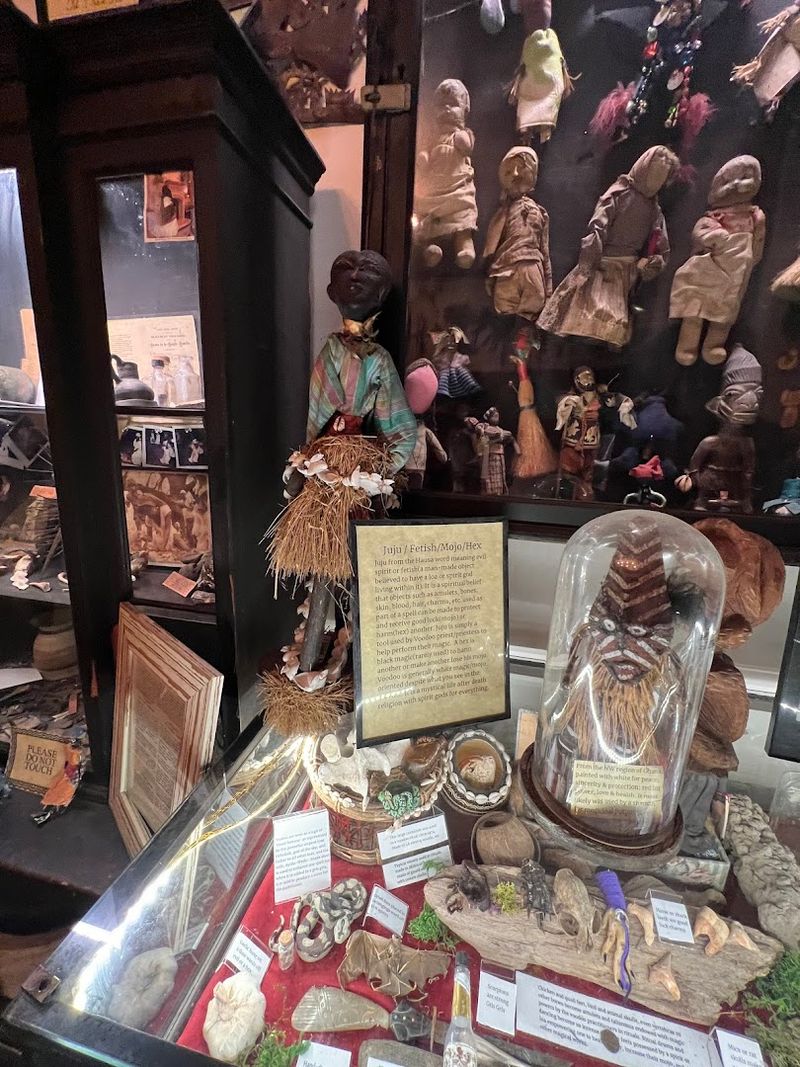
The museum was founded in 1972 by Charles Massicot Gandolfo, known as Voodoo Charlie, whose passion for preservation shaped its mission. His objective was clear: present Voodoo as a living spiritual tradition with deep roots in West Africa, Haiti, and New Orleans, not as cheap spectacle.
Displays trace influences and emphasize syncretism with Catholic practices, and curated notes correct myths that mainstream media often repeat. Small but focused, the collection honors practitioners and the complex history of Voodoo Queens and community rituals.
For me, the backstory turned the artifacts from curiosities into cultural witnesses. The museum’s origin gives the whole place a purposefulness that feels honest and grounded in local history.
Spooky Reputation: Ghost Stories And Small Shocks
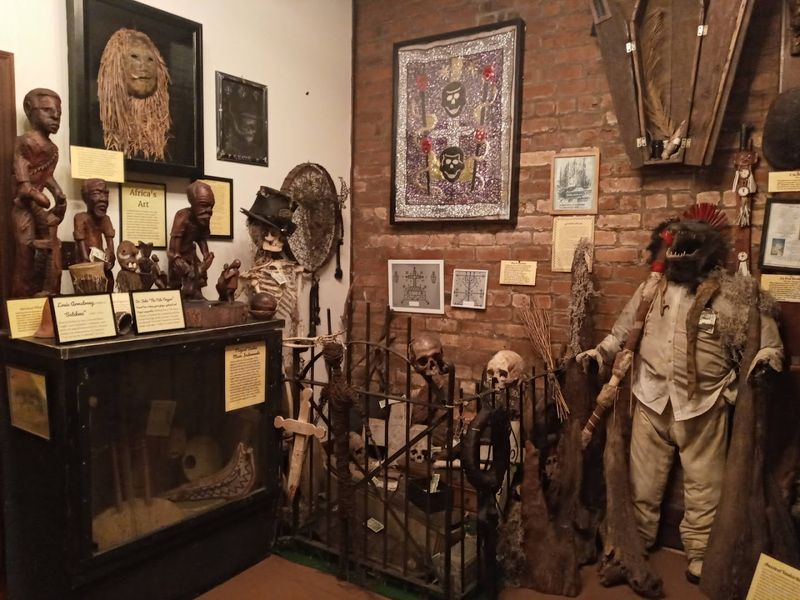
There’s a quiet lore here about flickering lights and the sense of being watched; visitors often describe unexplainable sounds or a shiver in particular corners. The museum doesn’t exploit these tales, but they seep into the atmosphere because the collection includes bones, skulls, and other items that carry somber associations.
One story tells of a priestess’s lingering presence that some guests feel near a wooden kneeling board said to belong to Marie Laveau. These anecdotes add a dark, human texture rather than cheap thrills.
I noticed the small ways the building seems alive: a lamp would dim, a draft would stir a banner. The effect is unsettling but also oddly respectful, encouraging stillness and attention.
Key Exhibits: Altars, Flags, And Oddities
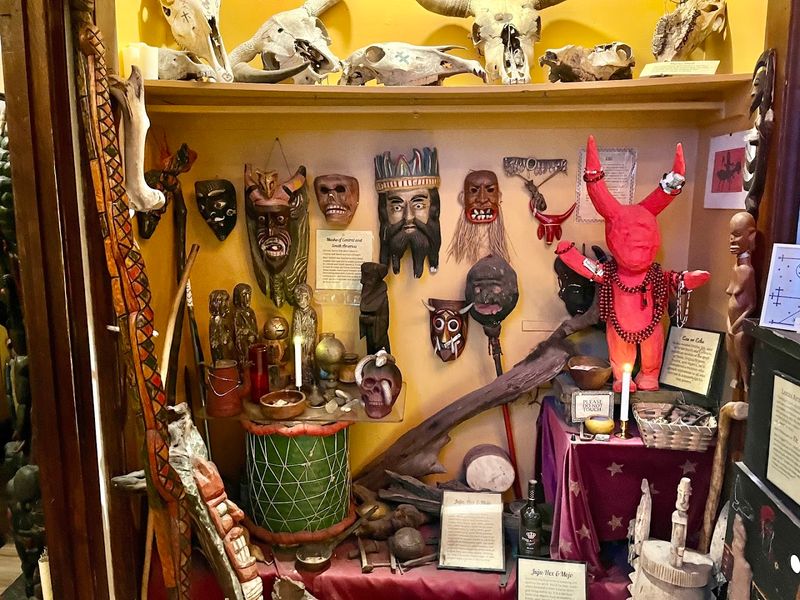
The Main Altar is the visual anchor: layered with offerings, coins, and notes that visitors leave, it feels like an active place of attention rather than a relic. Nearby, a wooden kneeling board attributed to Marie Laveau anchors the collection in local lore and devotion.
Haitian flags and masks provide color and history, while taxidermy and bone crosses introduce a ritual vocabulary that may surprise newcomers expecting only dolls and trinkets. Each item names a practice or a spirit; the labels try to make those connections clear.
Because space is limited, encountering these highlights feels intimate. You can stand close, take in stitches and inscriptions, and sense the continuity between art and ritual in New Orleans Voodoo traditions.
Guide And Staff: Human Faces Behind The Place
Staff and guides are understated but knowledgeable; they often work in the shop or lead small tours, and their presence gives the museum a living connection to contemporary practice. Some are practitioners themselves, which shapes how objects are presented and explained to guests.
Conversations here tend toward the personal: questions about offerings, about gris-gris, or the sources of particular pieces open into stories. The museum also coordinates contacts with practicing readers for those seeking further engagement beyond the visit.
I appreciated how staff balanced warmth and restraint, they answer questions without turning belief into a sales pitch, and that restraint helped the museum feel authentic and community-rooted rather than performative.
Practical Logistics: Timing, Crowds, And Pace
Visits are brief but rewarding; most people spend around twenty minutes inside, though you could easily linger longer reading labels and studying details. The museum is open daily with slightly extended hours on Sundays, and admission tends to be inexpensive compared with larger institutions.
Expect close quarters: when the place is busy it can feel crowded and movement becomes a slow, polite shuffle. Card payments are common at the front desk and the small gift shop, so have a card ready to avoid delays.
If you want a quieter experience, arrive early or later in the afternoon on weekdays. That way you can absorb the exhibits without bumping into other guests and take in the museum’s intimacy at your own pace.
Seasonal Notes: Street Life And Festival Rhythms
The museum’s experience shifts with the city’s calendar: during festivals and tourist surges the French Quarter hums and the museum can feel like a cool, packed refuge. On quieter days, the hush inside contrasts sharply with street noise, letting the artifacts take center stage.
Local traditions tied to cemetery visits, Congo Square remembrance, and seasonal rituals occasionally bring focused interest, and guided tours sometimes include nearby sites like Marie Laveau’s tomb for a fuller context.
Plan around major events if you prefer solitude, but note that festival days can amplify the museum’s energy, offering an intense, full-bodied sense of New Orleans culture that some visitors find enriching and memorable.
Detail Spotlight: Small Objects That Matter
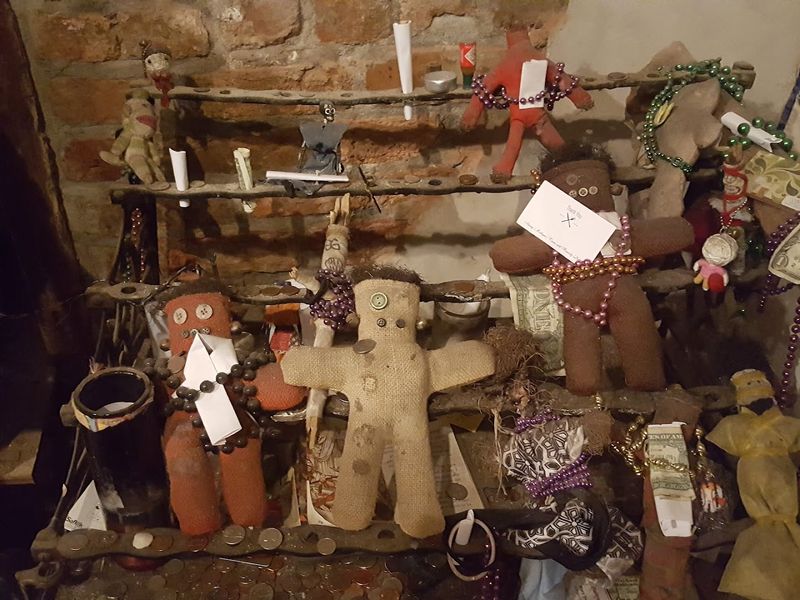
Small objects demand close attention: gris-gris bags, handwritten petitions, sewn flags, and tiny offerings reveal practices and personalities in miniature. Labels often explain materials and intent, clarifying that many items serve healing, protection, or remembrance rather than harm.
These details create a tactile history; threads, stains, and pinholes tell human stories that grand narratives can overlook. The museum’s compact display encourages this microscopic reading in a way larger spaces rarely do.
When you pause on a single gris-gris or a stamped note, the collection shifts from spectacle to conversation. Those tiny artifacts become the heart of the visit, asking you to listen closely and consider continuity between past and present practice in New Orleans.
Technique And Preservation: How Objects Survive Here
Preservation here is pragmatic rather than sterile; objects live in conditions that respect both ritual use and material fragility. Items like paper notes, textiles, and organic offerings receive practical care to keep their stories legible without stripping them of context.
The museum balances display and devotion, preferring visible wear that signals use over overzealous restoration. That approach honors the objects’ lived history while still providing enough documentation for visitors to understand origins and functions.
For curious visitors, this means you see artifacts as objects of practice rather than pristine museum pieces. That authenticity can be moving, and it also emphasizes the museum’s role as a steward of living traditions rather than a neutral archive.
Visitor Habits: How To Get The Most From A Quick Visit
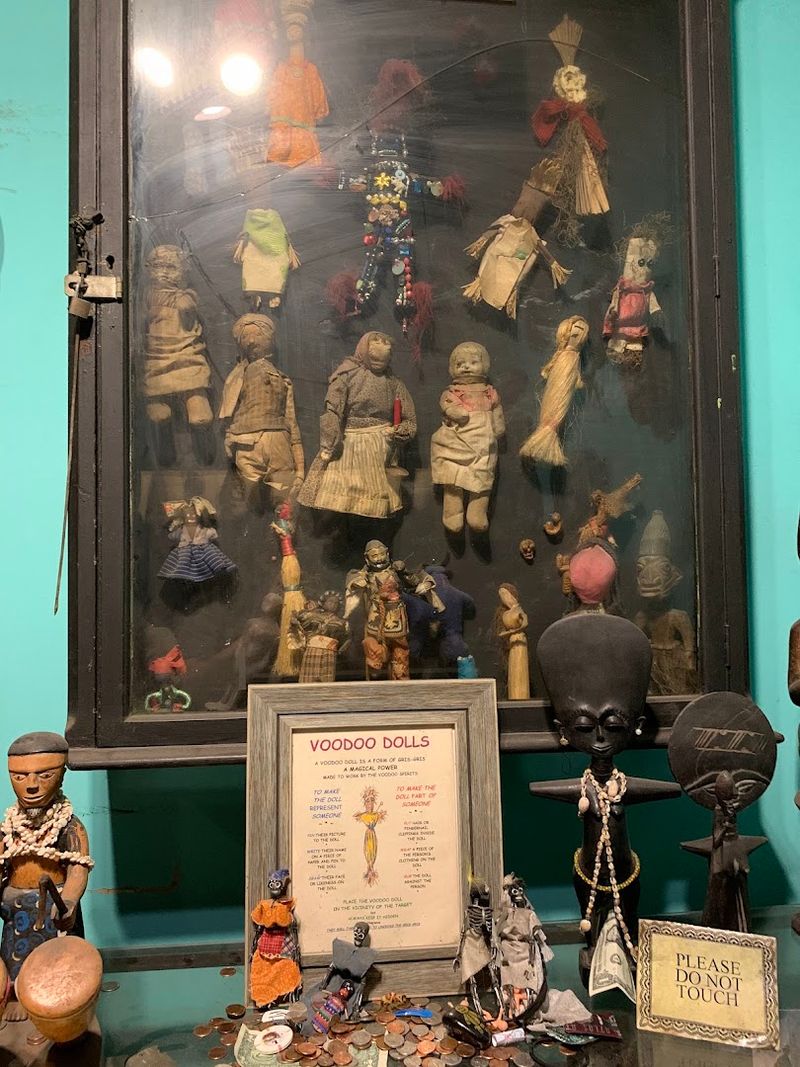
Move slowly and focus on one section at a time; the museum rewards a patient pace more than a checklist approach. Read the labels carefully and let artifacts steer your attention rather than trying to see everything at once in the cramped space.
If you want context, ask about guided tours that include nearby Voodoo sites or inquire about practitioners who offer readings; staff can point you toward those resources. The gift shop also offers books and locally made items for deeper study.
Above all, treat the place with respect: photographs are fine but avoid loud behavior, and consider leaving a small offering if the altar calls to you. That humility yields a richer, more thoughtful visit.