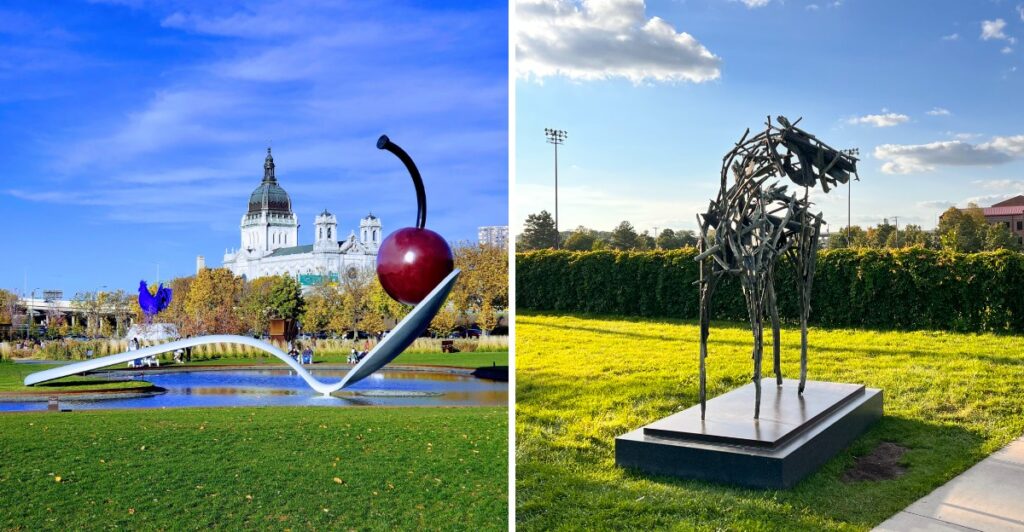
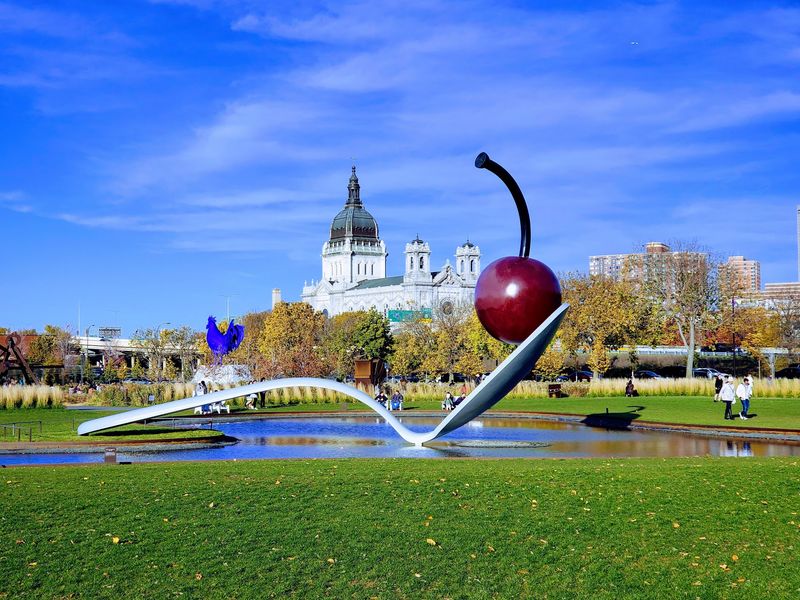
A 5,800-pound spoon cradles a 1,200-pound cherry in the middle of a Minnesota pond. The cherry’s stem even sprays water like a fountain, which is a very extra way to serve dessert.
The pond below is shaped like a linden tree seed, a surprisingly fancy detail for a giant snack. Kitchen spoons everywhere just quietly lowered their expectations.
That spoon has plenty of company, including a giant blue rooster standing nearby. Dozens of other outdoor sculptures spread across 11 acres of lawn, so the art keeps going well past the cherry.
Admission is free, and the grounds stay open daily from early morning until midnight. It’s also the only dessert in Minnesota with zero calories.
The Spoon That Made A Whole City Hungry For Art
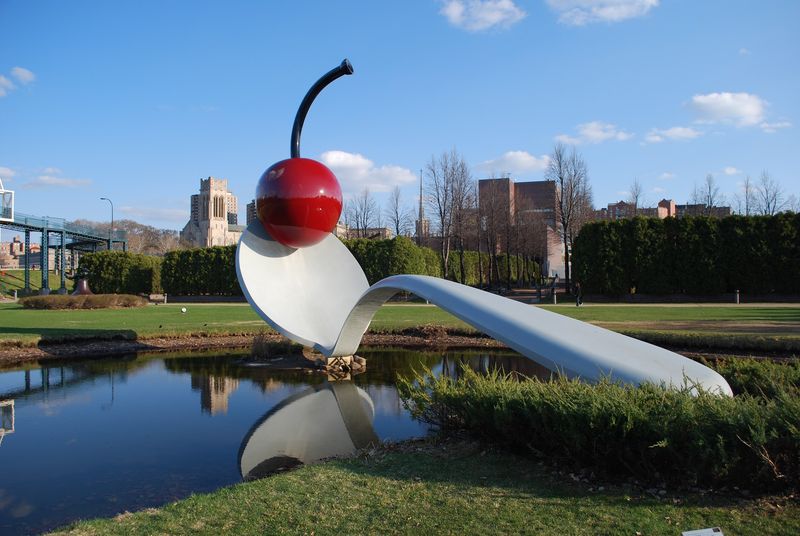
Claes Oldenburg and Coosje van Bruggen designed the famous Spoonbridge and Cherry at the Minneapolis Sculpture Garden. It was installed on May 9, 1988, and it has been the star of the show ever since.
The numbers are wonderfully silly. The spoon weighs 5,800 pounds, and the cherry adds another 1,200 pounds on top.
Then there’s the stem. It works as a fountain, spraying water down into the bowl of the spoon.
Even the pond joins the fun. Its outline is shaped like a linden tree seed, so the setting has its own quiet joke.
Most people know this sculpture from photos before they ever see it in person. It’s become one of the best-known symbols of Minneapolis and of Minnesota art in general.
Here’s a practical tip for photos. Walk around the pond and try a few different angles instead of shooting only from the front.
The spoon curves in a way that looks different from each side. You might find a view that feels like your own personal postcard.
Give yourself a few extra minutes here. A cherry this famous deserves a proper look, not just a quick snapshot.
A Bright Blue Rooster Is Ready To Steal The Spotlight
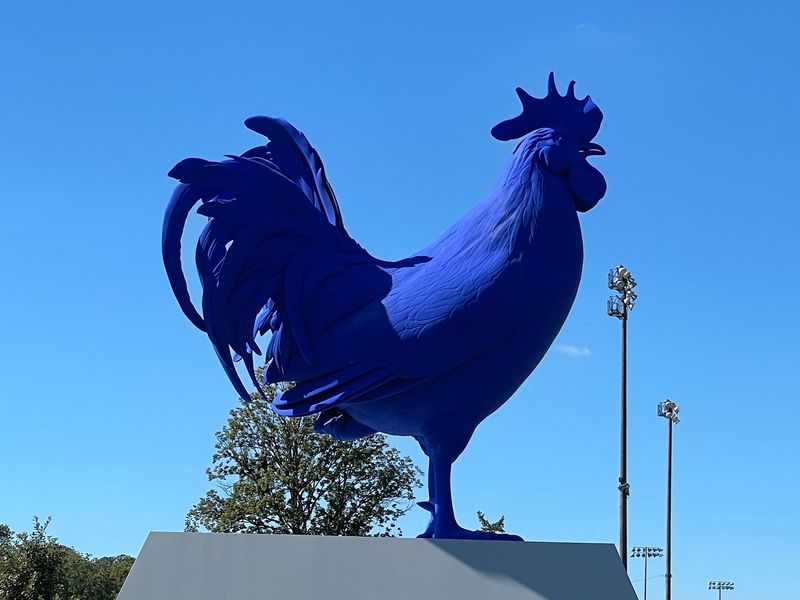
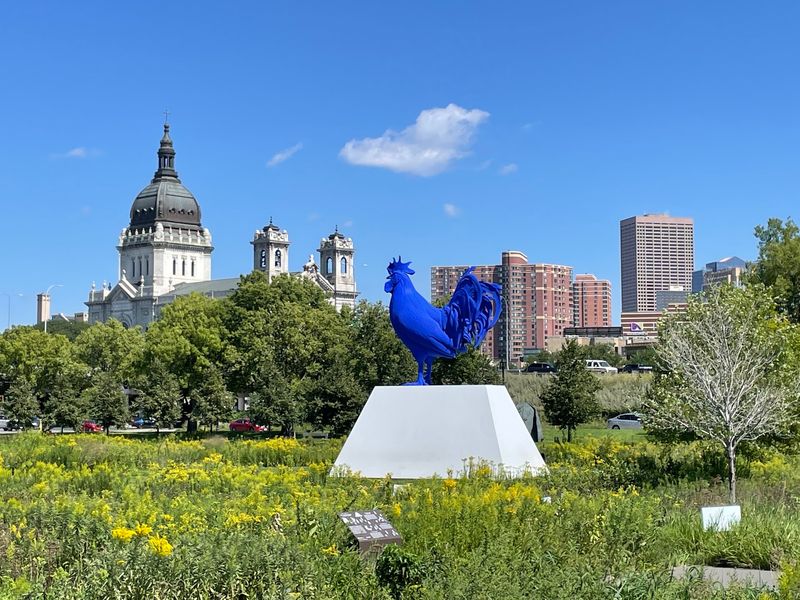
Not every giant bird gets this much attention. Hahn/Cock by Katharina Fritsch is a huge rooster painted a bold, eye-popping blue.
It’s hard to miss, and that seems to be the point. Next to the spoon, it ranks among the most famous pieces on the grounds.
Roosters usually wake up farms at sunrise. Fittingly, the garden opens at 6 am, so this one technically gets an early start too.
The color does a lot of the work here. Against green grass and an open Minnesota sky, that blue pops like a cartoon brought to life.
Kids tend to understand this piece right away, since it’s simply a giant rooster. Adults can enjoy wondering why an artist would make a farm animal so grand.
That mix makes it a great stop for families. Everyone gets something to talk about, even if the talk is mostly about how big it is.
Bring your camera and step back far enough to fit the whole bird in. The tail and comb are worth capturing.
Honestly, a rooster this confident deserves its own fan club. Consider this section your membership card.
More Than Forty Surprises Wait Along The Paths
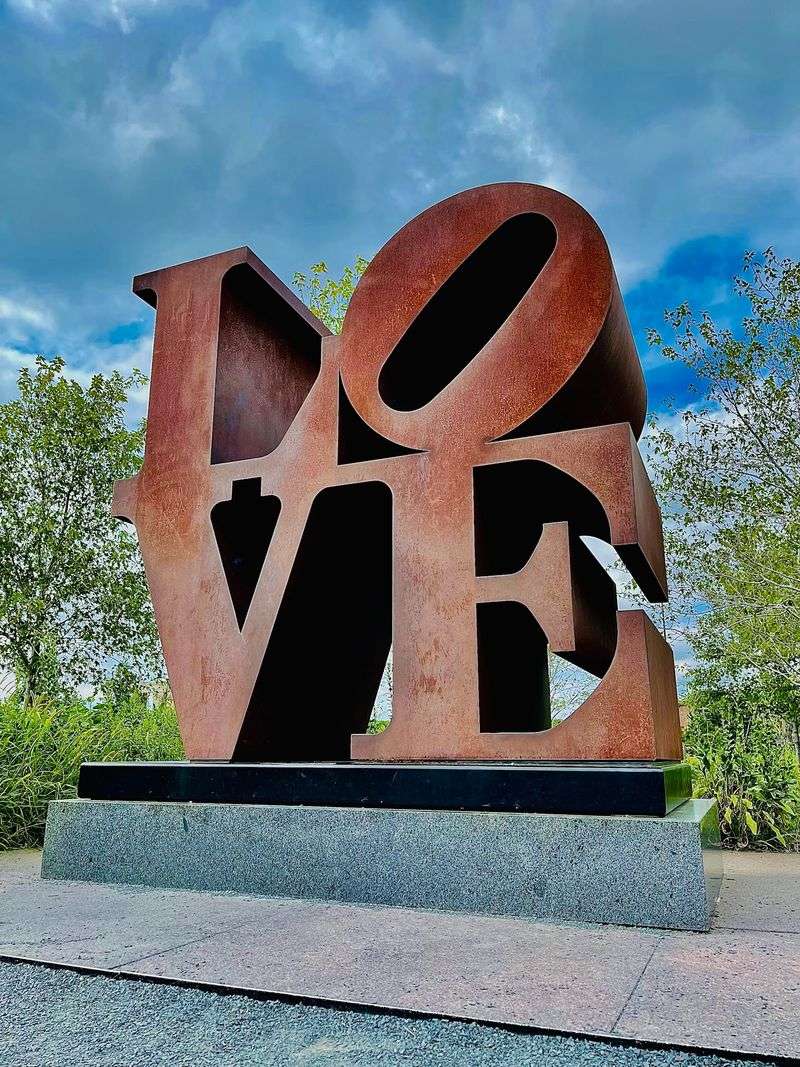
Eleven acres is a lot of room for art. The garden holds more than 40 outdoor sculptures from the Walker Art Center collection.
The artists come from many different countries. That means the styles change a lot as you wander from one lawn to the next.
Robert Indiana’s LOVE is here, with its famous stacked letters. Henry Moore’s Reclining Mother and Child brings smooth, rounded shapes to the mix.
Mark di Suvero’s Arikidea is another big name on the grounds. Theaster Gates contributed Black Vessel for a Saint, which offers a calmer, more thoughtful mood.
Plaques near the works explain what you’re looking at. They help a lot if modern art usually makes you scratch your head.
Want a little extra guidance? A free digital guide on the Bloomberg Connects app shares the history of the grounds, with content in multiple languages.
Free and private tours are offered as well. Those are handy if you’d rather hear the stories from someone who knows the collection.
Pace yourself and don’t rush. Some sculptures look completely different once you walk all the way around them.
Words Of The Dakota People Shape A Quiet Gathering Place
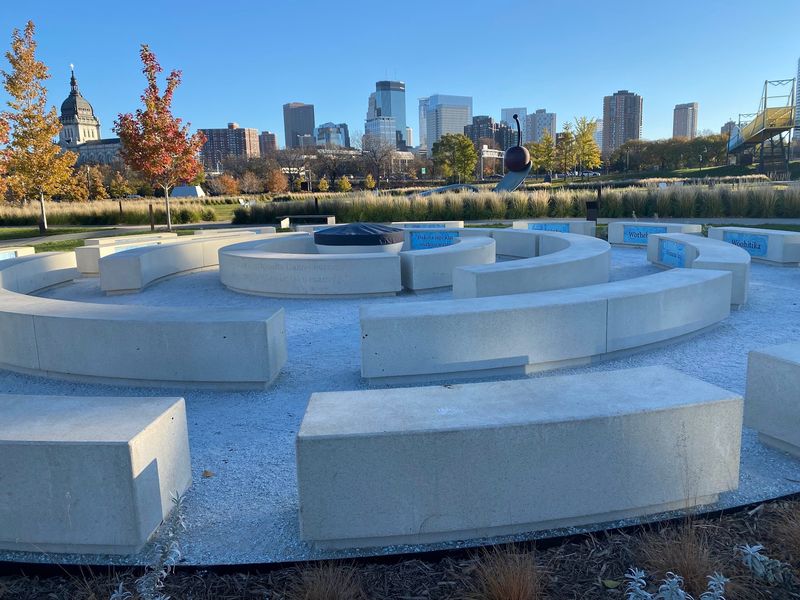
Some art asks you to look, and some asks you to listen. Okciyapi by Angela Two Stars leans toward the second kind.
Angela Two Stars is a Dakota artist. Her work brings the Dakota language into the heart of the garden, in a circular space with written words.
The setting matters here. Minneapolis sits on Dakota homeland, so the piece connects the art on these lawns to a much deeper story.
Okciyapi feels different from the giant spoon or the blue rooster. It invites a slower visit, where reading and thinking take center stage.
Take a moment to read the words and the nearby information. Even a few minutes can teach you something new about Minnesota’s first peoples.
Families can use this stop as a gentle learning moment. Ask kids what they notice about the shape, and why a circle might bring people together.
This is also a nice place to catch your breath between bigger, flashier sculptures. Balance is good for any art outing.
Every great garden needs a calm corner. This one happens to carry a meaningful message too.
Cross A Colorful Bridge Into A Whole Other Park
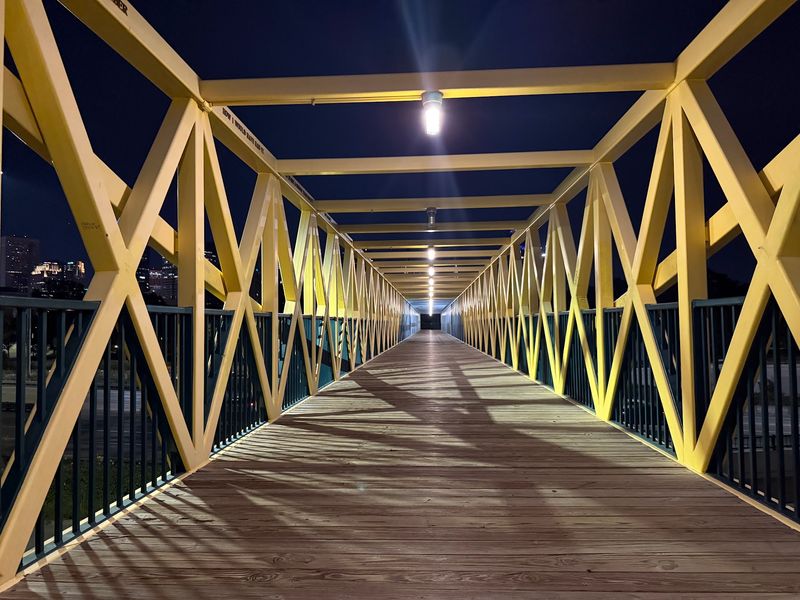
Bridges usually just get you from here to there. The Irene Hixon Whitney Bridge turns that simple trip into part of the art.
Artist Siah Armajani designed this pedestrian bridge. It links the Minneapolis Sculpture Garden with Loring Park on the other side of busy roads below.
The bridge was restored in 2018. That care keeps its look and its walkway in good shape for today’s visitors.
Crossing it also gives you a fresh view. From above, you can see the garden spread out and the city rising nearby.
Loring Park makes a great add-on to your trip. The connection lets you turn one outing into a longer walk without hopping in a car.
The garden also ties into the Garden of the Seasons, Kenwood Parkway, and the Grand Rounds National Scenic Byway. Fans of long walks will feel right at home.
Wear comfortable shoes if you plan to explore beyond the sculptures. The routes add up quickly once you start following paths.
A bridge designed by an artist is a pretty classy way to skip traffic. Your feet will barely complain.
Your Wallet Gets A Day Off Here
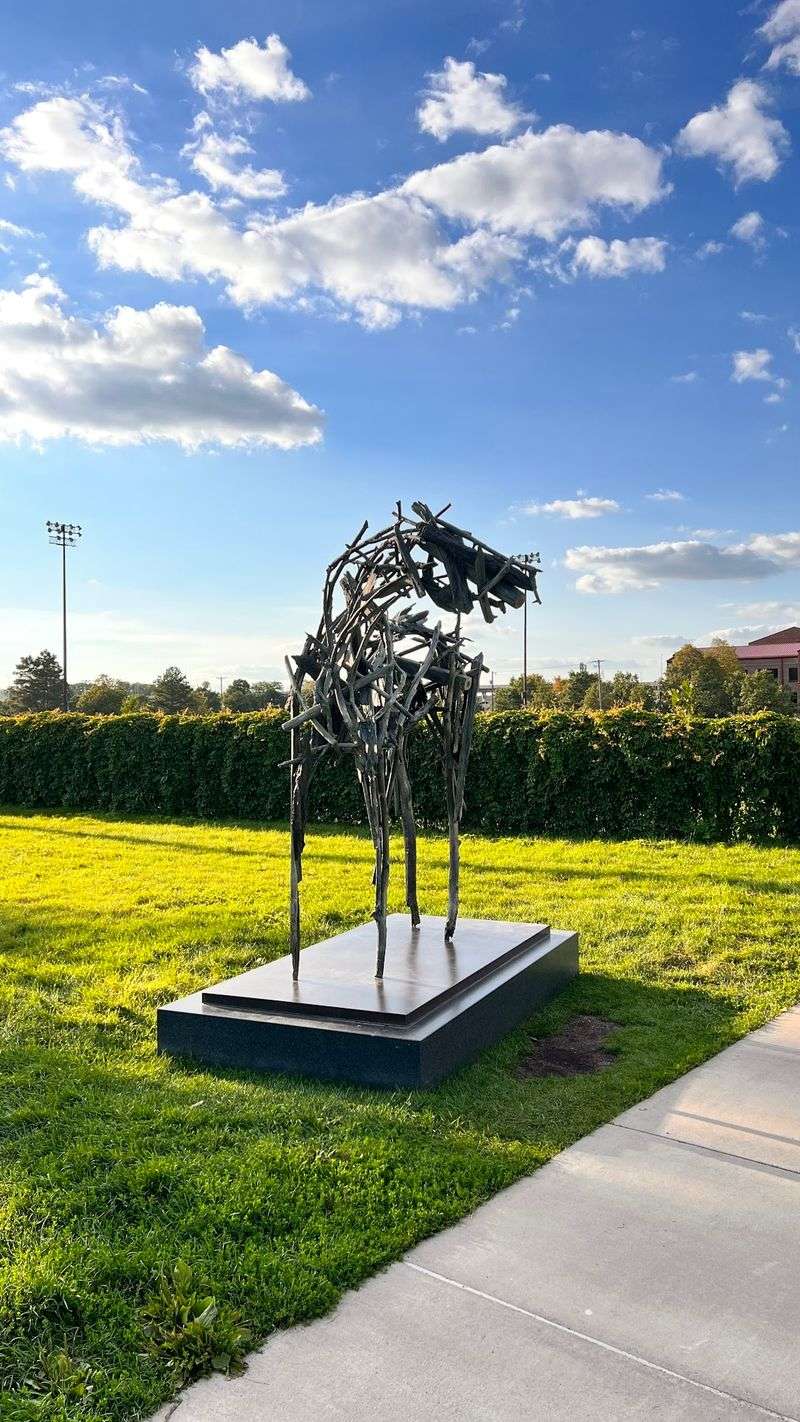
Free admission is a beautiful phrase. At the Minneapolis Sculpture Garden, no ticket is needed to wander the grounds.
The hours are generous too. Gates welcome visitors from 6 am until midnight, every day of the year.
That schedule gives you lots of options. Early birds can take a quiet morning stroll, while night owls can stop by after dinner.
Accessible walking paths run throughout the garden. That makes it easier for strollers, wheelchairs, and anyone who prefers smooth ground.
Restrooms are available on-site, which every parent will appreciate. There are also spots for picnicking, so packing a lunch is a smart move.
Dog owners get good news as well. Leashed dogs are welcome in the park, though they can’t go inside buildings.
Driving in? Pay parking includes a city garage on the Walker site, a Sculpture Garden pay lot, and metered street parking nearby.
Plan ahead on busy weekends so you aren’t circling the block. Then spend the money you saved on admission on a good picnic.
Old Parade Grounds Grew Into Something Wonderfully Weird
Long before the cherry arrived, this land had a very different job. It was called The Parade, because it was used for military drills.
Later, it became Armory Gardens. Starting in 1913, formal floral gardens bloomed here for about 50 years.
The Minneapolis Sculpture Garden officially opened in 1988. It became one of the first major public and private urban sculpture parks in the country.
Big changes came again in 2016 and 2017. A full reconstruction joined the garden with the Walker Art Center, creating a 19-acre campus.
The garden reopened on June 10, 2017. Its updates included ecologically sustainable water management and a habitat with over 300 native trees, shrubs, and plants.
Keep an eye out for the Alene Grossman Memorial Arbor too. It stretches about 300 feet, making it a lovely spot for a shady stroll.
Knowing the history adds a fun layer to your visit. You’re walking where drills and flower beds once stood, now shared with a giant rooster.
Not many places can claim that career path. This land really did reinvent itself.
Plan Your Visit And Make A Full Day Of It
Getting here is the easy part. The garden sits at 725 Vineland Place, Minneapolis, MN 55403, close to downtown.
The Walker Art Center is right next door. That’s handy if you want indoor art after your outdoor loop, or a backup plan for chilly Minnesota weather.
Nearby, you’ll also find the Parade athletic fields and Parade Ice Garden. The Minneapolis Chain of Lakes Regional Park connects to the area as well.
Special moments happen here too. The Minneapolis Sculpture Garden can host weddings, which makes sense for couples who want a truly memorable backdrop.
For a relaxed pace, plan to wander rather than race. Stop at the plaques, take photos, and let the odd sculptures make you smile.
Morning light can feel calm and fresh. Evening visits work too, since the gates stay open until midnight.
Pack water, a snack, and comfortable shoes. Add a picnic blanket if you want to linger on the lawns.
Whatever your route, save the spoon for a final look. Ending with dessert just feels right.