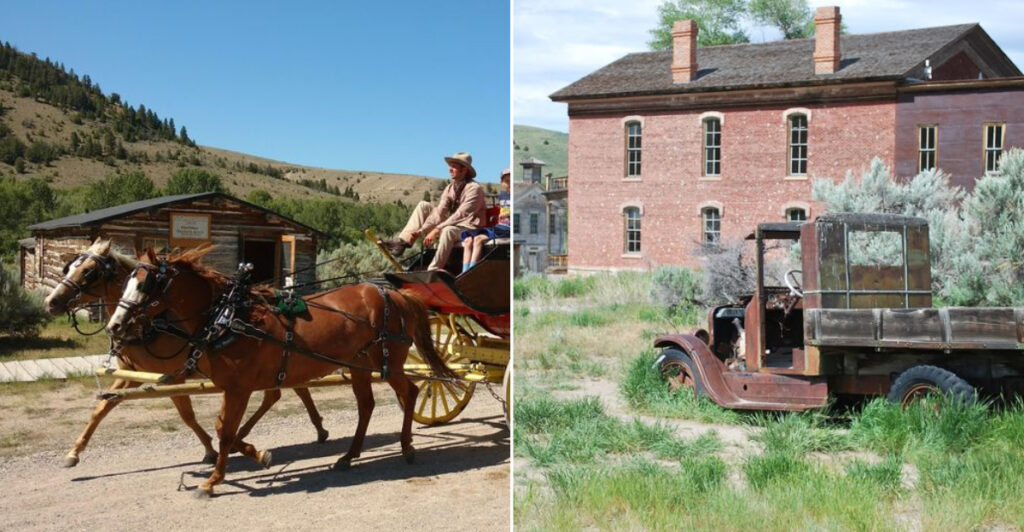
Montana is not what most people expect. The skies go on forever. The mountains are massive. And the wildlife shows up when you least expect it.
But the real story? Most tourists completely miss it. Somewhere on this land, gold rushes changed everything. Frontier justice played out in real time.
Pioneer families built something from absolutely nothing. And an entire piece of American West history is still standing, right here, waiting for you.
Have you ever had a 19th-century main street almost entirely to yourself? That is what is waiting for you in Montana. No crowds. No long lines.
Just raw, unfiltered history that most visitors drive past without a second glance. This is your chance to find what they missed. This place has a story to tell, and you are about to walk straight into it.
A Town That Time Forgot To Erase
Back in 1862, gold was discovered along Grasshopper Creek, and everything changed overnight. Thousands of prospectors, merchants, and adventurers flooded into what would become Montana’s first territorial capital. That town was Bannack, and it grew fast, loud, and wild.
Located at 721 Bannack Rd, Dillon, MT 59725, this site is now preserved as Bannack State Park, one of the most intact ghost towns in the entire American West. More than 60 original structures still stand here, which is genuinely rare for a settlement of this age.
What makes Bannack so different from other historic sites is that it was never rebuilt or renovated to look pretty. What you see is what actually survived.
Weathered wood, leaning walls, and crumbling plaster tell the real story of a town that burned bright and then slowly faded.
Montana became a territory in 1864, and Bannack served as its first capital before the seat of government moved to Virginia City. That is a piece of history most people do not know, and it makes this visit feel even more significant.
Have you ever stood in a place where an entire state’s story began?
Walking The Streets That Gold Built
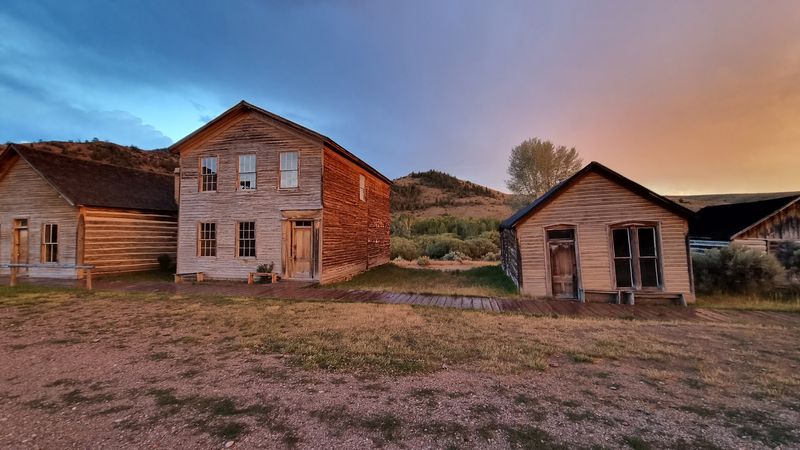
Most people imagine ghost towns as a single collapsed building on a lonely road. Bannack completely rewrites that picture. Here, you can walk an entire main street lined with original structures that date back more than 150 years.
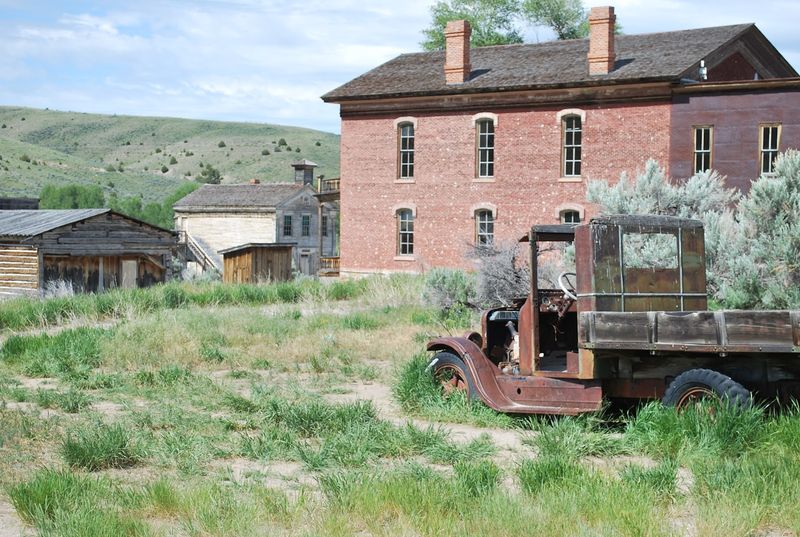
The Meade Hotel is one of the most striking buildings on the street. It was once the Beaverhead County courthouse, and later served as a hotel. You can still walk inside and feel the weight of all those years pressing down from the ceiling.
Skinner’s Saloon, the old schoolhouse, and the Methodist church are just a few of the other stops along the way. Each building has its own story, and the park provides information boards that help connect the dots.
You do not need a guided tour to understand what you are seeing, but having one makes the experience richer. The layout of the town has not changed much since the 1860s.
Streets are unpaved, buildings sit at odd angles, and everything has that authentic frontier feel that no theme park could ever recreate. Every step you take here is a step through living history, and that is not something you find just anywhere.
Sheriff Plummer And The Outlaw Legacy
No visit here is complete without learning about Henry Plummer. He was elected sheriff in 1863, which sounds like a straightforward piece of frontier history until you learn the rest of the story. Plummer was living a double life. As sheriff, he kept order in the streets.
Behind closed doors, he was quietly leading a gang known as the Innocents. The group targeted travelers across the region, and Plummer used his badge to stay one step ahead of anyone asking questions.
It was one of the most brazen criminal operations in the history of the American West. A group of vigilantes eventually uncovered the scheme and took matters into their own hands.
Plummer and several of his associates were brought to justice in January 1864, right here in Bannack. The gallows where this happened still stands in the park today.
The story raises real questions about law, justice, and who gets to decide what is right when there is no reliable system in place. Frontier life was not simple, and Bannack’s history reflects that complexity honestly. Standing near that gallows and thinking about what happened there is a genuinely powerful experience.
The Architecture That Refused To Disappear
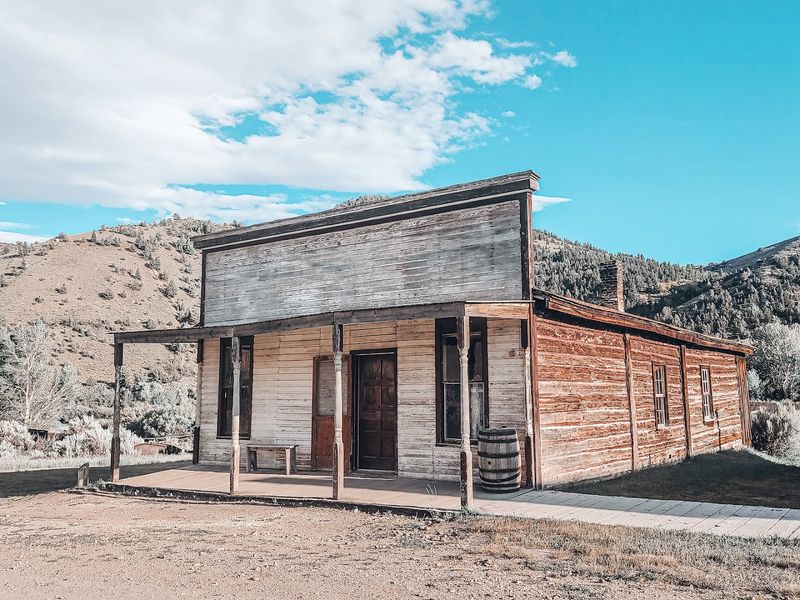
There is something deeply satisfying about old buildings that have been left alone. No fresh paint, no modern signage, no renovations designed to make things look more appealing to visitors. Bannack offers the real thing, and that rawness is exactly what makes it so compelling.
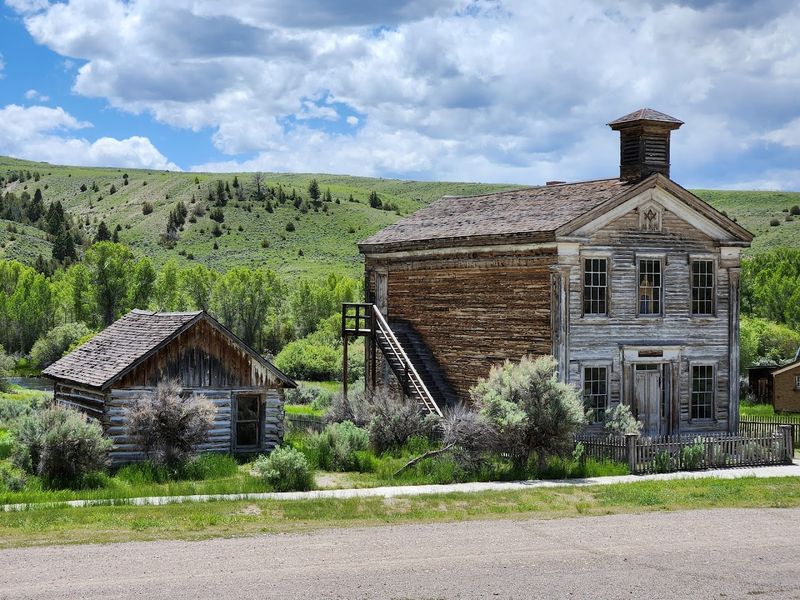
The structures here include log cabins, frame buildings, a brick hotel, and a church with a steeple that still points skyward after more than a century. Each construction style tells you something about the people who built it and the resources they had available at the time.
The Bannack church, built in 1877, is one of the most photographed buildings in the park. Its simple white exterior and tall narrow windows stand out against the dry Montana landscape in a way that feels almost cinematic.
Step inside and you will find original wooden pews still in place.
Preservation at Bannack follows a philosophy called arrested decay, which means the park stabilizes structures to prevent further deterioration without restoring them to a previous condition. This approach keeps everything honest.
What you see is genuinely old, not a recreation. Architects, photographers, and history enthusiasts all find something worth studying here. The way light falls through broken windows onto dusty floors creates images that no studio could stage.
Bannack Days Festival And Living History
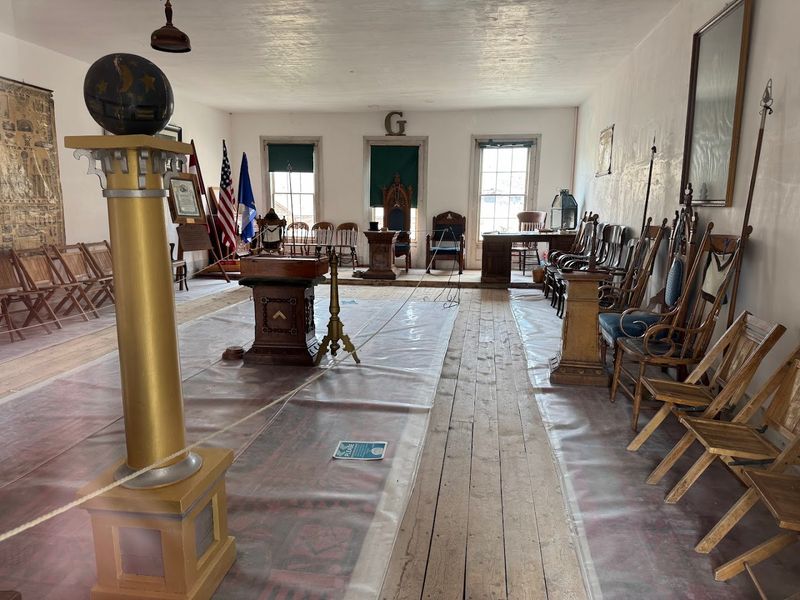
Once a year, this town comes alive in a way that goes far beyond reading information boards and taking photographs. Bannack Days, held every third weekend of July, transforms the ghost town into a fully animated piece of living history.
Volunteers and reenactors dress in period-accurate clothing and take on roles from the 1860s. You might encounter a blacksmith at work, a schoolteacher holding class, or a merchant selling goods from a wooden cart.
The attention to detail is impressive and genuinely educational.
Demonstrations include gold panning, candle making, blacksmithing, and pioneer cooking. Kids especially love the hands-on activities, but adults tend to get just as absorbed once they start panning for gold alongside someone who actually knows what they are doing.
The festival draws visitors from across Montana and beyond, but the setting keeps things intimate. You are not fighting through enormous crowds. Even outside of Bannack Days, the park occasionally hosts guided lantern tours and special events throughout the year.
The Landscape Surrounding The Town
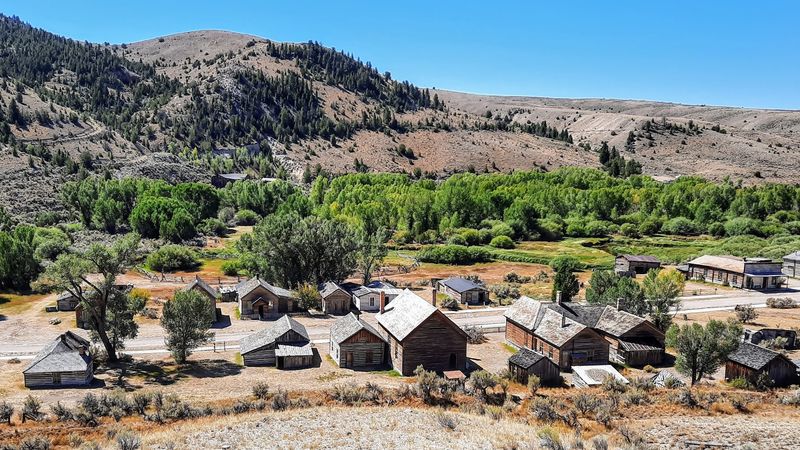
The physical setting of this town is just as striking as the town itself. The park sits along Grasshopper Creek in a wide valley surrounded by rolling hills and open rangeland. It is the kind of scenery that makes you want to stop the car and just look for a while.
Grasshopper Creek was the site of Montana’s first major gold discovery in 1862, and you can still see why early prospectors were drawn to this area. The creek winds through the valley in a way that feels peaceful and timeless.
Wildlife is active here, and deer, birds, and other animals are common sights near the water.
The surrounding landscape gives the ghost town a sense of isolation that feels authentic. There are no strip malls, no fast food signs, and no cell towers cluttering the view.
It is just open land and old buildings, which is increasingly rare to find anywhere.
Hiking trails near the park let you explore the terrain on foot and get a broader sense of the geography that shaped life here. Standing on a hillside above the town and looking down at those weathered rooftops is a perspective worth seeking out.
The quiet out here is not empty. It is full of something harder to name.
Practical Tips For Planning Your Visit
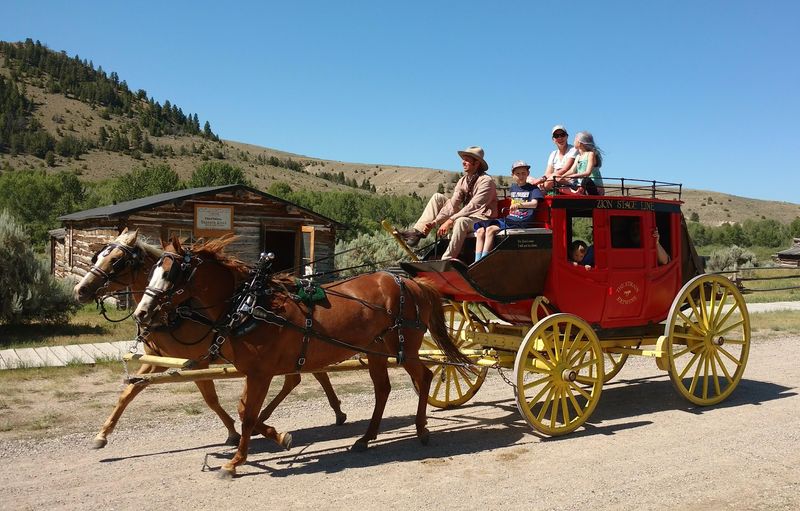
Getting there requires a short drive on a gravel road, but it is easily accessible for most vehicles. The park is located about 25 miles west of Dillon, Montana, and the drive itself is scenic and enjoyable. Allow at least half a day for your visit, though a full day gives you more room to explore without rushing.
The park is open year-round, but the best time to visit is between late spring and early fall when the weather is mild and all facilities are fully operational. Summer weekends tend to bring the most visitors, so arriving early on a weekday gives you a quieter, more personal experience.
There is a small day-use fee for entry, and the park also offers camping for those who want to extend their stay. Spending a night here, surrounded by the old town in the dark and quiet, is something people tend to remember for a long time.
Bring water, sunscreen, and sturdy footwear. The terrain is uneven in places, and some building interiors have low doorways and rough floors.
Cell service is limited out here, so downloading a map or the Montana State Parks information before you leave Dillon is a smart move.
Why This Place Deserves More Attention
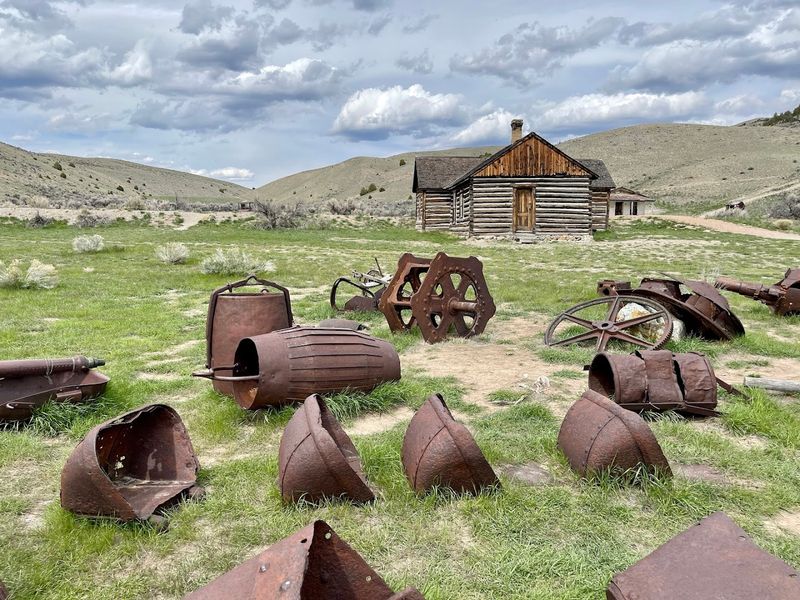
Montana has no shortage of spectacular destinations. Glacier National Park draws millions of visitors every year, and Yellowstone is one of the most recognized parks in the world. Bannack sits in a quieter corner of the state’s tourism landscape.
The historical significance here is enormous. This was the first capital of Montana Territory. The events that unfolded in this small valley helped shape how law and order developed across the entire region. That is not a minor footnote.
That is a foundational chapter in American Western history.
The level of preservation is also remarkable. Very few ghost towns of this age have this many original structures still standing.
Most have been lost to fire, flooding, or simple neglect. Bannack survived, and that survival feels like a gift that not enough people have unwrapped yet.
Visitors who make the trip consistently describe it as one of the most memorable experiences they have had in Montana. The combination of scenery, history, and atmosphere creates something that is hard to replicate anywhere else.
It does not need to compete with Glacier or Yellowstone because it offers something entirely different. Bannack State Park at 721 Bannack Rd, Dillon, MT 59725 is the kind of place that rewards curiosity and patience.