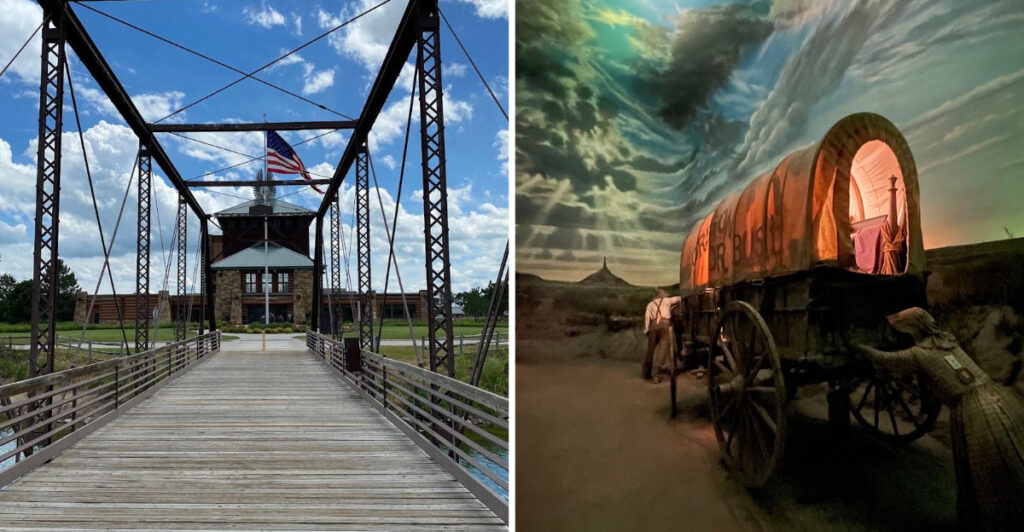
Interstate 80 spends hundreds of miles telling drivers to keep going, then Nebraska drops a giant museum across the highway like a very persuasive roadblock.
The museum near Kearney turns an ordinary stretch of pavement into a trip through nearly two centuries of westward travel. Inside, prairie wagons, gold seekers, and early motorists all compete for your attention.
This is impressive considering none of them had air conditioning.
Life-size scenes and personal audio guides pull you close to the travelers who crossed the Great Platte River Road before snack stops and heated seats became basic road-trip expectations.
You can follow the race to finish the transcontinental railroad, and end beside windows overlooking modern traffic below.
By the time you return to the car, Nebraska may seem less like open road and more like one enormous history lane.
A Covered Bridge Above The Highway Begins The Adventure
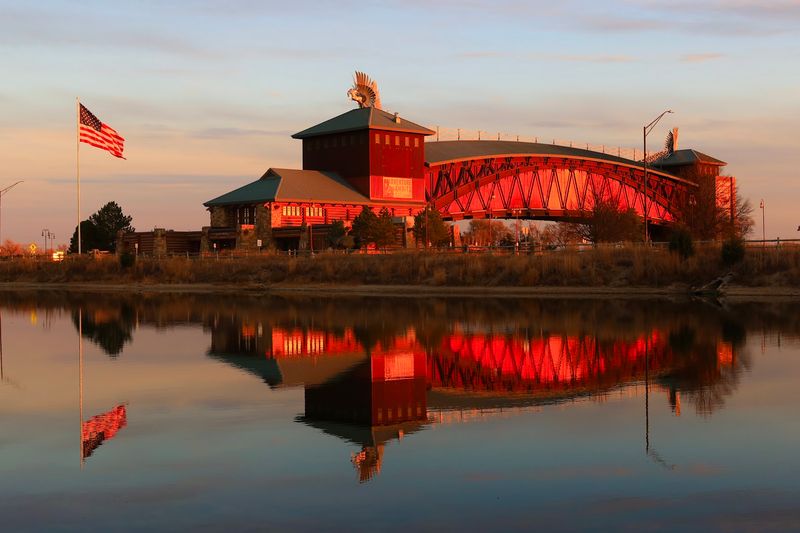
The building itself lands the first surprise before the history tour even begins.
The Archway stretches over Interstate 80 at Exit 275 in a covered-bridge-inspired structure colored to suggest a Midwestern sunrise.
Decorative eagles crown the towers, while traffic moves below a museum devoted to the generations that followed this same Platte River corridor.
Constructing it required more than ordinary roadside engineering. The central arch weighed roughly 1,500 tons and was assembled beside the highway before hydraulic jacks lifted it 22.5 feet.
Special transporters moved the structure into position during an interstate closure on August 16, 1999.
The attraction officially opened on June 9, 2000. That date began a new chapter for a route already shaped by Indigenous travel, emigrant trails, mail riders, rail lines, and cross-country highways.
Pause outside before entering and watch the traffic disappear beneath the span. The view gives you the entire idea in one glance.
The museum does not merely describe a transportation corridor. It becomes part of it.
Kearney Gives Modern Travelers An Easy Place To Step Into History
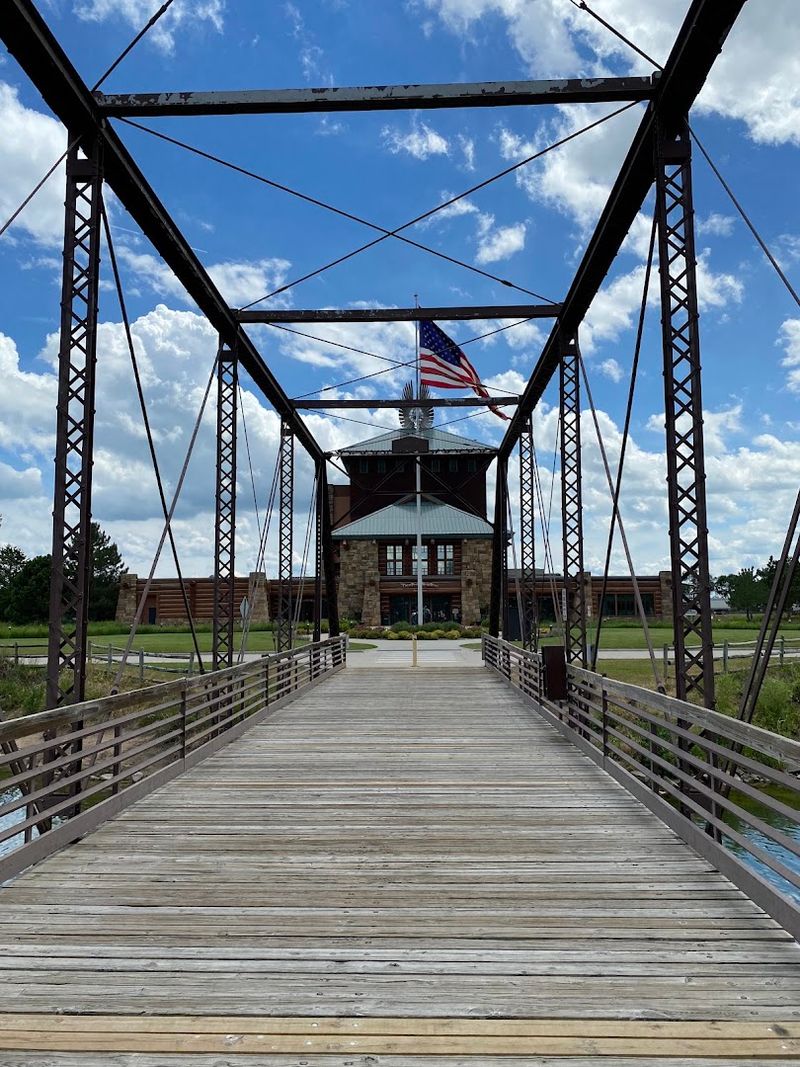
A road-trip museum works better when reaching it does not require a second expedition.
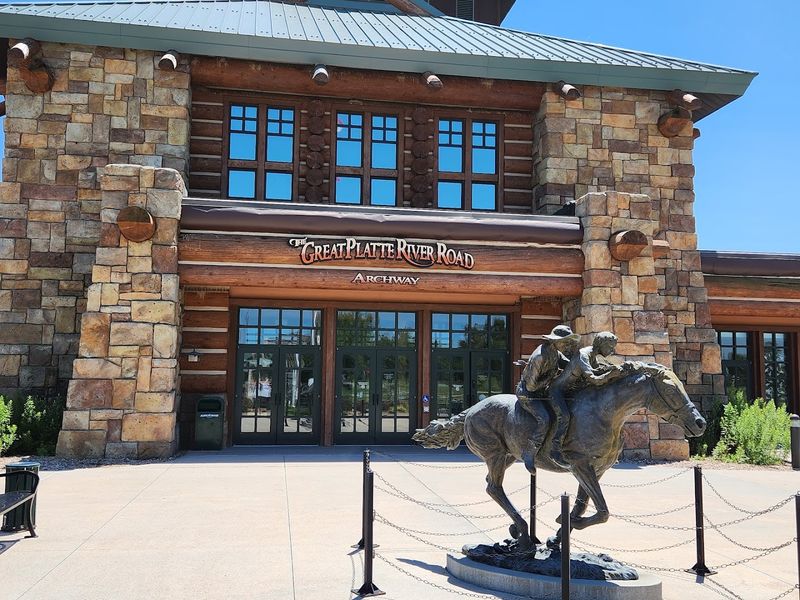
The Archway sits beside Interstate 80 at Exit 275, making it easy to include during a drive across central Nebraska. Its visitor center, gift shop, outdoor grounds, picnic shelter, trails, and lake give the campus more range than a quick indoor stop.
You will find it at 3060 East 1st Street, Kearney, Nebraska. Save the location before the drive, then follow the unmistakable bridge above the highway.
Plan at least an hour and a half for the historical exhibit, then leave extra room if your group likes to pause, replay audio, explore the grounds, or browse local products in the shop.
The tour is self-guided, so nobody has to march through history at the speed of the fastest reader.
Families can divide their attention without losing the story. Children may focus on wagons, animals, and dramatic scenes, while adults catch the personal accounts and larger historical connections.
Kearney handles the practical part of the stop, leaving the exhibit free to send your imagination much farther west.
The Great Platte River Road Turns Nebraska Into The Center Of The Map
The plains stop looking empty once you understand how many journeys crossed them.
For generations, the Platte River corridor acted as a natural pathway across the continent. Emigrants following the Oregon, California, and Mormon trails moved through the same broad region, often using overlapping routes rather than three neatly separated lines.
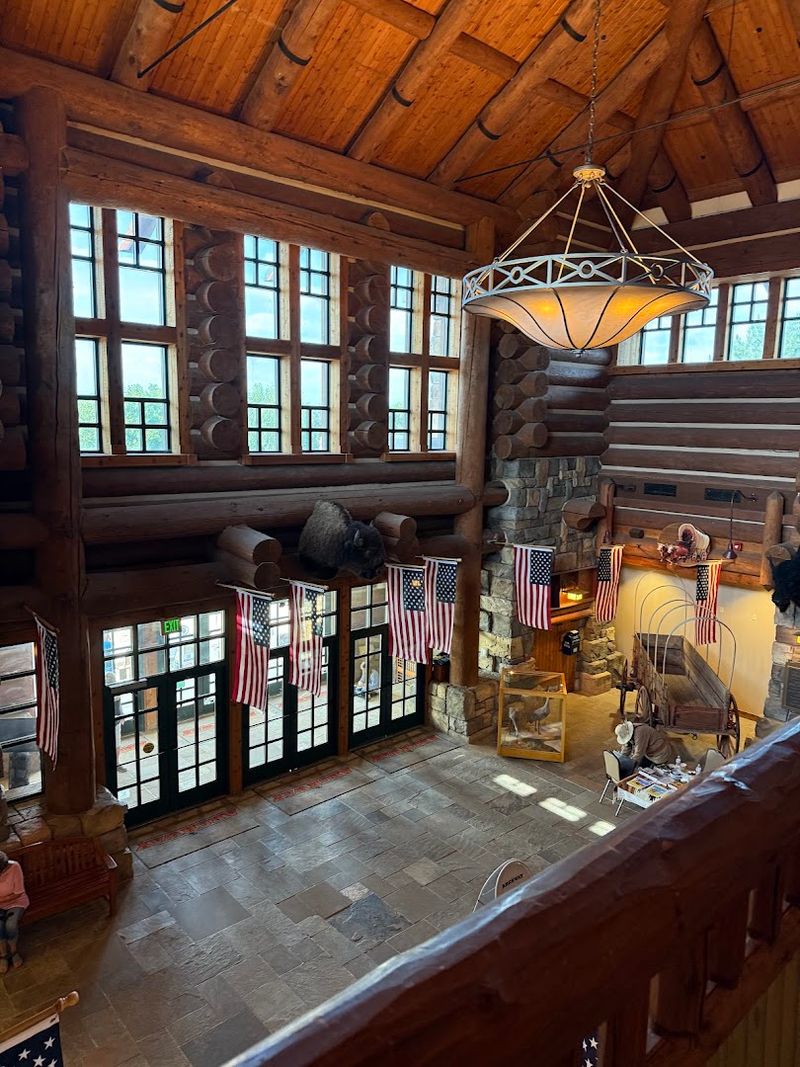
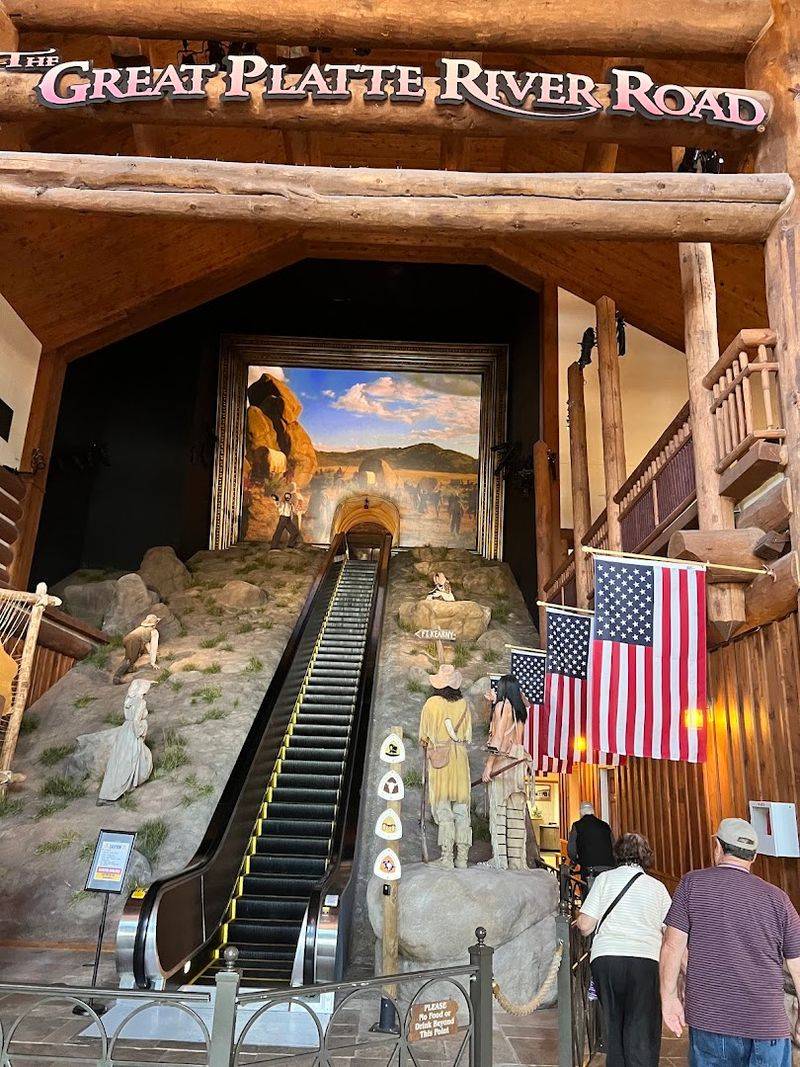
The Archway introduces that larger idea before narrowing the story to individual travelers. Life-size figures, environmental sound, personal accounts, and reconstructed scenes show how geography guided movement through central Nebraska.
The Platte provided a recognizable course and access to water, while the broad valley offered terrain wagon trains could follow. Modern Interstate 80 later developed along much of the same east-west corridor, continuing a pattern older than the pavement itself.
Look through the windows or think back to the drive you just completed. The landscape that may have seemed quiet was once crowded with difficult decisions, heavy wagons, livestock, dust, ambition, and uncertainty.
Nebraska moves from the background to the main route before the first wagon scene is finished.
Oregon Trail Scenes Put You Beside The Wagons
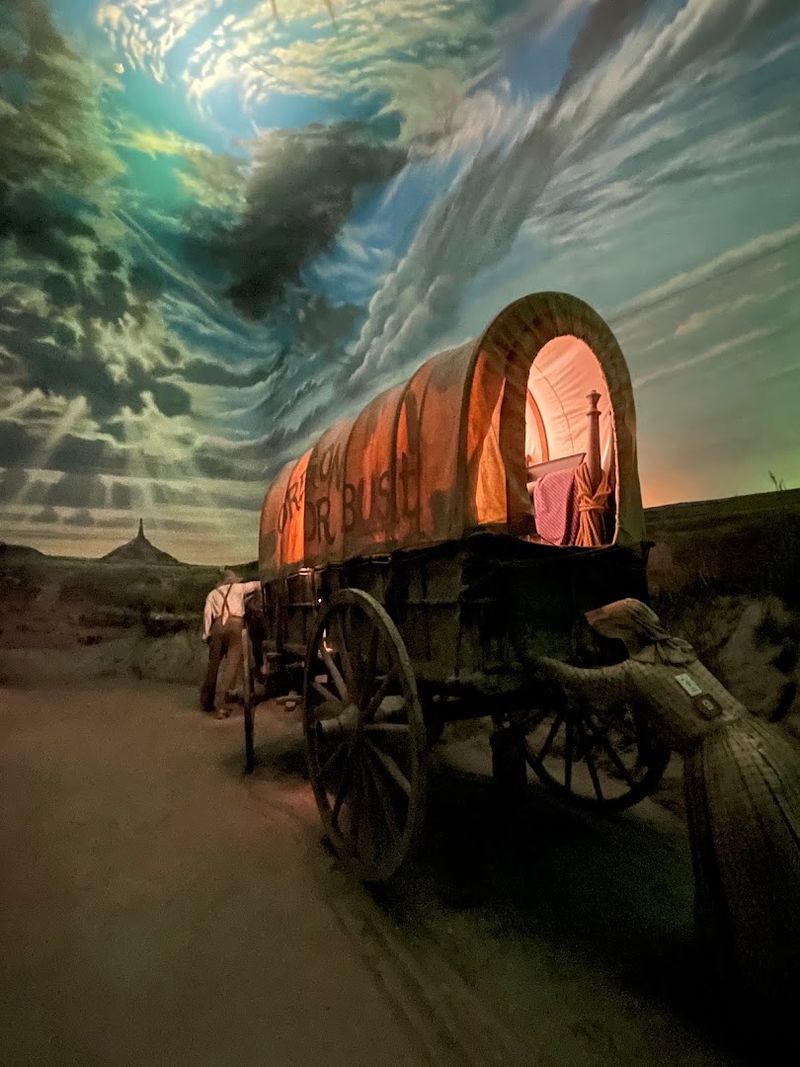
How much of your life could you fit inside one covered wagon?
The pioneer section surrounds you with the scale of that decision. Families packed food, tools, bedding, clothing, and possessions into limited space, then walked beside ox-drawn wagons for much of a journey measured in months rather than hours.
The exhibits avoid presenting westward migration as one cheerful adventure. Hard travel, illness, weather, river crossings, exhaustion, and separation sit beside hope, opportunity, and determination.
Personal audio guides add voices to the scenes. Instead of absorbing a wall of dates, you hear stories tied to people making choices under pressure. That approach turns the trail from a famous name into a sequence of daily problems that had to be solved mile by mile.
Stand beside the wagon long enough to notice how little room it offers. Then think about the size of a modern suitcase and the number of unnecessary items packed for a weekend.
The wagon may remain still, but the choices surrounding it carry plenty of weight.
Gold Seekers And Mormon Pioneers Add More Voices To The Trail
Not everybody moving west carried the same destination, faith, or reason for leaving.
California-bound gold seekers shared portions of the Platte River Road with Oregon emigrants, while Mormon pioneers traveled toward a new home in the Great Basin. Their paths overlapped across Nebraska even when their goals did not.
The Archway uses scenes such as a gathering of 49ers and a winter rescue connected to the Mormon Trail to widen the story beyond one familiar wagon route. The result presents westward migration as a crowded human movement rather than a single procession.
This is a good section to slow down and compare motivations. Some travelers chased land, others economic possibility, religious security, family connections, or a chance to begin again.
Ask younger visitors which decision would have frightened them most. The answer may lead to a better family conversation than any quiz at the end of the tour.
History becomes much harder to flatten once every wagon carries a different reason for going.
The Transcontinental Railroad Changes The Journey
The pace changes the moment steel rails enter the story.
The Archway follows the competition between the Union Pacific and Central Pacific as crews pushed toward completing the first transcontinental railroad.
Nebraska held a major place in that race, with the Union Pacific building westward from Omaha across the same Platte River corridor already followed by emigrant wagons.
The exhibit shows how quickly rail travel rewrote the meaning of distance. A journey that once demanded months of walking, rough camps, and uncertain weather could suddenly be completed in days.
Visitors also encounter the moment associated with the Golden Spike, driven at Promontory Summit in 1869 after the two railroad lines met. The ceremony marked a tremendous engineering achievement and connected eastern and western rail networks in a way that transformed travel across the country.
Can you imagine watching years of construction from opposite directions finally meet on one stretch of track?
The wagons may have opened the route, but the railroad arrived ready to steal the track.
The Lincoln Highway Turns The Trail Into A Road Trip
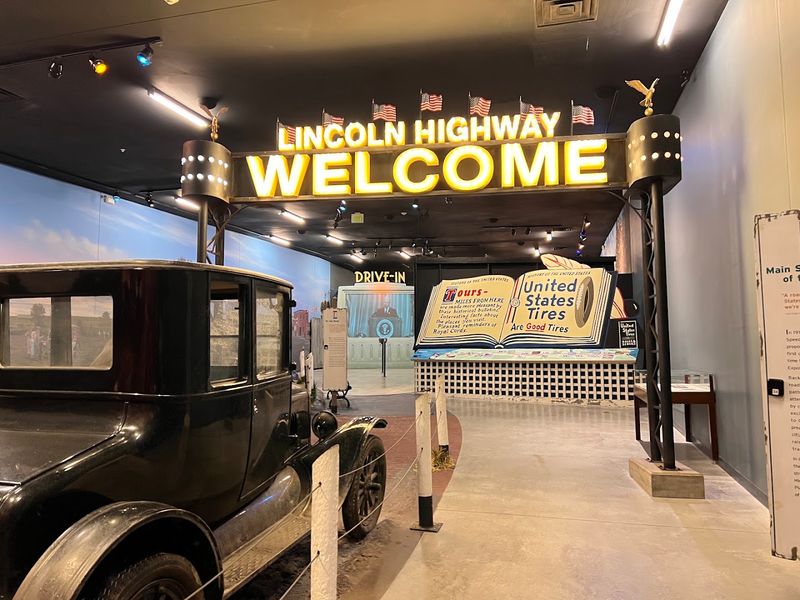
Rail travel made the West faster, but automobiles gave ordinary travelers control of the steering wheel.
The Lincoln Highway carried drivers across the country long before smooth pavement, roadside chains, and reliable navigation made road trips comfortable.
Nebraska motorists faced dirt, mud, deep ruts, mechanical trouble, primitive camps, and directions that sometimes relied more on landmarks than signs.
The Archway captures the optimism and stubbornness of those early drivers. Cars promised freedom, but that freedom often arrived with flat tires, overheated engines, and roads capable of swallowing wheels after heavy rain.
Outside, the Lincoln Highway display includes original 1913 paving bricks, a historic road marker, and a replica sign connected to Kearney’s Hammer Motel. Those details show how quickly roadside travel began creating its own culture.
Would you still call it a vacation if every muddy mile carried a chance of becoming an overnight repair project?
The automobile handed travelers the wheel, then immediately tested whether they deserved it.
A Roadside Cafe Connects The Old Trails To The Traffic Below
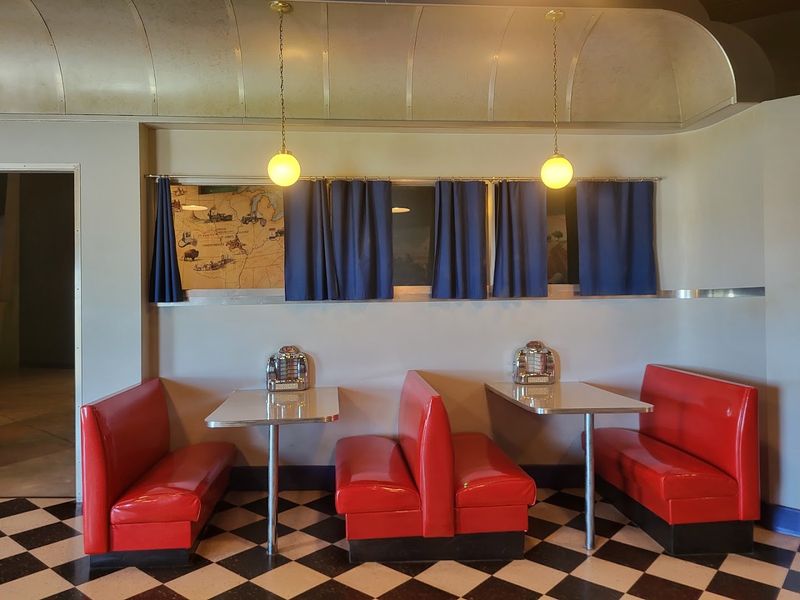
The final transition trades wagon dust and railroad smoke for chrome, booths, and the cheerful promise of a roadside stop.
A recreated mid-century setting brings the exhibit into the era of diners, drive-ins, family automobiles, and increasingly comfortable cross-country travel. The change in mood is immediate, but the urge to keep moving west stays recognizable.
Windows in the replica Roadside Cafe overlook Interstate 80. Cars and trucks pass beneath the museum while you stand above them, creating a direct connection between pioneer trails, mail routes, rails, early highways, and the modern interstate.
The view may be the cleverest part of the entire experience. It removes history from a sealed display case and places it under your feet in real time.
After the tour, explore the gallery, gift shop, Nebraska visitor information, picnic area, hike-and-bike trails, or lake if the schedule allows. Gold panning adds another hands-on activity for families who are not ready to return to the car.
The Archway sends you back onto Interstate 80 with a better understanding of who traveled this ground before you and why the road beneath carries far more history than its exit signs reveal.