A college with its own lightning research lab sits high in the mountains, where scientists chase storms on purpose. That alone got my attention.
Then I learned the same school ranks first among public universities for bachelor’s students who go on to earn a Ph.D.
I like the idea of a campus where undergrads help with real research instead of just reading about it. Nearly every professor here brings students into active projects.
That’s rare at any school, let alone a small one in New Mexico.
The price tag is the other surprise. Residents can lean on state tuition-free programs, and many out-of-state students can qualify for reduced tuition too.
I’m all for serious science that doesn’t come with a mountain of debt.
So how does a small desert school keep landing at the top of the rankings? The answer involves explosives, telescopes, a duck pond, and a whole lot of curious minds.
Seven Straight Years At The Top Is No Fluke
Winning once is nice. Winning seven years in a row starts to look like a habit, and New Mexico Institute of Mining and Technology has that habit down.
Most people just call it New Mexico Tech. Niche has repeatedly ranked it the best college in New Mexico, and it doesn’t stop at state lines.
Niche also places the school among top colleges nationally for value and for small colleges. It earns strong marks as a Hispanic-Serving Institution too, which matters in a state with deep Hispanic roots.
The New York Times’ college search tool also placed New Mexico Tech first among small public universities when athletics and party-scene preferences were given no weight. That tells you a lot about the culture here.
Students come to learn, build, and test ideas. Football Saturdays are not the main event, and nobody seems to mind.
For families comparing schools, those rankings are a useful starting point. They measure things like academics, value, and professor quality rather than flashy extras.
Still, rankings only tell part of the story. The real reasons behind them show up in the labs, the price, and the people, so let’s look closer.
Your Wallet Might Actually Thank You For Picking This One
Student debt is the topic nobody wants at the dinner table. New Mexico Tech makes that conversation a lot shorter.
The school is widely praised as one of the best values in science and engineering education nationwide. For New Mexico residents, the state’s tuition-free programs can cover tuition costs.
That’s a huge deal for local families. A top-ranked STEM degree without the scary loan balance sounds almost too good, yet it’s real.
Out-of-state students can get a break as well. Eligible students from participating Western states may qualify for reduced tuition through the Western Undergraduate Exchange program.
First-time applicants generally need a 3.0 GPA and qualifying test scores, while transfer students need a 3.0 GPA and at least 30 transfer credits. Only 10 WUE positions are available each academic year.
A large share of students also receive financial aid. Federal, state, and school grants all play a part in lowering the bill.
Here’s a practical tip for families. Fill out the FAFSA early and contact the financial aid office with questions well before deadlines.
Paperwork can get confusing at any college, so staying organized pays off. Keep copies of everything and follow up if something looks off.
Affordability is built into the school’s mission. Lower costs mean more students can chase big careers without starting adult life buried in payments.
Undergrads Get A Real Seat At The Lab Bench
A running joke says New Mexico Tech is a research institute that happens to have a university attached. Like most good jokes, it carries some truth.
The school offers undergraduate programs covering science, engineering, computing, and management. Master’s and doctoral programs provide additional opportunities for advanced study and research.
Engineering, earth and environmental science, physics, and computer science are especially strong here. Those fields fit a campus built around problem-solving.
What really stands out is how early students get involved. Nearly all professors bring undergraduates into their active research projects.
That means freshmen and sophomores can work on real questions, not just textbook exercises. It also means strong résumés long before graduation day.
The student-to-faculty ratio is often cited as 9:1. Smaller classes make it easier to ask questions and get to know professors.
The results speak loudly. New Mexico Tech ranks first among public universities for the share of bachelor’s graduates who go on to finish a Ph.D.
My advice for incoming students is simple. Knock on doors, ask professors about their projects, and say yes when a lab spot opens up.
Lightning Chasers And Explosives Experts Work Here
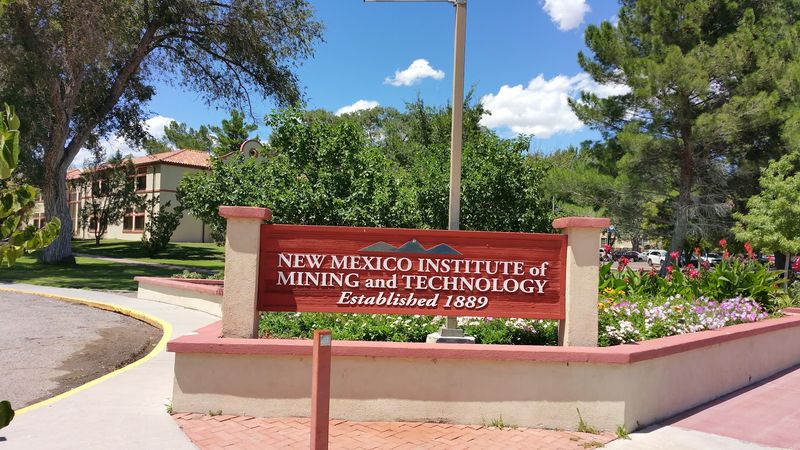
Lightning research is somebody’s actual job at this school. At the Langmuir Laboratory for Atmospheric Research, scientists study lightning and cloud physics up in the mountains.
That’s just one stop on a long list. The Energetic Materials Research and Testing Center, called EMRTC, focuses on explosives research and development.
EMRTC also hosts training courses for first responders. Fire departments and bomb squads travel to Socorro to learn on its ranges.
Then there’s the Petroleum Recovery Research Center. It’s known worldwide for work on oil recovery strategies.
The Geophysical Research Center supports studies in atmospheric physics, hydrology, and seismology. It even runs a seismic observatory that keeps an ear on the ground.
Tech also manages the Magdalena Ridge Observatory. That facility sits in the Cibola National Forest, about 20 miles west of campus, at high elevation.
All this research adds up to something bigger than a cool brochure. Students can connect classroom lessons to work that matters outside campus.
So when someone calls New Mexico Tech small, they mean the enrollment. The science happening here is anything but tiny.
Silver Mining Started This Whole Story Back In 1889
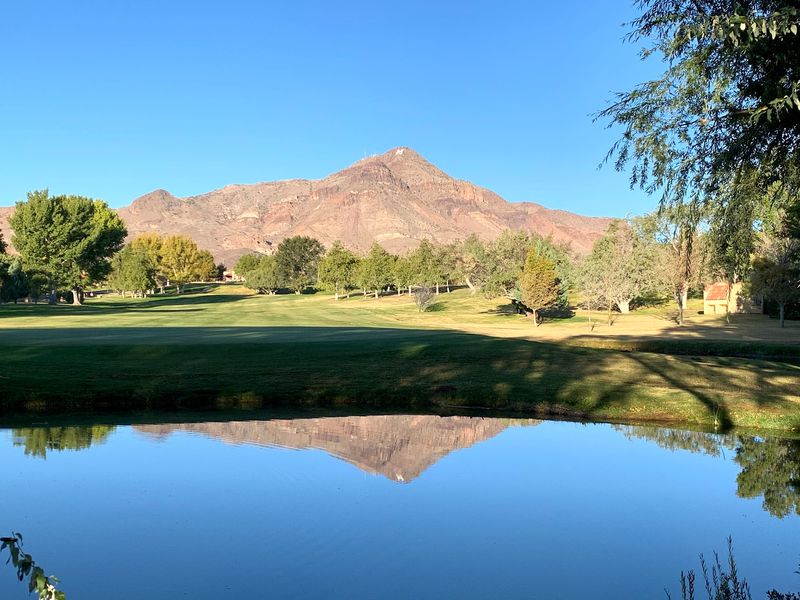
Back in 1889, silver was booming in the nearby Magdalena Mountains. Lawmakers created the New Mexico School of Mines to train people for that growing industry.
New Mexico was still a territory then. The goal was to strengthen the local economy by teaching mining specialties.
The school didn’t stay frozen in time. During World War II, it added more mathematics and physics courses to its lineup.
Later, the Very Large Array radio observatory was built nearby. Astrophysics joined the menu, which is quite a leap from pickaxes.
In 1951, the school adopted its current name, New Mexico Institute of Mining and Technology. The change became legally effective in 1960.
Today, the mission covers science, technology, engineering, entrepreneurship, and mathematics. The school calls that blend STE2M, with the extra E for entrepreneurship.
I love that the mining roots still show in the name. It’s a reminder that the school grew alongside New Mexico itself.
Curious history buffs should look into the campus mineral museum too. It connects nicely to the school’s rocky beginnings.
Rocks This Pretty Deserve Their Own Museum
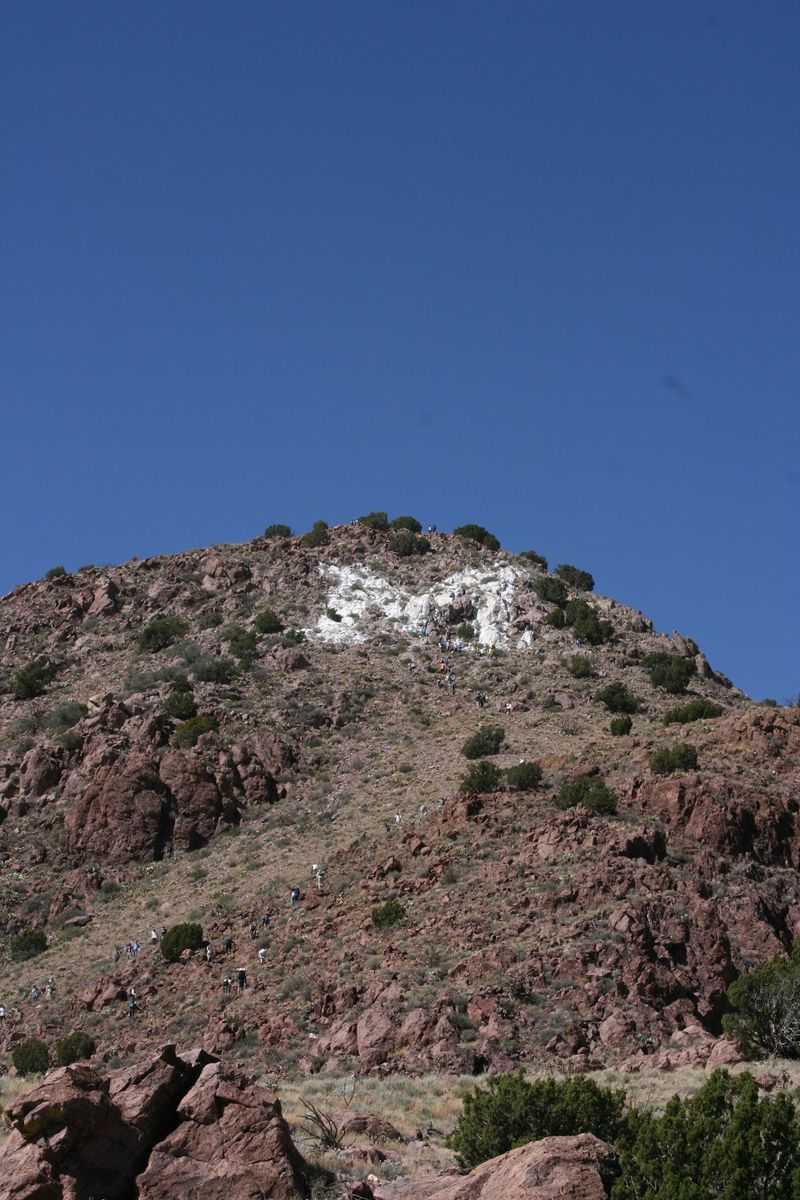
Sparkly crystals and rare rocks are on display right on campus. The New Mexico Bureau of Geology and Mineral Resources Mineral Museum lives at New Mexico Tech.
It fits the school perfectly. A place founded to teach mining should probably have an impressive rock collection, and it does.
The museum showcases minerals from New Mexico and beyond. Specimens fill display cases with colors that look almost unreal.
Families visiting Socorro will find it a fun stop. Kids who collect rocks in their pockets might never want to leave.
It’s also a smart choice for prospective students. Seeing the museum gives a feel for the geology and earth science programs.
Plan ahead before heading over. Check the museum’s current hours, since campus buildings keep their own schedules.
Bring a curious mind and maybe a notebook. Many specimens include details about where they were found.
I like that the campus shares its science with everyone, not just enrolled students. A museum like this turns a quick visit into a real learning moment.
Green Lawns And A Duck Pond In The Desert? Yes, Really
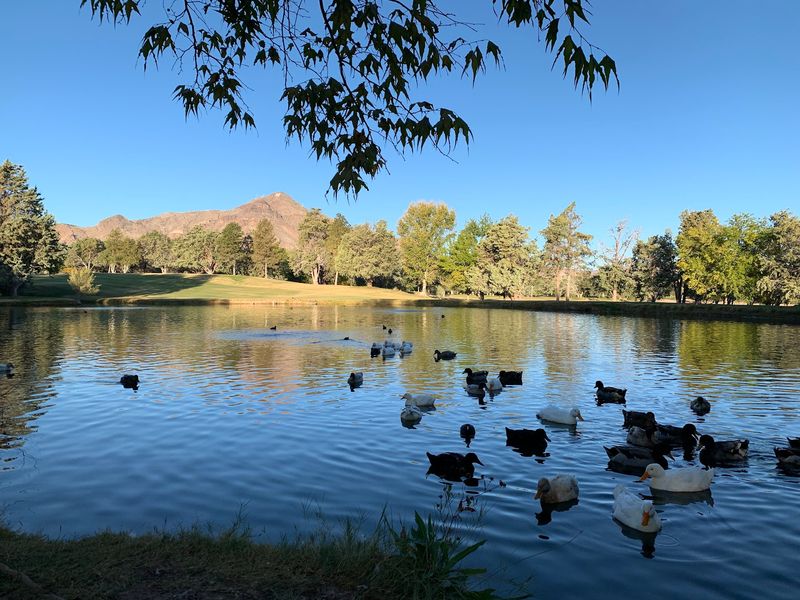
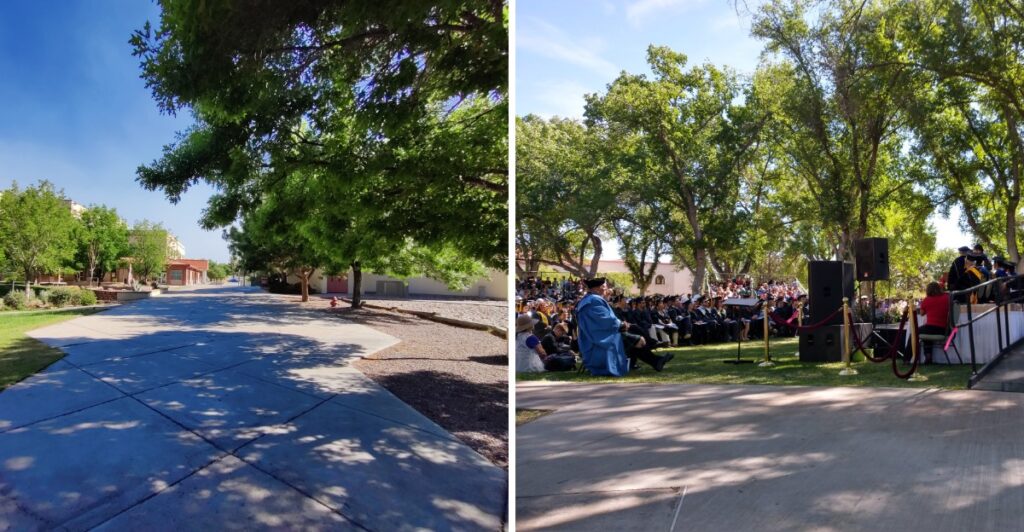
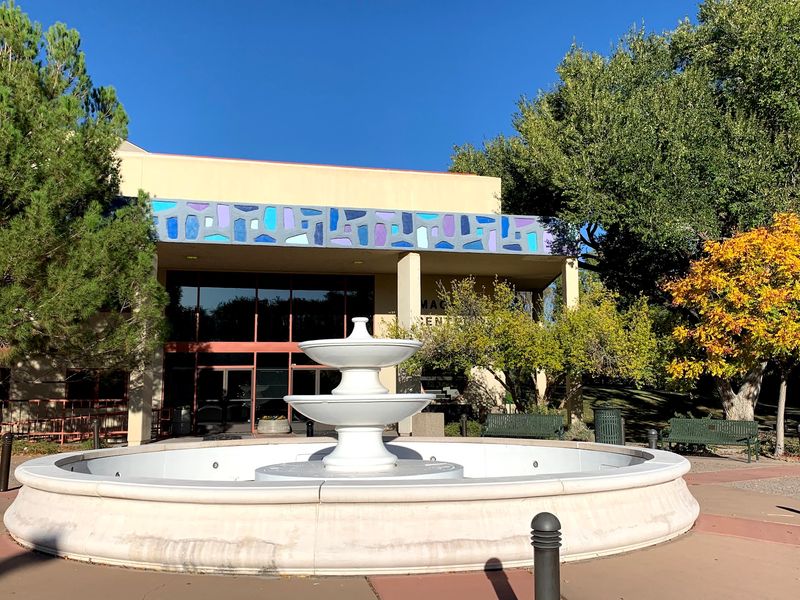
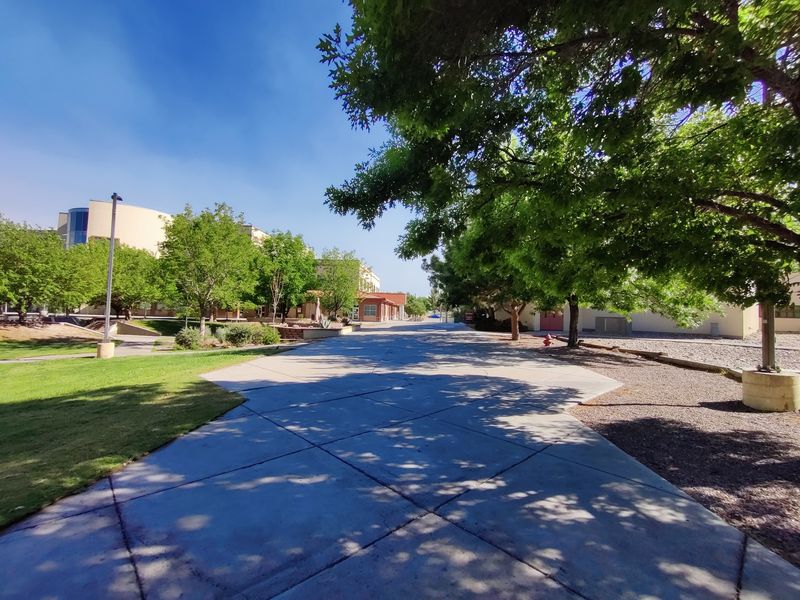
Socorro sits in the high desert, yet the campus feels like an oasis. Green lawns, shady trees, and colorful landscaping cover the grounds.
You’ll find New Mexico Tech at 801 Leroy Pl, Socorro, NM 87801. The campus sits in the historic Rio Grande valley.
A duck pond adds a relaxing touch between classes. Bird lovers also enjoy spotting different species around the water.
Right next door is an 18-hole championship golf course. Students and visitors can work on their swing without leaving the area.
The campus is compact and easy to get around. That’s handy for students rushing from lab to lecture with minutes to spare.
Mountains frame the view in the distance. Sunset turns the whole scene warm and glowing, which beats most campus postcards.
Campus offices generally keep weekday hours from 8 a.m. to 5 p.m. Weekend visitors should plan around closed buildings.
For a casual visit, take a slow walk around the grounds. It’s a great way to sense whether this college feels like home.
All Work And No Play? Not With A Bouldering Wall Around
Brains need breaks, and this campus clearly knows it. The Recreation and Wellness Center gives students plenty of ways to burn off exam stress.
Inside are two large gymnasiums. There’s also an updated weight and fitness room for anyone chasing a new personal record.
A bouldering wall offers a fun challenge. Problem-solving on a climbing wall feels pretty fitting at an engineering school.
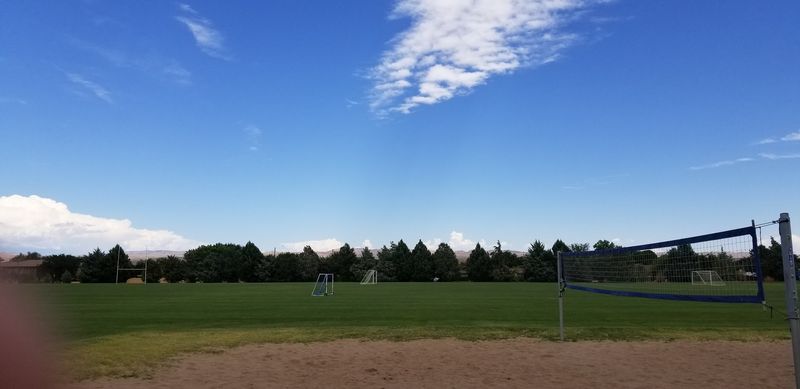
Racquetball and squash courts round out the indoor options. Outside, a large multi-use athletic field hosts all sorts of games.
Clubs bring another layer of fun. The Astronomy Club looks to the stars, while the Physics Club explores how everything works.
The Japanese Club celebrates culture and language. The Materials Club sparks interest in materials science and engineering.
New students should try a few clubs early. It’s one of the fastest ways to make friends on a smaller campus.
Balance matters, especially in tough STEM programs. A climb, a game, or a club meeting can reset a tired brain before the next problem set.
Stargazers, Scuba Fans, And Dancers All Find A Home Here
About 60 miles west of Socorro, giant radio dishes scan the sky. The Very Large Array is one of the most famous observatories anywhere.
Here’s the fun twist. Its headquarters sits on the New Mexico Tech campus, so astronomy feels close to home.
The neighborhood brings plenty of outdoor options too. San Lorenzo Canyon offers hiking for anyone craving rocks and open space.
Community members benefit from the college as well. Community education classes go far beyond science and engineering.
Courses have included music, fine arts, poetry, and creative writing. Golf, martial arts, Celtic dance, yoga, aerobics, and even scuba diving have joined the lineup.
Scuba lessons in the desert make me grin every time. Check the current class schedule to see what’s offered now.
The school also runs STEM outreach and summer programs for younger learners. That helps spark curiosity long before college applications begin.
New Mexico Tech serves its home state in many ways. It proves a small college can shine brightly for students, families, and neighbors across New Mexico.