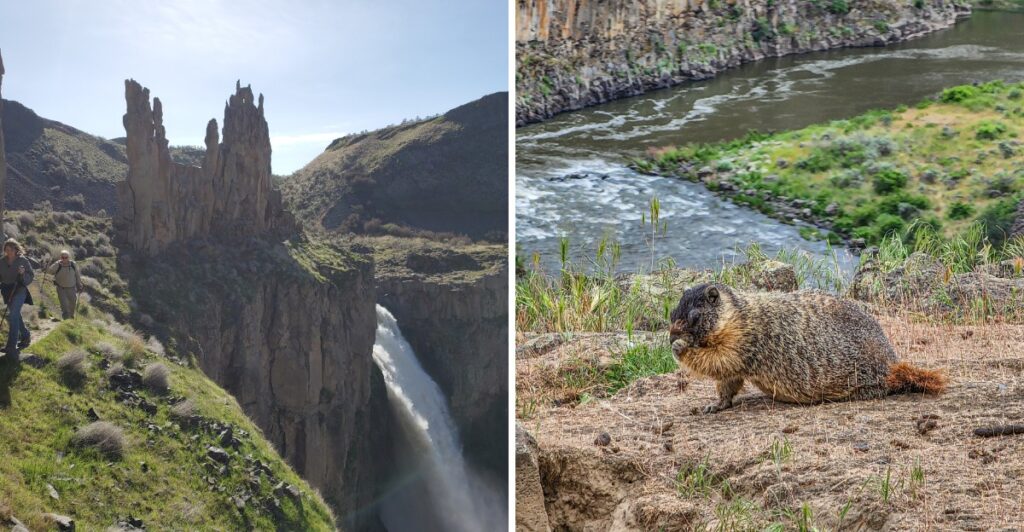
A river drops about 200 feet off a basalt ledge and lands in a canyon nearly 400 feet deep. Then golden hour hits, and the cliff walls start glowing like someone flipped on a lamp inside the rock.
Ice Age floods carved this canyon more than 13,000 years ago. A group of elementary school students even helped make it the official state waterfall of Washington in 2014.
You stand at a railing with wind tugging your jacket, while yellow-bellied marmots scurry along the rocky ledges below. Honestly, that’s my favorite kind of supporting cast, and they work for free.
The surrounding wheat country looks flat and quiet for miles before the ground suddenly splits open.
Then the falls roar, and you realize Washington’s been hiding one heck of a show in the middle of nowhere.
Washington Picked This Waterfall As Its Official Favorite For Good Reason
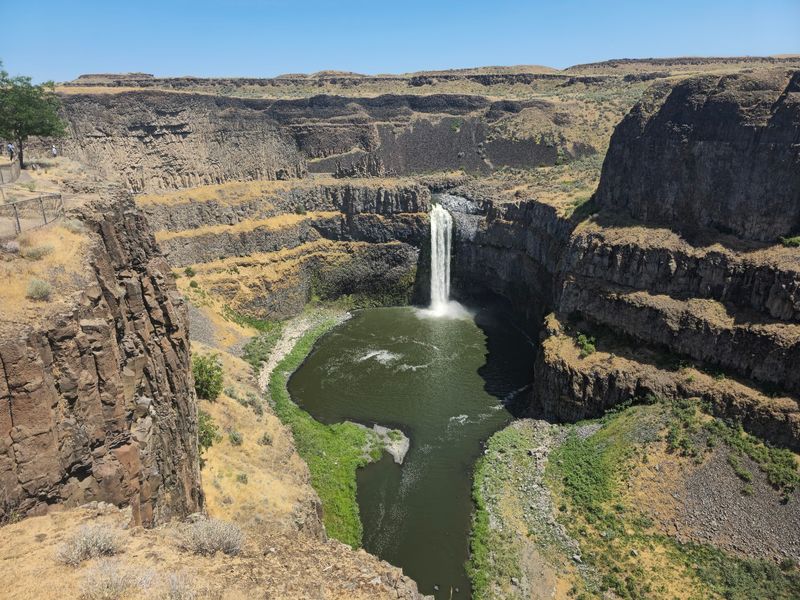
Out of thousands of waterfalls across the state, only one wears the official crown. Palouse Falls State Park Heritage Site protects that champion, and it earns the title the second you reach the rim.
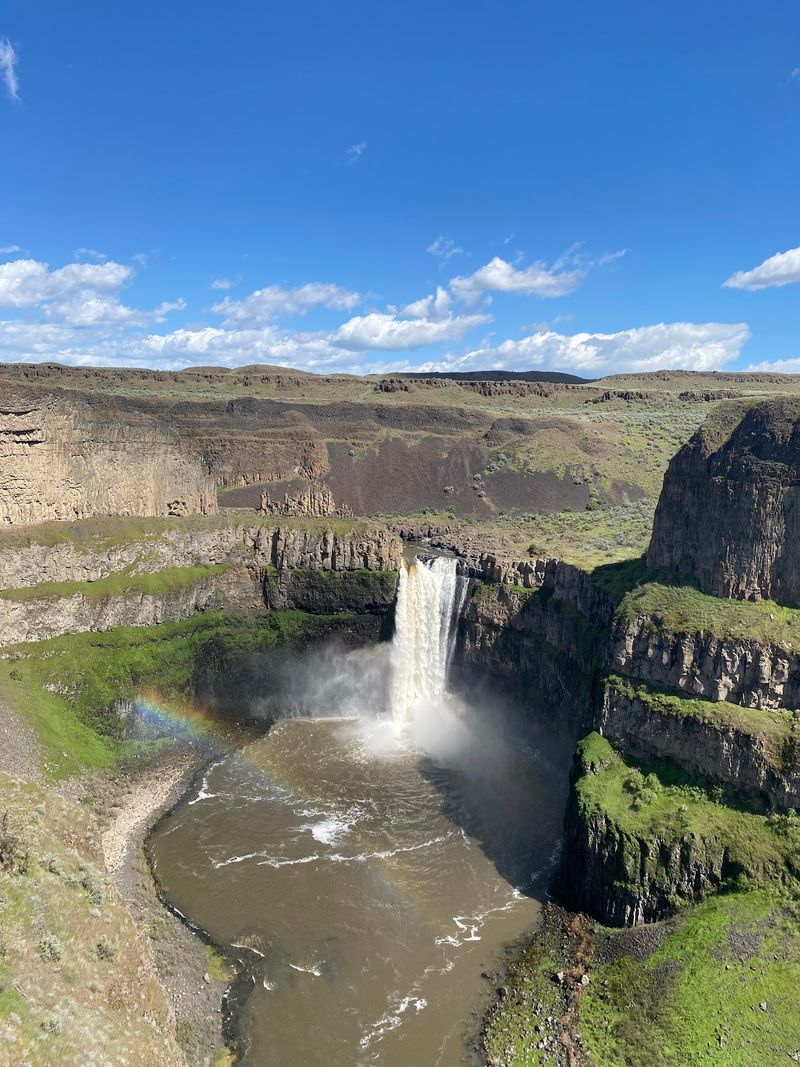
The main drop plunges roughly 200 feet into a round bowl of dark rock. Sources list slightly different heights, but nobody standing at the railing is checking with a tape measure.
Here’s a fun bonus most first-timers miss. Upstream sits a smaller upper fall of about 20 feet, so the river gets a little warm-up before its big leap.
The title itself has a sweet backstory. Local elementary school students pushed for the honor, and Washington made it official in 2014.
That means a bunch of kids handled a job usually reserved for lawmakers in suits. Pretty impressive homework assignment, if you ask me.
The setting adds to the shock. Flat farmland and dry hills stretch for miles, so the canyon appears almost out of nowhere.
One minute you’re watching wheat fields roll by your window. The next, you’re staring into a gorge that looks borrowed from another planet, with a waterfall pouring right through the middle.
Save Your Visit For Golden Hour And Watch The Cliffs Light Up
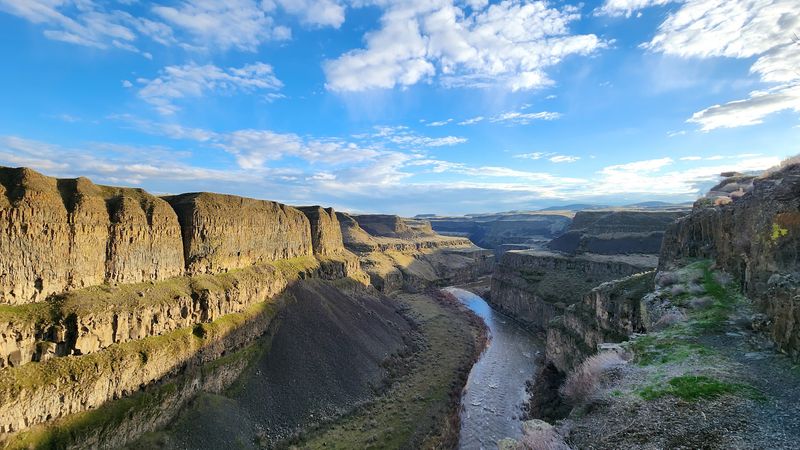
Timing matters here more than almost anywhere else. Photographers aim for golden hour and sunset, when low light washes across the basalt walls and turns them warm and dramatic.
Midday sun can flatten the scene a bit. Late afternoon brings out every ridge, crack, and column in the rock, almost like the canyon is posing for you.
Fall makes a smart season for this trick. The light sits lower in the sky, and the summer heat has usually backed off by then.
Summer afternoons can climb past 100 degrees, and shade is scarce along the rim. Cooler fall evenings let you linger without feeling like a baked potato.
Sunrise works too if you’re an early bird. The park opens at 6:30 a.m. during the summer season, giving you a shot at soft morning color.
Bring a jacket, since evenings can turn breezy on the open plateau. A tripod helps if you plan to stay until the light fades.
Just remember the park closes at dusk. Plan your shots so you’re heading back to the car as the last glow slips off the cliffs.
Giant Ice Age Floods Carved This Canyon Like A Sculptor With No Chill
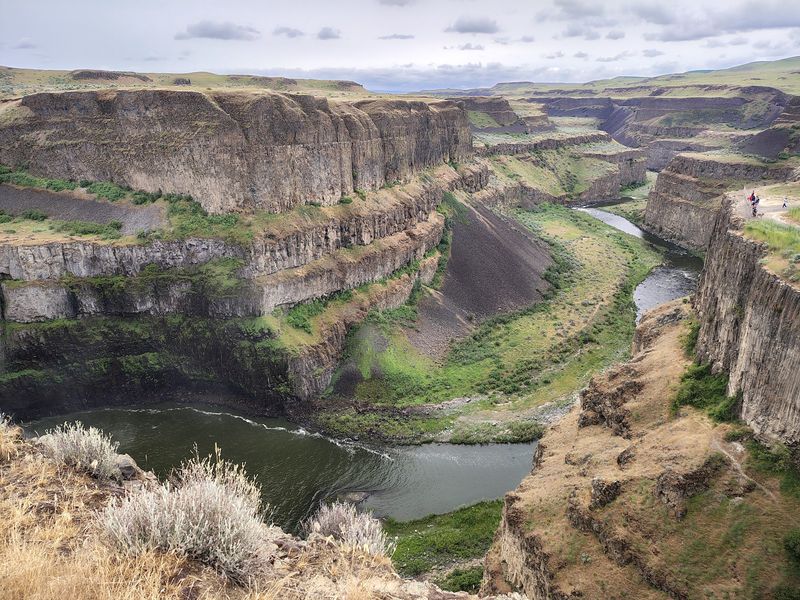
More than 13,000 years ago, enormous floods tore across this region with almost unbelievable force. Scientists call them the Ice Age floods, or the Missoula floods, and they reshaped huge parts of eastern Washington.
The water cut a canyon about 377 feet deep right here. That’s taller than many city skyscrapers, all scooped out by rushing water.
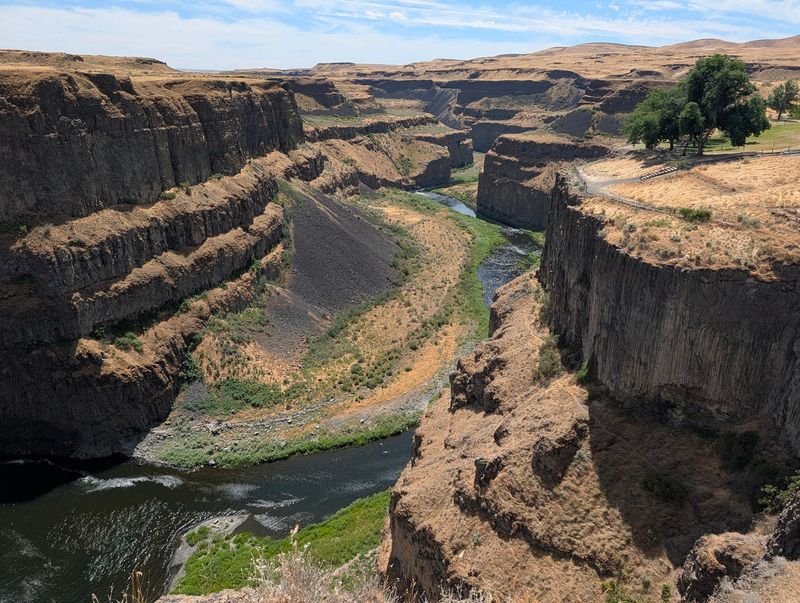
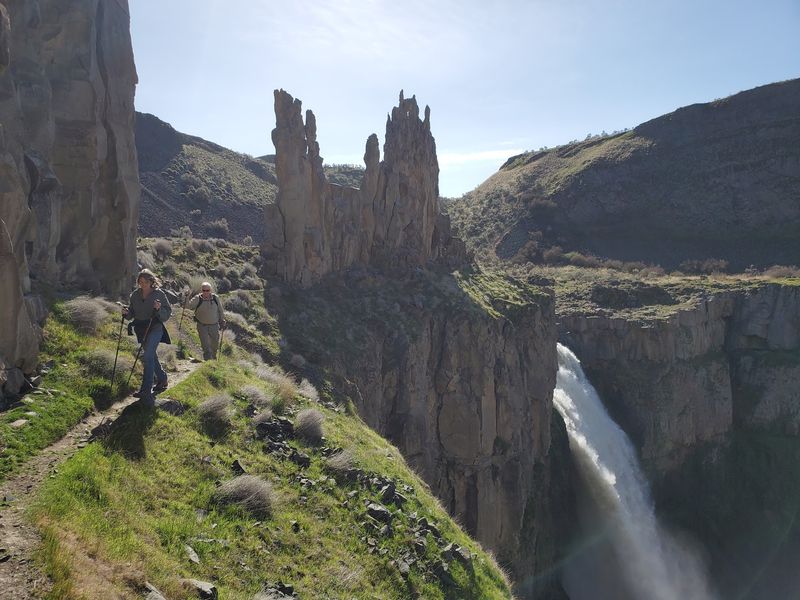
Look closely at the canyon walls and you’ll spot stacked layers of dark rock. These belong to the Columbia River Basalt Group, and many sections form tall, pillar-like columns.
Those columns formed when ancient lava cooled and cracked. The floods later sliced through them, putting the inside of the earth on display like a giant layer cake.
The canyon sits within a landscape called the channeled scablands. It’s also part of the Ice Age Floods National Geologic Trail, which links sites across several states.
A paved interpretive path tells the story with signs along the way. Reading them turns a pretty view into a jaw-dropping science lesson.
Kids who groan about geology class might change their minds here. Nothing sells rocks like a canyon this dramatic.
Three Different Viewpoints Mean You Get To Be Picky
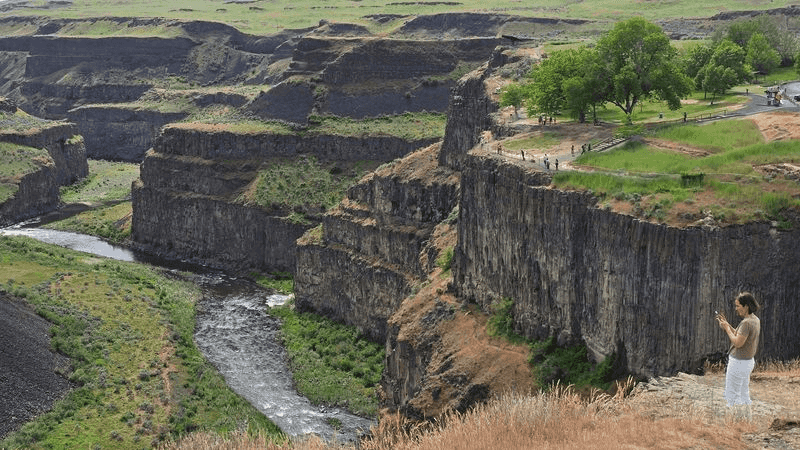
Choices, choices. Palouse Falls State Park Heritage Site offers three distinct viewpoints, and each one frames the waterfall a little differently.
The Fryxell Overlook sits highest of the bunch. It delivers the widest, most sweeping look at both the falls and the twisting canyon beyond.
For easier access, an ADA-accessible observation shelter sits close to the action. Historical displays inside share stories about the land and the people connected to it.
That shelter is a nice spot to catch your breath on a windy day. The plateau rarely blocks the breeze, so a little cover goes a long way.
Walking between the viewpoints is simple for most visitors. The developed area offers designated walking paths near the overlooks, but all trails into the canyon and to the base of the falls are permanently closed.
Some stretches can feel a bit steep, so sturdy shoes make sense. Leave the flip-flops in the car unless you enjoy skidding on gravel.
My advice is to visit every viewpoint before deciding on a favorite. The waterfall looks bold from the shelter, but the higher angle shows off the full scale of the canyon in a way photos struggle to capture.
Long Before Postcards, The Palouse People Called It Aput Aput
Aput Aput means Falling Water. That was the name the Palouse people gave this place, and it held deep meaning for them.
The falls served as an important meeting and fishing ground. Tribal legends also tell how the waterfall came to be, adding stories that reach far beyond geology.
The wider area carries remarkable history too. Some of the oldest documented human remains in the Western Hemisphere were found in this region.
It’s also known as the birthplace of the Appaloosa horse. Yes, that spotted horse you saw in old Western movies has roots right around here.
Lewis and Clark wrote about the area in their journals as well. So this corner of Washington has been impressing travelers for a very long time.
The park itself was dedicated on June 3, 1951. That makes it a classic among Washington State Parks, though the waterfall obviously beat everyone to the scene.
Take a few minutes to read the displays near the overlook. Knowing the history makes the view feel less like a pretty picture and more like a place with a long, living story.
Keep An Eye Out For Marmots, Falcons, And A Few Scaly Neighbors
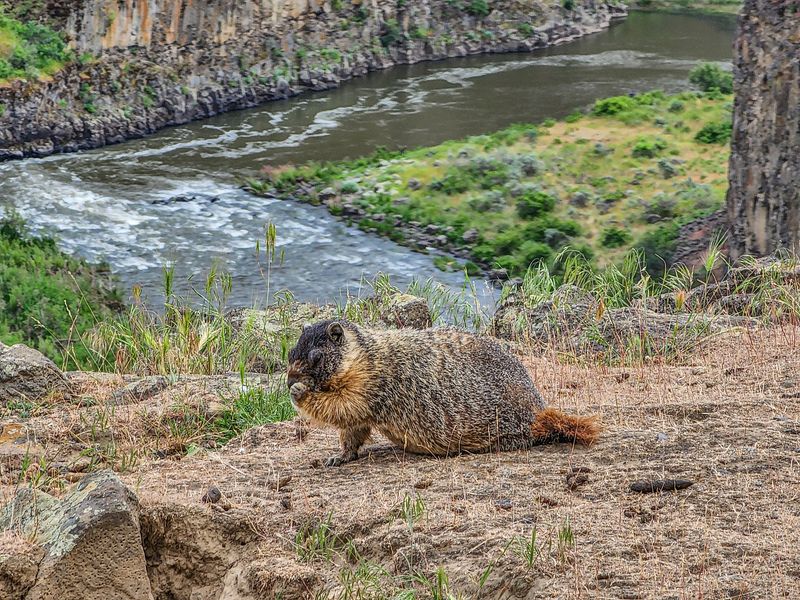
Some of the best entertainment here has fur. Yellow-bellied marmots, also called rock chucks, live along the cliffs and often pop up on the rocks.
They look like chunky, sun-loving squirrels with serious nap goals. Watching them scramble across ledges can easily eat up twenty minutes.
Look up, too, because the sky stays busy. Peregrine falcons, golden eagles, and Swainson’s hawks have all been spotted in the area.
Bird watchers come for canyon and plateau species alike. Binoculars are a smart thing to toss in your bag before you leave home.
Now for the less cuddly residents. Rattlesnakes live here and are especially active during warmer months, so watch where you step and stay on the paths.
That’s not a reason to skip the trip. It’s simply a reminder that this is real wild country, not a theme park with fake rocks.
Spring brings another treat with seasonal wildflowers along the rim. The color pairs beautifully with the dark basalt and makes the whole scene feel brighter and friendlier.
Pack A Lunch Because The Picnic Tables Come With A View
Lunch tastes better with a waterfall in the background. Palouse Falls State Park Heritage Site has eight picnic tables, and most of them face the canyon.
One table sits under a shelter and includes two braziers for grilling, but visitors should check current fire restrictions before using them.
The other seven tables are unsheltered, placed to soak up the scenery.
An ADA-accessible picnic shelter and trail make the area easier for more visitors to enjoy. That’s a thoughtful touch in such a rugged setting.
There aren’t restaurants or snack stands inside the park. Bring everything you need, from sandwiches to napkins to that one cookie you swore you’d share.
Water deserves special attention right now. Due to water system maintenance, the park has no potable water available, so pack plenty of your own drinking water.
On hot days, that advice becomes even more important. Shade is limited, and the sun on this open plateau doesn’t mess around.
A relaxed picnic also turns a quick stop into a longer visit. You get more time to watch the light shift on the cliffs, which is pretty much the whole point.
Getting There Takes A Little Planning, And Your GPS Needs Supervision
Typing just Palouse Falls into your phone can send you somewhere wrong. Search for the state park by name, and aim for Palouse Falls Road, LaCrosse, WA 99143.
The park sits near Washtucna in Franklin County, off Highway 261. The last couple of miles follow a gravel road, so take it slow.
Trailers and RVs are not allowed on the access road. Leave the big rig behind and bring a regular vehicle instead.
You’ll need a Discover Pass to park. You can buy one ahead of time or use the automated pay station at the park.
Hours generally run from 6:30 a.m. to dusk in summer and 8 a.m. to dusk in winter. Seasonal closures can happen, so check the park status before you go.
Parking is limited, especially on weekends and holidays. Arriving early helps, and weekday visits usually feel calmer.
Cell service is spotty in the park, so download maps before you lose signal. The park is day-use only, and overnight parking isn’t allowed. Plan to enjoy the sunset and roll out at dusk.