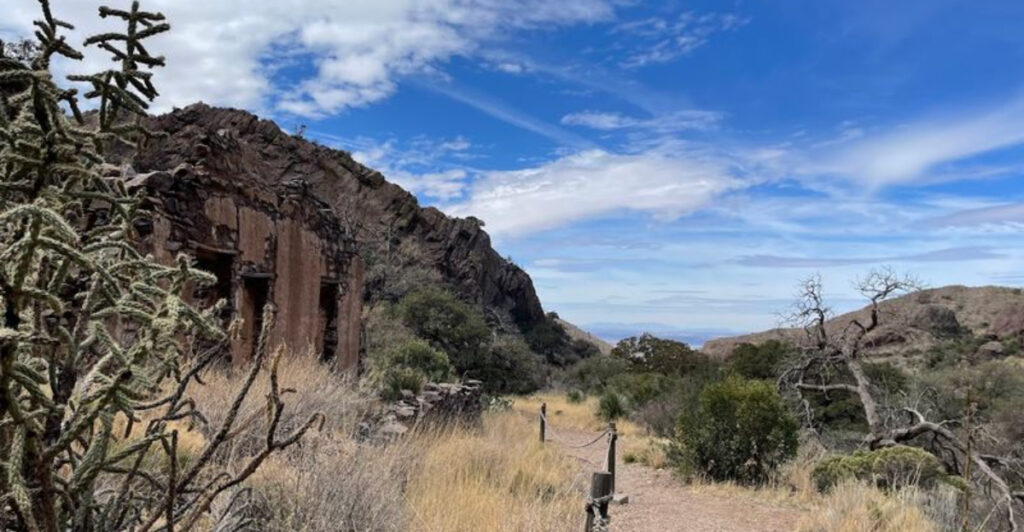
In a quiet corner of New Mexico, a gravel road heads toward the mountains, and the hike seems simple enough at first. Desert path.
Big sky overhead. Then the canyon starts giving up pieces of a much stranger story.
There are crumbling resort walls out here.
Not a tiny cabin, either. A 32-room mountain getaway once stood in this lonely stretch, close to a spring that still runs through the rock.
That detail stopped me cold. Water and ruins in the same canyon?
Come on.
The trail is about 3 miles round trip, so it will not take over your whole day. Still, it sticks with you.
This is not a hike for checking off miles. It is the kind of place that makes you pull out your phone, text a friend, and say, “You need to see this.” No wonder people talk about it in low voices afterward.
Desert Trails Framed By Rugged Mountain Views
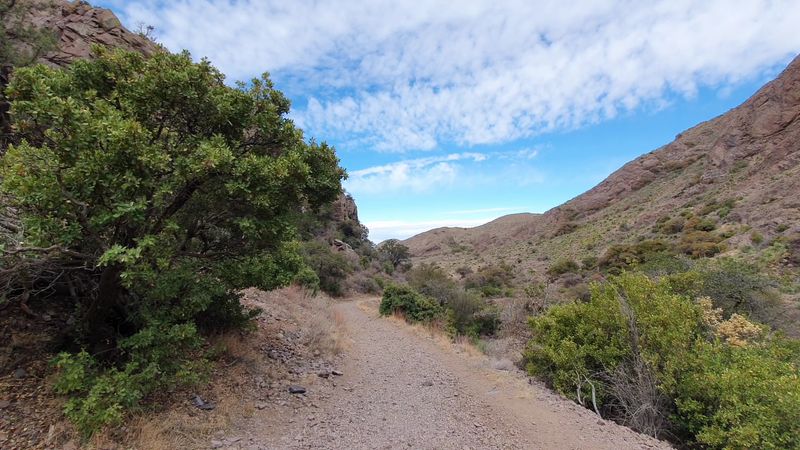
The first thing that stops you in your tracks on this trail is not something you touch or read on a sign, it is the sheer drama of the skyline looming ahead.
The Organ Mountains earn their name honestly, their spires shooting upward like the pipes of some enormous instrument, and they frame every step of the Dripping Springs Trail with a backdrop that photographers chase for hours.
I kept pausing to look back down the canyon just to see how the light shifted across those rocky ridges, and every angle offered something different.
The trail itself is wide, well-graded gravel, originally built wide enough for stagecoaches carrying resort guests up the mountain in the late 1800s, which means even on a steep section you never feel squeezed or off-balance.
The uphill grade is noticeable over the 1.5-mile route, enough to make your legs wake up but not enough to ruin your day.
With the Organ Mountains-Desert Peaks National Monument wrapping around the area, the landscape stays raw and open, giving those mountain views room to breathe all the way to the trailhead. You will find it at Dripping Springs Natural Area, 15000 Dripping Springs Rd, Las Cruces, NM 88005.
Weathered Stone Ruins Beneath Open Skies
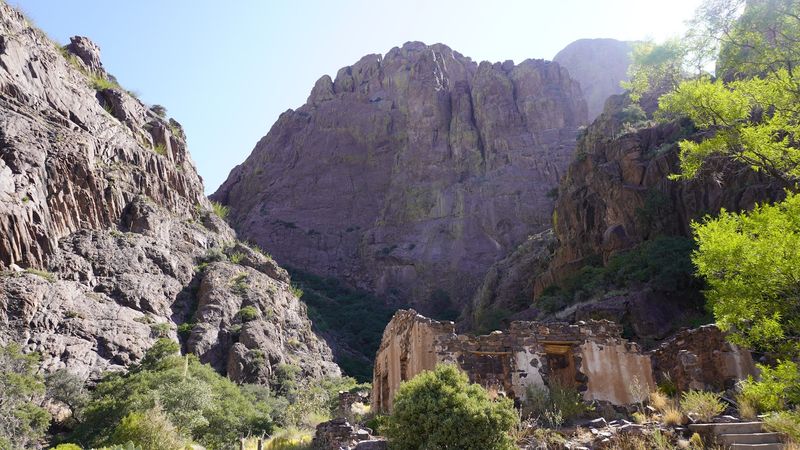
A bend in the trail suddenly brings old walls into view, and they have been standing since before your great-grandparents were born.
The ruins of Van Patten Mountain Camp rise from the rocky slope with a stubborn dignity, their thick stone and adobe walls still holding their shape after more than a century of desert wind and sun.
This remote mountain camp began as a homestead around 1892, opened as a resort by 1895, and eventually expanded into a 32-room hotel by 1906, drawing visitors who wanted to escape the brutal lowland heat in a cooler mountain setting.
Inside the footprint of those rooms, I tried to picture guests arriving by stagecoach, dusty from the road and ready for cool shade and a mountain breeze.
The interpretive signs placed around the ruins do a solid job of filling in the gaps, explaining which walls belonged to which part of the operation without turning the experience into a lecture.
Weathered and open to the sky, these ruins carry a presence that no museum replica could ever replicate, and standing inside them feels like borrowing a quiet moment from a much older story.
A Quiet Spring Tucked Into The Canyon
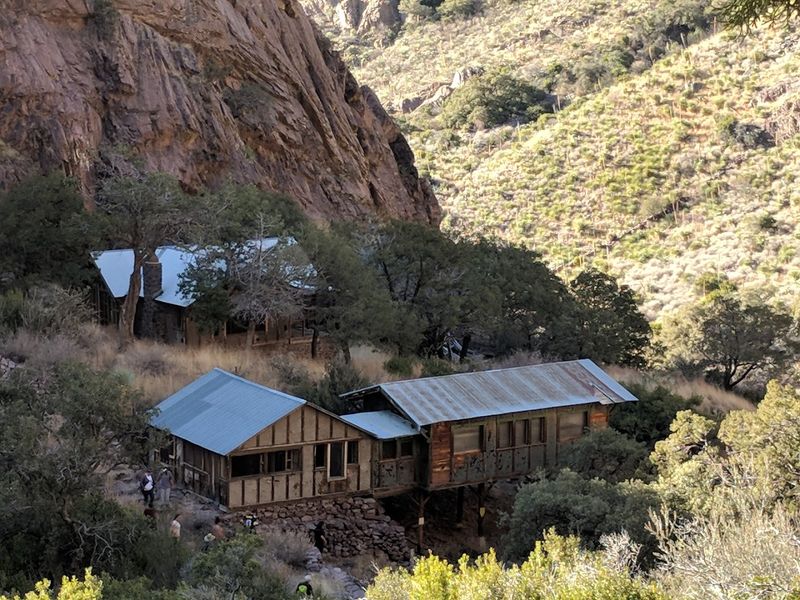
After 1.5 miles of uphill gravel, the sound of water in the middle of the Chihuahuan Desert feels almost impossible, like the mountain is playing a trick on you.
Dripping Springs is an intermittent spring, meaning its flow depends heavily on recent rainfall, so some days you might see water running down the rock and other days you get a quiet, steady drip that taps against stone in a rhythm that somehow feels more meditative than disappointing.
I visited on a dry stretch and still found the spring deeply satisfying, the moisture darkening the stone and feeding a thin line of green moss that traced the water’s path down the canyon wall.
Historically, this spring was the whole reason the resort existed at all, its water harnessed to supply the camp with a reliable source in an otherwise parched landscape.
A small seating area near the spring lets you sit, cool down, and actually listen to the place, which is a luxury on any trail.
The spring tucks itself into the canyon with the kind of quiet confidence that makes you want to stay longer than your schedule allows, and most hikers I saw were in no hurry to leave it behind.
Sunlit Paths Through Chihuahuan Desert Scenery
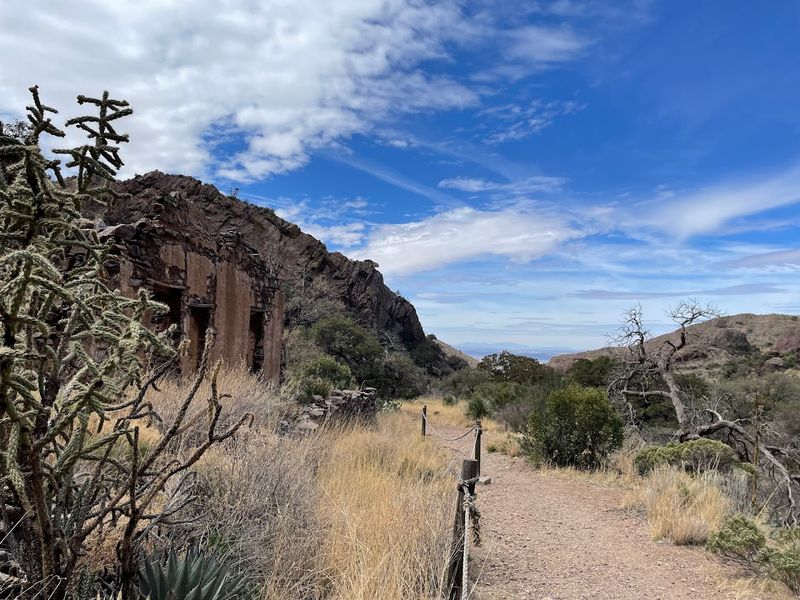
Not every great hike is about the destination at the end, and the trail to Dripping Springs proves that point with every quarter mile of scenery it throws at you along the way.
The Chihuahuan Desert has a reputation for being harsh and sparse, but up close it turns out to be surprisingly layered, with alligator juniper, mountain mahogany, sotol, and scattered wildflowers filling the slopes on either side of the path.
On the morning I hiked, the low sun was cutting across the canyon at a sharp angle, lighting up the pale rock faces and casting long shadows behind each plant, turning the whole trail into something that felt more like a painting than a walk.
The BLM manages this area as part of the Organ Mountains-Desert Peaks National Monument, and the careful stewardship shows in how intact and undisturbed the desert vegetation feels even this close to a well-traveled trail.
Interpretive signs along the path identify plants and explain their roles in the ecosystem, which added a layer of appreciation I did not expect to find on what I had assumed would be a simple out-and-back.
Sunscreen and a full water bottle are non-negotiable here, because that beautiful sunlight is also working hard against you once the morning cool burns off.
Old Resort Walls With Wild West Character
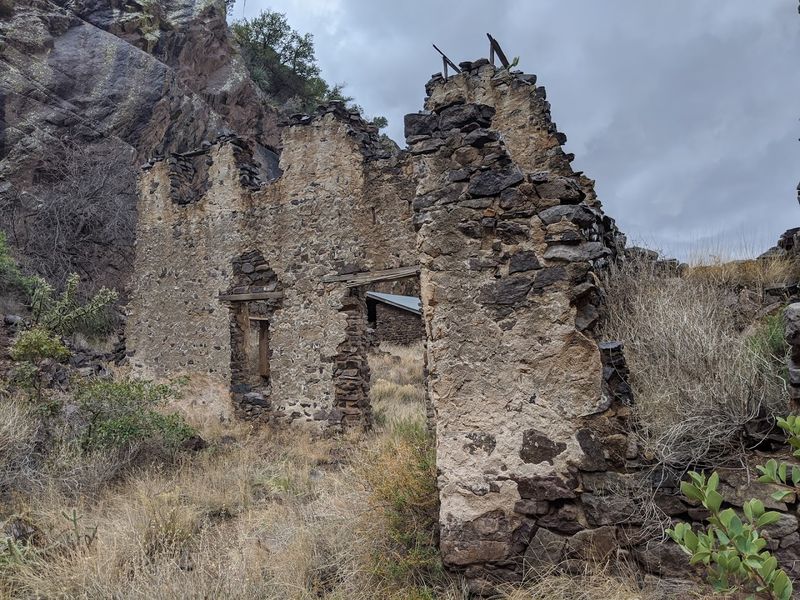
Right next to Van Patten’s camp sits another set of ruins with an even more unusual backstory, the kind that makes you stop mid-step and reread the interpretive sign twice.
Boyd’s Sanatorium was established around 1904 as a remote mountain health resort. It was specifically meant for patients with tuberculosis who believed the dry mountain air of southern New Mexico could help them recover.
The idea of traveling to a remote desert mountain retreat for medical reasons sounds strange today, but in the early 1900s, before modern treatments existed, dry elevated air was considered one of the best options available, and southern New Mexico attracted patients from across the country.
The walls of Boyd’s Sanatorium still stand in rough form, and they carry a different energy from Van Patten’s resort ruins, quieter and more serious, as if the stone itself absorbed the weight of the stories played out within it.
I found myself spending more time here than I had planned, reading every sign and trying to piece together what daily life must have looked like for patients and workers in that remote mountainside retreat.
The Wild West character of these walls comes not from drama but from the raw honesty of a place that tried to do something meaningful in a hard landscape and left its mark in stone.
Shaded Corners Along A Historic Mountain Route
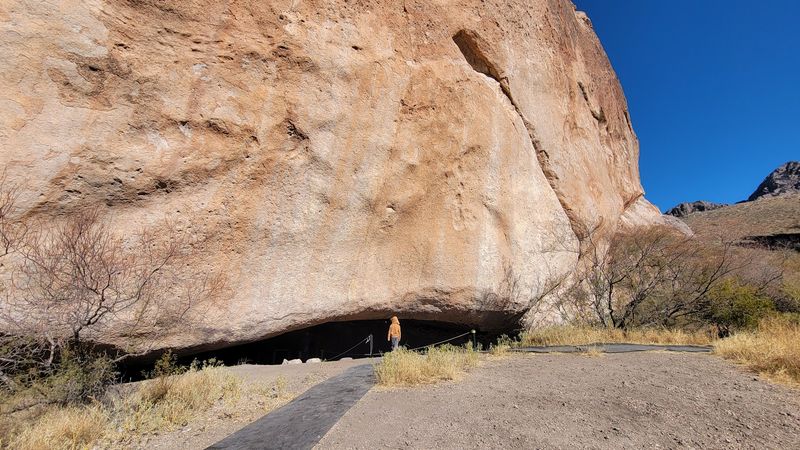
One of the small pleasures I did not see coming on this hike was just how many shaded rest spots the trail offers, which feels like a generous gift in the New Mexico sun.
Several sections of the historic route pass beneath rocky overhangs and clusters of juniper and mountain mahogany that create pockets of cool shade, and a few simple resting spots along the way let you slow down and enjoy them properly without rushing past too quickly.
The trail follows a route with real history behind it, originally developed as a stagecoach road that carried guests up to Van Patten’s resort in the late 19th century, meaning the path itself is a kind of living artifact of the mountain’s past.
It is easy to imagine stagecoaches once rolling over the same ground, and that thought adds a layer of texture to every single step, making the hike feel more like a time-travel exercise than a simple nature walk.
The coolest shaded corners also tend to be where wildlife lingers, and I spotted a red-tailed hawk riding a thermal above one rocky outcrop while resting near the halfway point.
Hikers who want a cooler, more relaxed pace should start early in the morning. Those shaded stops also make the whole experience noticeably more comfortable and enjoyable.
Rocky Slopes And Desert Plants
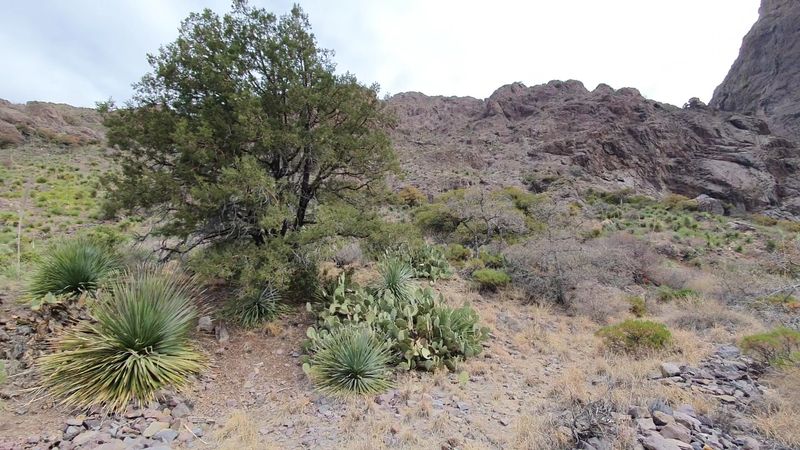
Somewhere around the midpoint of the climb, the canyon opens up just enough to hand you a view that makes the elevation gain feel completely worth every step.
From the trail, the desert floor stretches out in a broad, tawny sweep that extends past Las Cruces and keeps going until the horizon blurs into haze, giving you a sense of just how vast and open this corner of New Mexico really is.
The rocky slopes on either side of the trail are textured with cactus, agave, and the occasional alligator juniper clinging to crevices with the kind of stubbornness that desert plants have turned into an art form.
Desert mule deer are frequently spotted on these slopes, and I watched a small group pick their way across a rocky face above me with a casual ease that made my own footing feel embarrassingly clumsy by comparison.
Golden eagles and red-tailed hawks are also among the larger birds visitors may spot in the area, so keeping your eyes up as well as down is a solid strategy on this trail.
Rocky terrain, layered plant life, and sweeping desert horizons give this hike plenty of visual range. The scenery keeps surprising you right up until the moment you turn around and head back down.
A Peaceful Walk Through Ruins And Wilderness
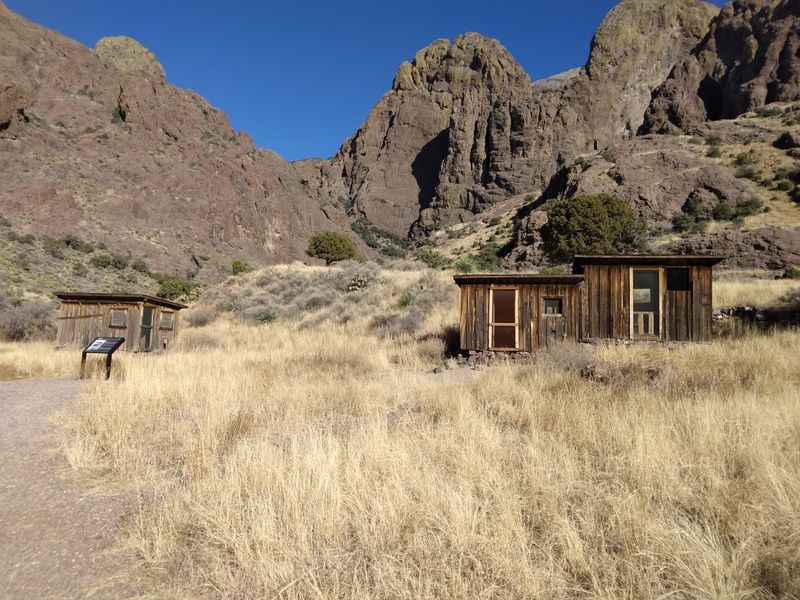
Everything about this place seems designed to slow you down in the best possible way, from the steady crunch of gravel underfoot to the way the canyon walls gradually close in around you as you climb.
The round trip distance of about 3 miles keeps the commitment reasonable, and the mix of natural scenery and historical ruins means the walk never settles into monotony, there is always something new to look at or think about around the next corner.
Families, solo hikers, and small groups all share the trail comfortably, and the atmosphere stays relaxed and unhurried in a way that feels increasingly rare on popular outdoor trails.
A visitor center near the trailhead offers maps, orientation, and historical context, while BLM information can help you understand the ruins and trail before you set off.
The $5 per vehicle day-use fee is one of the better deals in public land recreation, covering parking, restroom access, and 12 picnic sites that make a post-hike lunch a natural part of the plan.
When you are ready to experience all of this for yourself, head to Dripping Springs Natural Area near Las Cruces. The visitor center is open from 8 AM to 5 PM, while the Natural Area is generally open from morning until sunset, with seasonal gate hours posted by the BLM.