Some mornings in New Mexico, you set out chasing nothing more than a good breakfast burrito, and the road hands you something you never expected. Tucked into the quiet northeastern grasslands is a place where you can stand exactly where enormous creatures once wandered, their footprints frozen into solid rock.
It feels like stumbling onto a secret the rest of the world forgot about. Once you see those prints up close, you understand why folks say the long drive out here is worth every mile.
A Prehistoric Marvel Hiding in Northeastern New Mexico
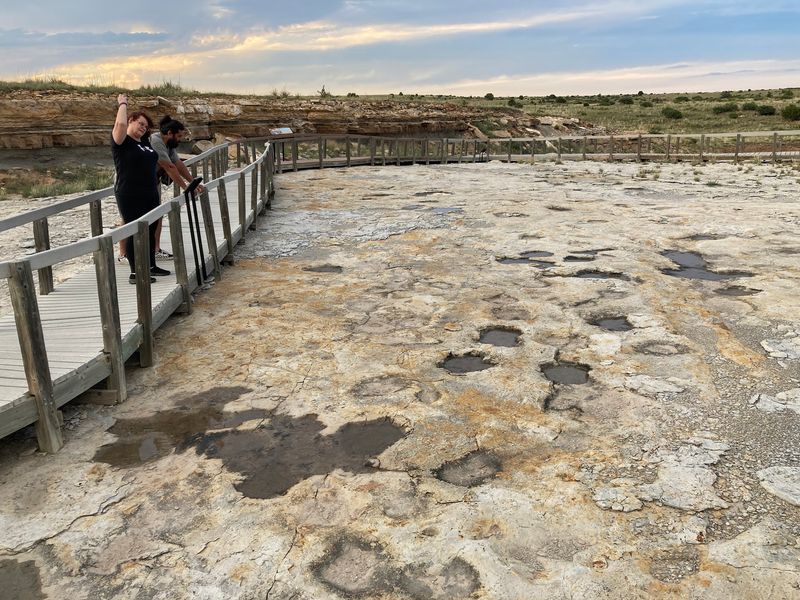
Roughly ten miles off the main highway near Clayton, past rolling grasslands and volcanic country, sits one of the most surprising stops in the whole state. Clayton Lake Dinosaur Tracks isn’t a museum with velvet ropes and glass cases.
It’s the real thing, out in the open, etched into ancient stone you can walk right up to.
The site sits at the spillway of a small dam, where a slab of rock preserves the footsteps of creatures that lived long before anything we know today. Visitors often describe the moment they realize what they’re looking at as surreal, a genuine window into a world that existed a hundred million years ago.
What makes it feel so special is the honesty of the place. There’s no polish here, just weathered rock, informative signs, and a quiet reverence in the air.
People who make the trip tend to call it a hidden gem, and they mean it. You come for curiosity and leave a little proud that you found a spot most travelers speed right past.
The Flood That Uncovered a Buried Secret
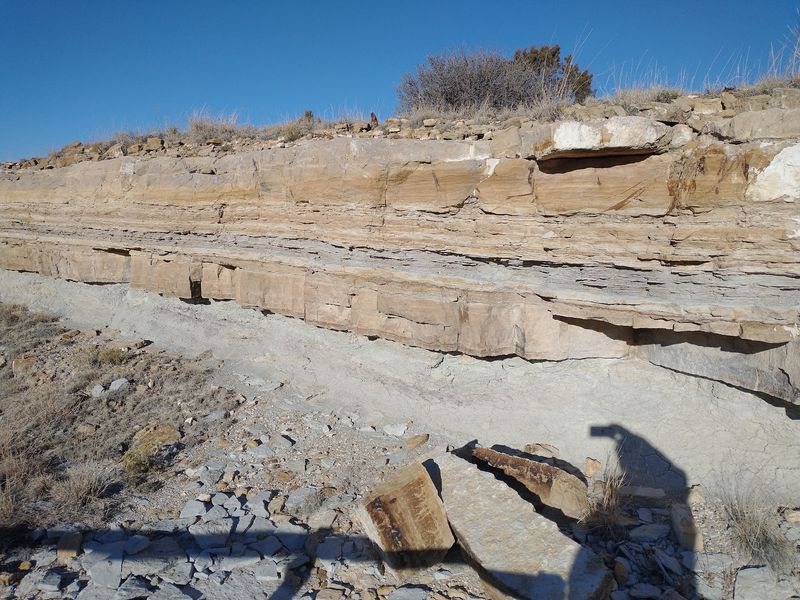
For over a century, this treasure stayed hidden beneath layers of silt and earth, waiting patiently for its big reveal. Nobody knew what lay just below the surface near the dam that had been built decades earlier.
Then, in the early 1980s, nature stepped in as the excavator. A powerful flood swept through the area and washed away the silt covering an earthen spillway, exposing something extraordinary underneath.
What emerged was a sprawling collection of perfectly preserved footprints, later named the Clayton Lake State Park Dinosaur Tracksite.
The story of the discovery is half the fun, and visitors frequently mention how much they enjoy reading about how it all came to light. There’s something poetic about the idea that the same forces of water and weather that shaped these tracks eons ago were the very forces that revealed them again.
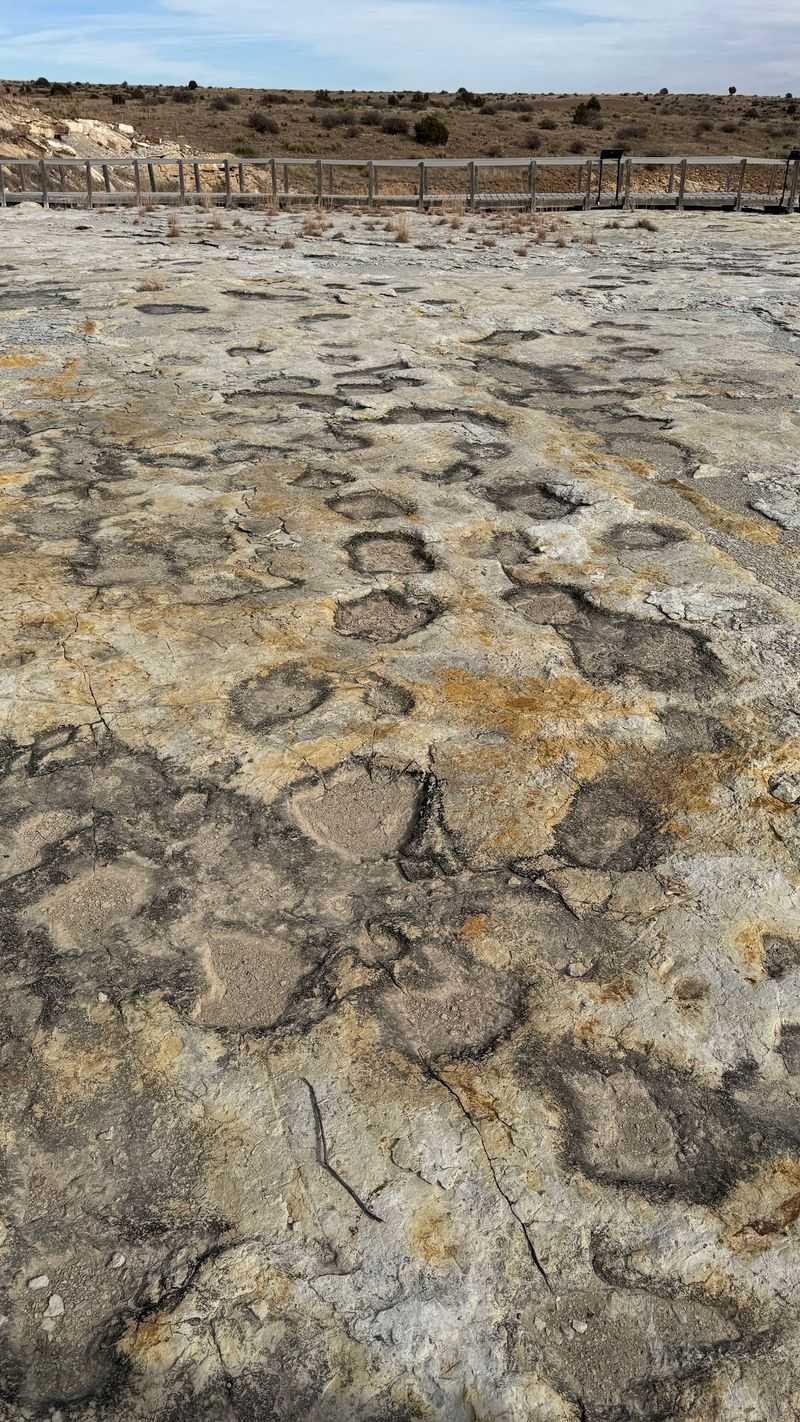
This wasn’t a modest handful of prints either. The site holds more than 500 individual footprints, with some counts suggesting as many as 800, making it one of the richest and best-preserved track sites open to the public anywhere in the United States.
Footsteps From 100 Million Years Ago
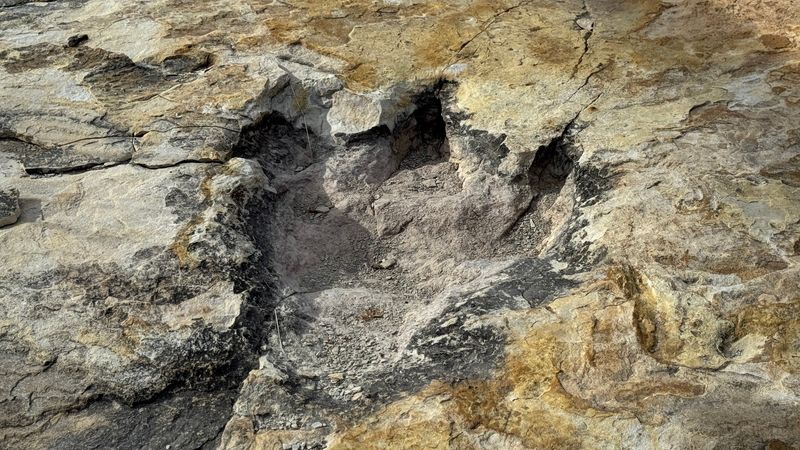
Peer down at one of these impressions and you’re staring at a moment captured roughly 100 million years ago, back during the Cretaceous Period. That’s a stretch of time so vast it’s hard to wrap your head around.
Most of the tracks here, close to 90 percent of them, belong to ornithopods. These were large, two-legged plant-eaters, and paleontologists believe they may have resembled the Iguanodont family.
The size range is remarkable too, from a one-foot-long youngster to a towering thirty-foot adult, all leaving their mark in what was once soft mud.
Standing beside prints of such different sizes gives you a strange sense of a family or a herd passing through together. It turns cold stone into something warm and alive in your imagination.
People who visit often say the scale of it catches them off guard. You expect a couple of footprints and instead find a busy record of movement, a snapshot of daily life from an unimaginably distant past, still resting quietly beside a New Mexico lake.
The Rare Tail Drag Marks You Won’t See Elsewhere
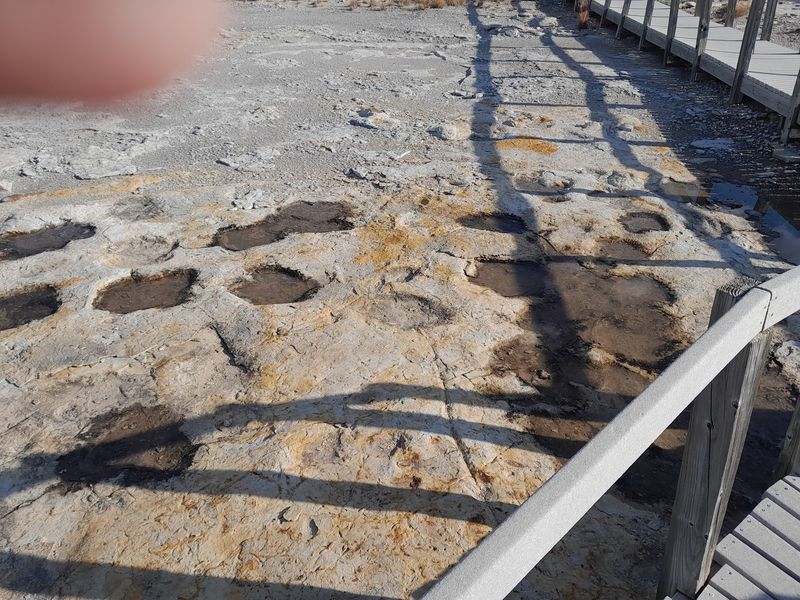
Of all the wonders here, one feature makes even seasoned track-hunters lean in closer. Clayton Lake holds rare tail drag marks, grooves left behind when a dinosaur likely slipped and used its tail to steady itself in the mud.
Long-time visitors treasure these unusual features, and more than a few mention they’ve never spotted anything like them anywhere else. The idea of a giant animal stumbling and catching its balance makes the whole scene feel wonderfully real and unrehearsed.
There’s also a deep footprint some describe as belonging to a hesitating dinosaur, as if the creature paused mid-step before deciding where to go. Alongside the tracks you’ll find ancient ripple marks and even the traces of worms in the old mud.
All these tiny details add up to a full snapshot of a living, breathing environment rather than a static display. Guests frequently note how sharp and clear certain prints appear, with toe impressions still crisp after all this time.
It’s the kind of detail that turns a quick stop into a lingering, thoughtful visit.
The Walk Out to the Ancient Shoreline
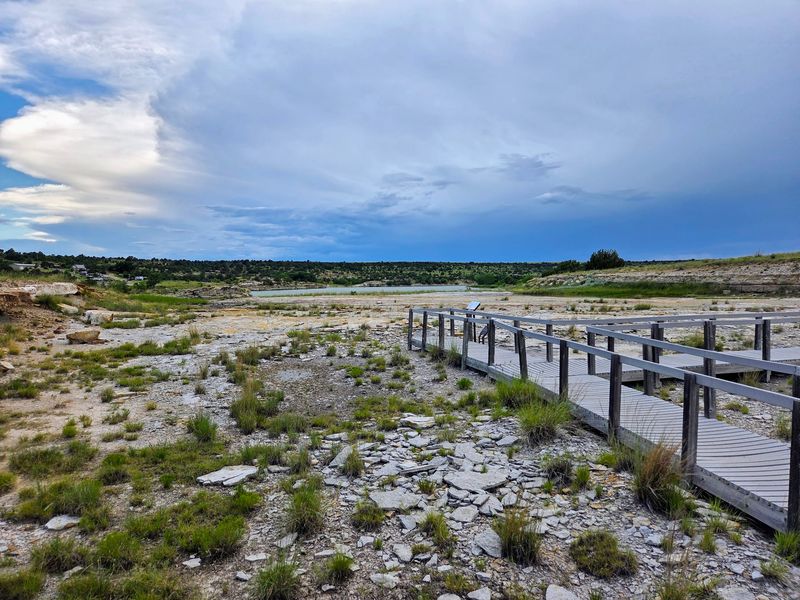
Getting to the tracks is a small adventure of its own. From the parking lot, a trail of roughly a quarter to half a mile leads you straight down toward the spillway where the footprints wait.
The path is manageable but comes with a bit of an uphill stretch, so regulars suggest proper shoes and maybe even a walking stick. Along the way you might spot local wildlife, which only adds to that sense of stepping into wild, open country.
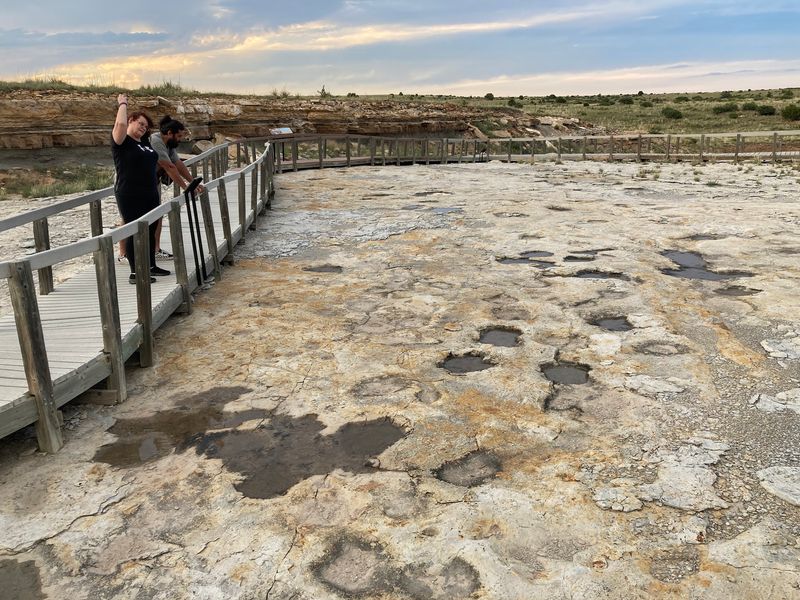
Once you arrive, a sheltered observation area with a boardwalk and informative kiosks gives you a comfortable perch for studying the imprints. Many visitors appreciate how clearly everything is labeled, with signs explaining exactly what you’re seeing at each spot.
A few folks note the walkways have aged and could use some updating, so watch your footing in spots. Even so, most agree the short trek is entirely worth it.
There’s a quiet satisfaction in the walk itself, a chance to slow down and prepare your mind for the strange, marvelous thing waiting at the end of the trail.
Chasing the Perfect Light on the Tracks
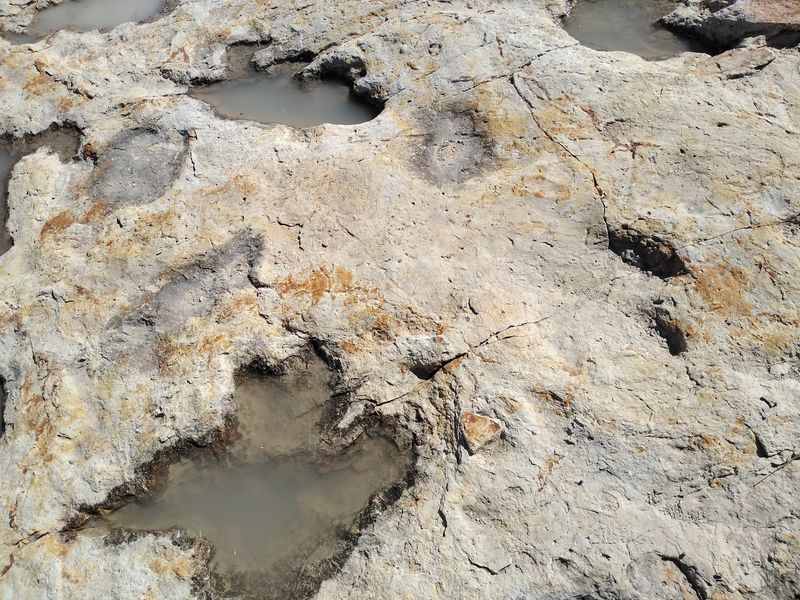
Timing your visit can make all the difference between a good look and a jaw-dropping one. The tracks show up best when the sun sits low in the sky, either in the morning or late afternoon, casting long shadows that trace the contours of each print.
One visitor shared how arriving about an hour after sunrise in February put the tracks in the shadow of the east bank, which helped the details pop. That raking light is the secret weapon for really seeing the depth of these impressions.
Weather plays a role too. Several people mention that after a good rain, the prints become far more defined, since the depressions can otherwise fill with sand and sediment that soften the outlines.
So if you catch the site on a bright midday with debris in the tracks, don’t be discouraged, and don’t judge the place by that single glimpse. Come back when the light is kind or the ground is freshly rinsed, and the same stone reveals a whole new level of clarity that makes the trip unforgettable.
More Than Footprints: The Lake and Campground
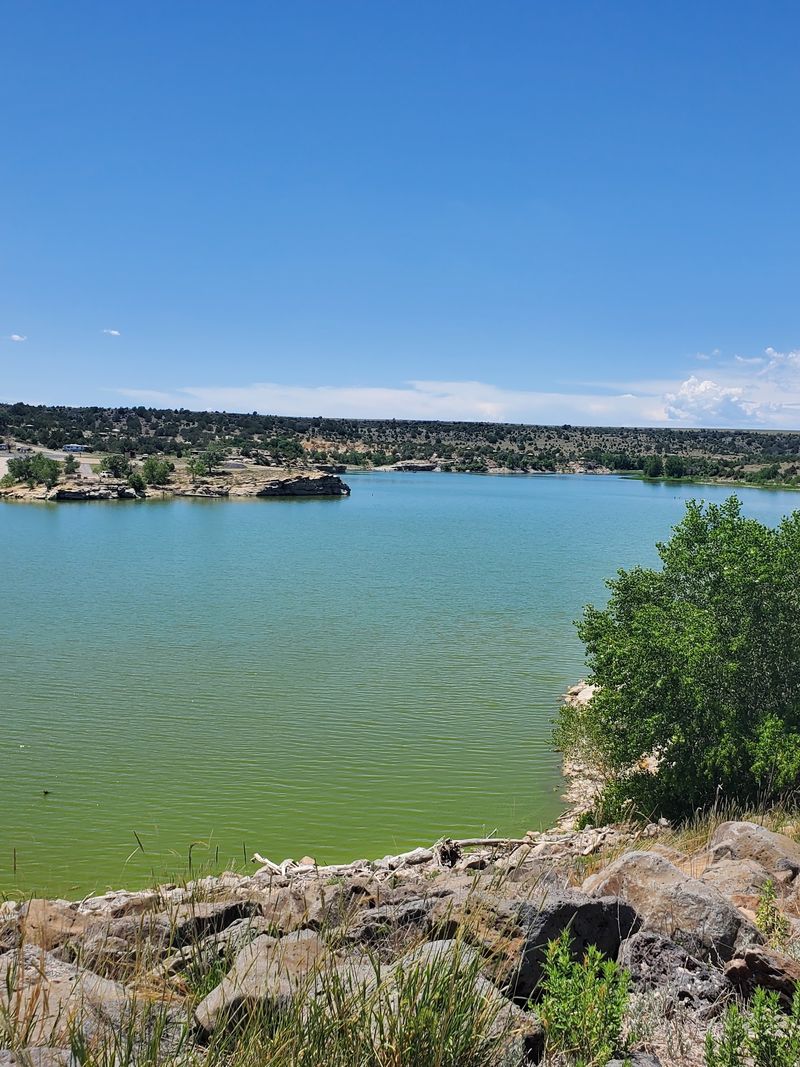
The dinosaur tracks may steal the headlines, but the surrounding park quietly earns its own fans. The 170-acre reservoir draws anglers hoping to land a trophy bass, and visitors describe the lake setting as starkly beautiful against the open landscape.
Campers find plenty to love here as well. There’s a small campground with electric and water sites, and some guests happily choose quieter dry-camping spots to soak up the solitude.
Regulars mention showers in the restrooms and a grill at every site, little comforts that make an overnight stay easy.
Wildlife adds to the charm. Early risers report birds in abundance, including eagles, along with pronghorns roaming the grasslands nearby.
People often speak of the area as peaceful and relaxing, a genuine getaway where you can fish, hike, and unwind far from crowds. Whether you pitch a tent for a night or simply pause to stretch your legs mid-road-trip, the park invites you to linger.
It’s the sort of unhurried place that rewards anyone willing to slow down and stay a while.
New Mexico’s First International Dark Sky Park
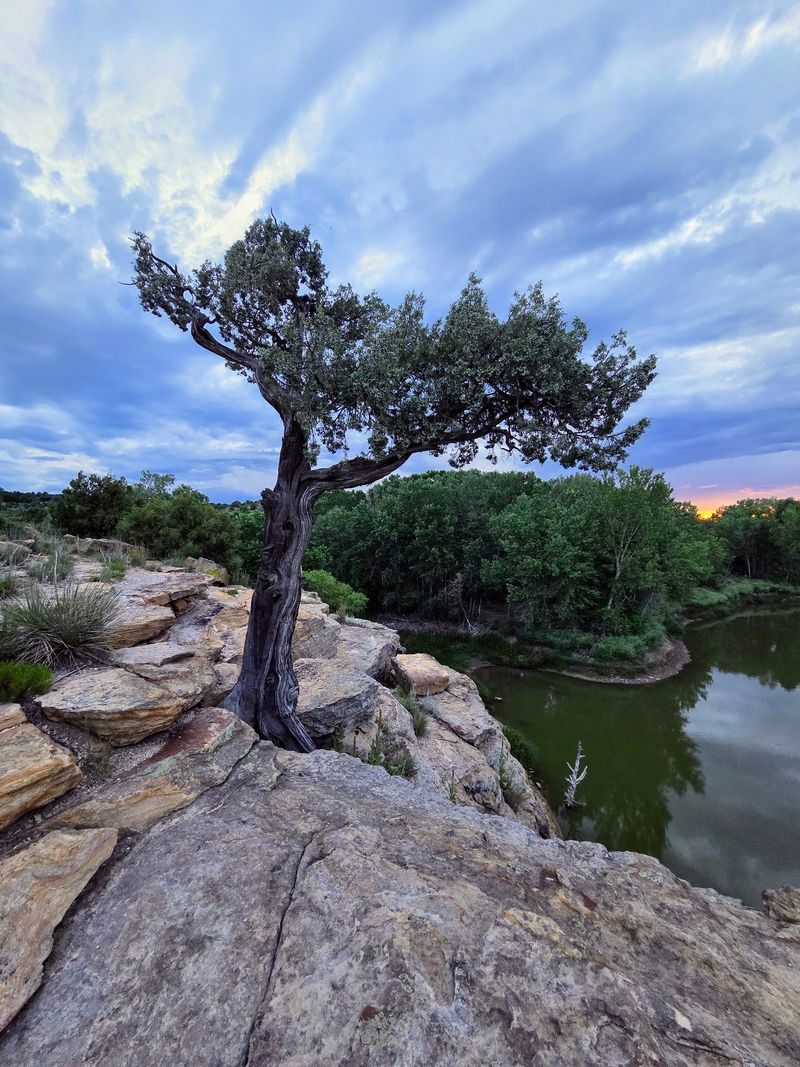
When the sun goes down, the park pulls off a second act that rivals the first. Clayton Lake earned the distinction of being New Mexico’s very first International Dark Sky Park, and the title is well deserved.
Away from city lights, the night sky here opens up in a way most people rarely experience. Some visitors actually came for the stars first and only later discovered the dinosaur tracks, stumbling onto two natural wonders in a single trip.
Stargazers describe the darkness as pure solitude, nothing but the quiet and the glittering sweep of the heavens overhead. It’s an ideal spot to catch a meteor shower, with wide-open horizons and no glare to wash out the view.
There’s a lovely symmetry to it all. By day you gaze down at footprints from a hundred million years ago, and by night you gaze up at starlight that’s been traveling far longer still.
Few places let you touch both deep time and deep space in the same twenty-four hours, and that rare combination makes Clayton Lake truly one of a kind.
Hours, Fees, and How to Find It
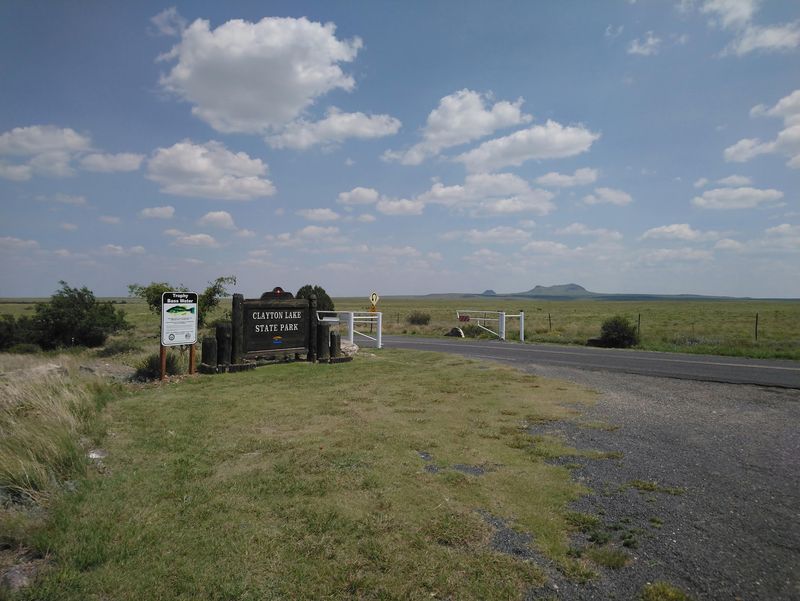
Planning your visit is refreshingly simple. The site welcomes guests every day of the week from 7 AM to 8 PM, giving you a wide window to catch that ideal morning or evening light.
Getting there takes a little commitment. Clayton Lake sits about ten miles off the main highway near Clayton, so it’s not a quick pull-over stop.
Most people find the drive itself scenic, winding through starkly beautiful country that sets the mood before you even arrive.
Entrance runs a modest per-vehicle day fee, with visitors mentioning amounts around five to ten dollars. Nearly everyone agrees it’s a small price for what you get in return.
Out front, life-size dinosaur statues greet arrivals and delight younger visitors, and a little shop offers souvenirs run by a friendly couple. If you have questions before heading out, you can reach the park by phone at 575-374-8808 or check details through the Clayton, New Mexico website.
A bit of planning goes a long way toward making the journey smooth.
Why This Detour Belongs on Your List
Some places stick with you long after you’ve driven away, and this is one of them. Between the ancient footprints, the rare tail drags, the peaceful lake, and those unmatched dark skies, Clayton Lake packs an astonishing amount of wonder into one out-of-the-way corner of the state.
It suits the curious traveler more than the impatient one. Plan on around thirty minutes to take in the tracks, though many linger far longer once the place works its magic.
Bring water, sun protection, sturdy shoes, and a camera, and be ready for wind on breezy days.
Families come away happy, with kids and grandparents alike charmed by the statues out front and the mysteries in the stone. Visitors repeatedly call it a hidden gem and swear the drive is worth it.
There’s also a gentle urgency here, since erosion slowly reshapes the tracks over time. So the next time hunger and curiosity send you down an unfamiliar New Mexico road, let this be your destination.
You’ll leave feeling like you found something rare, and you did.