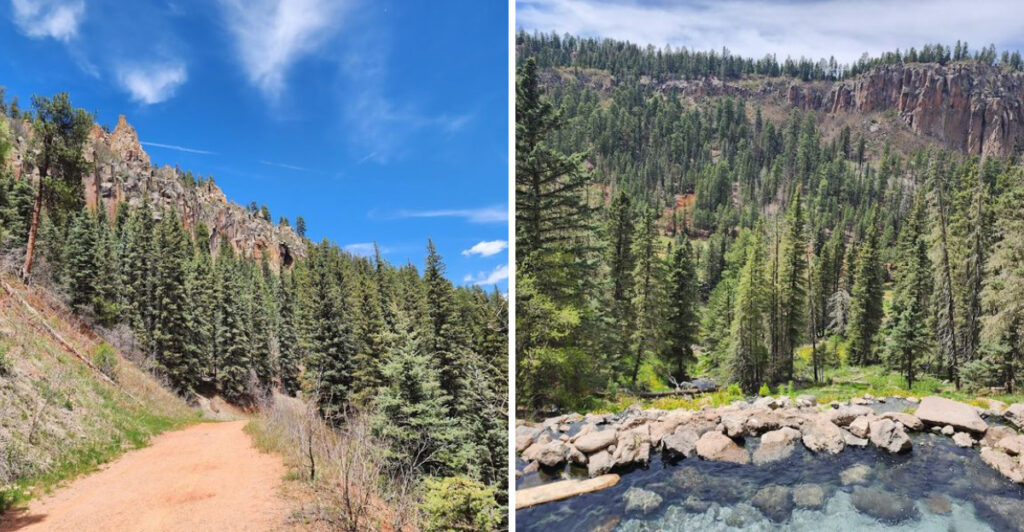
This is the kind of trail people mention once, then you find yourself thinking about it for days. Deep in northern New Mexico, it winds through a forested canyon toward steaming terraced pools fed by geothermal water bubbling up from the earth.
I heard about it from a friend who said the ending felt almost too good for such a short summer hike. That got my attention.
After visiting, I understood why she brought it up with that little “trust me” tone.
The warm pools sit on the hillside with canyon views all around. In summer, getting there can feel surprisingly doable.
In winter, the trail asks for more effort, but the payoff feels even stronger when cold air meets rising steam.
You arrive a little tired and step into the mineral water. Suddenly, the whole hike makes sense.
Keep reading, because people remember this place long after leaving it.
A Forest Path With A Warm Reward
Some trails tease you with a pretty view at the end. This one pulls off something far more satisfying: a soak in naturally heated water after a walk through one of New Mexico’s most beautiful forest canyons.
The path to the hot springs starts past a gate on Forest Road 376, which cuts through the Santa Fe National Forest in the Jemez Mountains.
In summer, when the road is open to vehicles, the hike from the parking area to the springs is a relatively short trek of about 0.6 to 0.7 miles one way, making it accessible even for casual hikers.
You cross a wooden bridge over a river, then follow a trail that climbs steeply near the end, which gives your legs a good workout right before the reward kicks in.
First-time visitors sometimes find the trailhead a little confusing since signage is minimal, but the path becomes clear once you pass the bridge and head uphill.
That final steep push is absolutely worth every step, and the moment the pools come into view is one you will not forget quickly.
Welcome to San Antonio Hot Spring, tucked off Forest Road 376 near Jemez Springs, New Mexico, deep in the heart of the Jemez Mountains.
Steam Rising Between The Pines
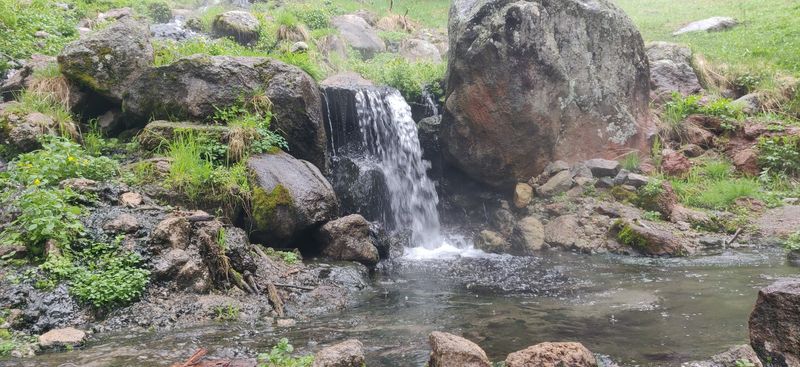
Steam curls up from a hillside pool while pine trees stand quietly all around you. That is exactly the scene waiting at San Antonio Hot Spring.
The hot springs release geothermal water that can emerge from the source at around 129 degrees Fahrenheit, which is hot enough to create a visible mist even on mild days.
Metal pipes at the uppermost pool deliver this superheated water directly into the rock-lined basin, creating a constant flow that keeps the pools fresh and warm.
That rising steam is not just dramatic to look at, it is also a handy navigation tool when you are approaching from below on the trail, since you can often spot it through the trees before the pools themselves come into view.
Visitors who arrive early in the morning get the full effect, with cool mountain air making the steam even more visible and the entire scene feeling almost otherworldly.
The contrast between the chilly forest air and the warm water is part of what makes this spot so memorable, turning a simple soak into something that feels restorative.
Every season frames that steam differently, but it never loses its power to stop you in your tracks.
A Hillside Soak Surrounded By Trees
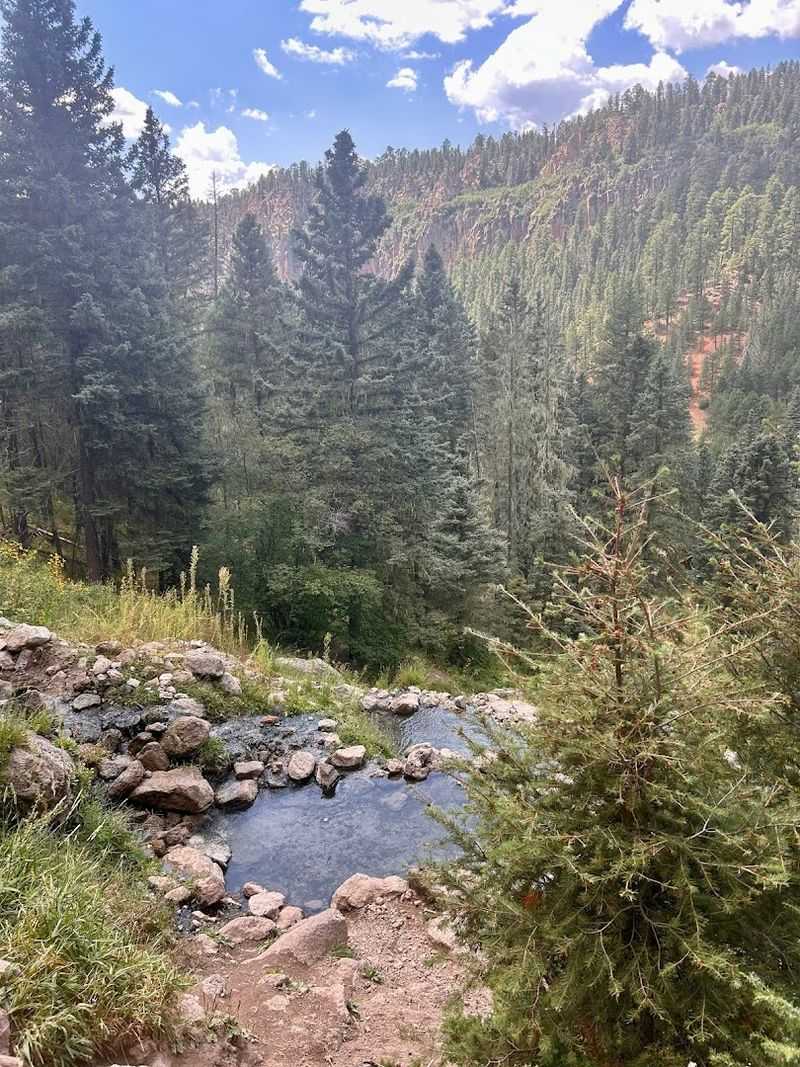
These pools sit on a hillside instead of a flat valley floor. That makes the soak feel genuinely elevated, both literally and in atmosphere.
The hot springs at this location are built up in a series of primitive, terraced pools with rock-lined walls, each one sitting slightly lower than the one above it as the geothermal water cascades down the slope.
Upper pools run the hottest, typically between 105 and 110 degrees Fahrenheit, while lower pools cool progressively, giving visitors a range of temperatures to choose from depending on their comfort level.
Pine and fir trees crowd the hillside above and below the pools, creating a natural enclosure that makes the whole setup feel private even when a few other visitors are present.
The rock walls that line each pool were not built by any official agency but shaped over time by visitors who stacked stones to hold the warm water in place, giving the site a handcrafted, organic character.
Sitting in that warm water with tree branches overhead and mountain air all around is the kind of simple pleasure that is hard to replicate anywhere else.
The hillside setting alone makes this one of the most visually striking natural hot springs in New Mexico.
Quiet Pools Above The Forest Floor
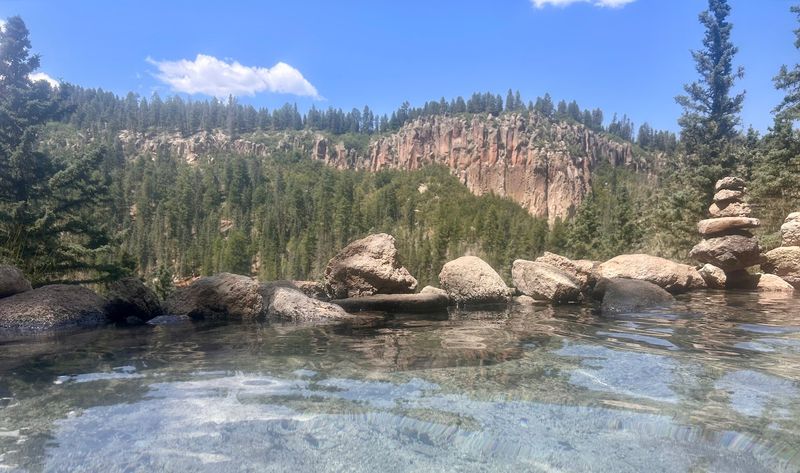
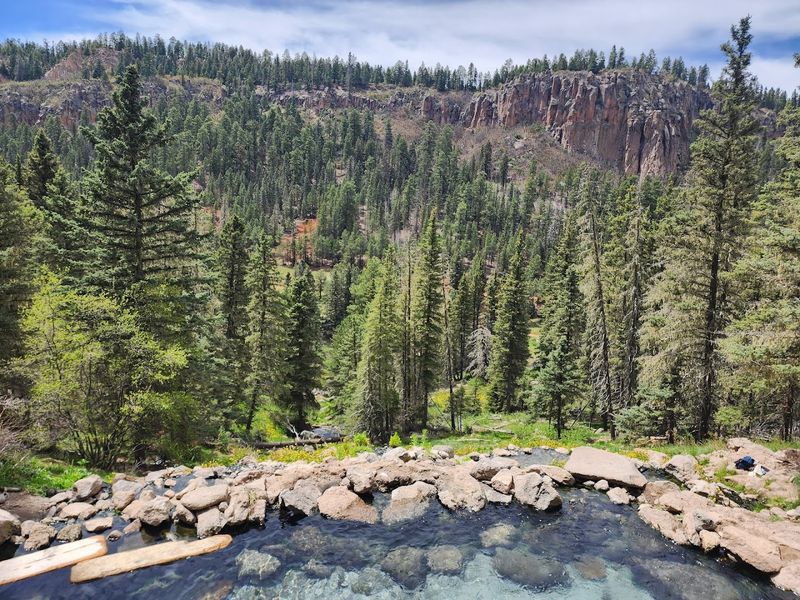
Elevation changes everything at San Antonio Hot Spring. The pools sit above the forest floor, giving each one a slightly different view of the surrounding landscape.
From the upper pools, you can look out over the valley below and watch the river glimmer between the trees, which adds a contemplative quality to the soaking experience that flat-ground springs simply cannot match.
Early arrivals often find the site at its quietest, especially on weekdays, when the forest feels still and the pools have more room to breathe.
The pools themselves are shallow enough to sit comfortably in but deep enough to fully submerge your body up to the shoulders, which is the sweet spot for soaking tired muscles after a long hike.
Because there are no developed facilities at the site, no restrooms, no picnic tables, no trash cans, the atmosphere stays raw and unmanicured in the best possible way.
That absence of infrastructure helps preserve the rustic, off-the-beaten-path feeling, though weekends and busy seasons can still bring plenty of visitors.
High above the forest floor, with warm water and wide views, these pools deliver a quiet that feels earned.
A Scenic Trail Through New Mexico Wilderness
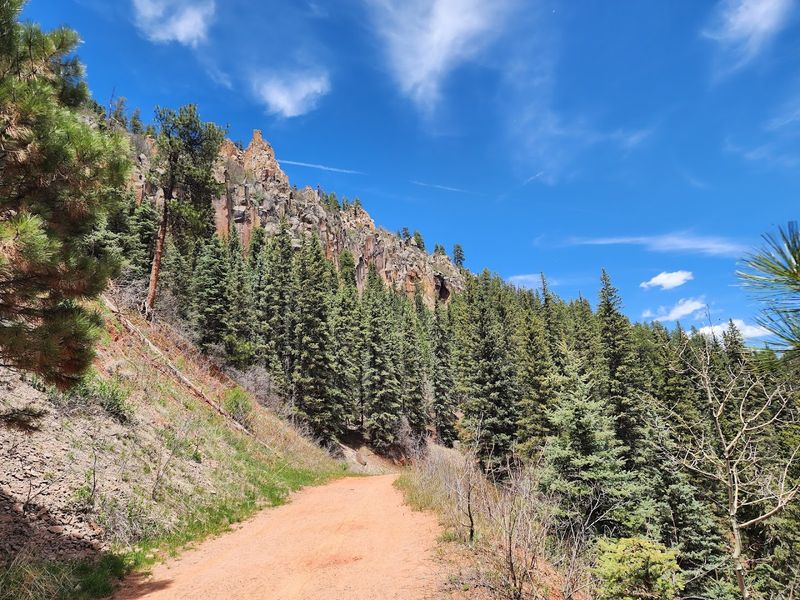
Before you ever reach the water, the trail itself earns its keep. It leads through beautiful New Mexico backcountry that many visitors never explore.
The route passes through the Santa Fe National Forest in the Jemez Mountains, a region known for its dramatic mix of ponderosa pines, volcanic rock formations, and high-altitude meadows that shift color with every season.
In spring and fall, which many visitors consider the best times to make the trip, the trailside vegetation puts on a quiet show of wildflowers, golden aspens, or frost-edged grasses depending on the month.
The path follows the valley floor for much of its length before climbing sharply near the springs, so the terrain keeps things interesting without becoming relentlessly difficult for most hikers.
The drive to the trailhead requires roughly five miles on Forest Road 376, a rough gravel road that moves best at a patient pace and rewards you with increasingly spectacular scenery.
A high-clearance or four-wheel-drive vehicle is strongly recommended for this approach, especially after rain or during shoulder seasons when the road surface becomes unpredictable.
The wilderness surrounding this trail is the kind that stays with you long after the soak itself has faded from memory.
Warm Springs Hidden Beyond The Trail
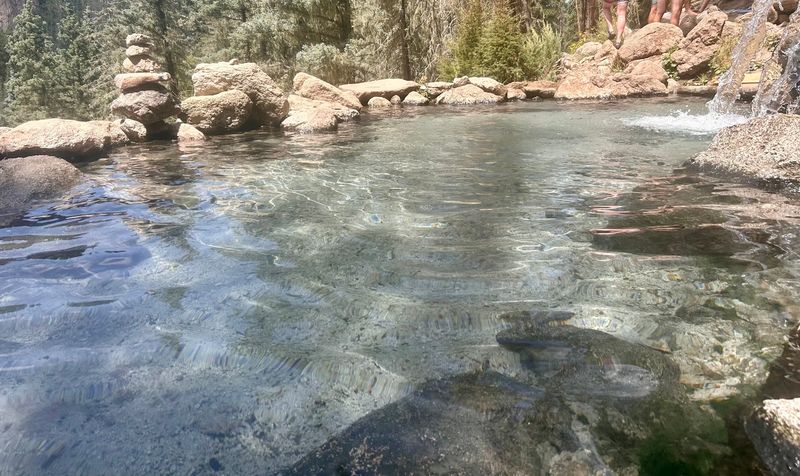
Part of what makes this destination so compelling is the sense of discovery that builds as you move deeper into the forest, because the springs stay completely hidden until you are practically standing in front of them.
There are no roadside billboards, no paved overlooks, and no gift shops pointing the way, just a trail, a bridge, and a hillside that eventually reveals its secret to anyone willing to make the walk.
The geothermal water that feeds the pools originates deep underground, heated by volcanic activity that still shapes this part of the Jemez Mountains, which sit within a broader region of ancient caldera geology.
That volcanic heritage is part of why the water emerges so hot, and it also explains why the surrounding landscape has such a raw, elemental quality that feels different from other forest destinations in New Mexico.
Access to the springs is completely free, which is a rarity for a natural feature this impressive, and the lack of an entry fee keeps the experience feeling like a genuine find rather than a ticketed attraction.
Visitors are expected to pack out everything they bring in, since there are no trash facilities on site, which helps preserve the hidden, unspoiled character of the place.
Finding something this beautiful tucked beyond a trail and a bridge never gets old, no matter how many times you make the trip.
Mountain Views From Natural Pools
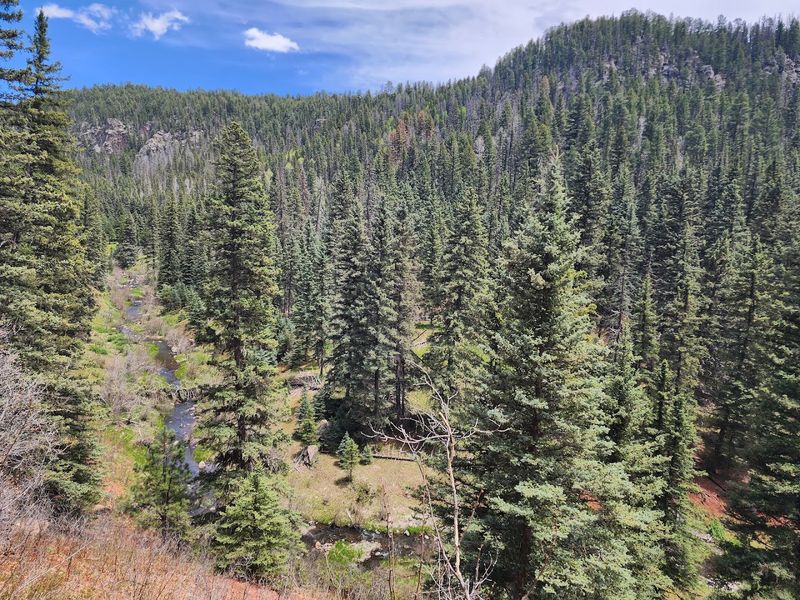
Not every hot spring comes with a view worth writing home about. These pools sit high enough to frame the surrounding mountain valley beautifully.
From the upper pools in particular, you can see the river winding through the valley floor below while ridgelines stack up in the distance, creating a layered landscape that shifts in color and shadow throughout the day.
The valley views are a huge part of the experience, and the hike through the canyon adds its own kind of scenery before you ever reach the water.
Morning light hits the opposite ridgeline first, painting the upper pines in warm gold while the valley below stays in cool shadow, a contrast that makes the early arrival strategy well worth the effort of an early alarm.
By mid-morning, direct sunlight reaches the pools, which some visitors find too intense, particularly in summer when UV levels at this elevation are notably strong.
A hat or a small shade umbrella can be genuinely practical, especially for longer soaks during the brighter middle part of the day.
Few natural experiences in New Mexico combine mountain scenery and warm water quite as effortlessly as this one does.
A Peaceful Soak In The Forest
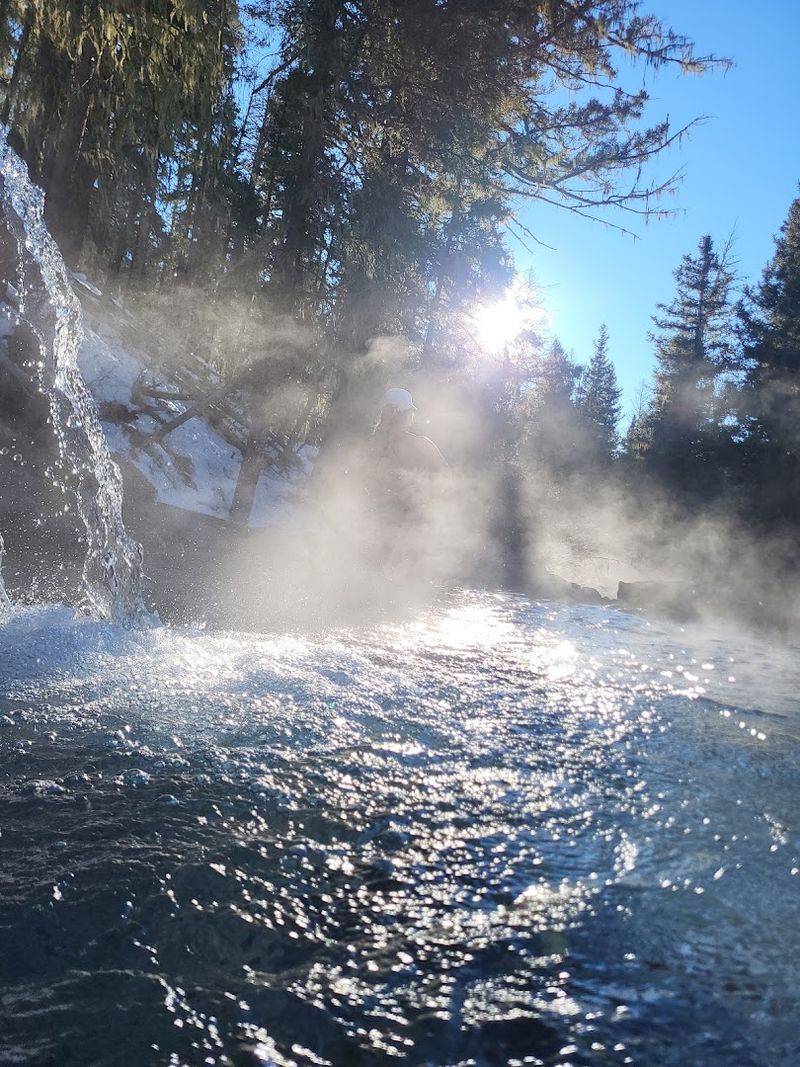
After all the driving, hiking, and final climb, the warm pools feel completely deserved. Wind through the pines makes the payoff even better.
The site is open year-round, so the soaking experience changes dramatically with the seasons. In winter, snow-dusted pines frame the steam, while late spring brings wildflower-edged trails and warm breezes.
Winter and spring visits can come with a significant trade-off: Forest Road 376 is subject to seasonal and wildlife-related closures, so vehicle access is not always available.
When the gate is closed, the approach can turn into a roughly five-mile hike one way from the closure point, which adds up to about ten miles round trip.
That longer hike has its devoted fans, though, with snowy or quiet-season approaches making the warm water feel even more rewarding at the finish line.
Spring and fall tend to offer the most balanced conditions, with mild temperatures, manageable crowds, and scenery that leans into rich greens or golden tones depending on the month.
Early mornings on weekdays are consistently recommended for the most peaceful experience, since weekend afternoons can draw larger groups that fill the limited pool space.
However you time your visit, check current Santa Fe National Forest road conditions before going, then let the forest settle your mind long before you step into the water.