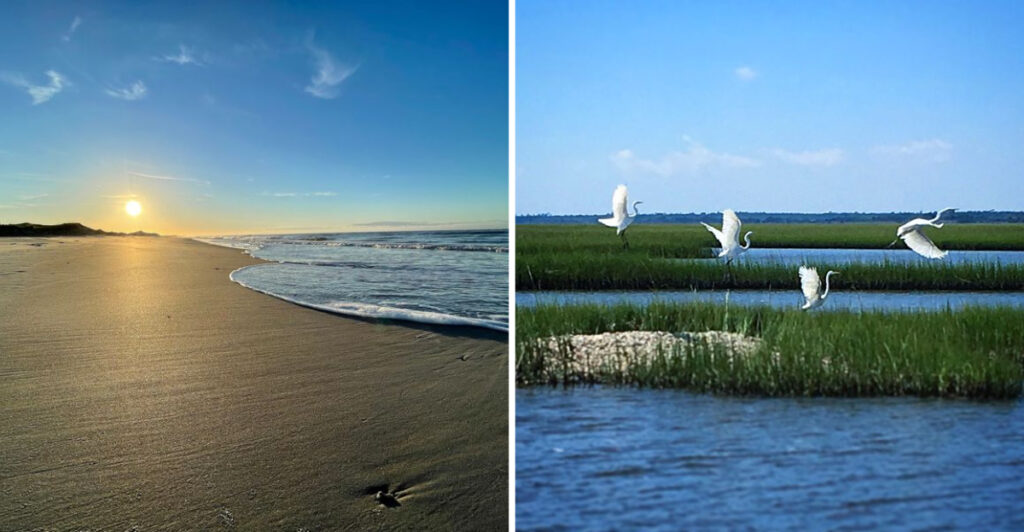
This North Carolina beach begins where the road gives up.
Reaching Bear Island takes a ferry ride or a paddle across the sound, and that small crossing leaves the usual beach clutter behind. Four miles of pale sand wait on the other side, with no hotel towers, loud boardwalk, or parking lot crowding the dunes.
The water changes with the weather rather than posing for postcards. Calm mornings can bring blue-green shallows, while wind and tides create a completely different scene by afternoon.
The trip takes more planning than a quick dash from the car. Bring ferry tickets, plenty of water, sun protection, and only what you are prepared to carry.
Once the mainland slips behind you, the extra effort starts looking like the best part.
Why settle for a beach beside the parking lot when the crossing can lead somewhere this wild?
The Ferry Turns Arrival Into Part Of The Adventure
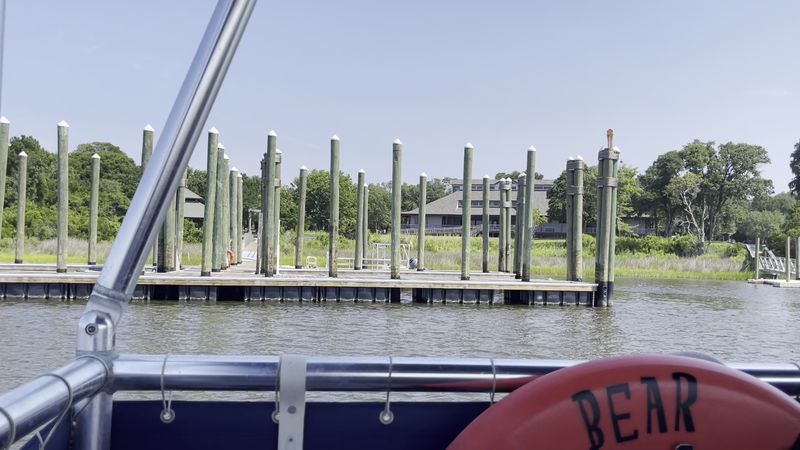
Your beach day begins before anyone gets sand between their toes.
The seasonal passenger ferry leaves from the mainland area of Hammocks Beach State Park and carries visitors across to Bear Island. Service runs from spring through fall, with the busiest schedule during summer and fewer trips in the shoulder seasons.
Tickets are sold at the park on the day of departure. There are no online or advance reservations, so arriving early matters on summer weekends and holidays. Every passenger needs a ticket, including young children who ride free.
The visitor center opens before the first summer ferry, giving you time to buy tickets, use the restrooms, and organize gear without turning the dock into a last-minute scramble.
The short ride changes the mood immediately. Marsh grasses replace roadside scenery, and the island appears without buildings behind the dunes.
Bring only what your group can manage. The ferry carries people and reasonable beach equipment, but every chair, cooler, umbrella, and toy still has to travel from the island dock to the ocean side.
The crossing does not delay the beach day. It gives the day an opening scene.
A Long Walk Builds Anticipation For The Ocean View
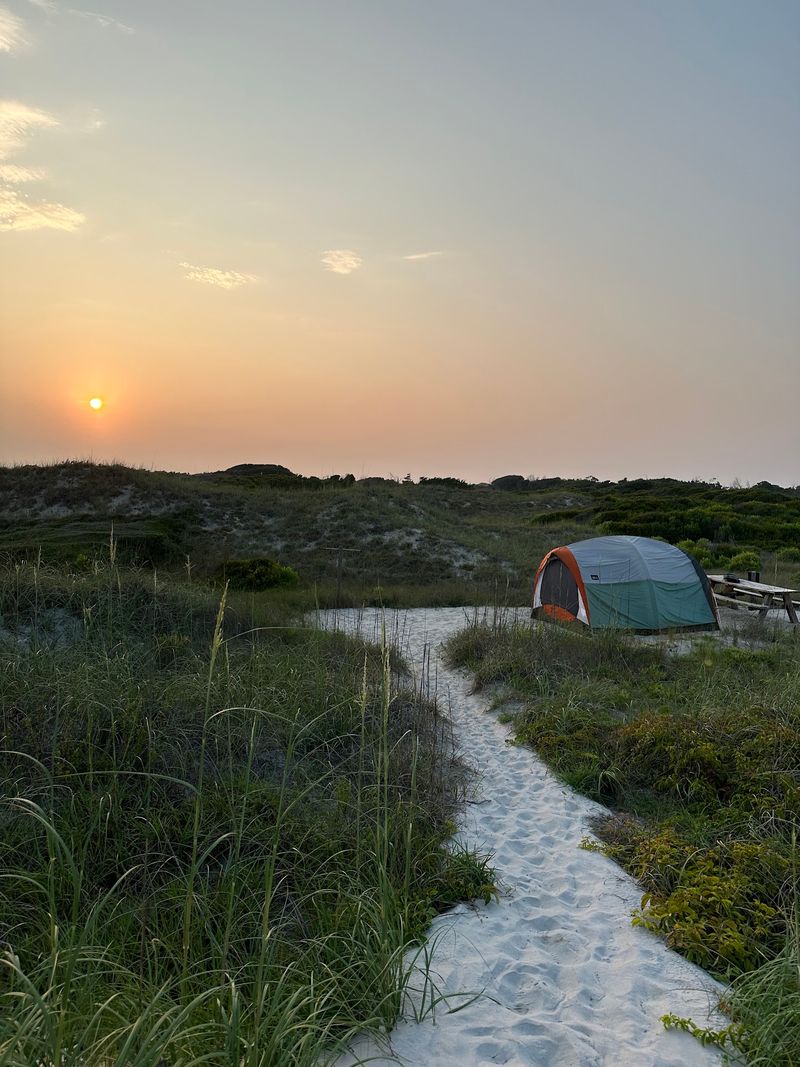
The ferry dock is not the finish line, and your cooler will notice first.
After landing, visitors follow a path across the barrier island toward the beach and bathhouse area. The route passes marsh, low vegetation, sandy ground, and open stretches with limited shade. The distance is manageable, but heat and heavy equipment make it feel longer.
Wear shoes that can handle warm sand and uneven surfaces. Apply sunscreen before leaving the mainland, not halfway across the island. A hat and refillable water bottle earn their space in the bag quickly.
Families benefit from a sturdy folding wagon for chairs, lunch, towels, and suddenly tired children. Keep the load compact enough to maneuver on the ferry and along the path.
Bring your own water even though the island has potable water. Salt air, swimming, and the return walk drain bottles quickly. Your mainland starting point is 1572 Hammocks Beach Road, Swansboro, NC 28584.
Then the trail reaches the dunes, the horizon widens, and the Atlantic finally appears. That reveal is stronger because the ocean has not been visible from the parking lot all morning.
Bear Island makes you carry the picnic. In exchange, it delivers an entrance worthy of the effort.
Four Miles Of Shoreline Make It Easy To Find Your Own Space
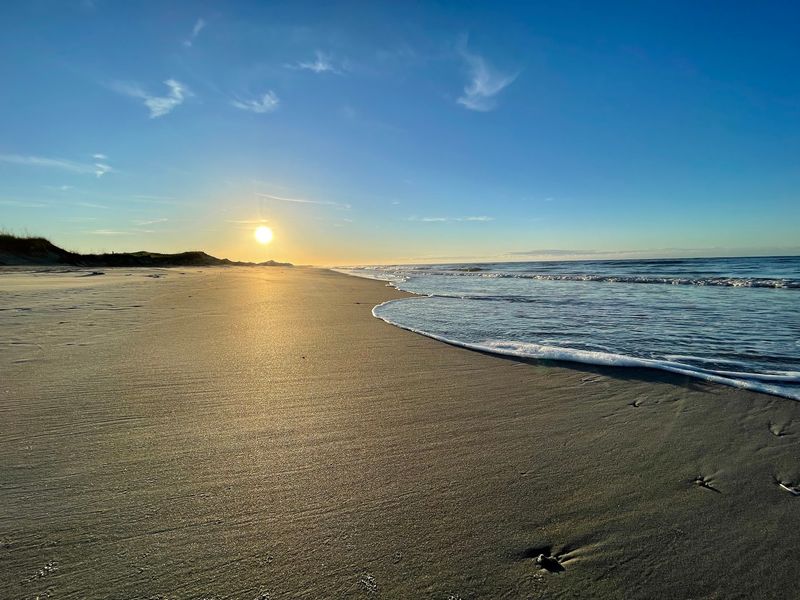
Crowds behave differently when a beach has room to keep stretching.
Bear Island is a four-mile-long undeveloped barrier island within Hammocks Beach State Park. The oceanfront has no strip of hotels, souvenir shops, rental condos, or restaurant patios competing with the dunes.
That missing development changes your entire beach rhythm. Waves, wind, shorebirds, and conversation take over the soundtrack, while the long shoreline lets ferry passengers spread out instead of defending one crowded patch of sand.
Calm conditions can tint the shallows blue-green, but the Atlantic changes outfits without asking permission. Rain, surf, tides, and suspended sand affect the color. Pale sand, natural dunes, and an uninterrupted horizon remain the real show.
Shell hunters can scan the tide line, while walkers have miles of beach available for a longer outing. Leave living creatures where you find them and avoid collecting anything protected or occupied.
Swimming is allowed, and lifeguards serve the protected swim area during the summer season. Lifeguards do not remove rip currents or changing surf, so follow instructions and keep children close.
The island gives you space generously. Treating that space carefully is the price of admission.
Camping Keeps The Beach Quiet After The Last Ferry
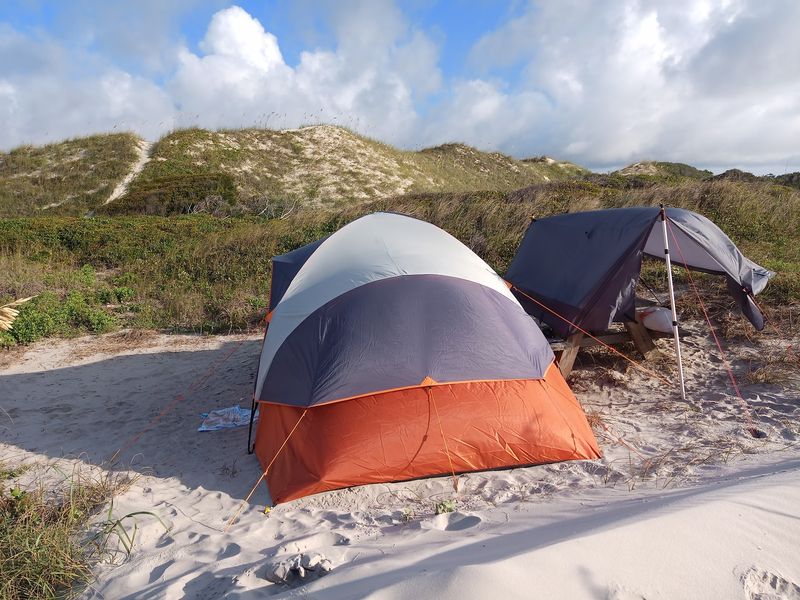
Day visitors leave with the schedule. Campers get the quieter shift.
Primitive campsites on Bear Island allow overnight guests to stay near the ocean without turning the barrier island into a developed campground. Access is by ferry, canoe, kayak, or private boat, and campers arrange their own transportation.
Reservations open within a six-month window. Campers check in before the mainland visitor center closes, collect an overnight parking permit, and carry every item to the site. Late arrivals miss more than sunset, so punctuality belongs on the packing list.
The island bathhouse provides restrooms, showers, and potable water while facilities are open. Campsites remain primitive, so arrive ready for weather, insects, darkness, and everything you pack in.
Sea turtle nesting season brings an important lighting rule. White lights are prohibited on the beachfront from roughly May through October, and campers should use red-lens lights instead. Dark beaches help protect nesting turtles and hatchlings.
Wind changes quickly, insects can be persistent, and campsites offer little shelter. Check the forecast, secure loose gear, and pack layers even after a hot afternoon.
Once the ferry leaves, the island becomes quieter without becoming empty. The waves simply take over the night shift.
Paddlers Reach The Island Through A Different Landscape
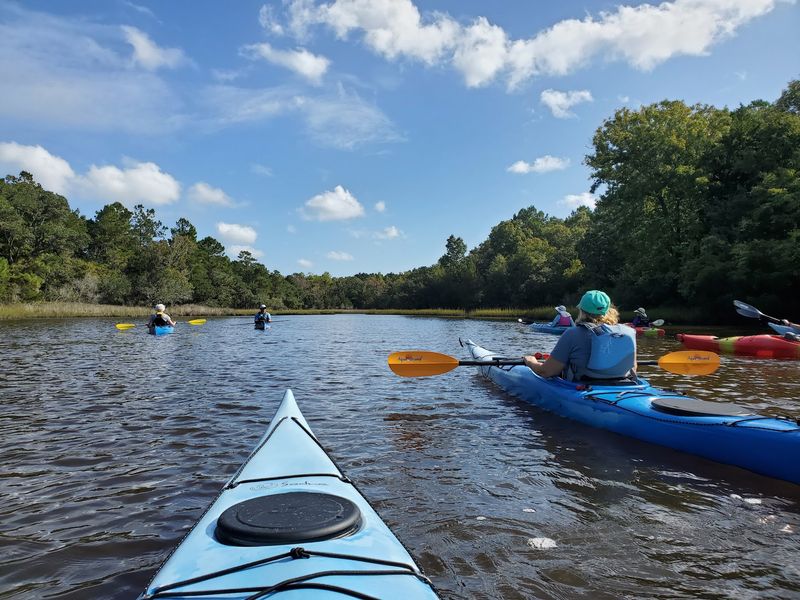
Some visitors buy a ferry ticket. Others decide their arms should earn the view.
Hammocks Beach State Park supports canoeing, kayaking, and paddleboarding through marshes and waterways surrounding its island areas. A private concessionaire offers rentals and guided outings for visitors without equipment.
Paddling to Bear Island is not a fixed one-hour adventure. Route, tide, wind, current, experience, and equipment affect the trip. Conditions that help on the way out may become a headwind or opposing tide on the return.
Check the weather and marine conditions before launching. Wear a properly fitted personal flotation device, secure drinking water and sun protection, and place phones or keys in waterproof storage. Save a park paddle map instead of relying on cell service.
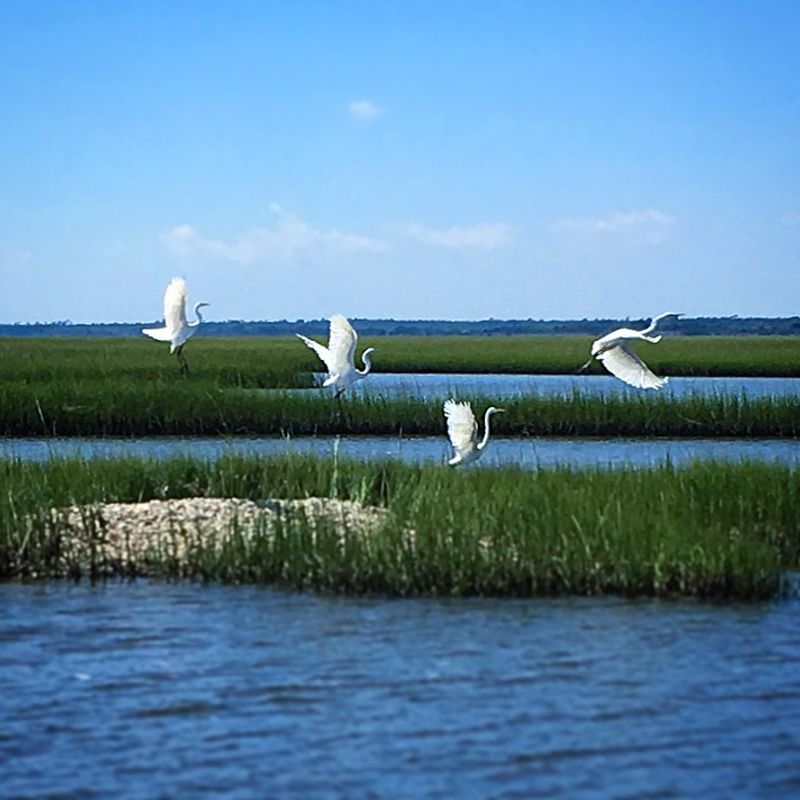
The marsh route offers a lower, quieter view than the ferry. Herons, egrets, other coastal birds, oyster beds, tidal creeks, and maritime vegetation can turn transportation into the main event. Wildlife sightings are possible and should be enjoyed from a respectful distance.
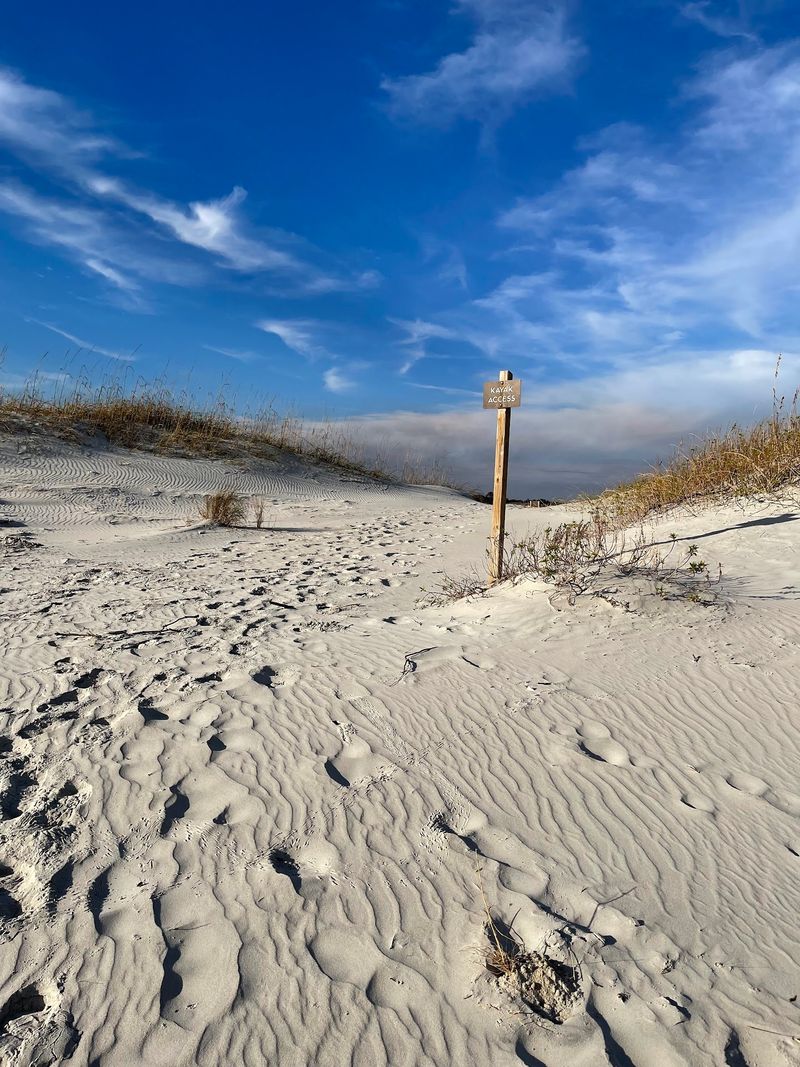
Paddlers also need to understand landing rules. There is no public docking on Bear Island, and specific sound-side campsites require access by canoe, kayak, or private boat.
The ferry gets you there efficiently. A paddle lets the landscape introduce itself one channel at a time.
Wildlife Protections Keep The Island Looking Wild
Quiet dunes are often busier than they appear.
Bear Island protects barrier-island habitat used by shorebirds, sea turtles, and other coastal wildlife. Loggerhead turtles nest above the high-tide line, while birds use sandy and grassy areas that may look like shortcuts.
Stay out of closed nesting zones and follow signs, fencing, and ranger instructions. Walking through dunes damages vegetation that helps hold sand in place, and approaching nests or wildlife can disrupt behavior at a critical time.
Keep food controlled and never feed animals. Pack out everything you bring, including wrappers, fishing line, broken toys, and the tiny plastic corners that escape snack bags.
A lightweight trash sack takes little room and keeps your lunch packaging from remaining behind.
Fishing is permitted, but anglers need the proper license and must follow size, season, and gear rules. Pack out every hook and strand of line because wildlife should not inherit yesterday’s fishing trip.
The island includes maritime forest, marsh, dunes, and ocean beach. Each zone handles wind, salt, flooding, and wildlife differently.
Bear Island stays beautiful because visitors are allowed in without being allowed to take over.
A Smart Packing List Prevents An Island Meltdown
Remote beaches are peaceful until someone realizes the sunscreen is still in the car.
Start with the essentials: water, food, sun protection, towels, suitable shoes, insect repellent, basic first aid, and a bag for trash. Add an umbrella only when you can secure it in coastal wind and carry it across the island.
The seasonal concession stand sells refreshments and accepts cash only, but its hours do not always match the ferry schedule. Treat it as a welcome backup rather than trusting it with lunch, water, and everyone’s patience.
The bathhouse, restrooms, showers, potable water, lifeguards, and concessions operate seasonally. Storms, surf, maintenance, or ferry disruptions can reshape the day, so confirm access before loading the cooler and announcing departure.
Cell service may be unreliable, so save the ferry timetable and park map, then choose a return trip well before the final departure. Missing the last boat is a dramatic ending that your beach story does not need.
Keep the group’s gear realistic. A smaller cooler is better than a rolling banquet trapped in soft sand. Count children, bags, and shoes before boarding in both directions.
Bear Island rewards smart preparation with four miles of shoreline, an uncrowded horizon, and the rare pleasure of watching your phone become the least interesting thing in sight.