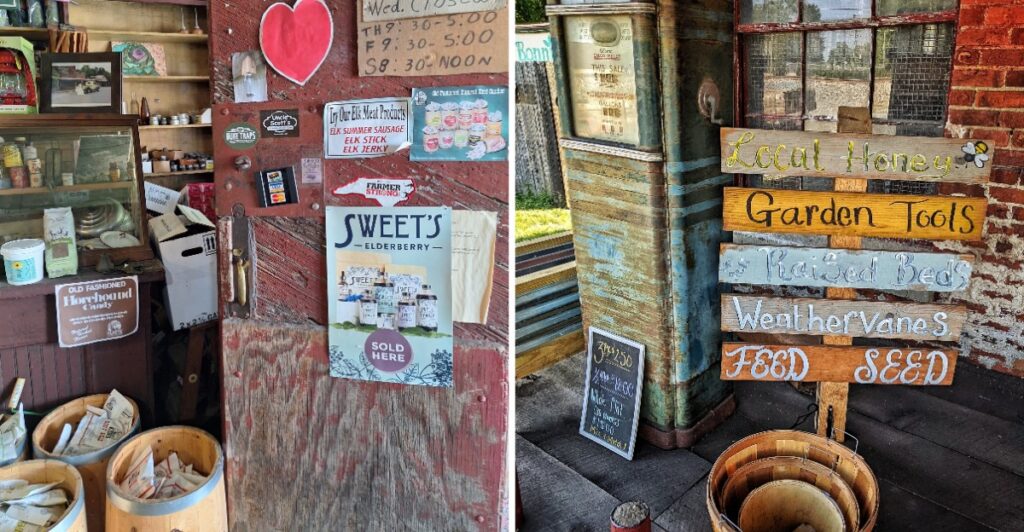
A cash register more than a century old is still taking money here.
That feels like the store winning an argument with time.
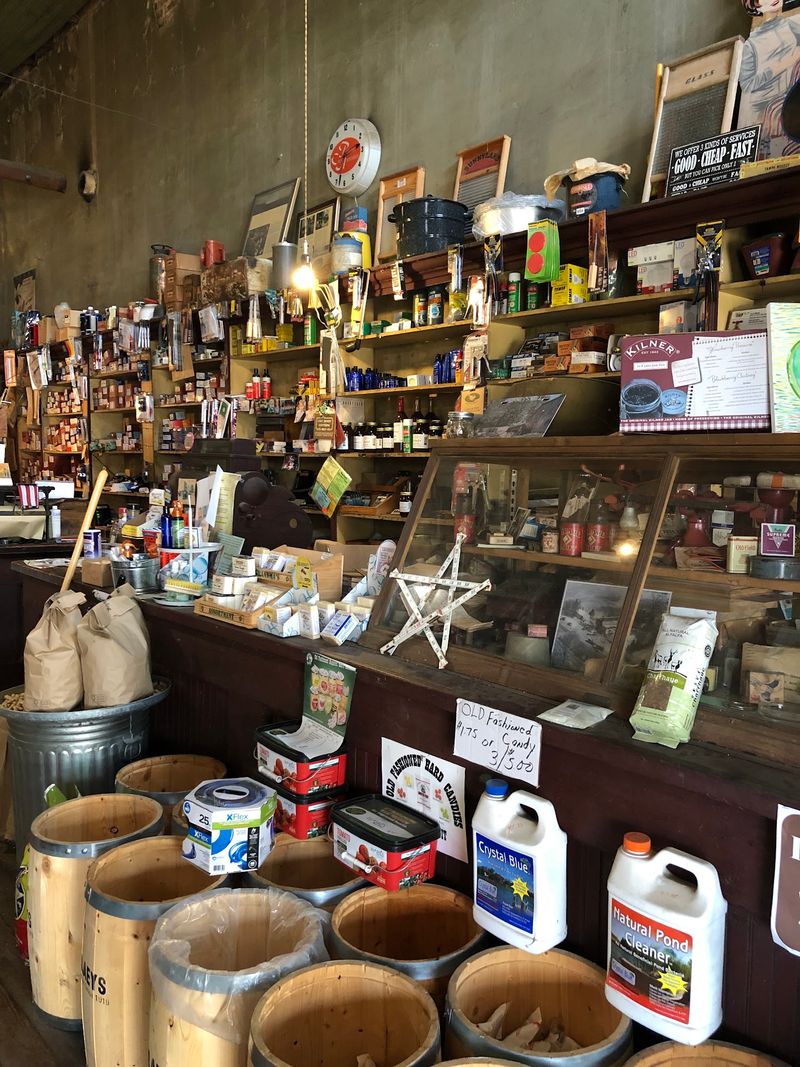
Old-fashioned candy shares space with practical everyday goods, so the shelves can shift from sweet to useful in a few steps.
The family business has been around since 1890. The brick building came along in 1908.
The years show, but not in a dusty museum way.
People still shop here. The old register still works. The candy still disappears.
Somewhere in North Carolina, that kind of stubborn continuity is still part of an ordinary shopping day.
Give the shelves a little extra attention.
You may come in for one thing and leave wondering how socks, cast iron, and candy became such good neighbors.
Old-Fashioned Candy Still Shares Space With Everyday Goods
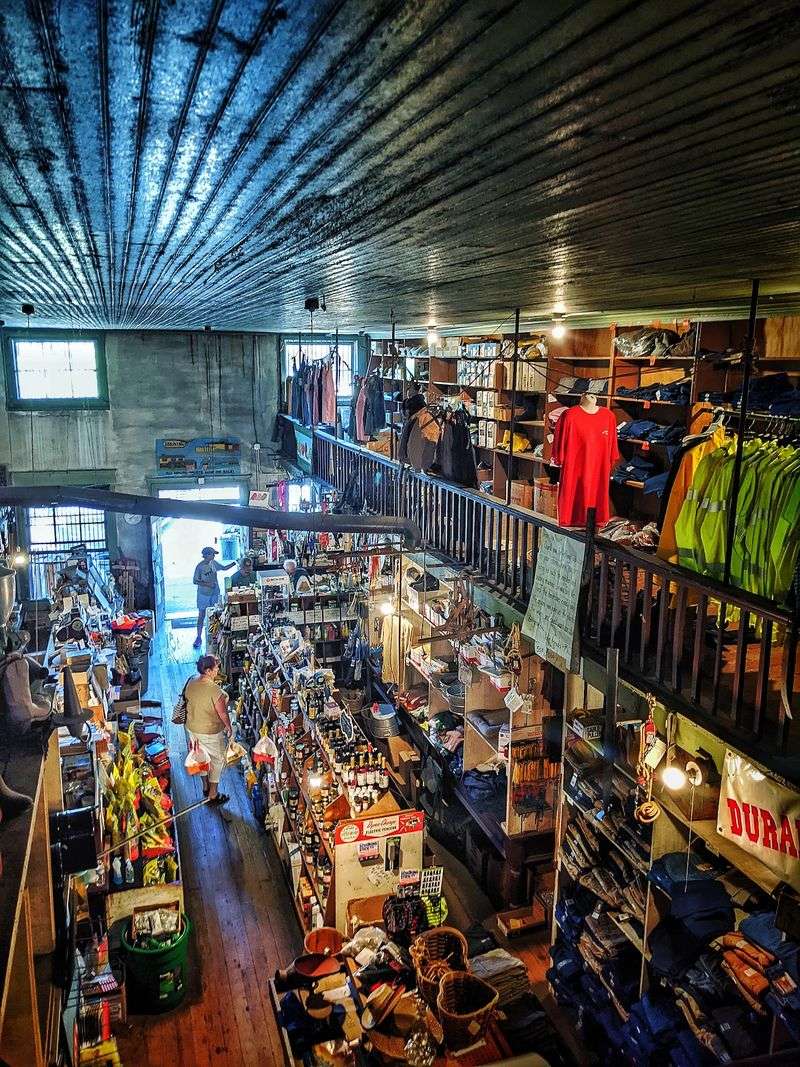
Candy is one of the easiest things to notice, especially if bright wrappers catch your eye before garden supplies do.
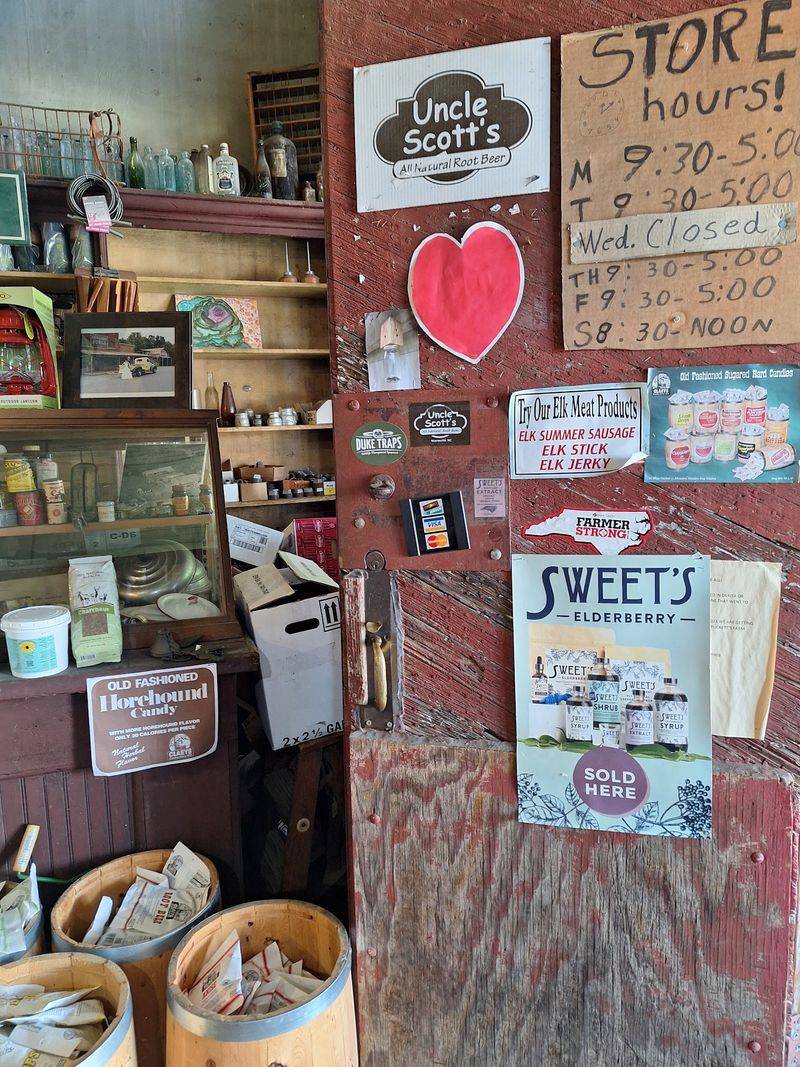
Claeys old-fashioned hard candy was still being sold here in 2025, and candy remains part of the broader mix of snacks and pantry goods associated with the store.
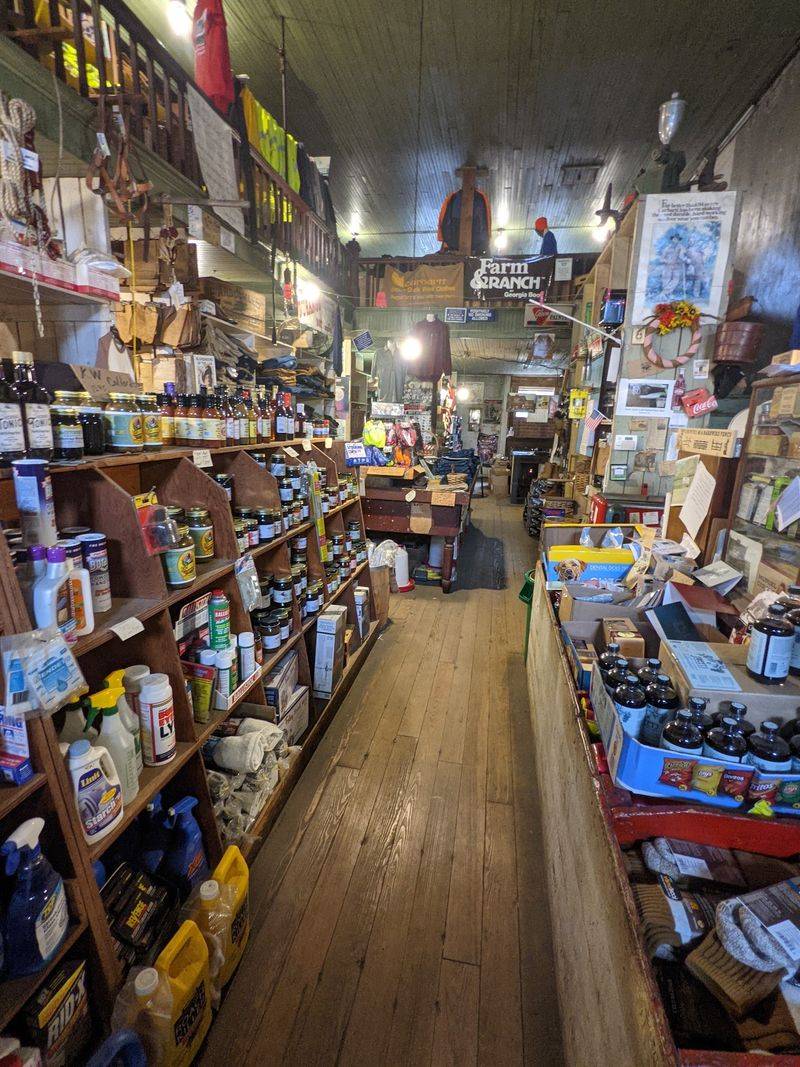
Moon Pies, cold sodas, jams, jellies, local treats, and other shelf-stable foods sit alongside goods that belong on a much more practical shopping list.
A sweet snack and a practical purchase can easily end up in the same bag.
You can pick up a treat for the ride home while also looking for workwear, soap, cookware, or something for the garden.
There is no need to build a shopping strategy around one exact candy flavor because stock can shift. Start with whatever is on the shelf that day and let the selection handle the decision.
If you are buying for a group, a few different hard-candy flavors make an easy shared bag. If the stop is mostly for you, one packet beside a cold soda keeps things simple.
The candy may get your attention first. The useful goods are usually what make the aisles take longer.
The Davis Family Started The Business In 1890
Davis General Merchandise began in 1890, when brothers Silas Winslow Davis and Charles Spencer Davis started the business in the Croft community north of central Charlotte.
The earliest operation was tied closely to local agriculture. The brothers sold farm supplies at a time when the surrounding area was much more rural, and families depended on nearby stores for goods that could otherwise require a longer trip.
The business eventually moved into the two-story brick building that stands today. More than a century later, the Davis family is still connected directly to the operation.
That long timeline can sound enormous until you break it into ordinary store days. Seeds were weighed. Supplies arrived.
Neighbors stopped in. Children grew up and took over responsibilities. The city around Croft changed far more dramatically than the basic job of a general store.
It did not survive by freezing every shelf in place. The merchandise changed as customers changed, while the family kept the business rooted in the same community.
If you like historic places, look around before reaching for your shopping list. Many of the details are still part of a working store rather than a recreated scene.
The Brick Building Dates To 1908
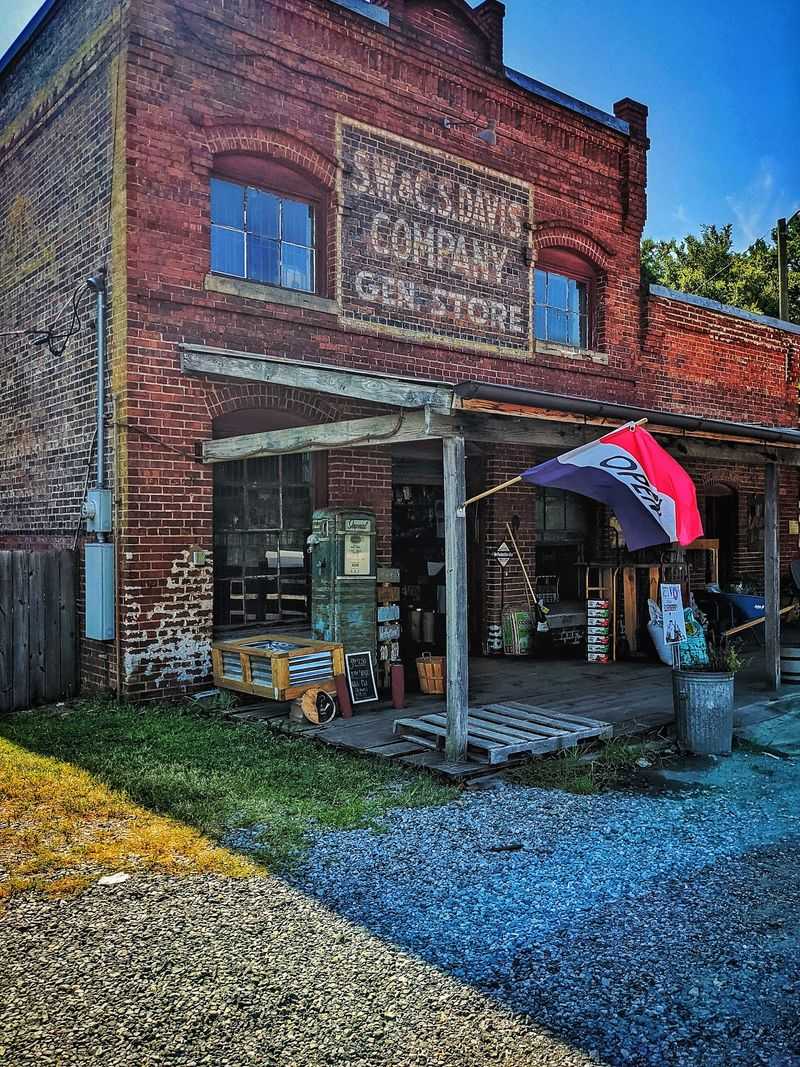
The current two-story store was built in 1908, replacing the earlier locations used by the family business. Its brick has an especially local origin: clay for the building was dug on the property near the railroad.
The railroad mattered to the store for more than construction. Trains delivered merchandise and agricultural supplies, connecting the business with farmers and other customers in the Croft area.
Inside, the building still shows traces of that commercial past. A warehouse area once held seed and flour, while tall shelving and the upper-level balcony preserve the proportions of an older general store.
The railroad remains close enough to make the connection easy to understand even now.
You do not have to imagine the store sitting in an isolated rural landscape, but it helps to remember that the transportation network outside once shaped what could arrive on the shelves inside.
The building is among Charlotte’s recognized historic properties, adding another layer to a storefront that has remained in use as the surrounding area developed.
Pause outside long enough to take in the full brick facade before going through the door. Then compare that exterior with the narrow aisles and tall interior shelves. The building tells the story better when you see both.
Seeds, Workwear, Cookware And Hardware Keep It Practical
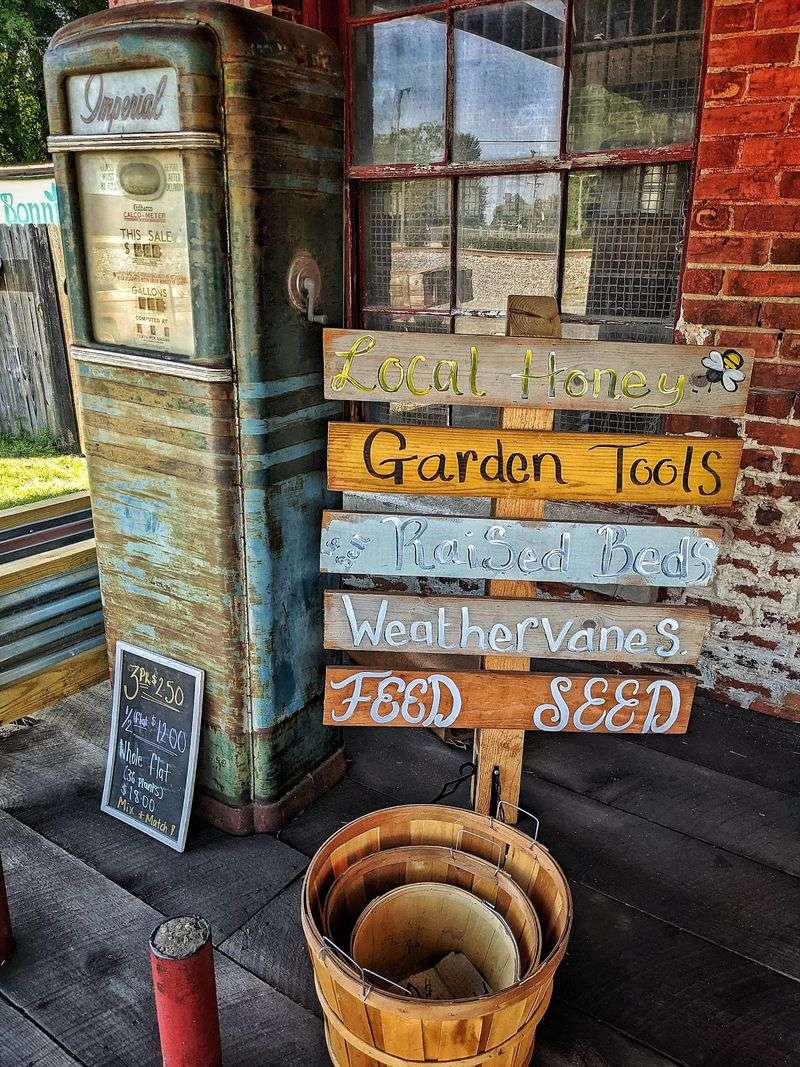
A century of history would not mean much to an everyday shopper if the store had stopped selling useful things. It has not.
Current merchandise includes gardening tools, seeds, plants, feed, workwear, overalls, boots, hardware, soap, socks, pocket knives, cast iron cookware, and other household or farm-oriented goods.
That range makes the general-store label feel literal rather than decorative. Someone planning a garden may be looking at seed while another shopper checks cookware or work clothes a few feet away.
Seasonal needs can change the mix. Spring naturally puts more attention on gardening supplies, while other categories stay useful throughout the year.
If you came for a specific project, begin there before the shelves distract you. A packet of seed is easier to remember before you start comparing cast iron or wondering whether you need another pair of work gloves.
The store also continues serving agricultural customers, which keeps the practical side of the business connected to its original purpose.
A shopping list is useful here. Leaving one empty line at the bottom is probably realistic.
A 1922 Cash Register Still Handles Cash Sales
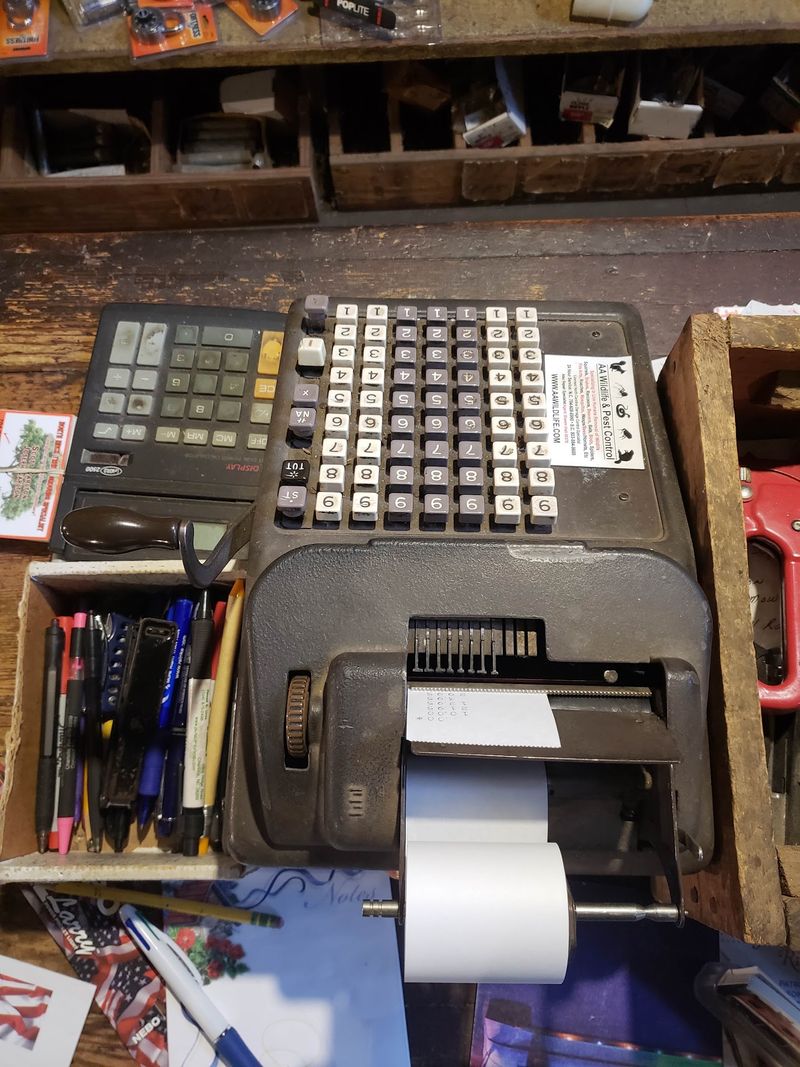
One of the store’s most unusual working pieces is not for sale. A cash register dating to 1922 remains in use for cash transactions.
Credit and debit cards can be handled with modern equipment, but cash purchases can still involve the old mechanical register. Its buttons and lever have been used by multiple generations of the Davis family.
The register is not the only surviving fixture. Old shelving, an early Coca-Cola bottle opener, a wooden fire bucket, and remnants associated with an early local telephone remain inside the building.
Those details are easy to notice between ordinary purchases. They are not arranged as a separate exhibit requiring a formal route. They simply share the store with the merchandise.
Look up as well as across. The L-shaped upper balcony and high shelves make the room feel very different from a modern big-box aisle, even before you notice the older equipment.
Treat the fixtures as part of an active business rather than props. There is plenty to see without touching or moving anything that is not merchandise.
If you pay cash, the old register may become part of the transaction. Few errands come with a mechanical soundtrack from 1922.
The Davis Family Still Runs The Store
Silas Davis, a grandson of co-founder S.W. Davis and a great-nephew of co-founder C.S. Davis, operated the store for decades and became closely associated with Croft before his death in 2023.
His children Andrew Davis, Noelle Small, and Lois Ellen Tuttle continued the family operation. That keeps the business connected to the same family that started it in the nineteenth century rather than leaving the Davis name on the sign after ownership moved elsewhere.
The store is at 8940 Old Statesville Road, Charlotte, NC 28269, in the historic Croft area between Charlotte and Huntersville.
Because operating hours can change, check the current schedule before making a special trip, particularly if you are aiming for a shorter shopping day.
Once there, give the visit a little more time than a normal hardware stop. You might come for seed, cookware, workwear, or candy, but the old fixtures and family history make it easy to pause between purchases.
That does not require turning every object into a history lesson. Browse, buy what you need, and notice the pieces of the building that have remained useful across generations.
The family connection remains visible in the everyday operation of the store.
A Television Role Added One More Chapter To The Building
The store’s brick exterior may look familiar for a reason that has nothing to do with farm supplies. It appeared in the Cinemax series Banshee as a fictional business called The Forge.
Production altered the appearance for filming, including adding a porch and signage for the fictional location. The underlying Davis name and historic storefront remained recognizable beneath the television transformation.
Today, that screen connection is a side note rather than the main reason the building matters. Long before a camera crew arrived, the store had already spent generations serving the Croft community.
Still, it gives television fans another detail to notice from outside. Take in the facade, remember that it once played a completely different business on screen, then head inside for the version that has been real since 1890.
After filming ended, the building returned to its everyday role as a general store. A place known locally for seed, overalls, tools, candy, and family ownership had briefly become a fictional television setting before returning to ordinary work.
The surroundings have changed, cameras have come and gone, and Charlotte has expanded around Croft. Inside, you can still buy a bag of old-fashioned candy beside the things people actually need.