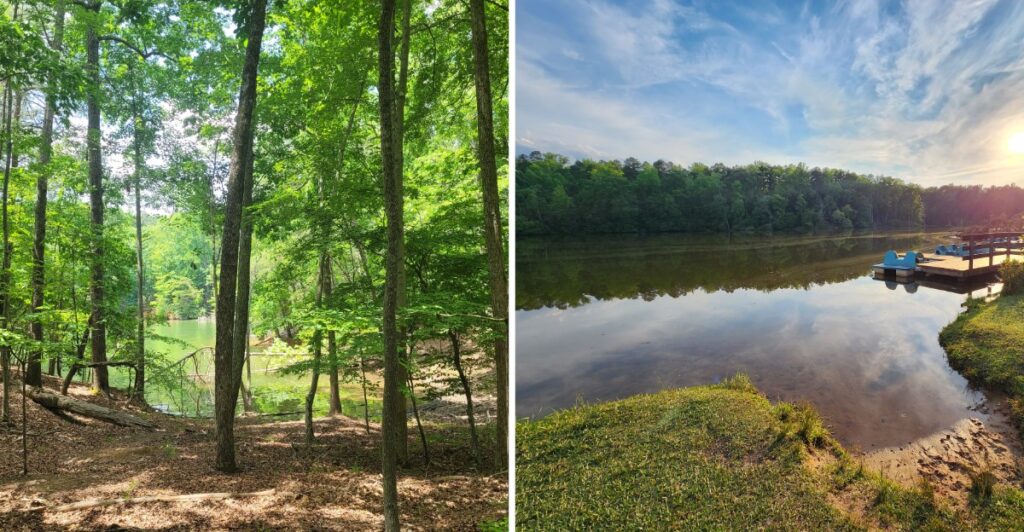
This is one of those places where the view deserves your attention.
So do the next three feet of trail.
The shoreline pulls your eyes toward the water, while wooded paths give you plenty of reasons to keep moving. Hiking and biking can fill the day, and the lake opens the door to paddling, swimming, and fishing.
North Carolina wildlife gets a vote too.
Snakes belong in these woods, especially around the kind of cover they like near water. Most of the time, a little awareness is all you need.
Watch where you step around logs, rocks, and thick brush. Give anything wild plenty of room.
Then get back to enjoying the lake.
You do not need to stare at your shoes all afternoon.
Just maybe look down before stepping over that log.
Five Hundred Twenty Miles Of Shoreline Shape The Setting
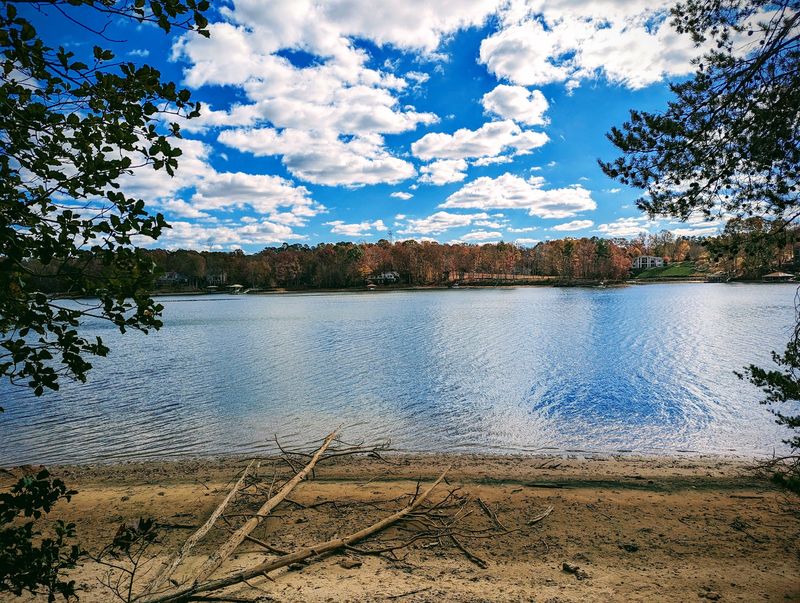
Lake Norman stretches for about 520 miles of shoreline, making it the largest man-made lake in North Carolina. Lake Norman State Park protects about 17 miles of that northern edge in Iredell County.
That combination gives the park a strong mix of water and woods. Trails move through forested sections, coves break up the shoreline, and several recreation areas put visitors close to the lake without requiring a boat.
The Lake Shore Trail is the obvious choice when the goal is to keep the water nearby. Other routes head deeper into the park, while the Itusi Trail system gives mountain bikers and hikers nearly 31 miles of single-track terrain.
For wildlife awareness, the important detail is not the lake’s size by itself. It is the variety of habitat packed into the park. Sunny edges, shaded forest floor, leaf litter, logs, rocks, and damp ground all create places where small animals can shelter.
That is a good reason to stay on marked trails and look before stepping into thick ground cover. It is also a good excuse to slow the pace. A shoreline walk is more interesting when you notice what is beside the path instead of treating every mile like a race.
Wooded Trails Reward A More Careful Step
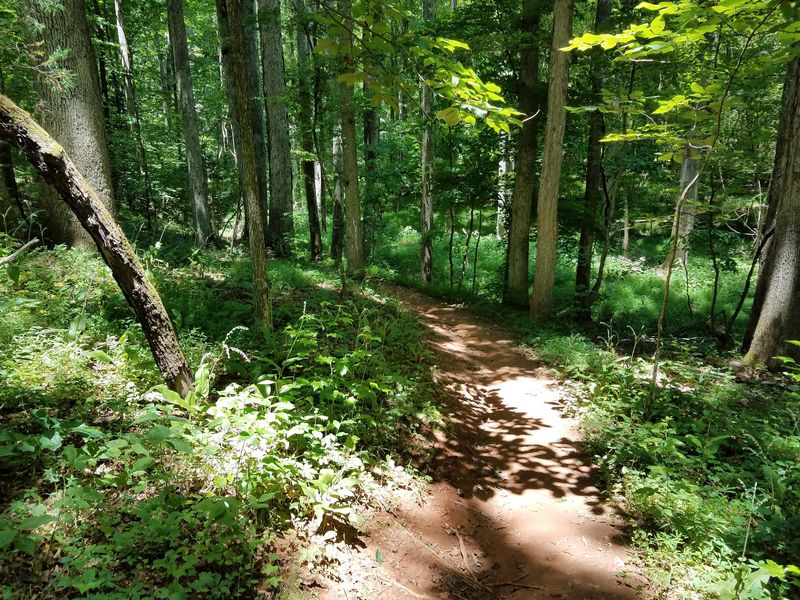
A forest trail can hide a surprising amount beneath a thin layer of leaves. Roots, stones, insects, small animals, and snakes can all disappear into the same colors when the ground is dry and brown.
The useful habit is not complicated: watch where hands and feet go.
Avoid reaching blindly into rock gaps, brush, hollow logs, or other places where the view is blocked. When approaching a fallen log, take a moment to see the other side rather than stepping into an unseen patch of ground.
Closed-toe shoes also make more sense on wooded trails than open sandals. They are useful for roots, gravel, mud, and uneven surfaces even before wildlife enters the conversation.
Lake Norman State Park has trails for different kinds of outings, from short easy routes to longer loops and the extensive Itusi system. That means the level of attention can match the route.
A short walk near developed areas feels very different from several miles through forested single track.
There is no need to turn every rustle into a wildlife mystery. Most trail sounds have ordinary explanations. Keep moving, keep the path visible, and let anything beside the trail have its space.
Copperheads Occur Across North Carolina
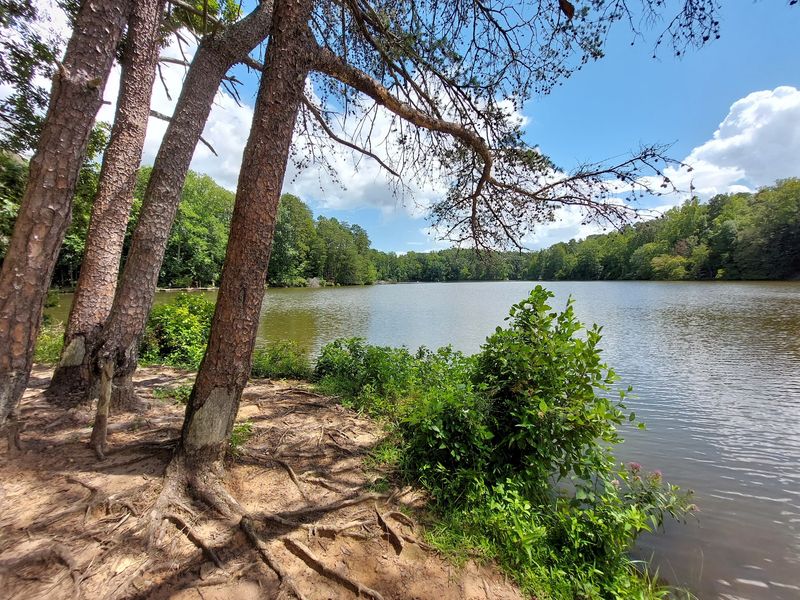
Copperheads are found across North Carolina and are among the state’s most familiar venomous snakes.
Their coloring helps them blend especially well with leaves and other brown ground cover, which is why simply watching where you step matters more than trying to become an instant snake expert.
The species is typically tan, coppery, or light brown with darker crossbands that often form an hourglass shape across the body. Individual patterns vary, so identification should never depend on one tiny detail seen from a distance.
The practical response is easier than identification anyway. Leave the snake alone.
North Carolina wildlife guidance emphasizes that snakes generally pose little threat when they are given space. Copperheads use their venom for prey, not for pursuing people, and many encounters can stay uneventful if nobody tries to touch or move the animal.
That makes curiosity safer from several feet away. A photo taken from a comfortable distance is one thing. Moving closer for a dramatic angle is unnecessary.
Because Lake Norman State Park sits within the species’ statewide range, basic copperhead awareness is sensible on wooded outings. The goal is not to expect one around every corner. It is to know what to do if one happens to be there.
Most Snake Encounters Need Space, Not Drama
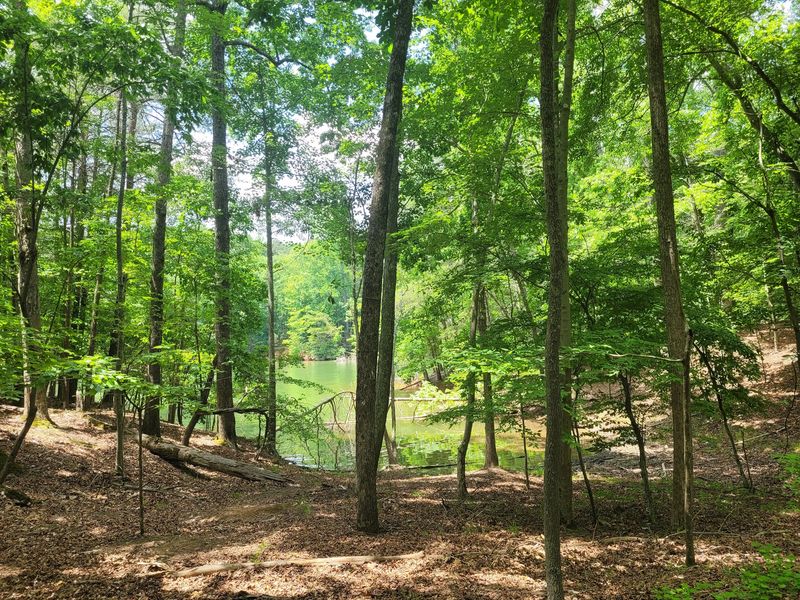
North Carolina is home to dozens of snake species, and only a small number are venomous. That makes distance a useful response even when you cannot tell exactly what crossed the trail.
A snake near the water may disappear before you have time to study it. Another may stay still and rely on camouflage. Either way, there is no need to poke it, move it, or block its route.
Snakes play useful roles in the ecosystem by feeding on prey such as rodents, frogs, fish, insects, and other small animals, depending on the species. They also become food for larger wildlife.
That means spotting one can be treated like any other wildlife encounter. Stop, give it room, and let it continue.
For families, one simple rule works well: children should know to stop and call an adult rather than approaching.
Pets need similar boundaries. Lake Norman State Park requires pets to stay on an attended leash no longer than six feet, and pets are not allowed on the swim beach, inside buildings, or in camper cabins.
That leash rule is useful far beyond snake awareness. It keeps pets close around bikes, other hikers, campsites, and wildlife throughout the park.
Warm Months Bring More Reasons To Stay Alert
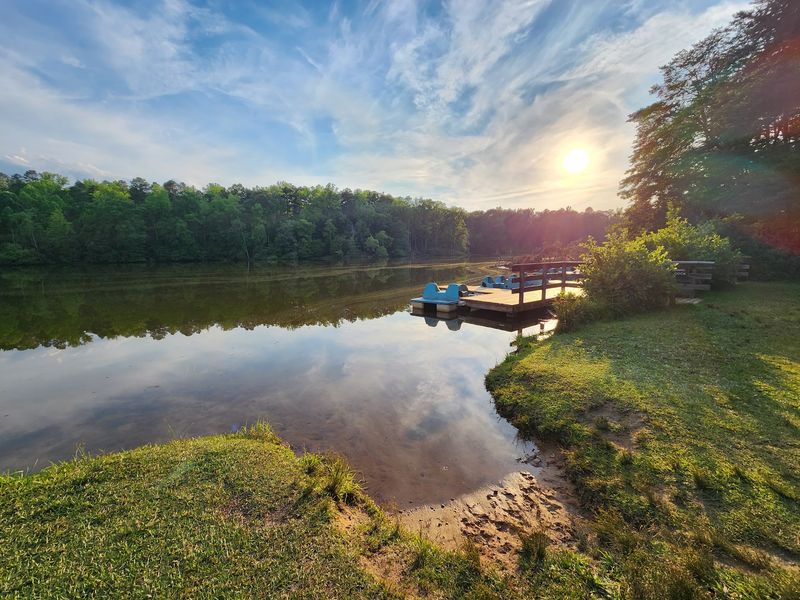
Snakes depend on outside temperatures to regulate their body temperature, so warmer conditions generally bring more reptile activity than the coldest part of the year.
That overlaps with the season when people are also drawn toward the lake. Swimming, paddling, hiking, biking, camping, and fishing all become easy ways to fill a warm-weather day.
The park’s swim beach gives families a designated place to get in the water, while paddlers can use rentals when seasonal operations and weather allow.
Lake Norman State Park currently offers canoes, pedal boats, single kayaks, tandem kayaks, and paddleboards through its boat-rental program.
Away from the beach, shade and water can make the woods feel cooler even on hot afternoons. That does not mean wildlife disappears. Looking down before sitting on rocks, stepping beside logs, or moving through thick vegetation remains a sensible habit.
A flashlight can also help near dusk around campsites or paths when light is fading.
Seasonal changes affect more than wildlife. Mountain bike trails can close because of weather or trail conditions, and boat rentals can pause during inclement weather.
Before building the whole day around one activity, leave enough flexibility for the park to change the plan.
Park Hours Change With The Seasons
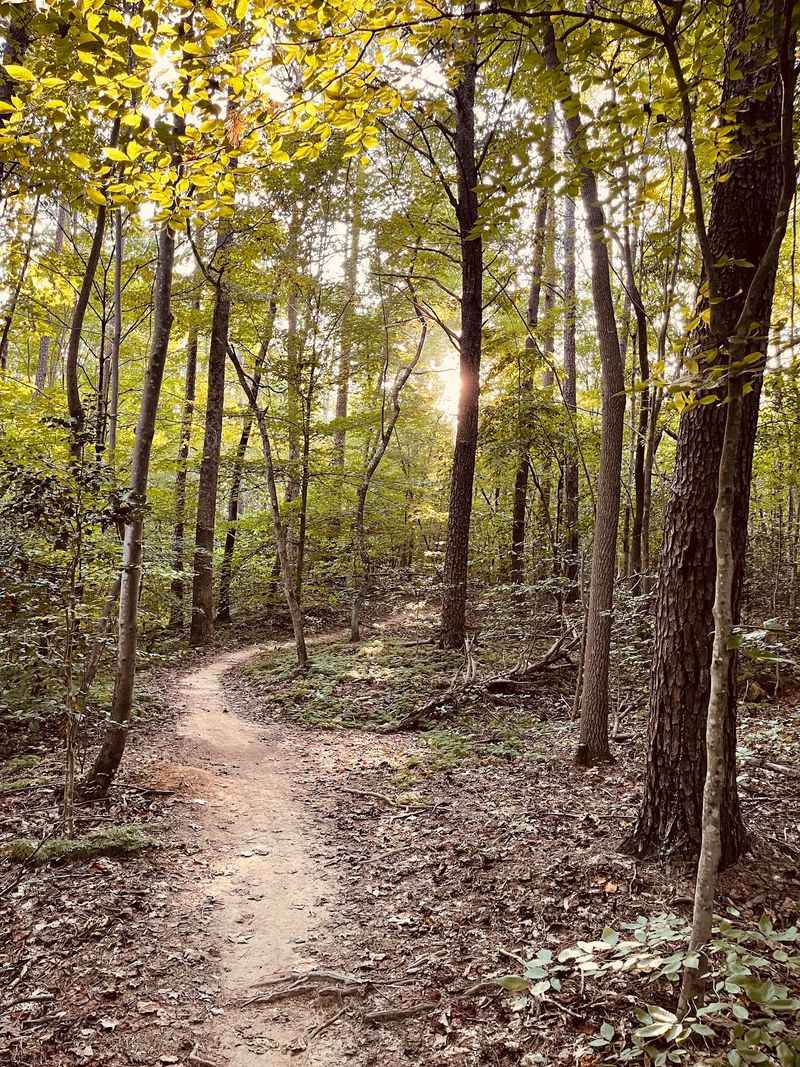
Lake Norman State Park is open year-round except Christmas Day, but day-use closing times change through the calendar.
January and February close at 6 p.m. March and April extend to 8 p.m. May through August stay open until 9 p.m.
September and October close at 8 p.m., and November and December return to 6 p.m. Day-use areas open at 7 a.m. throughout the year.
The campground and boat launch have 24-hour access through the St. Johns Road entrance, which makes those areas work differently from the regular day-use schedule.
For a first visit, the main park address is 759 State Park Road, Troutman, NC 28166.
Timing matters most when a hike or paddle is planned late in the day. A summer evening leaves a much larger window than a winter one, and a route that looks short on a map can take longer once photo stops, wildlife sightings, and lake views start slowing everyone down.
The easiest approach is to choose one main activity first. Build the rest of the day around it rather than trying to squeeze hiking, biking, swimming, paddling, and fishing into the same visit.
The Lake Offers Much More Than One Wildlife Encounter
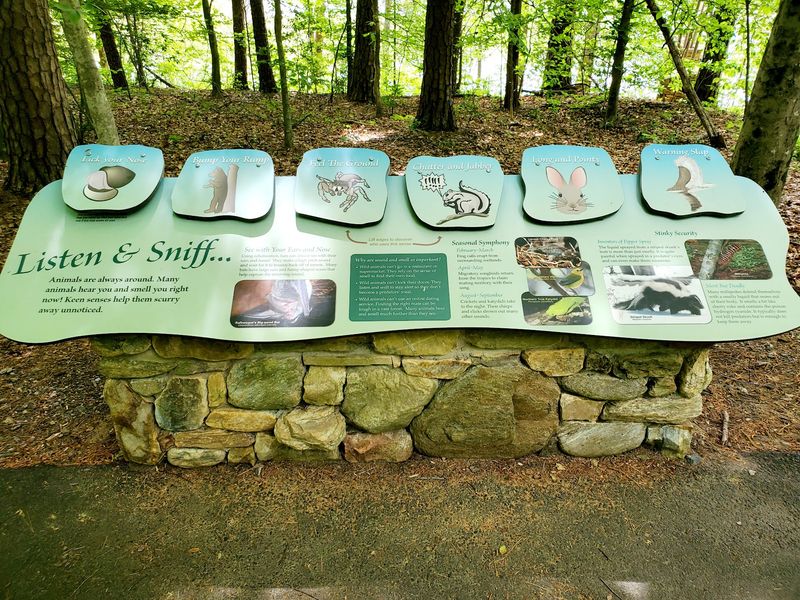
Snakes may be part of the landscape, but they are only one small piece of Lake Norman State Park.
The park supports hiking, mountain biking, boating, paddling, swimming, fishing, picnicking, birdwatching, and camping. Its Itusi Trail system is a major draw for cyclists, while the lake and smaller Park Lake give paddlers and anglers different kinds of water to explore.
Great blue herons add another wildlife angle. Two islands on Park Lake hold heron rookeries with more than 25 nests, giving patient visitors a completely different reason to look toward the trees and water.
Camping can stretch the visit beyond one afternoon, with tent and trailer sites, full-hookup RV options, and camper cabins available in the park. The best choice depends on whether the day is built around trails, the water, or simply having more time outside.
None of that requires treating snakes as either the star attraction or something to fear. They belong to the same landscape as the birds, fish, deer, and other wildlife moving through the woods.
Watch the trail, respect whatever crosses it, and keep going. The lake still has 17 miles of park shoreline waiting for the rest of your attention.