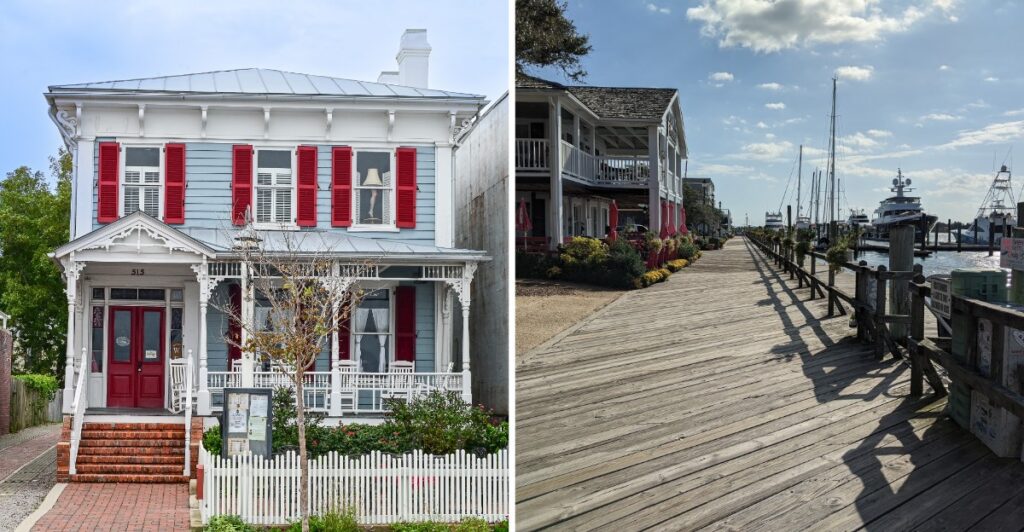
Walk ten minutes here and the afternoon can change centuries.
One direction gives you boats, docks, and water stretching toward the marshes. Turn inland and old homes start taking over the view instead.
That switch keeps this North Carolina coastal town interesting without requiring much mileage.
Downtown stays compact enough that the car can sit out most of the day. Front Street follows the water, while quieter blocks just behind it carry much of the town’s history.
Even sitting down can become part of the sightseeing.
Across the creek, protected islands and marshes give you something to watch between stops, especially if wildlife decides to cooperate.
So forget covering ground for the sake of it.
Around here, a side street, a museum door, or one very well-placed bench can completely rewrite the next hour.
Front Street Keeps The Waterfront In The Middle Of The Day
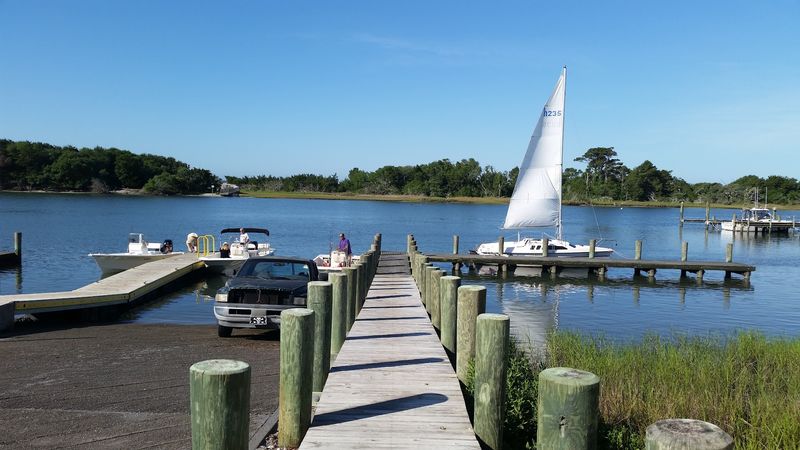
Front Street runs along Taylor Creek and gives downtown Beaufort its most obvious walking line. On one side, shops, restaurants, museums, and historic buildings fill the blocks. On the other, docks and open water keep the harbor in sight.
That arrangement makes wandering pleasantly inefficient. A storefront can interrupt a waterfront walk, and a few minutes later the creek can interrupt the shopping. Nobody has to choose between seeing downtown and seeing the water because the two keep meeting.
Boats come and go along the creek, while open views make it easy to pause when somebody spots a sailboat, a bird, or movement on the far shore.
Morning gives the creek a quieter look, while later hours bring more activity around the businesses and docks. Weather matters too. A breezy day can make the waterfront feel cooler than streets a block inland, so one light layer can earn its space in the bag.
Start with Front Street if nobody agrees on the plan. The water, shops, food, and historic district are all close enough to settle the argument as you go.
Downtown Is Compact Enough For Detours
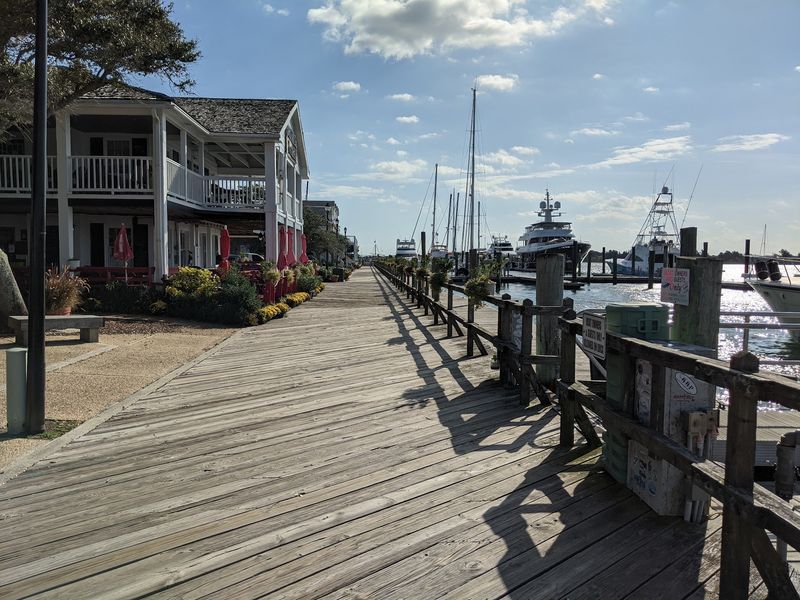
Beaufort’s early street plan dates to 1713, when surveyor Richard Graves laid out a twelve-block grid. That compact pattern still shapes the historic center today, which helps explain why so much of downtown works naturally on foot.
The blocks are short enough that changing your mind rarely creates a problem. Pass a shop that looked interesting? Double back.
Notice a quiet street lined with older houses? Turn the corner. Decide lunch needs to happen earlier than expected?
Front Street is never far away.
Walking also reveals details easy to miss through a windshield. Porch railings, old rooflines, plaques, and views down side streets add texture between the larger stops.
Comfortable shoes still matter if you plan to cover the waterfront and historic district in one outing. Summer heat can make a short distance feel longer at midday, so water, sunscreen, and a slower pace help keep the walk comfortable.
The useful part of a compact town is not how quickly you can finish it. Beaufort gives you room to circle back, change direction, and spend ten unexpected minutes watching the creek instead of worrying about the next parking space.
Shops And Food Keep The Stops Close Together
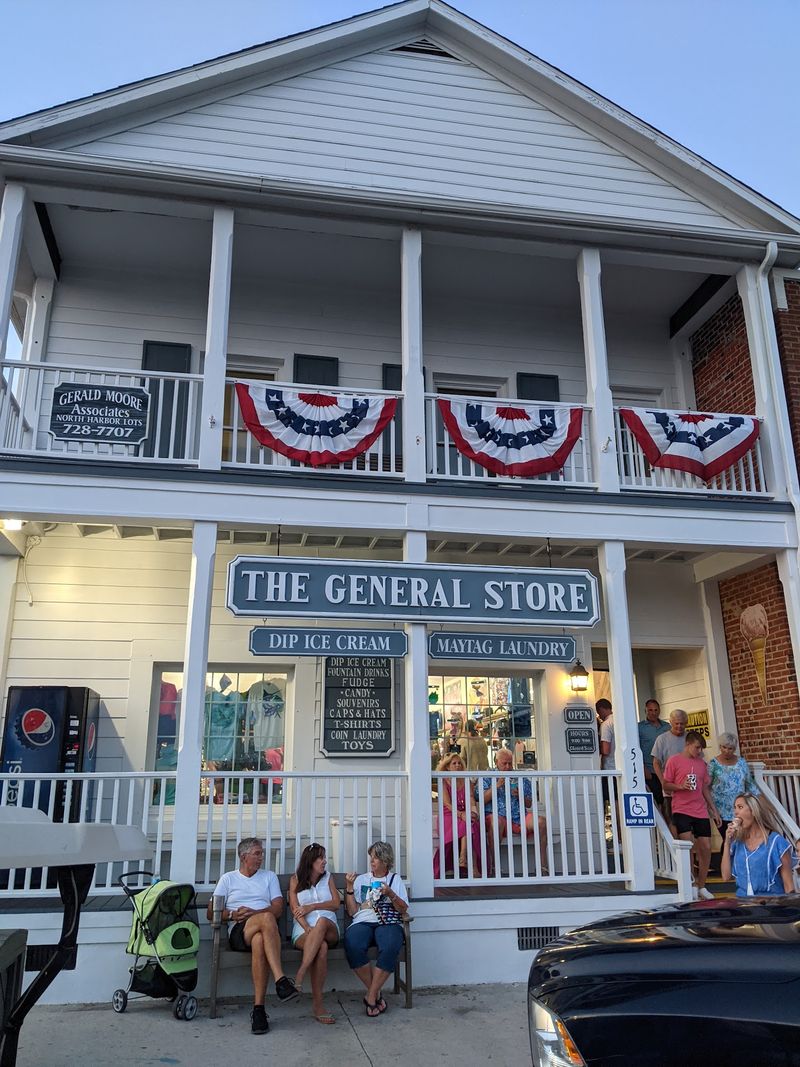
Front Street and the surrounding downtown blocks hold locally owned shops alongside places to eat, so browsing and lunch can share the same stretch of the day.
Clothing, art, gifts, home goods, books, and coastal-themed items appear among the storefronts, with selections changing from business to business.
That variety is easier to enjoy when nobody turns it into a shopping mission. One person can look for a practical souvenir while someone else gets distracted by art or a book. The group can regroup outside with Taylor Creek only steps away.
Food works the same way. Waterfront dining sits along the same central corridor, making it easy to decide whether lunch should be quick or become the main pause of the afternoon.
Timing can stay flexible. Browse while everyone still has patience, eat when conversation starts revolving around menus, then use the waterfront as the easiest post-lunch walk imaginable.
Independent businesses may keep different seasonal schedules, so one specific shop or meal deserves a quick check before the trip. Everything else can remain loose.
The tote bag may start empty. That condition is not guaranteed to last.
Historic Streets Begin Just Behind The Harbor
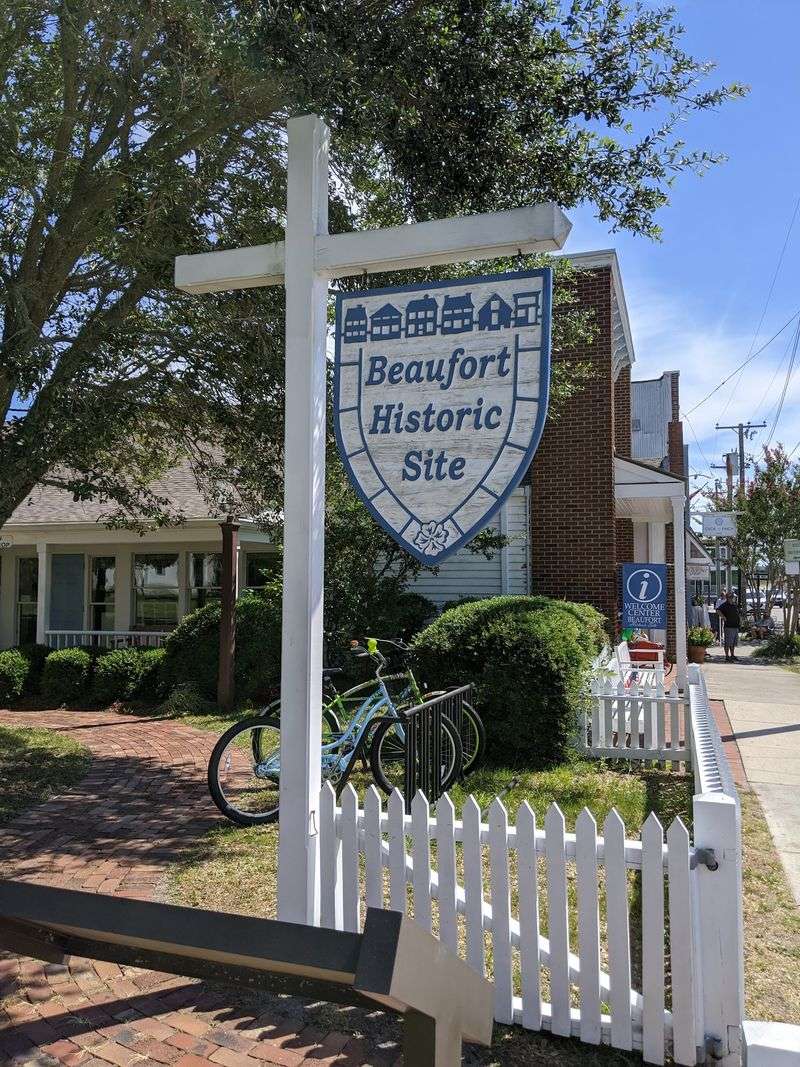
Beaufort traces its settlement to 1709, making it the third oldest town in North Carolina. Its town plan was laid out in 1713, and Beaufort was incorporated in 1723.
The original grid survives in the historic district, keeping several centuries of local history within an easy walk of the waterfront.
Turn inland from Front Street and the visual rhythm changes quickly. Older houses, churches, shaded sidewalks, and residential blocks replace some of the harbor activity.
About 150 restored historic homes carry plaques identifying early owners and dates of original construction.
The town’s relationship with the water remains part of that history. Fishing, shipbuilding, shipping, and other maritime work shaped Beaufort for generations, while the protected harbor influenced where the community developed in the first place.
A walk here does not need to become a hunt for every plaque. Pick a few streets, notice the architecture, and let the grid do the navigating. Many houses are still private residences, so the best view remains the one from the public sidewalk.
This is also where slowing down pays off. The harbor may be only a block or two away, but the quieter streets can feel like a separate chapter of the same town.
Taylor Creek Opens The View Toward The Rachel Carson Reserve
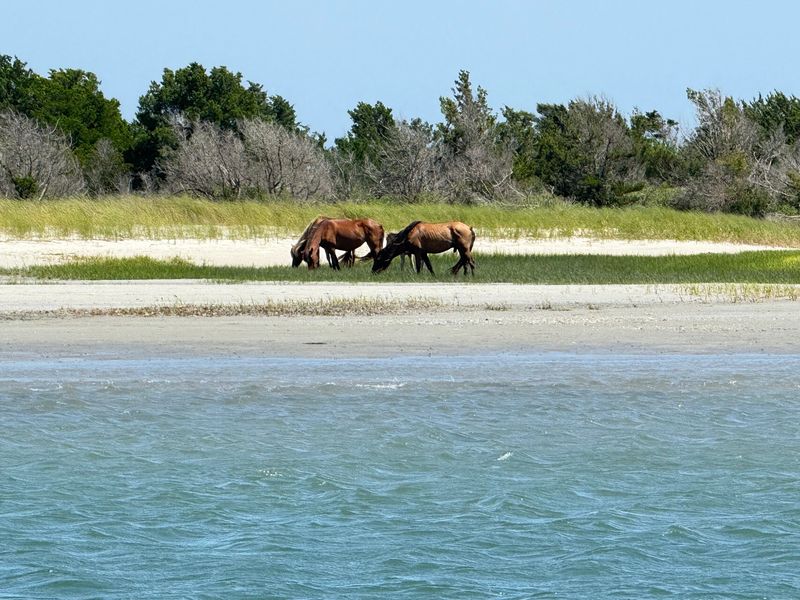
Look across Taylor Creek from downtown and the low islands on the other side belong to the Rachel Carson Reserve. The protected site covers 2,315 acres and includes Carrot Island, Town Marsh, Bird Shoal, Horse Island, Middle Marsh, and surrounding estuarine waters.
That view adds more than scenery to a Front Street walk. More than 200 bird species have been observed within the reserve, and its habitats include salt marsh, tidal flats, dunes, maritime forest, submerged vegetation, and sandy shoreline.
The reserve is also home to a herd of feral horses. Horses were brought to the islands by a local resident in the 1940s and eventually became wild. They can sometimes be seen from Beaufort, although a sighting is never something to schedule around.
Binoculars make the wait more interesting. Even when the horses stay out of view, birds, boats, tides, and changing light keep the far shore from looking static.
Anyone heading into the reserve needs a private boat, passenger ferry, kayak, or canoe. Visitors who reach the islands must stay at least 50 feet from the horses, with greater distance encouraged for natural behavior and safety.
Staying on the Beaufort side is simpler. Find a place along the waterfront, look across the creek, and see what moves first.
The Historic Site Gives The Walk A Practical Starting Point
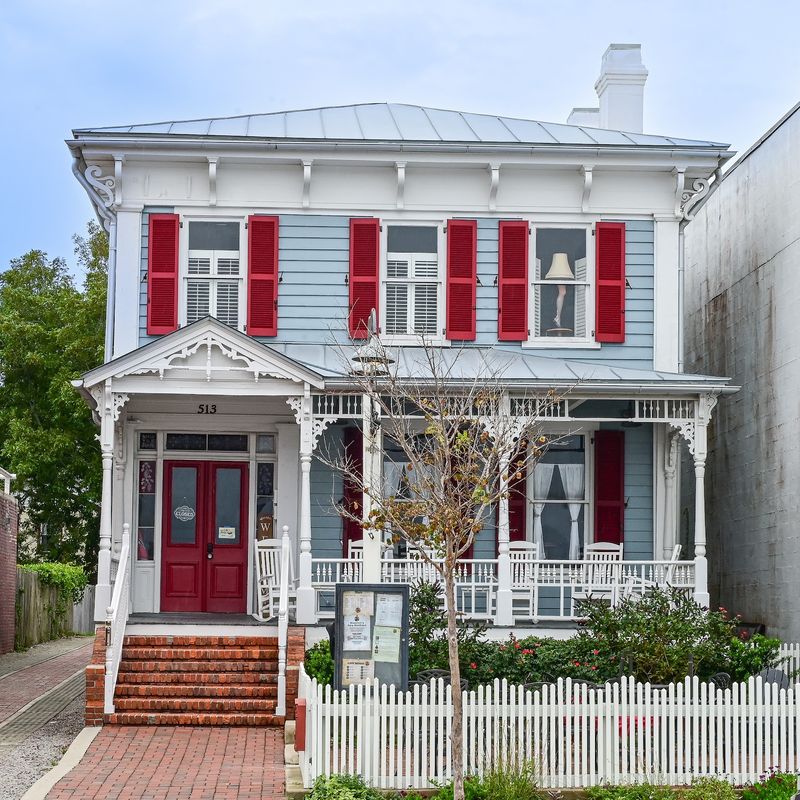
The Beaufort Historic Site brings several pieces of local history together on about two acres in the heart of the historic district.
Six restored buildings, including the Mattie King Davis Art Gallery, sit on the two-acre site alongside the Old Burying Grounds, while the Robert W. and Elva Faison Safrit Historical Center serves as the official Visitors Center for the Town of Beaufort.
The center is at 130 Turner Street, Beaufort, NC 28516.
That makes it useful before anyone starts improvising. Walking maps and local information can settle basic questions, while the surrounding streets make it easy to move directly into the historic district afterward.
The site is open Monday through Saturday year-round, with longer hours from April through December and shorter winter hours from January through March.
Guided options include historic-building tours, Old Burying Ground tours, and bus tours, though schedules and reservations deserve a check before building the day around one.
A visit does not have to become a formal history lesson. Stop for orientation, look around the grounds, then decide how deep everyone wants to go. Some people will happily spend more time with the buildings.
Others will be ready to point their shoes back toward the harbor.
Either choice works because Front Street is only a short walk away.
Maritime History Still Shapes The Waterfront Experience
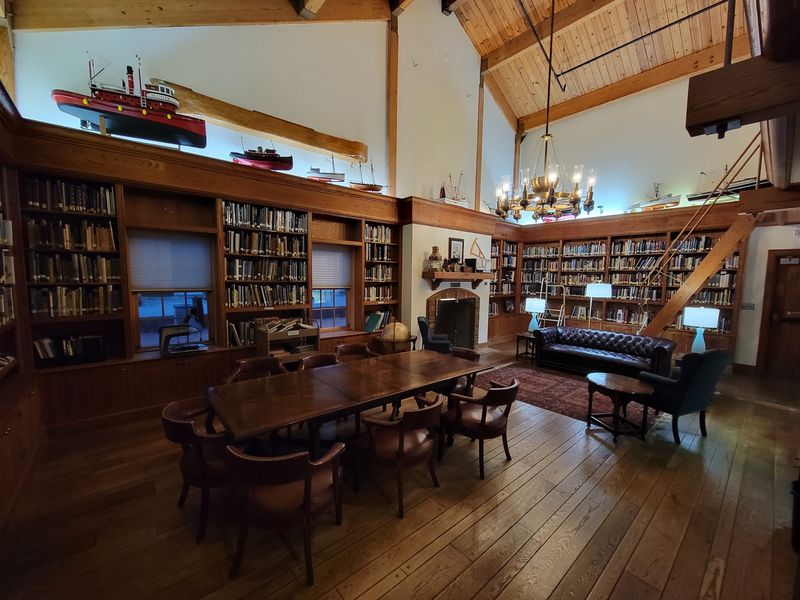
Beaufort’s maritime story does not disappear while the North Carolina Maritime Museum’s main building is temporarily closed for HVAC work.
The waterfront itself still carries that history through working docks, boats, maritime businesses, and the town’s long connection to fishing, shipping, and coastal travel.
Museum-associated programming continues through scheduled activities and related locations, so anyone interested in the region’s seafaring history can still find ways to add that theme to a visit.
Because offerings can change during the closure, it makes sense to check the current calendar before building a day around a specific program.
Instead of treating the museum as a fixed indoor stop, let the waterfront do more of the storytelling. Watch boats move along Taylor Creek, look toward the reserve, and notice how closely the town still sits beside the water that shaped it.
A rainy day may require a different plan than usual, while a clear afternoon makes it easy to keep the focus outdoors.
The simplest Beaufort day still needs very little choreography. Begin near the historic district or waterfront. Browse until food sounds better.
Walk after lunch. Check the creek for birds or horses. Add a scheduled maritime program if one fits.
Then leave a little space unassigned. A walkable town is most useful when every block does not already have an appointment attached to it.
Beaufort gives your feet plenty to do. The schedule can relax.