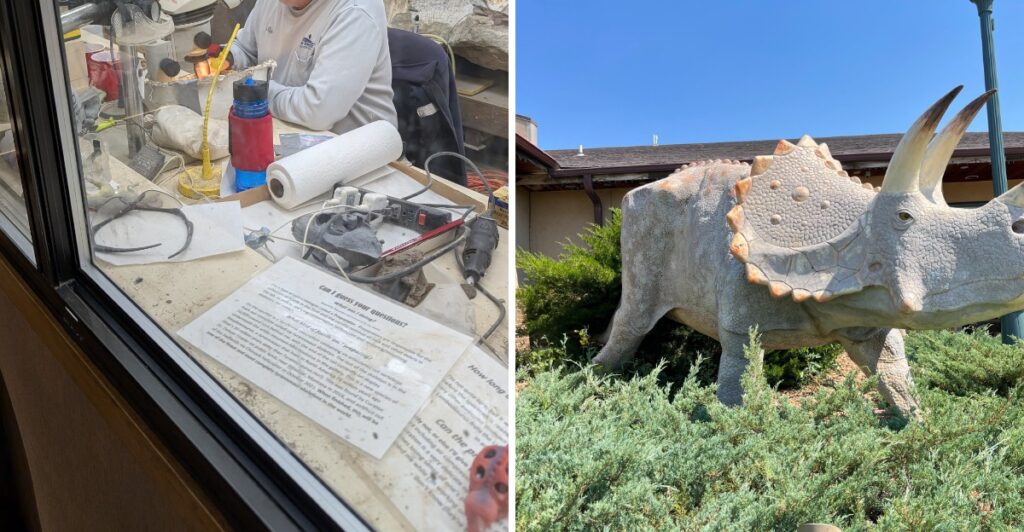
A Triceratops skull named Bill lives in a museum in North Dakota. Bill. Not Rex, not Thunderjaw.
Just Bill, like a guy who fixes your furnace.
Bill has impressive company, too. There’s a tyrannosaur skull that became the official reference for its whole species.
There’s also a hadrosaur arm that still shows mummified skin. I’m honestly jealous, because my skin can’t survive one summer without peeling.
Paleontologists work behind a big window here, cleaning fresh fossils dug up from nearby rock. You can watch them chip away at history in real time. That is my favorite kind of reality show.
The rocks downstairs even glow in the dark. Bill clearly picked a cool place to retire.
Real Badlands Bones Are The Stars Of This Show
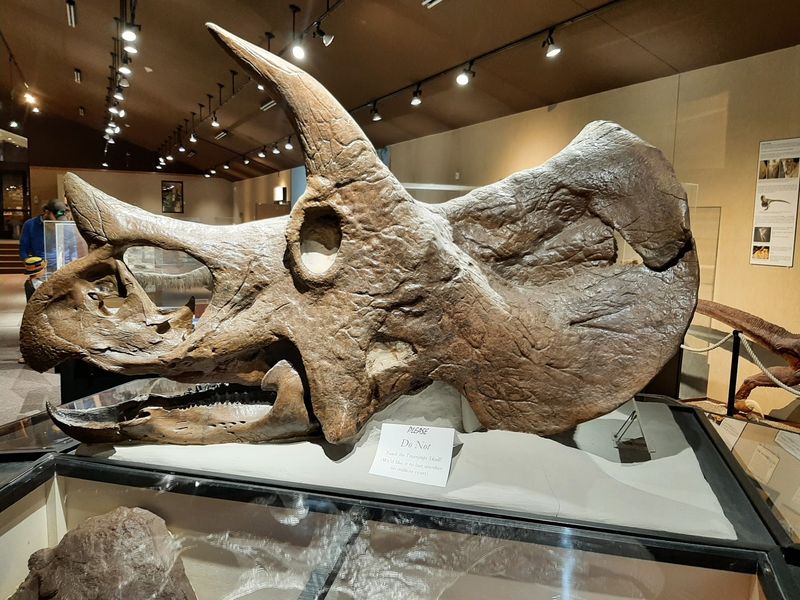
The Badlands Dinosaur Museum holds the largest collection of real dinosaur fossils on display in North Dakota. That’s a big title for a museum covering about 13,400 square feet.
Size doesn’t matter much when the bones are the real deal. Skeletons, skulls, and reconstructions fill the space, along with dozens of fossil and mineral displays.
The museum was established in 1992 and opened to the public in 1994 as the Dakota Dinosaur Museum.
The City of Dickinson took ownership of the collection in 2015. A reopening followed in 2016.
Then came a fresh name in 2017, along with a major overhaul of exhibits and buildings. Today it stands as a key part of the larger Dickinson Museum Center complex.
Many fossils here came from the ground right around this region. The Hell Creek Formation of North Dakota has been a favorite digging spot for the museum’s team.
That local connection makes every display feel personal. You’re not just seeing old bones from somewhere far away. You’re seeing creatures that once stomped across the same dusty hills outside town.
Hand-painted murals show the landscapes where these animals lived. They help your imagination fill in the missing scenery.
Rare Skulls That Scientists Actually Care About
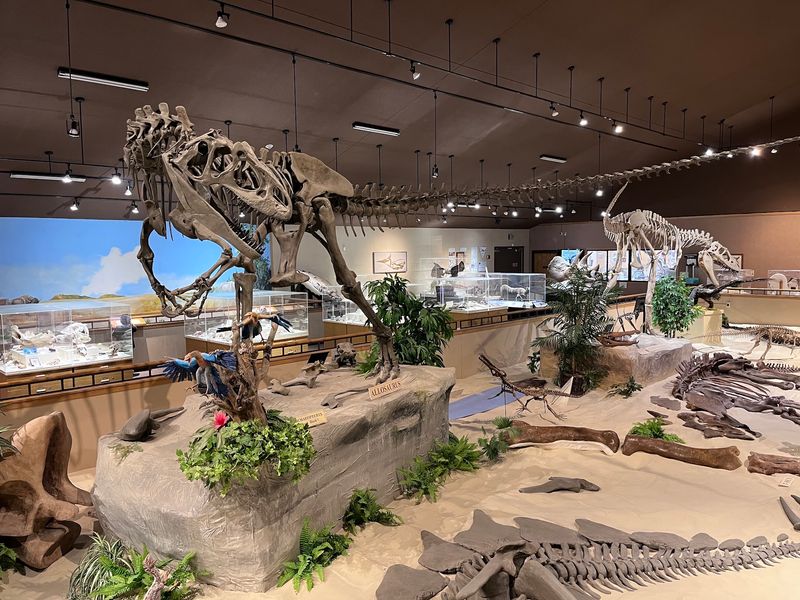
Some fossils are cool to look at. Others are cool to look at and important to science, and this museum has a few of those.
One standout is the holotype skull of Daspletosaurus wilsoni, a tyrannosaur. A holotype is the specimen scientists use to officially name and describe a new species.
That means this skull is basically the original ID card for its whole kind. Researchers compare other finds to it. Not bad for a museum along I-94.
Next up is a complete Lambeosaurus skull. It’s the only Lambeosaurus ever collected from the United States, which makes it a true one-of-a-kind display.
Lambeosaurus was a duck-billed dinosaur with a fancy crest on its head. Scientists think crests like that may have helped with sounds or showing off.
Then there’s an articulated hadrosaur arm with mummified skin. Skin rarely survives millions of years, so seeing its texture is a huge treat.
Read the signs near these pieces. They explain what makes each fossil special, and they turn a quick glance into a real lesson you’ll remember.
Say Hello To A Triceratops Named Bill
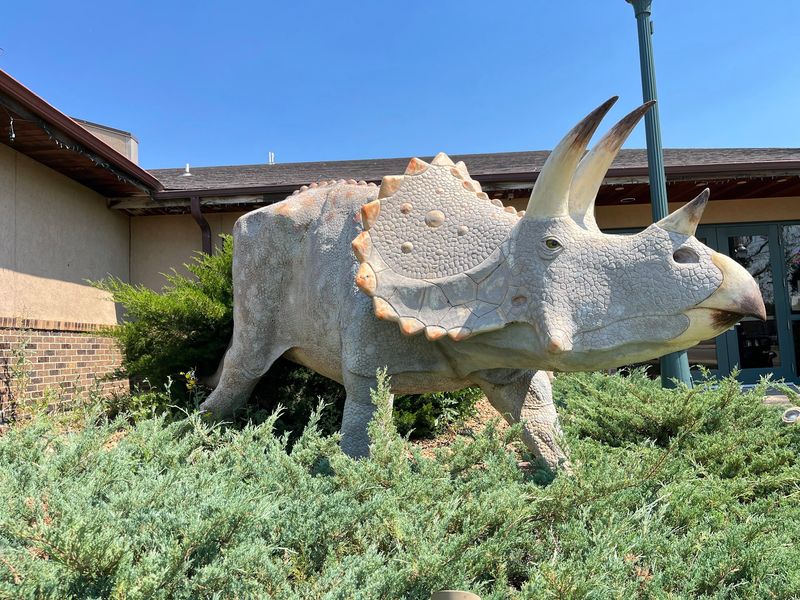
Every great museum needs a celebrity, and Bill fits the job. Bill is a complete Triceratops prorsus skull, which is a rare thing to find in one piece.
Sources point to a discovery near the Dickinson area or around Baker, Montana. Either way, Bill came from rough western country that loves to hide fossils.
A Triceratops skull isn’t small. Those famous three horns and that wide bony frill made this plant-eater look tough from every angle.
Standing near it gives you a real sense of scale. Pictures in books shrink these animals down, but real bone tells a bigger story.
Here’s a fun detail for kids. Triceratops means three-horned face, which is pretty honest naming.
Take a slow walk around Bill if you can. Notice the texture of the bone and how the horns curve. You might spot little marks and cracks that show how long it waited underground.
Photos are tempting, so snap one for the family group chat. Just know your relatives may ask why you’re posing with a guy named Bill.
Ordinary Rocks Turn Neon Under Black Light
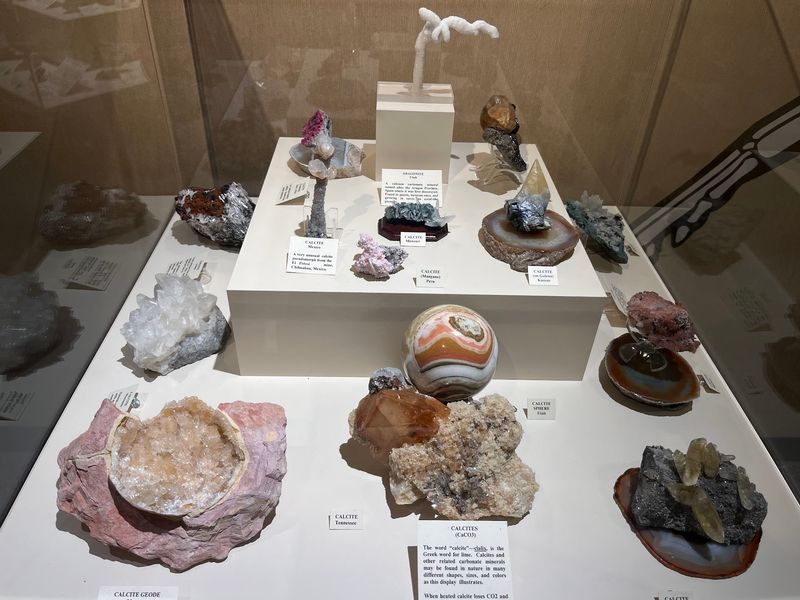
Plain gray stone can hide a wild secret. In the fluorescent mineral exhibit, rocks that look boring in daylight glow brightly under black light.
Greens, pinks, oranges, and blues pop out of the dark. It feels like the rocks are throwing a party nobody told you about.
The glow happens because certain minerals absorb ultraviolet light and give off visible light. That’s real science dressed up as a light show.
Beyond the glowing case, the museum holds thousands of rock and mineral specimens from around the world. Crystals, polished stones, and odd formations fill display after display.
Labels help explain where pieces came from and what makes them unusual. Rock fans can spend a long time here comparing colors and shapes.
Bring curious kids to this section early. It’s a great way to show that geology is way more exciting than it sounds in a textbook.
Fossils from other eras appear too, including regional rhinoceros and bison bones. The ancient rhino Subhyracodon from the Brule Formation proves North Dakota once had some surprising neighbors.
Little Paleontologists Get Plenty Of Hands-On Fun
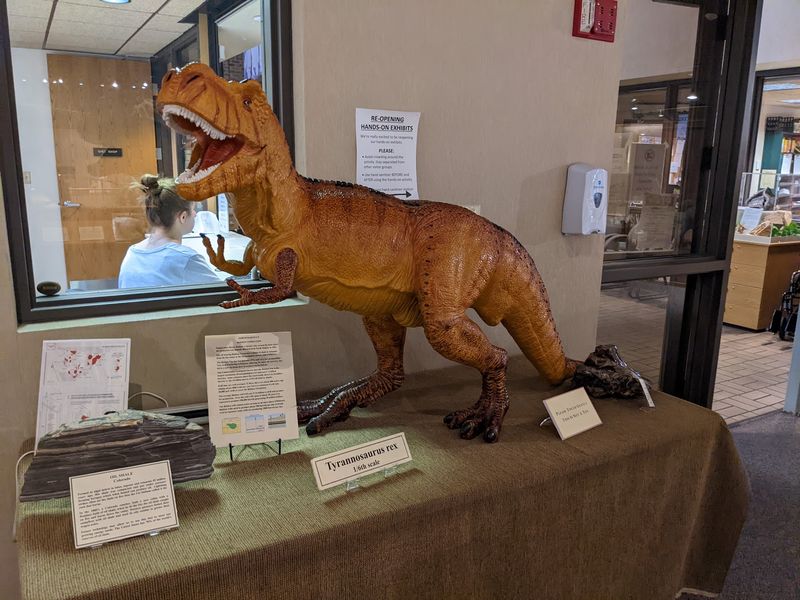
Kids learn best when their hands are busy. The museum offers hands-on activities that let young visitors do more than just look.
An augmented-reality sandbox is a favorite feature. As you shape the sand, colorful maps and contour lines shift to match the hills and valleys you build.
It’s basically playing in the sand, but with a science degree. Kids can make mountains and watch the colors change instantly.
A family activity area adds even more chances to explore. These spaces give younger visitors a break from reading signs.
Don’t skip the sculpture of baby dinosaurs hatching from eggs. Real fossilized dinosaur eggs and replicas sit nearby, so kids can compare art with actual evidence.
Families with mobility needs will find ramps and accessible restrooms. Service animals are welcome in all public areas, too.
Plan for little ones to want a second round at the sandbox. A smart parent saves it for the end, when attention spans start fading.
Watch Paleontologists Work Behind The Glass
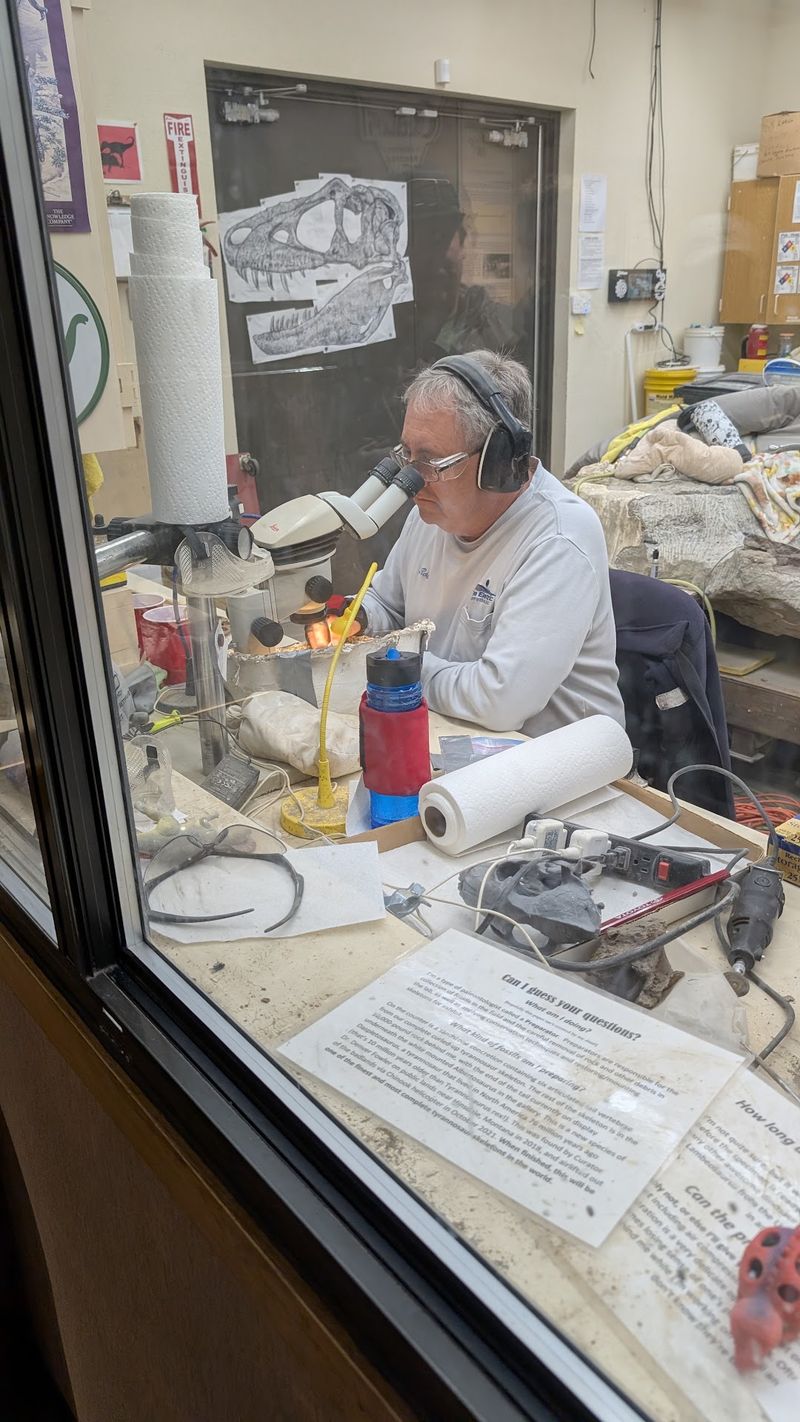
Ever wondered how a fossil goes from a dirty rock to a shiny display? A public-viewing window answers that question in real time.
Behind the glass sits the fossil preparation lab. Paleontologists clean and prepare newly found fossils for study and display.
This isn’t old news, either. Since 2016, the museum has collected fossils from the Hell Creek Formation of North Dakota and the Judith River Formation of Montana.
Many of those recent finds end up in the exhibits. Others sit in the lab while workers slowly remove rock from around them.
The work is careful and patient. Tiny tools and steady hands matter more than speed, because one wrong move could damage something millions of years old.
Staff may or may not be working during your visit, so timing is a bit of luck. Stop by the window more than once if your first look shows an empty table.
Kids who dream of digging dinosaurs will love this part. It shows that paleontology is a real job, done by real people, right here in town.
One Ticket Opens More Doors Than You Expect
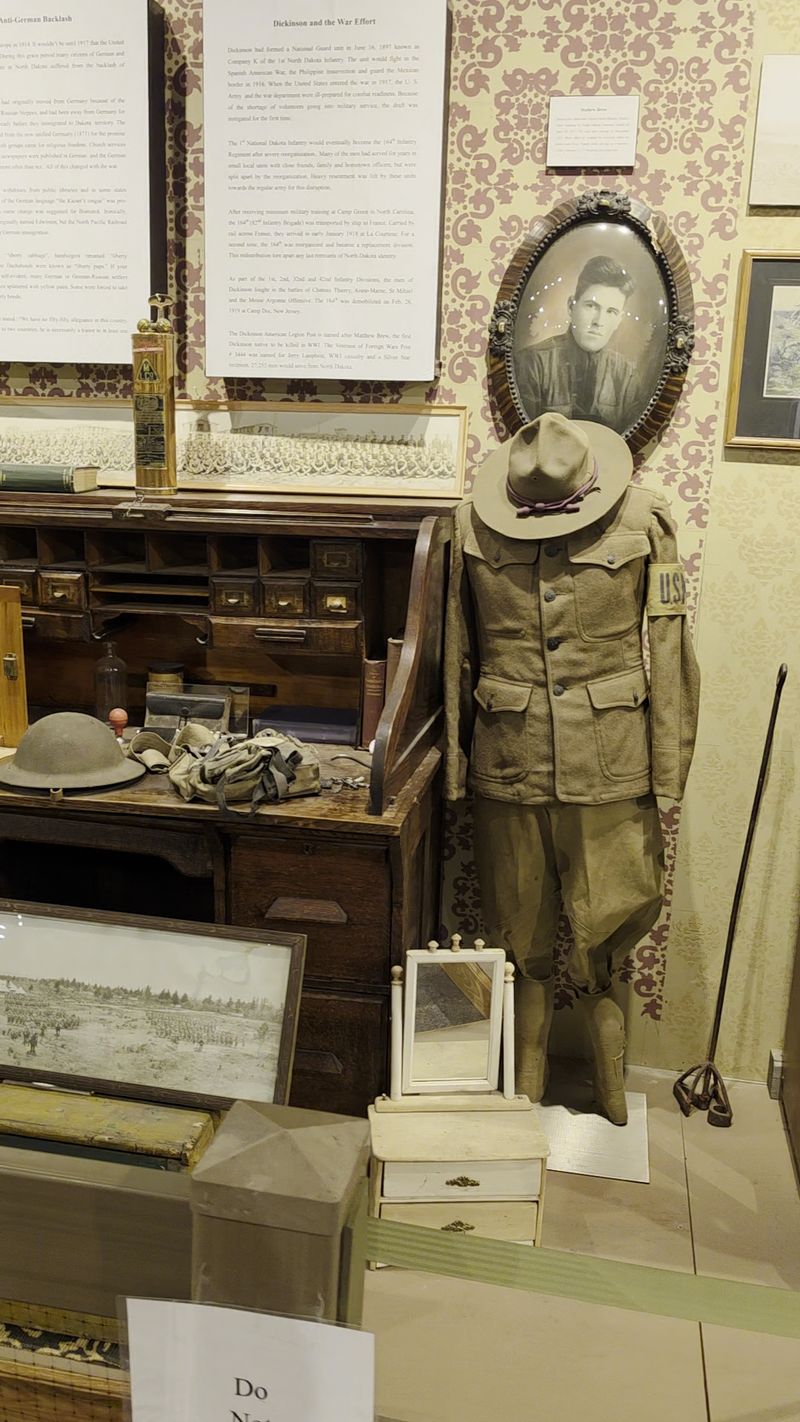
Good news for bargain lovers. Admission to the Badlands Dinosaur Museum also gets you into the Joachim Regional History Museum all year long.
That history museum covers stories from the Dickinson area. It makes a nice change of pace after hours of ancient bones.
Summer brings even more extras. Between Memorial Day and Labor Day, your ticket covers the Pioneer Machinery Hall too.
Guided tours of the Prairie Outpost Park buildings are also included during that season. These historic structures sit right next to the main museum building.
Pairing dinosaurs with pioneer history tells a long story about the same land. First came giant reptiles, and much later came homesteaders with plows and big dreams.
Give yourself extra time in summer. The outdoor buildings and machinery hall can easily stretch your visit beyond the dinosaur halls.
Wear comfy shoes for the outdoor portion. Prairie weather can be sunny and breezy, so a hat and water bottle won’t hurt. The fossils have waited millions of years, so they’ll understand.
Plan Your Trip Before The Calendar Runs Out
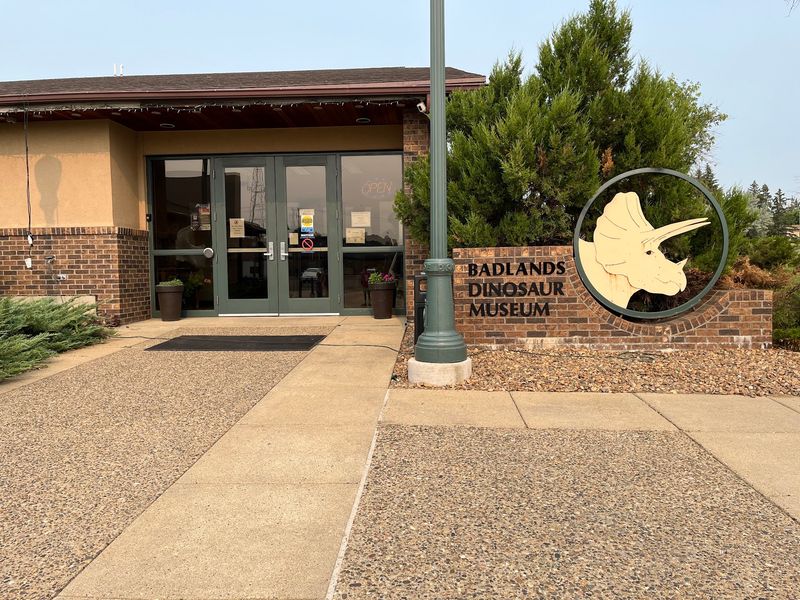
Finding the museum is easy. It sits at 188 Museum Dr E, Dickinson, ND 58601, just south of Interstate 94.
That location makes it a handy stop on a North Dakota road trip. You can hop off the highway, see dinosaurs, and get back on track.
Hours run Monday through Saturday from 9 AM to 5 PM year-round. Between Memorial Day and Labor Day, Sunday hours from noon to 5 PM are added.
The museum closes on most federal holidays. Upcoming closures include Veterans Day, Thanksgiving, Christmas, and New Year’s Day, so check the calendar before driving.
Driving an electric car? Free EV charging stations with J-1772 plugs are available for visitors.
Save a little time for the gift shop. It carries minerals, fossil specimens, toy dinosaurs, books, jewelry, and t-shirts.
Fall is a great time for a visit before 2026 wraps up. Just pick a weekday, skip the holidays, and let Bill know you’re coming. He’s been waiting a very, very long time.