If your commute ever feels busy, this Ohio River crossing would like a word.
It has been carrying traffic since the 1960s, and the job has only gotten bigger since then.
Much bigger.
Every day, a steady mix of cars and trucks rolls between Ohio and Kentucky while most drivers probably give the bridge about three seconds of thought.
That is what makes it interesting.
The steel truss may look familiar, but the story behind it includes traffic pressure, freight, major engineering decisions, and a new chapter now taking shape right beside it.
I find crossings like this easy to underestimate.
You drive over, watch the river disappear behind you, and move on.
Meanwhile, the bridge is handling a job far larger than the one it was originally built for.
So how much is this familiar crossing really carrying?
More Than 160,000 Vehicles Cross Each Day
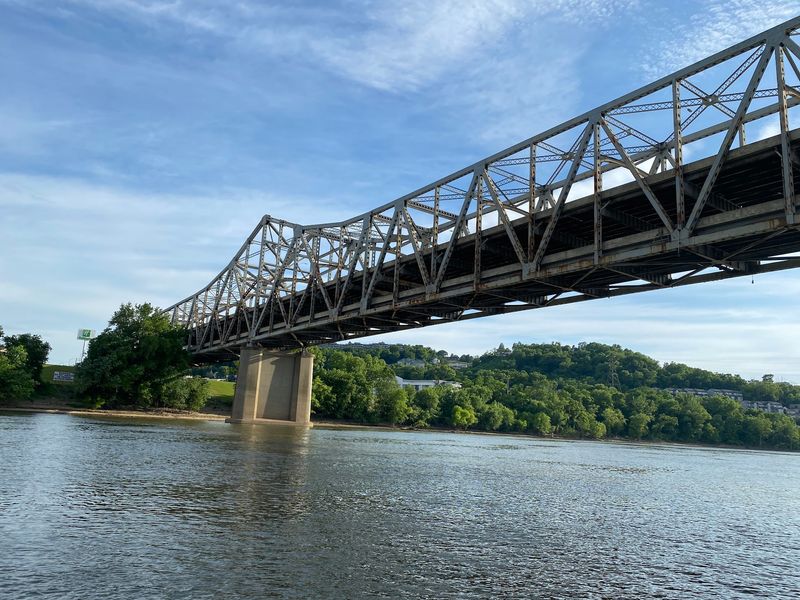
The biggest number attached to the Brent Spence Bridge is also the easiest to miss from behind the wheel. More than 160,000 vehicles use the crossing each day, roughly twice the volume the bridge was designed to accommodate when it opened.
Morning commuters mix with interstate travelers, delivery vehicles, and trucks following a route that connects the Midwest with points farther south.
At peak periods, there is little room for traffic to spread out, so a routine crossing can slow quickly when several streams meet at once.
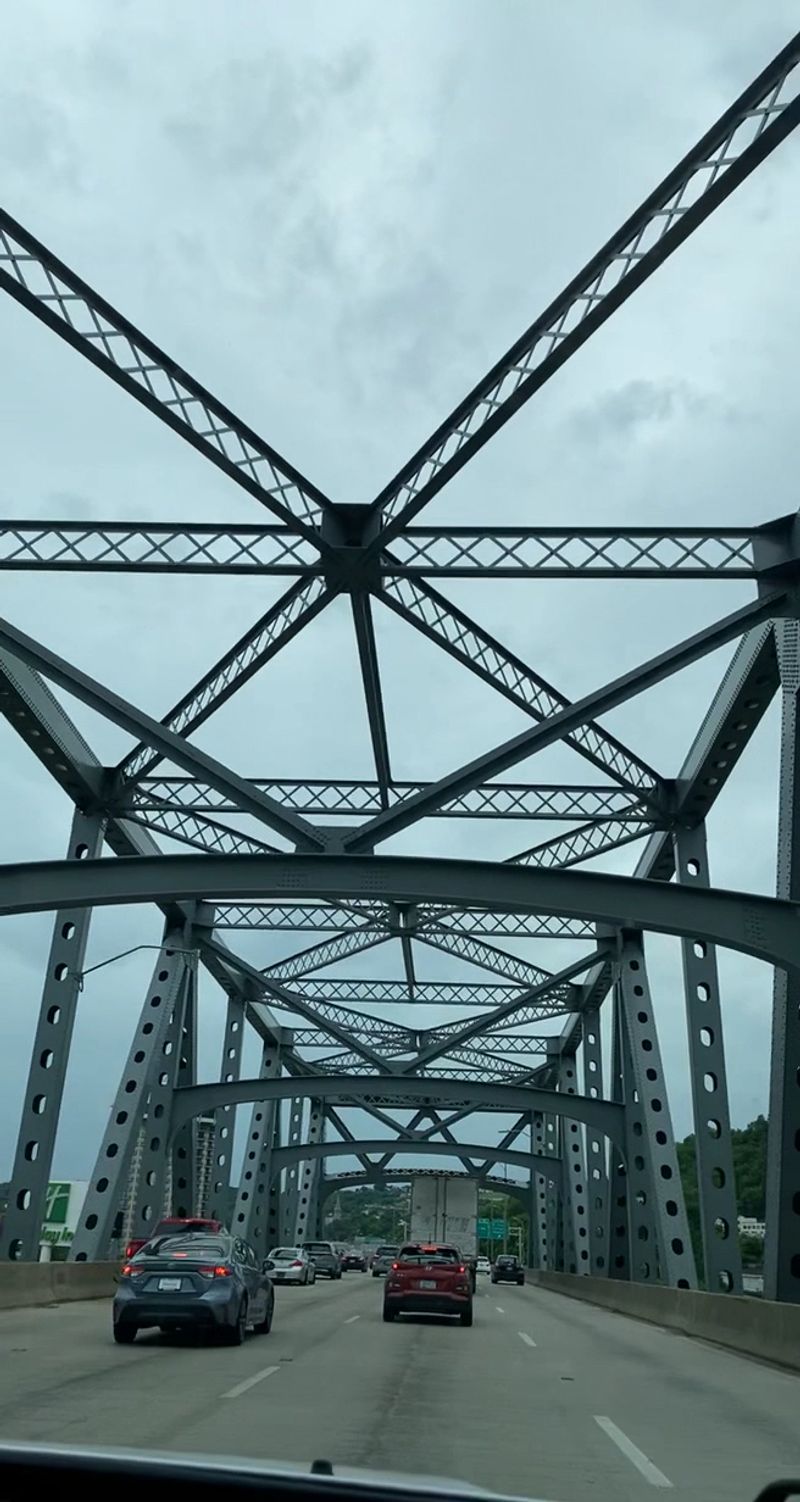
The bridge now carries four lanes in each direction on two roadway levels. Southbound traffic uses the upper deck, while northbound traffic runs below it. Drivers do not need an engineering lesson to feel how compact that arrangement is.
A lane change that seems simple on a wide interstate can demand more attention here, especially when trucks and local traffic are moving through the same stretch.
Timing changes the experience. Outside the busiest periods, the crossing may feel almost uneventful. During heavier travel, brake lights can stack up fast.
Construction in the surrounding corridor gives drivers another reason to check conditions before heading through.
Two Interstates Share A Double-Decker Crossing
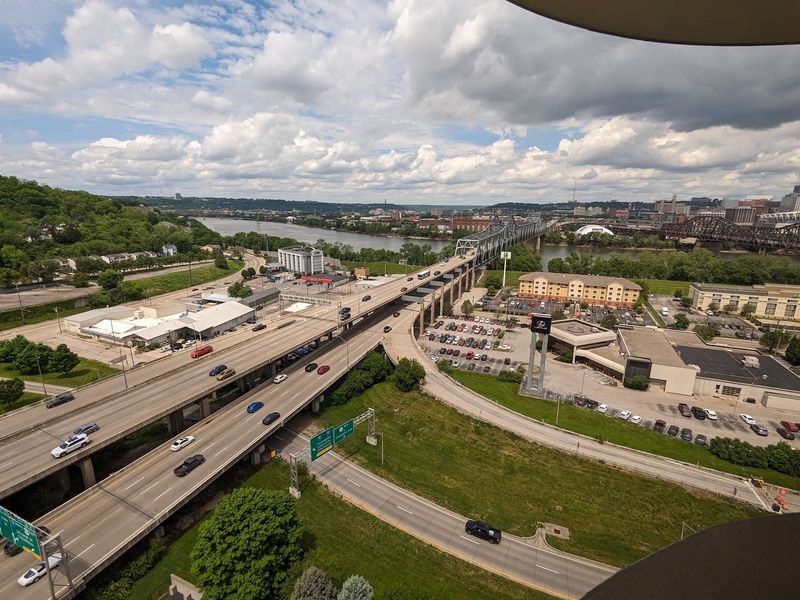
The bridge carries both I-71 and I-75, placing two major interstate routes on the same river crossing. Its double-decker layout lets traffic move on stacked roadway levels instead of spreading across one broad deck, giving the structure its distinctive profile.
Southbound traffic uses the upper deck. Northbound traffic uses the lower deck. Each level currently has four 11-foot travel lanes, with only narrow shoulder space on either side.
That configuration dates to 1985, when the original emergency shoulders were removed so a fourth lane could be added in each direction.
The crossing sits on I-71/I-75 over the Ohio River between Cincinnati, Ohio, and Covington, Kentucky.
Downtown streets, regional commuter traffic, and long-distance interstate travel all meet near the approaches, which helps explain why the area can feel busy before the bridge even comes into view.
From the driver’s seat, the two levels are the detail most likely to stick. One opens toward the sky, while the other runs beneath the roadway above.
When traffic moves well, the river crossing happens quickly enough that the scale of the structure is easier to appreciate from outside the car.
The Bridge Was Built For Far Less Traffic
When the Brent Spence Bridge opened on November 25, 1963, it had three lanes in each direction and was designed to accommodate about 80,000 vehicles per day. Regional and interstate traffic eventually moved far beyond that figure.
By 1985, officials had changed the roadway configuration to create more capacity. The emergency shoulders were removed and the decks were restriped to fit four travel lanes in each direction.
The change helped move more vehicles across the river without building another span, but it also produced the tight lane-and-shoulder arrangement drivers know today.
Now the crossing handles more than twice its original design volume. That does not mean the bridge has been declared structurally unsound.
Engineers continue to consider the existing structure structurally sound, and the current project is built around keeping it in service.
The larger challenge is traffic. Local trips, interstate travel, freight movement, and downtown access have been sharing the same constrained crossing.
The future layout will divide that workload between two bridges instead of asking one structure to keep handling every type of trip in the same space.
Freight Gives This Crossing National Weight

Passenger cars make up much of the daily traffic, but freight gives the corridor importance far beyond Cincinnati and Covington. About 24,000 trucks use the crossing each day, moving goods through a route that forms part of a much larger north-south transportation network.
Hundreds of billions of dollars in freight move through the corridor each year. I-75 stretches from the Great Lakes region toward the South, tying the bridge into commercial trips that can begin or end hundreds of miles away.
That broader role is easy to forget when you are simply trying to merge before the next exit. Trucks, local cars, and long-distance travelers have different destinations, yet they share the same limited roadway as they approach the bridge.
Heavy demand alone can create backups, especially when commuter periods overlap with steady commercial traffic.
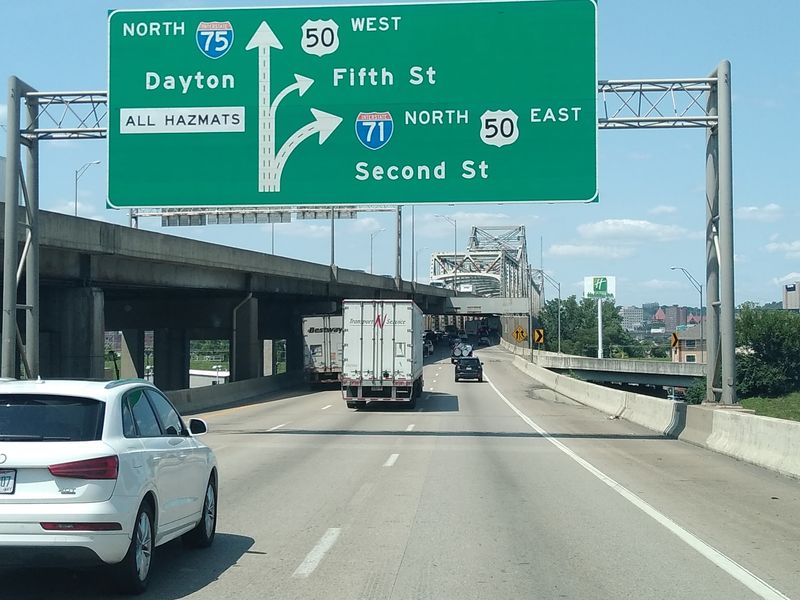
For drivers, the practical choice is straightforward: check the route before leaving, allow extra time when traffic is building, and watch lane signs closely as downtown exits and interstate movements begin to split.
A few minutes of planning can make this part of the drive considerably less complicated.
Spring 2026 Brought A Major Construction Milestone
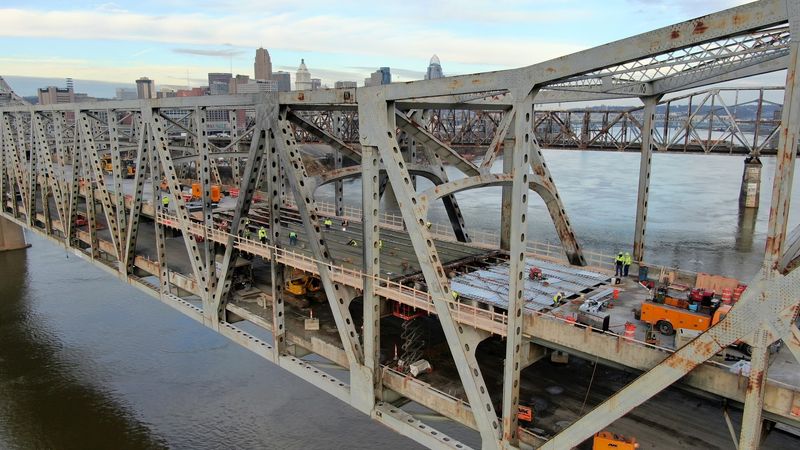
The long-planned corridor project became much more visible in 2026. Heavy construction began in the spring, and a formal groundbreaking took place on May 8 at the site where the new companion bridge will cross the Ohio River.
The work reaches well beyond one new span. The Brent Spence Bridge Corridor Project covers roughly eight miles of I-71 and I-75 through Kentucky and Ohio.
It includes highway reconstruction, redesigned ramps, the new companion bridge, and rehabilitation of the existing Brent Spence Bridge.
That scale means the surrounding road network will keep changing as construction moves forward. Work on approaches, ramps, retaining walls, structures, and nearby streets is part of the same effort, so the river crossing is only one piece of what travelers will see.
Regular drivers have a good reason to check the route before leaving. A familiar exit may operate differently, a ramp may close for an extended period, or lanes may shift while crews create space for future connections.
The basic crossing remains in service, but advance planning can save plenty of last-minute lane changing.
The New Companion Bridge Will Take Through Traffic
The new structure is not meant to replace the Brent Spence Bridge. It will stand immediately to the west and work beside it, giving long-distance interstate traffic a separate path across the Ohio River.
The companion bridge is planned as a double-decker structure with five lanes on each deck. Through traffic on I-71 and I-75 will use the new crossing, while shorter local trips between Cincinnati and Covington will remain on the existing bridge.
Separating those movements is the central idea behind the project.
Once finished, the change should be easy to understand from the driver’s seat. Staying on the interstate will mean following the through route onto the new bridge. Heading into the downtown areas will keep local drivers on the older span and its connected street network.
That should reduce the amount of weaving created when local exits and long-distance trips compete for the same space.
The companion bridge is expected to open in 2031, depending on weather and construction schedules. Work on the broader approaches is expected to continue afterward, with substantial completion projected for 2033.
Until then, the construction zone will keep evolving as the new crossing gradually becomes part of the river view.
The Original Brent Spence Bridge Is Staying In Service

The original bridge is not headed for demolition when its new neighbor opens. Plans call for the Brent Spence Bridge to be rehabilitated, reconfigured, and kept in service for local traffic between Cincinnati and Covington.
Part of that work will reverse the lane change made in 1985. The bridge is planned to return to three lanes on each deck instead of four. Emergency shoulders will be restored, the bridge decks will be replaced, and steel repairs will be completed where needed.
That gives the 1963 structure a more focused job. Local trips will use it, while interstate through traffic shifts to the companion bridge.
The change is designed to give both types of drivers clearer routes across the river without forcing every movement into the same tight crossing.
For anyone who has used the Brent Spence Bridge for years, the future may feel familiar and different at once. The steel truss will remain. The river will still open beneath the roadway.
Cincinnati and Covington will still sit on opposite banks. What changes is the workload.
Until that transition happens, the bridge continues carrying an extraordinary amount of daily traffic across the Ohio River.
Most trips will still be about reaching the next exit or continuing down the interstate. Knowing what is happening beneath and beside those lanes simply makes the crossing harder to overlook.