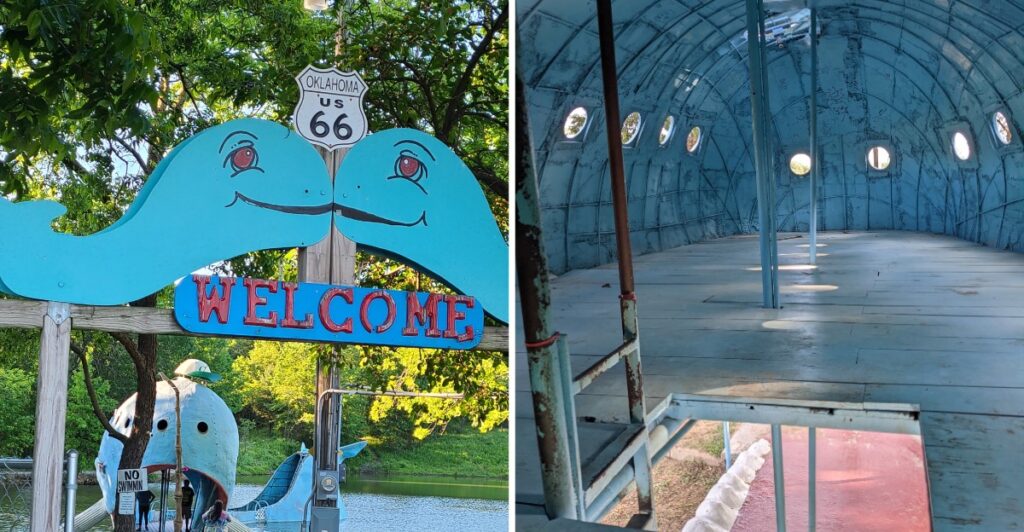
You can ignore a lot of things from the car.
An enormous smiling blue whale beside Route 66 is not one of them.
It has been making travelers pull over in Catoosa since the early 1970s, when a local zoologist turned a family project into something much bigger than expected.
And yes, you can walk right inside it.
The pond once welcomed swimmers. Today, the stop is more relaxed.
Walk the grounds. Bring a fishing pole. Grab a picnic table.
Or just stand there for a minute and appreciate the fact that Oklahoma has an eighty-foot whale beside the highway.
Admission is free, which makes pulling over even easier.
Personally, I would stop for the photo and stay for the story.
How often does a giant blue whale practically wave you in from Route 66?
Hugh Davis Built The Whale For His Family
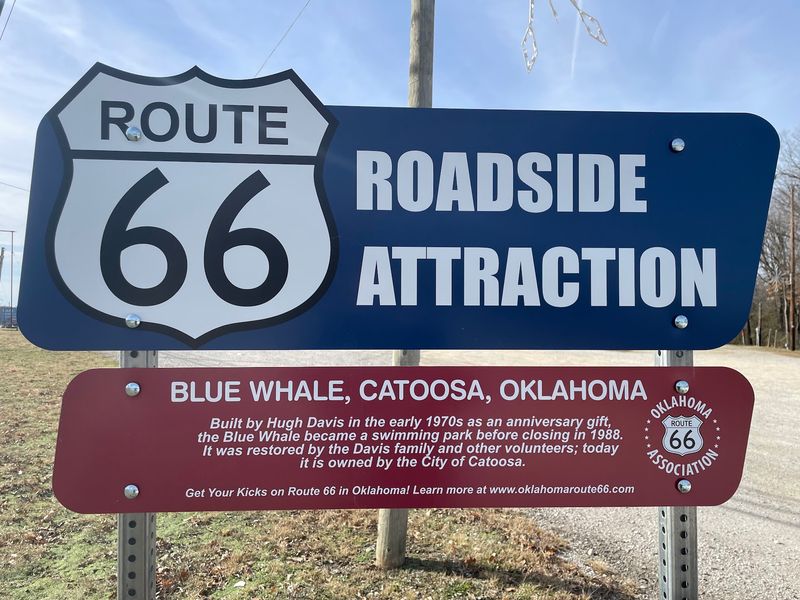
Hugh S. Davis built the Blue Whale as a place where his grandchildren could play and swim.
Davis was a zoologist, and his friend Harold Thomas helped with the construction.
The shape is built around a welded metal framework covered with cement.
Davis and Thomas handled the construction themselves rather than ordering a prefabricated roadside attraction.
The whale began as a family project beside the Davis pond and later became part of a public swimming, fishing, and picnicking site.
When you visit today, the whale still sits in the same pondside setting that shaped the original project.
Walk around the structure before heading inside. From the side, its length is easier to see, while the front gives you the full view of its wide mouth and rounded head.
The pond remains an important part of the property even though swimming has ended. Fishing, picnicking, and time around the water continue to connect the site with its earlier recreation history.
The Giant Blue Landmark Was Finished In 1972
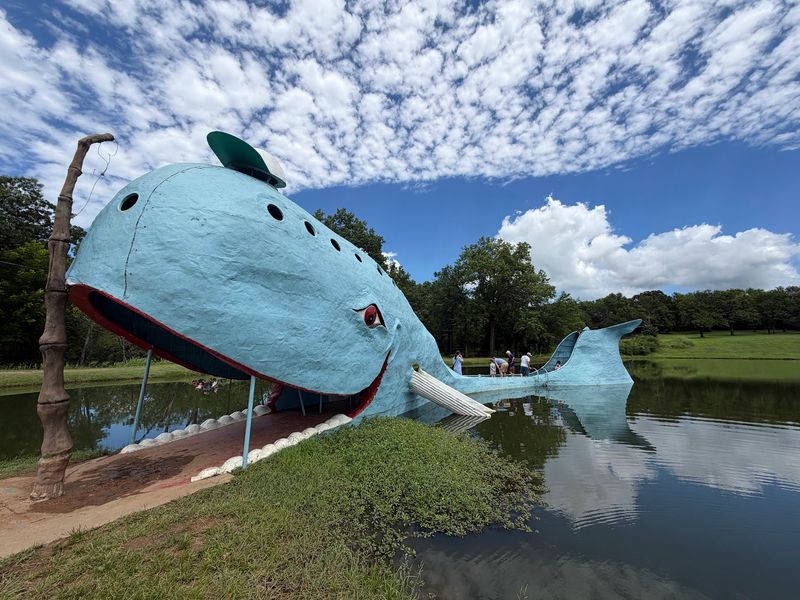
Construction took about two years.
Davis and Thomas first welded the internal metal framework, building the whale’s shape section by section.
They then covered that framework with cement mixed and applied by hand. The cement was mixed and applied one five-gallon bucket at a time.
The whale was completed in July 1972.
It stands about 20 feet tall and measures roughly 80 feet from end to end.
Those dimensions make it visible well before you reach the pond’s edge.
The handmade construction remains obvious when you look closely at the surface and the shape of the body.
The welded framework and hand-applied cement formed the permanent structure completed in 1972.
Over the decades, the structure has needed maintenance and restoration work to keep the exterior, grounds, and visitor areas usable.
Walk around both sides if the grounds are open. The scale changes depending on whether you are standing near the head, looking across the pond, or viewing the full body from farther away.
The surrounding Route 66 setting also makes the whale easy to include in a longer drive through northeastern Oklahoma.
Swimmers Once Climbed And Played Around The Whale
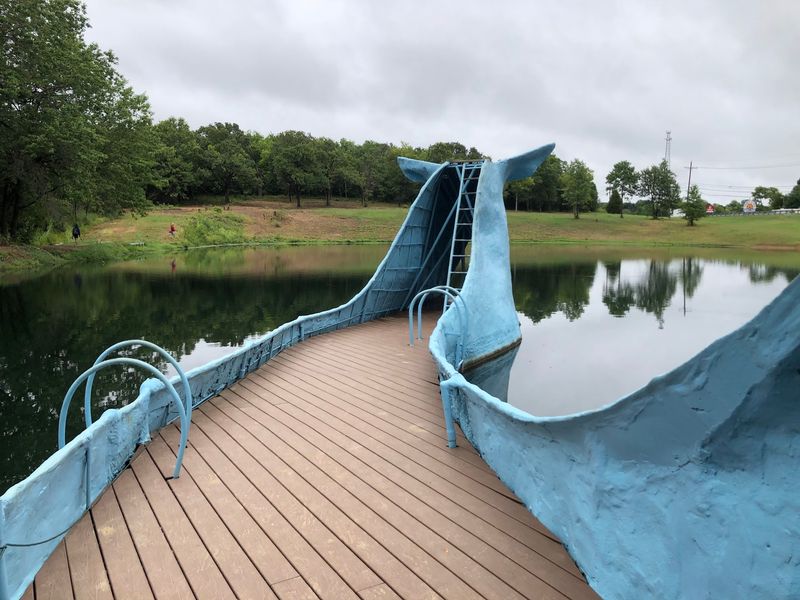
The Blue Whale once functioned as part of a public swimming area.
Visitors climbed on the structure, entered the water from around the whale, and used the pond for swimming during the attraction’s earlier years.
The site also included fishing and picnicking.
Swimming eventually ended when the attraction closed in 1988.
Today, swimming is no longer allowed in the pond.
That rule applies even though the whale’s original design and history remain closely connected to water recreation.
You can still walk around the pond and explore the whale from land.
Historical photographs and other displays in the current visitor center help show how the property looked during its swimming era.
If you are visiting with children, explain the difference before arriving so nobody expects a swimming stop.
The water now serves as part of the scenery and fishing area rather than a public swimming hole.
You may see turtles around the pond, and visitors can feed them during a stop.
Keep to the designated visitor areas and follow posted rules around the water.
Current activities include walking around the whale, fishing, picnicking, and exploring the Route 66 site.
The Old Swimming Hole Became A Route 66 Landmark
The Blue Whale sits directly along historic Route 66 in Catoosa.
The site later opened to the public for swimming, fishing, picnicking, and roadside visits.
The City of Catoosa now owns and operates the property.
The grounds remain open as a public attraction, and admission is free.
You do not need to plan an entire afternoon around the stop unless you want extra time for fishing, picnicking, the visitor center, or the gift shop.
For a shorter visit, walk around the whale, step inside, look across the pond, and spend a little time with the historical material on site.
The Route 66 setting also makes it easy to combine the Blue Whale with other roadside stops in the area.
Because operating hours can change, check current access before setting out.
The site has gone through major restoration and improvement work in recent years, including updates to visitor facilities and the grounds.
Those changes have added modern amenities without changing the whale’s original position beside the pond.
Walk around the structure, step inside, and leave time for the pond and visitor center.
Visitors Can Still Walk Inside The Giant Structure
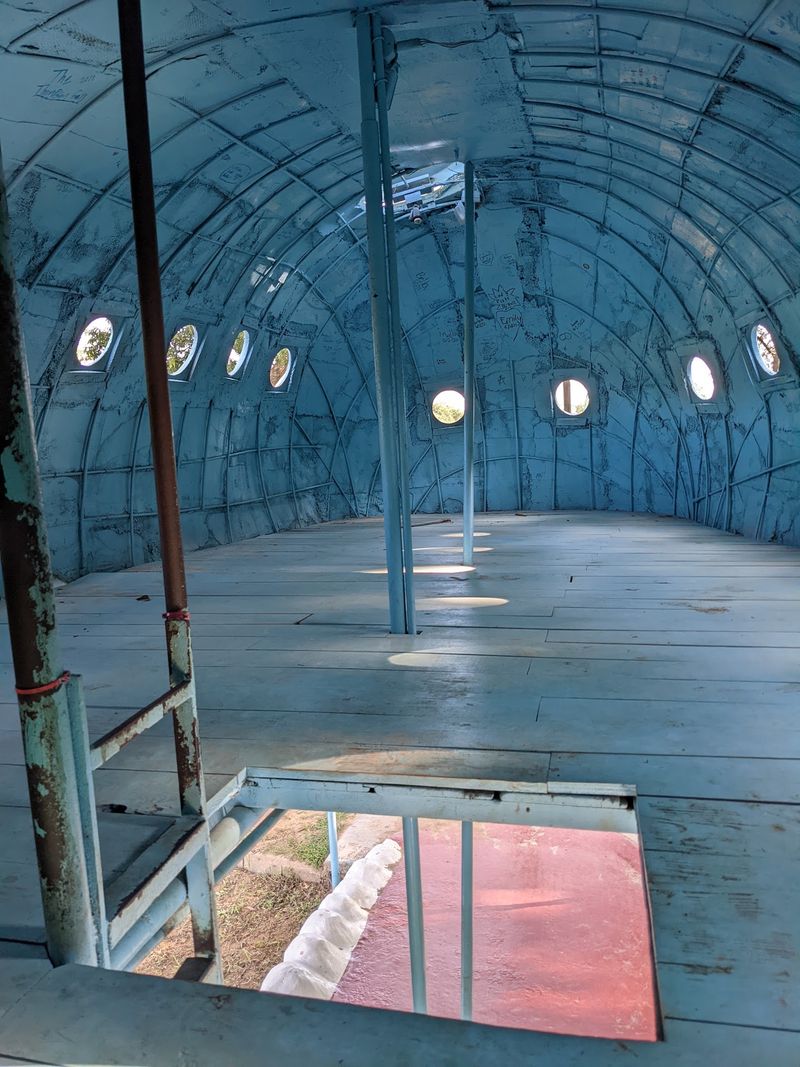
Visitors can still walk inside the Blue Whale.
The wide mouth opens into the interior, where you can see the curved structure from the inside rather than only viewing it from across the pond.
A small ladder also leads into a compartment inside the whale’s head.
Access to individual upper areas can change, so follow any current barriers or instructions posted on site.
Move carefully inside the structure.
The whale is more than 50 years old, and some interior spaces are tighter than the open grounds outside.
Keep children close and avoid climbing beyond areas intended for visitors.
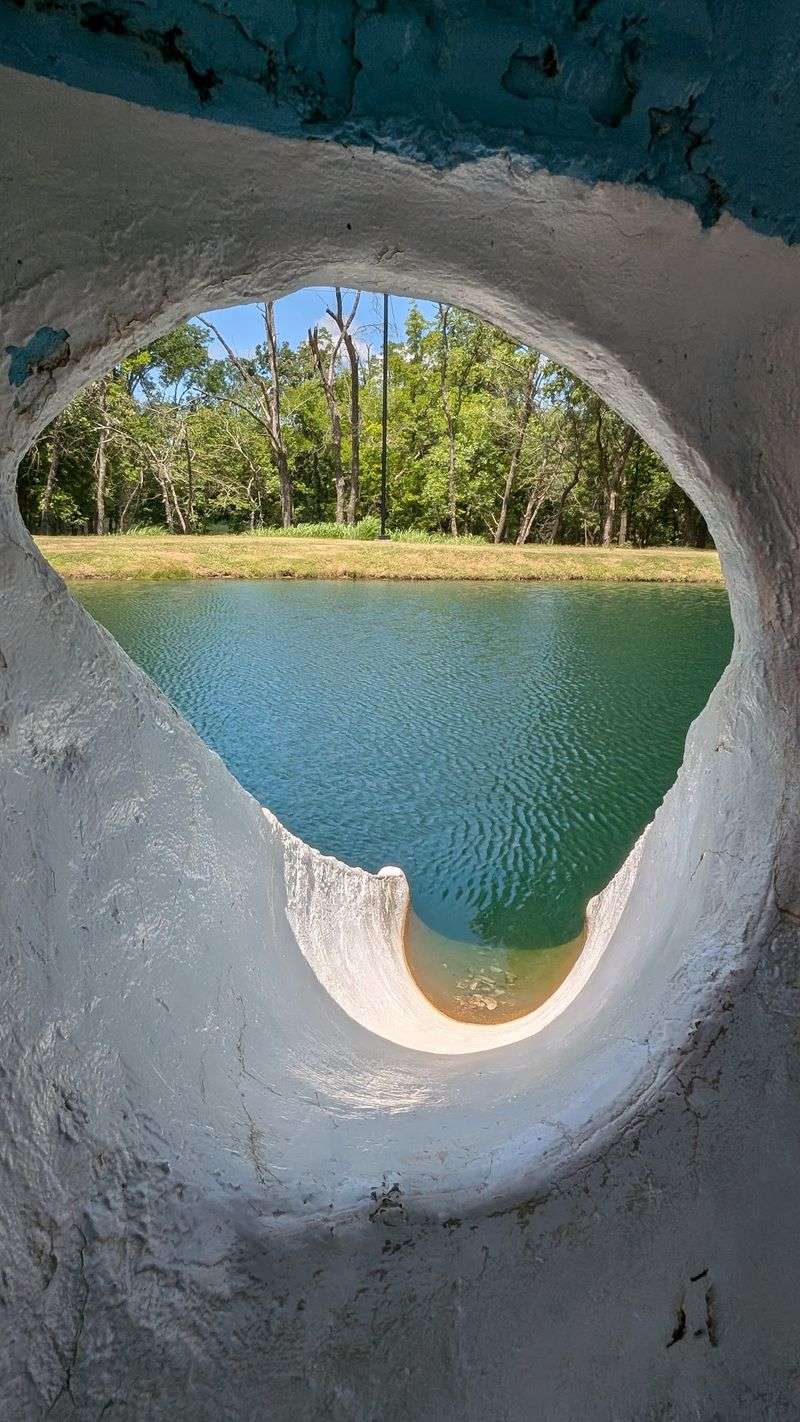
The interior also gives you a different view back toward the pond.
If you want photos, stand inside the mouth and frame the water through the opening without blocking other visitors.
Take your time when using the ladder or moving through narrower sections.
The attraction is not designed like a modern indoor exhibit with wide hallways and flat floors throughout.
That irregular layout is part of the original structure.
Once you have explored the inside, step back outside and walk around the body to see how the interior connects with the whale’s overall shape.
Fishing And Picnicking Keep The Pond Part Of The Experience
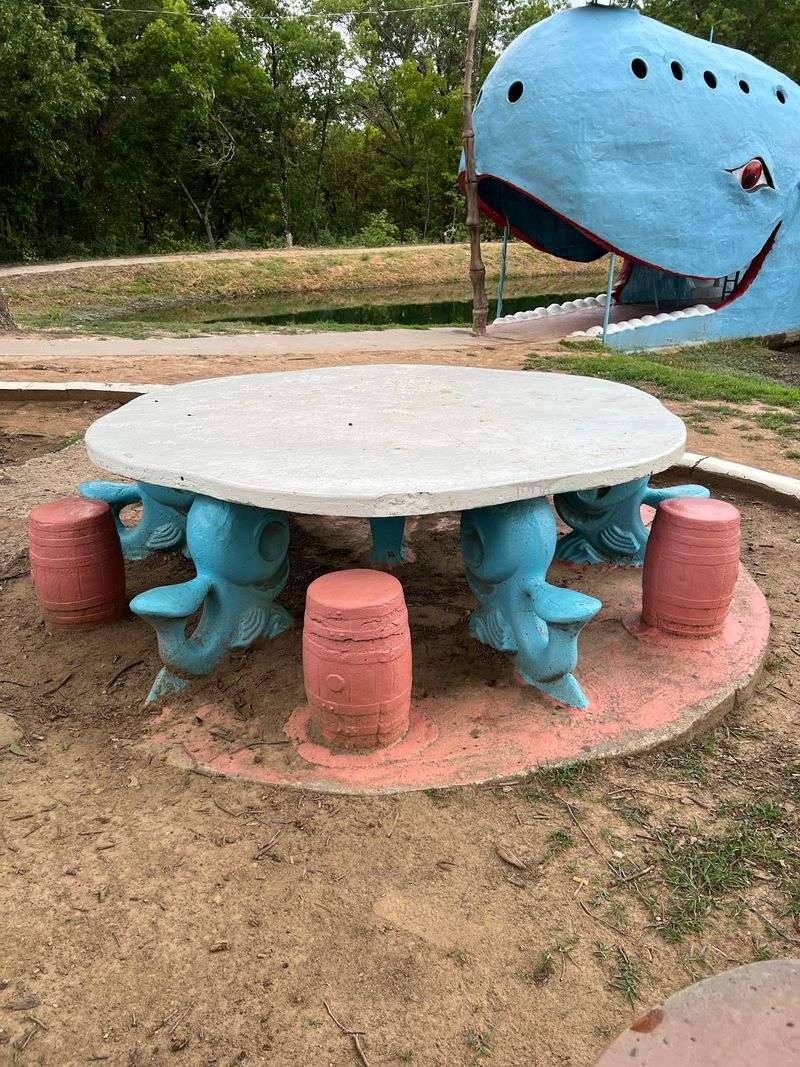
Fishing and picnicking remain part of the current Blue Whale experience.
Visitors can fish around the pond, use the grounds for a break, and spend time near the water without swimming.
Picnic areas give you room to stop longer than a quick roadside photo.
The pond also supports turtles, and visitors can feed them during a stop.
A newer visitor center has changed the practical side of the stop.
The roughly 4,000-square-foot facility includes a gift shop, historical photographs and artwork, updated visitor amenities, restrooms, a concession area, and meeting or event space.
Offerings at the concession area can change, so check what is available when you arrive rather than planning a full meal around a specific item.
If you want to fish, bring the equipment you need and follow current local rules.
For a picnic, use the designated areas and keep the grounds clean when you leave.
The pond is no longer a swimming hole, but it remains central to the site through fishing, wildlife, and the views around the whale.
The visitor center also gives you an indoor place to look through historical material before or after walking the grounds.
More Than 50 Years Later The Blue Whale Remains Open Along Route 66
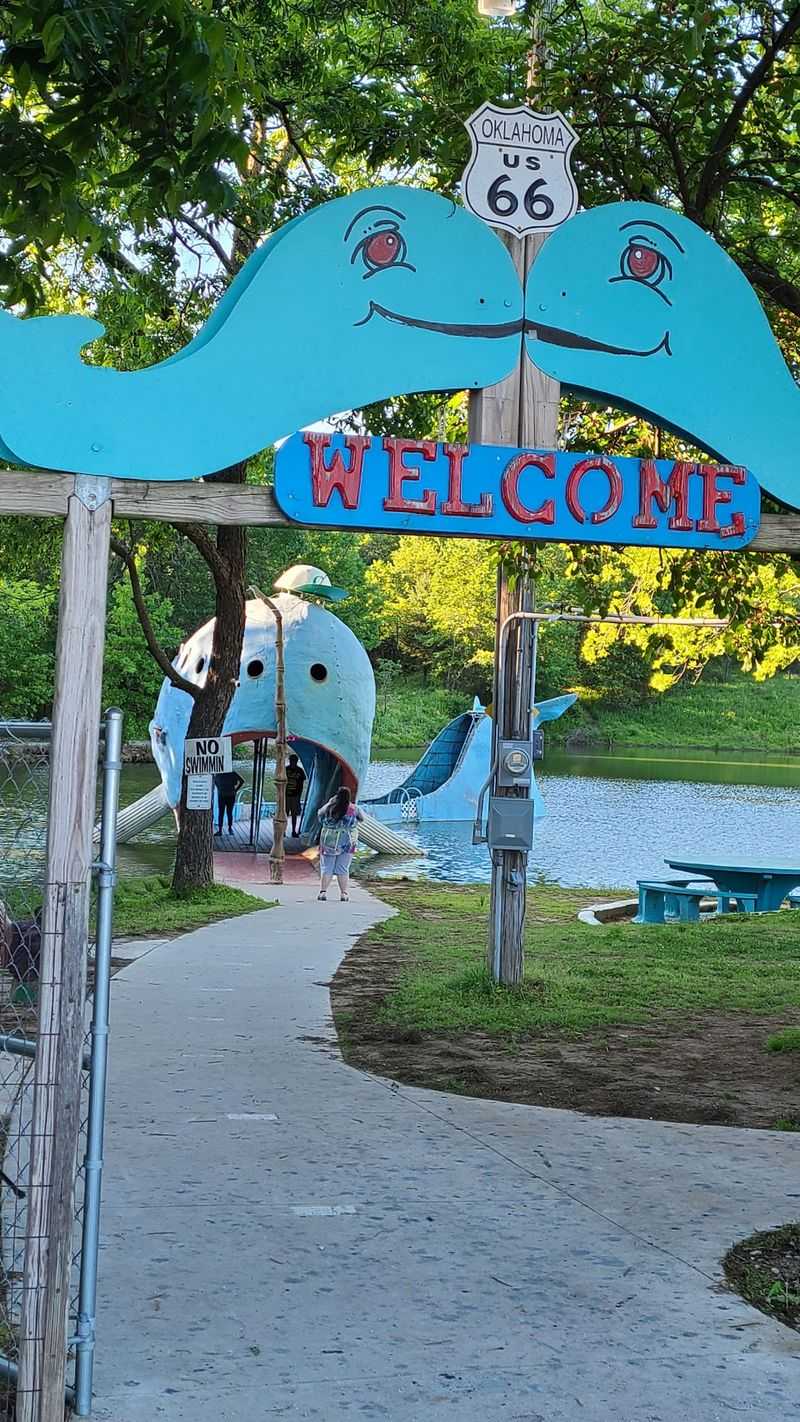
The Blue Whale was completed in 1972 and remains open to visitors more than five decades later.
Admission is free.
The attraction now combines the original whale and pond with updated visitor facilities created through recent restoration work.
The newer visitor center adds indoor space, a gift shop, historical material, concessions, restrooms, and event facilities to the property.
The whale itself remains the central feature.
You can walk around it, enter the structure, look across the pond, fish, picnic, and spend time with the site’s Route 66 history.
Seasonal schedules and operating hours can change, so check current information before driving out.
The Blue Whale is located at 2600 N State Hwy 66, Catoosa, OK 74015.
Allow enough time to see both the outdoor structure and the newer visitor center.
A shorter stop can cover the whale and pond, while a longer visit leaves room for fishing, a picnic, historical displays, and the gift shop.
Keep swimming off the plan, stay within the public areas, and follow any posted instructions around the structure and water.
More than 50 years after its completion, the Blue Whale still stands beside Route 66 in the same pondside setting where Hugh Davis’s family project began.