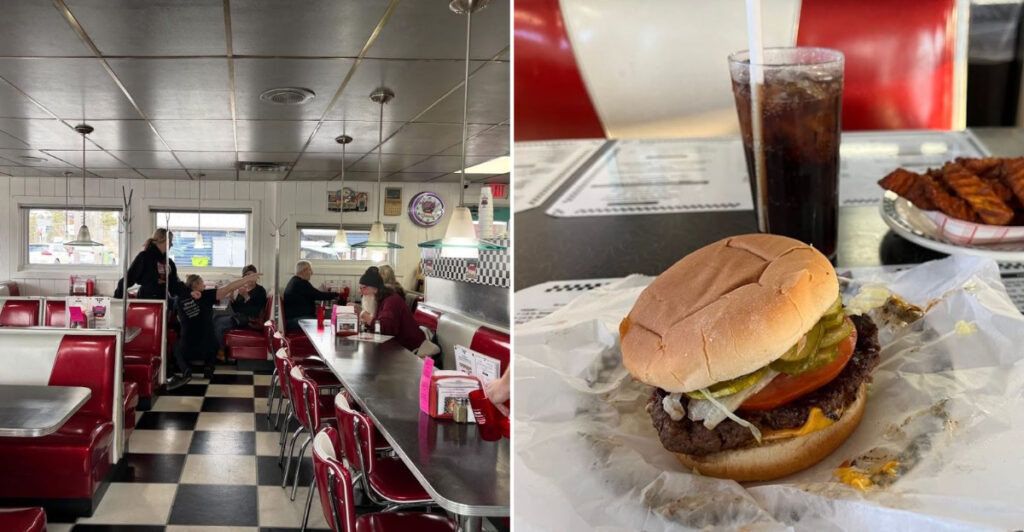
Some burgers are neatly wrapped. Some burgers really feel like they need a seatbelt.
I will always choose the second one.
That is why an old-school Michigan drive-in still matters.
It has never needed to chase novelty or perform for attention. Decades of loyal customers already settled the argument.
The real appeal is the consistency that never becomes dull.
People return because the food remembers what made them happy the first time, then delivers it again without fuss. That kind of reliability is rare enough to feel rebellious now.
Some restaurants spend years trying to become legends. This one simply kept doing its job until the title became unavoidable.
The result carries nostalgia without becoming trapped by it.
Michigan has preserved a burger tradition that still knows exactly how to win people over.
The Pink Landmark Has Served Traverse City Since 1958
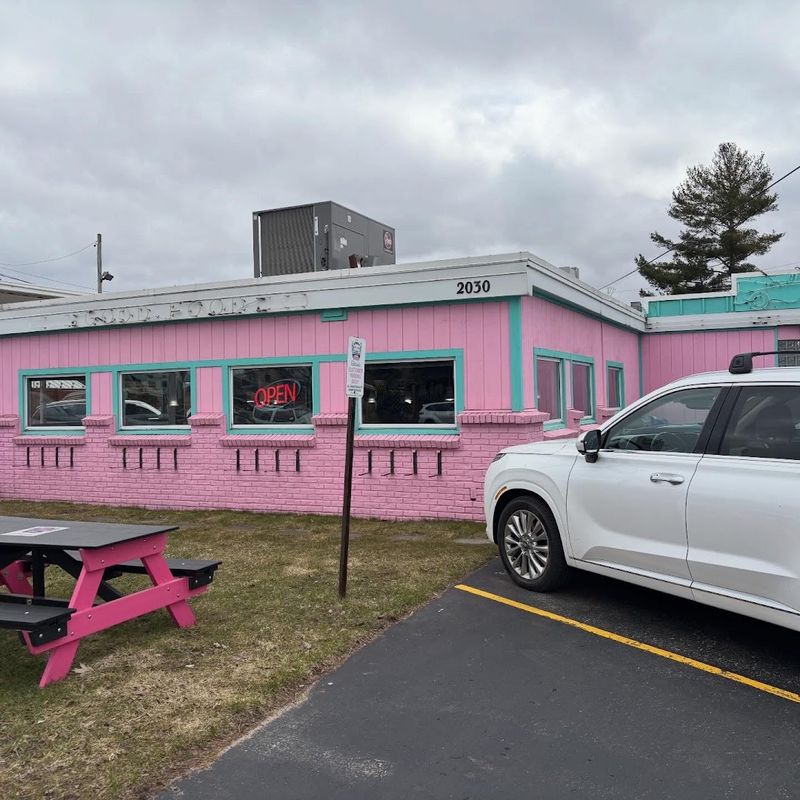
Sixty-plus birthdays give a restaurant permission to skip the costume department. Don’s Drive-In opened in 1958 and has served Traverse City ever since.
The opening year places it squarely inside the original American drive-in era. It did not recreate that format decades later for decoration.
Local tourism information confirms a long-running lunch and dinner menu featuring burgers, soups, sandwiches, and milkshakes. Those categories offer continuity without freezing the kitchen in time.
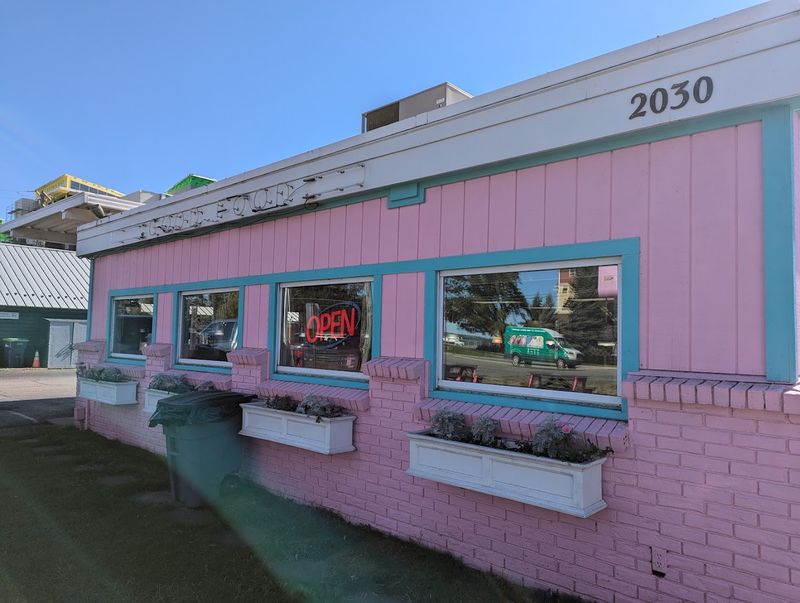
The bright pink building also gives the business an unmistakable roadside identity. A neon sign shaped like a tail-finned car strengthens the period connection.
Longevity alone cannot explain a menu, but it gives every unchanged feature useful context. Here, history comes with grill marks instead of footnotes.
That combination separates an authentic survivor from a newer retro concept. The calendar did the decorating, and it took its sweet time.
That history also gives first-time visitors a point of entry. You do not need to understand every detail of drive-in culture before ordering.
The building, menu, and roadside setup explain the tradition while lunch handles the rest.
The Address Puts Roadside Dining Beside East Bay
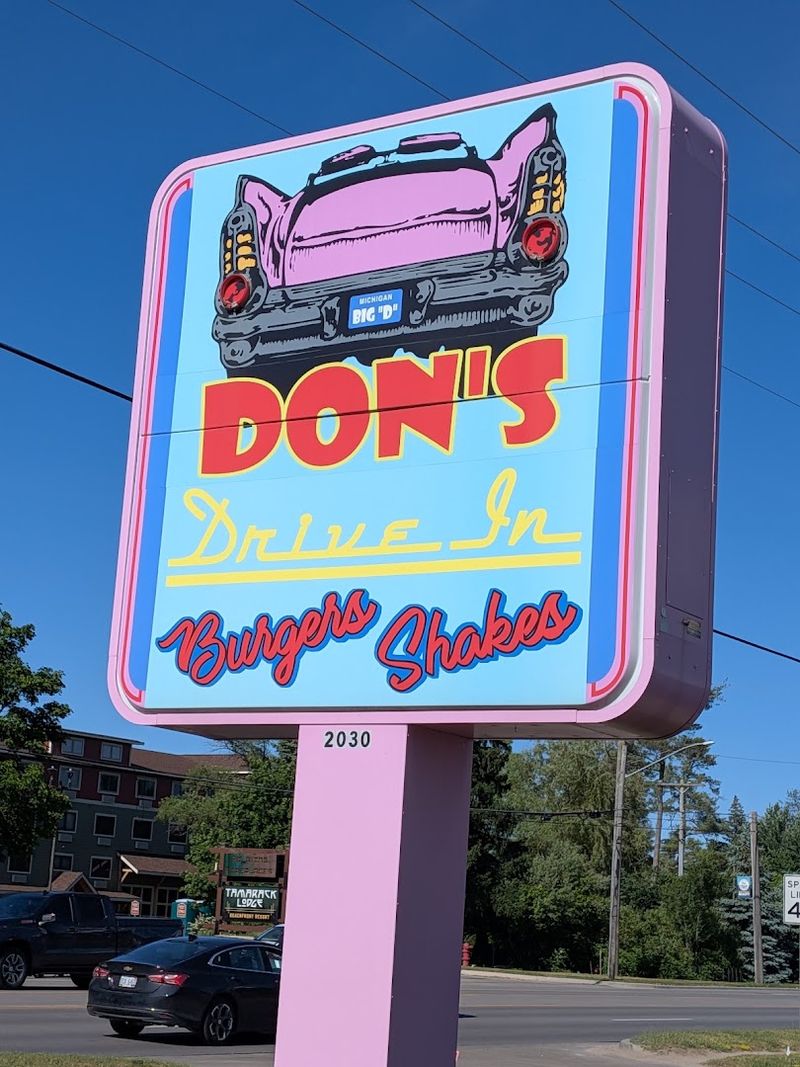
A drive-in needs a road, and this one chose a heavily traveled stretch. U.S. 31 carries the restaurant through Traverse City’s East Bay area.
The pink facade sits near Four Mile Road, making the building easy to identify. Its roadside position supports the car-oriented format instead of merely referencing it.
The correct address is 2030 US 31 N, Traverse City, Michigan. That location appears consistently in official business information, local tourism records, and map routing.
Outdoor seating also sits beside the building. Grand Traverse Bay lies beyond the roadway and gives this drive-in a northern shoreline context.
Most importantly, the address belongs to an operating restaurant, not a preserved display. Burgers, shakes, and Coney dogs keep the property focused on food.
The road does more than lead to lunch here. It explains why cars shaped the restaurant in the first place.
The location also makes the stop useful during a Traverse City day.
You can pair lunch with shoreline views, nearby parks, or a drive along the bay without forcing the restaurant into an elaborate itinerary at all.
The Quarter-Pound Cheeseburger Leads A Proven Combination
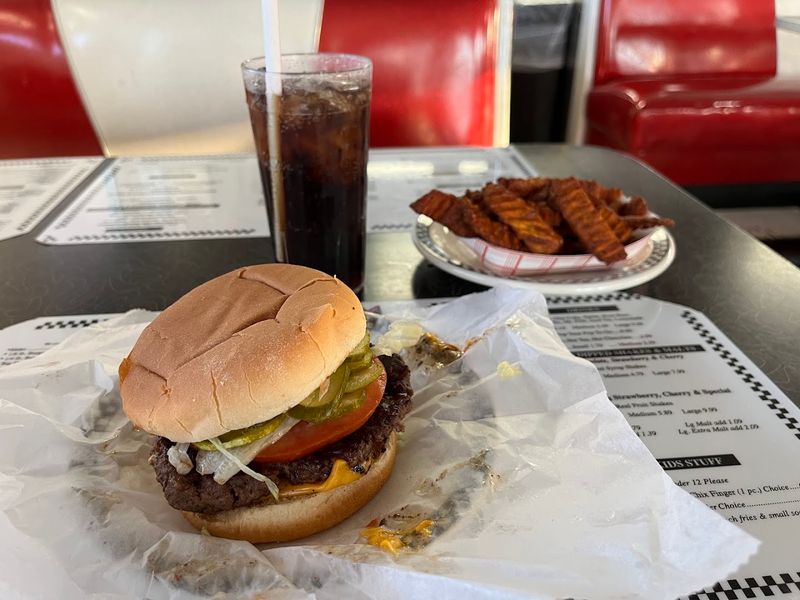
Start with the order that has carried the menu for decades. The quarter-pound cheeseburger anchors Don’s familiar pairing of burger, fries, and shake.
A local food feature identified that trio as the restaurant’s most popular meal. The combination also matches the categories emphasized in current business materials.
Cheese may join lettuce, tomato, mayonnaise, ketchup, mustard, onion, and pickle. Diners can adjust those toppings, so the burger does not depend on one fixed arrangement.
The patty size lands between the smaller burger and larger specialty builds. It offers the clearest introduction to the kitchen’s long-running grill format.
French fries add the expected drive-in partner, while a shake completes the restaurant’s signature structure. Each component has a separate job and a long history here.
Why complicate a combination with decades behind it? Some menus need a diagram, but this one fits comfortably on a napkin.
The appeal comes from balance rather than excess.
Beef, cheese, toppings, fries, and a shake create a complete drive-in order without turning lunch into a stunt. It is familiar food doing exactly what generations expected from it.
The Big D Gives Two Patties Top Billing
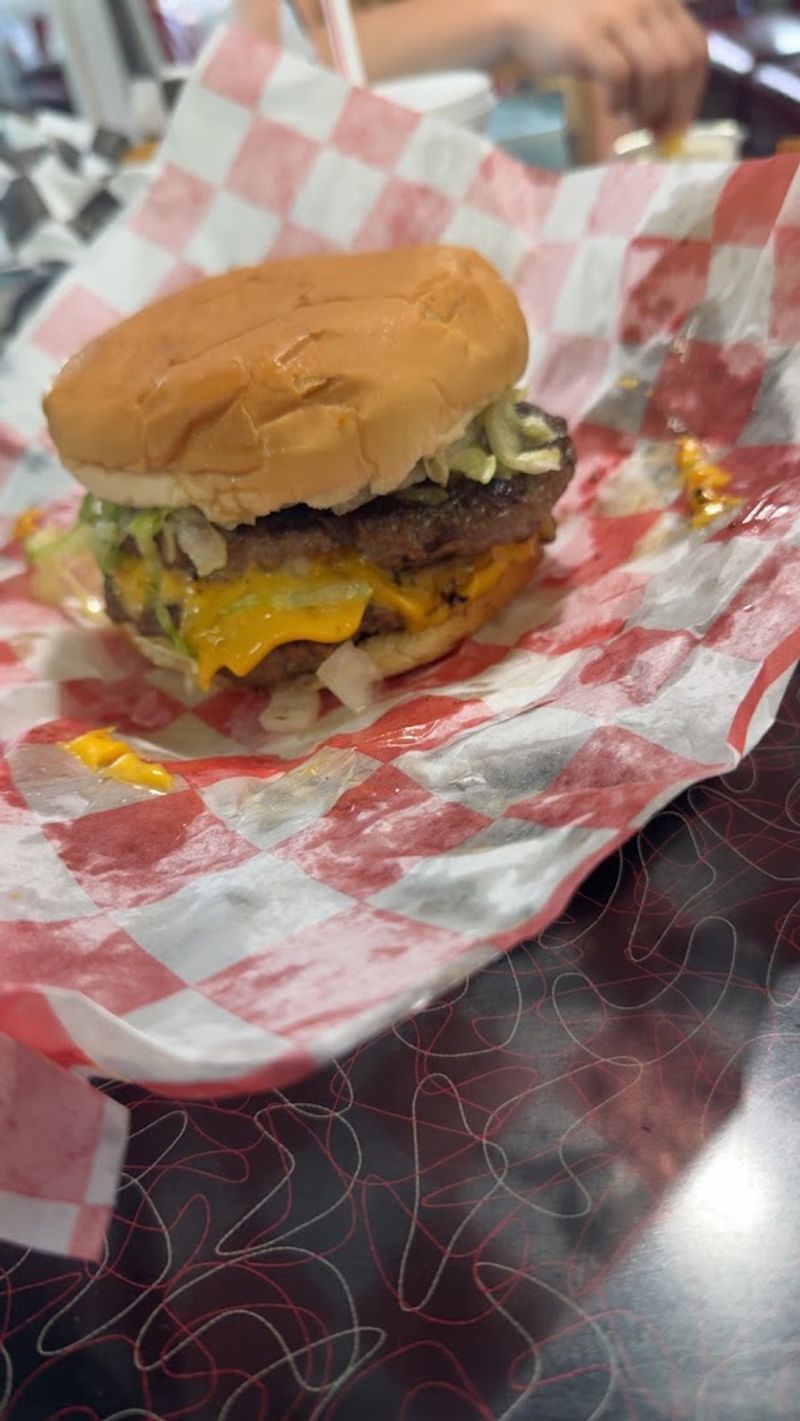
One letter carries considerable lunch responsibility here. The Big D combines two beef patties into the restaurant’s signature half-pound burger.
Current menu information presents it with American cheese and a full set of familiar toppings. Lettuce, tomato, mayonnaise, ketchup, mustard, onion, and pickle form the pictured version.
Fried onions, mushrooms, jalapeños, olives, bacon, and extra cheese can expand the build. Availability may change, but the central double-patty format defines the burger.
That format offers more than extra beef. The two-patty construction separates the Big D from the standard single-patty burger.
The name also suits the restaurant’s direct menu language. Big D says exactly enough, then leaves the explanation to the griddle.
Choose toppings with structural awareness, because enthusiasm can outgrow a bun. Even a confident initial needs support from both hands.
The Big D also gives repeat visitors somewhere to graduate after trying the standard cheeseburger.
It still keeps familiar flavor language while increasing the scale, which makes the upgrade obvious before the first bite reaches the table.
Real Fruit Shakes Give The Straw A Workout
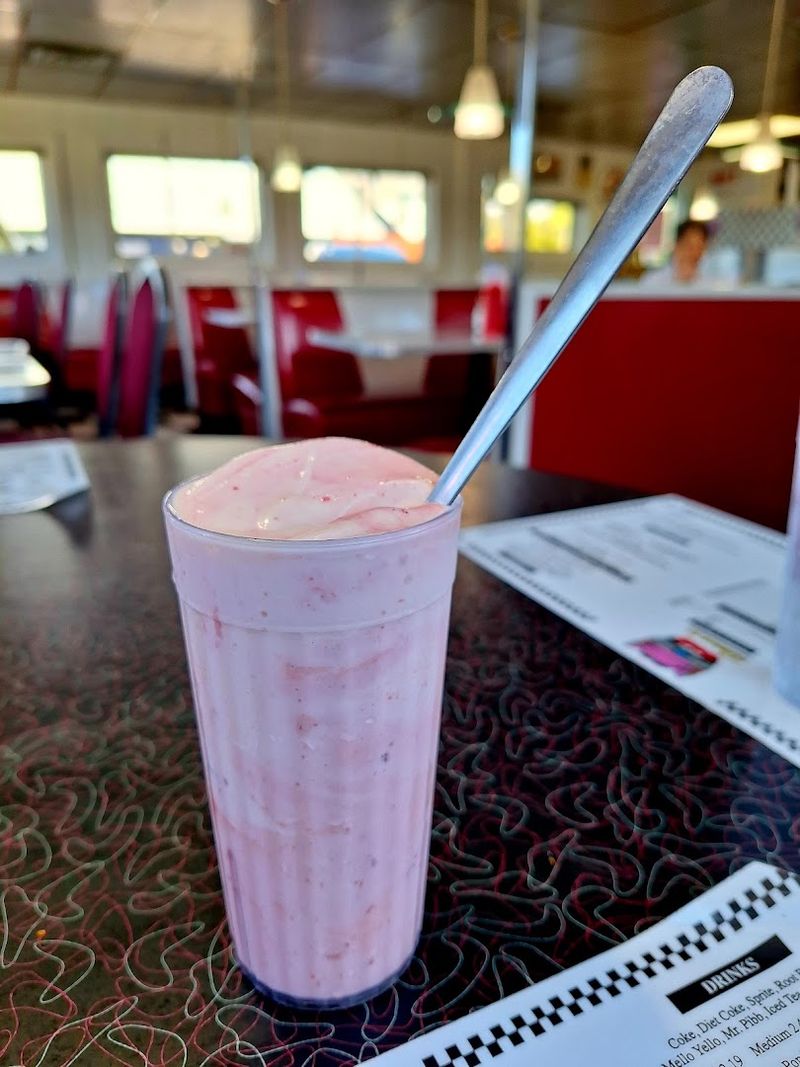
The straw receives an unexpectedly athletic assignment here. Don’s hand-dips its milkshakes and offers fruit-based versions alongside familiar shake flavors.
Cherry carries particular local relevance because Traverse City sits at the center of a major cherry-growing region. Strawberry and raspberry have also appeared among the real-fruit selections.
The menu distinguishes fruit pieces from syrup-based flavoring. That detail changes texture as well as taste, especially when pieces move through a thick shake.
Vanilla and chocolate keep the selection grounded in drive-in tradition. Malt preparation provides another version of the same hand-mixed format.
The shakes deserve their own section because the business promotes them beside burgers and fries. They are part of the core identity, not decorative extras.
A cherry shake can make a straw question its career choices. Fortunately, a spoon understands the assignment immediately.
Fruit pieces also make each shake slightly less predictable than a perfectly uniform blend. One sip may taste creamy, while the next delivers a brighter burst of cherry or berry.
The spoon remains nearby for practical reasons.
House Chili Sauce Defines The Coney Dogs
The bun takes a longer route on the footlong Coney. Don’s offers both regular and footlong versions, then adds its house chili sauce.
That sauce gives the hot dogs a specific identity beyond their size. Additional toppings can adjust the finished order without changing the chili-centered base.
The Coney category also broadens a menu commonly associated with hamburgers. It supplies another long-established drive-in staple with minimal explanation required.
Choose the regular version for a compact order or the footlong for a larger one. Both use the same central sauce, so length becomes the main decision.
Current business information gives the Coney dogs prominent space beside the Big D. Their placement signals a specialty, not a stray hot-dog listing.
The footlong may occupy more bun, but the chili sauce gets the final word. Condiments rarely win arguments this efficiently.
Coney dogs also give groups another easy sharing strategy.
One person can stay loyal to burgers while someone else orders the chili-covered specialty, allowing the table to compare two classic drive-in traditions without turning lunch into negotiations.
Squawk Boxes Preserve The Original In-Car Format
Pressing a button can summon more than another screen. Parking spaces outside Don’s include menu boards with squawk boxes for ordering.
The system supports true in-car dining, not merely curbside collection. Window-mounted trays hold the meal beside the driver.
That setup connects directly to midcentury drive-in design. The parking space becomes the dining area, while the dashboard handles table-adjacent duties.
Indoor seating and outdoor tables provide additional ways to eat. However, the squawk-box lanes explain the word “drive-in” with unusual precision.
The equipment also carries functional value. Diners can read the menu, place an order, and eat without transferring to a dining room.
Modern restaurants use plenty of buttons. Very few deliver a burger tray to the driver’s window after one press.
The experience slows the meal in a way. Instead of rushing through a counter line, you settle into the parking space, place the order, and let the restaurant come to you as traffic continues beyond the windshield.
The Interior Keeps Its Midcentury Details Visible
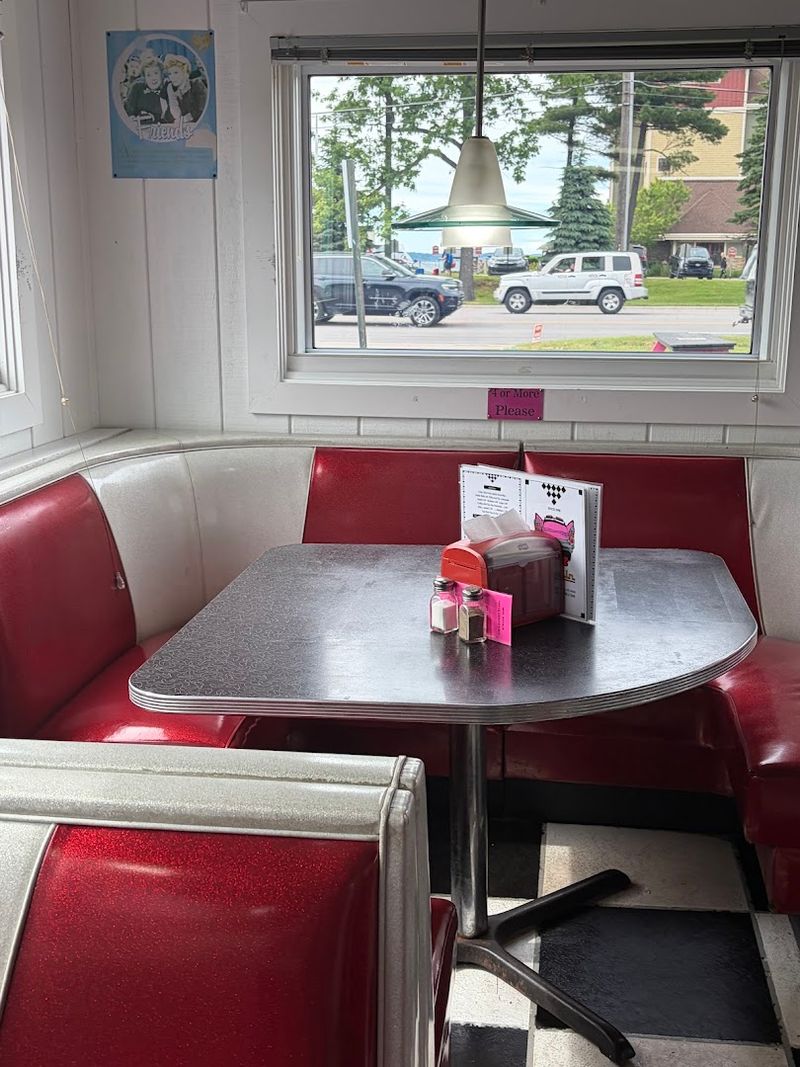
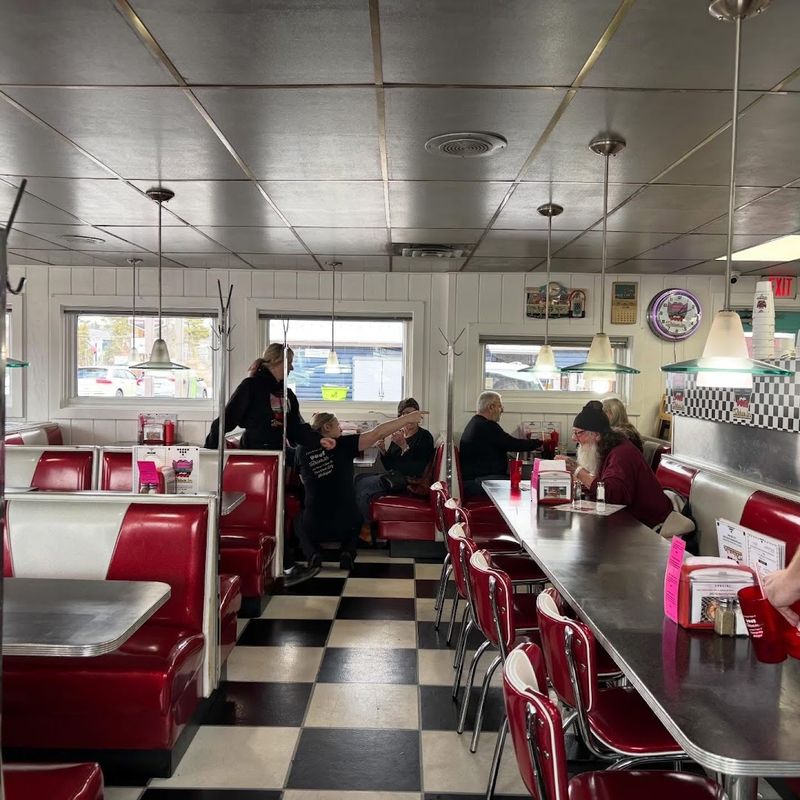
Checkerboard floors rarely whisper, and this one has plenty to say. Inside, red-and-white booths continue the restaurant’s recognizable 1950s visual language.
Vinyl records, decorative hubcaps, and midcentury pop-culture images cover parts of the walls. A jukebox adds working context to the period design.
These details have a factual reason to appear in a dining article. They connect the current restaurant to the era of its 1958 opening.
The kitchen has added items over time, including fried pickles, curly fries, and mozzarella sticks. The dining room, however, keeps the original drive-in story easy to read.
That balance prevents history from controlling every menu decision. The restaurant can preserve its visual identity while expanding what reaches the table.
The final punchline belongs to the checkerboard floor. After six decades, it has earned the last square.
The room gives indoor diners plenty to notice while waiting for food.
Every record, hubcap, booth, and wall image adds another clue, making the restaurant’s history readable without turning lunch into a museum visit or history lesson.