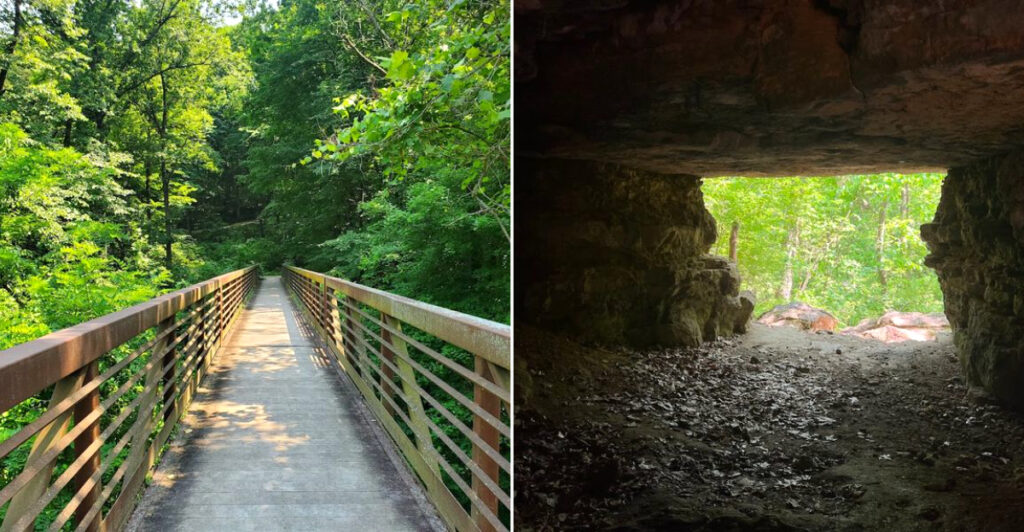
Burlington has a wilder side than it lets on from the road. A few minutes from town, the pavement gives way to trees, creek water, limestone, and that quiet little feeling that you may have found the good part by accident.
The cave is the headline, even if you can only admire it from the entrance. That almost makes it better.
The cool air drifting out, the wooden bridge, and the creek below give the place a bit of mystery without trying too hard.
Come for a short walk, then let the preserve pull you in slowly. Kids can poke around the creek, adults can pretend they are not also hunting for fossils, and everyone gets a reminder that Iowa still knows how to surprise you outdoors.
What Starr’s Cave Nature Center Actually Is
A lot of people show up expecting a polished state park with a gift shop and a snack bar. What they find instead is something more honest and more interesting.
Starr’s Cave Nature Center is a Des Moines County Conservation property that combines a small indoor nature center with a network of wooded trails, a creek, and a real limestone cave that gives the whole place its name.
The indoor center has educational exhibits and live animals on display, the kind of setup that works well for school groups and curious kids who want to touch something.
The trails outside connect to Flint Creek, where families wade in the shallows and occasionally find fossils pressed into the creek bed stones.
The full address is 11627 Starrs Cave Road, Burlington, IA 52601, and the property is managed by Des Moines County Conservation. Admission to the grounds is free, which is one of the better deals in the area.
The nature center building itself has set hours, so checking ahead before you plan to go inside is worth the thirty seconds it takes to look it up.
The Story Behind The Cave
Starr’s Cave has been a local landmark in Iowa for generations, and its history runs deeper than the trail map suggests.
The cave itself is a limestone formation carved out over thousands of years by water moving through the bluffs above Flint Creek.
It was used historically as a shelter, and local lore connects it to Jesse James, though historians tend to treat that particular story with a healthy dose of skepticism.
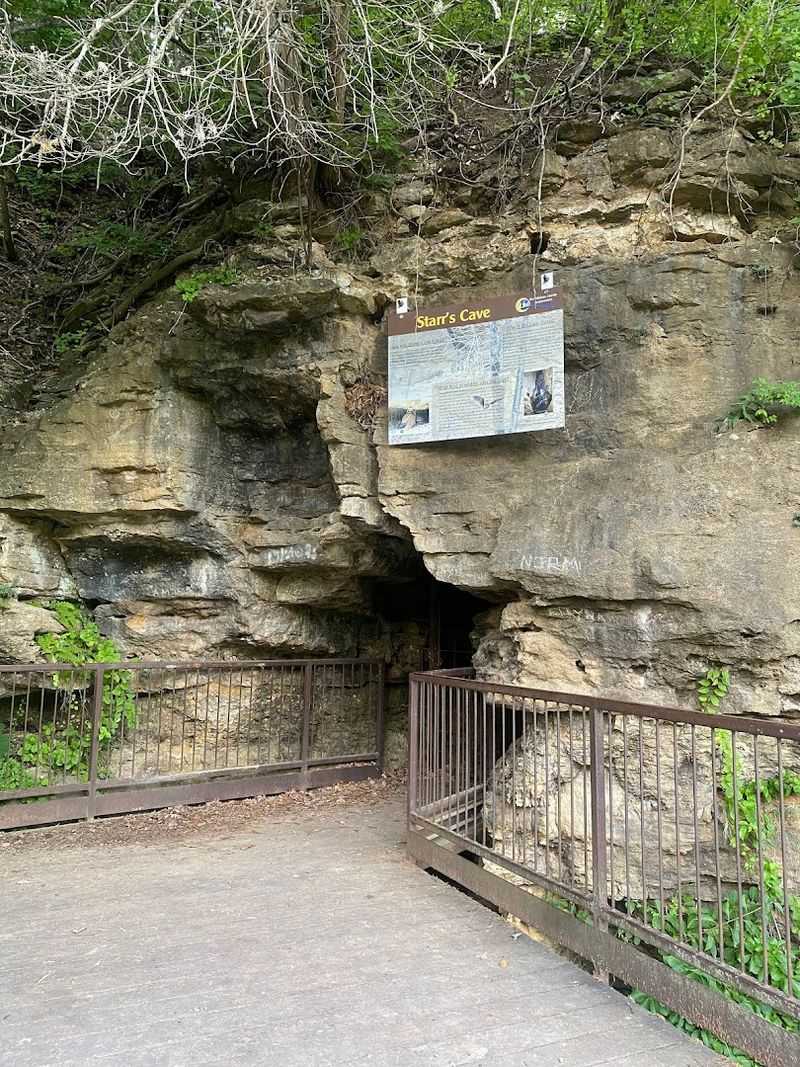
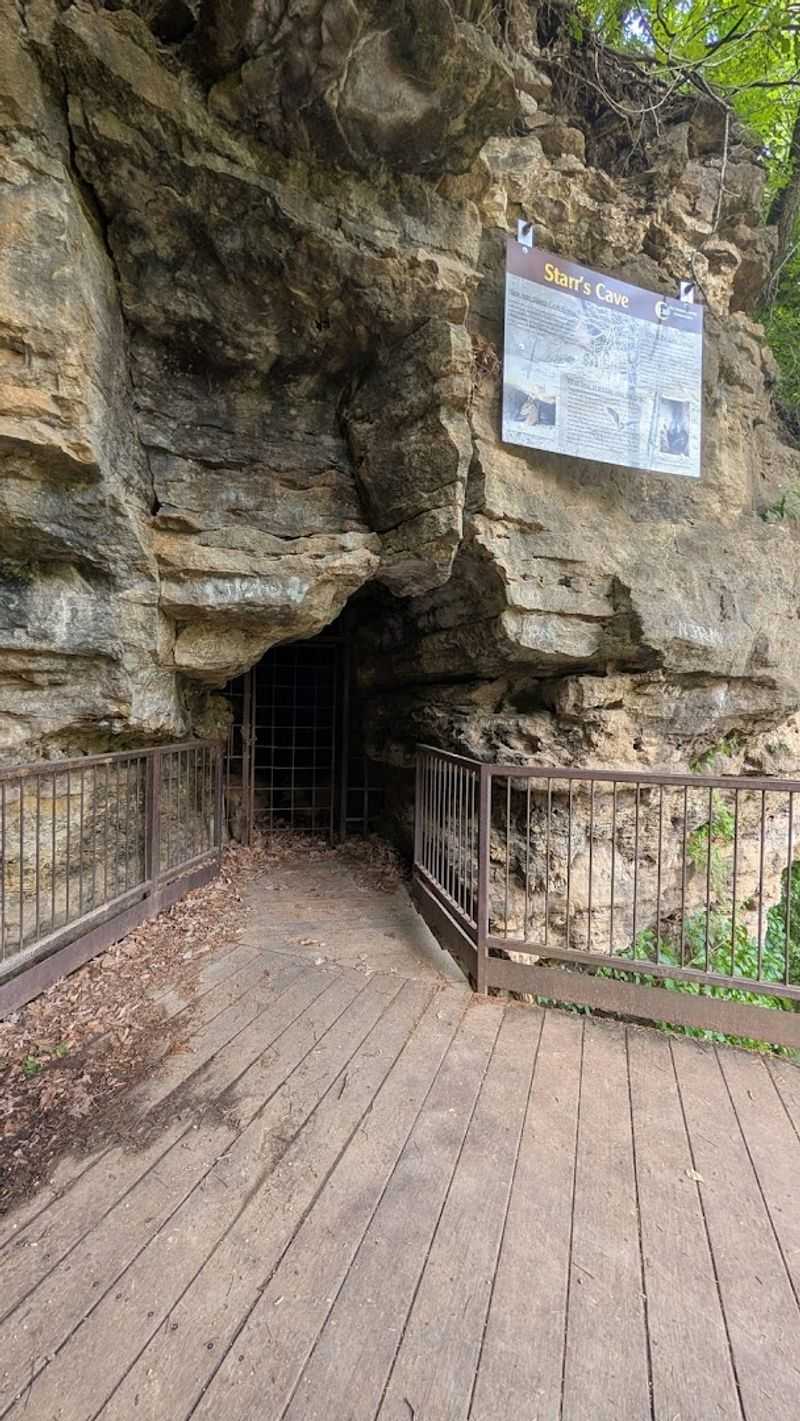
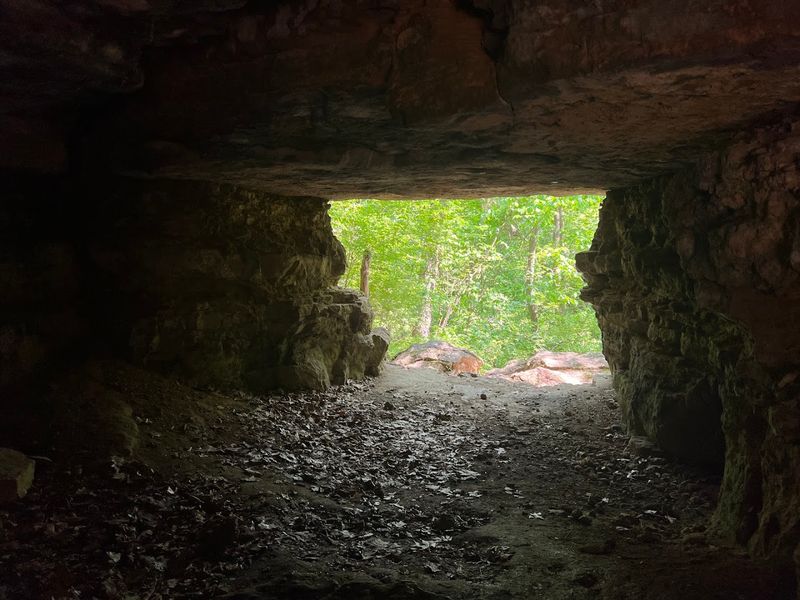
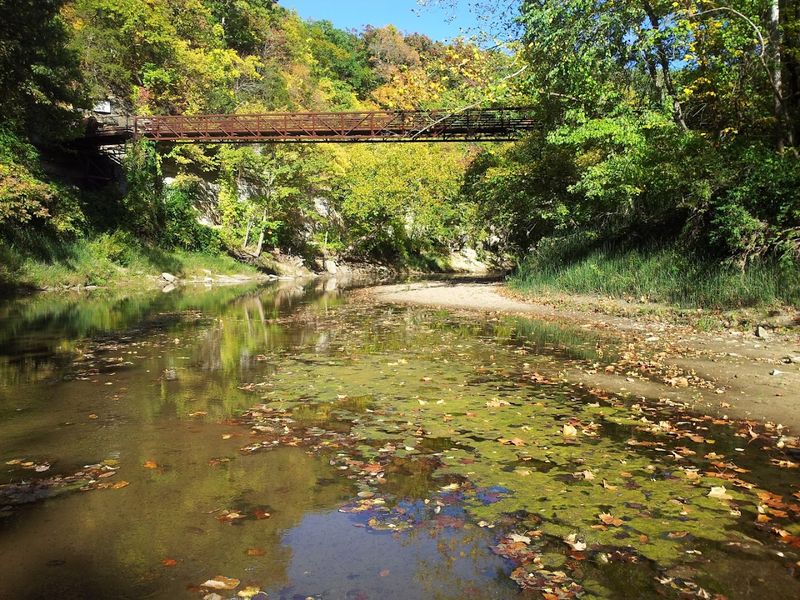
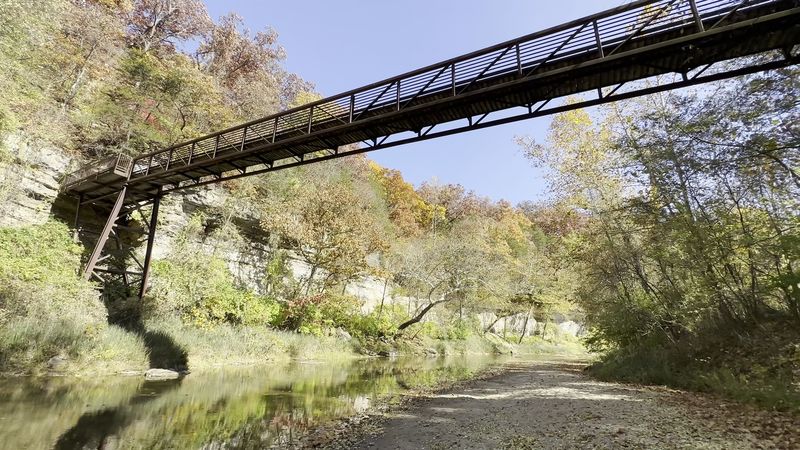
The cave entrance is still accessible via a wooden bridge that crosses Flint Creek, and standing at that entrance is genuinely worth the short walk.
A cool draft pushes out from inside even on warm summer days, which is one of those small sensory details that sticks with you.
Informative plaques outside the entrance explain the geology and the history without turning it into a lecture.
The cave has been closed to the public for years due to white-nose syndrome, a fungal disease affecting bat populations across North America. The closure protects the bats that roost inside.
Knowing that context makes the visit feel less like a disappointment and more like a small act of conservation awareness.
The Trail System and What To Expect Underfoot
The trail network here is not going to challenge a seasoned hiker, and that is entirely the point.
The preserve has about two miles of scenic hiking trails, including a segment of the Flint River Trail, with one shorter accessible section that makes part of the experience easier for visitors using wheelchairs or pushing strollers.
The route takes you from the parking area through a canopy of trees, toward Flint Creek, and up to the cave entrance area.
Side trails branch off toward more wooded terrain with a bit more elevation, and those are worth exploring if you want something quieter.
Two smaller cave features, Devil’s Kitchen and Crinoid Cavern, are also part of the preserve, though they require more care and are not the same as walking a smooth paved path.
Keep your eyes scanning below and to the sides of the path rather than straight ahead.
The trails are generally well maintained and clean, which reflects the work of the county conservation staff. Wear closed-toe shoes with some grip, especially if rain has passed through recently.
The terrain near the creek can get slick, and no amount of pretty scenery is worth a twisted ankle on a Tuesday afternoon.
Flint Creek and the Creek Stomping Culture
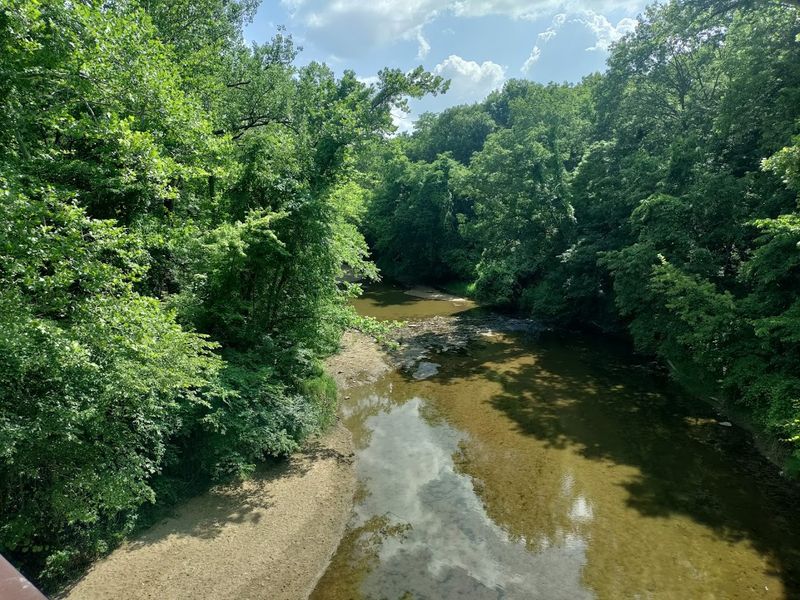
On a warm afternoon in Iowa, Flint Creek becomes one of the most inviting features on the property, and honestly, it earns that status.
The creek runs shallow in places near the preserve, which makes it a natural gathering spot for families who show up with no plan other than letting the kids explore a little.
The water is cool, the current can vary, and the creek bed is loaded with flat stones that make the whole setting feel wonderfully hands-on.
Fossil spotting is a legitimate joy here, but collecting is not allowed.
The limestone geology of the area means that ancient marine fossils can be seen in the rocks, including brachiopods, crinoids, cup coral, and gastropods, but county rules say fossils, rocks, plants, animals, and artifacts must be left where they are.
Adults who stopped looking closely at creek rocks somewhere around age ten tend to quietly start again within about five minutes of arrival.
Some areas of the creek may run deeper or slicker than they look from the bank, so bring a change of clothes if you are visiting with kids, and pack water shoes if you have them.
Bare feet may work on softer sections, but the rocky stretches near the bridge can be rough.
Fishing is not allowed in the preserve area, so this is better treated as a place for creek exploring, quiet observation, and appreciating the landscape without taking anything home.
What Lives Inside the Nature Center
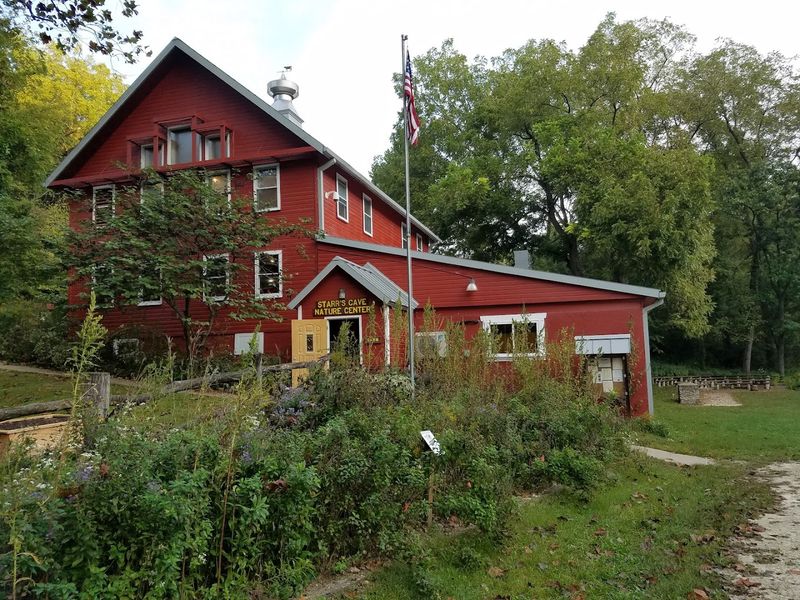
The indoor portion of the property holds more than most people expect from a county conservation center.
The nature center has educational displays focused on the natural history of the region, covering geology, local wildlife, and the cave ecosystem.
Live animals are kept on display as part of the interpretive program, giving younger visitors something to focus on beyond a poster on a wall.
The children’s learning areas and updated displays are designed to introduce basic nature concepts in a way that holds attention.
It is the kind of low-pressure indoor space that works well on days when the weather is not cooperating or when younger kids need a break from the trail.
Current county information lists summer hours from April 1 through September 30 as Saturday and Sunday from noon to 4 PM, or by scheduled visit. Winter hours from October 1 through March 31 are Tuesday through Friday from 9 AM to 3 PM.
The nature center may not always be open during posted hours because staff are often out leading programs, so calling Des Moines County Conservation at 319-753-5808 before planning your visit around the building is the smart move.
The park grounds are open daily from 6 AM to 10:30 PM.
Wildlife You Might Actually See
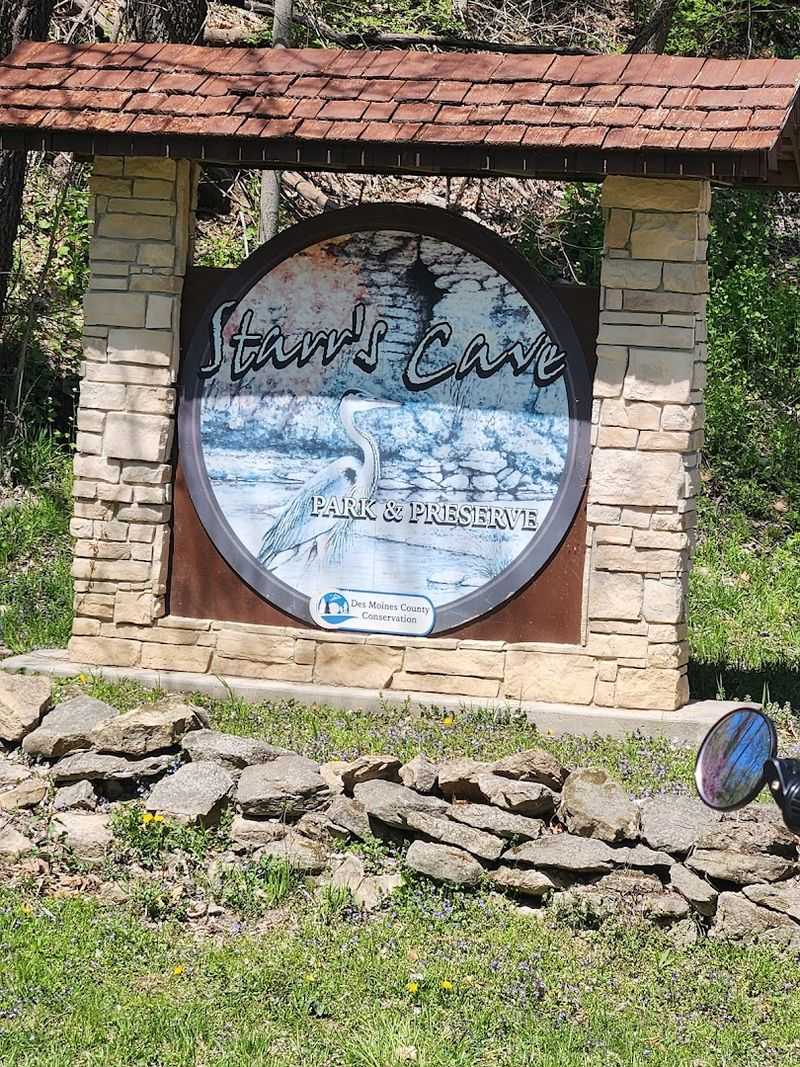
The wildlife at this Iowa preserve does not need to be advertised because it simply shows up.
White-tailed deer are a regular sighting along the upper trails, particularly in the early morning and late afternoon.
Grey squirrels, chipmunks, and wild turkeys move through the woods with the kind of casual confidence that suggests they regard the human visitors as the guests, which is fair.
Birdwatching here rewards patience. Great blue herons work the creek edges, birds of prey circle the bluff tops, and owls have been spotted in the heavier tree cover.
The variety is impressive for a property that sits so close to a city, and it reflects how intact the habitat remains despite the urban proximity.
Softshell turtles have been spotted in the creek, which is the sort of detail that makes a nature walk feel more like a discovery than a stroll. Mosquitoes are also part of the wildlife inventory, and they are enthusiastic participants from late spring through early fall.
Insect repellent is not optional on warm evenings near the creek. Pack it, apply it, and save yourself from spending the drive home scratching your ankles.
Fall Colors and the Best Time To Visit
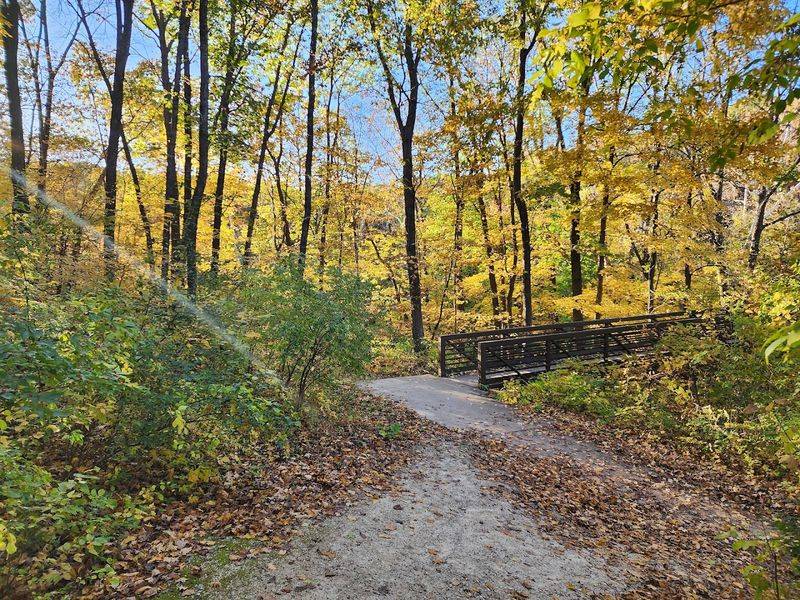
Timing a visit to Starr’s Cave around peak fall color is one of the better decisions you can make in southeast Iowa.
The canopy over the main trail turns into a mix of orange, yellow, and deep red sometime in mid to late October, and the contrast against the limestone bluffs makes the whole place look like a calendar photo without any filters applied.
Summer visits work well for creek access and fossil hunting, but the heat and humidity bring the mosquitoes with them. Spring is quieter and the creek runs higher after snowmelt, which adds some energy to the landscape.
Winter is worth considering for a brisk walk when the leaf cover is down and the cave entrance and bluff structure become more visible through the bare trees.
The trails are open year-round, and the grounds stay accessible even when the nature center building is closed. Early morning visits in any season tend to be quieter, and the wildlife sightings are better before the midday foot traffic picks up.
If your schedule allows it, a weekday morning in October is probably the single best window to see this Iowa property at its most photogenic.
Accessibility and Practical Visitor Details
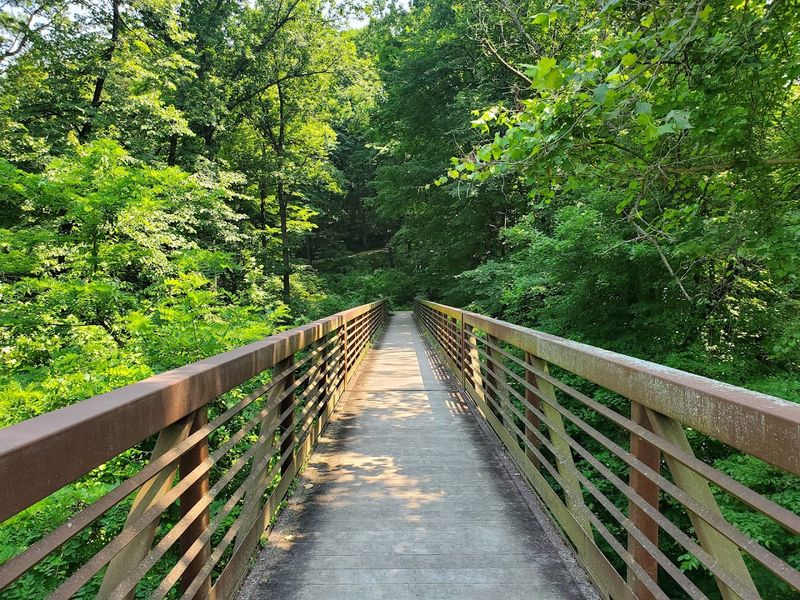
One detail that sets this preserve apart from many rural Iowa natural areas is that part of the trail system is more accessible than visitors might expect.
The park has about two miles of trails, including a shorter handicap-accessible section, though other parts of the preserve become more natural, uneven, or slick near the creek and cave areas.
That matters for families with mixed mobility needs who want to plan realistically before arriving.
Parking is available at the trailhead, which eliminates one of the common friction points of visiting natural areas. Restroom facilities are available on site.
The picnic area near the creek is a reasonable spot for a lunch break, and the tables are close enough to the water to make the setting feel worthwhile.
Pets are allowed, but county rules say they must be leashed. The property phone number is 319-753-5808 if you want to confirm any current visitor rules before heading out.
The overall footprint of the preserve is compact enough that a full visit, including the trails, the cave bridge, and a creek stop, fits comfortably into two hours.
How It Fits Into a Burlington Day Trip
Burlington sits on the Mississippi River in southeast Iowa, and the city has more going on outdoors than its modest size might suggest.
Starr’s Cave fits naturally into a half-day itinerary that starts with a morning trail walk and then moves into the city for lunch or a drive along the river bluffs. The nature center road is close enough to town that you are not committing to a long detour.
The Flint River Trail connects to the preserve and extends the hiking options for anyone who wants more mileage. That connection makes the property feel like part of a broader outdoor network rather than an isolated stop.
Cyclists and runners use the trail extension regularly, and the route adds context to the landscape you see from the preserve itself.
Burlington’s downtown sits a short drive away and has its own set of riverfront views and local spots worth exploring after a morning outdoors.
The combination of the nature preserve and the Mississippi River setting gives the city a natural character that is easy to overlook on a quick pass through Iowa.
A visit to Starr’s Cave is a reasonable starting point for understanding what the region actually looks like when you slow down and pay attention.
Why This Free Iowa Preserve Keeps Drawing People Back
A 4.7-star rating across nearly 400 Google reviews is not something a free county preserve earns by accident.
The combination of a real cave landmark, a wading creek, fossil-rich rock formations, accessible trail sections, and live animal exhibits covers enough ground to satisfy a wide range of people in a single afternoon.
Repeat visits happen because the property shifts with the seasons in ways that make it feel different each time.
The cave being closed is the most common note of disappointment in reviews, and it is worth being clear-eyed about that going in. You will not be walking through the main cave.
What you will do is cross a wooden bridge over a clear Iowa creek, feel cool air drifting out of a limestone entrance, read about the bat population that lives inside, and spot fossils in the rocks while leaving them exactly where they belong.
That combination of small, real moments is what keeps this place on people’s return lists. No admission fee, no crowds on weekday mornings, and a trail that many visitors can handle make the barrier to showing up essentially zero.
The property rewards people who arrive with low expectations and an open afternoon.