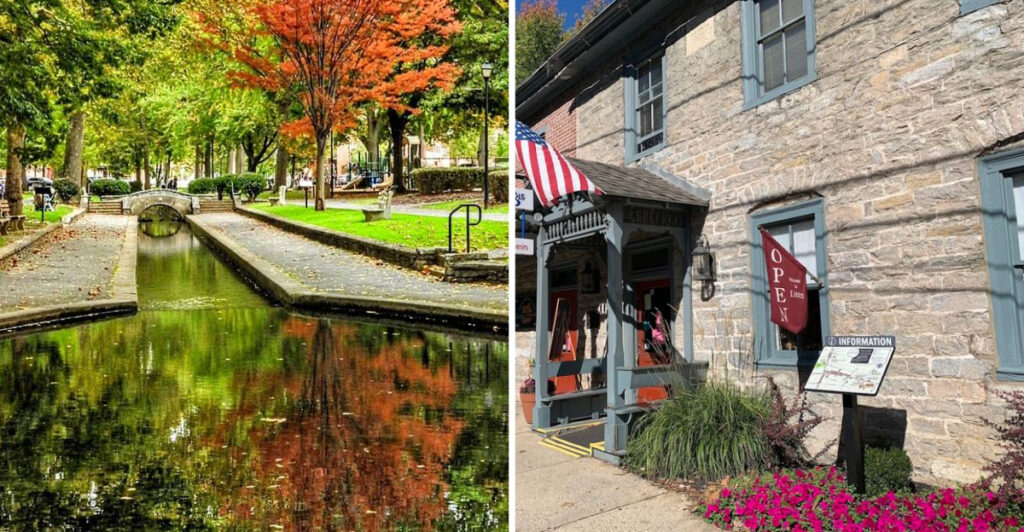
History does not sit quietly behind glass in this Pennsylvania town. It shows up in pretzels, stone walls, shaded sidewalks, and buildings that have been collecting stories for centuries.
You can twist dough inside an 1861 bakery, pass a school founded before the United States, and follow Moravian history without needing a bus tour or a complicated plan.
Chocolate joins the timeline too, because apparently Pennsylvania understood that dates and architecture go down easier with dessert.
Everything sits close enough for an easy walk, yet each block brings a different chapter. One doorway leads to colonial life. Another opens into a family food tradition that never left.
This is history without the stiff voice or velvet rope. It is walkable, snackable, and much more fun than pretending every old building needs a serious face.
You Start On Main Street, And Suddenly History Feels Personal
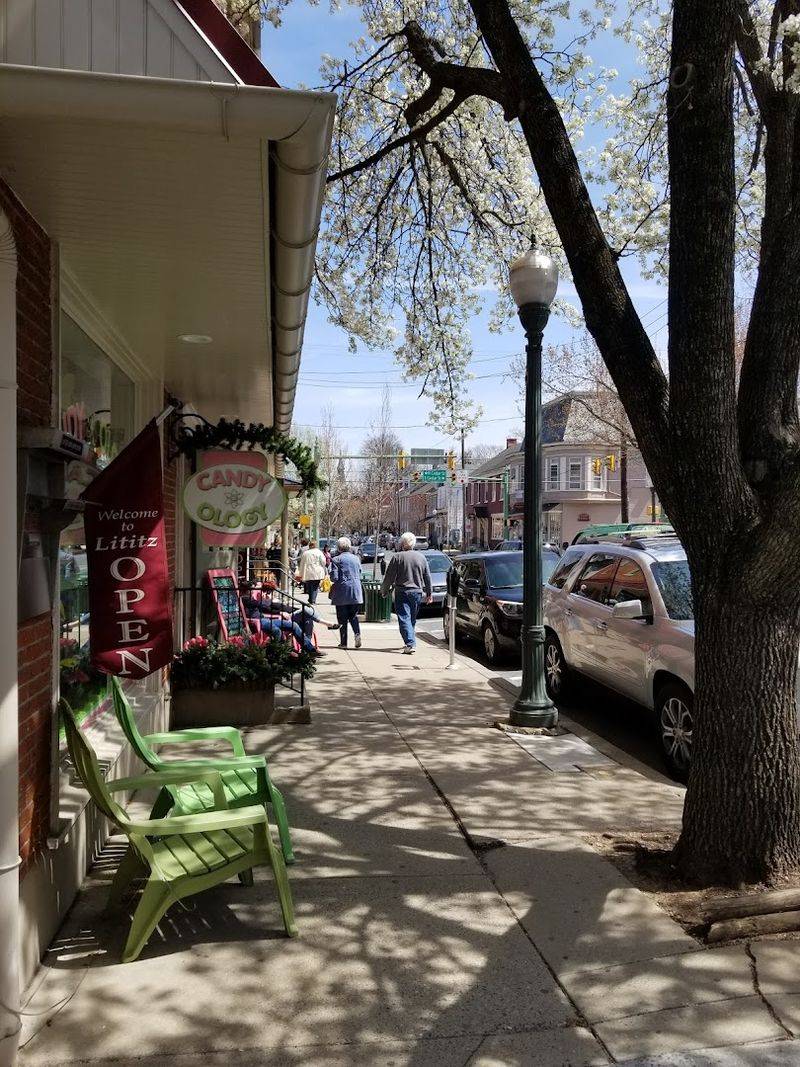
Main Street has no patience for boring history lessons. It places three centuries beside the sidewalk and lets the buildings explain themselves.
The structures are not replicas. They are originals, preserved and repurposed as shops, bakeries, and small businesses. Daily life continues inside rooms that once served very different purposes.
The street feels calm and approachable. No towering facades or overwhelming crowds hurry visitors toward the next block.
Historic markers appear at regular intervals. They provide useful context without turning the walk into a lecture.
You can read every detail or let the stonework handle the storytelling. Look above the storefronts too. Old windows and rooflines keep quieter stories overhead while modern business continues below every single day.
The streetscape follows the Moravian congregation’s original grid. That design gave Lititz its orderly and walkable foundation. The layout has remained recognizable for nearly three centuries.
Downtown attractions sit close together. The pretzel bakery, museums, Linden Hall, and Lititz Springs Park remain within a comfortable walking distance.
Take Main Street slowly. Around here, an old doorway can steal ten minutes and somehow improve the entire afternoon.
Lititz Began With A Moravian Story That Crossed An Ocean
Lititz began with a name that crossed an ocean before reaching a Pennsylvania farm field.
The borough was formally named in 1756. It honored a historic Moravian refuge in what is now the Czech Republic.
The community began through a practical arrangement. Farmer George Klein offered land to a Moravian congregation.
The congregation built a settlement shaped by its faith, values, and architectural preferences.
Moravian influence reached far beyond decoration. It guided the organization of homes, schools, and public spaces. The connection becomes clearer once the buildings enter the picture.
Faith, planning, and daily life shaped the same streets from the beginning. Household objects give the rooms an immediate quality. Kitchens and workspaces show how closely labor and home life overlapped.
Nothing here needs theatrical staging. A worn tool, narrow staircase, or simple kitchen can reveal more than dramatic labels ever could on their own.
Early Lititz operated almost as a closed community. The congregation controlled who could live there.
That practice kept the settlement closely connected and architecturally consistent for generations.
The influence remains visible near Moravian Church Square. Stone buildings reflect a preference for sturdy construction over elaborate display.
Lancaster County contains many historic communities. Few connect a Czech refuge to Pennsylvania farmland so directly.
Remember the name while exploring. Four short syllables carry a much longer journey than the road sign suggests.
Step Inside Two Homes That Bring The 1700s Within Reach
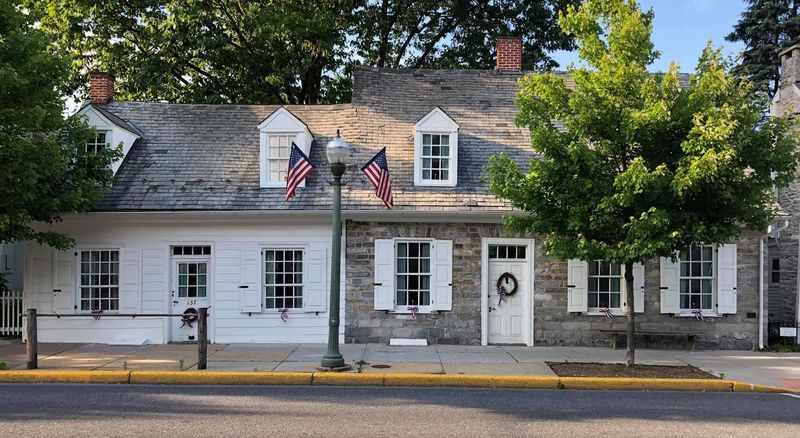
Two neighboring houses manage to make modern household complaints sound slightly dramatic.
The Lititz Historical Foundation operates both preserved properties on the same block. The 1792 Johannes Mueller House anchors the experience. Its rooms recreate a tradesman’s home from the late 1700s.
Period objects appear where residents would have used them. They are not arranged only for visual effect.
The neighboring 1793 Christian Schropp House contains the Lititz Museum. Together, the buildings reveal Moravian influence on home design and daily organization.
Tours explain how residents lived, worked, and interacted. The community operated under close congregational oversight.
Kitchens and workspaces show how closely labor and home life overlapped. Visitors can stand inside Pennsylvania’s colonial past rather than simply reading about it.
Study the tools and narrow rooms. Your kitchen drawer may suddenly seem like an unreasonable display of wealth.
You Can Still Twist Pretzels Inside America’s First Commercial Pretzel Bakery
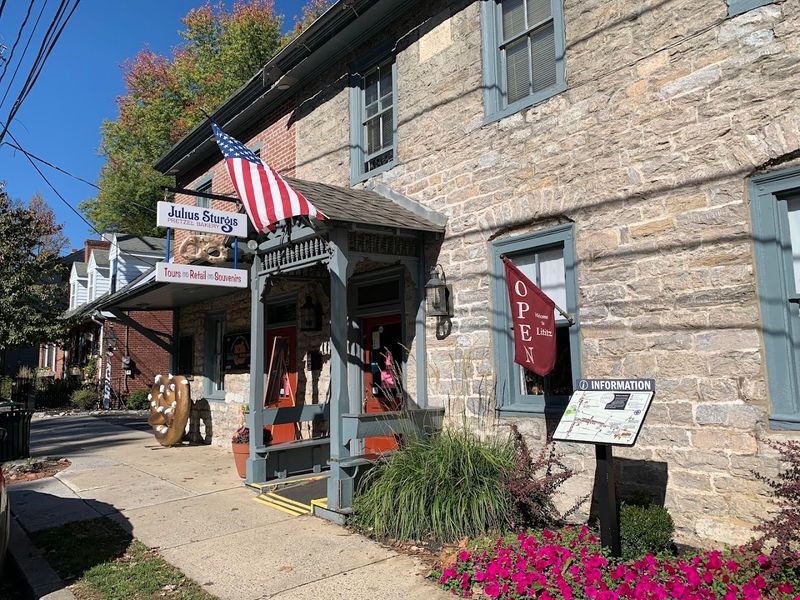
This history lesson comes with dough, salt, and a strong possibility of crooked results.
Julius Sturgis purchased 219 East Main Street in 1861. He opened America’s first commercial pretzel bakery, according to the company.
The bakery remains in its original location. It no longer operates as a full production factory. Instead, the building functions as a living historic attraction. Visitors can tour the old workspace and learn the craft.
Hands-on pretzel twisting is a major highlight. Guides demonstrate a technique used since Julius established the business. The twisting lesson also gives everyone permission to fail cheerfully.
A crooked pretzel still disappears quickly once it cools on the tray.
Fresh soft pretzels are still made on-site from his original recipe. The aroma starts making its case immediately.
The Sturgis family maintained the business across several generations. That continuity gives the site unusual historical depth.
This is not a reproduction inspired by the bakery. It is the real location under the founding family’s name.
Do not worry about perfect twisting. History has survived stranger shapes, and warm pretzels remain very forgiving.
Linden Hall Has Been Educating Girls Since 1746
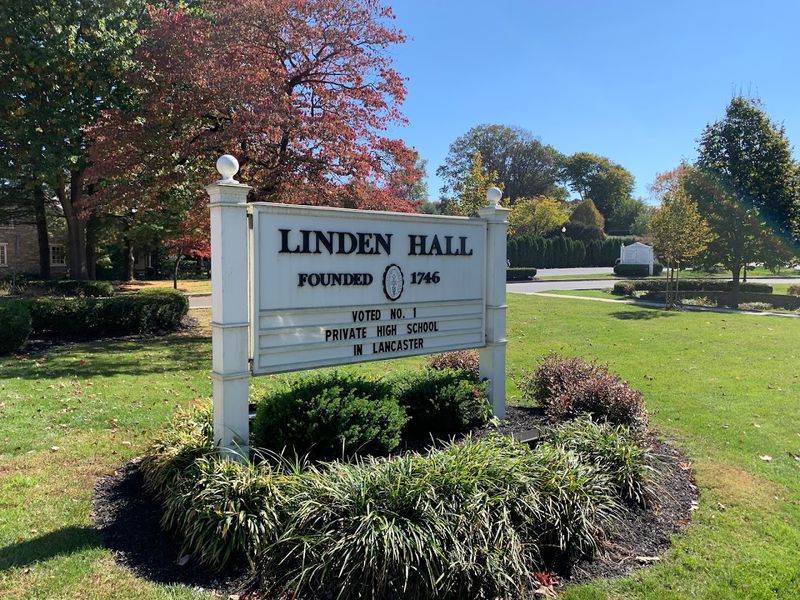
Before the country had a flag, Linden Hall already had students and probably unfinished assignments.
Founded in 1746, Linden Hall describes itself as America’s oldest independent boarding and day school for girls.
The campus sits close to Moravian Church Square. Its location reflects deep ties to the congregation that founded Lititz.
Education and faith developed together during the town’s earliest years.
The linden trees behind the school’s current name were planted in 1838. They continue growing on the campus.
Walking past provides a look at the school’s architectural character. A formal campus visit is not required. The campus adds a living rhythm to the historic district.
Students still cross grounds shaped by many earlier generations before them. The buildings share the solid and restrained appearance found throughout historic Lititz.
Few Pennsylvania schools carry a founding date before independence. Linden Hall also belongs to rare company nationally.
The school remains active today. Its history continues through real classrooms rather than displays behind glass.
Two and a half centuries later, the bell still has work to do. That is commitment with excellent attendance.
Wilbur Chocolate Made Lititz History A Little Sweeter
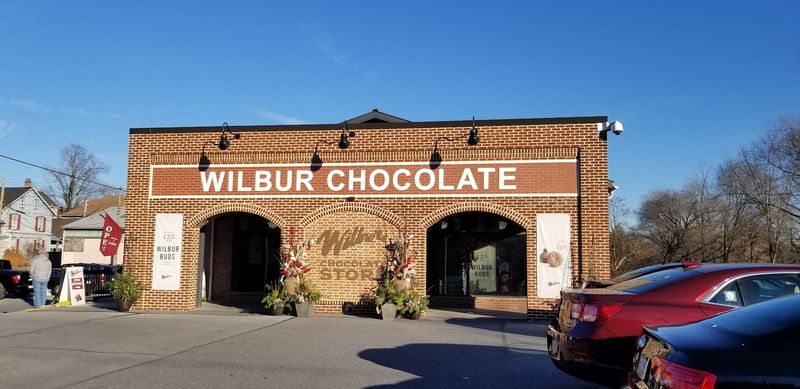
Every timeline improves when chocolate finally arrives. Lititz reached that important milestone in 1894.
Wilbur Chocolate introduced its recognizable Wilbur Buds that year. The product added confectionery history to an already food-minded town.
The former factory building was restored and repurposed instead of demolished. Its presence keeps an industrial piece of Lititz visible within the modern downtown.
That reuse reflects a broader local pattern. The borough often preserves old buildings by giving them new purposes.
Wilbur Buds still have a loyal following. Familiar visitors may recognize the brand before learning its connection to Lititz.
Chocolate and pretzels both took root here during the 19th century.
Each industry left physical marks on the streetscape. Both traditions remain tied to the borough’s identity. The sweetest detail is how naturally this history remains downtown.
Chocolate is not a side note here. It has a permanent local address.
Lancaster County is famous for its food traditions. Lititz contributes a confectionery story that neighboring communities cannot quite duplicate.
Call it historical research if necessary. Leaving with chocolate simply means you examined the evidence thoroughly.
Lititz Springs Park Gives The Walking Tour A Peaceful Finish

After dates, doorways, and pretzel decisions, Lititz Springs Park gives your brain somewhere green to sit.
The park stands beside downtown. Its location makes it a natural final stop after museums, bakeries, and historic buildings.
The Lititz Welcome Center occupies a replica of the town’s 1884 Victorian Gothic passenger depot. The building establishes the historical tone before visitors enter the grounds.
Natural springs feed the park’s water features. Moving water softens the pace after a history-packed morning. The park offers the rare luxury of stopping without ending the day.
Quiet minutes beside the water reset tired feet and busy thoughts again.
The park also connects with rail-trail access. Visitors with remaining energy can extend the outing beyond downtown. Significant green space is not always easy to preserve near historic commercial streets.
Lititz retained a natural area beside its walkable center. The result feels thoughtful rather than accidental.
The park does not compete with the borough’s history. It simply gives every story a quieter place to settle.
Find a bench and declare the walking tour complete. Your feet have earned closing arguments and possibly another pretzel.