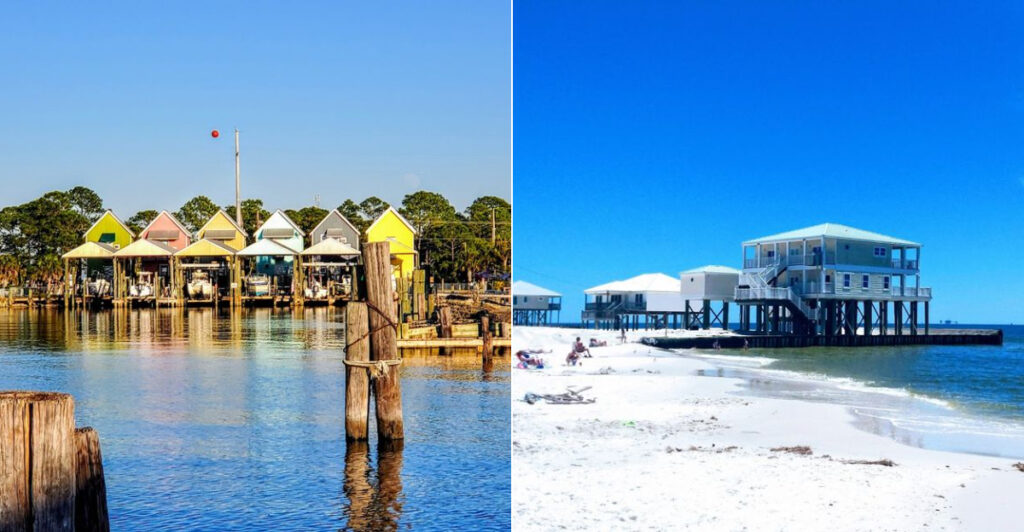
Six million people crowd the beaches at Gulf Shores every year. A short drive away, an island sits quietly in the Gulf with white sand, clear water, and room to actually breathe.
Most travelers have never heard of it. The ones who have are not in any hurry to spread the word.
This small Alabama barrier island has refused every invitation to become something louder than it is.
No high-rises. No chain restaurants.
No fight for space at the waterline. What it has instead is seven miles of uncrowded shoreline, one of the most important bird sanctuaries on the Gulf Coast, a Civil War fort still standing at the mouth of Mobile Bay, and a pace of life that golf carts and front porches seem to enforce without trying.
Come for a weekend and leave wondering why you do not live here.
The Island Feels Delightfully Frozen
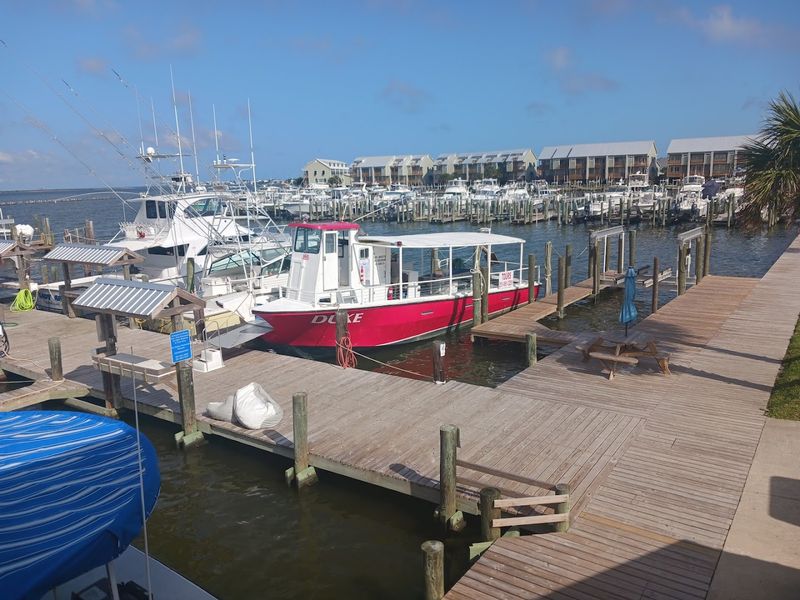
Some places get swallowed by development. Dauphin Island, Alabama, simply refused to go that route.
There are no towering condos blocking the horizon. No chain restaurants lining every corner.
What you find instead is a shoreline that still looks a lot like it did decades ago, with small cottages, quiet roads, and trees that lean gently toward the Gulf.
Locals call it a vintage feel, and they mean it as the highest compliment. Golf carts outnumber fancy cars.
Neighbors wave at strangers. The island has a permanent population of around 1,778 people, and that small-town energy is impossible to fake.
A scenic bike path winds through the island, making it easy to explore without ever needing a car. Visitors who arrive expecting flashy resort energy leave pleasantly confused in the best possible way.
What makes this place so refreshing is exactly what it lacks. No neon signs.
No crowds pressing against you at the waterline. Just the sound of waves and the kind of quiet that actually lets your shoulders drop.
Have you ever walked onto a beach and felt like you had the whole thing to yourself? That feeling is not rare here.
It is practically the default setting on Dauphin Island.
Seven Miles Of Sand
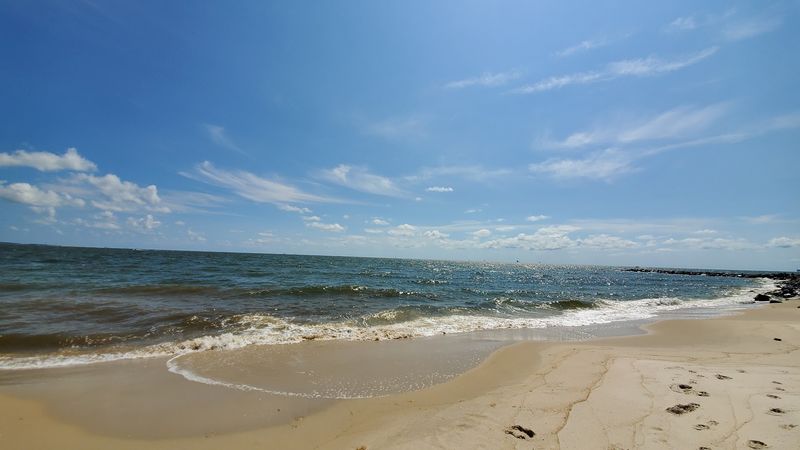
The West End Public Beach on Dauphin Island is the kind of place that makes you stop mid-step and just look around for a moment.
Seven miles of sugary white sand stretch along the Gulf, and on most days, you will not be fighting anyone for space. The water is clear and calm.
The sand is soft underfoot. Shell collectors absolutely adore this stretch of coastline.
Sunsets here are genuinely spectacular. The West End faces west, which means the sky puts on a full show every evening.
Visitors who time their walks just right often describe it as one of the best sunsets they have ever seen, and that is not an exaggeration.
Swimming is popular, and the relatively gentle Gulf waters make it approachable for families. Kids can wade in without the aggressive surf found on Atlantic beaches.
Parents can actually relax, which is its own kind of miracle.
The beach also stays remarkably clean. No cluttered boardwalks.
No vendors in your face every ten feet. Just open space, blue water, and the occasional pelican gliding past like it owns the place.
Could a beach this beautiful really still be this uncrowded? On Dauphin Island, the answer is yes, and regulars hope it stays that way for a very long time.
A Birder’s True Paradise
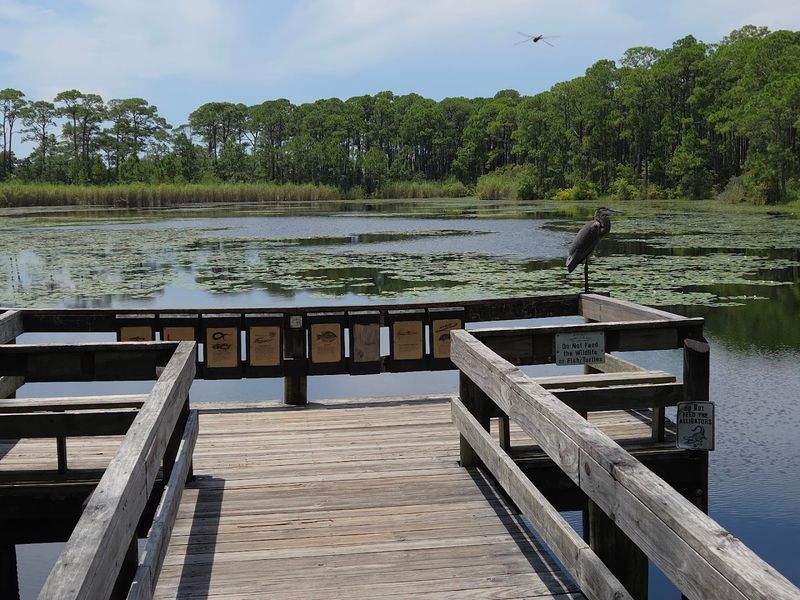
Every spring, something remarkable happens on this small Alabama island. Millions of migratory birds cross the Gulf of Mexico and land here, exhausted and hungry, making Dauphin Island one of the most important stopover points in all of North America.
The Audubon Bird Sanctuary covers 164 acres and is “recognized as one of the most important birding destinations on the Gulf Coast and a Globally Important Bird Area. That is not a small claim.
Serious birders travel from across the country just to stand quietly among these trees and wait.
The sanctuary features an impressive mix of ecosystems packed into one place. Freshwater lakes, coastal dunes, swamps, and Gulf beaches all exist within its boundaries.
Each habitat attracts different species, which means your binoculars get a serious workout.
Warblers, tanagers, buntings, and raptors all pass through during migration season. Even casual visitors who have never identified a bird in their lives tend to find themselves completely absorbed by the activity overhead.
The trails are well-maintained and easy to walk. There are no steep climbs or complicated navigation.
Just a peaceful path through one of the most biologically rich patches of land on the Gulf Coast.
What is the best time to visit? Spring migration peaks from late March through May, but fall migration brings its own wave of activity.
Honestly, any season offers something worth seeing here.
Fort Gaines Tells Stories
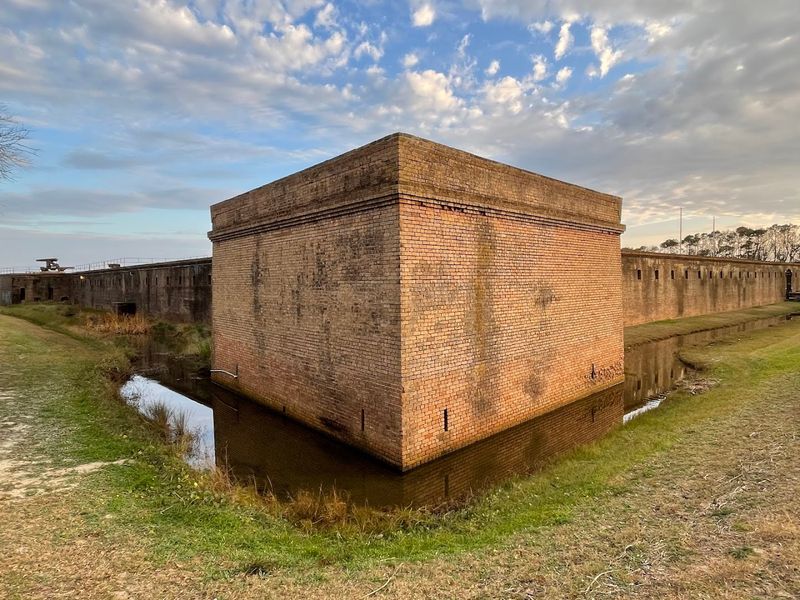
Fort Gaines has been standing at the entrance to Mobile Bay since the 1800s, and it has seen a lot. Built to guard one of the most strategically important waterways in the South, the fort played a significant role during the Civil War.
Walking through its grounds feels genuinely different from visiting a museum. The original cannons are still there.
The blacksmith shop still stands. The tunnels running beneath the brick walls are cool, dim, and surprisingly atmospheric.
History visitors who typically find historical sites a little dry tend to change their minds here. There is something about standing next to a 19th-century cannon and looking out over the same water that soldiers once watched that makes the past feel very close.
The fort also offers a commanding view of the bay, which alone makes the visit worthwhile. On clear days, you can see Fort Morgan across the water.
The two forts once worked together to control the entrance to Mobile Bay, and standing at one while looking toward the other is a quietly powerful experience.
Guided tours are available and add real depth to the visit. Rangers and volunteers share stories that do not appear on any informational placard.
Could this be the most underrated historical site on the Alabama Gulf Coast? Many visitors walk away convinced it absolutely is, and they start planning a return trip before they even reach their cars.
Sea Lab Surprises Everyone
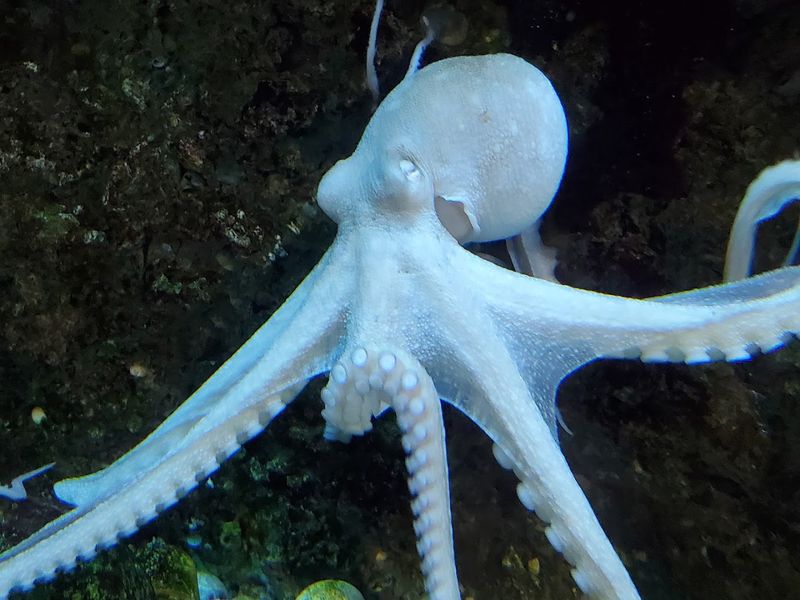
Not everyone expects a world-class marine science facility on a quiet island. That is part of what makes the Dauphin Island Sea Lab such a satisfying surprise.
The Estuarium is the public-facing side of a serious research institution, and it manages to be both genuinely educational and genuinely fun. Over 100 species native to coastal Alabama waters live here, from stingrays and sea turtles to tiny creatures that most people have never thought to look at up close.
The living marsh boardwalk is a highlight that visitors consistently talk about. It puts you directly above an active coastal marsh, where you can watch fish, crabs, and birds going about their lives just below your feet.
It is surprisingly absorbing.
Kids tend to go a little wild here in the best possible way. The hands-on exhibits are designed to invite curiosity rather than just present facts.
Parents appreciate that the experience holds attention without requiring any coaxing.
Adults without children also find plenty to engage with. The exhibits covering Alabama coastal habitats are detailed and thoughtfully presented.
You leave knowing things you did not know before, which is always a good feeling.
The Sea Lab also conducts ongoing research into Gulf Coast ecosystems, so the facility feels alive and purposeful rather than static. Is there a better spot on the island to spend a rainy afternoon?
Locals will tell you there is not.
Shell Mounds And Ancient History
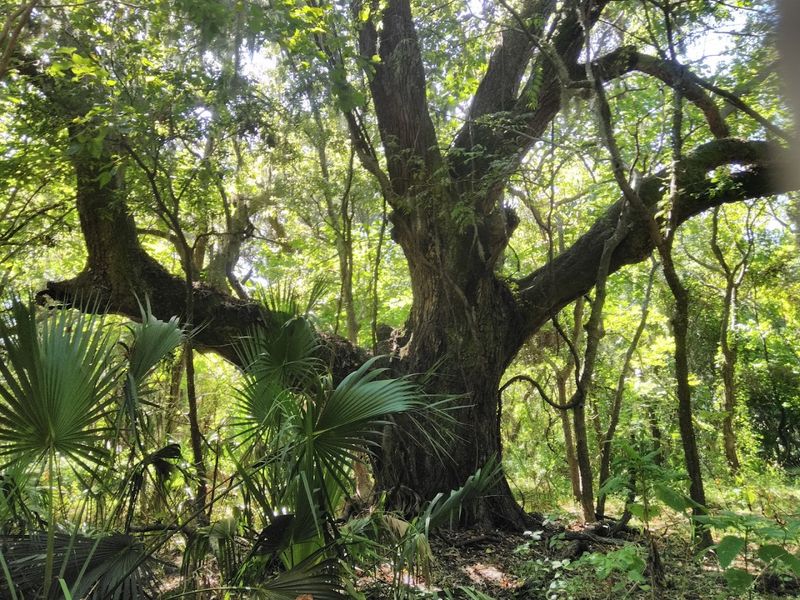
Long before any fort was built or any cottage went up on this island, people were already calling it home. Indian Shell Mound Park offers a quiet but striking reminder of that history.
The park features ancient mounds made entirely of oyster shells and fish bones, left behind by the island’s original inhabitants thousands of years ago. These mounds are not small.
They rise through the forest like natural hills, covered in roots and shade, and they carry a weight that is hard to describe.
Walking the forested trails here feels different from other outdoor experiences on the island. The canopy closes in, the light filters through in patches, and the sound of the Gulf fades.
It becomes its own kind of quiet.
Archaeologically, the site offers a rare and largely undisturbed look at the lives of the people who depended on these waters long before European contact. Interpretive signage along the trails explains what researchers have learned from studying the mounds.
Families with curious kids often find this stop unexpectedly captivating. The idea that people built these enormous mounds over generations, one shell at a time, tends to spark real conversation.
The park is free to visit and easy to access from the main road. It does not demand a lot of time, but it rewards the visitors who slow down and actually look.
How often do you get to stand on top of thousands of years of history?
Getting Here Is Part Of It
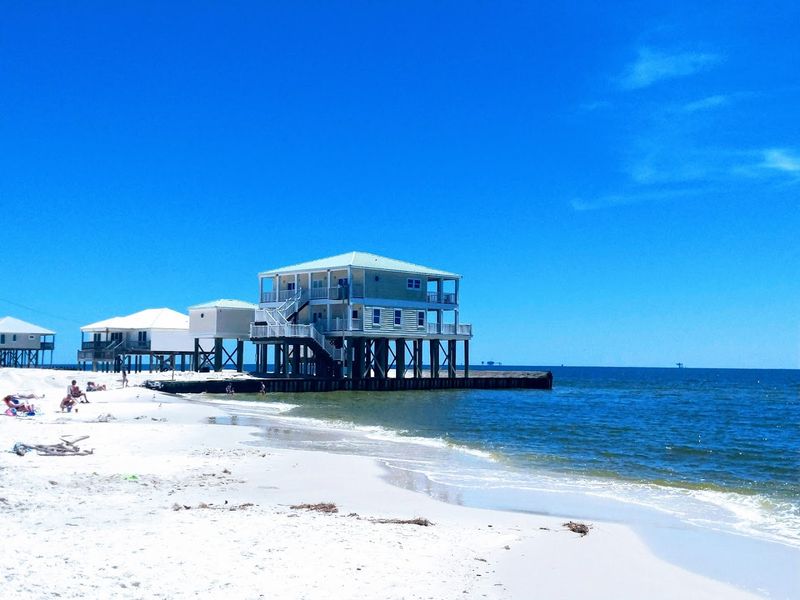
Reaching Dauphin Island requires a decision. That small act of intention is actually part of what makes the place feel special once you arrive.
The most common route is across a three-mile bridge from the mainland. It is a straightforward drive, but the moment you clear the bridge and see the island spread out ahead of you, something shifts.
The pace of everything slows down almost immediately.
The other option is the ferry from Fort Morgan, and this one is genuinely enjoyable. The crossing takes you across the mouth of Mobile Bay, with open water on all sides and the kind of sea breeze that immediately reminds you that you are officially on vacation.
Dolphins occasionally appear alongside the ferry, which has a way of making any trip feel like it started on the right foot.
The ferry runs seasonally, so checking the schedule before planning is a smart move. Visitors who take it often say the crossing itself became one of their favorite memories from the trip.
Neither route is complicated, but both feel like arrivals rather than just parking. The island does not sit right off a major highway.
You go there on purpose, and that purpose is felt the moment you step out of the car.
Is the journey part of the charm? Absolutely.
And once you are here, the idea of rushing back feels almost offensive to the atmosphere around you.
Local Life Moves Slowly
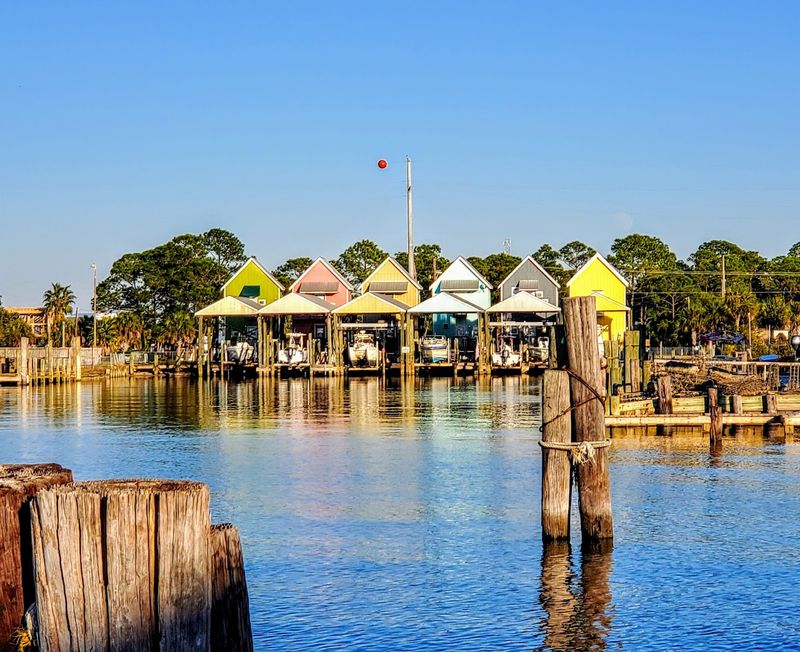
Life on Dauphin Island runs on its own schedule, and it is not in any hurry. Golf carts are a legitimate mode of transportation here, not a novelty.
You will see them parked outside shops, rolling down bike paths, and carrying families to the beach with coolers strapped to the back.
The fishing culture is real and deeply embedded. Many residents have built their lives around the rhythms of the Gulf, and that connection to the water shows in everything from the local seafood to the way people talk about the tides.
Fresh Gulf seafood is available at small local spots that prioritize the catch over the decor.
There are no big chain hotels crowding the shoreline. Accommodations lean toward beach cottages and small rental homes, which means most visitors end up cooking some meals, sitting on porches, and actually settling in rather than just passing through.
The community here is small enough that strangers start to feel familiar after a day or two. You see the same faces at the beach access, at the local market, on the bike path.
It creates a warmth that larger resort towns simply cannot manufacture.
Alabama has a reputation for hospitality, and Dauphin Island delivers on that promise in a genuinely unhurried way. No performance.
No script. Just people who like where they live and do not mind sharing it.
Ready to slow down? This island will not rush you.