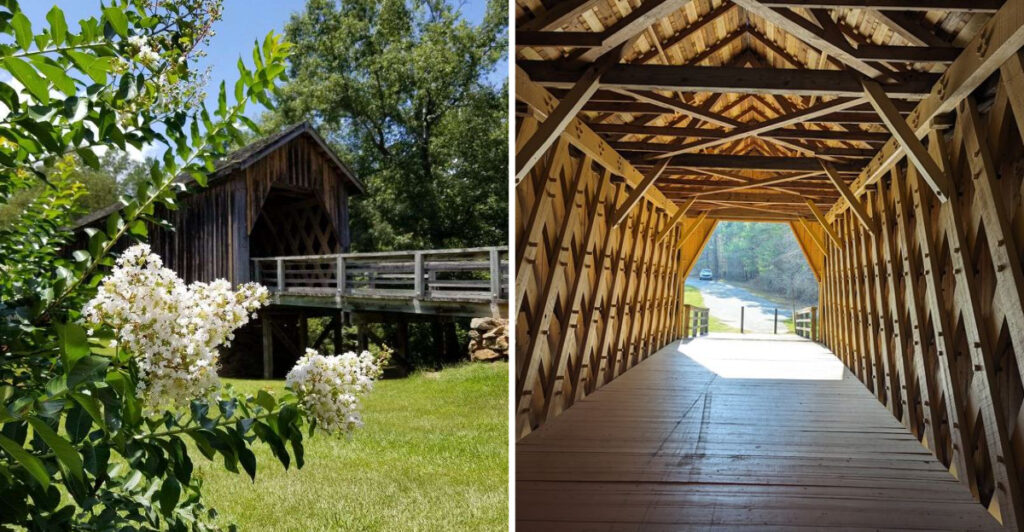
What waits beyond a quiet Georgia bend besides trees, creek water, and your GPS acting slightly unsure?
A covered bridge with more history than traffic.
This Upson County stop does not shout for attention. It simply stretches across the creek, framed by timber latticework and the kind of peaceful scenery that makes rushing seem rather silly.
The original bridge was built in 1892. Flooding damaged it in 1994, but a faithful replacement opened three years later and kept its historic design on the road.
Walk through the wooden interior, and claim a nearby picnic spot before continuing the drive.
You do not need tickets or an afternoon of preparation. You only need enough curiosity to pull over.
Do you dare to step inside and see what history is hiding beneath those wooden beams?
Allen Road Sets The Pace Before The Bridge Appears
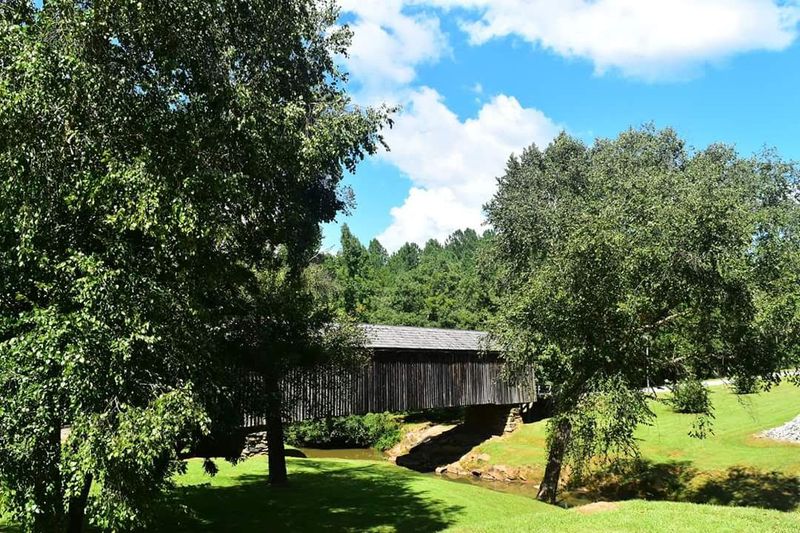
The drive toward Auchumpkee Creek becomes part of the visit before the red structure enters view.
Allen Road passes through a rural section of southeastern Upson County, away from the busiest commercial areas.
Fields, woods, and narrow country-road scenery create a slower approach than most planned tourist stops offer.
Auchumpkee Creek Covered Bridge stands near Hootenville, a historic community name also connected with the structure.
Another road bridge now carries vehicles across the creek, leaving the covered span available for pedestrian exploration.
That separation helps preserve the landmark while giving visitors time to look without watching for cars.
Georgia road trippers should save the location before leaving stronger cellular service, since rural turns can arrive quickly.
Drive carefully, especially after rain, and avoid blocking road access when choosing where to park.
The first glimpse through the trees provides the trip’s most dramatic moment without needing any manufactured suspense.
A printed map or saved screenshot helps because official directions rely on highways, county roads, and landmarks rather than a large attraction entrance.
Allow extra stopping distance on the final approach, since the parking turn can appear sooner than expected.
Once the engine stops, the creek and wooden structure take over the soundtrack.
The Original Crossing Arrived In 1892
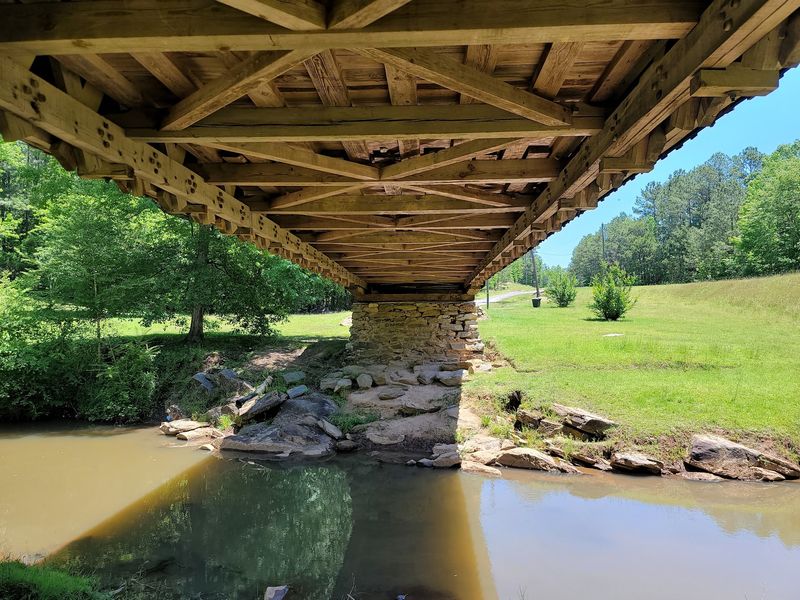
Local builders Warren Jackson Alford and Dr. James Wiley Herring completed the original bridge in 1892.
Upson County records place its construction cost near $1,195, a modest figure even after accounting for the period.
The bridge crossed Auchumpkee Creek with a covered span measuring about 96 feet.
Sources also list the complete structure near 120 feet, explaining why both measurements appear in historical descriptions.
Herring and Alford built the crossing for a rural community that needed dependable transportation rather than a future sightseeing attraction.
The wooden cover protected important structural elements from weather, helping extend the useful life of the bridge.
By 1975, the original structure had been added to the National Register of Historic Places.
That recognition acknowledged its engineering and transportation history before the later flood changed the site permanently.
Knowing the builders’ names makes the bridge more personal than a date carved onto a sign.
Auchumpkee Creek Covered Bridge also became known as the Hootenville Bridge and Zorn’s Mill Bridge, names that connect it with the surrounding rural history.
Those alternate names can appear in older records, maps, and covered-bridge references.
You can find it along Allen Road near U.S. 19, Thomaston, Georgia 30286.
The story begins with two local craftsmen solving an everyday problem using timber, calculation, and experience.
Town Lattice Work Gives The Interior Its Pattern
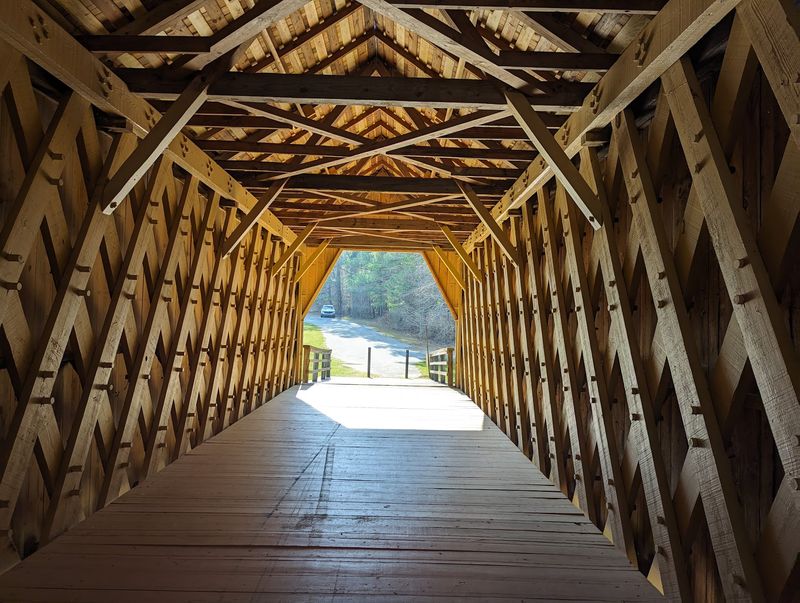
Step inside and the repeating diagonal timbers immediately pull your eyes toward the opposite opening.
The bridge uses a Town lattice truss, a design formed by overlapping wooden planks fastened into a broad grid.
This system distributes weight across many connected pieces instead of relying only on several massive beams.
It also produces the geometric interior that makes covered bridges especially satisfying to photograph.
Light enters through openings along the sides, changing the pattern as clouds move and the day advances.
The enclosed space can soften outside noise while making footsteps and nearby water easier to notice.
Look closely without climbing, leaning through openings, or disturbing any part of the structure.
Visitors interested in engineering can follow the repeated lattice from one end to the other and see how the pattern remains consistent.
The current bridge is a reconstruction, but its design intentionally follows the historic form.
Town lattice construction became popular because builders could assemble it from smaller timber pieces using a repeatable pattern.
The method suited communities that needed durable spans without transporting extremely large beams over long distances.
That balance lets you appreciate old construction methods without pretending every visible board survived from 1892.
The 1994 Flood Ended The Original Bridge
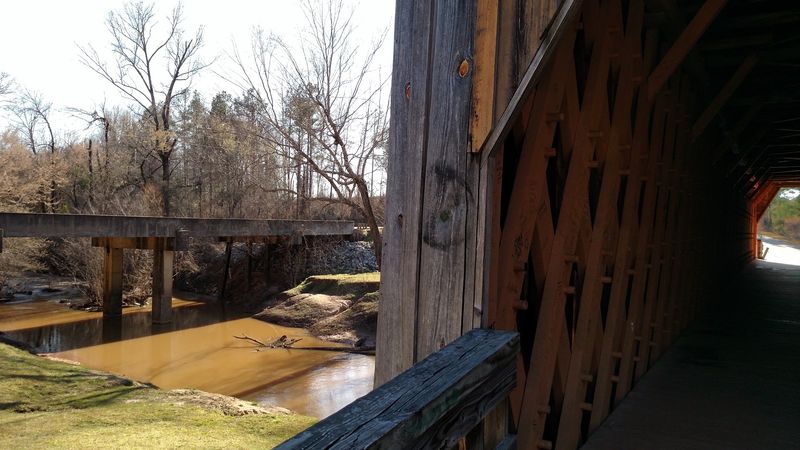
For more than a century, the first bridge remained part of the Upson County landscape.
It underwent restoration in 1985, helping preserve the aging structure before a much larger threat arrived.
In July 1994, flooding associated with Tropical Storm Alberto swept through Georgia and damaged the bridge.
Water lifted the historic span from its supports and carried away a landmark that had survived since the nineteenth century.
The loss reached beyond transportation because a replacement road crossing already served modern traffic needs.
What disappeared was a physical link with local craftsmanship, community travel, and more than one hundred years of county history.
Flooding from Alberto caused severe damage across the state, making the bridge one piece of a broader setback.
At the site, the creek appears calm during ordinary weather, which makes the destructive force harder to imagine.
The original bridge’s National Register listing could not protect it from moving water, which remains one of preservation’s hardest realities.
Historic status supports recognition and care, but it cannot remove exposure to storms, erosion, or flooding.
The bridge standing there now exists because the community and preservation specialists decided the loss should not remain permanent.
A 1997 Reconstruction Brought The Landmark Back
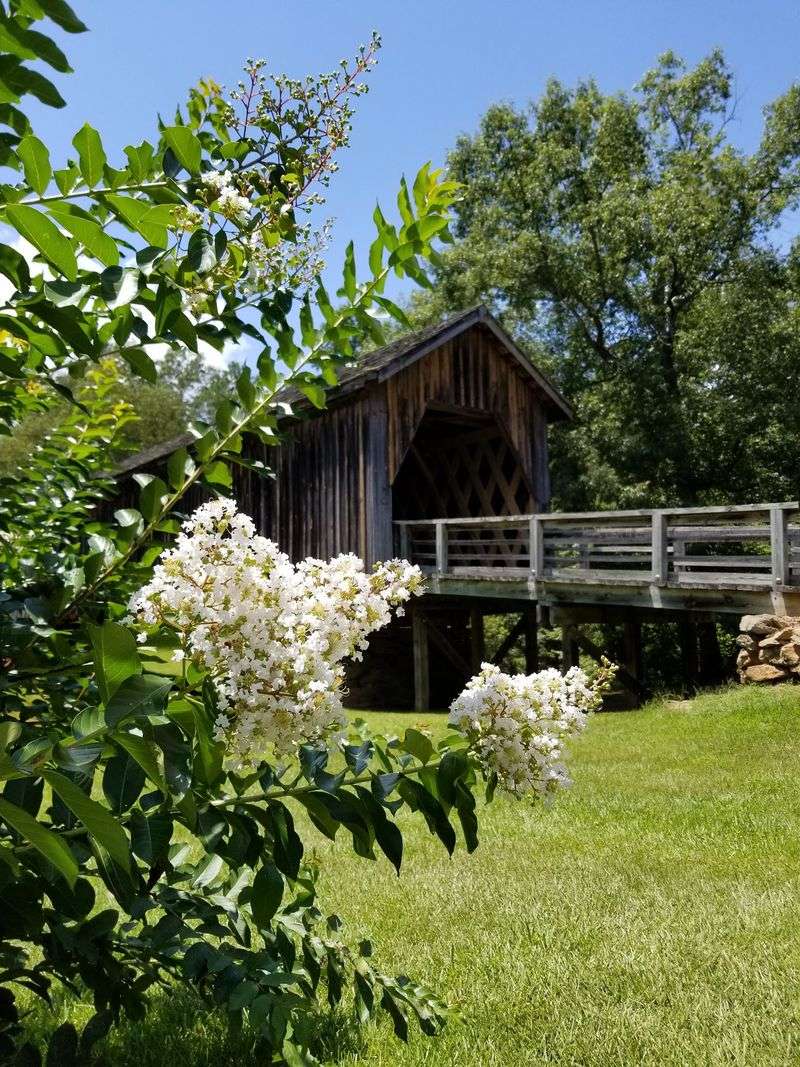
Three years after the flood, the covered bridge returned through a reconstruction led by master bridge craftsman Arnold M. Graton.
Federal disaster-relief funding helped pay for the work, while Georgia transportation authorities supported the rebuilding effort.
Upson County reports a reconstruction cost of approximately $209,000.
The new bridge recreated the 1892 appearance and reused pieces from the original structure where possible.
Historical sources describe it as an exact replica or a highly faithful reconstruction of the lost span.
The project preserved the red exterior, enclosed passage, lattice design, and relationship with Auchumpkee Creek.
Rebuilding also allowed the structure to continue as a historical landmark rather than returning to regular vehicle service.
That choice matters because modern traffic demands would place unnecessary pressure on a wooden covered bridge.
The result carries two histories at once: the original builders’ work and the 1990s effort to recover it.
County information says pieces from the original bridge were incorporated into the replacement, preserving a tangible connection with the lost structure.
You should still understand that the standing bridge dates primarily from the 1997 project.
Preservation here did not freeze time. It rebuilt a familiar form after nature removed the first one.
Walking Access Makes A Short Stop More Rewarding
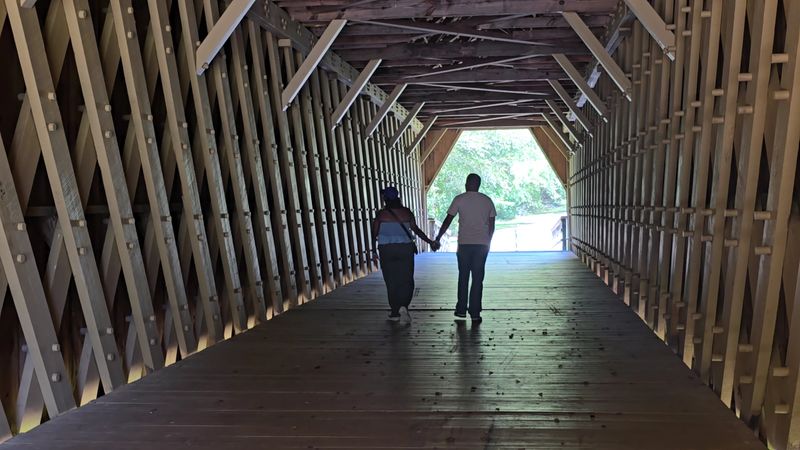
Motor vehicles do not cross the covered bridge, so you can explore the interior at a comfortable pace.
Official local tourism information lists daylight access, making morning and afternoon the most practical visiting periods.
A parking area and picnic space are available near the bridge, although amenities remain simple.
Bring water and snacks when planning a longer pause because this is a rural historical site, not a developed visitor center.
Comfortable shoes help after rain, when grass, creekside ground, and parking edges may become soft.
Families should keep children close near the water and road, since the peaceful setting does not remove ordinary outdoor risks.
Photographers can work with the red exterior, wooded surroundings, creek, lattice interior, and repeating lines of the walkway.
Georgia sunlight changes those views throughout the day, especially where tree cover creates alternating brightness and shade.
Visit respectfully, carry away everything you bring, and leave structural pieces exactly where they belong.
Weekday mornings may provide the quietest experience, while weekends can bring photographers, families, and travelers following Georgia’s covered-bridge routes.
No formal tour is required, so the quality of the visit depends largely on how carefully you observe.
The bridge needs very little from visitors beyond patience, care, and enough time to walk through slowly
The Creekside Setting Completes The Detour
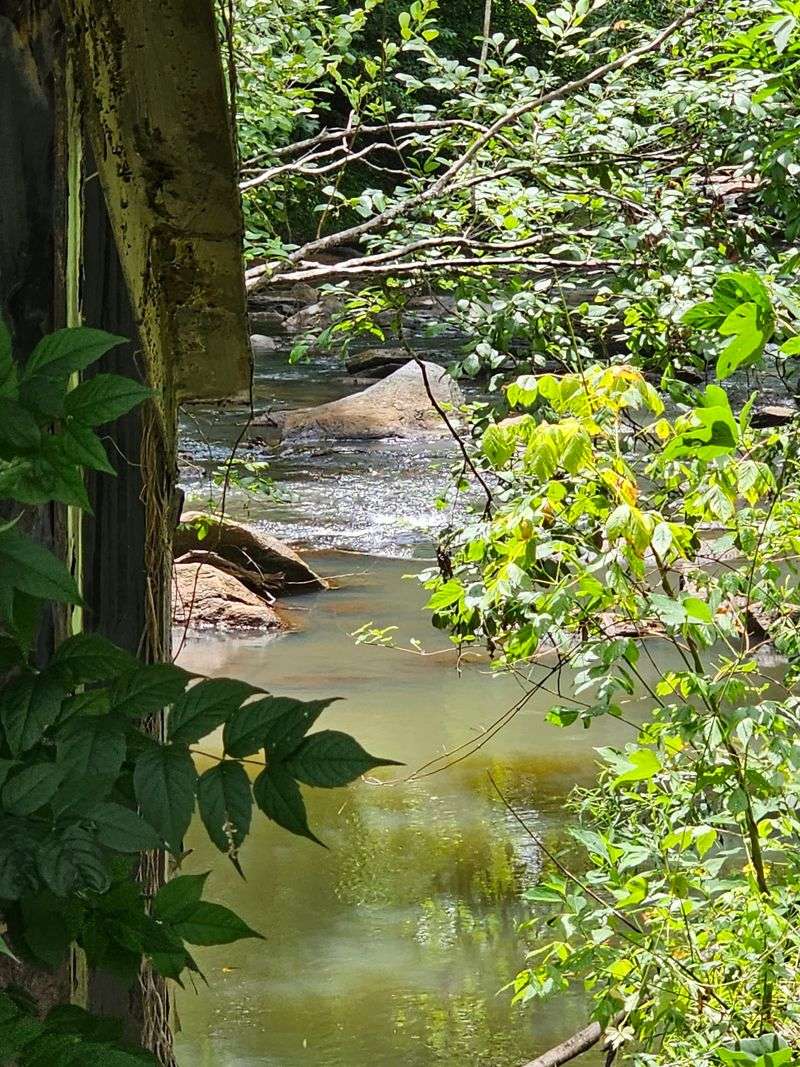
Auchumpkee Creek gives the bridge its purpose, history, and quietest reason to remain for another fifteen minutes.
Water moving beneath the structure adds sound and reflection without competing with the bridge itself.
Tree cover creates shade around parts of the site, although summer heat and insects still require preparation.
Bring sun protection and insect repellent rather than assuming the woods will handle both problems.
After heavy rain, admire the creek from safe ground and respect any barriers or changing conditions.
The location works well as one stop in a broader Upson County drive rather than a standalone day trip.
Nearby Thomaston can provide food, fuel, and additional historic points of interest before or after the bridge.
Current local guidance places the site on Allen Road south-southeast of Thomaston and recommends daylight visits.
Georgia has other surviving covered bridges, but this one carries a distinctive story of destruction and deliberate return.