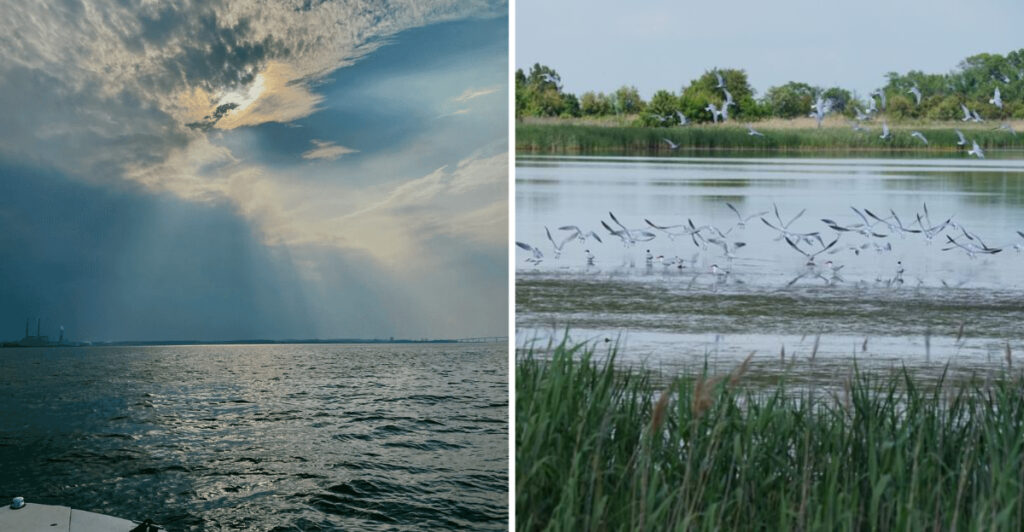
Most beaches ask you to find a parking spot. This one asks you to find a boat.
This Maryland island getaway sits in the Chesapeake Bay, with no bridge, ferry, or shuttle connecting it to the mainland. Getting there is part of the adventure, and that alone makes the visit feel different before your feet ever hit the sand.
The island covers about 1,100 acres and has a surprisingly unusual history. Once two separate islands, Hart and Miller were joined together in 1981, then reshaped over decades before the public beach area opened in 2016.
Today, visitors come for the quiet shoreline, open water views, and the feeling of reaching somewhere that most beach trips never include.
The hardest part is not finding the beach.
It is getting there.
Half A Mile Of Sand Along The Western Shore
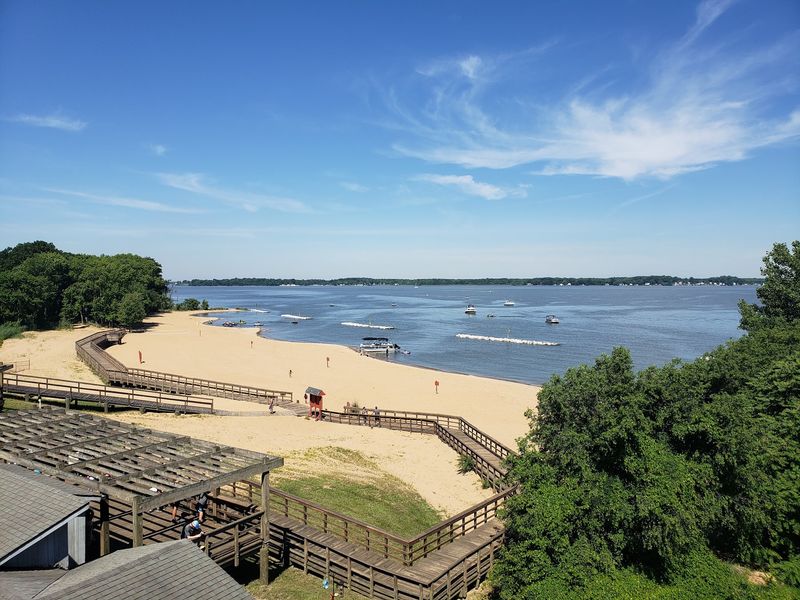
The western side of Hart-Miller Island is where the beach takes over.
The sandy shoreline runs for about 3,000 feet, giving you more than half a mile along the Chesapeake Bay. Swimming, wading, sunbathing, beachcombing, fishing, and picnicking all fit naturally into a day here.
There is no need to build the visit around a long list of attractions. You can bring chairs, find a place on the sand, and decide how active you want the day to become.
If you like walking beaches, the length gives you room to move without finishing the shoreline in a few minutes.
If swimming is the priority, remember that there is no lifeguard on duty. Keep children close, stay aware of your own limits, and watch for boat traffic near the shore.
The water here is Chesapeake Bay water, not a clear tropical sea. It is brackish, and its appearance can change with weather, wind, runoff, and other conditions.
That makes the setting distinctly Mid-Atlantic even when a bright summer day gives you broad water views and a long strip of pale sand.
Day-use hours run from 8 a.m. to sunset. After sunset, the island is reserved for registered campers.
Getting Here Means Arriving By Water
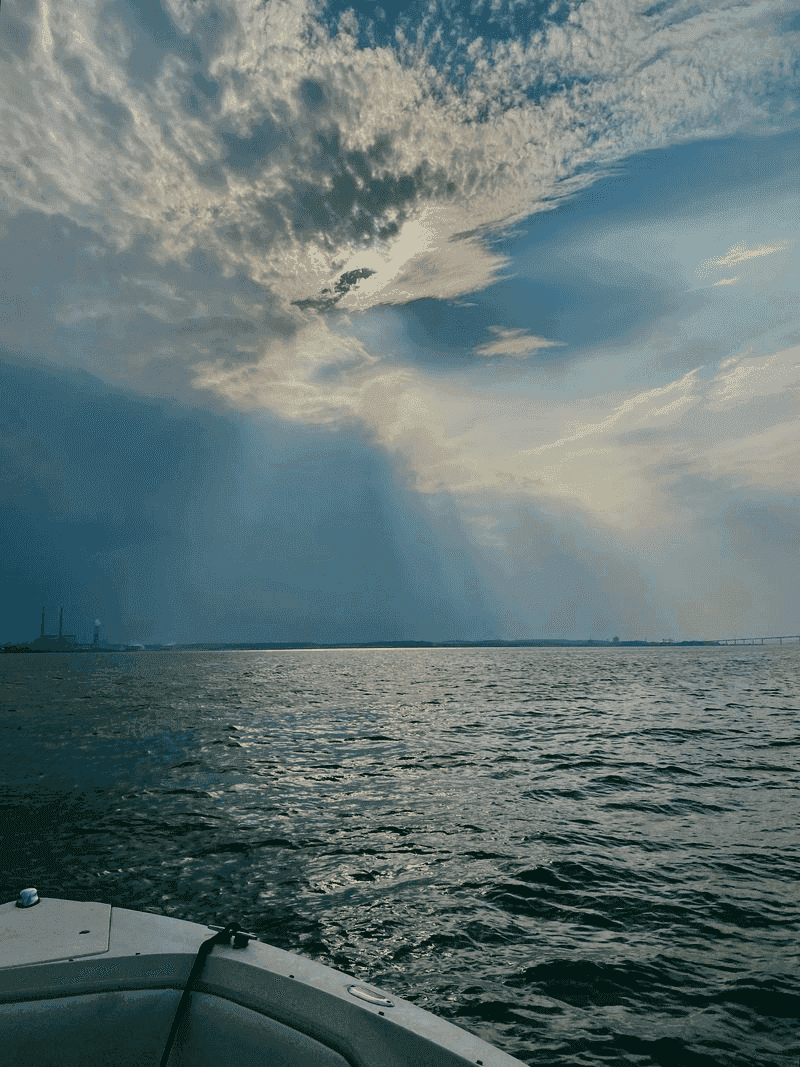
There is no road, bridge, public ferry, or parking lot on Hart-Miller Island.
The park is accessible only by personal boat or watercraft, so the day begins with figuring out how you will cross the bay and, just as importantly, how you will get back.
That can mean a powerboat, sailboat, kayak, canoe, or another suitable craft. Whatever you use, conditions matter. Wind can change the character of open water quickly, and boat traffic becomes another part of the route.
If you are paddling, match the trip to your experience level and check the weather before launching. A calm morning does not guarantee identical conditions later in the day.
Boaters approaching the western beach also need to stay alert for swimmers and people wading close to shore. The west side is used for mooring and beach access, so slow, careful approaches make sense when other visitors are in the water.
Once you land, there is no quick drive to a store for whatever you forgot.
Bring your water, food, sun protection, and anything else you expect to need before you leave the mainland.
The island sits in Baltimore County near the mouth of Middle River, but the practical address is the water route, not a street.
The Island Has A History Bigger Than A Typical Beach Day
Hart-Miller Island looks natural from the water, but its modern shape comes from decades of major engineering and restoration work.
Hart and Miller were once separate islands connected to a peninsula extending from Edgemere. In 1981, construction of a dike joined them.
The enclosed area was then used for dredged material from Baltimore Harbor and surrounding waterways until 2009. Over time, that process helped create the larger island landscape that exists today.
The result is an unusual mix of recreation and restoration. The western shoreline provides the beach, while other parts of the island include marsh, open habitat, ponds, and areas used by migrating birds.
The North Cell remains closed to the public, so do not assume every part of the 1,100 acres is open for wandering.
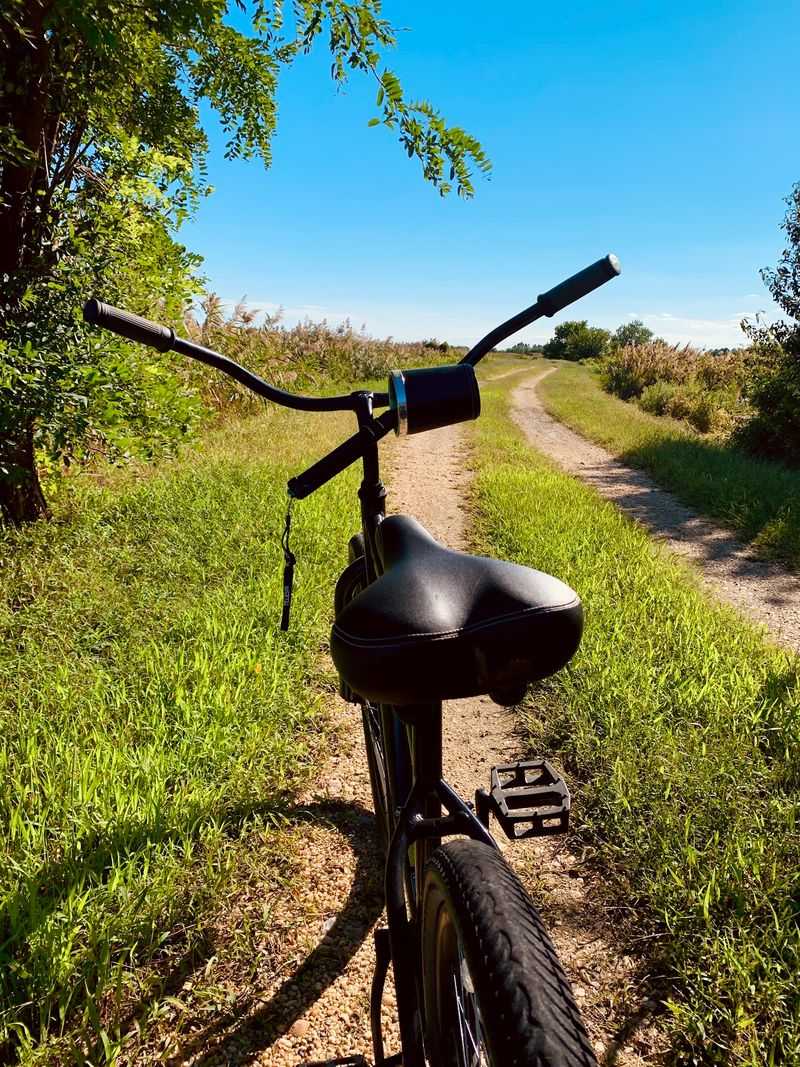
The South Cell normally contains miles of interior trails, but access to those inland trails and free bicycle rentals is currently unavailable.
That does not close the beach or campsites. You can still plan around the shoreline, boating, swimming, fishing, picnicking, bird-watching, and camping.
If hiking or biking is the main reason for your trip, check the island’s access status before launching so you know what will be open when you arrive.
Twenty-Two Campsites Turn A Beach Day Into An Overnight Trip
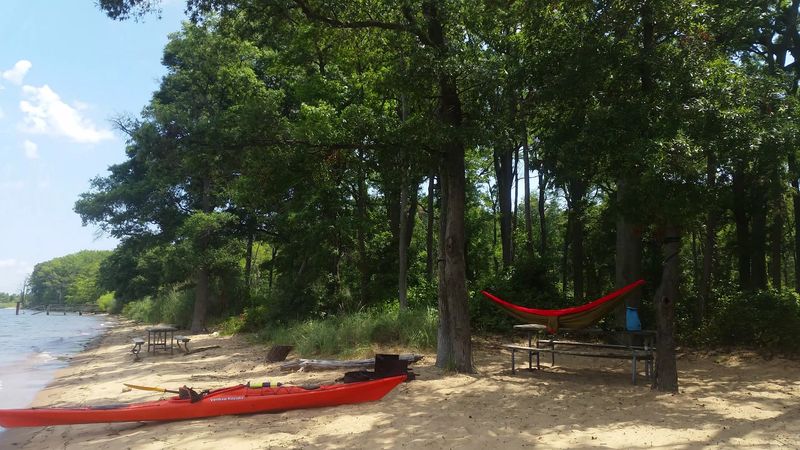
You do not have to leave Hart-Miller when day-use hours end.
Camping is available from May 1 through September 30, with 22 first-come, first-served sites spread across three areas.
Six sites are in the main camping area on Hart-Miller Island. Eleven are at Hawk Cove, and five more are on Pleasure Island.
Each campsite comes with a picnic table, lantern post, and campfire grill. Fires belong in the provided rings, and glass containers are not allowed on the island.
The setup is simple, so treat the trip as a boat-access camping outing rather than a stay at a developed campground with every convenience waiting nearby.
Seasonal restrooms and a water supply are available at the main camping area on Hart-Miller Island from May through September. If you are staying elsewhere or simply prefer not to depend on island facilities, carrying your own drinking water is the easier plan.
Because the sites are first come, first served, an overnight trip takes a little flexibility.
Bring the equipment you need, secure your boat with changing conditions in mind, and keep your food and supplies organized.
Once the day-use visitors leave at sunset, only registered campers remain. That gives an overnight stay a very different schedule from a quick afternoon on the beach.
Birding Adds Another Reason To Look Beyond The Sand
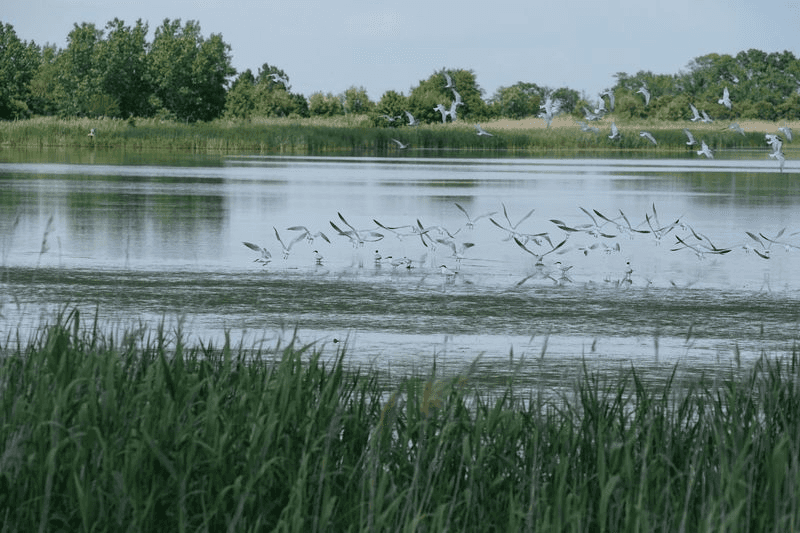
The beach may be the first thing you notice, but Hart-Miller Island is also known for migrating birds.
More than 300 bird species have been observed around the island since the late 1970s, thanks to the mix of Chesapeake Bay shoreline, marsh, open habitat, ponds, and other environments.
Bald Eagles, Ospreys, Northern Harriers, shorebirds, and migrating species can all put binoculars to work.
An observation platform is part of the island’s seasonal facilities and provides a higher view over the marsh. It is generally available from May through September.
You do not need to be an experienced birder to make use of the setting. A slow walk near the open portions of the island can turn up birds moving between water, shoreline, and vegetation.
Fishing and bird-watching also work well for anyone who wants a break from sitting on the beach all afternoon.
The island’s wildlife value is one reason to pay attention to closures and boundaries. The North Cell is closed, and the current staffing situation also limits access to the inland South Cell trails.
Stay in areas open to visitors and let the beach, shoreline, and accessible habitat provide the day’s exploring.
A pair of binoculars takes up very little boat space and can add a lot to the trip.
Swimming Comes With A Few Extra Things To Remember
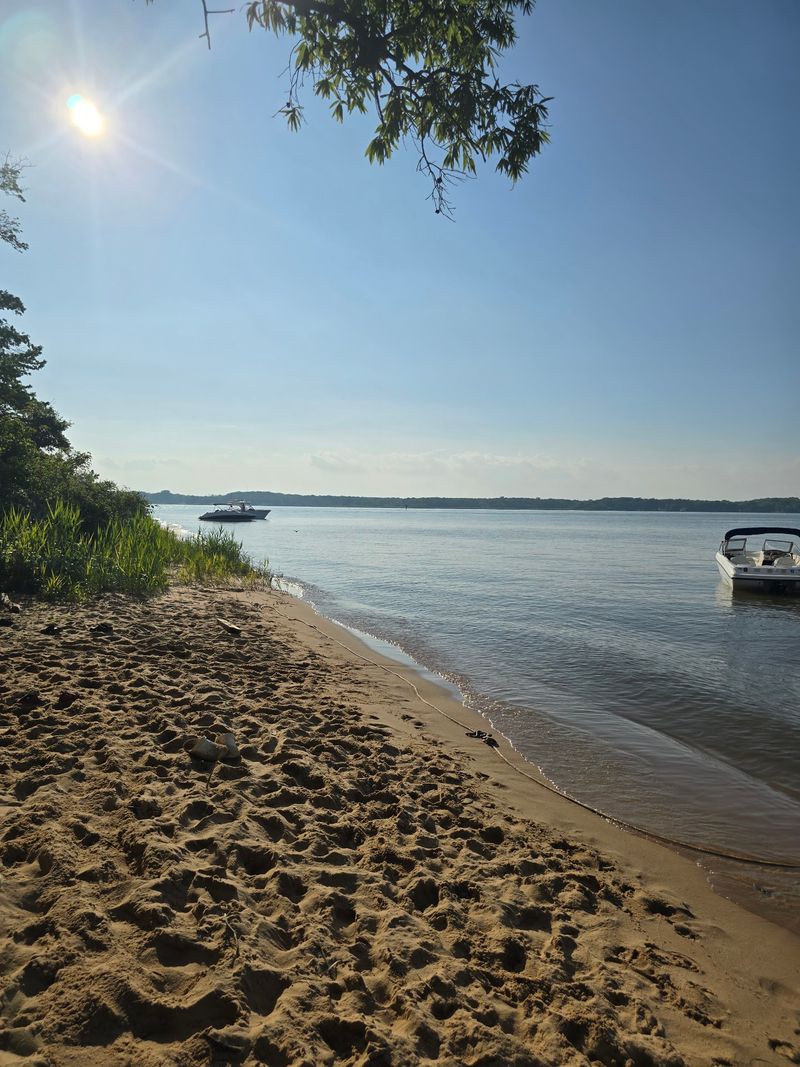
The broad sandy beach makes swimming an obvious part of a warm-weather visit, but this is an unsupervised beach.
There is no lifeguard on duty, so everyone entering the water needs to judge conditions for themselves. Children should stay under direct supervision, and swimming alone is a poor plan.
Boat traffic adds another layer of awareness. Hart-Miller is a boating destination, and vessels may be approaching or leaving the western shoreline while people are swimming and wading.
Keep an eye on what is happening beyond your immediate patch of water, especially when the beach is busy.
The Chesapeake is an estuary, so water conditions can change from one visit to another. Recent rain, wind, and other environmental factors can affect clarity and water quality.
Checking current swimming conditions before leaving the mainland is a simple addition to the trip.
The same goes for weather. A beach afternoon that begins under calm skies can become less comfortable if wind builds across the bay, particularly when your ride home depends on a small boat or paddle craft.
You do not need to turn the day into a complicated safety exercise. Check conditions, know your limits, supervise children, and remember that your return trip is still waiting after the swim.
What To Pack And What To Confirm
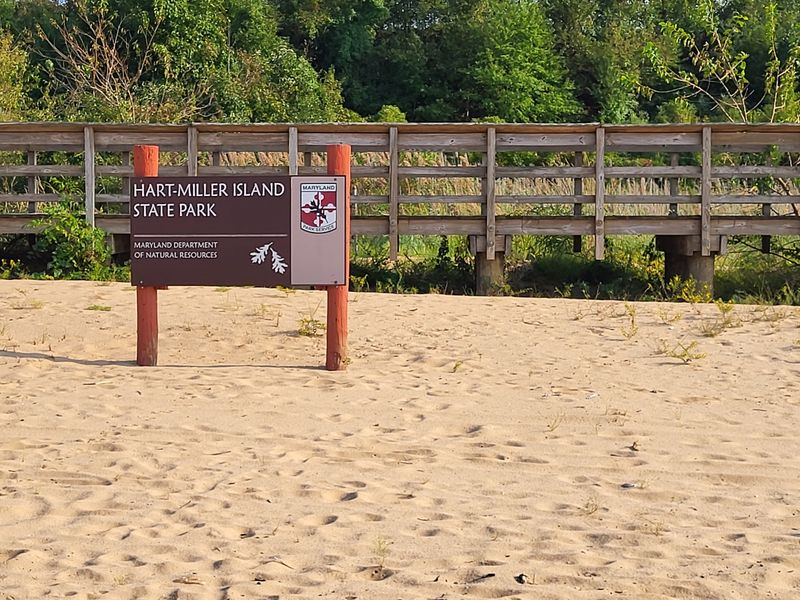
Hart-Miller is easier to enjoy when you pack like you are going somewhere without a parking lot, because you are.
Bring enough drinking water, food, sunscreen, hats, shade, towels, insect repellent, and any personal supplies you will need. Pack a bag for trash as well.
Leashed pets are allowed on Hart-Miller Island, so a dog can join the day if you are prepared to manage the boat ride, heat, water, and cleanup.
Glass containers are prohibited, making reusable plastic or metal containers the better choice for drinks and food.
Seasonal restrooms and water are available around the main camping area, but the island is not a place to rely on a full set of beach-town services.
The inland trails and bicycle rentals are currently unavailable, so build the trip around what is accessible: the beach, water, campsites, fishing, picnicking, birding, and open shoreline areas.
Check the forecast before launching and keep sunset in mind if you are not camping.
Then let the day stay simple.
A boat ride, more than half a mile of sand, Chesapeake Bay water, and enough supplies to stay comfortable are really all you need to understand the appeal of Hart-Miller Island.