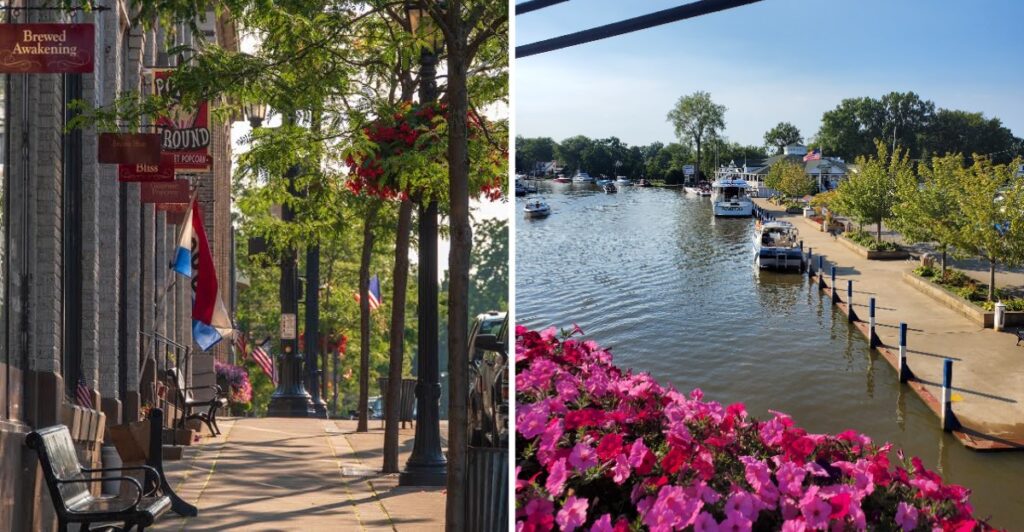
Here is the nice thing about this town: you do not need to earn the day.
Start by the water.
Maybe that means the beach. Maybe it means the river. Either way, you can keep walking instead of turning every stop into another drive.
The lighthouse is close. So is the harbor. Downtown is right there when you want coffee, a slower stroll, or a break from the shoreline.
By the time Ohio finally enters the conversation, you may already be too busy deciding whether to keep following Lake Erie or cut back toward the river.
That is the part I like most.
Nothing here forces the afternoon into a schedule.
You wander. You stop. You change your mind.
And if the whole day can unfold without once checking the clock, why rush it?
Start Where The River Meets Lake Erie
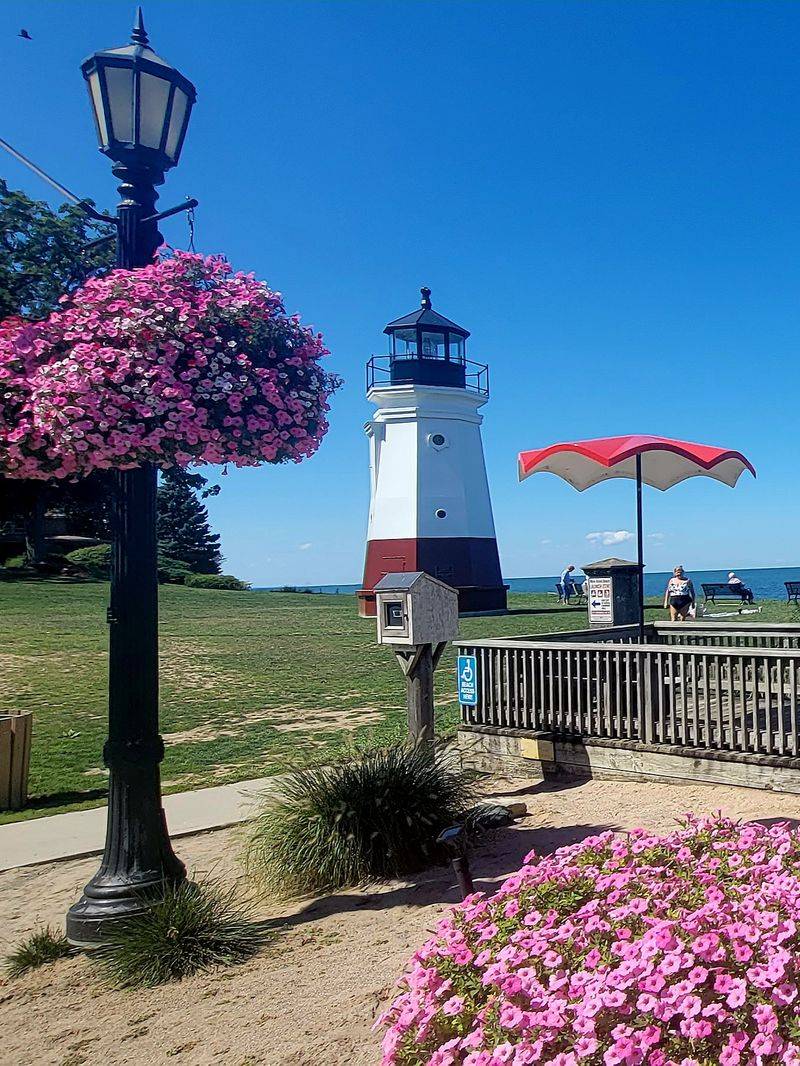
Water explains much of Vermilion before you even get to the first attraction.
The city sits where the Vermilion River reaches Lake Erie, a location that shaped local transportation, fishing, shipbuilding, and recreation over time.
That geography also gives a visit two distinct waterfront moods.
The lake side opens wide toward the horizon, with Main Street ending near the shoreline. The river side feels more contained, with docks, boardwalks, boats, and parks lining the water closer to downtown.
You do not have to choose one over the other.
A relaxed day can move between both without much effort. Start with Lake Erie when the morning is bright, switch to the river when you want a bench or picnic table, and head back toward the lake later if sunset is part of the plan.
The layout is part of what makes Vermilion easy to explore on foot.
Instead of spending the day jumping between distant attractions, you can keep circling back toward the same waterfront core.
That makes the first decision simple: lake first or river first?
Main Street Beach Brings Sand Into Downtown
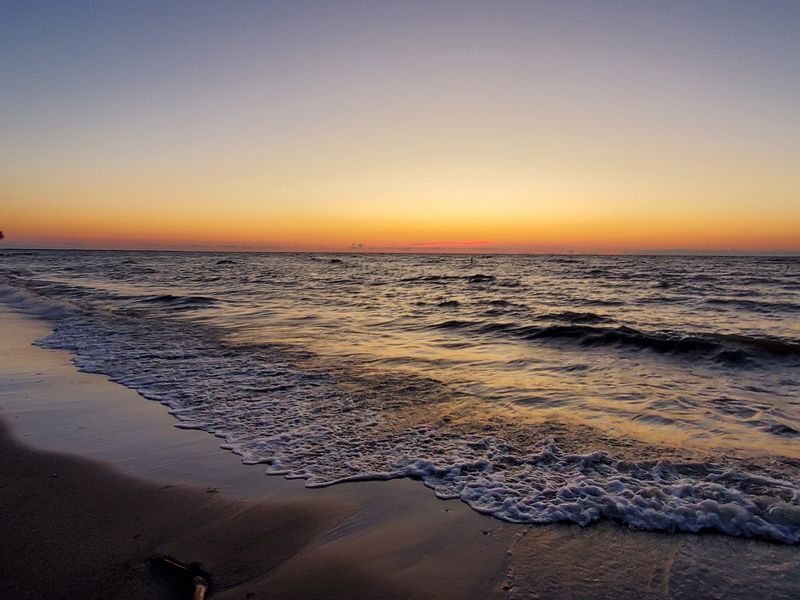
Main Street Beach sits at the north end of Main Street, putting a public Lake Erie shoreline directly beside downtown.
The beach includes sand, lake access, picnic tables, restrooms, shade areas, and an observation platform. Swimming is permitted, and the site also provides accessible features for visitors who need them.
That makes it more than a quick overlook.
You can stop for a short walk along the shoreline, sit for a while with a lake view, or work beach time into the middle of a downtown visit without moving the car across town.
The Vermilion Lighthouse stands right beside the beach, so the two naturally fit together.
This is also one of the easiest places to see how close Vermilion’s main attractions really are. Turn away from the water and Main Street leads back toward the historic district. Stay facing the lake and the day can stretch a little longer.
Weather on Lake Erie deserves some respect, especially outside midsummer. A light layer can be useful when wind picks up near the shore.
Once you have found the lake, the rest of downtown is already close.
The Lighthouse Carries An Older Story
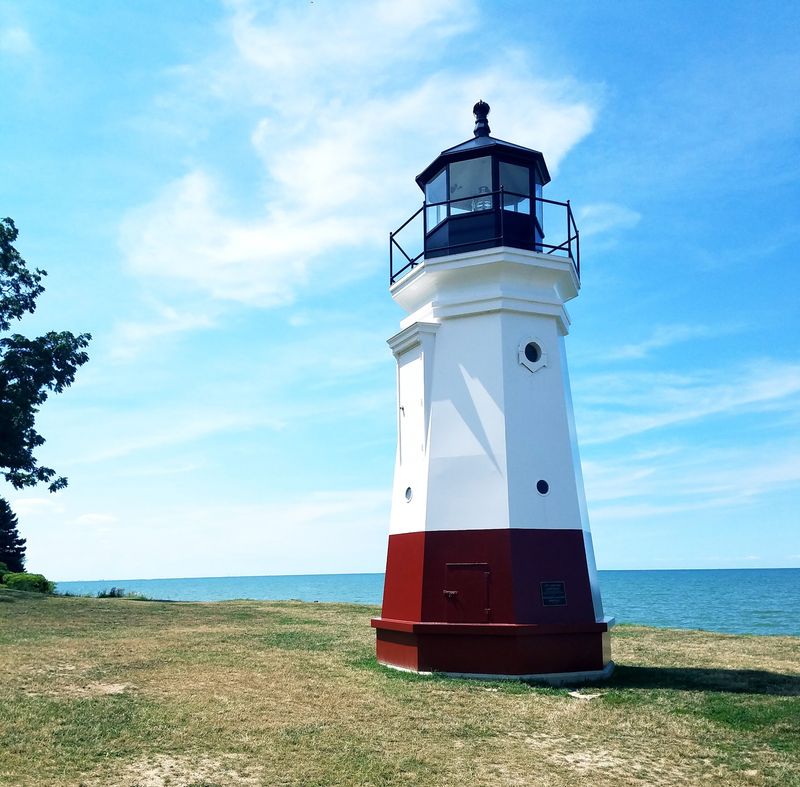
The lighthouse beside Main Street Beach looks historic because its story reaches back to an earlier structure.
Vermilion had an iron lighthouse dating to 1877. That original tower was eventually removed after developing a lean, and the waterfront spent decades without the same familiar landmark.
The present tower is a replica built in 1991.
Its design was based on the 1877 lighthouse, giving the lakefront a visual link to Vermilion’s maritime past. The replica was also built as a working light rather than simply a decorative structure.
That history gives the stop more substance than a quick photo.
Stand near the lighthouse and the location starts connecting several parts of Vermilion at once: Lake Erie in front, Main Street behind, the river harbor nearby, and a downtown shaped by the water just a short walk away.
There is no complicated itinerary required here.
See the lighthouse while you are at the beach, then let the next decision depend on the weather.
A clear afternoon might keep you by the lake a little longer. If everyone is ready for a change of scenery, the riverfront offers a different view without taking the day far from downtown.
The Riverfront Slows The Pace In A Different Way
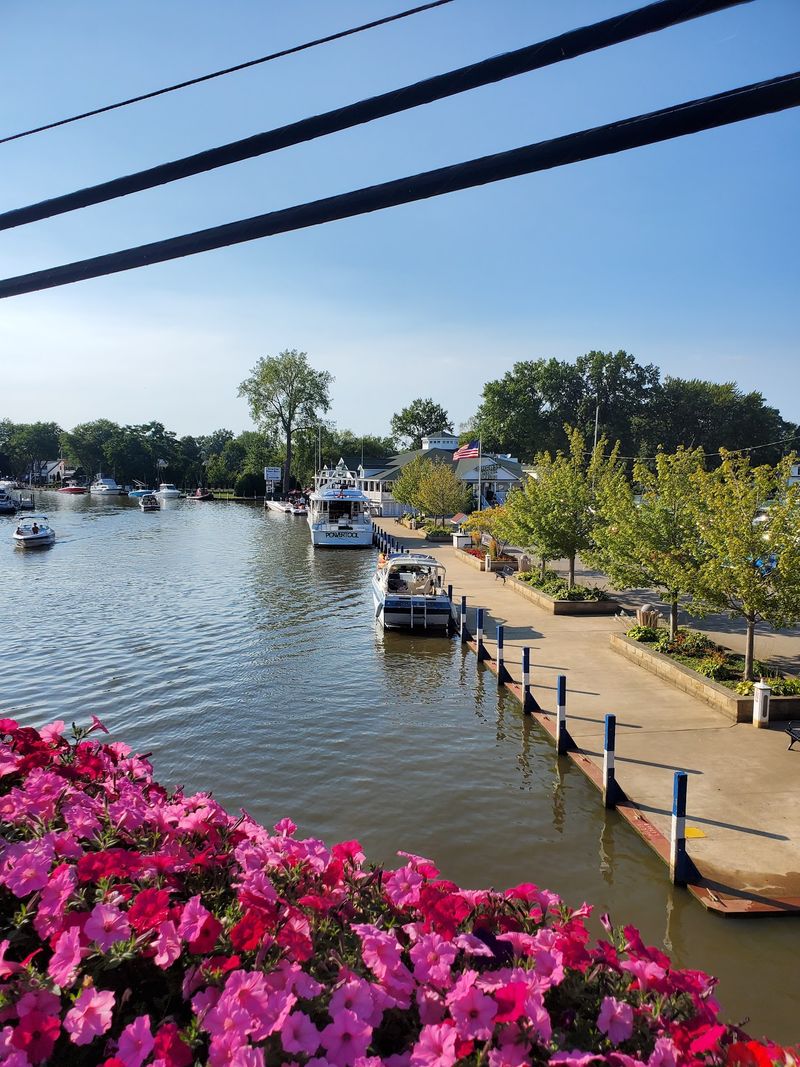
Lake Erie gets the bigger horizon, but the Vermilion River gives the town another useful place to pause.
McGarvey’s Landing includes a boardwalk along the river with benches, picnic tables, landscaping, and public boat docks. It is a practical stop when you want waterfront scenery without returning to the sand.
That setting also makes a picnic easy.
Bring lunch, find a table, and watch the harbor traffic come and go while giving your feet a break from downtown walking.
Rotary Centennial Park adds another river view nearby. The park includes benches, plantings, picnic tables, and a historical marker connected to Vermilion’s railroad past.
That gives a short riverfront walk two slightly different stops.
One leans more toward the boardwalk and docks. The other adds a small history detail to the scenery.
Neither requires much planning.
If the beach was the active part of the morning, use the river as the slower part of the afternoon. If the river comes first, Main Street Beach can take over later.
The water stays in sight either way, but the feeling changes enough to keep the day from becoming repetitive.
Boats Still Connect The Harbor With Downtown
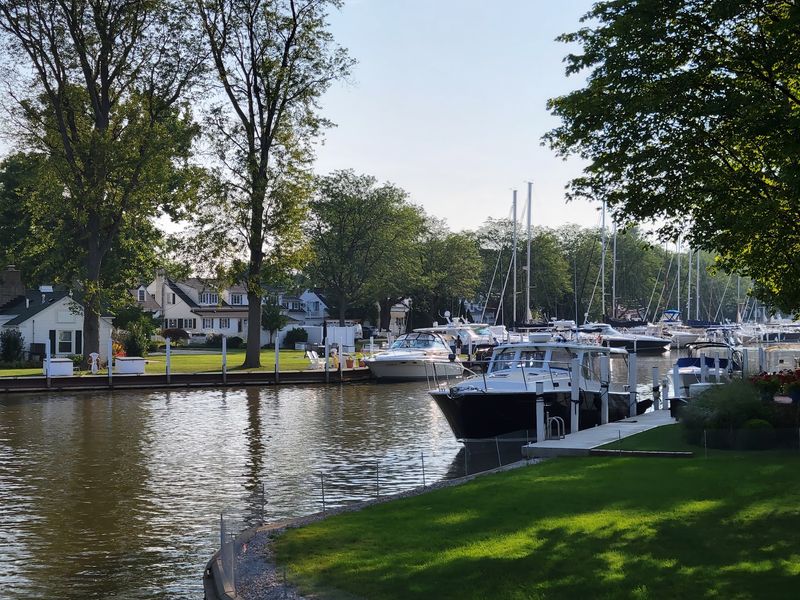
Vermilion’s relationship with boats goes well beyond scenery.
Shipbuilding once became a major local industry, and the river harbor still keeps boating close to everyday downtown life.
Public guest docks are available inside the Vermilion River harbor near the historic district. Boaters can tie up and continue into town on foot, with downtown businesses and Main Street Beach within walking distance.
That creates an unusual option for a small-city day trip: arrive by road or arrive by water.
Even without a boat, the harbor helps explain the town.
The river was not simply decorative. It supported transportation, fishing, shipbuilding, and trade, and those connections remain visible in the layout of the waterfront.
Vermilion also continues to celebrate that history through the Festival of the Fish, a tradition that began in 1966. In 2026, the event marks sixty years and runs from June 19 through June 21.
You do not need to plan a visit around the festival to understand the maritime angle.
A walk past the docks, a stop along the boardwalk, and a look toward the river mouth already show how closely the town is tied to the water.
Historic Downtown Stays Close To The Shore
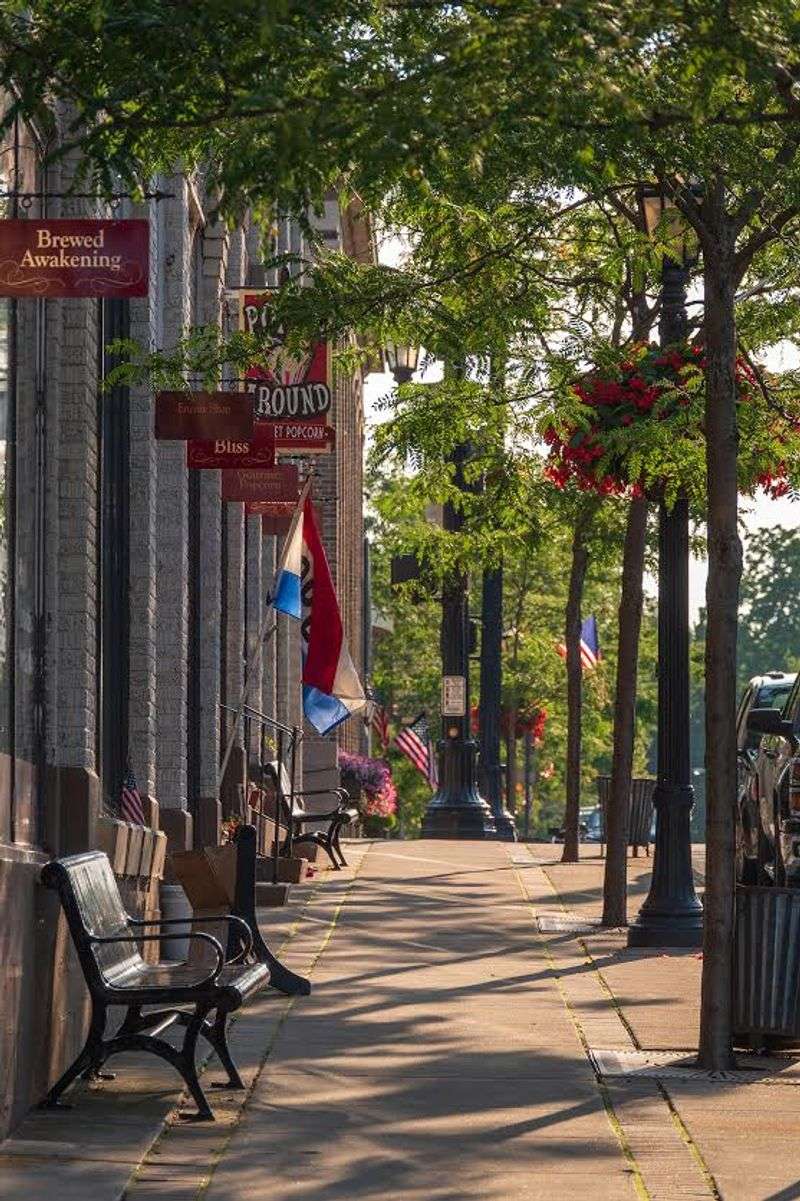
The waterfront works especially well because downtown never feels far away.
Main Street leads directly toward Lake Erie, while the surrounding historic district keeps shops, older buildings, river access, and the beach within a fairly compact area.
That makes walking a practical way to connect the stops.
A useful place to anchor that loop is Main Street Beach at 479 Main Street, Vermilion, OH 44089, with the shoreline at the north end of the street.
Vermilion has a historic walking-tour route for anyone who wants more context while moving through downtown. Instead of simply passing older buildings, the route gives the streets a little more meaning.
Comfortable shoes still help.
A compact downtown does not mean the day stays short, especially once beach time, river stops, and a few extra blocks start adding up.
The easiest approach is not to rush the walking portion.
Pause when a building catches your attention. Look up at rooflines and older architectural details instead of keeping your eyes only at storefront level. Then head back toward the water when you are ready for another break.
That back-and-forth rhythm suits Vermilion better than a rigid route.
Downtown gives the day structure, while the lake and river keep offering places to stop before the next block.
Build The Day Around How Little You Need To Drive
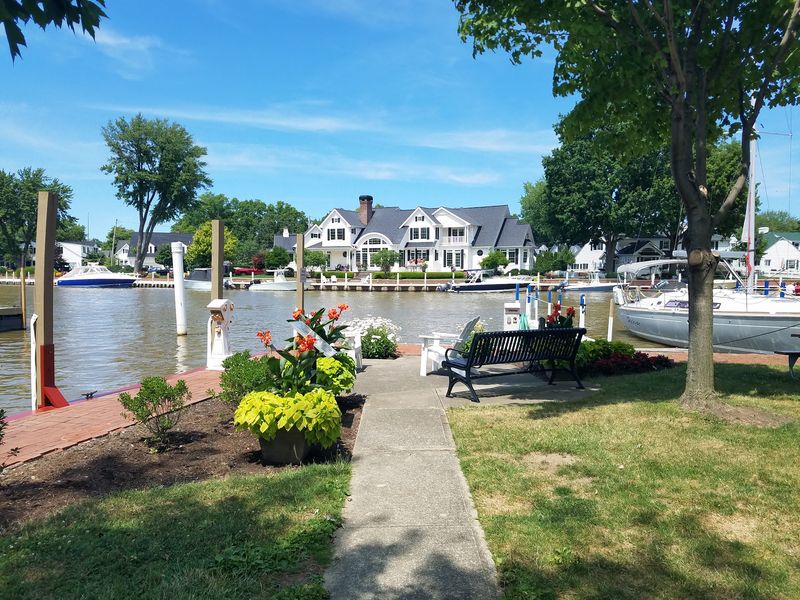
Vermilion works best when the plan stays simple.
The beach, lighthouse, riverfront boardwalk, public docks, parks, and historic downtown all sit close enough that a visit can revolve around walking rather than repeated car trips.
Start with whichever waterfront sounds better.
A lake-first morning can begin at Main Street Beach and the lighthouse before turning south toward downtown. A river-first version can use McGarvey’s Landing as the opening stop, then work toward the shops and eventually the beach.
There is no single correct order.
Weather may decide more than the itinerary does. A breezy lakefront might send you toward downtown sooner, while a clear evening can make returning to the beach an easy final move.
That flexibility is the real advantage of the town’s compact layout.
You can change the plan without losing the day.
Spend longer by the river if the harbor catches your attention. Add the historic walking route when you want more context. Save the beach for later if the light looks better toward evening.
The distance between stops stays manageable, so the schedule can remain loose. That leaves room for the kind of small decisions that make a lake day better: another bench, another block, or one more look at the water before heading back.
By the end, the question is less about how much you managed to see and more about which stretch of waterfront made you slow down the longest.