A coastal town does not need a famous name to make a strong impression.
This Washington spot offers a different kind of waterfront experience, where river views, local history, and a slower pace shape the visit. It sits near the coast but keeps the character of a working community rather than a typical beach getaway.
That difference is exactly what makes it interesting. The scenery is still there, but the rhythm feels more relaxed and personal.
I have always enjoyed places that give you a reason to look closer instead of rushing through.
Could this be the quieter coastal stop you did not know you were looking for?
Raymond Home Prices Still Sit Below Better-Known Washington Coast Towns
Housing is where Raymond’s bargain argument becomes easiest to see. Over the three months ending June 2026, the city’s median home sale price was roughly one hundred thousand dollars below Ocean Shores and about sixty thousand below Long Beach.
The difference becomes even larger against Washington as a whole, where June’s statewide median sale price was more than twice Raymond’s recent median.
Raymond is a small market, so relatively few sales can move its median more sharply than they would in a larger city.
Still, the current comparison is hard to miss. Buyers looking at southwest Washington can find a river community tied to the coast without immediately stepping into the higher price levels seen in better-known beach destinations.
Raymond also has a different scale from those resort-oriented towns. Its population is about twenty-nine hundred, while timber and shellfish remain part of the local economy.
The tradeoff is location. Raymond is not a quick suburb of a major metro area, and the Pacific beach is a drive away.
For someone who values a smaller town, that housing gap gives Raymond a practical reason to stand out.
Willapa Bay Gives This Small City A Genuine Coastal Connection
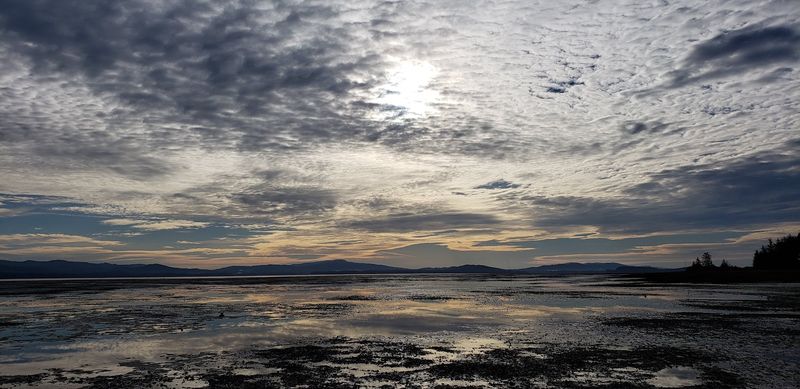
Raymond is not lined with oceanfront hotels or a broad sandy beach. Its coastal identity comes from Willapa Bay and the river system feeding into it.
The city borders the bay region where the Willapa River reaches tidal water, putting Raymond between the Willapa Hills and one of the major estuaries on the West Coast.
Willapa Bay covers a broad area of sheltered water, tidal flats, marshes, and channels rather than open Pacific surf.
That difference shapes the landscape. This is a place for river bends, mudflats, working docks, birds, and changing tides.
Shellfish remain part of the local economy, connecting Raymond to an industry that depends directly on the bay. Timber remains important too, so forests and estuary are not just scenery around town. They are part of how the area has made a living.
The ocean is still within reach by road, but Raymond makes more sense as a Willapa Bay gateway than as a beachfront resort.
That can be an advantage if your idea of coastal Washington includes kayaking, fishing, wildlife watching, and quieter water.
Raymond does not need to imitate Long Beach or Ocean Shores. Its coastal connection works differently, with the river doing much of the introducing.
The Willapa River Runs Straight Through Raymond’s Story
Raymond grew where it did because water made movement possible. Before modern roads took over, the Willapa River helped connect the young town to timber, mills, boats, and outside markets.
Early Raymond was built across tidal land and sloughs, with parts of the business and residential districts raised on pilings. Wooden streets and sidewalks once crossed ground that could be affected by the tides.
Timber quickly turned that unusual setting into an industrial town. Logs could move from the surrounding forests toward mills and the river, while finished lumber could leave by water and rail.
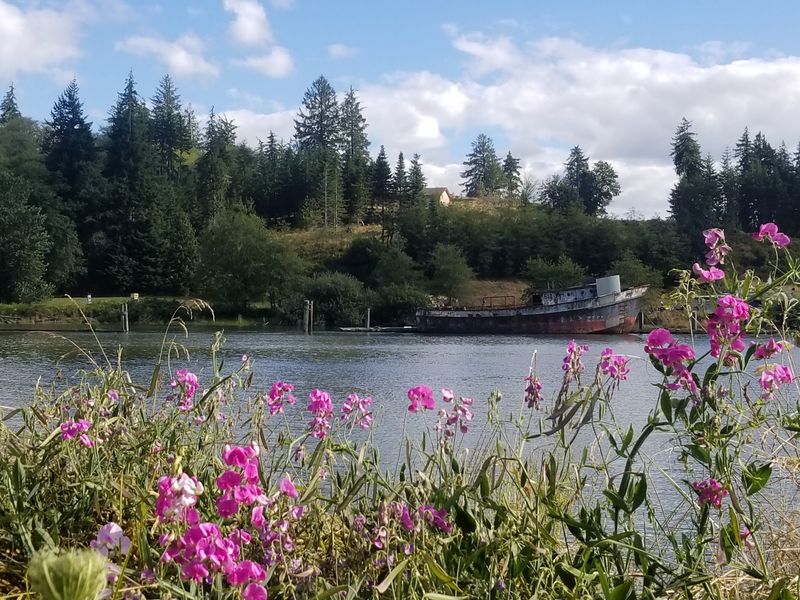
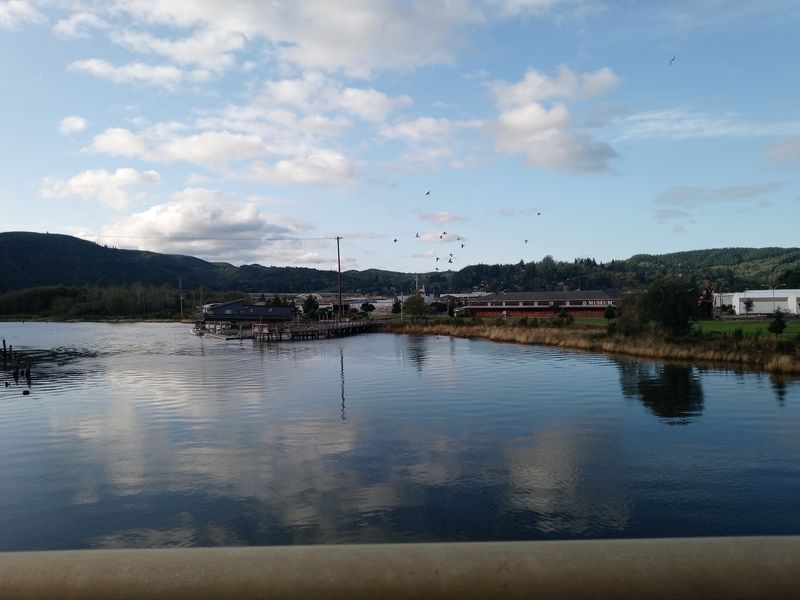
The river remains impossible to ignore today. It passes directly through Raymond, and the waterfront still includes commercial facilities, docks, public access, and views toward the forested hills.
The lower river is tidal, so Willapa Bay influences its level and movement through the day.
Boats, birds, exposed tidal edges, and reflections can all change with the conditions.
Raymond’s streets have changed dramatically since those days, but the reason the city formed here has not disappeared.
Follow the river through town and much of Raymond’s history begins to line up on its own.
A Lumber-Mill Past Still Shapes This Southwest Washington Town
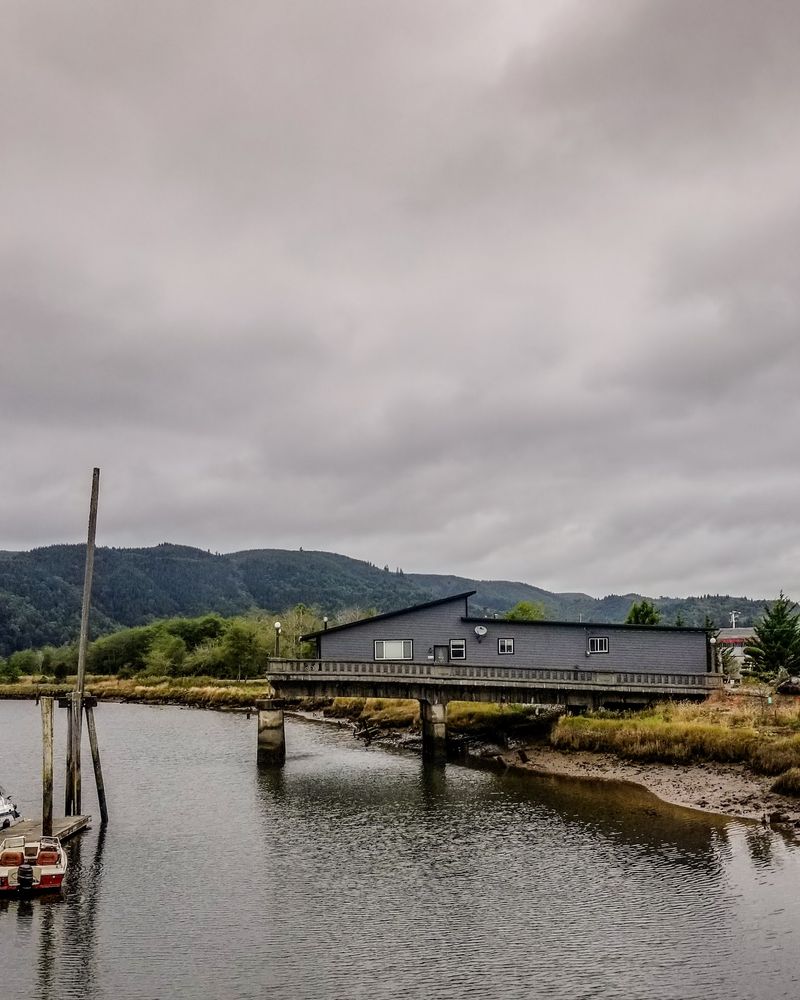
Raymond officially incorporated in 1907, but its industrial story was already moving quickly by then.
The town was named for L.V. Raymond, its first postmaster. In the early years, sawmills and other industries gathered along the waterfront, taking advantage of the surrounding timber and direct access to the river.
The growth was dramatic. During Raymond’s busiest industrial years, mills and factories lined the waterfront, and the city’s population rose far above its current size.
The landscape has changed since then, but timber never vanished from Raymond’s identity. A modern sawmill still operates on the waterfront, and logging remains part of the local economy.
That continuity gives the city a working quality that separates it from places built mainly around vacation traffic. Industrial buildings, river infrastructure, forested hills, and older pieces of town history sit close together.
Timber influenced why Raymond grew, where businesses were built, how goods moved, and what kinds of jobs supported the community.
Even the town’s unusual early construction makes more sense in that context. Building over tidelands was complicated, but access to timber and transportation made the location valuable.
Raymond today is smaller and quieter than it was during those peak mill decades, yet the old economy still leaves a visible outline.
Riverfront Parks Put Kayaking, Fishing And Wildlife Near Downtown
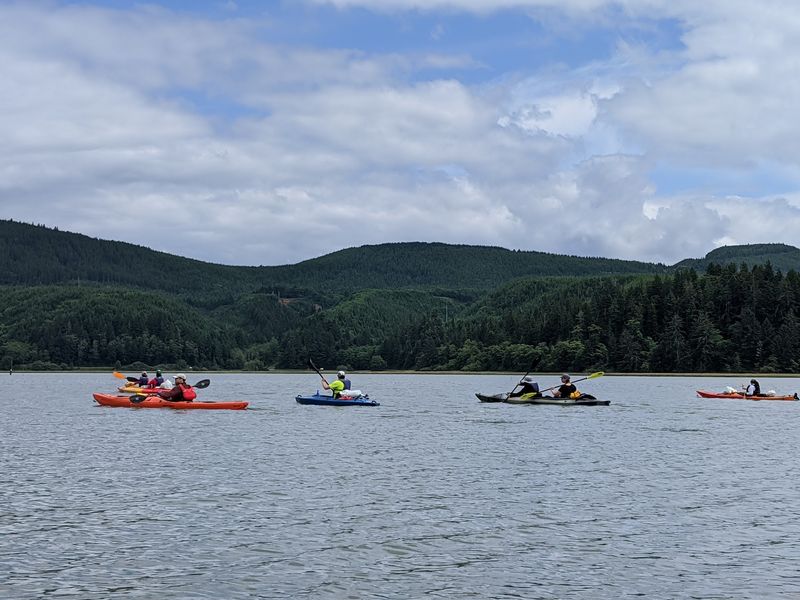
You do not have to leave Raymond’s center to get close to the Willapa River.
Denny Porter Riverfront Park sits off Alder Street beside the Northwest Carriage Museum. The park includes a dock, kayak launch, outdoor amphitheater, picnic tables, and restrooms, making it one of the easiest places to turn a downtown stop into time on the water.
Nearby Willapa Landing Park gives the riverfront another kind of access. It has public restrooms and a dock, while a grass-and-gravel wetland trail heads toward tidal areas where ducks, geese, and other birds can be spotted.
The old motorized boat launch at Willapa Landing is no longer accessible for powered boats, so paddlers should use designated hand-launch options rather than assuming every former launch still works the same way.
A local kayak rental operation near the downtown dock also makes it possible to get onto the Willapa River without bringing your own boat.
Fishing fits naturally into the riverfront too, with docks providing places to spend time close to the water.
The parks do not demand an entire day, which is exactly why they work.
You can walk the waterfront, launch a kayak, watch the tide, or add a picnic between other stops.
More Than Sixty-Five Historic Vehicles Fill The Northwest Carriage Museum
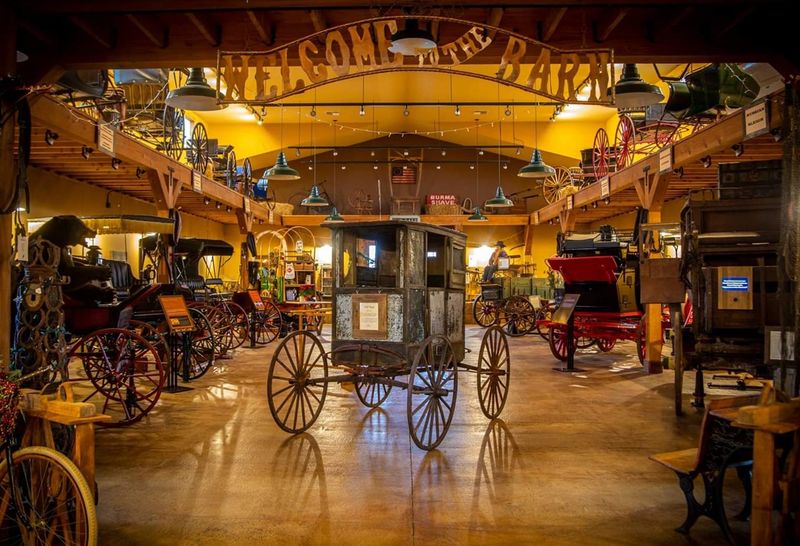
One of Raymond’s major indoor attractions sits right beside the riverfront.
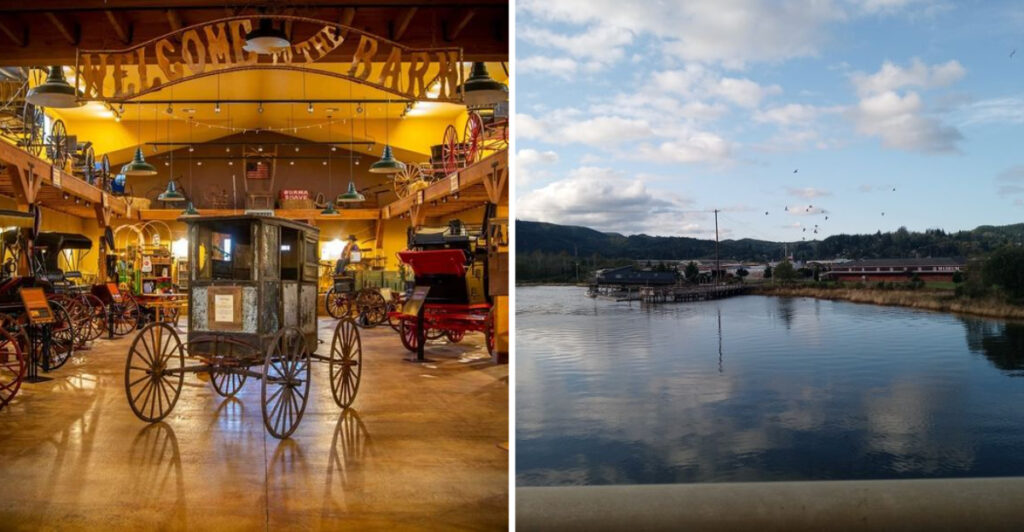
The Northwest Carriage Museum holds more than sixty-five horse-drawn vehicles, including carriages, buggies, wagons, coaches, and sleighs. Thousands of period artifacts fill out the collection, giving the vehicles more context than a simple row of restored wheels.
The museum opened in 2002 after receiving an initial donation of twenty-one vehicles and has grown significantly since then.
Interactive exhibits make the collection easier to explore. Visitors can step into a one-room schoolhouse setting, examine a working-style wheelwright shop, climb aboard a wagon, and try other hands-on displays connected to nineteenth-century transportation.
The museum also mixes fully restored vehicles with examples that have been conserved to preserve original paint, striping, upholstery, lettering, and other surviving details.
Craftsmanship becomes the real subject. A close look at a carriage body, wheel, suspension system, or interior shows how much engineering went into transportation before automobiles became ordinary.
The museum is at 314 Alder Street and is open daily, making it a reliable stop even when southwest Washington weather turns wet.
Pair it with the riverfront next door and Raymond suddenly has an easy indoor-outdoor afternoon without requiring much driving between stops.
Highway 101 Makes Raymond Easy To Pass And Easy To Add To A Road Trip
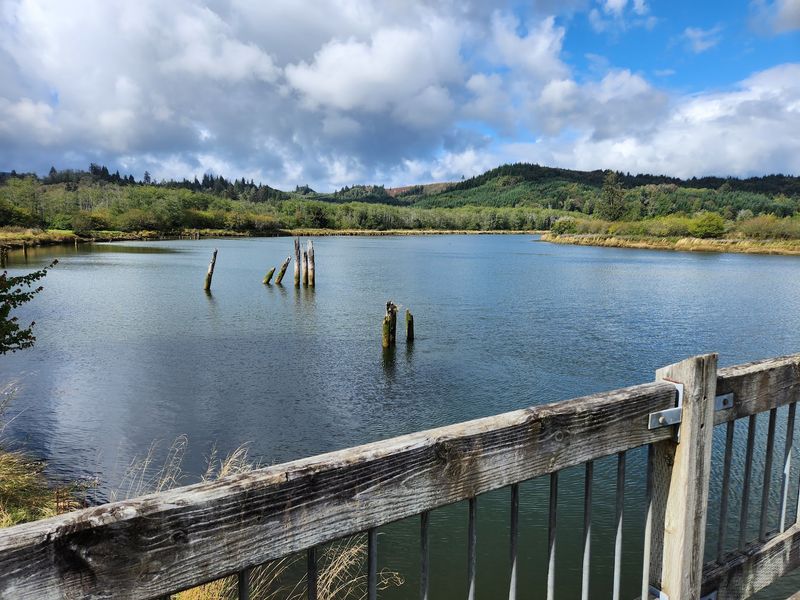
Raymond sits directly on U.S. 101, while State Route 6 begins at its junction with the highway and runs east toward the I-5 corridor at Chehalis.
That road layout puts Raymond directly between coastal and inland routes. U.S. 101 carries travelers along southwest Washington, while State Route 6 connects town toward Chehalis.
The same convenience makes it easy to keep driving. Raymond has no giant beachfront resort district demanding attention from the highway.
Stopping changes the picture.
The riverfront, museum, docks, and historic streets sit close enough together for a simple downtown visit. A longer day can add paddling, fishing, or a drive toward Willapa Bay and the Pacific coast.
Raymond is not trying to compete with Washington’s bigger beach towns on their terms. It offers a smaller population, a working river, forested surroundings, and current housing prices that remain lower than several better-known coastal communities.
For travelers, that makes it an easy place to underestimate.
For anyone thinking about staying longer, that same low-key scale may be exactly the point.