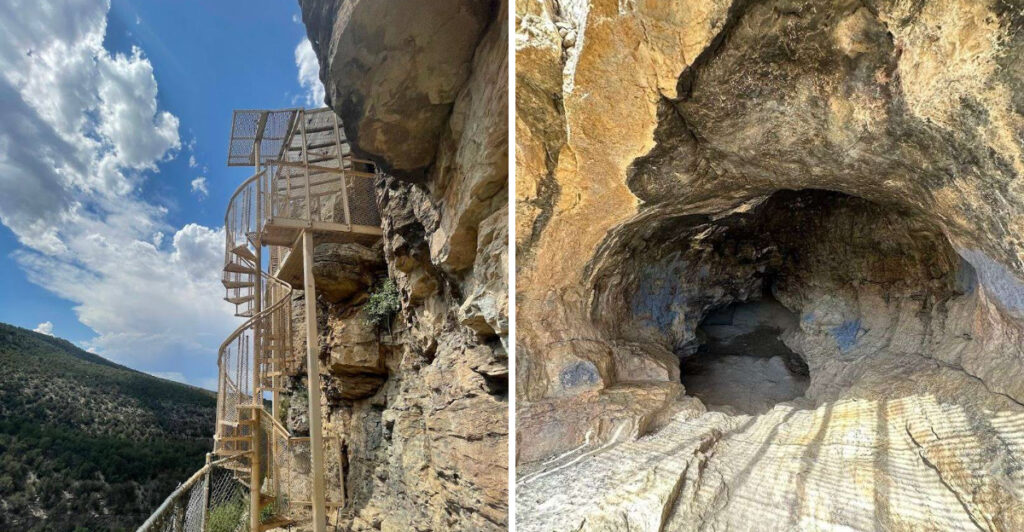
The trail starts quietly, then the whole place clicks. You see the cliff, then the staircase leading to the cave above the canyon.
Suddenly it is not just another outdoor stop. It feels like a scene you want to send to someone with the caption, look at this.
The hike is short, but the setting does not feel small. Rock walls press close, the canyon drops below, and the entrance carries that cool, shadowed feeling caves always seem to have.
What makes this one stand out is the prehistoric story attached to it. Old finds and years of debate have turned the site into one of New Mexico’s stranger outdoor conversations.
It is scenic, yes, but the history gives it a sharper edge. You do not leave with only photos.
You leave wondering what the stone has seen, and who stood there first, long before the road.
Forest Roads To A Prehistoric Cave
Before I ever set foot on the trail, the road itself made it clear this trip was going to be an adventure worth remembering.
The drive to the trailhead means navigating roughly two and a half miles of unpaved gravel road, and I quickly learned that five to ten miles per hour is the sweet spot for keeping your car in one piece.
Mini vans and sedans can make it out here in decent conditions, so you do not necessarily need a truck, but you do need patience and a willingness to dodge the occasional jutting rock.
The road carves through pinon and juniper forest, with pullouts along the way that double as informal picnic spots, which I took full advantage of before even reaching the trailhead.
The north side of the mountain usually shortens your time on the dirt road, and that route can be easier for lower-clearance vehicles.
Rain changes everything out here, turning the gravel into a slippery challenge, so checking the weather before heading out is the smart move for this route, too.
The journey ends at a small parking area marked with a trail sign, and that is your official welcome to Sandia Cave Trailhead at NM-165, Placitas, NM 87043.
Cliffside Cave Trails And Canyon Views
The trail puts you between a canyon dropping away on one side and a cliff rising sharply on the other, and I actually forgot to check my phone for about an entire hour.
The half-mile path from the parking area to the cave feels relatively easy, with a gentle slope and plenty of flat stretches where you can catch your breath and soak in the scenery.
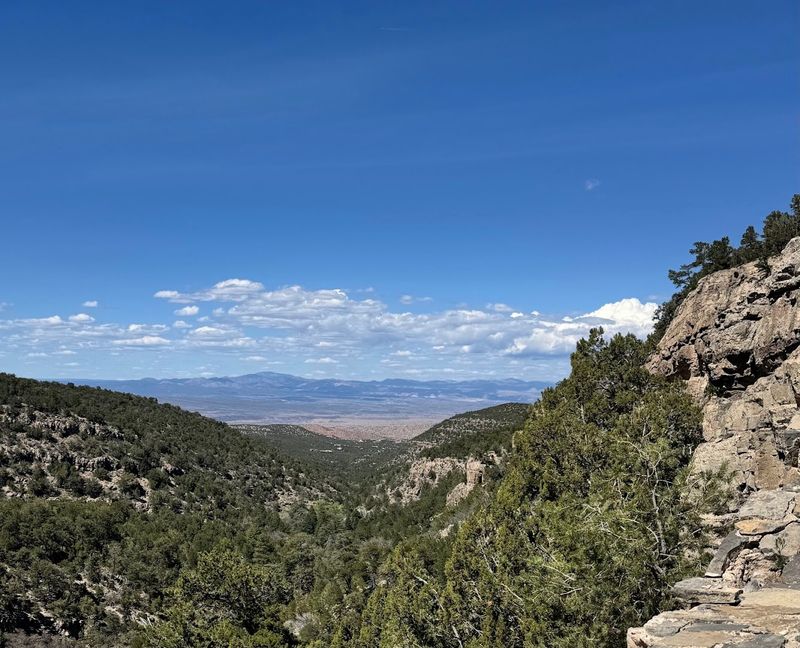
What surprised me most was how quickly the views opened up, revealing sweeping sightlines across the canyon and toward the broader Sandia range that stretch far into the distance.
The trail hugs the cliff in places, which adds a thrilling sense of exposure without feeling technical for most reasonably prepared hikers.
Shaded sections and natural rock outcroppings serve as informal rest spots, and I noticed families with young children moving comfortably along the path without any real struggle.
Graffiti and scattered trash still show up in certain spots, which is a real shame given how spectacular the surroundings are, so carefully packing out what you bring in sets a good example.
By the time the spiral staircase comes into view halfway up, the canyon panorama behind you feels like a reward you have really earned.
A Spiral Stairway Into Stone
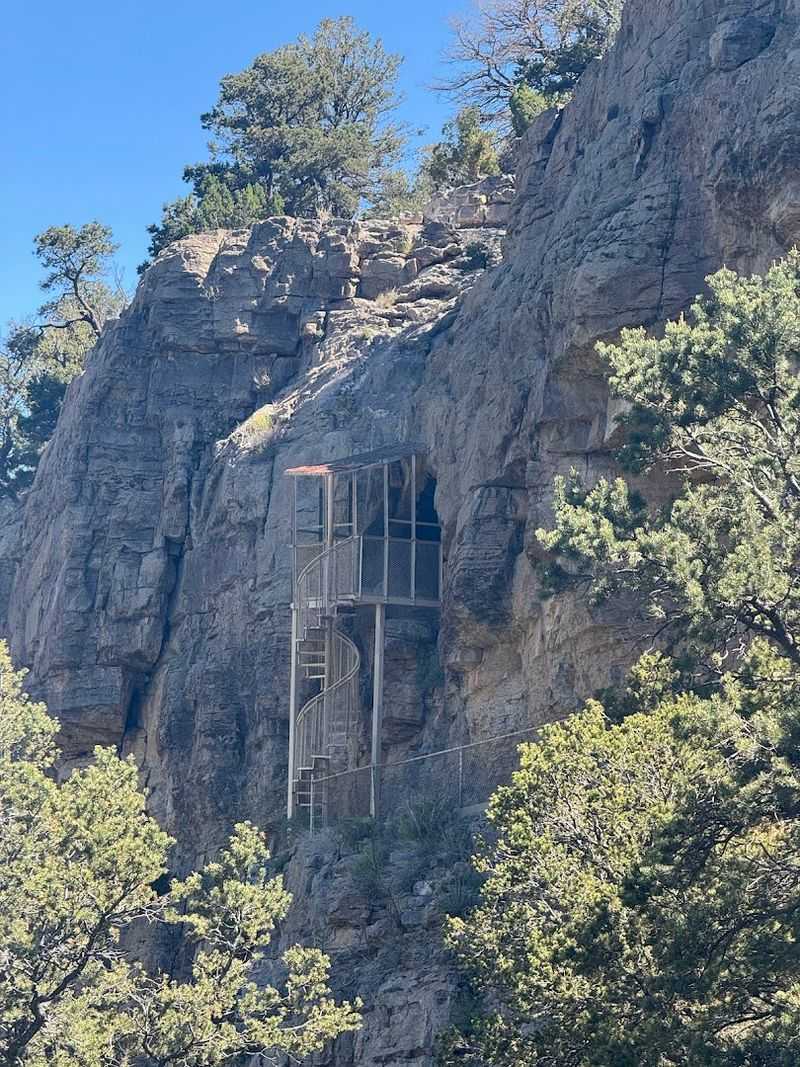
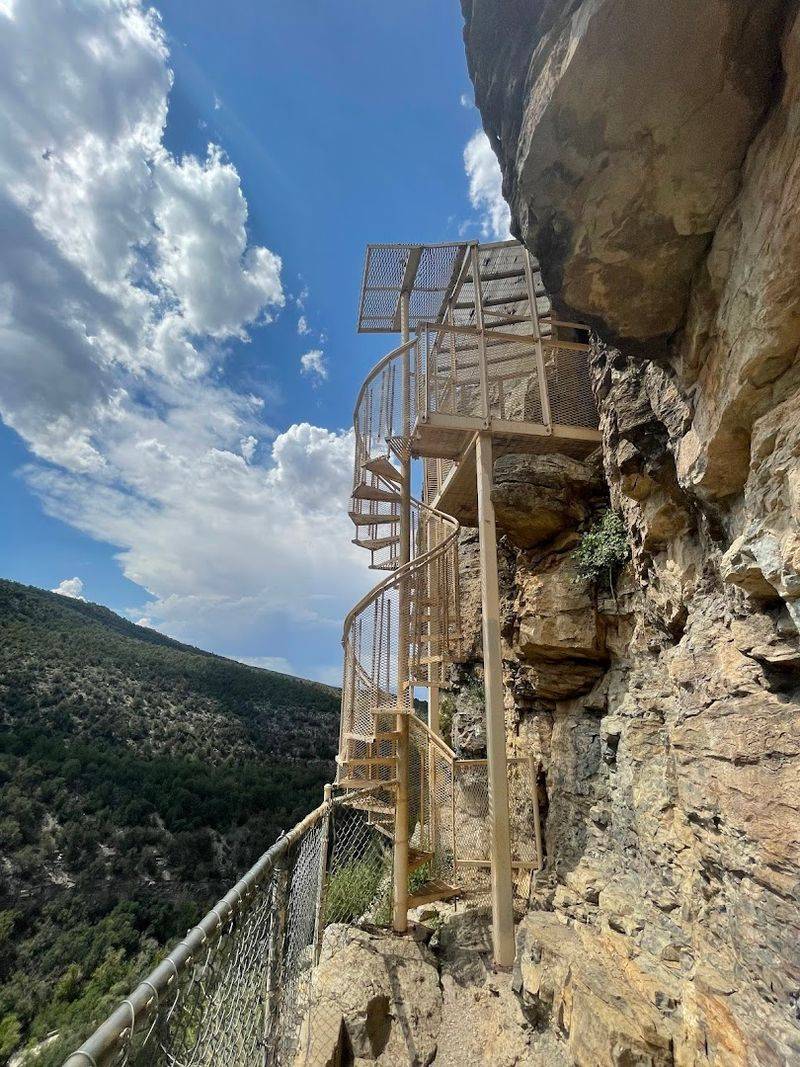
Nothing quite prepares you for the moment you round a bend on the trail and suddenly a metal spiral staircase appears, bolted directly into the cliff face like something out of an explorer’s journal.
The staircase is narrow and see-through underfoot, which means you get an unobstructed view straight down the mountainside with every step you climb, a detail that tends to sort hikers into two very distinct camps.
For those comfortable with heights, it is an absolute thrill, offering a perspective of the canyon below that no flat trail could ever provide.
The structure looks intimidating at first, but once you are on it, the metalwork feels steady enough beneath your feet to let you focus on the view instead.
The staircase has become one of the most photographed features of the entire hike, and I spent a solid ten minutes just capturing different angles before continuing upward.
Concrete steps near the base can show wear after weather and heavy use, so watching your footing as you transition from trail to staircase is worth keeping firmly in mind.
At the top of that spiral, the cave entrance gives the climb one of those surprisingly small, electric moments that makes a hike feel like a real achievement today, too.
Limestone Ledges Above The Forest
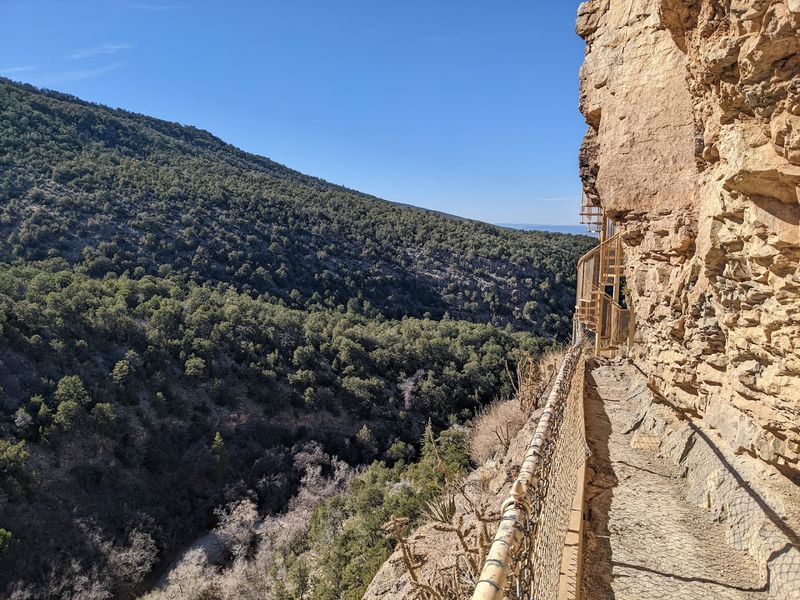
The limestone ledges just outside the cave entrance gave me a view over a forest canopy that seemed to stretch endlessly toward the horizon, and for a moment the whole scene felt almost unreal.
The geology here is pretty striking, with cream and gray limestone layers stacked in visible bands that tell a story going back hundreds of millions of years to when this region sat beneath a shallow sea.
Those same ancient rock formations helped make Sandia Cave such a significant archaeological site, though researchers have long debated the evidence of prehistoric human use here over time.
From the ledges you can spot the winding dirt road far below, the parking area looking almost toy-sized from that elevation, and the broader Sandia range rolling northward under a wide New Mexico sky.
The light up here shifts dramatically depending on the time of day, with morning visits offering a cool clarity and late afternoon casting warm tones across the rock face that make every photograph look effortless.
I found a flat section of ledge wide enough to sit and eat lunch while watching a pair of ravens circle the canyon below, which felt like a perfectly New Mexican way to spend a Tuesday.
Few places reward the short walk with such a grand sense of elevation and geological wonder as these rocky outcroppings do.
A Quiet Cave Above The Canyon
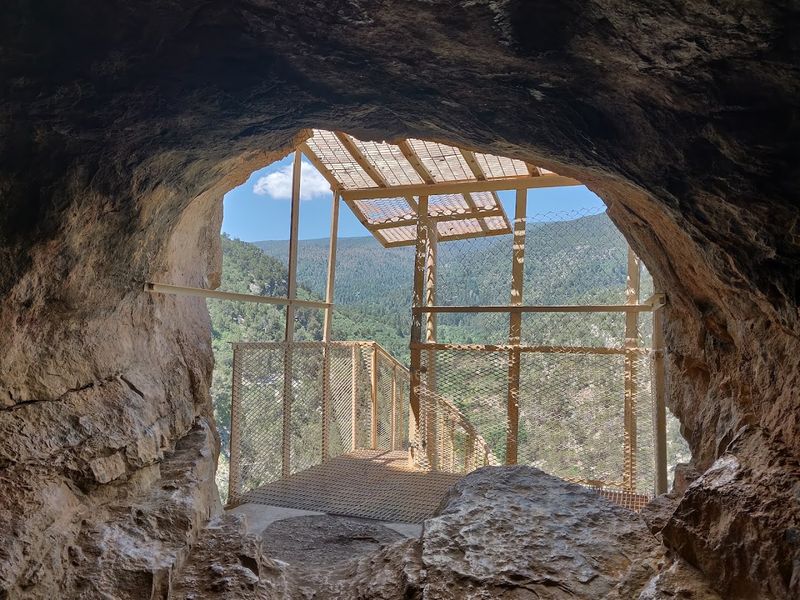
The cave itself is quieter than you might expect, a shallow limestone chamber that extends back about thirty feet before a low wall signals the boundary between casual visitor and committed spelunker.
When I visited on a weekday morning, my hiking partner and I had the place entirely to ourselves, which gave the experience an almost meditative quality that is hard to find at more popular outdoor sites.
The cave carries a particular stillness that feels distinct from the windy canyon outside, a pocket of cool, dry air that seems completely separate from the desert landscape just below.
Sandia Cave was first excavated in the 1930s by University of New Mexico archaeologist Frank Hibben. He claimed to have found evidence of human occupation dating back roughly twelve thousand years, but that claim later became heavily disputed in archaeology.
The reported finds included stone tools, mammoth bones, and other materials that Hibben interpreted as evidence that prehistoric people used this ledge as a possible hunting camp or shelter during the Pleistocene era.
Inside that quiet chamber, with the cave mouth framing the canyon and forest below, it is easy to understand why the location keeps pulling curious people toward the rock again and again.
The cave rewards patience more than speed, and those who linger tend to leave with a far deeper impression than those who simply snap a photo and turn back.
Dark Cave Passages And Desert Air
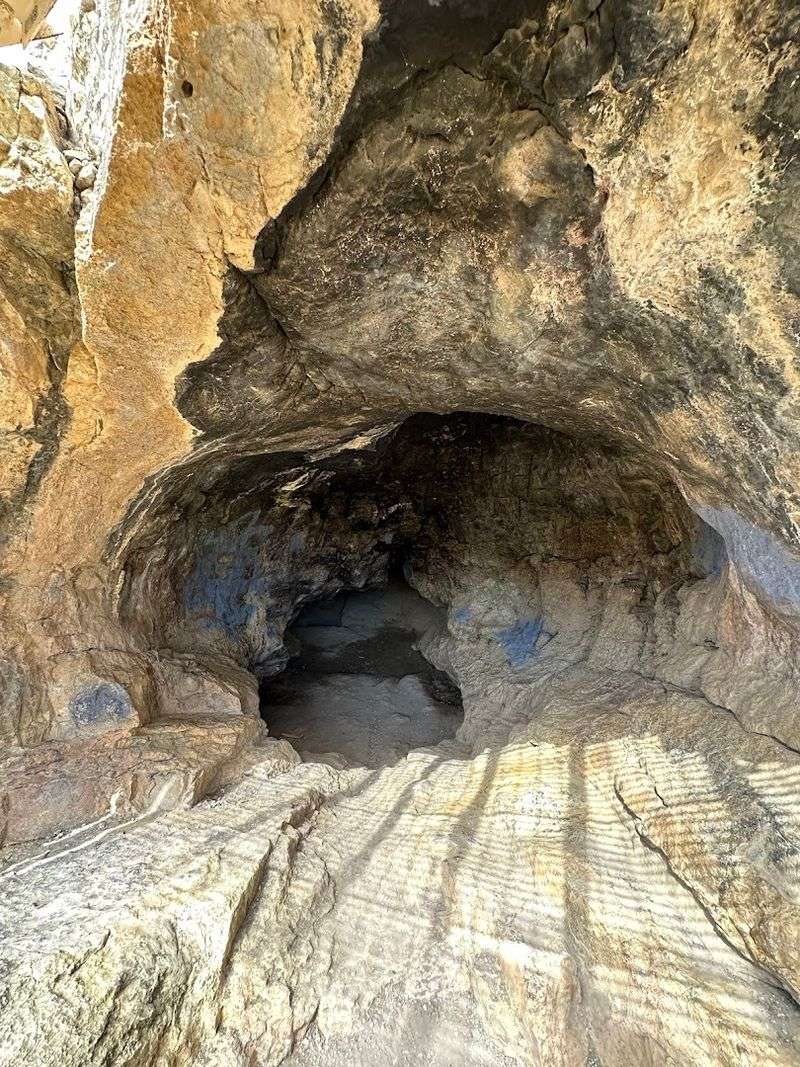
Past that low interior wall, the cave shifts from a scenic viewpoint into something that feels much more like a real underground exploration, and the change happens fast.
Cell phone lights are almost useless back here, a fact I confirmed firsthand when my screen glow barely reached two feet in front of me, and the darkness beyond felt seriously deep.
People who come prepared with headlamps and proper bright flashlights sometimes push farther into the cave system and encounter passages that require crawling, which adds a whole new layer of adventure for those who want that kind of challenge.
Visitors sometimes report bats or signs of wildlife in darker sections, so it is best to keep voices low, avoid touching anything, and leave every darker corner undisturbed whenever possible.
The air inside smells of cool limestone and dry earth, a sharp contrast to the juniper-scented breeze outside, and it carries a faint mineral quality that feels ancient in a way that is hard to put into words.
Knee pads, a face covering, gloves, and sturdy closed-toe shoes are strongly recommended by experienced visitors for anyone seriously planning to crawl through the deeper sections.
That shift from sunlit canyon to pitch-black passage is one of the most memorable contrasts I have encountered on any trail, and it turns a simple hike into something far more layered, memorable, and surprising.
Rugged Cave Walls With Ancient Echoes
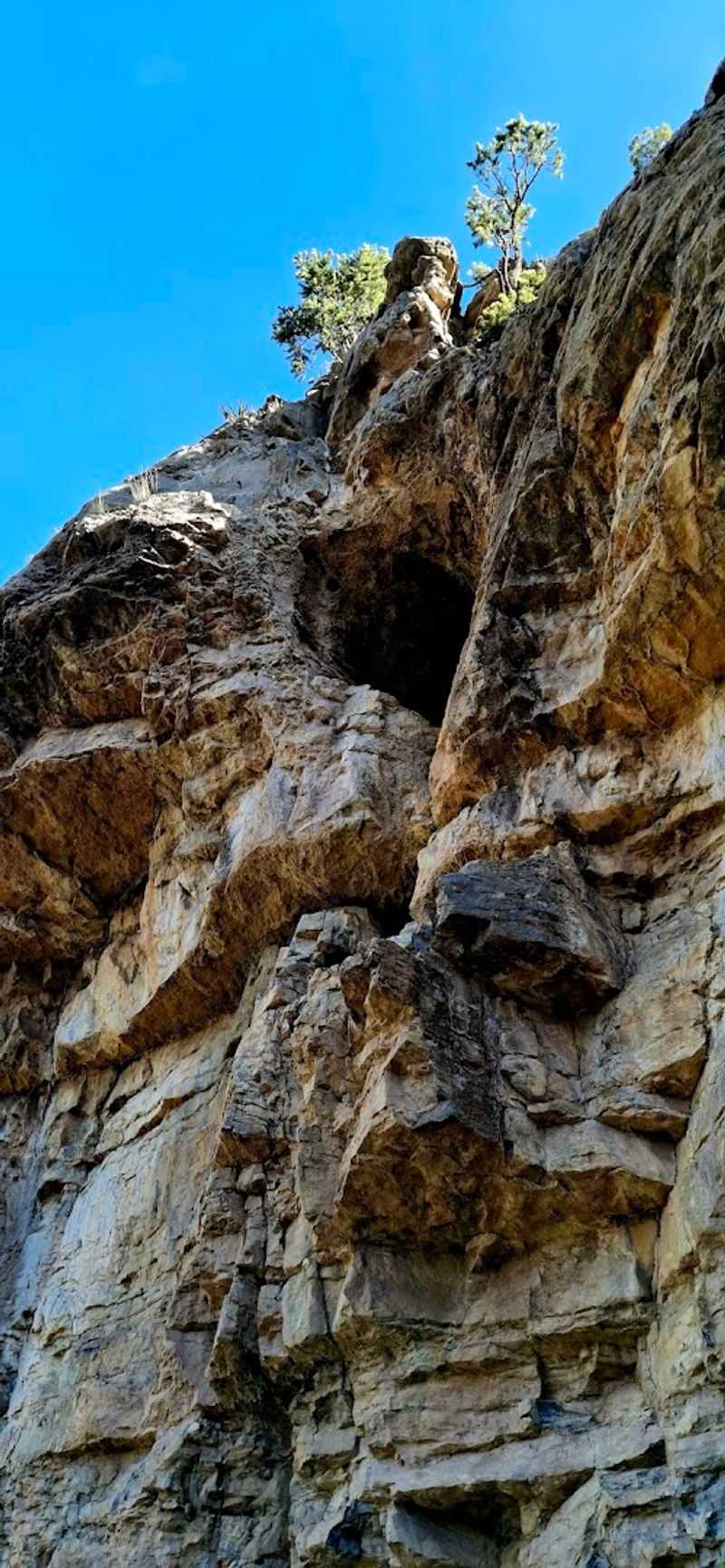
A hand along the cave walls makes the place feel like it has been waiting patiently for you to show up for about twelve thousand years, at least in the site’s debated story.
The limestone here is rough and layered, pocked with small fossils and mineral deposits that catch the light in unexpected ways when you sweep a flashlight beam across the surface.
Frank Hibben’s 1930s excavations at this site sparked one of the more colorful controversies in American archaeology, with later researchers questioning whether some of the stratigraphic evidence had been manipulated, casting a long shadow over the original findings.
Regardless of where the academic debate ultimately lands, the cave remains tied to reported evidence of prehistoric human presence, though the interpretation of that evidence is still debated by researchers today.
The walls narrow as you move deeper, and the ceiling drops in sections, forcing you into a crouch that makes the whole experience feel far more intimate than the open canyon outside completely, too.
Scratches and natural formations in the rock create patterns that your brain keeps trying to interpret as intentional markings, which is either your imagination working overtime or a reminder of how deeply humans are wired to search for meaning in stone.
Every rough surface in this cave carries the weight of an unresolved story, and that ambiguity is precisely what makes it so compelling to explore.
Hidden Corners Of The Sandia Mountains
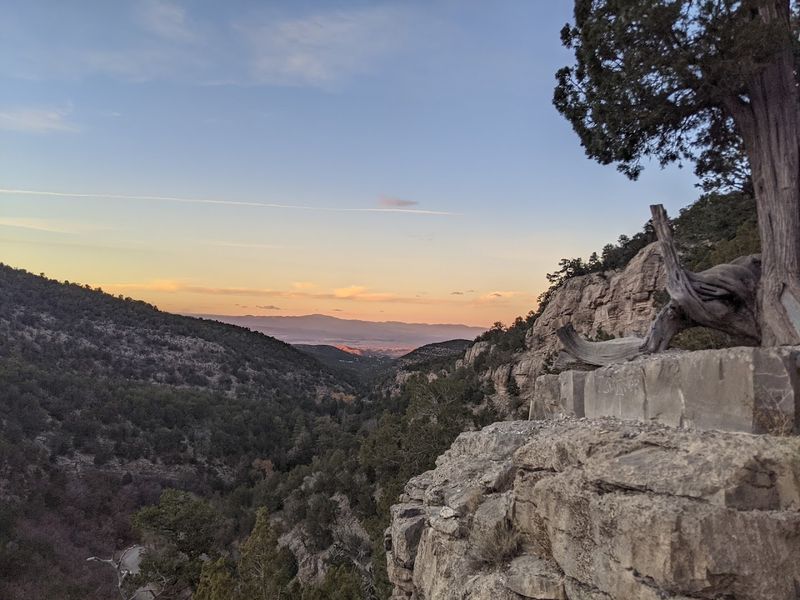
Most people driving through Placitas have no idea that a prehistoric cave sits in the cliffs just off NM-165, and that anonymity is honestly a big part of its appeal for many curious travelers.
The Sandia Mountains cover a dramatic stretch of terrain east of Albuquerque, rising from high desert scrub to forested ridgelines that catch snow in winter and thunderstorms in summer, and the cave sits in one of their lesser-known northern pockets.
October can bring lighter crowds and a quality of light that turns the limestone cliffs into something resembling a painting, all warm amber and deep shadow across the rock.
The site is managed by the Cibola National Forest and is generally open to the public, with no admission fee, though daylight visits are the much smarter call for this rough canyon setting, especially if you want time for photos.
Cell service disappears well before you reach the small parking area, so downloading a map or reading up on the cave’s history before you leave home is an actually useful habit to develop.
Water is non-negotiable out here, even on a half-mile trail, because the dry mountain air and sun exposure work together faster than most first-time visitors expect out here.
A place this raw, this quiet, and this historically loaded within thirty to forty-five minutes of a major city is the kind of discovery that makes you want to keep every other hidden corner of New Mexico to yourself.