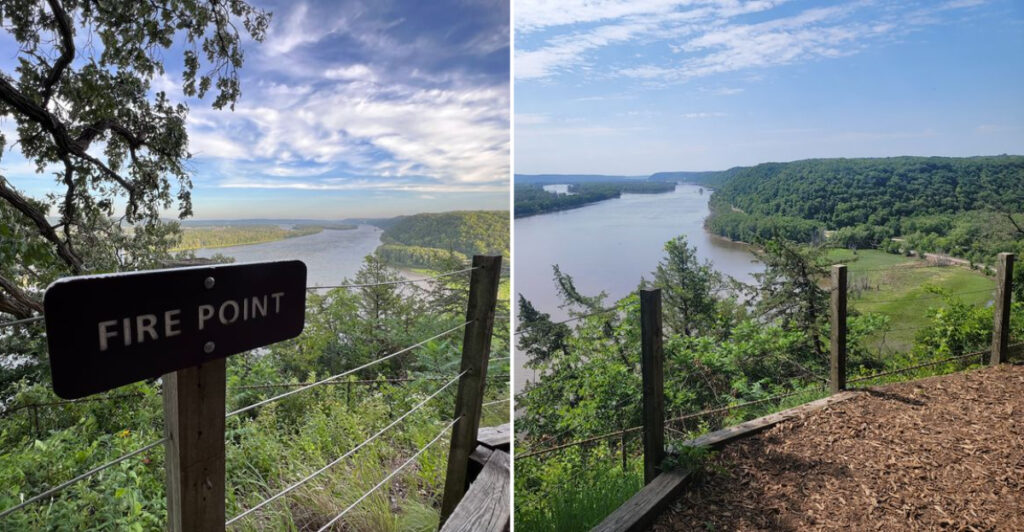
I went into this hike expecting a nice walk and maybe a decent river view. A few minutes into the climb, I was already reconsidering how generous I had been with the word “nice.” The trail winds through a quiet stretch of northeastern Iowa, with hardwood trees all around and ancient burial mounds resting near the path.
Then the bluff opens up, and the Mississippi River suddenly fills the view below. That was the moment I forgot all about the uphill part.
It is not a long hike, but it feels surprisingly full. There is history underfoot, plenty of scenery, and just enough climbing to make the overlook feel earned.
I stopped more than once for photos, though I will admit at least one of those stops was really just me catching my breath. This is the kind of Iowa trail that sticks with you long after the walk is over.
Where The Adventure Starts

Few places in the upper Midwest pack this much history and natural beauty into a single trailhead. Fire Point Trail is part of Effigy Mounds National Monument, along the western bank of the Mississippi River in the small town of Harpers Ferry, Iowa.
The monument sits at 151 IA-76, Harpers Ferry, Iowa 52146, right where the bluffs rise steeply above the river floodplain. From the parking area near the visitor center, the trail begins with a noticeable uphill climb before leveling out across the top of the bluffs.
The drive to get here is part of the reward. Iowa Highway 76 winds through river towns and rolling hills, and the scenery builds anticipation the whole way.
The monument is open daily from 9 AM to 4:30 PM, and admission is completely free. No national parks pass is required, which makes this an especially easy yes for spontaneous weekend road trips.
Arriving right at opening time on a weekday morning means you will likely have the trail almost entirely to yourself.
The Initial Climb Up The Bluff
The trail does not ease you in gently. Right from the start, Fire Point Trail heads uphill with enough of a grade to get your heart rate moving within the first few minutes.
That said, the climb is absolutely manageable for most fitness levels.
The path is covered with wood chips, which creates a surprisingly even and forgiving surface underfoot. The chips help with traction during wet conditions too, so a little morning dew or recent rain does not have to change your plans.
Benches are placed at intervals along the uphill section, giving you a legitimate excuse to pause and catch your breath while pretending to admire the trees.
The forest canopy on the way up is dense and beautiful, with a mix of oaks and other hardwoods that filter the sunlight into something almost golden on clear mornings.
Closed-toe shoes are the right call here since the trail also includes some scattered roots and small rocks in spots. The steep part does not last forever, and once you crest the bluff, the whole mood of the hike shifts into something much more relaxed and rewarding.
The Ancient Burial Mounds Along The Path

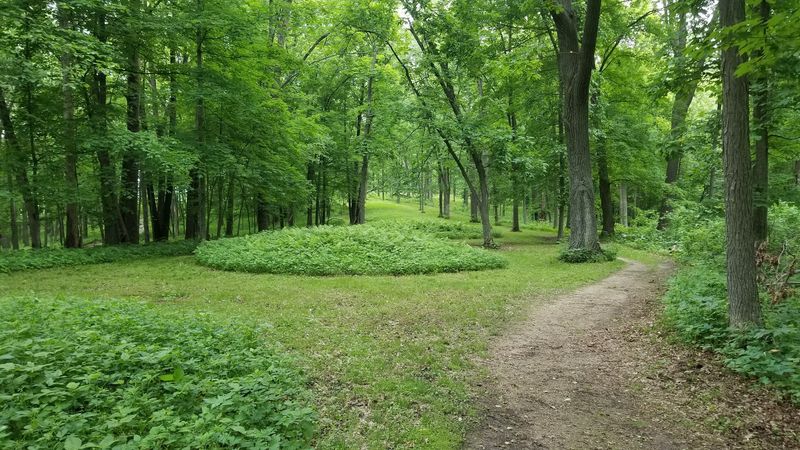
Once you reach the top of the bluff, the burial mounds begin appearing along the trail in clusters. These are not dramatic towering structures.
They are low, rounded earthen forms that blend into the forest floor with a quiet kind of presence that feels unexpectedly moving.
The mounds were built by Indigenous peoples over a span of thousands of years, and many of them are shaped like animals such as bears and birds when viewed from above.
At ground level, the shapes are subtle, which is why picking up a free map at the visitor center before you start is genuinely useful rather than just a suggestion.
The map helps you understand what you are looking at and puts the landscape into context. Ranger-led talks are available at the monument and add a layer of depth to the experience that a solo walk simply cannot replicate.
The trail signage is clear and well-maintained, so getting lost is not a real concern. What is worth noting is that this is sacred ground to many Native communities, and the respectful, quiet atmosphere on the trail reflects that.
Most visitors naturally slow their pace here.
The View That Steals The Show
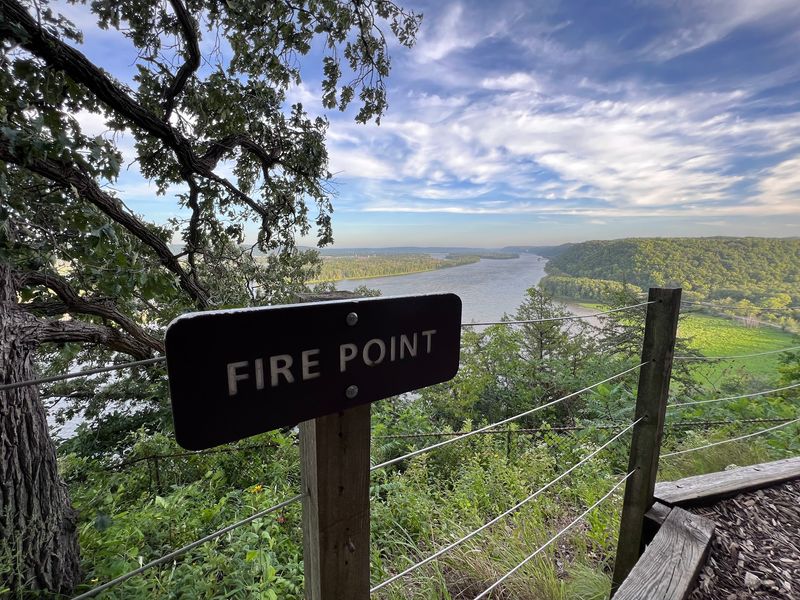
The payoff for that initial climb is real. Fire Point overlook delivers a wide, open view of the Mississippi River that genuinely stops you in your tracks.
The river spreads out below in broad silver curves, framed by wooded bluffs on the Wisconsin side and wetlands closer to the Iowa bank.
On a clear day the view stretches far enough that you can follow the river’s path for several miles in both directions. Early morning light is especially beautiful here, turning the water into something that looks almost painted.
Fall is widely considered the best season to visit, when the bluffs on both sides of the river turn deep red and orange.
The overlook has enough flat space to stand comfortably and take it all in without feeling crowded, even when other hikers arrive.
I spent a solid twenty minutes just sitting on a rock at the edge and watching a barge work its way slowly upstream. There is a second overlook called Twin Views also reachable on a short out-and-back from the same trail, so you can collect two spectacular viewpoints in a single hike of under two miles round trip.
Trail Length And Difficulty Level
Fire Point Trail is genuinely approachable for a wide range of hikers. The Fire Point Loop is about two miles round trip, with roughly 350 feet of elevation gain concentrated largely in the bluff climb.
The steepest section is concentrated near the beginning of the hike, and once you are on top of the bluff the trail flattens out considerably.
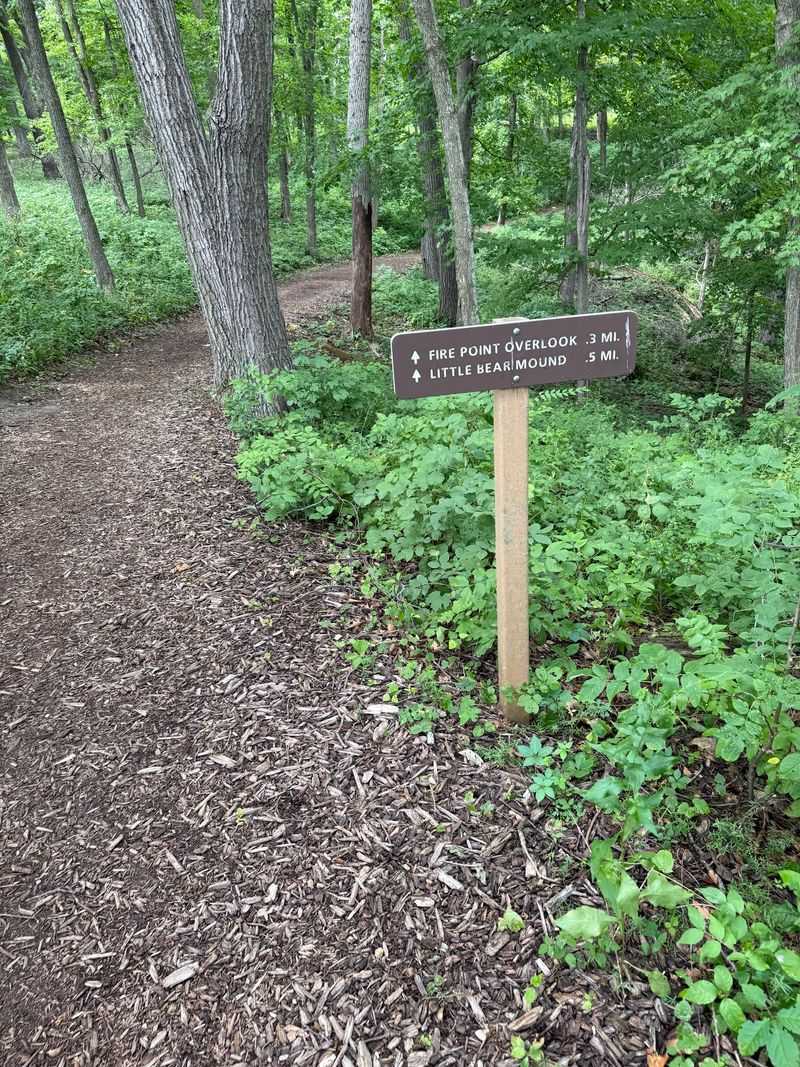
The wood chip surface helps throughout, and the trail is wide enough in most sections to walk comfortably side by side. Trail markers and signage are clear and consistent, so you always know where you are and how far you have come.
For visitors who want more mileage, the monument has around 14 miles of trails in total, including longer loops through the north and south units. The Marching Bear trail is a favorite for those who want a longer, more solitary experience.
The Hanging Rock trail is the most demanding option and requires genuine hiking preparation. Fire Point, though, hits a sweet spot that works well for families, older hikers, and anyone who wants a meaningful outdoor experience without needing to train for it in advance.
Stop Here Before You Hike

Before heading out on the trail, the visitor center is worth more than a quick glance. The small museum inside covers the history of the mounds, the Indigenous cultures that built them, and the natural environment of the Mississippi River bluffs with clear and engaging displays.
Park rangers are stationed there and are consistently described as friendly and genuinely helpful. They can answer questions, suggest which trails suit your fitness level, and hand you a free paper map that makes the whole hike more meaningful.
The bathrooms at the visitor center are clean and well-maintained, which is always a practical win before a hike.
The center keeps the same hours as the monument itself, 9 AM to 4:30 PM every day of the week, so arriving before the doors open means you will miss the context-setting exhibits. Arriving right at 9 AM and spending fifteen minutes inside before hitting the trail is a smart approach.
The auditorium inside occasionally screens interpretive videos about the monument’s history, though availability can vary.
Keep Your Eyes On The Sky
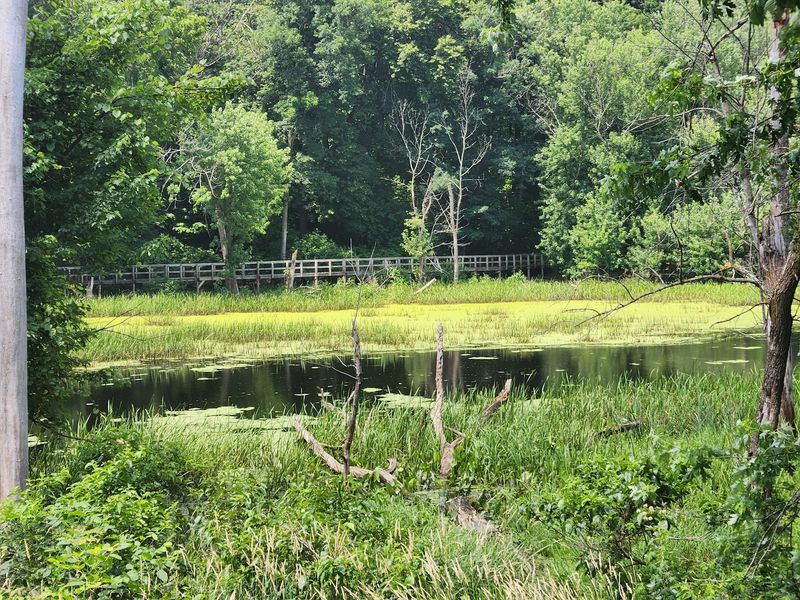
The bluffs and wetlands around the monument create a rich habitat that attracts a surprising variety of wildlife. Bald eagles are a genuine possibility at the overlooks, with especially strong viewing opportunities along the Mississippi during winter.
Golden eagles have also been documented around the monument, particularly during the colder months, so keeping your eyes on the sky can pay off. The wetlands visible from the bluffs below support herons, egrets, and a rotating cast of migratory waterfowl depending on the season.
The forested trail itself is home to woodland birds year-round, and the quiet nature of the hike means you hear them clearly.
The monument is dog-friendly, which is a bonus for visitors who want to bring a four-legged hiking companion along. Dogs must stay on leash, which is reasonable given the sacred nature of the grounds and the wildlife in the area.
I spotted what looked like a red-tailed hawk circling lazily above the tree line on my way back down from Fire Point, which felt like a fitting send-off from a trail that keeps delivering right up until the last step.
When This Trail Shines
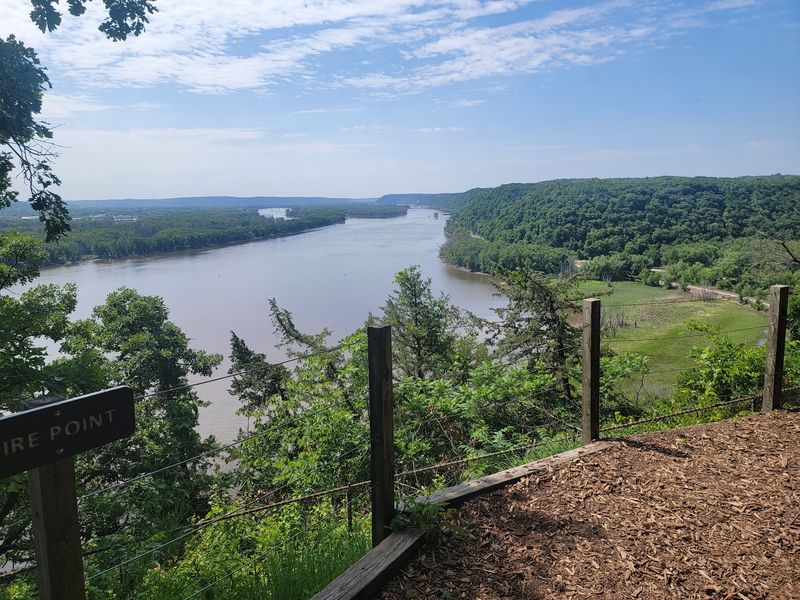
Fall is the consensus favorite season for Fire Point Trail, and after visiting in October I understand why completely. The hardwood forest turns into a full display of red, orange, and gold, and the views from the overlook look like something a landscape painter would invent.
Spring is also rewarding, with wildflowers appearing along the trail and migrating birds moving through in large numbers. Summer visits are perfectly enjoyable but can get warm on the exposed bluff sections, so an early morning start helps.
Winter visits are quieter and can be beautiful on clear days, though the trail can get slippery and traction devices for your shoes are worth bringing.
Regardless of season, closed-toe shoes are non-negotiable on the wooded sections. Bringing water is smart even for a short hike since the climb at the start is more demanding than it looks on paper.
Picnic tables near the parking area make for a pleasant post-hike stop.
The monument does not charge admission, which remains one of its best qualities. Plan for at least two to three hours to visit the center, hike to Fire Point, and sit long enough at the overlook to actually absorb the view rather than just photograph it.