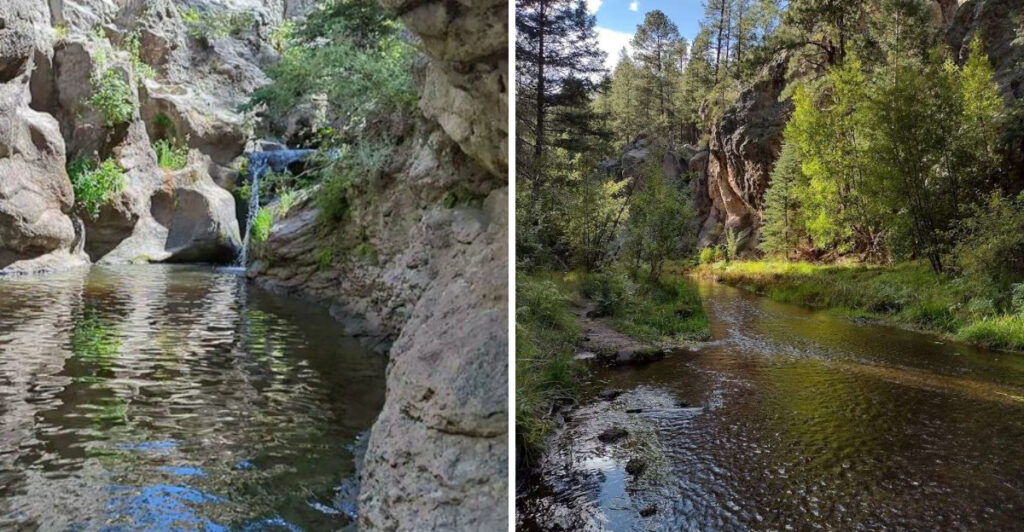
This hike feels like one of those plans you make casually, then cannot stop talking about later.
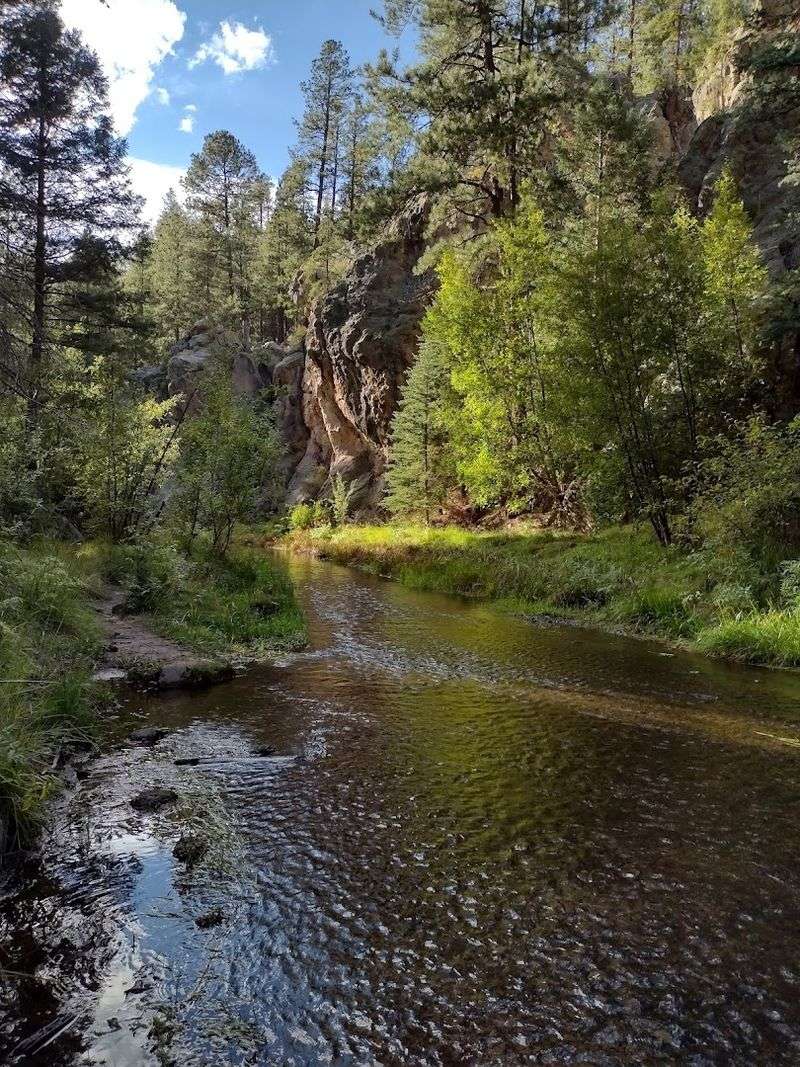
It starts with a creek running beside the trail, which sets the mood from the first steps. The water crossings keep things fun, and the path stays friendly enough that you can actually enjoy what is around you.
No rush. No big grind.
Just a steady walk toward red rock that keeps getting better.
Then the canyon shows up, and the whole hike shifts. The walls narrow, the sound softens, and you can feel everyone paying attention.
I had heard good things before going, but the final stretch still surprised me.
That is what makes this trail stand out. It feels easy without feeling ordinary.
New Mexico has a lot of places that photograph well, but this one also gives you that quiet little wow moment in person. That ending explains the hype.
A Creekside Path Into Red Rock
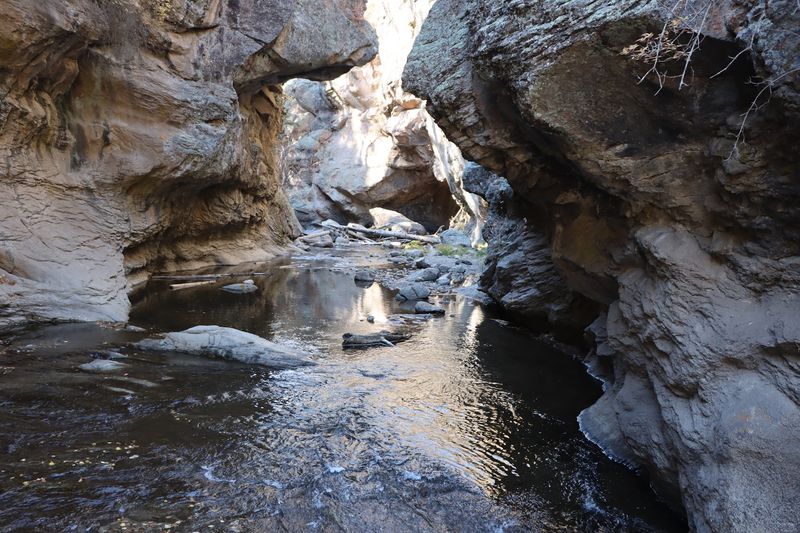
The moment your boots hit the trailhead, the creek sets the tone. You catch that first glimpse of water threading through the canyon, and the whole hike starts to feel special.
The path hugs the waterway closely, and the red volcanic rock walls begin to rise on either side almost immediately, framing the trail in warm rust and amber tones.
This is not a hike where you stare at your feet counting steps. Every turn brings a new view worth pausing for, from a patch of wildflowers clinging to the rocky bank to a bird darting low across the water.
The creek crossings start early and keep coming, with enough of them to make the walk feel playful without turning it into a struggle. Water levels vary by season, and after rain, some crossings can be deeper or faster than expected.
Water-friendly footwear is the smartest decision you can make before starting this New Mexico trail. The combination of moving water, red rock scenery, and easy terrain makes this opening stretch feel less like a warm-up and more like the main event before the main event.
It all begins at Jemez East River Slot Canyon at 31827 NM-4, Jemez Springs, NM 87025.
Where Water Carves The Canyon
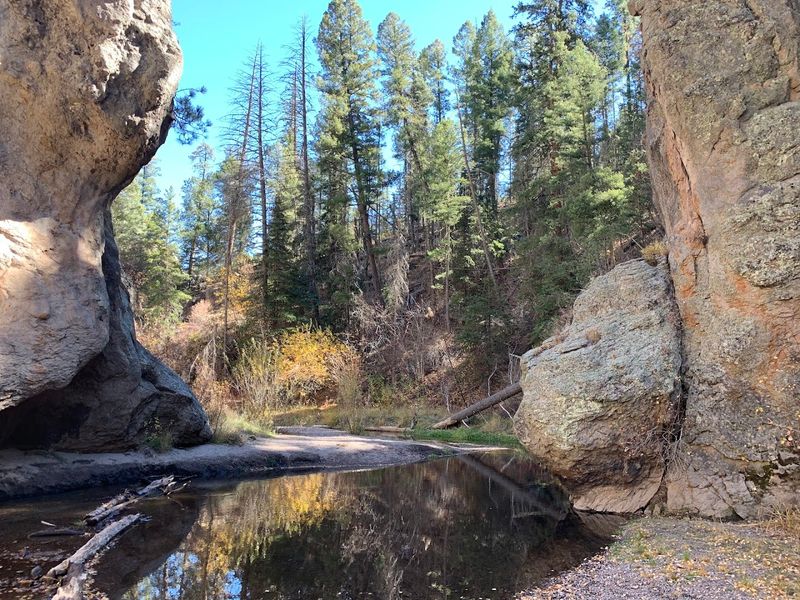
Geology does not usually move fast, but this canyon makes patience feel powerful. Inside the walls, you can sense water slowly shaping the place over thousands of years.
The East Fork of the Jemez River has been shaping these walls grain by grain, and the result is a corridor of smooth, curved stone that feels almost sculpted by hand.
Volcanic rock dominates the landscape here, and the colors shift as the light changes throughout the day, moving from deep burgundy in the shadows to a warm orange where the sun touches the walls directly.
Past floods and seasonal runoff have reshaped parts of the canyon floor over time, shifting sediment, moving rocks, and changing the depth of pools from year to year. That history is written right into the rock and creek bed if you know where to look.
Watching the creek move through the narrowest sections of the canyon, pressing against both walls in places, gives you a real sense of the force that created this place. The water is still working, still carving, still writing the next chapter of this canyon’s long story.
Narrow Walls And Quiet Pools
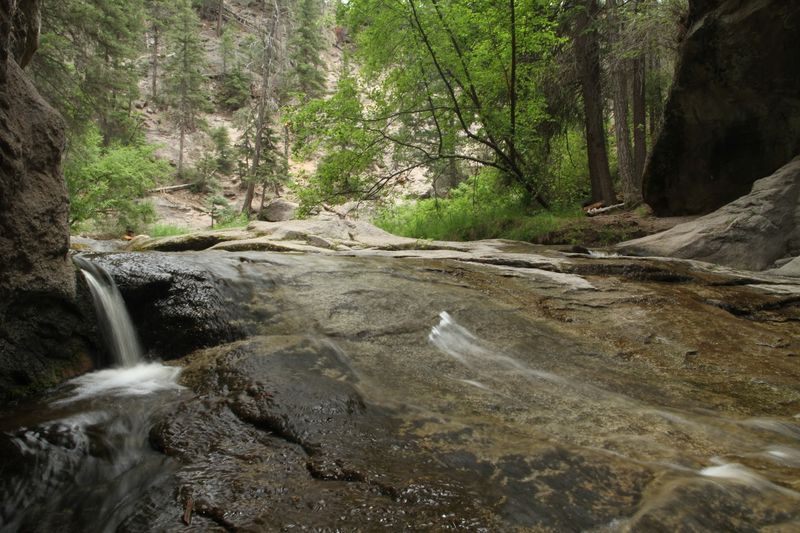
The slot canyon section feels like a different world. The sky narrows above you, and the sound of the outside world seems to fade behind the stone.
The walls close in as the route tightens, and the stone on either side rises steeply, creating a cool, shaded corridor that muffles sound and slows everything down.
The natural pools tucked into the base of the canyon are one of the most memorable features here, and for good reason. The water is clear and cold, and on a warm afternoon, plenty of visitors wade right in without a second thought.
I will be honest with you: the water temperature will wake you up faster than a double shot of espresso. But after that first cold shock, the pools feel absolutely refreshing, and the setting around them makes every shiver worth it.
The combination of tight walls, still water, and absolute quiet gives this section of the trail a meditative quality that is hard to find on busier hikes. You can stand here for twenty minutes and feel like the whole mountain belongs to you alone.
A Shaded Walk Through Stone
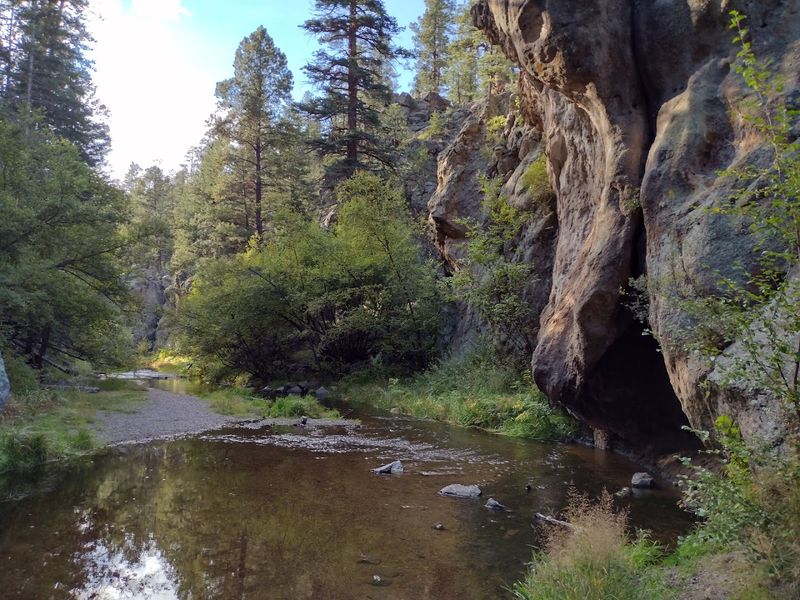
One of the most underrated pleasures of this trail is how much natural shade it provides, especially once you move deeper into the canyon corridor.
The walls rise high enough on both sides that direct sunlight only reaches the canyon floor during a narrow window of midday hours, which makes this a genuinely comfortable hike even in warmer months.
I visited in the morning and found the entire slot canyon section bathed in cool, diffused light that softened every edge and made the red rock glow rather than glare. Photographers will find this lighting situation nothing short of ideal.
The stone underfoot changes texture as you move through the canyon, shifting from loose gravel near the creek banks to smooth, water-polished surfaces inside the narrowest sections. Wearing shoes with decent grip makes a real difference here.
The shaded atmosphere also seems to encourage wildlife to linger. I spotted several bird species darting between the canyon walls, and one reviewer mentioned seeing a non-venomous snake sunning itself just off the trail near the water.
Keeping your eyes open adds an extra layer of discovery to every step you take through this living corridor of stone.
Sunlight Between Canyon Walls
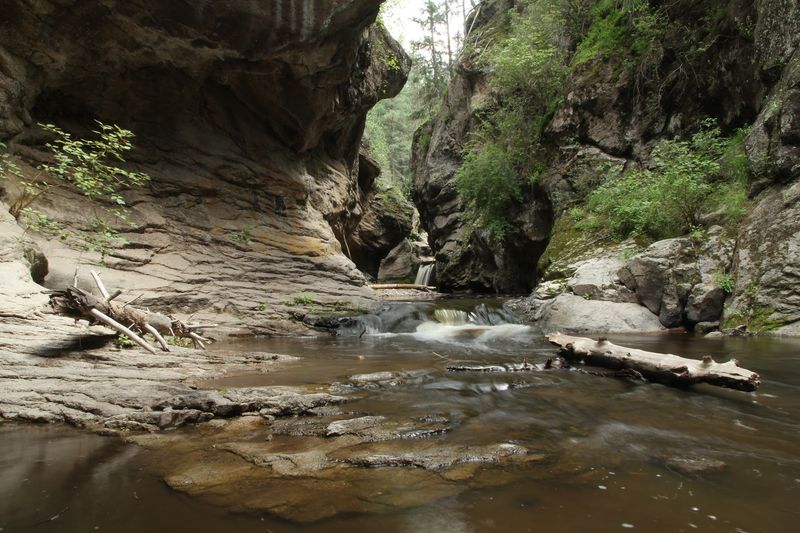
At a certain point on this hike, sunlight slips between the canyon walls and hits the water below. It is the kind of small moment that makes everyone stop for a second.
The light behaves differently inside a slot canyon than it does anywhere else. It bends, bounces off the curved rock faces, and creates a warm amber glow that makes the whole interior feel like it is lit from within.
I spent a solid ten minutes in one spot just watching the light shift as clouds moved overhead, each change producing a completely different mood in the canyon. It is the kind of thing that makes you grateful you left your phone on silent and actually looked up.
The best light tends to arrive around midday when the sun is directly overhead and can reach the canyon floor through the narrow opening above. If you time your arrival at the slot canyon section for late morning, you will likely catch this effect at its most dramatic.
After dark, the mountain setting can also make the sky feel wide and clear on good nights. Still, this is better treated as a daytime hike unless you are fully prepared for nighttime navigation.
A Hidden Corner Of The Mountains
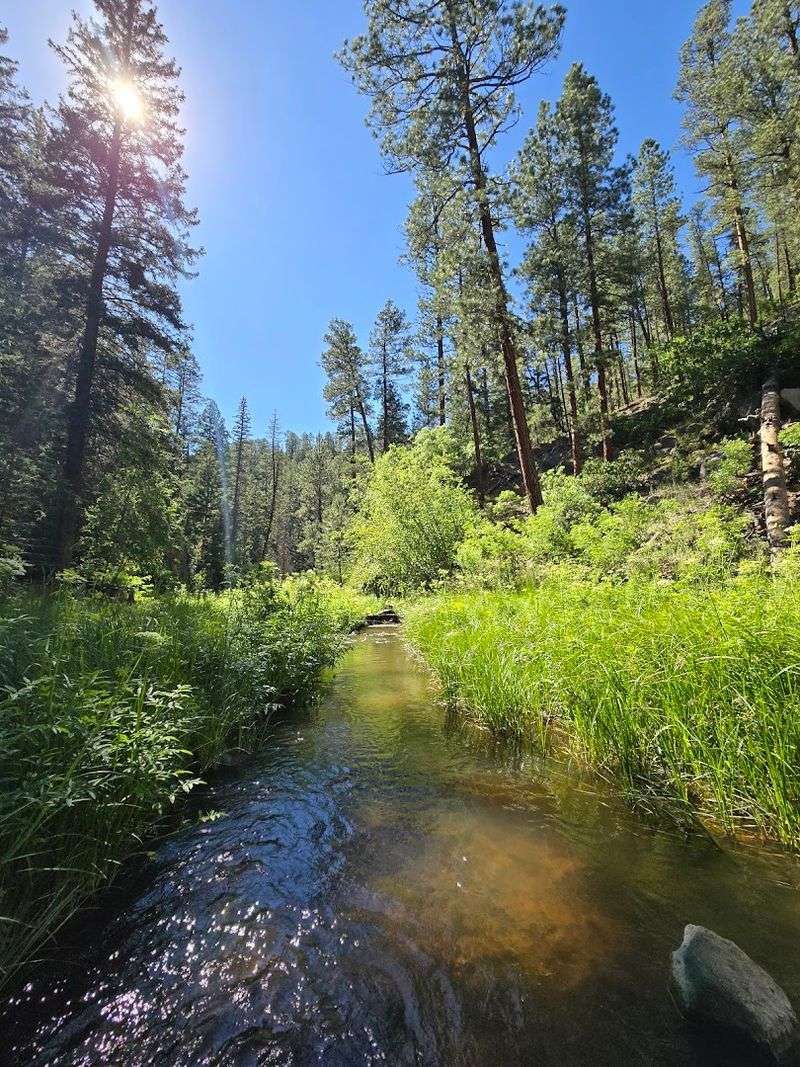
A trail this beautiful can still feel surprisingly tucked away. Even with other hikers around, the canyon has a way of making the mountains feel quiet and close.
The slot canyon sits within the Santa Fe National Forest, surrounded by conifer-covered peaks and open meadows that stretch out beyond the canyon walls. The larger trail system it belongs to, East Fork Trail #137, connects this spot to miles of additional scenery that many visitors never explore.
Getting here requires a drive along NM-4 through some genuinely beautiful northern New Mexico mountain scenery, and the road itself is worth the trip. Scenic pullouts and slow curves can easily make the drive feel like part of the adventure.
Parking and day-use rules can change by season, so check current Forest Service information before you go. The East Fork Trailhead area may require a small day-use fee, and trailhead facilities can vary depending on maintenance and seasonal conditions.
The drive to reach it is as much a part of the adventure as the hike itself.
Clear Water Beneath Red Cliffs
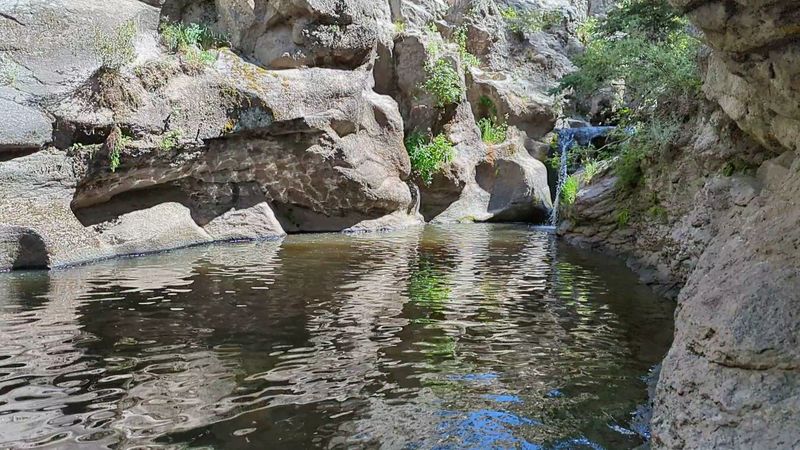
The water in the East Fork of the Jemez River can run so clear that you can count the pebbles below. Even where the stream deepens, the creek bed often stays beautifully visible.
Against the backdrop of the deep red and orange volcanic cliffs, that clarity creates a color contrast that feels almost too vivid to be real. I kept stopping to look down at the creek bed just because the view from ankle height was that good.
The natural pools formed along the canyon floor are a popular stop, particularly during warmer months. They are best for wading and cooling off, though the cold temperature keeps most people from lingering too long without getting moving again.
The drier months of May, June, September, October, and November are generally the best times to visit. Flash flooding is a real concern during monsoon season and heavy rain events, so checking the weather forecast before heading out is not optional, it is essential.
Dogs are allowed on this trail, but they should stay leashed and under control. If your hiking companion enjoys water, those creek crossings may become the happiest part of the whole outing.
An Easy Trail With Wild Views
Not every great hike needs to punish your legs to earn its views, and this trail makes a strong case for that philosophy with every step.
The short canyon outing is generally considered an easy out-and-back, with minimal elevation gain that keeps it accessible for many hikers. The full East Fork Trail #137 is much longer, so it is important to choose your turnaround point carefully.
The distance can vary depending on how far you continue into the canyon system, giving you the flexibility to set your own pace and turnaround point. Many hikers keep the outing short, while others continue farther along the East Fork route.
The views along the way include open meadows, dense conifer forests, impressive volcanic rock formations, and of course the canyon walls themselves rising on either side of the creek. That variety of scenery keeps the trail feeling fresh from start to finish.
For a New Mexico hike that combines moving water, red cliffs, cool shade, and a sense of discovery, this route delivers a lot without asking for a brutal climb.