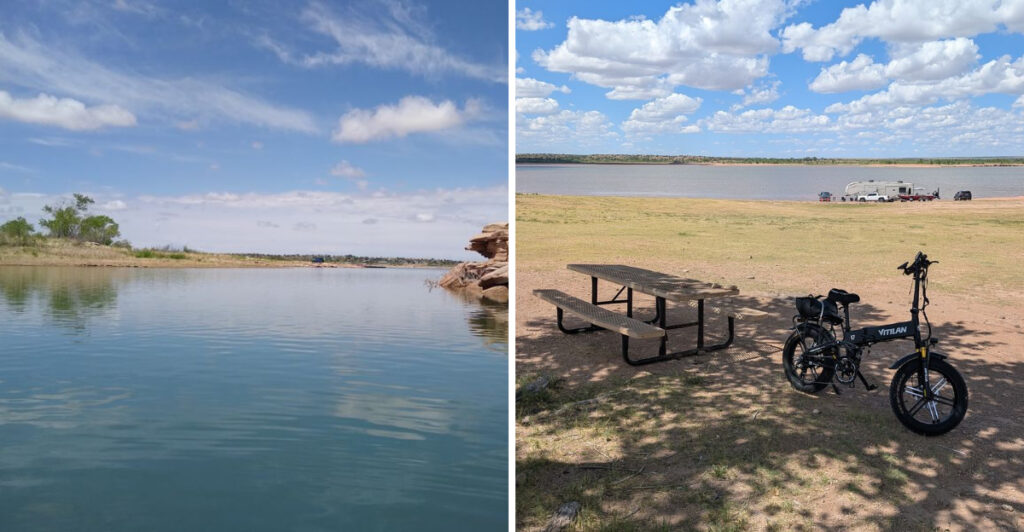
A lake weekend sounds even better when swimming, paddling, and camping all happen in the same place. This broad reservoir on the eastern plains gives visitors room to spread out, yet the shoreline still feels easy to explore.
Mornings are made for launching a kayak before the breeze arrives. Afternoons invite a swim near camp, followed by a slow walk beside the water as the light changes.
Once darkness settles in, the open sky becomes part of the experience. New Mexico delivers plenty of dramatic landscapes, but this one pairs outdoor adventure with the simple pleasure of sleeping close to the lake.
Families can settle into a developed campsite, while travelers seeking fewer amenities can choose a more basic setup near the shore. The best part is how naturally one activity leads into the next.
Arrive for a few hours, and staying through Sunday suddenly sounds like the smarter plan.
Where Desert Cliffs Drop Into Blue Water
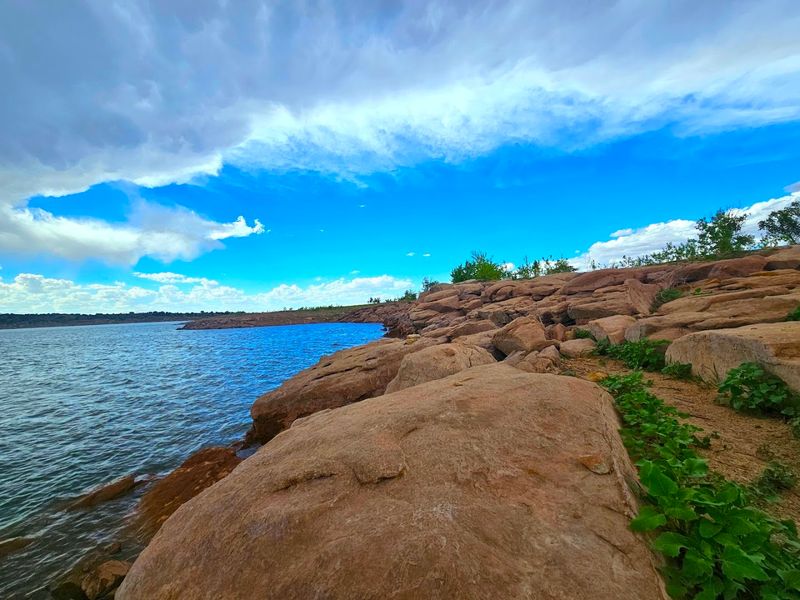
Red sandstone does not usually get credit for being dramatic, but the cliffs here earn every bit of attention they get. Jagged ledges of iron-rich rock tumble toward a reservoir so blue it looks almost painted on.
The contrast is striking enough to make visitors stop mid-hike just to take it in.
The terrain surrounding the lake rolls through juniper and piñon trees, native grasses, and desert plants like cholla and prickly pear cactus. Those plants frame every view with spiky, sun-baked texture that feels unmistakably like the American Southwest.
The sandstone gets its deep red tone from iron oxides baked into the rock over millions of years.
Photographers tend to arrive early in the morning when the light reaches across the cliffs at a low angle. The water reflects the rocky walls and creates a mirror effect that doubles the scenery.
New Mexico rarely looks more cinematic than Sumner Lake State Park at 32 Lake View Dr, Lake Sumner, NM 88119.
The Shoreline That Feels Miles From Everything
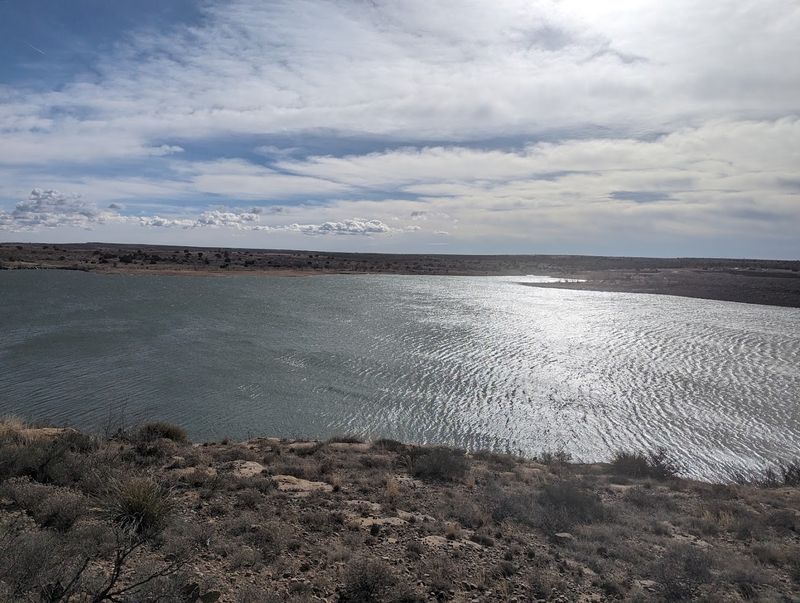
Some places earn their reputation for quiet the hard way, by simply being far from everything. This park sits in the eastern New Mexico plains, about 16 miles northwest of Fort Sumner by the main road, and that distance does a lot of the work for you.
The drive out through the high plains already starts to peel away the noise of daily life. The lake itself stretches far enough that you can stand on one bank and barely make out the far shore.
Campers have noted that on still nights, voices from across the water carry clearly, which tells you just how little background noise exists out here. No highway hum, no city glow, just wind and water.
First-time visitors often describe a mild shock at how quickly the stress drops once they step out of the car. The spaciousness feels physical, like the landscape is actively giving you room to breathe.
That wide-open feeling is one of the park’s most underrated offerings, and it costs nothing extra to enjoy it.
Paddle Toward The Lake’s Quietest Corners
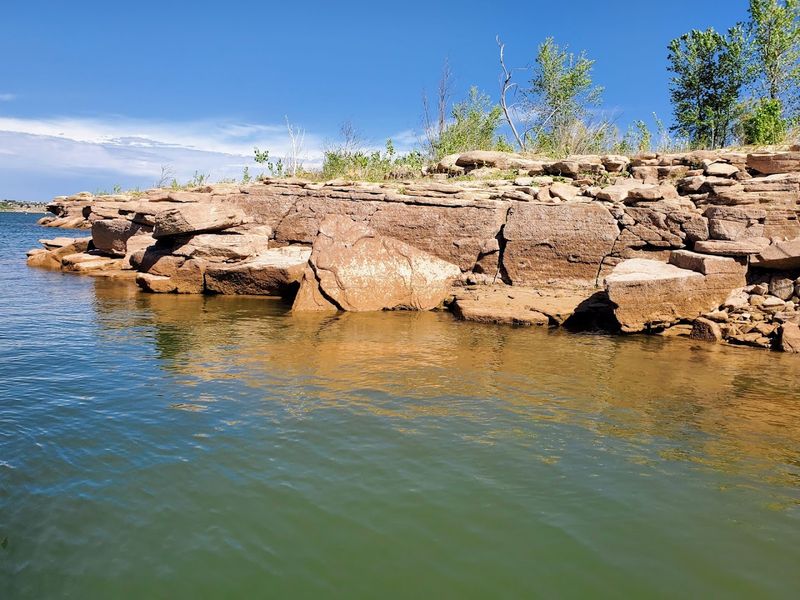
A 4,500-acre reservoir gives a paddler plenty of room to wander without retracing the same route twice. The lake splits into two distinct arms, the Alamogordo Arm and the Pecos River Arm, and each one has its own personality.
Exploring both in a single weekend is completely doable and keeps the experience fresh each day.
Kayaking, canoeing, and paddleboarding all work well here because the water stays calm in the early morning hours before any afternoon wind picks up. Three boat ramps and a dedicated dock make launching straightforward, even for people bringing their own gear for the first time.
I noticed that paddlers who set out before nine in the morning tend to get the glassiest conditions.
The coves tucked into the Pecos River Arm are especially peaceful, with shallow inlets where you can drift quietly and watch herons work the shallows. New Mexico paddling does not get much more rewarding than a slow morning loop through those corners.
Pack sunscreen generously, because the high desert sun reflects off the water with real intensity.
Campsites With Water Just Beyond The Tent
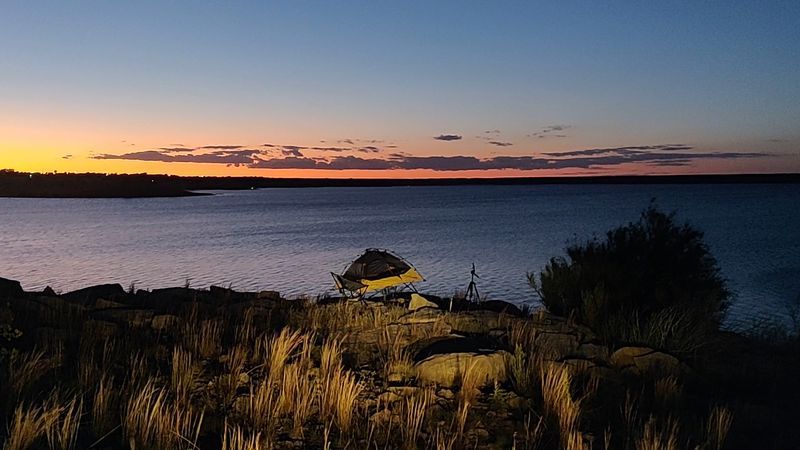
The lake view from inside your tent is one of those small camping luxuries that never gets old. The park offers 50 developed campsites along with primitive, shorefront, and boat-in options, so there is a setup for every type of camper.
Some developed sites include water and electric hookups and can accommodate RVs up to 120 feet long. Mesquite Campground sits right at the water’s edge and consistently gets mentioned as the top pick for anyone who wants immediate lake access.
Sites there come with covered picnic tables and fire rings, while the park also provides restrooms, showers, and water within the campground for visitors. East Side Campground also puts campers within easy reach of the water.
Primitive shorefront spots are available for those who prefer a more stripped-down experience with just the stars and the sound of the water nearby. Goathead stickers are common throughout the park, so closed-toe shoes are a practical must for walking around camp.
A dump station is also available within the campground, making departure preparations easier for RV travelers.
Golden Hour Turns The Shoreline Copper
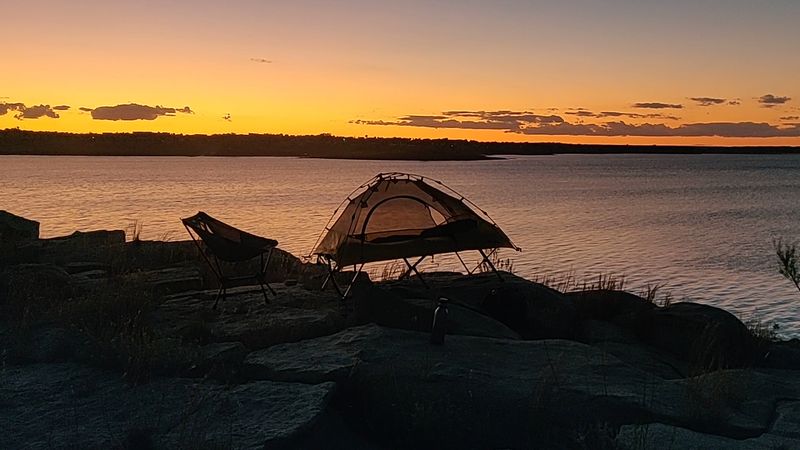
Late afternoon at this lake operates on a completely different color palette than the rest of the day. As the sun drops toward the mesa line, the iron oxides in the sandstone catch the light and shift from rust to a deep, glowing copper.
The water picks up those warm tones and turns the entire surface into something that looks almost too good to be real. The park’s trails and shoreline areas provide broad views of the lake during this transformation.
Visitors can choose among open shoreline vantage points around the park, where the changing light remains visible over the water and the wide horizon gives sunset plenty of room to unfold. The wide, unobstructed horizon means the show starts early and runs long.
Bringing a camp chair up to that ridge and settling in for the full golden-hour sequence is a genuinely satisfying way to end an active day on the water. The colors shift fast, so arriving at least 30 minutes before sunset gives you the full experience.
Few evenings in the Southwest close out more beautifully than this one does.
Hidden Coves Beyond The Busy Launch Area
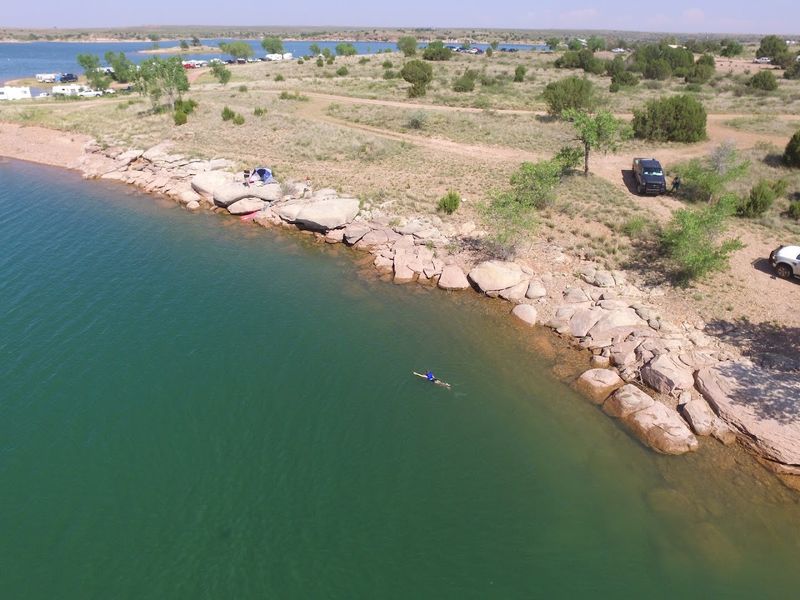
Most casual visitors park near the main boat ramp, set up their gear, and never venture past the busiest stretch of shoreline. That leaves the quieter corners of the lake remarkably uncrowded, even on weekends when the campgrounds fill up.
A little paddling effort rewards you with inlets that feel genuinely private.
The branching shape of the reservoir creates natural separations between the busier zones and the calmer ones. The Pecos River Arm in particular narrows into sections where the banks close in and the water goes still.
Fishing from a small boat or kayak in those spots tends to produce better results simply because the area sees less traffic and disturbance.
Swimming in a sheltered cove on a hot afternoon, with sandstone walls on three sides and nobody else around, is the kind of experience that makes people plan return trips before they have even driven home. I found one inlet that felt completely tucked away, with dragonflies hovering at the waterline and a heron standing motionless on a nearby rock.
That kind of solitude is the park’s quiet specialty.
Desert Stars Take Over After Dark
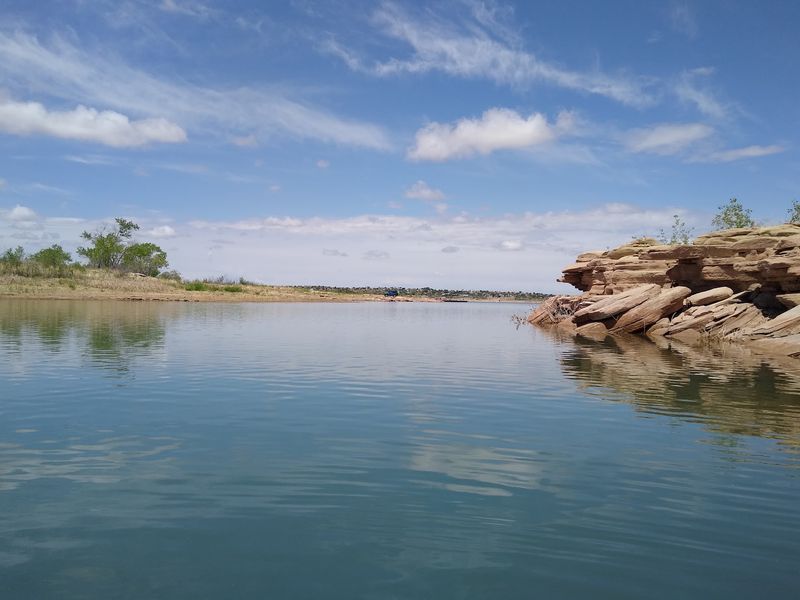
Third-party astronomy guides rate this area as Bortle Class 1, the darkest tier on the scale used to describe night-sky brightness. That rating reflects the park’s remote setting and limited surrounding light under clear nighttime conditions.
Once the sun fully sets and your eyes adjust, the sky overhead becomes dense with stars in a way that surprises even experienced campers. The Milky Way appears as a visible band rather than a faint smear, and individual star clusters resolve clearly without any equipment.
Visitors staying in the Mesquite Loop have reported watching the galactic core rise over the lake and reflect softly on the water below. That double display, sky above and lake below, is something that photographs struggle to fully capture.
Bringing a simple star chart or a free stargazing app helps identify constellations and planets, which turns a passive experience into an active one. The park’s location in eastern New Mexico, far from Albuquerque or any major city, keeps the horizon dark in every direction.
Plan to stay up later than usual, because the show keeps improving as the night deepens.
Wake Up To Water Outside Your Campsite
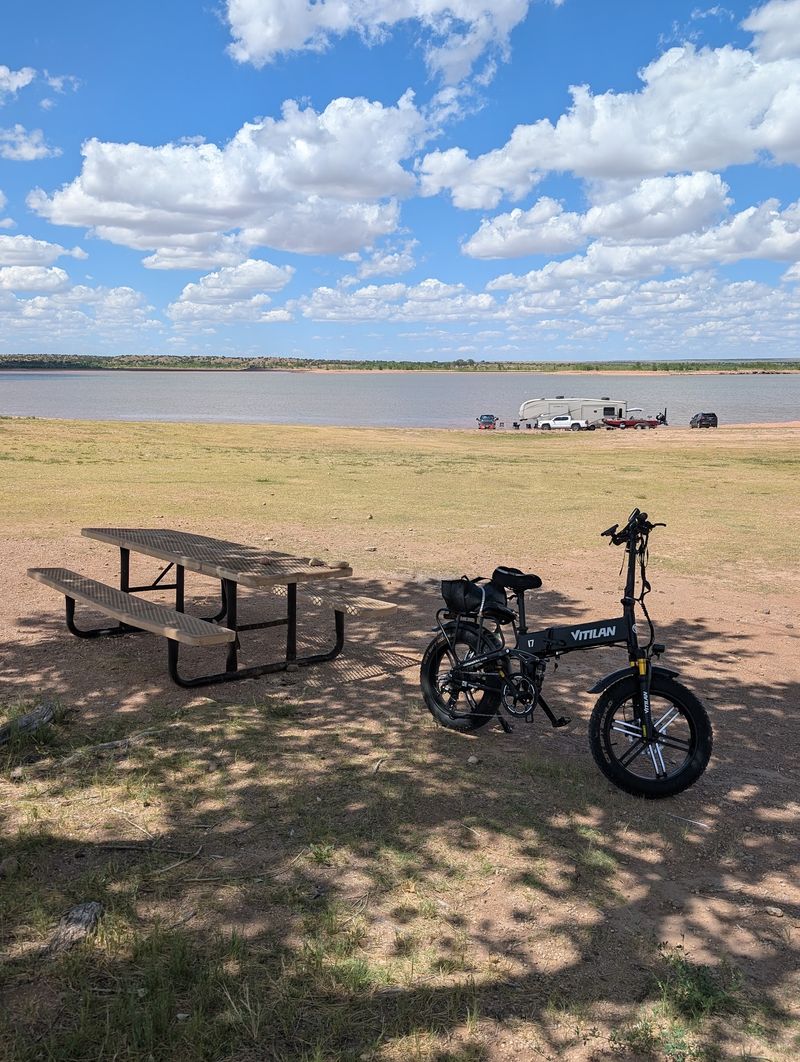
Morning at a waterfront campsite moves at a pace that the rest of the world rarely allows. The lake sits quiet and glassy before the wind picks up, and the early light turns the surface into something that looks almost silver.
Roadrunners have been spotted darting between campsites in the early hours, adding a distinctly New Mexico touch to the wake-up routine.
Mesquite Campground places campers directly at the water’s edge, so the first thing visible through the tent door is the lake itself. Sites there include covered picnic tables, which means breakfast outside stays comfortable even when the morning sun starts climbing.
The covered shelter is a small detail that makes a noticeable difference over a full weekend stay.
Getting out on a paddleboard or kayak before eight in the morning means glassy water, cooler temperatures, and the lake almost entirely to yourself. That first hour on the water, with the cliffs still in shadow and the surface unbroken, is the kind of moment that anchors a trip in memory.
Sumner Lake State Park, located at 32 Lake View Dr, Lake Sumner, NM 88119, delivers that experience reliably.