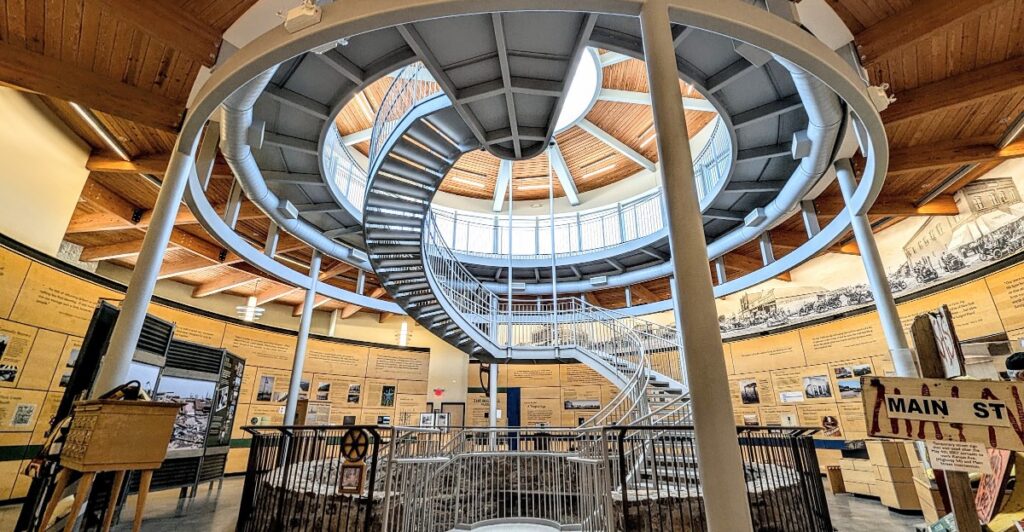
A 1,000-pound meteorite sits a short walk from a hole in the ground that crews dug by hand in the 1880s.
That hole is 109 feet deep. Yes, people dug it with shovels, picks, ropes, and barrels.
The building around it has its own wild story. A massive tornado flattened the town in 2007, but the old well survived.
A brand-new museum later rose right on top of it. This spot in Kansas mixes pioneer grit, space rocks, and storm history under one round roof.
I like how it doesn’t pick just one story to tell. It tells all of them, and somehow they fit together.
I can’t imagine a stranger combo in a small-town museum. So how does a spiral staircase, a twisted siren, and a meteorite end up in the same room?
Men With Shovels Built A Record Breaker Here
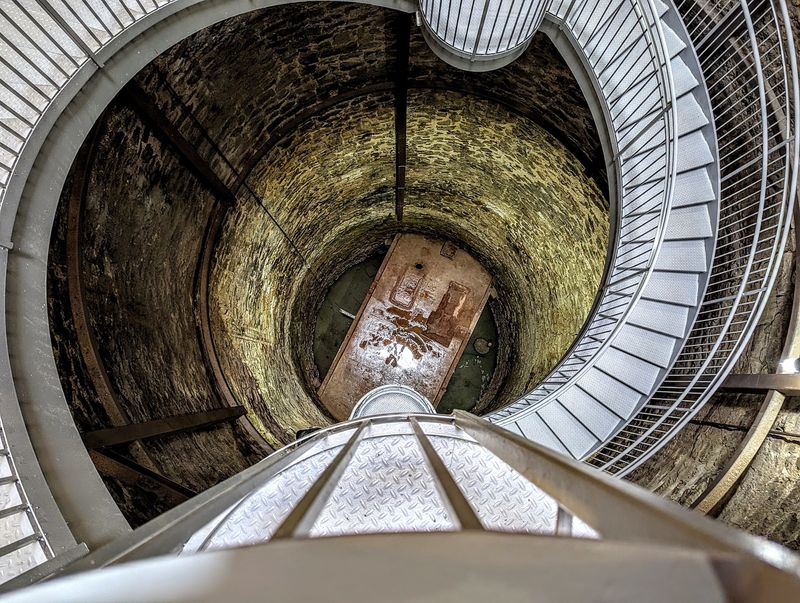
Crews of men dug a well 32 feet wide using hand tools, ropes, pulleys, and barrels. The Big Well Museum and Visitor Information Center sits right on top of that impressive pioneer project.
Work started in 1887 and wrapped up in 1888. The goal was simple: supply water to the town and to the Santa Fe and Rock Island railroads.
Steam engines needed plenty of water, and a growing prairie town did too. So workers kept digging until they hit 109 feet.
That’s deeper than many office buildings are tall.
Today, it’s known as the largest hand-dug well in the United States. Older signs once called it the biggest in the world, which is a pretty bold brag for a hole.
The well served as the town’s water supply until 1932. A few years later, in the late 1930s, it turned into a tourist stop instead.
Picture the muscle behind every bucket of dirt hauled up. You’ll look at the brick walls differently once you understand how they got there.
Respect for those workers comes fast. It’s honestly hard not to feel a little lazy by comparison.
Your Legs Will Remember These 84 Steps Down
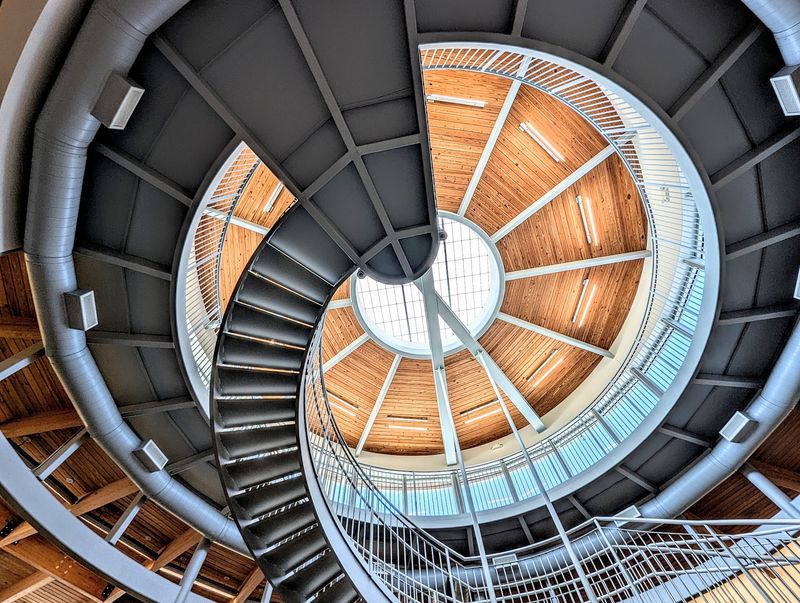
Eighty-four steps wind down into the well on a modern spiral staircase. It’s the star of the show for many visitors, and it feels like stepping back in time.
The staircase was added during the 2012 rebuild. Here’s the clever part: it hangs from the building above instead of touching the old well walls.
That design keeps the historic brickwork safe from extra stress. The shape also copies the Golden Spiral found in nature.
It doubles as a quiet nod to a tornado’s swirl, which feels fitting in this town.
The stairs don’t reach the very bottom of the well. Still, you get close enough to feel how deep those workers went.
Wear comfy shoes, because what goes down must come back up. Think of it as a free leg workout on a long road trip.
Take your time on the way down and peek over at the brick walls. Each turn gives you a slightly different view of the shaft.
It’s a nice reminder that old engineering and new design can share space without bumping elbows. Kids especially enjoy counting every single step out loud.
A Space Rock Heavier Than Your Car Engine Waits Inside
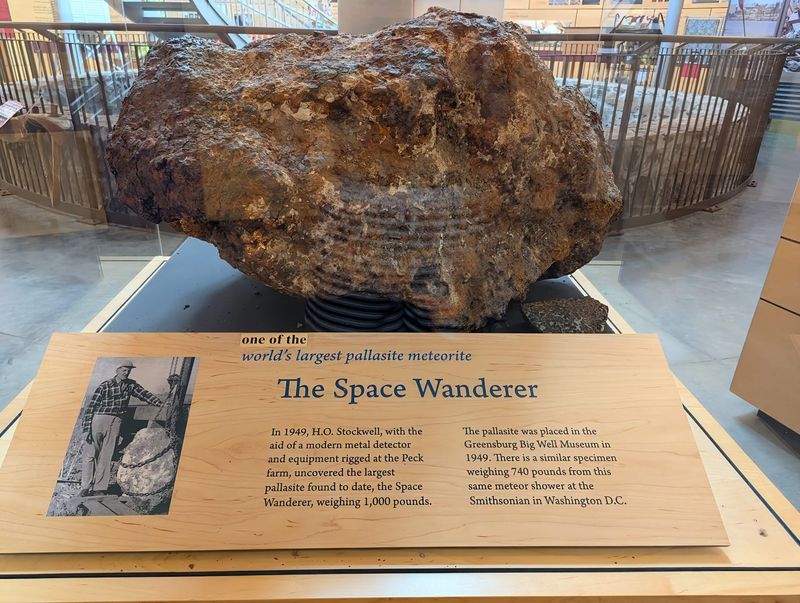
Not every small-town museum can say it owns a chunk of outer space. This one has a 1,000-pound Brenham pallasite meteorite on display.
Pallasites are special meteorites made of metal mixed with shiny crystals. This giant was discovered by H.
O. Stockwell using a metal-detecting device on the Ellis Peck farm east of Greensburg in 1949.
For years, it was billed as the world’s largest single-piece pallasite. That’s a big title for a rock that once fell from the sky onto a Kansas field.
The story gets even better after 2007. When the tornado hit, the museum was destroyed, and the meteorite went missing amid the wreckage.
Fortunately, it was recovered from the rubble and later returned to the rebuilt museum, ready to impress a new crowd.
Kids usually love this part, and so do adults who secretly wanted to be astronauts. Space rocks just have that effect on people.
Spend a moment looking closely at its surface. Try to imagine the long trip it took before landing near this tiny town.
Then remember that someone tracked down this massive space rock with a metal detector in a Kansas farm field. Talk about an unusual discovery.
It’s a great conversation starter on the drive home, too.
Twisted Signs Tell The Story Of One Terrible Night
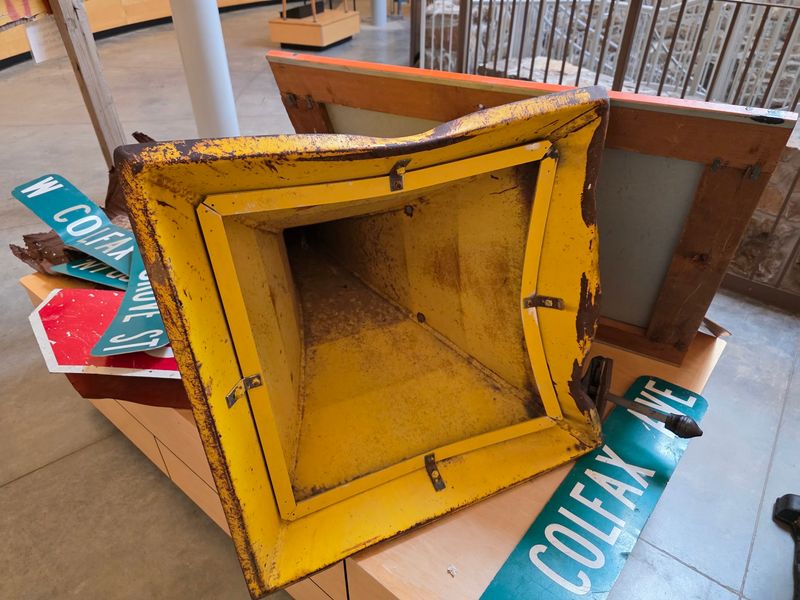
On May 4, 2007, an EF5 tornado tore through Greensburg. It wiped out about 95 percent of the town, including the old visitor center at the Big Well.
Amazingly, the well itself survived. The exhibits here show what the storm left behind, and they hit hard.
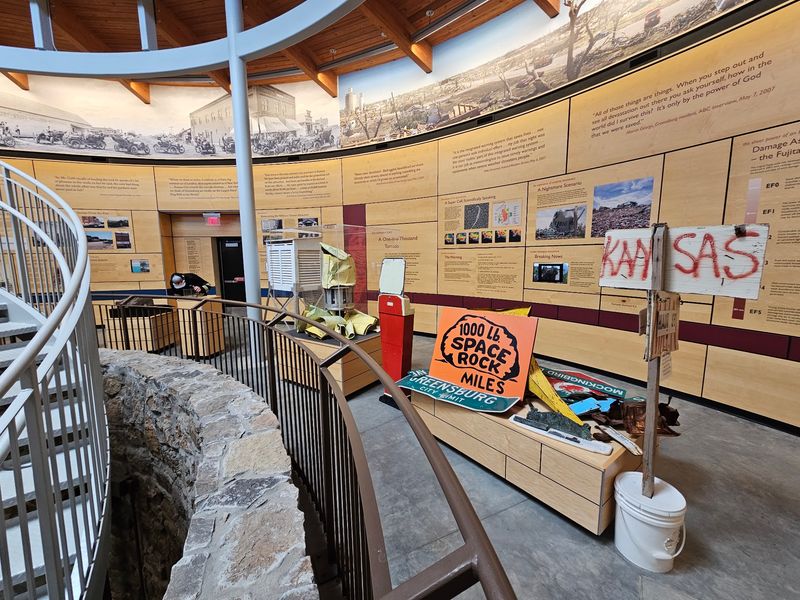
You’ll see twisted traffic signs and bent street signs. Metal that once stood straight now curls like ribbon.
The remains of the town’s Federal Signal Thunderbolt siren are on display too. A siren built to warn people became part of the storm’s story itself.
Interactive kiosks play video of residents sharing their memories. Hearing real voices describe that night makes the exhibit feel personal and close.
Bring tissues if you tend to get emotional. These stories carry weight, but they also show courage and neighbors helping neighbors.
Take a few quiet minutes here. The debris isn’t flashy, yet it says more than any sign could.
It’s a powerful reminder of nature’s force and people’s strength. Many visitors leave this section with a new respect for storm warnings and for the folks who stayed to rebuild.
Walking In A Circle Means Walking Through Time
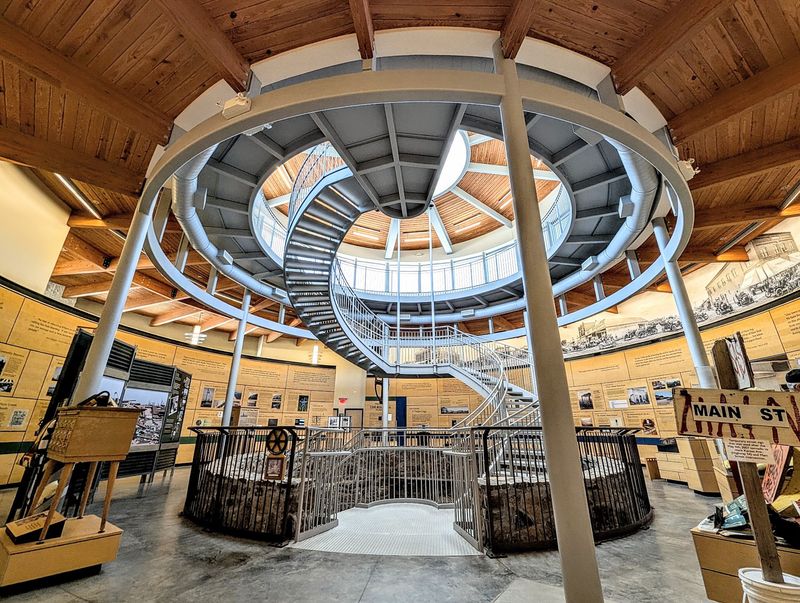
Round buildings make great storytellers. The galleries here wrap around the well in a circle, and the history follows that same path.
A circular timeline covers the town in three stages. First come its beginnings, then the tornado, and finally the eco-friendly rebuild.
The setup works like a book you read with your feet. Each step forward moves you a little further through the story.
The well sits at the center beneath a circular rotunda. So no matter where you stand, the old shaft stays close by, like the heart of the building.
Exhibits explain how the well was built and how it shaped the town. Then the story shifts to the storm and the comeback that followed.
Plan for at least an hour if you like reading signs. There’s a lot of detail packed into this round space.
Glasses help, too, since many panels are full of text and photos. It’s easy to lose track of time once the story pulls you in.
And yes, you can circle back for anything you missed. That’s the bonus of a round room.
Climb Up For A 360-Degree Look At A Reborn Town
Down isn’t the only direction worth exploring here. An observation deck sits above the gallery, offering 360-degree views of the town.
The windows label notable buildings built with sustainable methods. It’s like a map you can actually see in real life.
Greensburg chose to rebuild as a green community after the storm. Today, 100 percent of the city’s electricity comes from renewable wind energy, which is pretty impressive for a small prairie town.
From up top, you can spot some of those new buildings. The labels help you know exactly what you’re looking at.
Stand there for a minute and let it sink in. Almost everything in view had to be built again after 2007.
That’s a lot of hammering, planning, and hope. Seeing it all at once makes the comeback feel real instead of just words on a sign.
Bring your camera, because the wide Kansas sky makes a great backdrop. Clear days give you the best views.
After climbing down into the well and back up again, this deck feels like a well-earned reward. Your legs might argue, but your eyes will thank you.
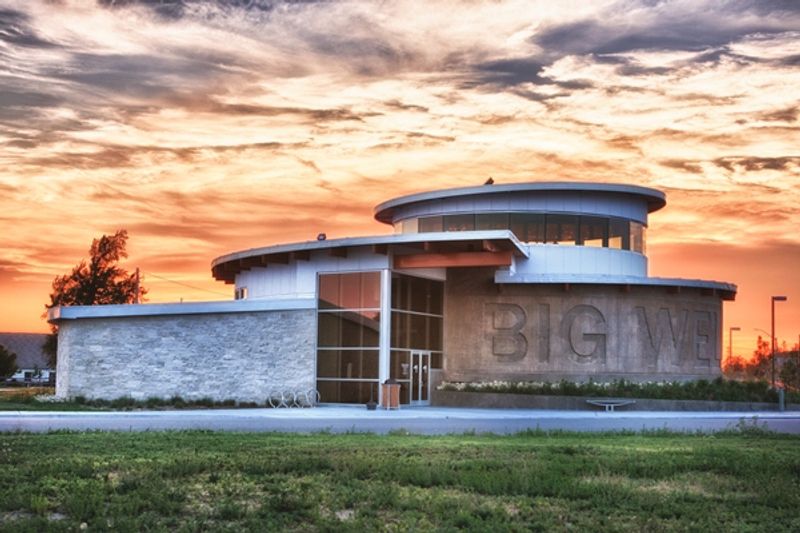
Limestone And Colored Concrete Give The Building Style
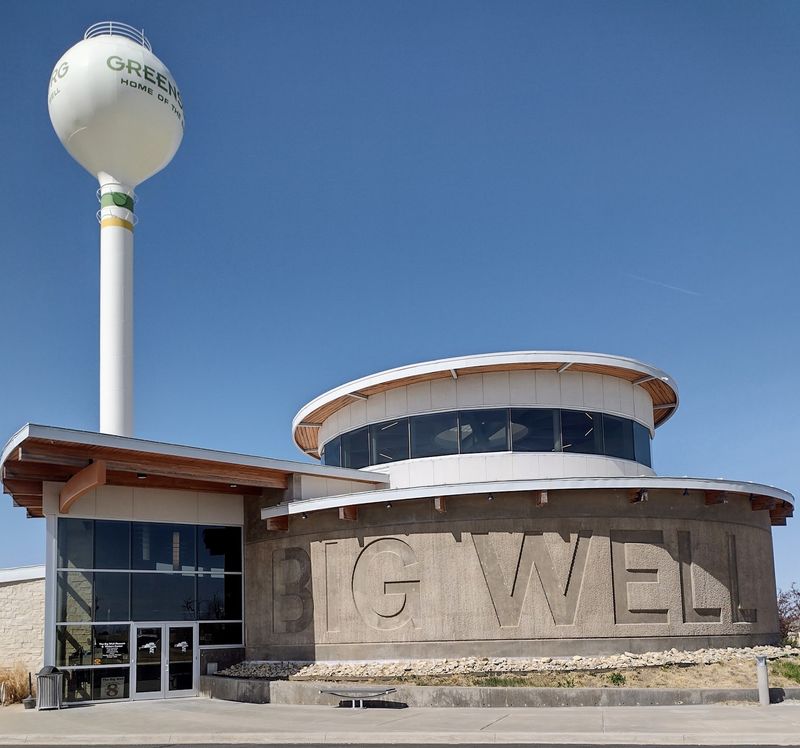
Plenty of small museums live in plain old buildings. Not this one, which opened on May 26, 2012, with a sleek and stylish look.
The outside uses textured colored concrete and limestone veneer. That mix feels modern while still fitting the prairie setting around it.
Limestone has deep roots in Kansas building history. Using it here connects the new structure to the past in a subtle way.
The design also matches the town’s green mission. Greensburg rebuilt with sustainability in mind, and the museum reflects that thinking.
Inside, the round shape centers everything on the well. Outside, the clean lines make it easy to spot when you pull into town.
Take a slow lap around the exterior before heading in. It’s worth noticing how the building balances old and new.
The Big Well Museum shows that a small town can build something striking. After losing so much, the community created a landmark that feels proud and fresh.
Snap a photo out front. It makes a nice souvenir that won’t cost a thing, and it proves you found this unusual stop on your trip.
Free Bikes, A Gift Shop, And Room For Your Pup
Borrowing a bike for free sounds too good to be true. Yet the museum lends free bicycles for self-guided green tours around Greensburg.
It’s a fun way to see the rebuilt town up close. You can pedal past the sustainable buildings you spotted from the observation deck.
Before you ride off, check out the gift shop. It’s a handy place to grab a souvenir to remember your visit.
Got a furry travel buddy? Pets are allowed inside if they’re on a leash or in a carrier.
That’s great news for road trippers who never leave home without their dog. Nobody has to wait in a hot car while everyone else explores.
The museum also serves as the town’s visitor information center. So if you have questions about what to see next, this is a smart first stop.
Planning tip: pair the museum with a bike loop for a full afternoon. You’ll get history, fresh air, and a little exercise all in one go.
Not bad for a stop that began with a hole in the ground. Your pup might even enjoy the ride beside you.
Plan Your Stop At This Award-Winning Kansas Wonder
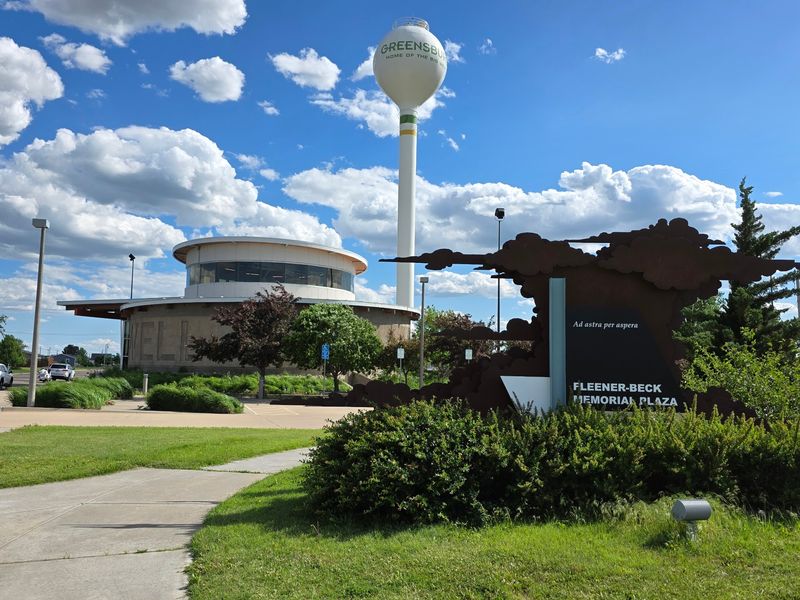
Awards follow this well around like fans. It was listed on the National Register of Historic Places in 1972 as the Greensburg Well.
In 1973, it was named an American Water Landmark. Then in 2008, it earned a spot as one of the 8 Wonders of Kansas.
Back in 1956, the well welcomed its one-millionth visitor. That’s a huge crowd for a small prairie town.
You’ll find the Big Well Museum at 315 S Sycamore St, Greensburg, KS 67054. The town sits roughly 100 to 110 miles west of Wichita.
Hours run Monday through Saturday from 9 a.m. to 6 p.m. On Sundays, doors open from 1 p.m. to 6 p.m.
There’s an admission fee, so plan for that before you go. Most visits take an hour or two, depending on how much you read.
Greensburg also has a wind farm, a nice symbol of its green comeback. Keep an eye out for it as you drive in.
A road trip across western Kansas just got a lot more interesting. Who knew a well could hold this many surprises?