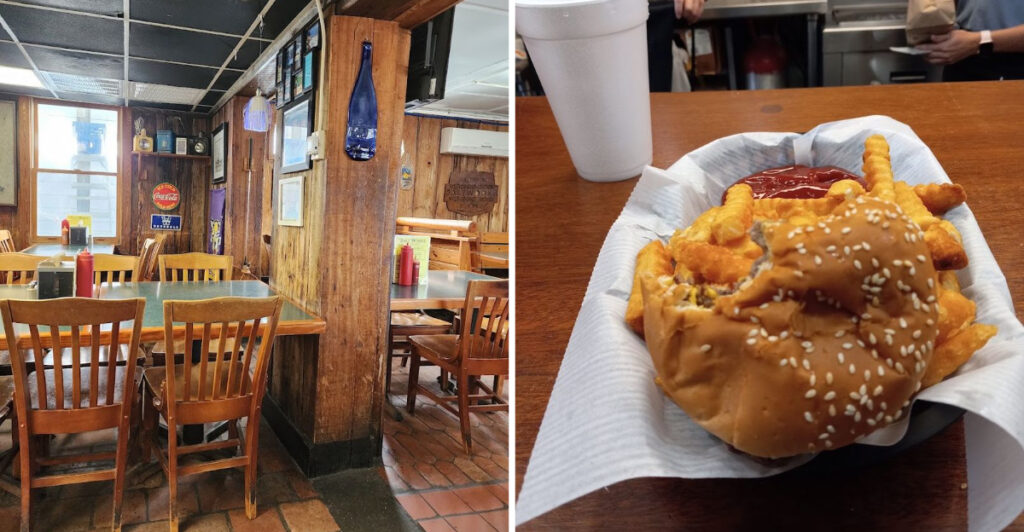
This Wilmington counter is small enough to miss and busy enough to make you turn around.
Since 1973, it has served the kind of breakfast that gets straight to the point. Hot grits, eggs, waffles, burgers, and strong coffee keep the tiny dining room moving from morning into lunch.
The setup is simple. Seating is limited and weekend waits are common. Regulars know that the best move is arriving early before the room fills and your appetite starts making impatient decisions.
Nothing here tries to turn breakfast into a production. Paper menus stay focused, the grill keeps working, and every plate earns its space on the table.
Read both sides of the menu before ordering because lunch may tempt you before breakfast is finished.
North Carolina has flashier brunch spots, but this one proves a small room can still make a very big impression.
Weekend Breakfast Turns Patience Into Part Of The Routine
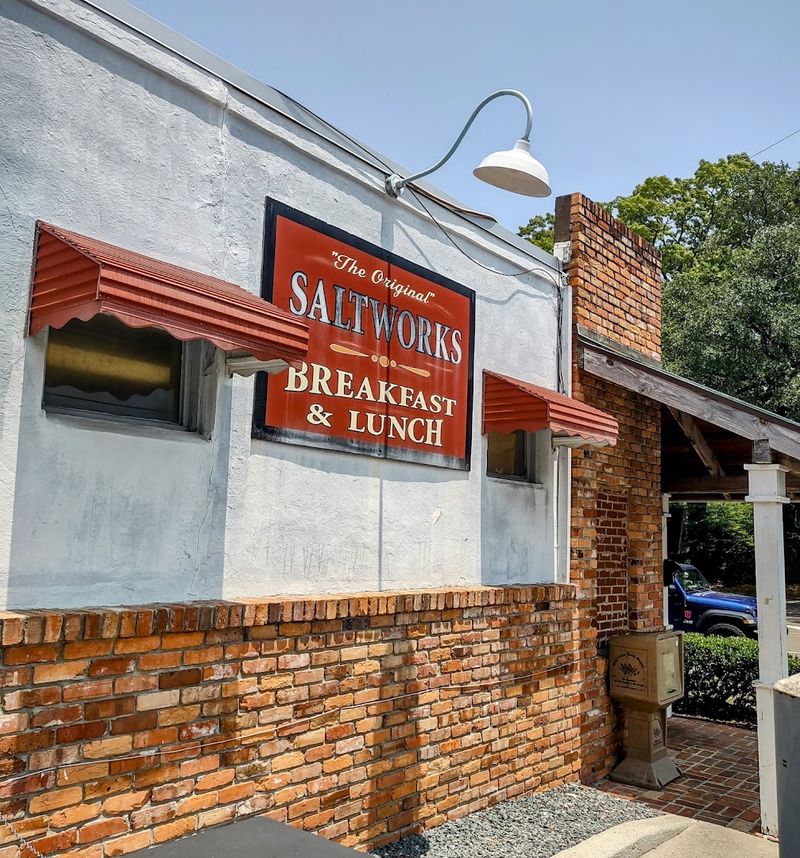
Saturday begins early when fewer than sixty seats have to satisfy a city full of breakfast plans.
Current published hours start at 7 a.m. every day, with service continuing until 3 p.m. Monday through Saturday and 2 p.m. on Sunday.
That daytime schedule concentrates the action, especially when beach visitors and Wilmington regulars arrive during the same late-morning stretch.
The restaurant does not take reservations, so the line moves according to available tables rather than a digital waitlist. Arriving close to opening gives you the easiest route inside, while a later visit may include time on the porch or beside the outdoor tables.
Cash remains the payment method, and an ATM is available on the front porch. Handle that detail before you sit down, because a hot plate of eggs is not the ideal moment to remember your wallet contains only cards.
Once a table opens, the staff keeps the compact room moving with practiced speed. Drinks are refilled, orders reach the kitchen quickly, and the next group is seated without making your breakfast feel rushed.
Would you wake up early for a shorter wait, or let the sidewalk crowd sharpen your appetite?
The Small Dining Room Carries More Than Seventy Years Of History
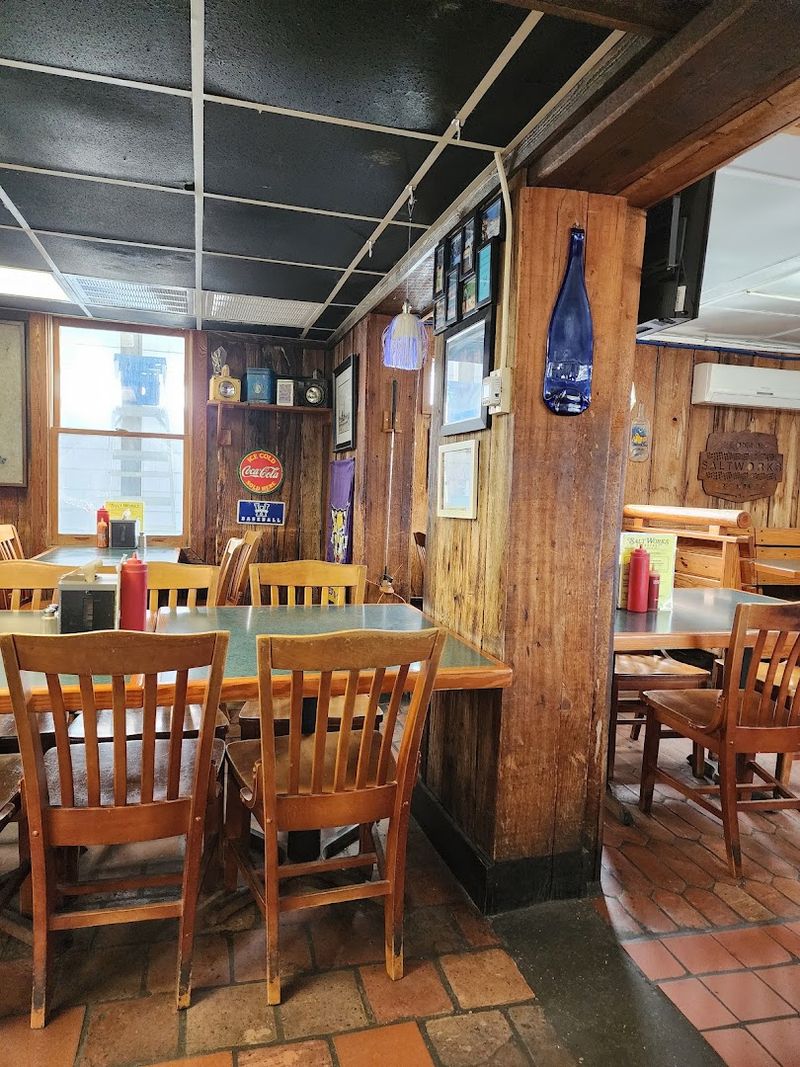
The building began feeding the neighborhood before The Original Salt Works had its current name.
You will find the restaurant at 6301 Oleander Drive, Wilmington, North Carolina 28403. The structure operated as a soda fountain during the 1950s before Katy Monaghan and Buddy Wheelis opened Salt Works in 1973.
Current owner Bob Hubbard became the fifth owner in 2003.
The dining area measures roughly 1,000 square feet, and the official tourism listing places seating capacity at fifty-five. Those numbers explain why every table matters and why a busy breakfast can make the room seem even smaller than it looks from the road.
Pine paneling, framed photographs, license plates, duck decoys, and sports memorabilia give the interior the accumulated character of a restaurant that has changed gradually rather than starting over every decade.
The open kitchen keeps the cooking close to the tables. You hear the grill, catch the smell of bacon and onions, and watch plates move through a space where wasted steps would become obvious immediately.
This is not a room designed for lingering over laptops. It is built for coffee, conversation, hot food, and the pleasant challenge of deciding what deserves your next visit.
House Omelets Put Nearly Every Breakfast Favorite In One Fold
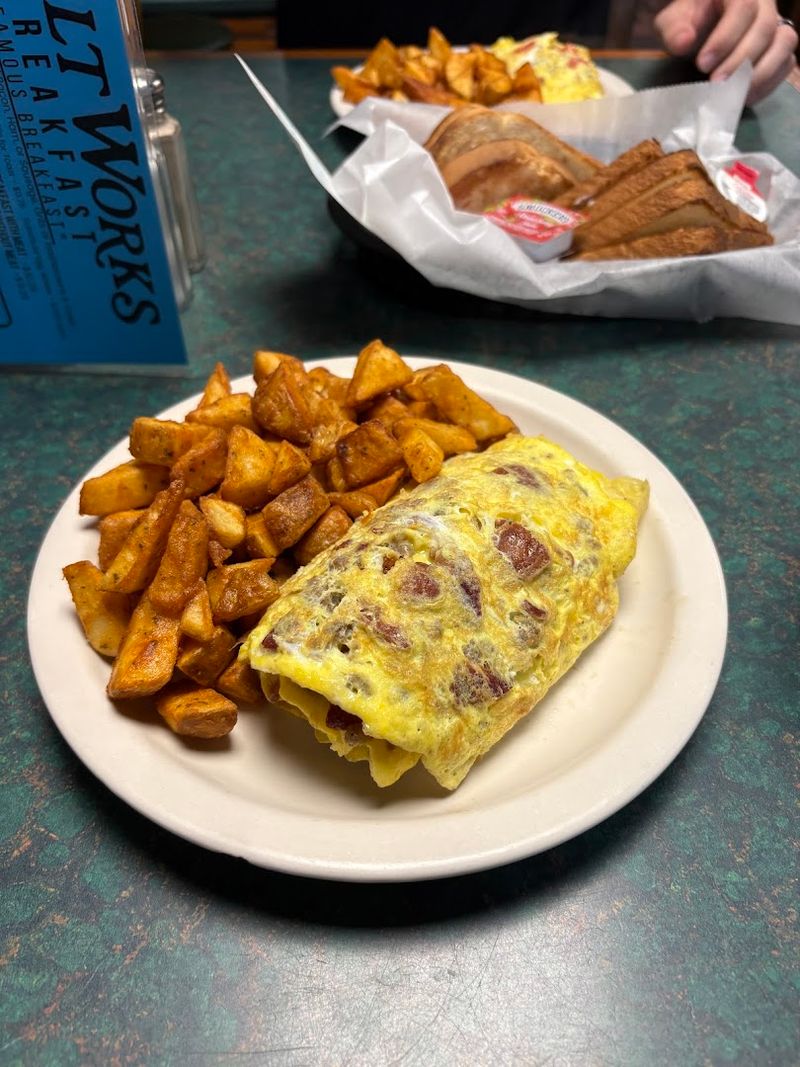
Ham, bacon, sausage, cheese, tomatoes, onions, and peppers all report for duty in the house omelet.
That combination makes the order useful for anyone who refuses to choose one breakfast meat. Grits or hash browns and toast complete the plate, giving you enough food to treat lunch as a distant concern.
A vegetable omelet provides another substantial route with cheese, tomatoes, onions, mushrooms, and peppers. Traditional three-egg versions keep the choices simpler through combinations such as cheese, ham and cheese, sausage and cheese, or bacon and cheese.
Then the Salt Works Super Bowl changes the shape of breakfast completely. Grits form the base, followed by ham, bacon, sausage, cheese, and eggs cooked to order. Every spoonful can pick up a different mix, so the bowl stays interesting after the first layer disappears.
Country ham and corned beef hash remain available for diners who prefer a straightforward egg breakfast. Hash browns, toast, grits, and home-style sides let you build a plate without accepting more food than the morning requires.
Watch the kitchen during a rush and the menu makes even more sense. Familiar ingredients move quickly, portions stay generous, and nobody needs a speech before the first bite.
Belgian Waffles Make Sharing Sound More Sensible Than It Is
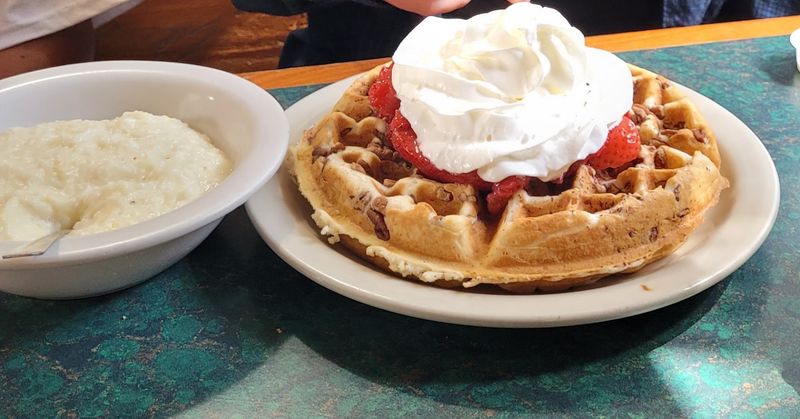
The waffle reaches the table with enough surface area to attract attention from neighboring seats.
Belgian waffles remain one of the restaurant’s established breakfast choices, with strawberries and whipped cream available for anyone leaning toward a sweeter start. A pecan version adds crunch without covering the warm grid beneath it.
The texture keeps the order from becoming a plate-sized distraction. A soft center absorbs syrup, while the patterned exterior provides enough structure to carry fruit, butter, or nuts without collapsing immediately.
Families can split one alongside eggs or an omelet, though sharing becomes less appealing after the first forkful. The size makes it look cooperative; the aroma encourages private ownership.
Cinnamon French toast gives sweet-breakfast diners another option, while standard egg plates let you bring salt and syrup together without choosing sides.
That flexibility works well when one person wants bacon and another believes strawberries should control the morning.
Order the waffle early in the meal if everyone plans to taste it. Once the plate reaches the wrong side of the table, diplomacy may not bring it back.
Burgers And Fried Bologna Take Over When Breakfast Steps Aside
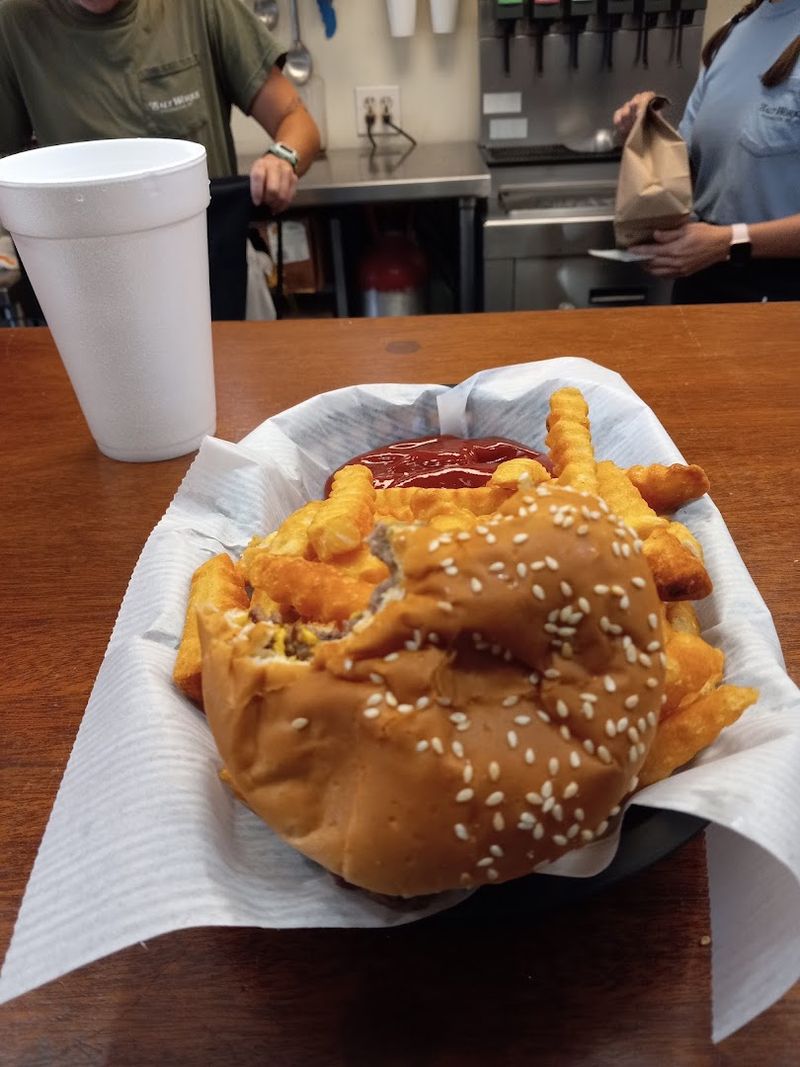
Around lunchtime, the griddle changes assignments without losing its pace.
Cheeseburgers, double cheeseburgers, bacon cheeseburgers, and a meatless burger give the compact menu several ways to handle a serious midday appetite.
Fries or onion rings bring the expected crunch, and the burgers arrive without the towering construction that can make lunch require instructions.
The fried bologna sandwich keeps the old-school side of the menu visible. It can be ordered simply or paired with cheese, letting the browned edges and soft bread do most of the work.
BLTs, grilled cheese, chicken sandwiches, and a homemade chicken salad widen the choice without turning the menu into a binder. The official tourism listing still highlights that chicken salad, which has remained one of the restaurant’s recognizable house-made items.
A small kitchen benefits from knowing its strengths. Breakfast favorites occupy the morning, then burgers and sandwiches carry lunch with ingredients the crew can prepare quickly and consistently.
You may arrive for eggs and notice a cheeseburger crossing the room before the check arrives. That is how a breakfast stop quietly schedules its own return visit.
Homemade Chili And Slaw Give The Hot Dogs Their Wilmington Accent
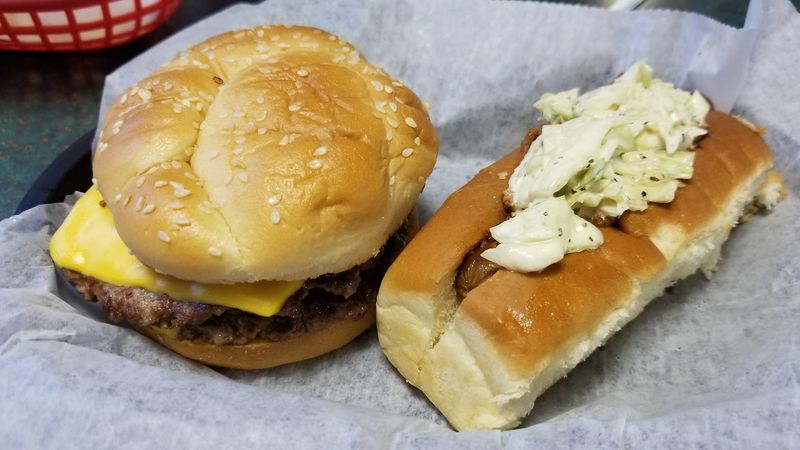
A steamed bun becomes much more persuasive once homemade toppings join it.
The hot dog ordered all the way comes with mustard, chili, onions, and slaw. Both the chili and slaw are made in-house, giving the finished sandwich more personality than a quick squeeze from two commercial containers.
The steamed bun stays soft around the toppings, while the onion and slaw add texture against the hot dog. Crinkle-cut fries can complete the plate, though onion rings make an equally strong case when you want the crunch to arrive in larger circles.
Baby lima bean soup offers a quieter lunch choice with deeper roots. Its secret recipe was passed down from the restaurant’s first owners, keeping one of the oldest preparations connected to the current kitchen.
House-made chicken salad follows the same practical tradition. It can fill a sandwich without pretending lunch needs smoke, spice, or a stack tall enough to lean.
Hot dogs, soup, and chicken salad may look like separate menu directions, but they share the same advantage. Each depends on preparation rather than novelty, which helps explain why regulars can rotate orders for years without needing a new trend.
A Century-Old Live Oak Makes The Wait Easier To Remember
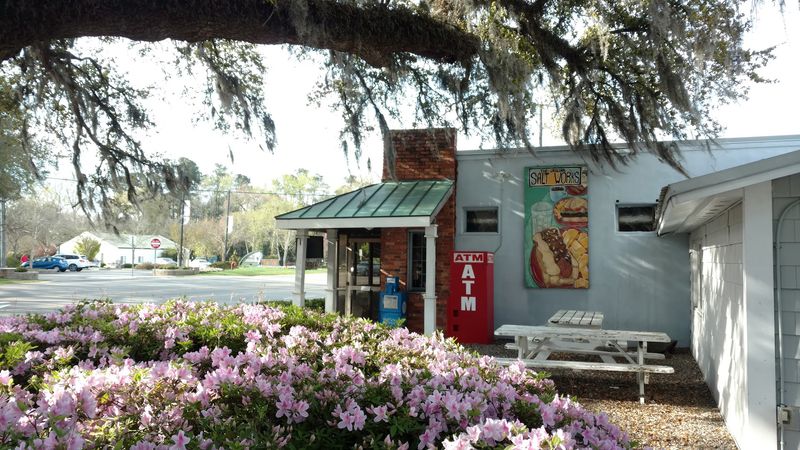
Outside, one tree has been watching the restaurant far longer than most customers have been eating there.
Picnic tables sit beneath a century-old live oak during warmer months, extending the available seating beyond the tight dining room.
The canopy provides valuable shade along one of Wilmington’s busy roads and gives waiting diners somewhere to settle before a table opens.
The outdoor area also changes the mood of a crowded morning. Instead of standing shoulder to shoulder near the entrance, you can sit beneath the branches, finish coffee, or let children move around before breakfast arrives.
That tree has become part of the restaurant’s identity, just like the soda-fountain building, cash-only routine, and menu that still gives fried bologna and lima bean soup permanent space.
The Original Salt Works does not need a large dining room to create a loyal crowd. It uses a short schedule, a focused menu, quick service, and enough history to make a simple meal feel connected to Wilmington rather than interchangeable with another breakfast stop.
Arrive early, carry cash, and look at the lunch menu before leaving.