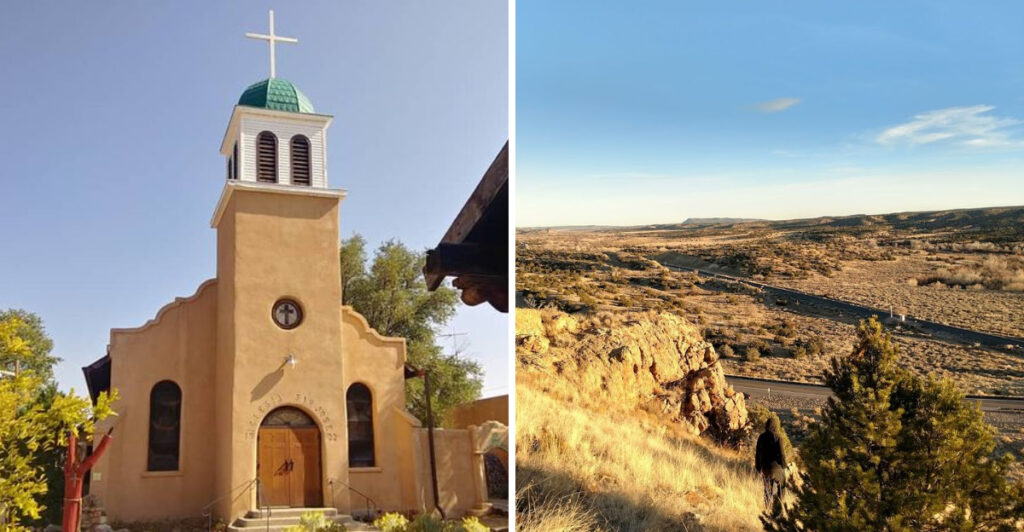
Some towns ask you to slow down before you even park. This small New Mexico village does it with dirt roads, old storefronts, and that hard desert light that makes every shadow look dramatic.
One minute you are following the Turquoise Trail, the next you are staring at weathered buildings that look like they have been waiting for a Western scene to begin. The surprise is that this is not a set.
It is a real village with mining stories in its walls, hand-painted signs along the lanes, and a silence that feels almost impossible to find now. You can wander without a schedule here.
Peek at adobe corners. Read old plaques.
Watch the desert hills change color around you. It feels less like a quick stop and more like the kind of place that makes you forget why you were rushing in the first place.
That pull is hard to shake.
Old-Time Streets With Old West Character
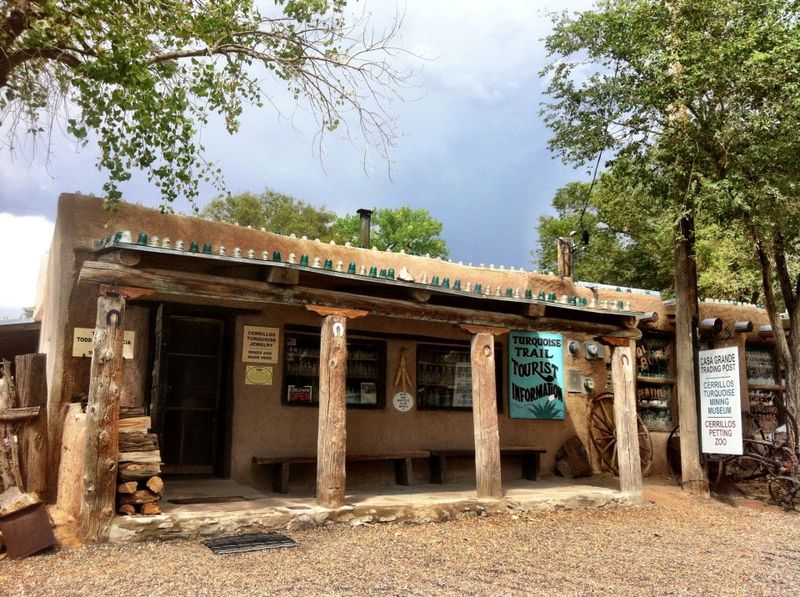
A step onto Front Street feels like crossing a threshold into a different century.
The washboard dirt road stretches ahead, flanked by weathered structures that look ready for a film crew to arrive at any moment, and honestly, that feeling makes perfect sense once the history comes into view.
This area has served as a backdrop for more than a dozen films, including “Young Guns,” while “The Cowboys” was filmed just outside town, showing the visual power of this quiet place.
The buildings lean just slightly, the wood is sun-bleached to a silvery gray, and the whole scene carries a dusty authenticity that no movie studio could manufacture on a budget.
Walking here, it is hard not to pause over the details, a rusted hinge, a hand-painted sign, a porch post worn smooth by decades of leaning hands.
What stands out most is the silence between those details, the kind of quiet that makes you slow your pace without anyone asking you to.
This small New Mexico village is Cerrillos, along the Turquoise Trail in the heart of Santa Fe County.
Adobe Corners That Feel Frozen In Time
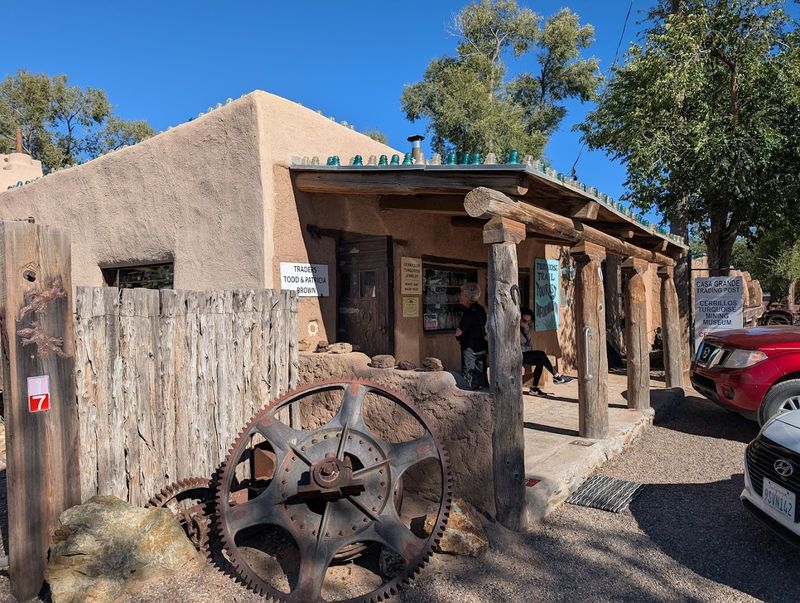
Adobe has a way of absorbing history into its walls, and nowhere proved that more clearly to me than in Cerrillos.
New Mexico holds the distinction of being the largest producer and consumer of adobe bricks in the United States, and standing in this village, you can absolutely feel why that tradition runs so deep.
Native Americans, Spanish settlers, and Anglo-Americans all shaped this architectural style over generations, layering culture into every mud brick pressed and dried under the desert sun.
The Casa Grande Trading Post alone is housed within a 28-room adobe building that commands its corner with quiet authority.
After a fire swept through in 1890, Doc Richard’s Drug Store was rebuilt in adobe rather than replaced with something newer, which says a great deal about the commitment here to keeping things rooted.
I ran my hand along one exterior wall and felt the cool, slightly gritty texture that only real adobe carries.
These corners do not just look frozen in time, they feel structurally committed to staying exactly where history left them.
Quiet Storefronts With Desert Soul
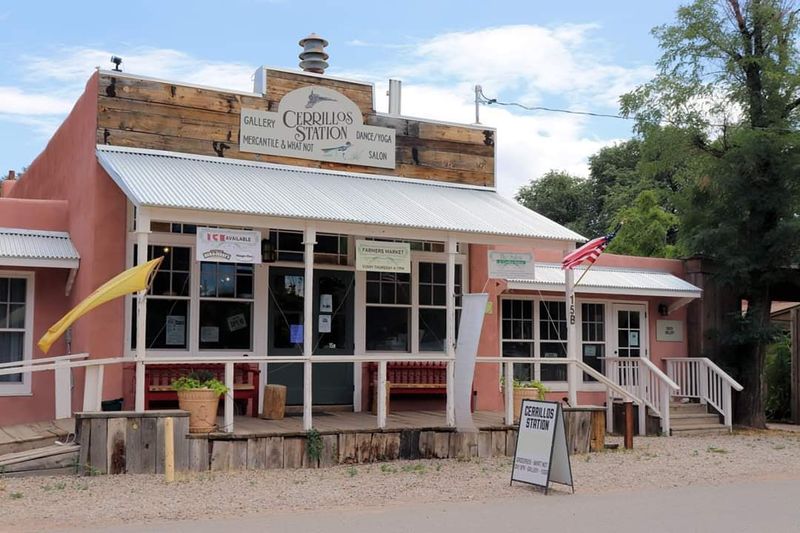
A storefront that doubles as a fine arts gallery and movement studio is not something you expect to find on a dusty desert lane, yet that is exactly what Cerrillos Station offers.
The town’s handful of operating businesses carry personalities as distinct as their weathered facades, from the Casa Grande Trading Post to the nearby Seftel Gallery, each one feels like a character rather than just a commercial space.
What I noticed immediately was the absence of chain logos, plastic signage, and the general noise of modern retail.
Instead, hand-lettered signs and screen-door frames do the talking, and they do it quietly, which fits the mood perfectly.
The dry desert silence that settles between these storefronts is almost tangible, the kind that makes every creaking floorboard sound significant.
Film crews and photographers have been drawn here for years precisely because this atmosphere cannot be faked or replicated on a set.
Poking my head into each doorway felt less like shopping and more like reading chapters of a story that this small, sun-warmed town has been telling for well over a century.
Sunlit Roads Beneath Wide New Mexico Skies
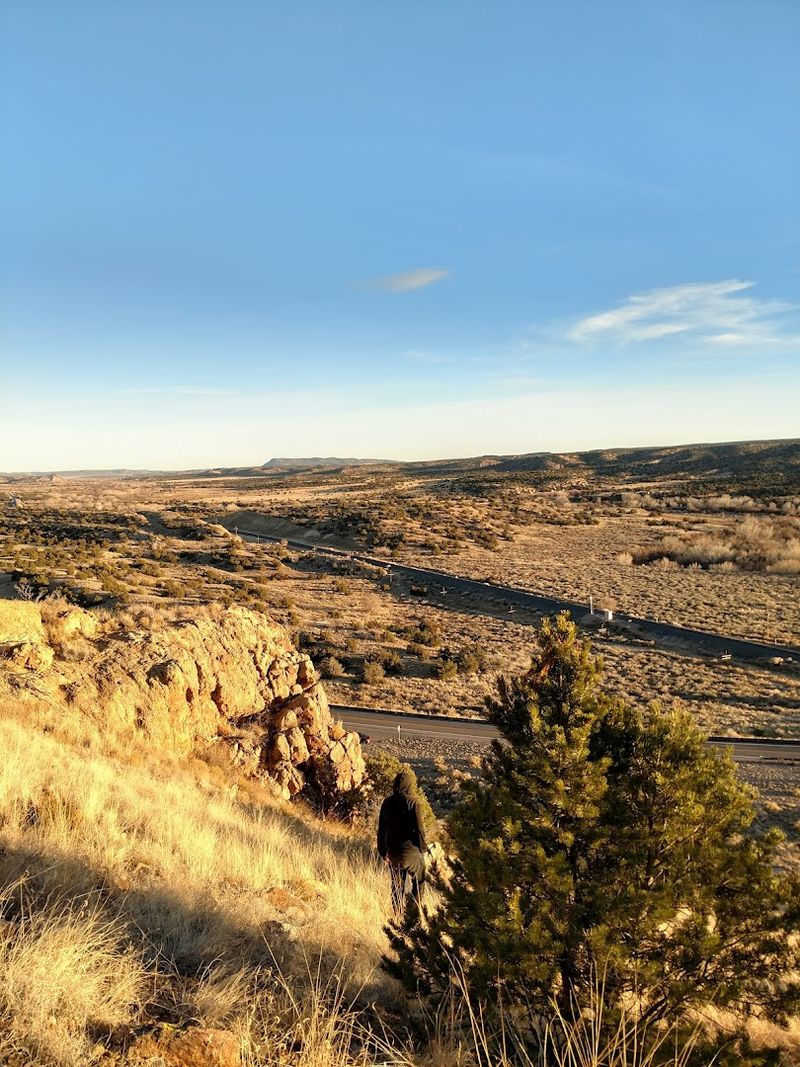
Few drives I have taken anywhere have matched the particular hypnotic quality of the Turquoise Trail National Scenic Byway, also known as New Mexico Highway 14.
The road winds south from Santa Fe through piñon-dotted hills and volcanic outcrops, and Cerrillos sits along this route like a well-placed pause in an otherwise breathless landscape.
On the day I passed through, the sky was that specific shade of deep blue that the high desert seems to reserve for its best afternoons.
Cerrillos Hills State Park, just outside the village, opens up panoramic views of the Sandia, Ortiz, Jemez, and Sangre de Cristo mountain ranges, all visible from a single vantage point if you pick the right trail.
The contrast between the red and rust-colored earth below and the vivid sky above creates a visual drama that requires no filter or enhancement.
I pulled over more than once just to stand in the road and absorb what was in front of me.
Roads like this one remind you that the journey itself can outshine any single destination waiting at the end of it.
Rustic Buildings With Frontier Charm
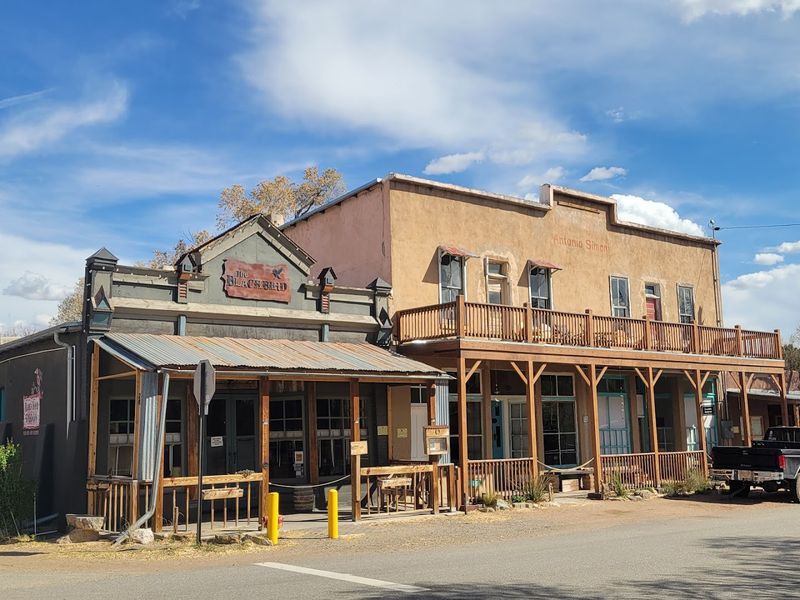
The Simoni Building went up in 1892 as a hotel, then reinvented itself as a mercantile store and later another frontier business, which is about as flexible as old buildings get.
That kind of adaptive history is written all over the structures lining the old streets here, each one carrying the scars and character of a town that boomed hard and then settled into a slower, more deliberate existence.
Cerrillos thrived as a mining hub during the mid-to-late 1800s, and the buildings left behind from that era have not been scrubbed clean or over-restored for tourist appeal.
What you see is largely what the original residents built and used, which gives the whole village a texture that feels earned rather than curated.
I kept noticing small architectural details, deep-set windows, thick walls, wide covered porches, that made practical sense in a hot desert climate long before air conditioning was a consideration.
The frontier charm here is not a theme applied after the fact.
It grew organically from the land, the materials at hand, and the practical needs of people carving out a life in a demanding landscape.
Historic Details Around Every Turn
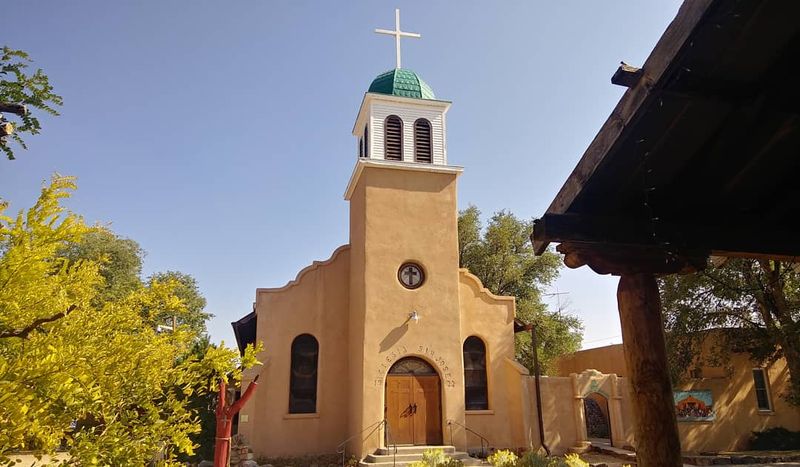
The Cerrillos Historical Society installed 19 plaques throughout the village, and reading each one turned my casual stroll into something closer to a curated history tour.
Every plaque anchors a specific building or site to a real moment in time, giving the surrounding structures a context that makes them feel even more significant than they already look.
The Cerrillos Mining District is listed on the New Mexico State Register of Cultural Properties, a recognition that underscores just how layered this small place really is.
Inside Cerrillos Hills State Park, interpretive trail markers walk visitors through hundreds of years of mining activity, including evidence of ancient excavations, low stone walls, ruins, and petroglyphs left by people who worked this land as far back as 900 CE.
The Cerrillos Turquoise Mining Museum adds another dimension, housing hundreds of artifacts from the American Old West and the local mining district in a space that punches well above its square footage.
I found myself reading every plaque twice, not because the language was dense, but because the stories kept pulling me back for a second look.
Dusty Lanes Made For Slow Wandering
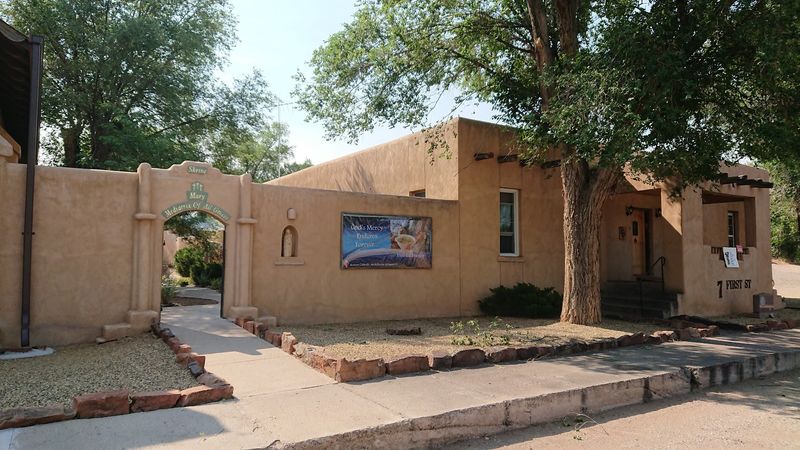
Even the main street of Cerrillos is unpaved, which sets the pace before you even take your first step.
There is a particular rhythm that dirt roads impose on visitors, a slower, more deliberate stride that gravel and concrete never quite manage to demand.
The lanes here are lined with territorial-style adobes and shaded in spots by old trees whose roots have had decades to settle deep into the desert soil.
I found myself stopping constantly, not because I was tired, but because each short stretch offered something new worth examining up close.
A weathered door painted a faded turquoise, a hand-stacked stone wall, a window frame that had clearly been repaired more than once with whatever material was available at the time.
The town does not rush you, and that unhurried quality feels almost radical in an era when most travel experiences are optimized for efficiency.
Cerrillos has remained deeply connected to its mining past, and the dusty lanes carry that connection in a way that no museum exhibit could fully replicate on its own.
Desert Views Framing A Bygone Era
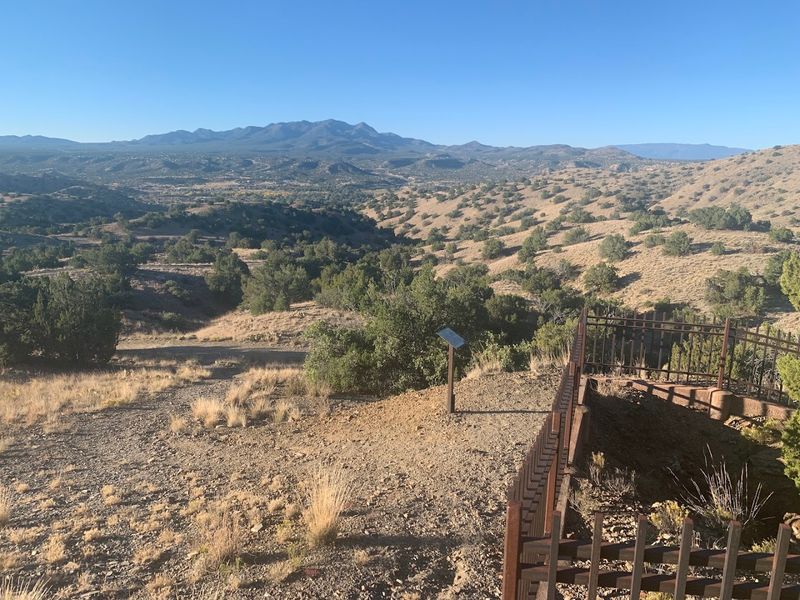
Cerrillos sits nestled in the hills just south of Santa Fe, and the landscape surrounding it does serious work in setting the mood before you even reach the village itself.
Cerrillos Hills State Park opens onto sweeping panoramic views of the Galisteo Basin, a wide, open expanse that stretches in every direction with the kind of grandeur that makes you feel appropriately small.
The Cerrillos Hills themselves display a dusty purple hue along the horizon that I have not encountered anywhere else, a color that seems to belong exclusively to this corner of the Southwest.
A few miles north, the Garden of the Gods Overlook presents giant russet boulders rising from piñon foothills in a scene that stops conversation cold.
The rugged countryside visible from the Turquoise Trail ties all of these views together into one continuous, unhurried visual experience.
This landscape carries over a thousand years of mining history in its ridgelines and arroyos, and knowing that adds weight to every sweeping view.
Standing at the edge of those hills, I felt less like a tourist and more like a witness to something that has been quietly unfolding for centuries.