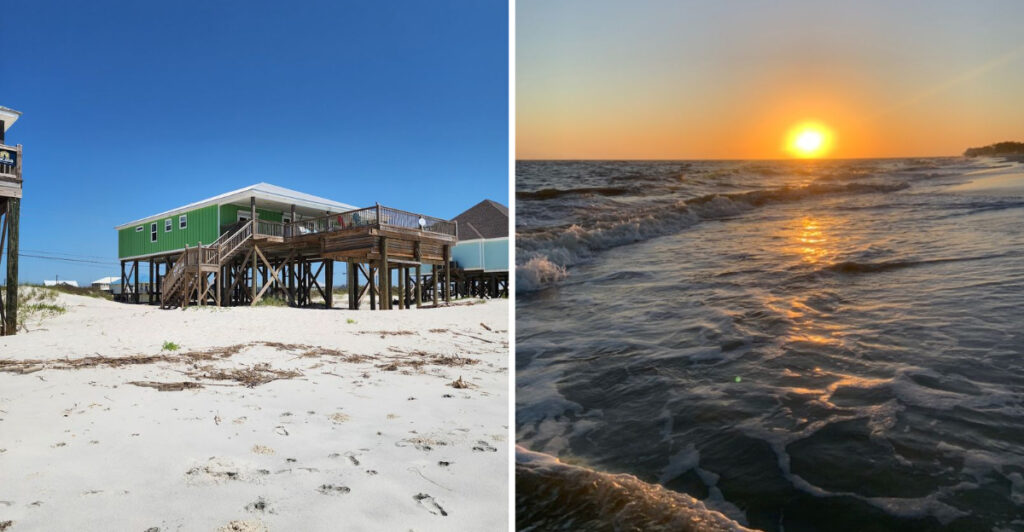
One bridge separates Alabama’s coastal rush from a beach town that refuses to shout.
This 14-mile barrier island keeps the skyline low and the Gulf firmly in charge. Weathered oaks lean over quiet streets. Birds sweep across marshes.
Sugar-white sand appears without an arcade announcing it from three blocks away.
You can explore an old fort, follow coastal trails, or reach the beach before the day turns into a military operation. No passport. No resort wristband.
No elevator ride between you and the water.
The scenery is not pretending to be tropical. It has its own appeal, shaped by dunes, maritime forest, and plenty of breathing room.
Alabama has busier coastal towns, but this one does not compete for attention. It simply waits beyond the bridge and makes you wonder why everyone else kept driving.
The Bridge Lets The Mainland Keep The Hurry
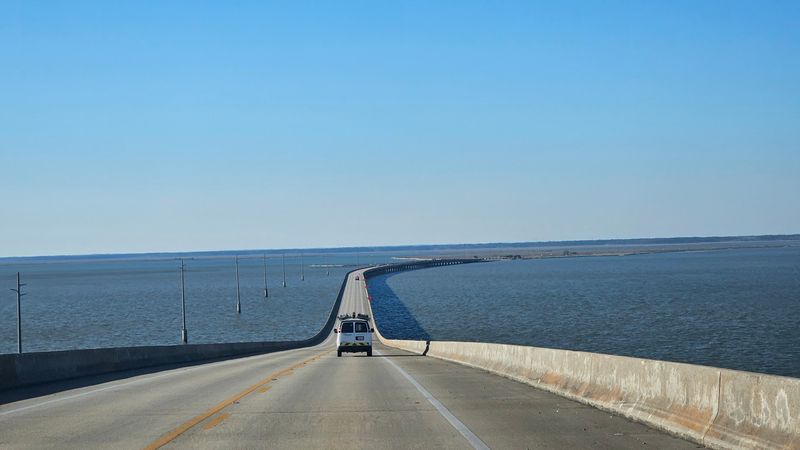
The first attraction has no ticket booth. As you cross the long bridge from the mainland, Mobile Bay opens on both sides, and the horizon begins doing more work than the roadside signs.
There are no ceremonial gates. Traffic thins, rooftops stay low, and the road begins pointing toward water rather than another commercial strip.
Dauphin Island is connected to the mainland by a bridge, so you can arrive without coordinating a ferry.
That convenience matters, especially when the island itself operates at a slower pace. You get the sense of leaving everyday routines behind without turning the journey into a full travel day.
The bridge also introduces the geography shaping the island. Mobile Bay lies to the east and north, while the Gulf stretches south.
Could the crossing cure every stressful thought in your head? Probably not. It can, however, make several of them miss their exit.
White Sand Gives Alabama A Quieter Coastline
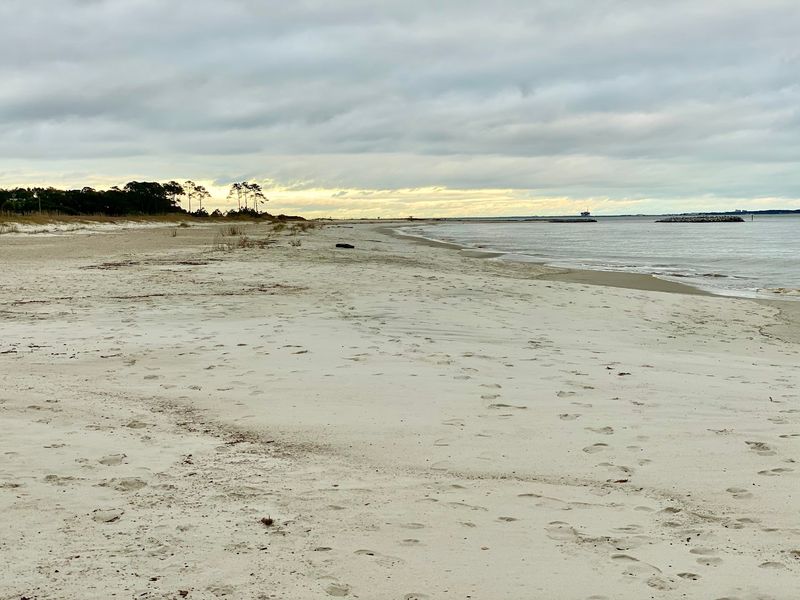
Your beach towel will not need to negotiate with a forest of umbrellas. Dauphin Island’s public beaches offer pale sand, Gulf views, and a shoreline experience that generally feels lower-key than the state’s biggest resort areas.
The island is about 14 miles long, but that does not mean every mile is one continuous public beach. Access, habitat, private property, and shifting barrier-island conditions all shape where you can reach the water.
Town-managed options include East End Beach, Bienville Beach, and West End Beach.
Public beach parking now uses ParkMobile rather than relying on visitors to buy a seasonal day pass at Town Hall. One daily payment allows same-day parking at the town-owned beaches covered by the system, while annual passes remain available for purchase.
Town Hall is located at 1011 Bienville Boulevard, Dauphin Island, Alabama 36528. That address is useful for annual parking passes and island information, but most day visitors can handle beach parking electronically.
There are no lifeguards at West End Beach, and swimming is at your own risk. Rip currents, changing weather, and Gulf conditions deserve the same respect here as anywhere else along the coast.
The beach may look soft enough to erase every rule. The Gulf disagrees, so keep your common sense close.
Beach Houses Keep The Skyline Close To Earth
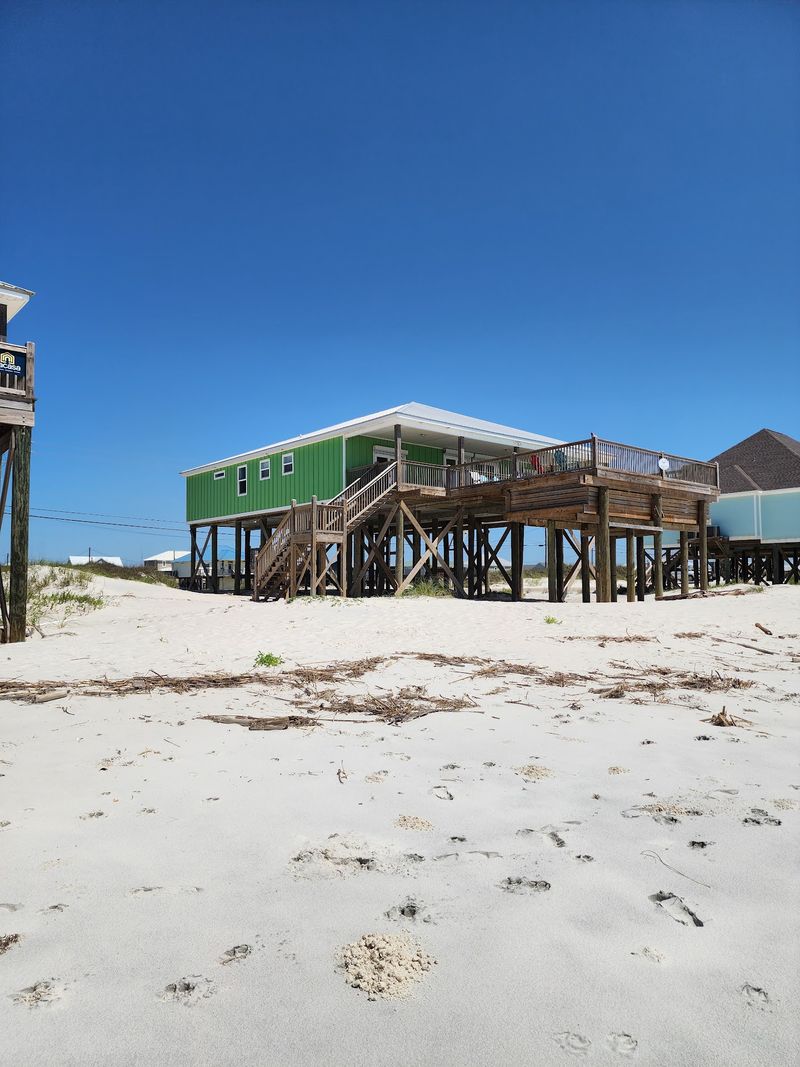
Here is a coastal surprise: you can still see the sky. Dauphin Island has lodging, rentals, condominiums, and private homes, but its overall profile remains much lower than the tower-lined skylines found in busier Gulf destinations.
Elevated beach houses shape much of the residential landscape, especially toward the western part of the island. Their stilts are not merely a style choice.
Barrier islands face storm surge, flooding, erosion, and shifting sand, so coastal construction has to acknowledge that the water occasionally rewrites the neighborhood plan.
The homes vary in color, age, and design, which helps the island look like an actual community rather than a single resort complex repeated block after block.
Some face the Gulf, others overlook Mississippi Sound, and many sit along streets where bicycles and golf carts share the slow pace.
Low-rise does not mean untouched. Dauphin Island has homes, businesses, rentals, and year-round residents. Its charm comes from the scale and the nature still visible between them.
Would a taller building improve the sunset? The island seems happy to let the sun answer that one.
The West End Opens The View And Changes The Rules
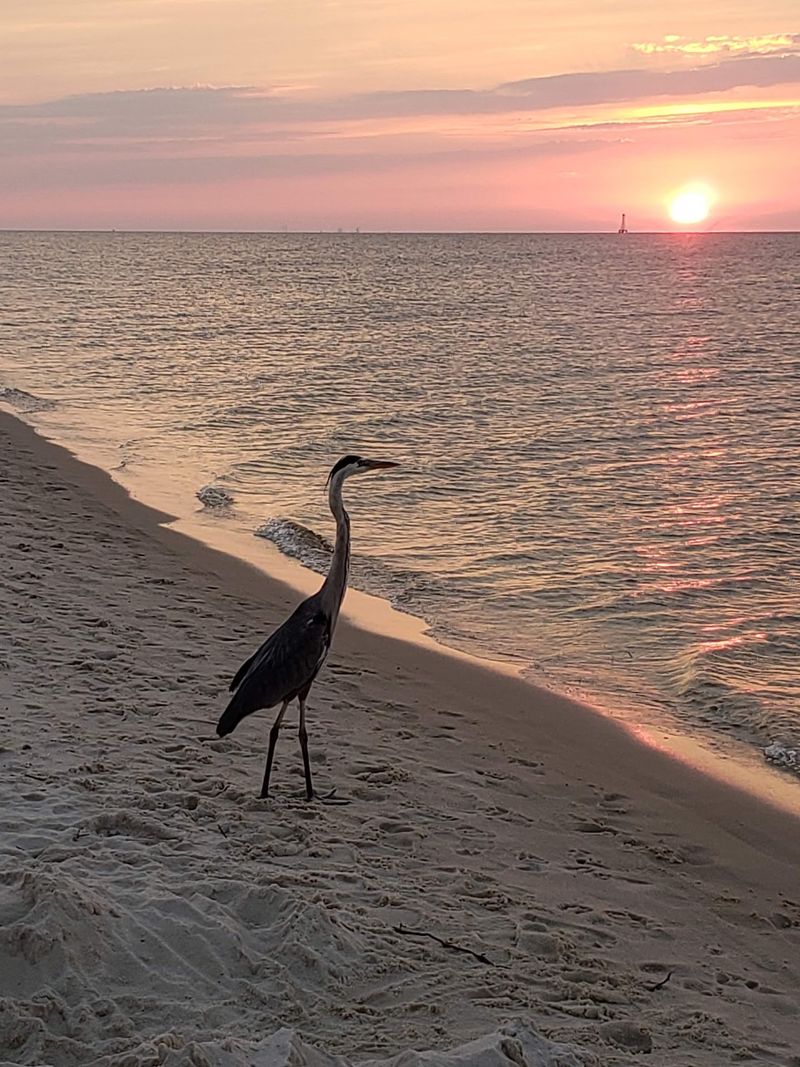
The farther west you travel, the more the road begins to look outnumbered. Sand, low vegetation, broad water views, and open sky take over the scene near the island’s western tip.
West End Beach is a town-managed public beach at 3000 Bienville Boulevard. It has restrooms, while food and chair-rental vendors may operate during peak season. The surrounding dunes and shoreline still keep the setting visually open.
Several rules protect both visitors and habitat. Pets are not allowed at West End Beach because of critical bird-nesting areas. Glass, grills, fires, and overnight camping are also prohibited, and there are no lifeguards on duty.
Parking areas and operating hours change by season, so checking current town information before heading west is smart. Side-street access is restricted in several locations, and some streets do not provide legal routes to the beach at all.
Sunset is the obvious reward, but late-day light also brings long shadows across the sand and water. Bring what you need, use marked access points, and let the landscape handle the special effects.
The West End gives you room to breathe, but it does not give your car permission to invent a parking space.
Migrating Birds Turn The Island Into A Rest Stop

Some visitors arrive with luggage. Others arrive with wings and no intention of checking in. Dauphin Island sits along a major migration route and provides crucial stopover habitat for birds crossing the Gulf of Mexico.
The Audubon Bird Sanctuary on the east end protects maritime forest, swamp, dunes, lake habitat, and Gulf shoreline.
Town information describes a multi-mile trail system, a half-mile interpretive loop, and a 1,000-foot accessible boardwalk leading toward a wharf overlooking Galliard Lake.
Spring migration can be especially dramatic after weather forces exhausted northbound birds to land and rest. Warblers, tanagers, vireos, and other species may appear in numbers that make even casual observers start whispering and pointing like seasoned birders.
Fall brings another movement south, while resident and coastal species give the sanctuary value throughout the year. Egrets and herons may gather near the lake, and shorebirds use beach and marsh habitats across the island.
Stay on the trails, give wildlife space, and keep dogs leashed where pets are permitted. Habitat is the reason the birds stop, and protecting it matters far more than getting one step closer for a photo.
You may enter without knowing a single bird call. By the time one tiny warbler steals the whole afternoon, your phone will be full of identification searches.
Fort Gaines Lets The Bay Tell Its Own History
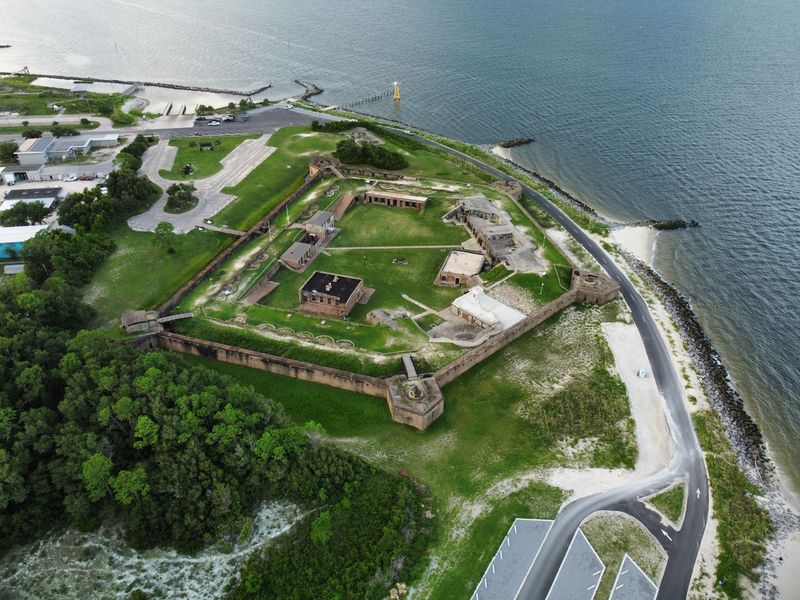
The eastern tip of the island comes with three million bricks and very little subtlety. Fort Gaines has guarded the entrance to Mobile Bay for more than 150 years, and its walls place you directly inside the geography of coastal defense.
Construction began in the early 19th century, and the fort is best known for its role in the 1864 Battle of Mobile Bay. Fort Morgan stands across the channel, allowing the two forts to protect the main entrance between the Gulf and the bay.
Inside Fort Gaines, you can explore brick passageways, cannon positions, courtyards, historic rooms, exhibits, and views toward the water. The surviving structures help explain how soldiers lived and how the fort changed as military technology evolved.
The fort is generally open daily from 9 a.m. to 5 p.m., with closures on several major holidays. Admission is charged, and current hours should be confirmed before visiting.
History here is not confined to a display case. Ships still move across the bay, the ferry crosses nearby, and the same channel that shaped the battle remains visible from the walls.
Read every plaque if that is your style. Or stand near a cannon and let the bay explain why someone thought three million bricks sounded reasonable.
Dauphin Island Makes A Slow Day Easy To Fill
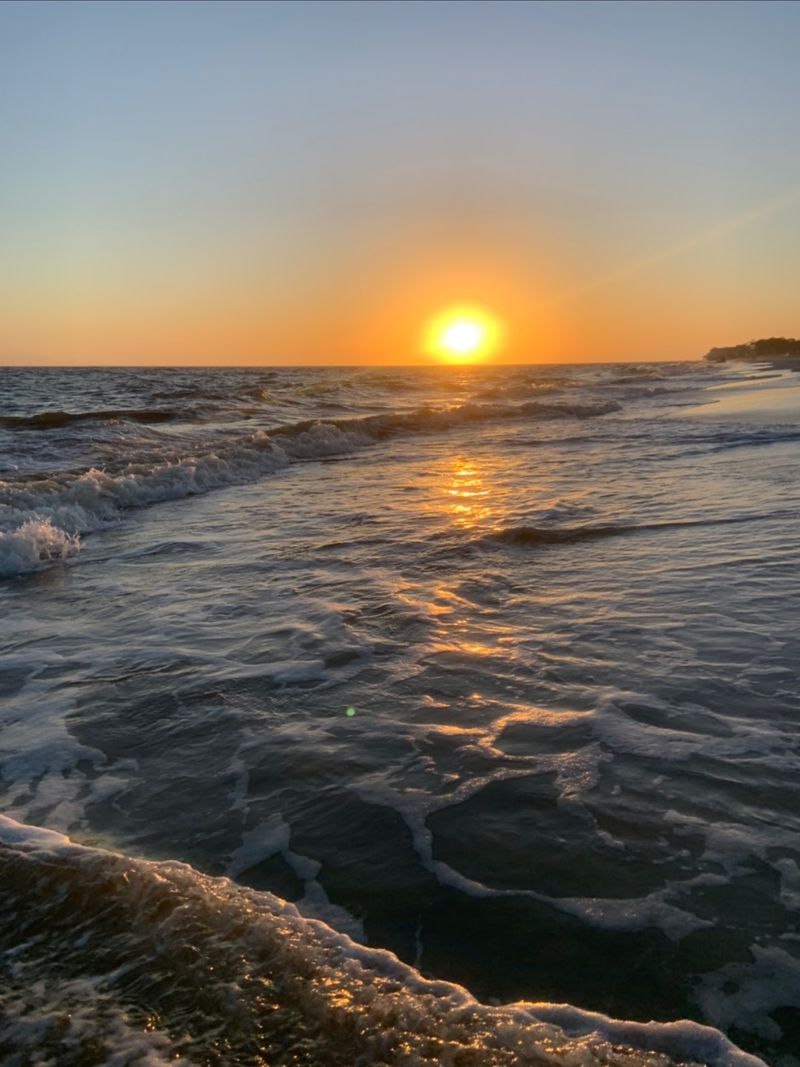
The island does not demand an itinerary, but it quietly builds one for you. A beach morning can turn into a sanctuary walk, a fort visit, a seafood lunch, and a sunset without the day ever feeling packed.
The Mobile Bay Ferry adds another route into the experience. It carries vehicles and passengers between Dauphin Island and Fort Morgan, operating year-round with daily service when weather and maintenance allow.
Summer often brings more frequent departures, while schedules change across the year.
The ferry gives you a scenic crossing to Fort Morgan. Check the schedule because weather or maintenance can interrupt service.
Around town, locally operated restaurants, rentals, small businesses, parks, and working waterfront areas keep the island from becoming a beach backdrop with nothing behind it.
About 1,300 permanent residents live here, and their community continues long after vacation traffic thins.
Come for the pale sand, but notice the marshes. Visit the fort, but leave time for the birds. Watch the sunset, but do not rush across the bridge the second it disappears.
Dauphin Island is not hiding from travelers. It is simply waiting for the ones who know that the prettiest places rarely need to shout.