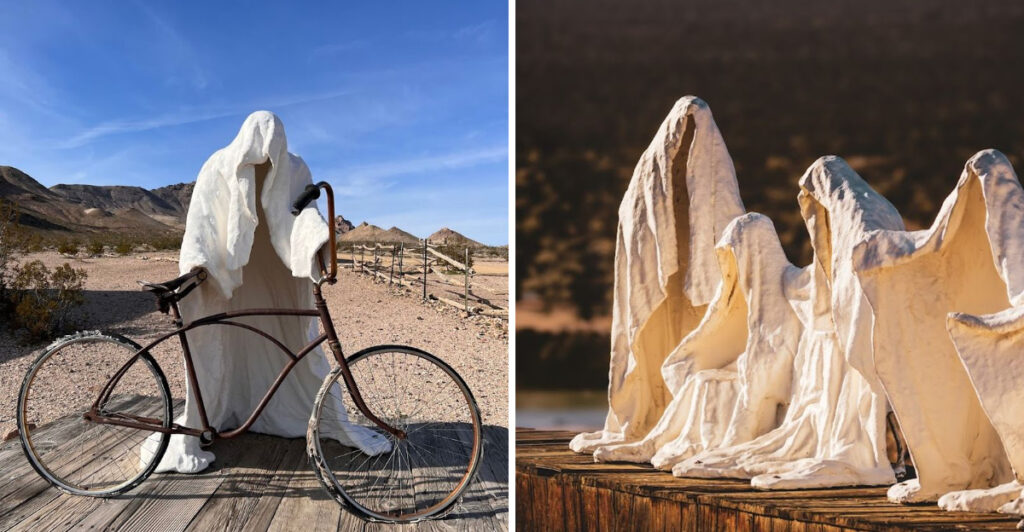
Who puts a recreation of the Last Supper in the middle of the Nevada desert with no fence, no ticket, and no explanation? One artist did in 1984, and others just kept arriving with their strange ideas.
Steel prospectors, chrome flowers built from car parts, a cloaked figure on a bicycle, until the whole collection became something the art world genuinely had no category for.
Stunning, surreal, and completely free to visit and open around the clock. They sit in the open desert and somehow feel all the more powerful for it, stranger and more memorable than anything inside four walls could be.
Nevada rewards the curious traveler, and this particular place tends to leave a real impression long after the drive home.
The Backstory Behind The Desert Art Park
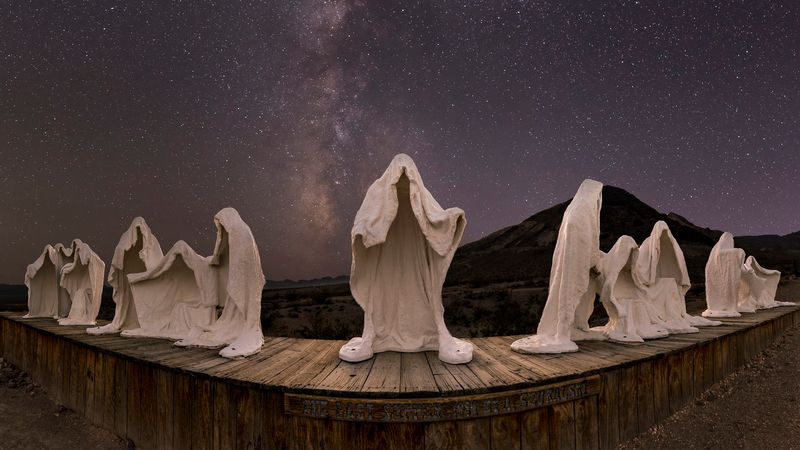
Polish-Belgian artist Albert Szukalski drove through the Mojave Desert in 1984 and saw something most people miss.
He saw a canvas. Instead of passing through, he stopped and created “The Last Supper,” a haunting sculptural take on Leonardo da Vinci’s famous painting.
His ghostly figures, made from plaster-soaked burlap draped over live models, became the founding piece of what would grow into a full outdoor museum. Other Belgian and American artists followed his lead over the following years.
Each one brought a new sculpture that pushed the limits of what desert art could be.
After Szukalski passed away, the site was formally organized as a non-profit in 2000. Its mission was clear: preserve existing works, encourage new ones, and keep the space free for all visitors.
Located at 1 Golden St, Beatty, NV 89003, the museum sits at the northern edge of the Amargosa Valley, roughly 120 miles northwest of Las Vegas.
The Last Supper Sculpture That Started It All
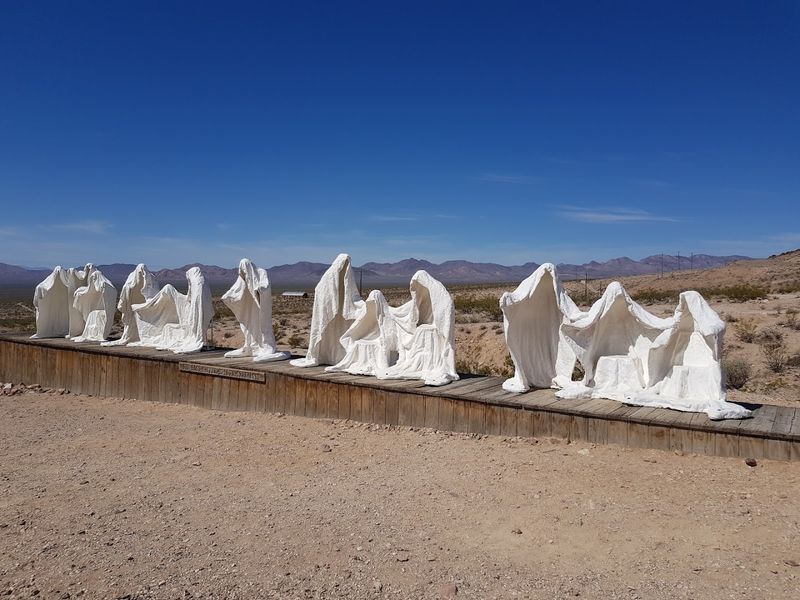
Few outdoor artworks carry the kind of quiet power that this piece does. “The Last Supper” features life-sized ghostly figures arranged in a row across the open desert floor. They are draped in pale, hardened burlap, making them look like spirits frozen mid-conversation.
Szukalski created them by covering live human models with plaster-soaked fabric and letting it harden. The result is eerie and beautiful at the same time.
Viewed straight-on from the front, the composition mirrors da Vinci’s iconic painting closely enough to feel intentional and deeply familiar.
The figures glow differently depending on the time of day. At golden hour, they take on a warm, almost sacred tone.
Under a full moon, they become something stranger and more unsettling. Photographers often plan visits around the light specifically because of this piece.
It remains the most recognized work at the museum and the reason many visitors make the trip to Nevada in the first place.
Icara And The Myth That Landed In The Desert
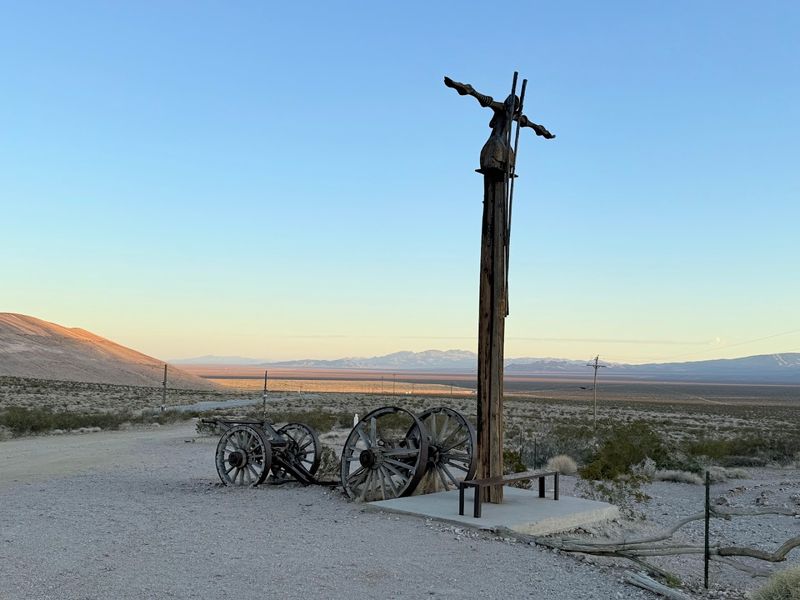
Greek mythology found a home in the Nevada desert thanks to artist Dre Peeters. “Icara” is a hand-carved winged female figure, a reimagining of the Icarus myth with a feminine twist. Peeters created the piece around 1992, and it has held its ground in the desert ever since.
The original myth follows a boy who flies too close to the sun on wax wings and falls into the sea. Peters flipped the gender and gave the figure a sense of stillness rather than disaster.
The result feels meditative rather than tragic.
The carving itself shows real craftsmanship. Details in the wings and figure reward close inspection.
Most visitors spend more time with this piece than they expect to because there is always something new to notice.
Surrounded by open sky and cracked desert earth, “Icara” feels perfectly placed. The wide-open Nevada landscape amplifies the sense of flight and freedom the sculpture suggests, turning a simple myth into something that feels genuinely timeless.
A Steel Prospector Honors Local Mining History
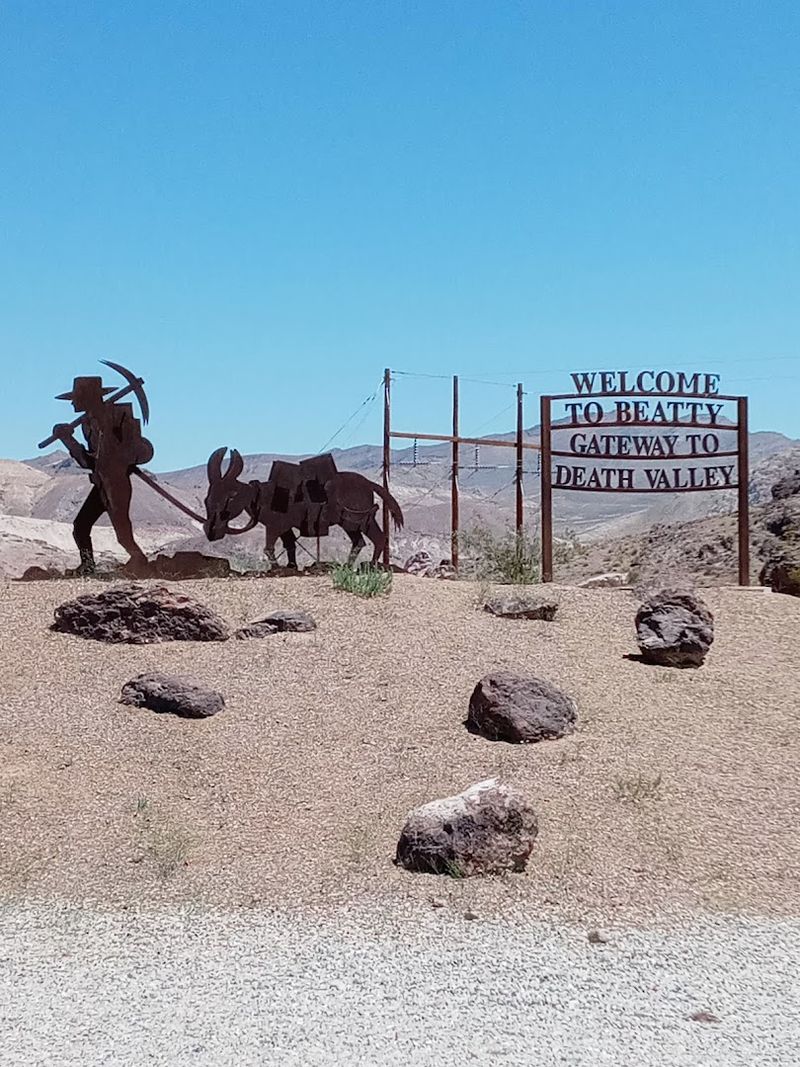
Fred Bervoets created “Tribute to Shorty Harris” in 1994, and it stands at a commanding 24 feet tall. The steel sculpture depicts a prospector figure alongside an unlikely companion, a penguin.
The pairing sounds odd until the full story clicks into place.
Shorty Harris was a real prospector who played a key role in the discovery of gold near Rhyolite in the early 1900s. The town boomed fast and faded just as quickly.
Bervoets chose to honor Harris not with a realistic portrait but with an abstract steel monument that captures spirit over likeness.
The penguin companion adds a layer of humor and mystery. No one agrees entirely on what it means, which is part of what makes the piece work.
Art that invites questions tends to stick with people longer than art that explains itself.
Standing near the ruins of old Rhyolite, the sculpture creates a direct conversation between the mining past and the artistic present. It is one of the more emotionally layered pieces on the grounds.
Ghost Rider And Desert Flower Add To The Strangeness
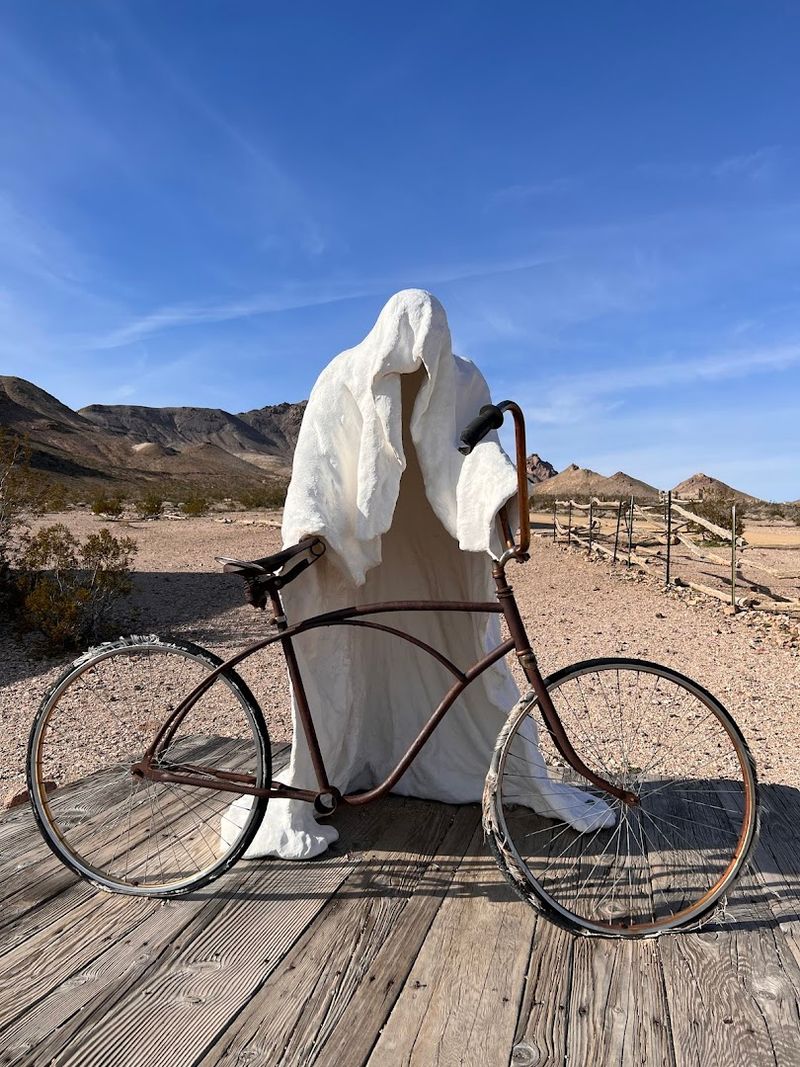
Albert Szukalski did not stop at “The Last Supper.” He also created two other standout works that show the full range of his imagination. “Ghost Rider” is a cloaked figure mounted on a bicycle, draped in the same eerie hardened fabric as the supper figures. It looks like something out of a fever dream, and it fits the landscape perfectly.
“Desert Flower” takes a completely different approach. Szukalski assembled chrome car parts into a sculptural bloom that catches the desert sun and scatters light in unexpected directions.
The contrast between industrial material and organic form is striking and a little funny.
Together, these two pieces show that Szukalski had a genuine range. He could work in haunting minimalism or playful assemblage depending on what the idea called for.
Both works have aged well in the harsh Nevada climate, which says something about the quality of their construction.
Visitors who take time to explore beyond “The Last Supper” are consistently rewarded. These quieter pieces often leave the strongest impression.
Newer Works Keep The Collection Growing
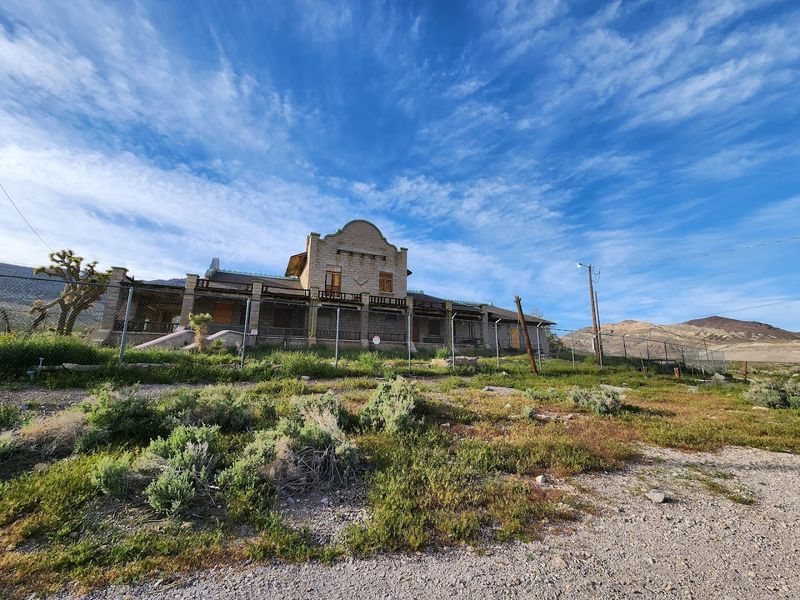
The Goldwell Open Air Museum keeps evolving. Recent additions prove the site is not frozen in the past. “Portone” by Amanda Phingbodhipakkiya arrived in 2021, featuring nine steel frames arranged across the desert ground.
The piece plays with ideas of passage, threshold, and perspective in a way that feels very current.
“Keep Going” by Michelle Graves followed in 2023. The shadow-casting sculpture uses light and form to shift its appearance throughout the day.
Visitors who arrive at different hours see something genuinely different each time.
The museum celebrated its 40th anniversary in October 2024, a milestone that brought fresh attention to the collection. Winning “Best Sculpture Park” in the USA Today 10Best Sculpture Park 2026 Competition added more national recognition to a place that had long been a word-of-mouth favorite.
The ongoing additions signal that this is a living museum, not a preserved relic. Artists continue to find the Nevada desert an inspiring and challenging place to work.
New pieces can appear as the residency program draws fresh talent to the site.
The Red Barn Art Center And Residency Program
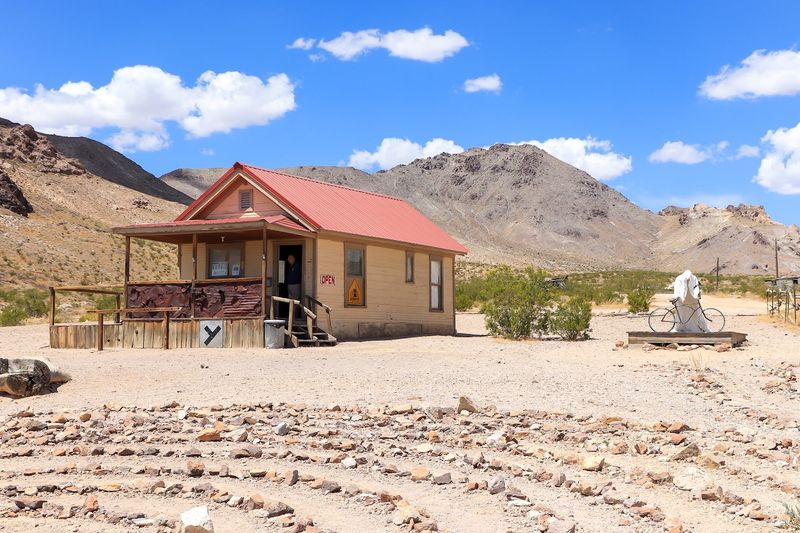
Behind the sculptures, there is a working creative hub. The Red Barn Art Center sits on the museum grounds and serves as both a workspace and a residency facility.
Artists apply to spend time here, living and working in the desert environment that inspired the original collection.
The program is intentionally challenging. The Mojave is hot, remote, and unforgiving.
Artists who come here are not looking for comfort. They are looking for the kind of clarity that only real isolation can produce.
Many have said the landscape changes how they work in ways they did not expect.
The residency has drawn creators from across the country and beyond. Some have produced works that stayed on the grounds permanently.
Others take their desert-influenced ideas back to studios elsewhere.
The center also supports the preservation of existing sculptures, which require maintenance in the harsh climate. Donations help fund both the upkeep and the residency program.
Visitors can often pick up free pamphlets inside that explain the history and meaning behind each piece on the grounds.
Photography Heaven In An Unlikely Location
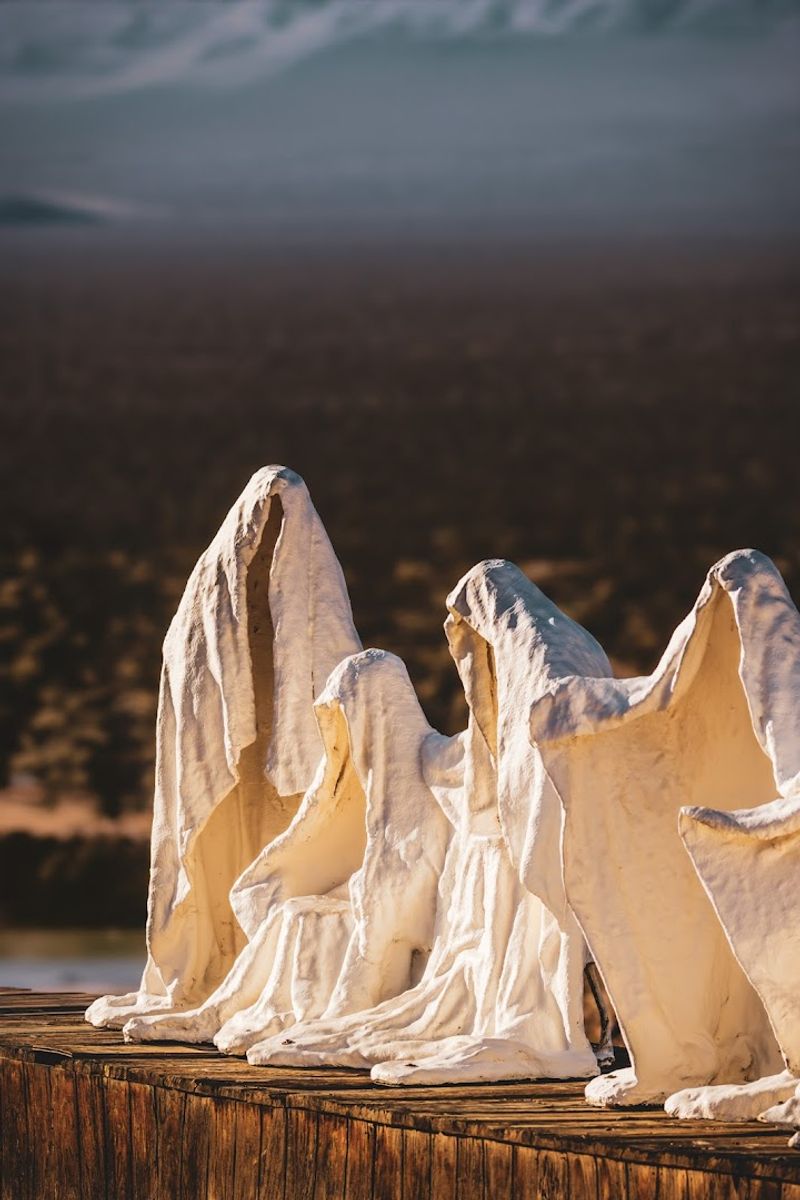
Serious photographers have been making pilgrimages to this site for years. The combination of surreal sculpture and raw desert scenery creates a backdrop that almost no studio could replicate.
Every piece interacts with natural light differently, which means the same visit can produce wildly different results depending on the hour.
Sunrise and golden hour are popular choices for a reason. The low-angle light catches the textures of the ghostly figures and throws long shadows across the cracked desert floor.
The pink cinder block figure of Lady Desert glows in a way that feels almost otherworldly at dusk.
The site is open around the clock, which means night photography is fully possible. Under a clear Nevada sky with minimal light pollution, the sculptures take on a completely different character.
Star trails and moonlit figures are a combination that rewards patience.
Photos taken for personal use are welcome. Commercial use requires permission from the museum.
Free pamphlets at the visitor area help photographers understand each piece before framing their shots.
Planning Your Visit To This Desert Oddity
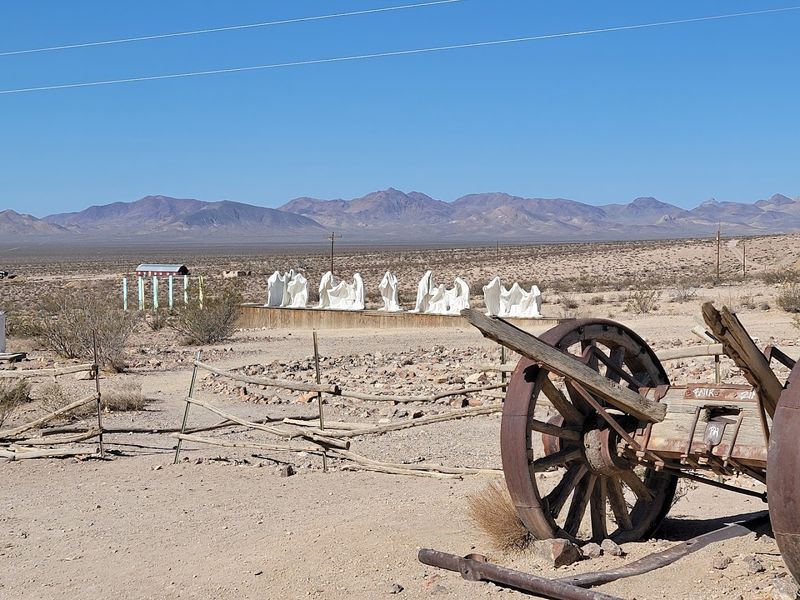
Getting here is part of the adventure. The museum sits near the ghost town of Rhyolite, about four miles west of Beatty, Nevada.
The road into the site is unpaved and can be rough. A standard vehicle handles it fine in dry conditions, but it is worth being prepared for a bumpy approach.
Admission is completely free, which makes it one of the most accessible art experiences in the American Southwest. A donation box sits on the grounds, and contributions go directly toward preservation and the residency program.
The site genuinely depends on visitor generosity to keep the sculptures maintained.
Beatty itself offers food and basic amenities for those passing through. The museum is a natural add-on for anyone visiting Death Valley National Park, which sits nearby.
Las Vegas is about 120 miles to the southeast, making this a feasible day trip or road trip stop.
Comfortable shoes, sun protection, and water are essential. The Nevada desert does not offer shade, and the ground between sculptures can be uneven and dusty.