Driving across the flat white salt desert of Utah, the last thing anyone expects is an 87-foot sculpture covered in colorful minerals rising out of nowhere. And yet, there it is.
This is one of those roadside stops that earns every second of the detour. Visitors pull over for a quick photo and end up standing there far longer than planned, just trying to take it all in.
Salt, sky, and something that has absolutely no business existing in the middle of a desert highway. The contrast alone is worth the stop.
Utah has no shortage of jaw-dropping scenery, but this one hits differently because nobody sees it coming. Pull over, tilt your head, and enjoy one of the most unexpected sights on the entire interstate.
The Story Behind It
Karl Momen did not plan to change the Utah desert forever. He was simply driving across the Bonneville Salt Flats when a vision stopped him cold.
The Swedish artist saw a tree rising from the barren ground. That image stayed with him until he did something about it.
Between 1982 and 1986, Momen funded the entire project himself, reportedly spending over one million dollars of his own money. No grant.
No committee. Just one man with a vision and a very large construction bill.
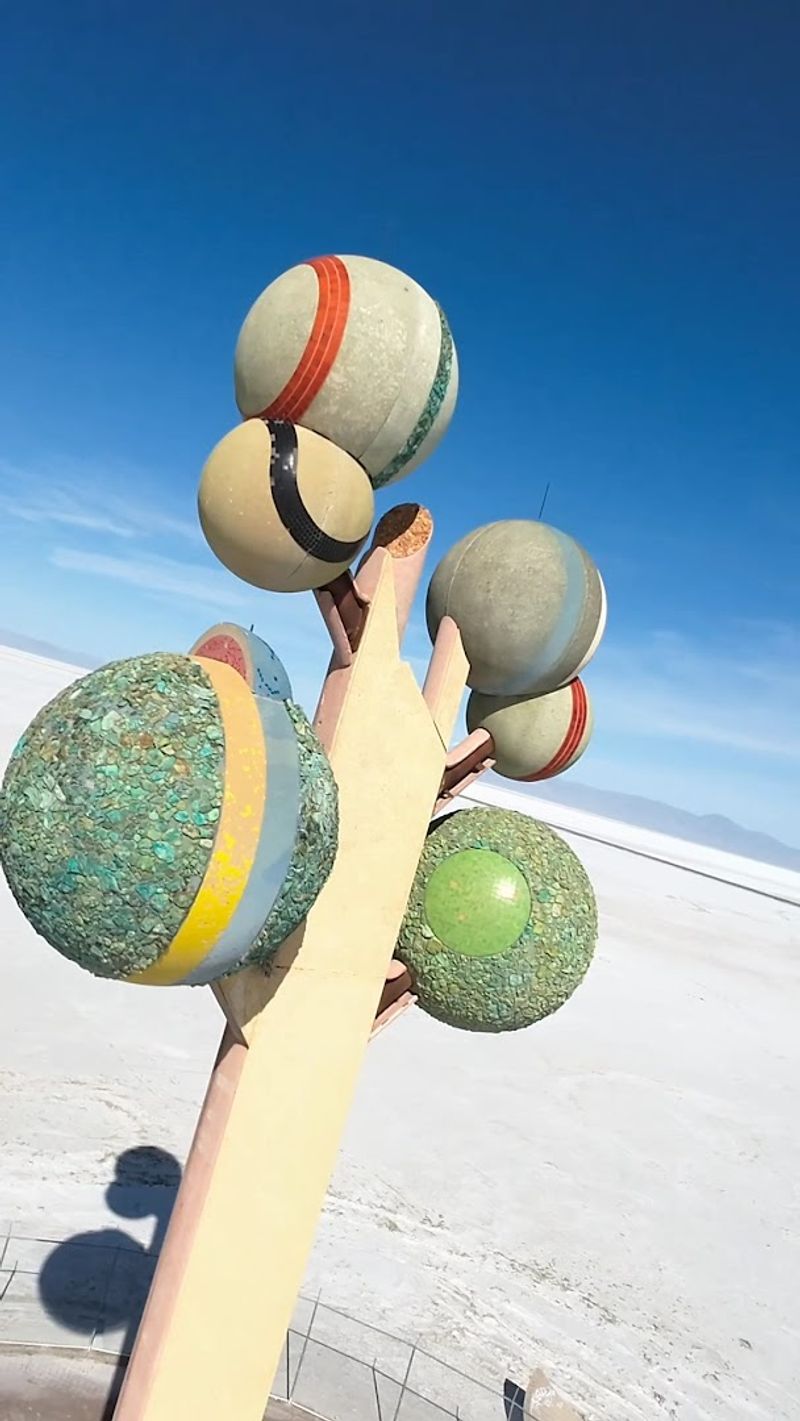
He used 225 tons of cement, five tons of welding rod, and nearly 2,000 ceramic tiles to bring the sculpture to life. The spheres were coated with crushed natural rock and minerals sourced directly from Utah, giving the piece a glistening, almost alive quality in the sunlight.
After completing the work, Momen donated it to the State of Utah in 1996 and returned to Sweden. He gave away a million-dollar creation without keeping a single square inch of it.
The official title is “Metaphor: The Tree of Utah,” though most people simply call it the Tree of Utah or the Tree of Life. The plaque at its base once carried words from Friedrich Schiller’s Ode to Joy, though that bronze plaque was reportedly stolen about two decades ago.
What kind of person builds a surrealist sculpture alone in the desert? Apparently, exactly the kind Utah needed.
What It Actually Looks Like
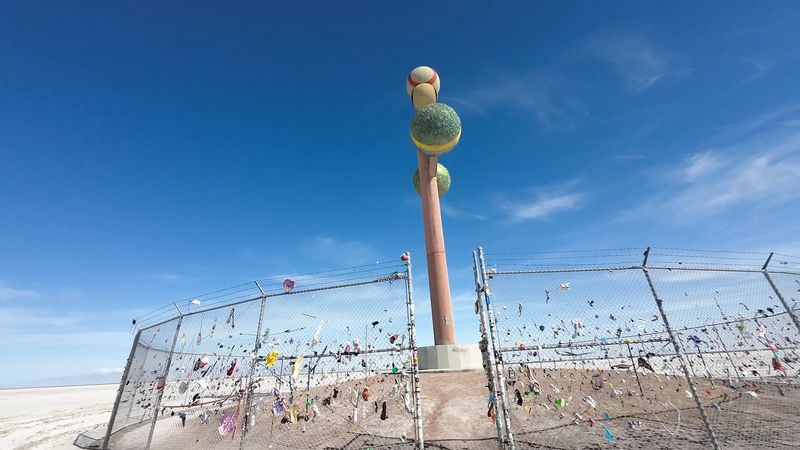
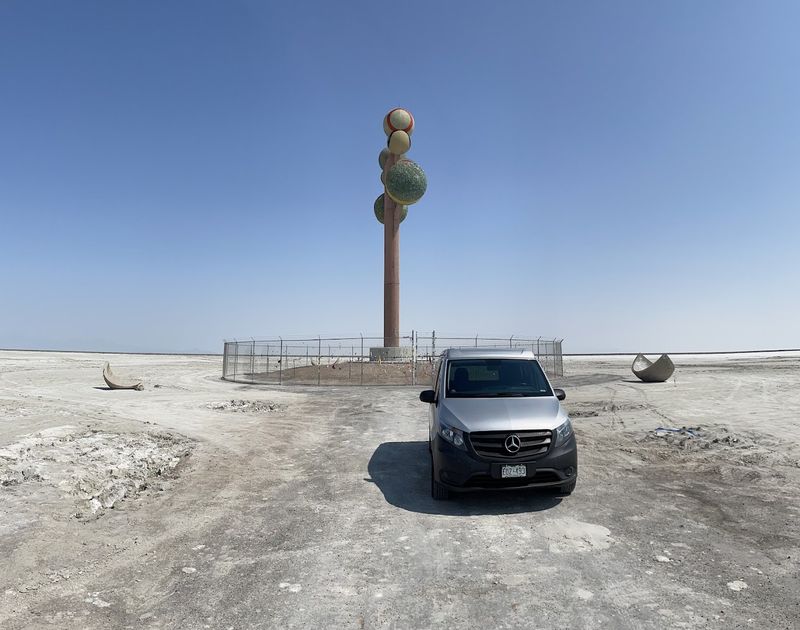
Nothing quite prepares you for the first real look. From a distance, it appears as a tall, blocky trunk topped with oversized round shapes in bursts of color.
Up close, the details are even more surprising. The six large spheres sitting on top of the squarish concrete trunk are coated with approximately 100 tons of crushed natural rock and minerals, all sourced from Utah.
The surface catches sunlight in a way that makes the whole structure seem to shimmer. On a clear afternoon, you can spot it from up to 17 miles away across the flat desert.
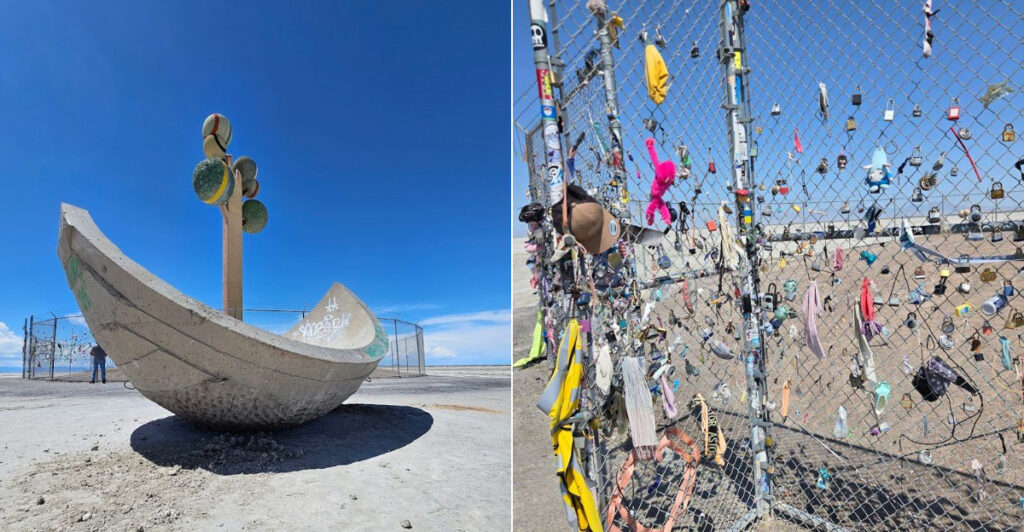
Scattered around the base are several hollow sphere segments, broken and resting on the ground like giant ornaments that rolled off a holiday tree. Some of these have collected graffiti over the years, which adds an unplanned layer of street art to the scene.
A chain-link fence currently surrounds the base to protect visitors from any tiles that may fall from the upper structure. It is not the most glamorous safety feature, but it does let you get surprisingly close.
The colors shift depending on the time of day. Morning light gives the minerals a cooler, more muted tone, while afternoon sun pulls out warmer reds and oranges.
Have you ever seen a sculpture that actually changes mood with the weather?
The whole thing is abstract, bold, and completely unforgettable.
The Desert Setting
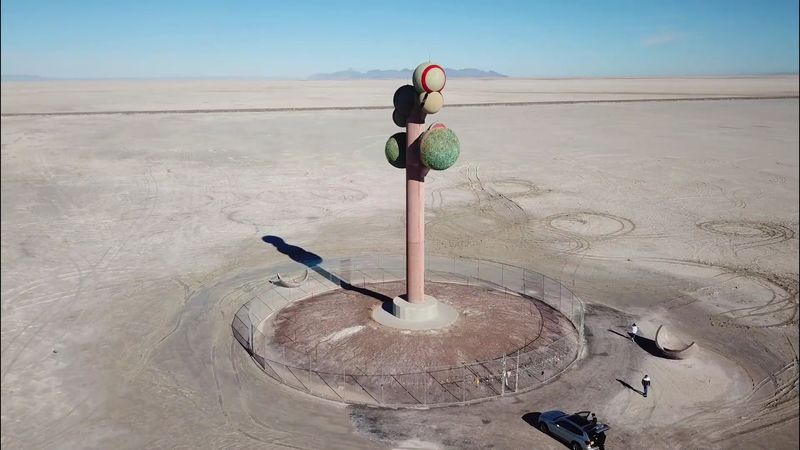
The location is not accidental. Momen chose one of the emptiest stretches of land in the entire American West to place his creation.
The Great Salt Lake Desert in Utah is flat, white, and almost completely silent. There are no trees, no buildings, and very little shade.
The sculpture stands on the north side of Interstate 80, about 25 miles east of Wendover and midway between two former railroad communities called Arinosa and Barro.
Most people drive through this part of Utah without stopping. The salt flats stretch in every direction with almost nothing to break the view.
That is exactly what makes the Tree of Utah so striking. It does not blend in.
It refuses to blend in. The 87-foot structure rises from the desert floor like something that fell from another planet and decided to stay.
On a hot summer day, the heat rising off the salt flats creates a shimmer around the base of the sculpture. The effect makes it look like the tree is floating.
Winter visits offer a completely different experience. The cold air sharpens the colors, and the pale winter sky turns the whole scene into something that looks almost painted.
What does it feel like to stand in the middle of a desert with nothing around you but salt, sky, and one very colorful sculpture? Visitors say it feels like the whole world went quiet.
Getting There Safely
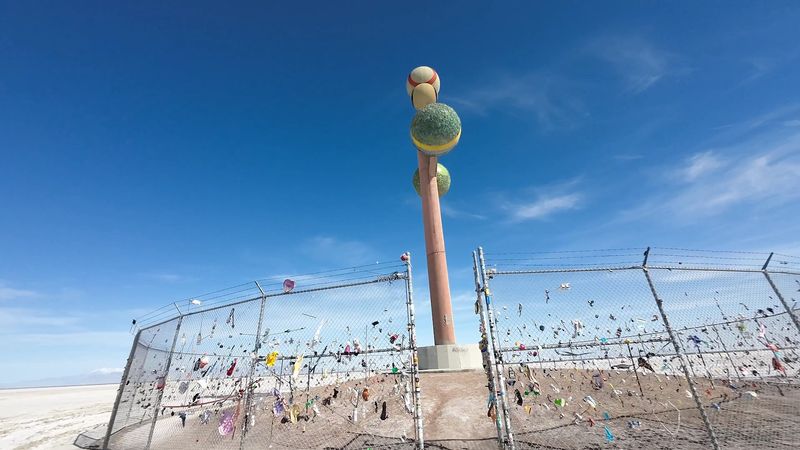
Reaching the Tree of Utah is straightforward, but the approach requires some attention. The sculpture sits right off Interstate 80, and the exit is easy to miss if you are moving fast.
The address is PCMW+7X, Greenhaven, UT 84083. If you are coming from Salt Lake City, you are looking at roughly 95 miles of highway driving before you spot the structure on the north side of the road.
Visitors say the pull-off area has changed over time. Some report a small gravel parking area near the site, while others note that parking has been limited at certain points, requiring a careful stop on the shoulder.
The key advice is to slow down well in advance and signal clearly. Trucks move fast on I-80, and the shoulder is not wide.
Pulling far off the travel lane is the smart move.
Google Maps navigation has reportedly sent some drivers down an old road in poor condition near the site. Staying on I-80 and following highway signs is the more reliable approach.
The sculpture is open 24 hours a day, every day of the week. There are no restrooms at the site, so plan accordingly before leaving the last town.
A ten-minute stop is usually enough for photos, but most people find themselves lingering a bit longer once they actually see it up close. Plan for fifteen minutes just to be safe.
Best Time To Visit
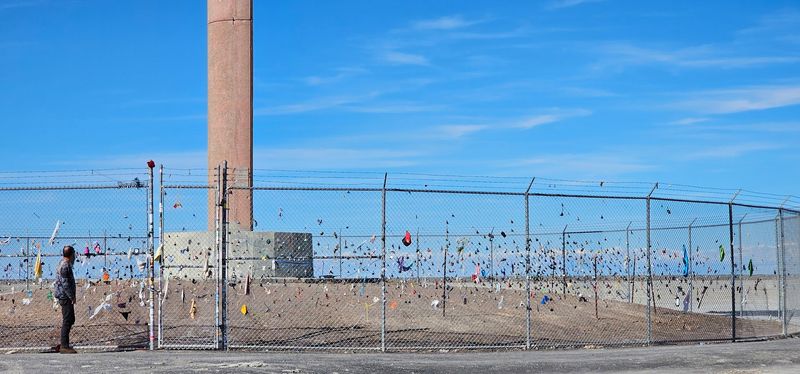
The Tree of Utah looks different at every hour of the day, and choosing the right time makes a real difference in what you experience.
Early morning is quietly spectacular. The low sun hits the mineral-coated spheres at an angle that makes each color pop with extra intensity.
The desert is also cooler and calmer, and there are usually very few other visitors around.
Midday in summer is a different story. The heat on the salt flats can be intense, and standing near a concrete sculpture with no shade nearby is not comfortable for long stretches.
Visitors say summer temperatures make it hard to stay more than a few minutes without feeling the full force of the sun.
Afternoon light, especially in the hour before sunset, is widely considered the most photogenic window. The warm tones in the sky mirror the warm mineral colors on the sculpture, and the flat desert around it turns golden.
Utah winters bring their own kind of beauty to the site. Cold, clear days offer sharp visibility and crisp light.
The sculpture looks dramatic against a pale winter sky, and the crowds are minimal.
Spring and fall hit a sweet spot. Comfortable temperatures, good light, and the bonus of seeing the salt flats in their seasonal variations make those months ideal for a relaxed stop.
Is there a wrong time to visit? Probably not, but the right time makes a great photo truly unforgettable.
The Visitor Tradition
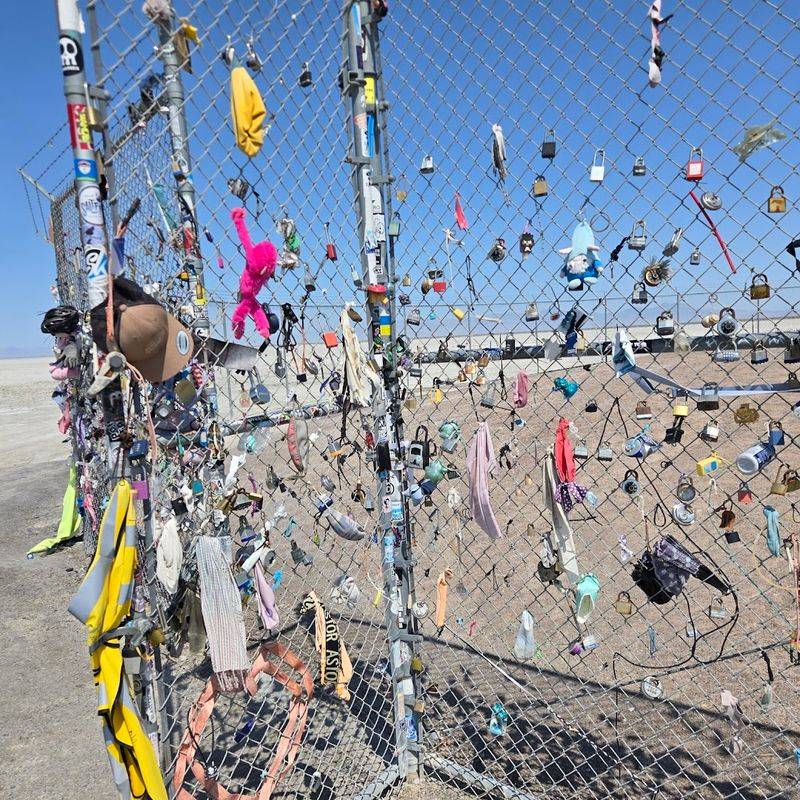
Roadside attractions often develop their own quiet rituals, and the Tree of Utah is no different. Over the years, visitors have started leaving small tokens at the base of the sculpture.
Coins, rocks, and small personal objects pile up near the fence at the base. Nobody officially started this tradition.
It just happened, the way meaningful places tend to attract meaningful gestures.
Some visitors say it feels like a way of acknowledging the effort Momen put into creating something in the middle of nowhere. Others simply like the idea of leaving a small piece of themselves behind in such an unusual spot.
The base area also draws a surprising variety of wildlife. Birds have reportedly built nests in and around the sculpture, apparently deciding that an 87-foot concrete structure is close enough to a real tree for their purposes.
That detail alone says something about the power of the form Momen created.
Pokemon Go players have also discovered the site. The remote location turns out to be surprisingly active in the game, which has introduced a whole new generation of visitors to a sculpture built decades before smartphones existed.
The tradition of leaving tokens connects back to the inscription that once appeared on the base plaque. The words from Ode to Joy carried a message about joy and shared humanity, which feels fitting for a place where strangers leave small gifts for each other without ever meeting.
What small thing would you leave behind?
Photography Tips Here
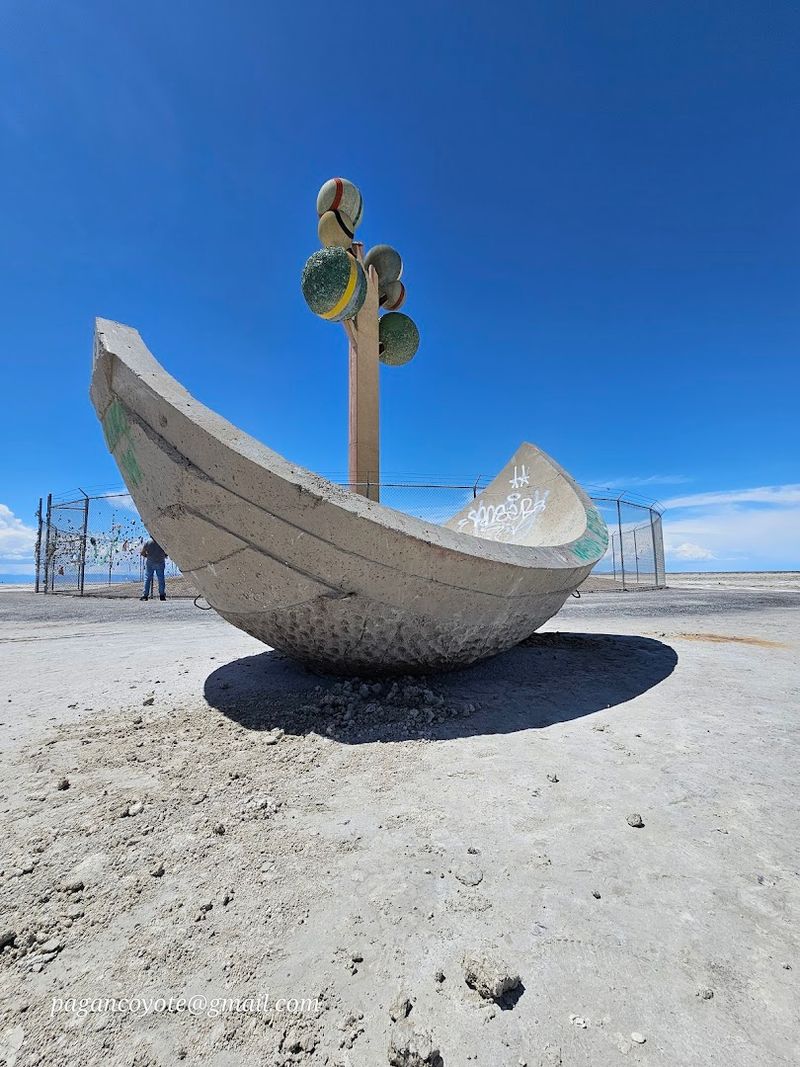
The Tree of Utah is one of the most photogenic roadside stops in Utah, but getting a great shot takes a little thought. The flat, open landscape is both a blessing and a challenge.
For the best full-height shot, step back as far as the site allows. The sculpture stands 87 feet tall, and getting the whole thing in frame requires distance.
A wide-angle lens or the widest setting on a smartphone works well here.
The white salt flats around the base can fool a camera’s exposure meter. If your photos are coming out too dark or too bright, adjusting the exposure manually gives you much more control over the final result.
Shooting from a low angle, close to the ground, makes the sculpture look even more imposing against the sky. Some visitors say this is their favorite approach because it emphasizes just how out of place the sculpture looks in such a flat landscape.
The fence around the base is unavoidable in close-up shots, but framing around it creatively can actually add a layer of texture to the image. Some photographers use the fence lines as leading lines toward the sculpture itself.
Golden hour shots, taken in the last 45 minutes before sunset, consistently produce the most dramatic results. The warm light interacts with the mineral surfaces in ways that mid-day sun simply cannot replicate.
Drones are popular here too, given the wide open airspace above the salt flats. Always check local regulations before flying.
Combining Your Road Trip
The Tree of Utah works perfectly as part of a larger western Utah road trip. Its location on I-80 puts it within easy reach of several other notable stops.
The Bonneville Salt Flats are less than 25 miles further west. That is roughly a ten-minute drive, making it an obvious pairing.
The salt flats are famous for land speed records and offer a completely different but equally surreal landscape experience.
Visitors heading east can reach Salt Lake City in about 90 minutes. The city offers museums, food, and accommodations for anyone making this a multi-day adventure through Utah.
Wendover sits just across the Nevada border to the west, about 25 miles from the sculpture. It serves as a practical base for anyone wanting to explore this stretch of the desert over more than one day.
The drive along I-80 through this part of Utah is itself worth experiencing. The landscape changes gradually from open desert to salt flats to distant mountain ranges, and the light shifts constantly as you move west.
Visitors also report spotting small artistic creations and figures along the highway near the Tree of Utah. Keeping an eye on the roadside adds a fun scavenger-hunt quality to the drive.
Utah rewards the curious traveler who does not just follow the main route. This particular stretch of highway has more going on than it first appears, and the Tree of Utah is just the beginning of what you will find.