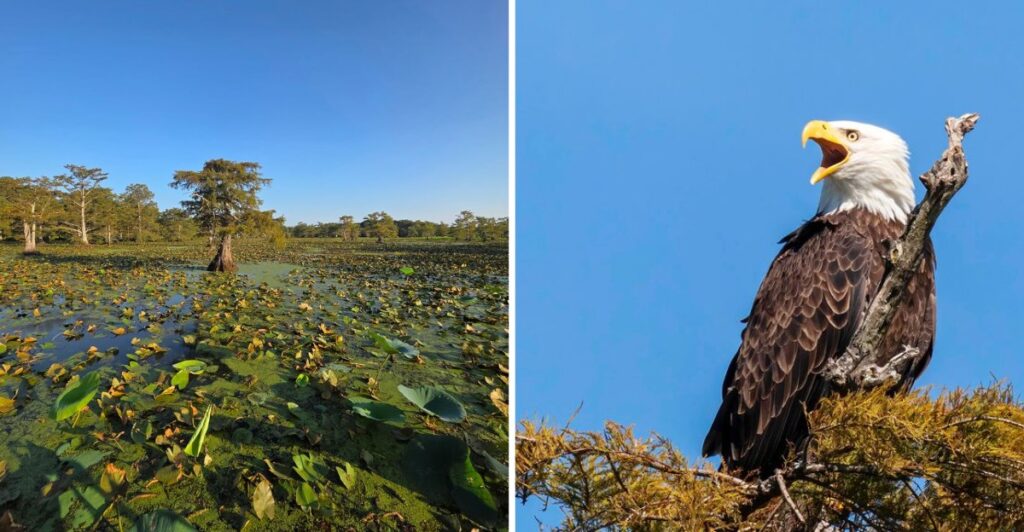
This Tennessee lake has the kind of shoreline that makes you look twice.
At first, the cypress trees and shallow water steal the attention. Then something moves along a log, slips through the reeds, or disappears beside the bank.
That is where the wildlife watching gets interesting.
The lake was shaped by the New Madrid earthquakes more than two centuries ago, and the landscape still looks unusual enough to match that story.
Snakes are simply part of the ecosystem here, especially around the quieter edges where watersnakes can blend in surprisingly well.
I’d keep my eyes on the logs. Around this lake, the scenery occasionally blinks back.
The Lake’s Cypress Swamps Create Natural Snake Habitat
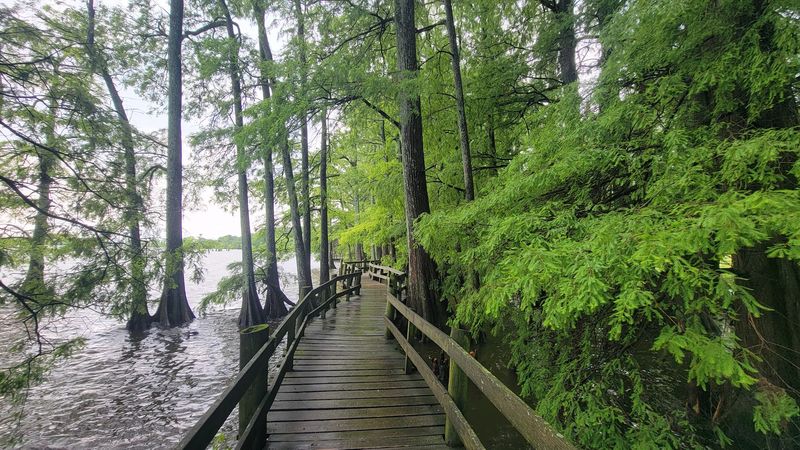
Reelfoot is shallow, wet, and full of structure. Those three things matter when you are trying to understand why watersnakes fit so naturally into the landscape.
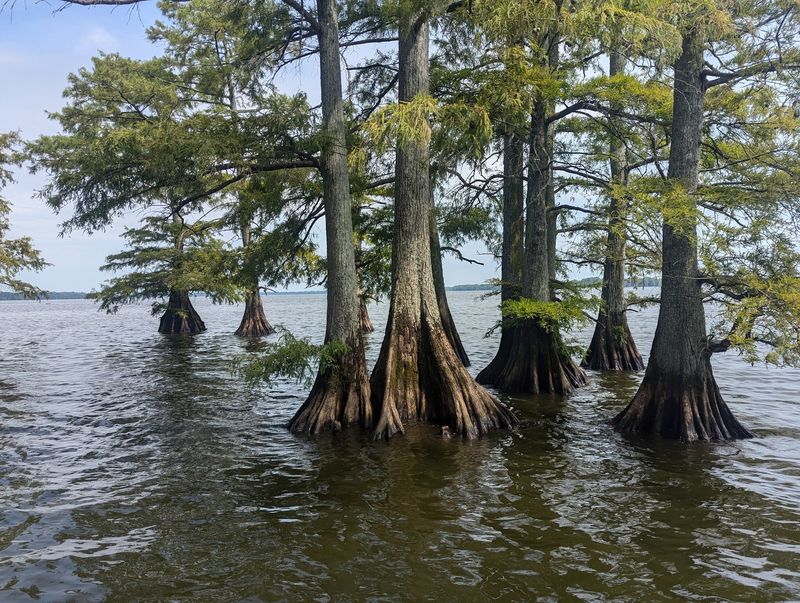
Cypress swamps, marshes, river sloughs, lake edges, thick vegetation, logs, and branches over the water all provide places for semi-aquatic snakes to hunt, rest, and warm themselves.
Reelfoot is Tennessee’s largest natural lake, covering about 10,427 acres, and roughly 68 percent of its water is three feet deep or less. Cypress trees and submerged stump fields break up the open water, while aquatic vegetation fills many shallow areas.
That kind of habitat supports fish, frogs, tadpoles, crayfish, salamanders, and other small animals that appear in the diets of local watersnakes. The result is a shoreline where snake habitat begins almost exactly where the water does.
You do not need to go searching through vegetation to appreciate that connection. Watch open logs, low branches, and the edge between water and land from a comfortable distance.
Once you know what habitat to notice, the lake starts revealing details that are easy to miss on a quicker visit.
Broad-Banded Watersnakes Are Common At Reelfoot
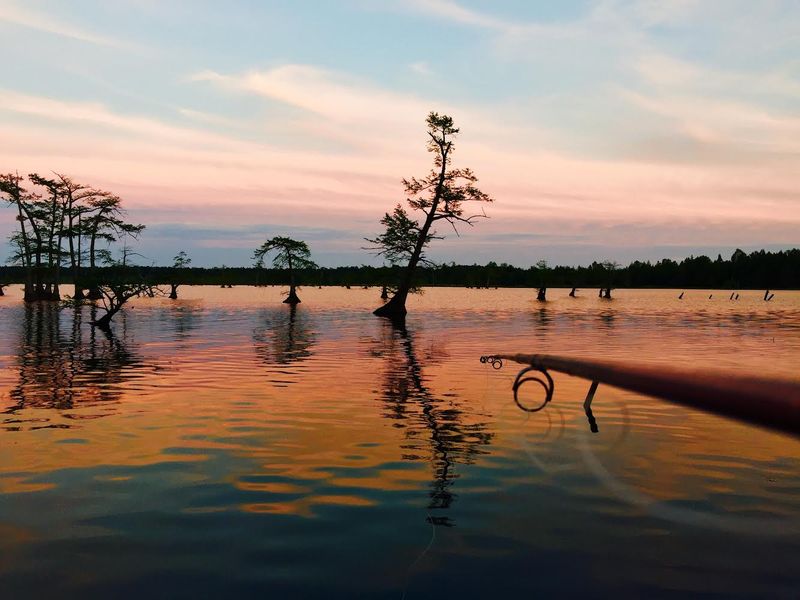
The Southern Watersnake gives Reelfoot one of its clearest snake connections. The Broad-banded Watersnake, Nerodia fasciata confluens, is the Southern Watersnake subspecies found at Reelfoot Lake and in Tennessee counties along the Mississippi River.
The species is common at Reelfoot, and basking logs and lake edges are among the best places in Tennessee to see it.
Adults are generally medium-sized, with broad dark crossbands separated by lighter bands. Color can vary, so pattern alone is not always the easiest way to identify one from a distance.
Its habitat explains why the lake suits it so well. Broad-banded Watersnakes favor cypress swamps, marshes, river sloughs, shallow lakes, and thick vegetation.
oThey are often found basking on logs or branches above the water, then slipping into the shallows when they move.
Their diet is tied closely to the wetland around them, with fish, frogs, toads, and tadpoles making up much of what they eat.
If you spot one stretched across a log, leave the distance between you intact. A pair of binoculars or a zoom lens lets you notice the bands and body shape without changing the animal’s behavior.
Rare Mississippi Green Watersnakes Use The Backwaters
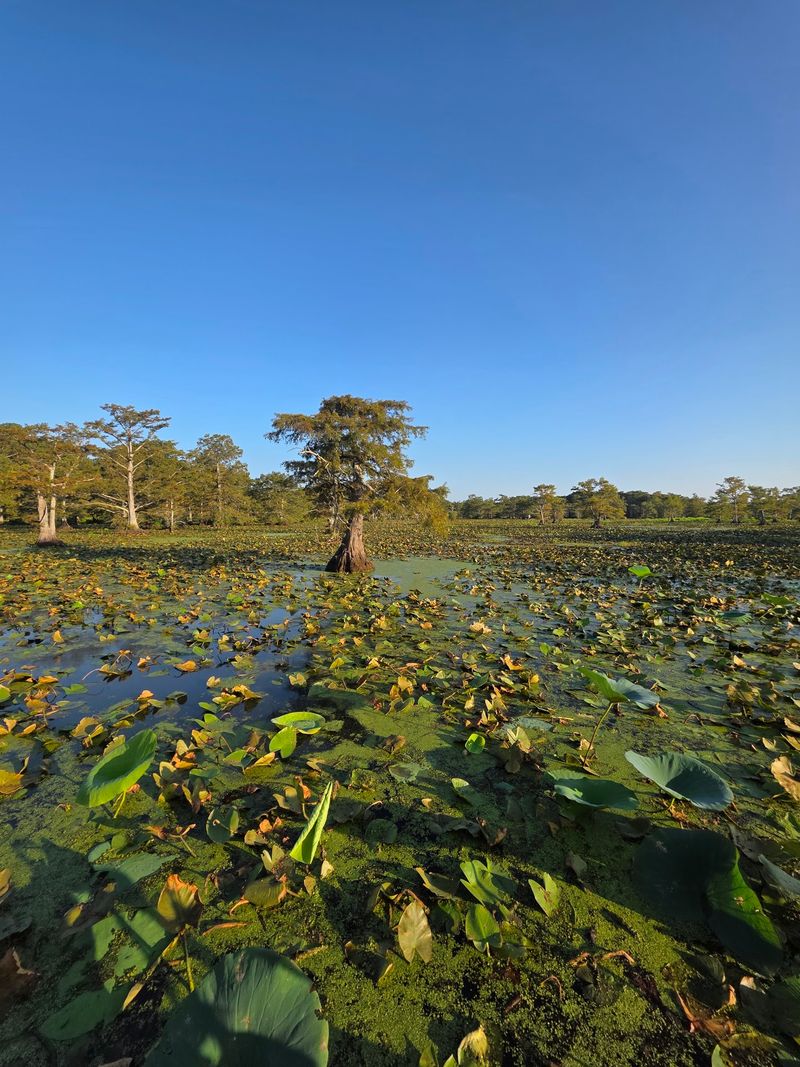
Reelfoot also gives you a chance, though never a guarantee, to encounter a much rarer Tennessee snake.
The Mississippi Green Watersnake occurs in the cypress swamps of extreme western Tennessee, and the edges and backwaters of Reelfoot Lake are among the best places in the state to see it.
This species favors quiet water. Swamps, wetlands, river sloughs, lake margins, and cypress or tupelo habitat suit its lifestyle. Adults are generally dark greenish-brown, with markings that can be much less obvious than the bold bands on a Broad-banded Watersnake.
The Mississippi Green Watersnake is listed as In Need of Management in Tennessee and is considered extremely rare and critically imperiled in the state. Loss of native cypress swamp habitat has contributed to its decline.
That status makes distance especially important. If one appears along a branch or backwater edge, observation is enough. There is no need to move closer, touch vegetation around it, or try to coax it into a better photo.
A sighting here can be brief. The snake may blend into shaded water or woody debris before you realize what you are looking at. Sometimes the whole encounter is simply noticing movement where the swamp looked still seconds earlier.
Cottonmouths Also Belong To The Reelfoot Landscape
Not every snake beside the lake is a watersnake, and Reelfoot is also within cottonmouth range. Cottonmouths occur mainly in the western third of Tennessee, and Reelfoot Lake and nearby swamps are among the places where they can be seen.
Cottonmouths are venomous, so the easiest visitor rule is also the most useful one: give every unidentified snake plenty of space. You do not need a close look to decide whether an animal should be left alone.
From a distance, watersnakes and cottonmouths can be confused. Southern Watersnakes are generally lighter and less heavy-bodied and lack the facial pits found on cottonmouths.
Mississippi Green Watersnakes also lack those facial pits and the vertical pupils associated with cottonmouths.
Those details are useful for learning, but they are not a reason to approach a snake for confirmation. Let binoculars or a camera lens do the close work instead.
Cottonmouth behavior also carries more mythology than most visitors need. Their reputation for aggression is often exaggerated, and they generally try to escape when encountered.
Giving them an open path and keeping your distance is the simplest way to share the shoreline.
Logs And Lake Edges Are Good Places To Look
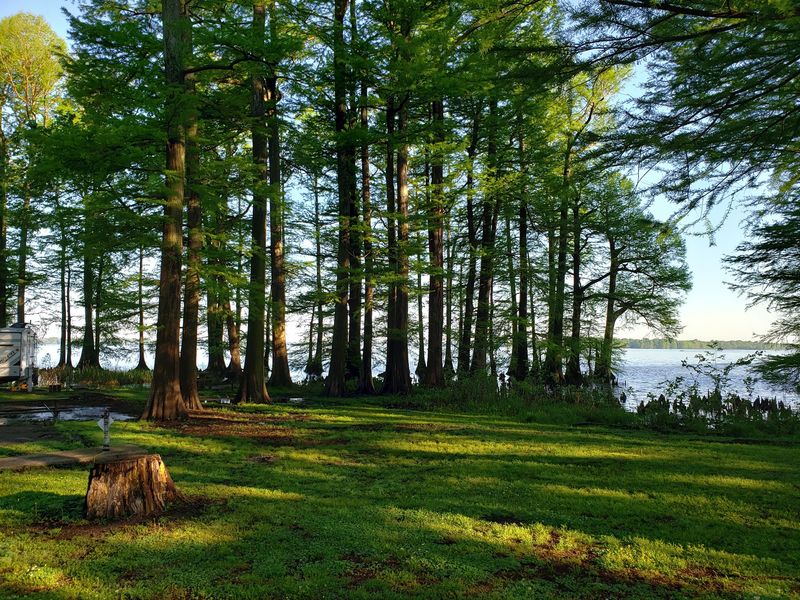
Once you know where Reelfoot’s snakes spend time, wildlife watching becomes less about searching everywhere and more about watching the right places. Basking logs and the edges of Reelfoot Lake are particularly good places to notice Southern Watersnakes.
That makes a slow shoreline visit more useful than rushing from one viewpoint to the next. Scan a sunlit log before moving on. Look at branches hanging just above the water.
Give patches of thick vegetation a glance without stepping into them. A dark shape that first looks like bark may turn out to be a resting snake.
The park’s cypress scenery also gives you plenty to watch even when no snake appears. Cypress trunks rise directly from the water, submerged stumps break the surface, and marsh vegetation creates small pockets of cover.
Wildlife remains unpredictable, so awareness matters more than expecting a guaranteed sighting.
Good footwear also makes sense around wet ground and natural shoreline areas. Stay on established visitor routes where required, avoid placing hands or feet where you cannot see clearly, and never attempt to handle a wild snake.
The same habits make the visit easier for you and leave the animals undisturbed.
More Than 270 Bird Species Share This Wetland
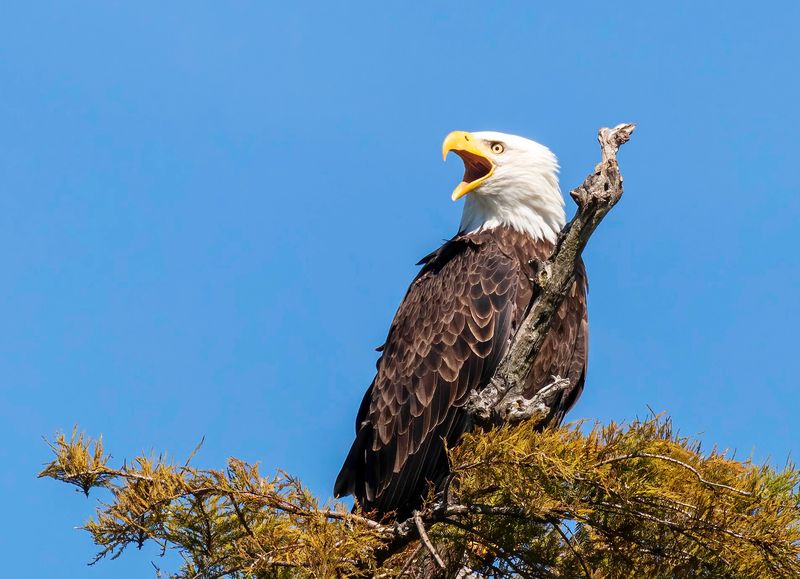
Snakes are only one part of Reelfoot’s wildlife story. More than 270 bird species have been reported from the Reelfoot Lake area, and winter is especially notable for waterfowl and bald eagles.
The lake and surrounding protected lands sit along an important migration corridor. Reelfoot National Wildlife Refuge manages the upper portion of the lake for migratory birds, and the area serves as a wintering ground for waterfowl and bald eagles.
American white pelicans, herons, ospreys, ducks, and other wetland birds add movement above the same water where snakes use logs and backwaters.
Winter eagle watching is one of the area’s established traditions. Reelfoot Lake State Park offers eagle programs during the winter season, while the national wildlife refuge also provides opportunities for birding and wildlife observation.
The State Natural Area protects a broad mix of open water, marsh, bottomland hardwood forest, and cypress habitat. That variety is why the wildlife list extends far beyond one group of animals.
Bring binoculars and the trip can shift easily from a watersnake on a log to an eagle overhead or a heron standing motionless in the shallows. Keeping your attention in more than one direction can turn up several kinds of wildlife in the same visit.
The State Park Makes The Lake Easier To Explore
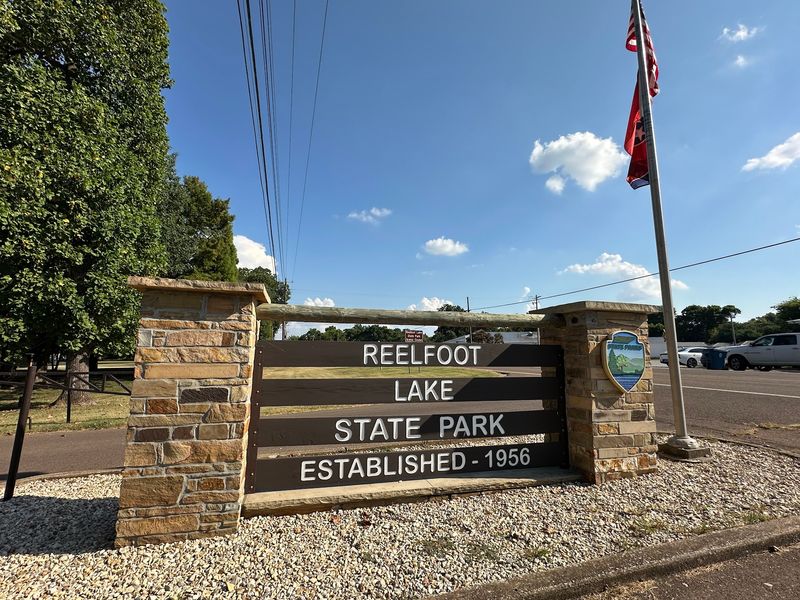
Reelfoot Lake State Park provides a practical base for seeing this unusual wetland without trying to navigate the entire lake on your own. The park consists of several sections around the shoreline, with visitor areas, camping, cabins, day-use facilities, and access to the lake.
You can find Reelfoot Lake State Park at 2595 State Route 21 East, Tiptonville, TN 38079. Boardwalks and developed shoreline areas give you places to look into the cypress habitat while staying on established visitor routes.
The park also runs scheduled interpretive programs and pontoon tours. In 2026, its program calendar has included wildlife-focused cruises and tours about the earthquakes and history of Reelfoot Lake.
Tour dates vary, so a visit built around one of those programs is easier when you reserve the activity as part of the day.
Two park day-use areas, Blue Bank and Eagle Basin, are undergoing renovation work with intermittent closures expected during the project period, which is scheduled to continue into early 2027. Other park sections remain part of the broader Reelfoot experience.
Whether a snake appears or not, the habitat gives you plenty to notice. Watch the waterline, scan the logs, listen for birds, and let the cypress swamp set the pace. Give the wildlife room and allow the next sighting to arrive on its own.