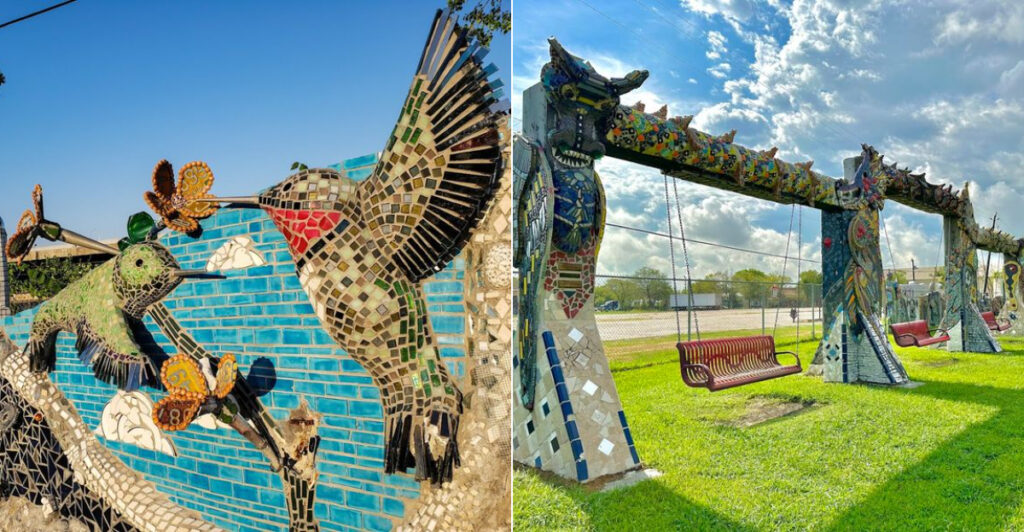
This place does not waste time. You do not always need a big plan to end up somewhere memorable.
Sometimes all it takes is one turn, one stop, and suddenly the whole day gets a lot more interesting. That is the fun of finding a place like this in Texas. It is colorful, creative, and full of the kind of details that make people slow down, look closer, and smile without even meaning to. One path leads to a mosaic wall.
Another brings a sculpture that makes you stop and stare for a second longer. Then you look up and realize there is more waiting around the next corner. That feeling is easy to love.
In Texas, big experiences come in all forms, and this one proves a park can be much more than green space.
This Park Is Still Becoming More
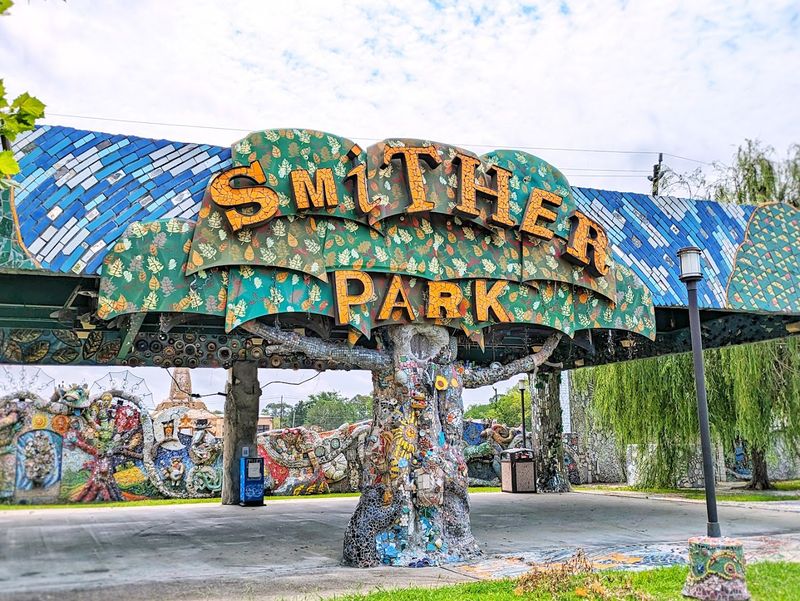
Not every park starts with a vision this bold. Smither Park was born from the creative legacy of John Milkovisch and it was brought to life by artist Randolph H. Johnston.
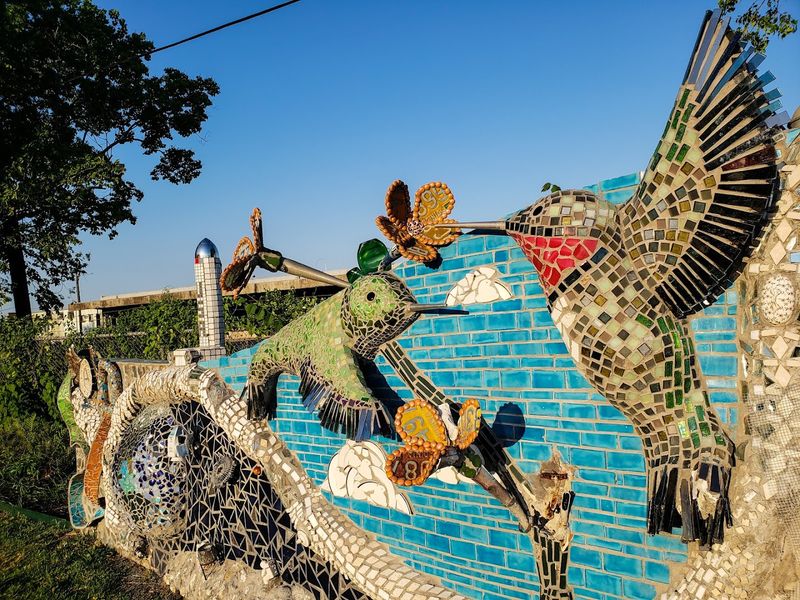
He spent years building the park almost entirely by hand, using donated tiles, broken ceramics, and found objects to construct an outdoor space that feels part folk art museum, part community celebration.
After Johnston passed away in 2008, the Orange Show Center for Visionary Art took over stewardship of the park and opened it to volunteers and artists who wanted to continue adding to it.
That collaborative spirit is what makes Smither Park so special. It was never meant to be finished.
New sculptures and mosaic panels are still being added today, making every visit a slightly different experience than the last. Have you ever visited a place that felt like it was still writing its own story while you were standing inside it? That is exactly what Smither Park feels like.
The history here is not just on a plaque on a wall. It is embedded in every tile, every figure, and every hand-placed piece of glass that catches the light on a bright Houston afternoon.
A Mosaic World Built Tile By Tile
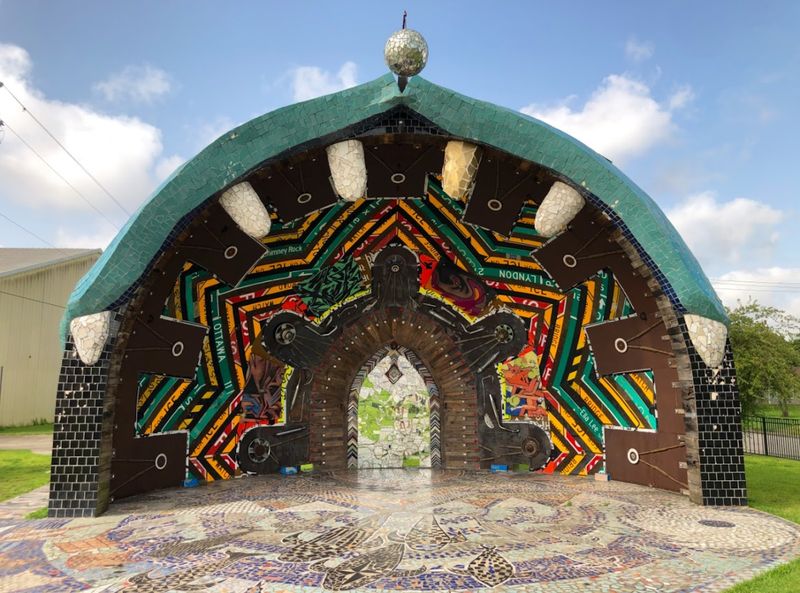
There is no such thing as a boring corner here. The first thing that grabs your attention is the color.
Walls, benches, sculptures, and pathways are covered in mosaic tiles that shimmer and shift as the light changes throughout the day.
The mosaics are not printed or manufactured. Every single piece was placed by hand, often by volunteers with no formal art training, which gives the whole park a raw and personal energy that polished galleries simply cannot replicate.
Some panels tell stories. Others are purely abstract, with swirling patterns of blue, gold, green, and red that seem to move when you look at them long enough.
The craftsmanship is genuinely impressive, even when it is intentionally imperfect.
What is fascinating is that the park actively welcomes new contributions. Community mosaic events are held regularly, where visitors can add their own tile work to the ever-growing canvas.
The mosaic tradition at Smither Park draws direct inspiration from visionary art movements that celebrate self-taught creativity over formal technique. It is a reminder that art does not require a degree.
It just requires dedication, patience, and a good eye for color.
Sculptures That Stop You Mid-Step
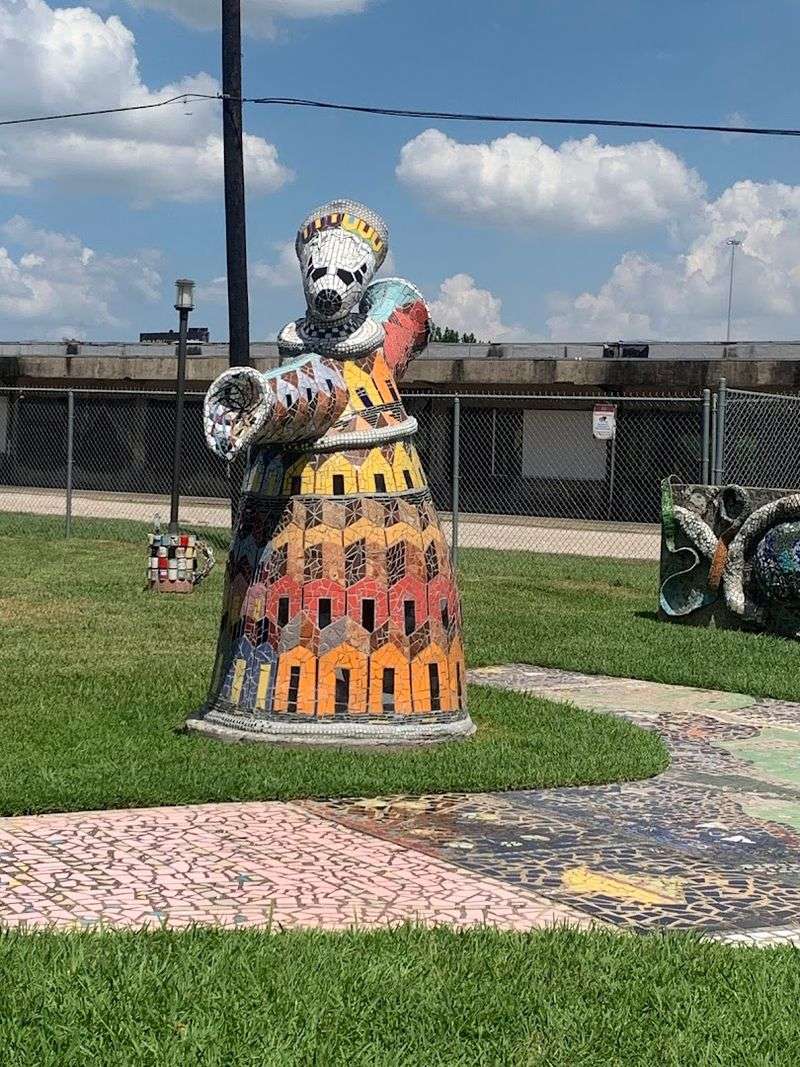
It gets harder to leave the longer you stay. Around every bend in Smither Park, a new sculpture demands your attention.
Some are towering figures made from concrete and tile. Others are smaller, more intimate pieces that you almost walk past before realizing what you are looking at.
The sculptures range from human-like forms to abstract shapes that are harder to define, which is part of what makes exploring the park so entertaining. You are never quite sure what is coming next.
Several large anchor sculptures line the main path, forming a kind of ceremonial walkway that gives the space a sense of structure amid all the wonderful chaos. They feel ancient and playful at the same time, which is a difficult balance to pull off.
Artists from Houston and beyond have contributed individual sculptures over the years, each bringing their own style and voice to the collection. The result is a diverse visual landscape that does not feel random. It feels curated, even though it grew organically.
The variety of forms and scales keeps the experience visually dynamic from start to finish, and no two angles of the same sculpture ever look quite the same.
The Orange Show Connection You Should Know About
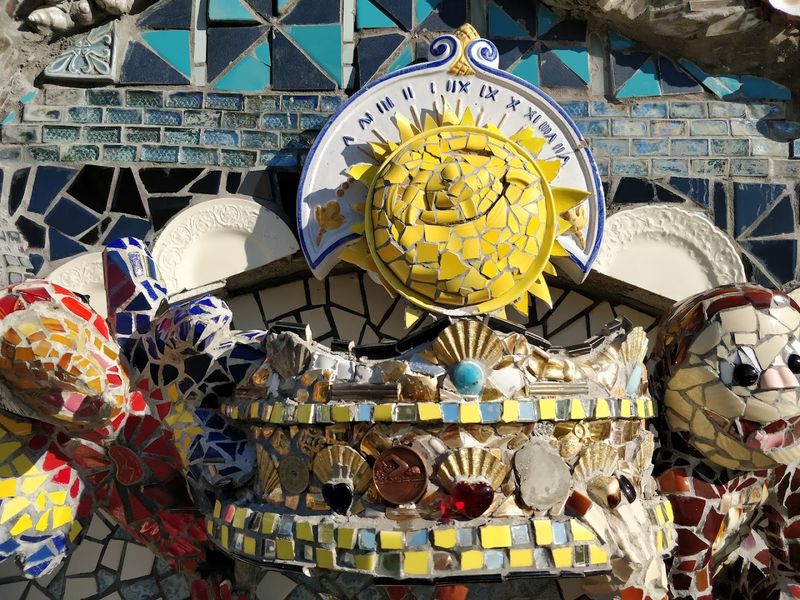
To truly understand this place, you need to know a little about the Orange Show Center for Visionary Art, the organization that manages it. The Orange Show itself is a monument just a short distance away, built by postman Jeff McKissack over more than two decades as a tribute to the orange fruit.
McKissack believed oranges were the key to good health and long life, and he built an elaborate folk art environment to share that message with the world. The monument opened in 1979 and became one of Houston’s most beloved and unusual landmarks.
The Orange Show Center now preserves both the original monument and Smither Park, using them as platforms for arts education, community engagement, and the celebration of self-taught artists.
The connection between these two sites gives Smither Park a deeper context. It is part of a larger Houston tradition of honoring creativity that exists outside the mainstream art world.
Visiting Smither Park without knowing this background is still a great experience, but knowing it adds layers of meaning that make each sculpture and mosaic feel even more intentional and powerful.
Best Times To Visit And What To Expect
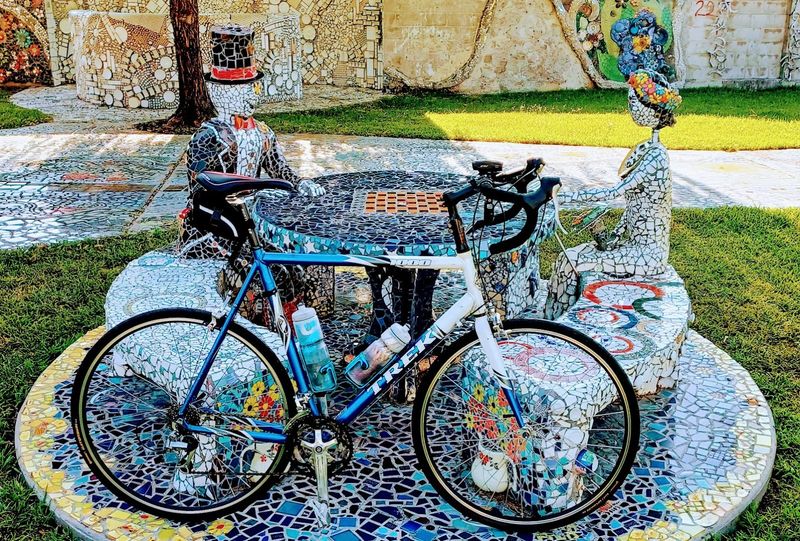
Planning a visit to this park is pretty simple, and that accessibility is one of the things that makes it so appealing. The park is free to enter, which means there is no reason not to stop by whenever you are in the East End of Houston.
The best time to visit is in the morning, when the light is soft and the temperature in Houston is more forgiving. Summer afternoons in Texas can get intense, so early visits are highly recommended from June through September.
Spring is arguably the most pleasant season to explore the park. The weather is comfortable, the colors of the mosaics pop beautifully in the mild light, and the park tends to have more volunteer activity happening, which adds life to the space.
Parking is available along Munger Street, and the surrounding East End neighborhood is walkable and full of character. Giving yourself at least an hour to explore the park properly is a good idea, though many visitors end up staying longer than planned.
Bringing water, comfortable shoes, and a fully charged phone is strongly advised. The photo opportunities here are endless, and you will not want to run out of battery before you reach the back half of the park.
Community Art In Action
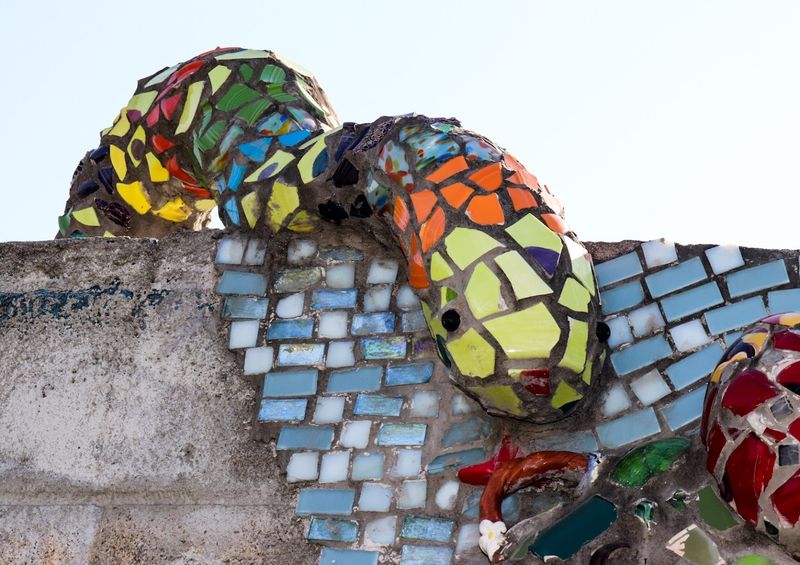
One of the most remarkable things about Smither Park is that it is not a static display. It is a living community project that continues to grow through the hands of volunteers, artists, and everyday visitors who want to contribute something lasting.
The Orange Show Center regularly organizes volunteer days where people of all ages and skill levels can come and help build new mosaic panels or maintain existing sculptures. No experience is required, just enthusiasm and a willingness to get a little messy.
These events attract a wonderfully mixed crowd. You might find yourself working alongside a professional artist, a high school student, a retired teacher, and a tourist from another country, all contributing to the same piece of artwork.
That sense of shared creation is something you rarely encounter in traditional art spaces. Smither Park flips the usual relationship between viewer and artwork, inviting everyone to become a participant rather than just an observer.
What would it mean to you to have your work become part of a permanent public installation in one of Texas’s most creative cities? Many volunteers describe it as one of the most meaningful afternoons they have ever spent.
Checking the Orange Show Center’s website before your visit is a smart move if you want to catch one of these events. Showing up on a volunteer day transforms a good visit into an unforgettable one.
Photography Heaven In The Heart Of Texas
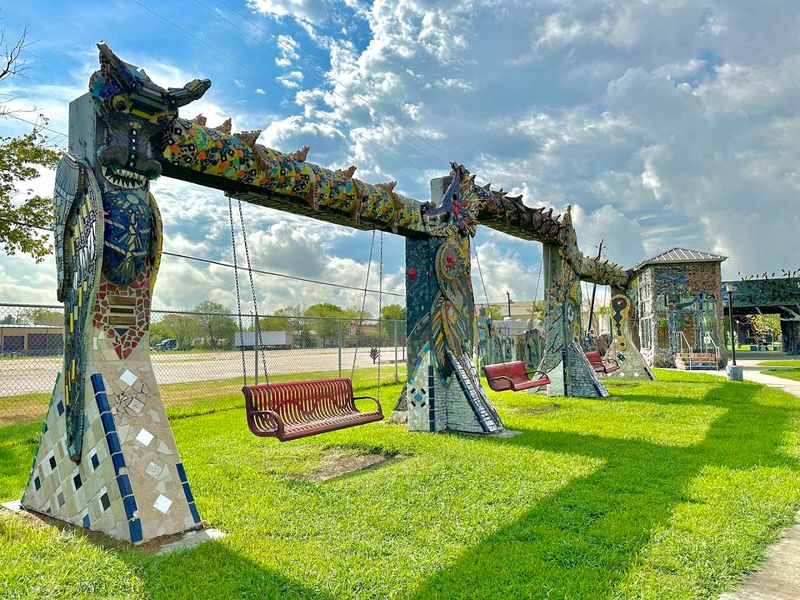
Good luck taking just one photo. For anyone who loves photography, this is a serious destination.
The combination of vivid colors, unusual textures, and constantly changing light creates a playground for anyone with a camera.
The mosaic surfaces catch light in unexpected ways depending on the time of day. Morning visits produce warm golden tones across the tile work, while midday sun creates sharp contrasts that make the colors almost electric.
Portrait photographers often use the park as a backdrop for creative shoots because the visual variety is so rich. One section might feature a deep blue mosaic wall, while ten steps away there is a rough concrete figure surrounded by lush green grass.
The sculptures also offer interesting compositional challenges. Their scale, texture, and placement create natural framing opportunities that experienced photographers love to work with.
Even if photography is not your main interest, the visual experience of the park is deeply satisfying on its own terms. The colors and forms are arranged in a way that feels both spontaneous and surprisingly harmonious, which is a rare quality in any creative space.
Why Smither Park Belongs On Your Houston Itinerary
Curiosity takes over pretty quickly here. Houston is a city full of museums, galleries, and cultural institutions, but Smither Park offers something that most of them cannot. It is completely outdoors, completely free, and completely unlike anything else in the city.
The park sits in the East End, one of Houston’s most culturally rich neighborhoods, which means a visit here fits naturally into a broader exploration of local art, food, and community life in that part of the city.
For families, the park is a fantastic outing. Children are naturally drawn to the bold colors and strange figures, and the open space gives them room to move around freely while adults take in the details at their own pace.
For solo travelers or couples, the park offers a contemplative and visually stimulating experience that does not require a guide or an audio tour. The art speaks for itself, loudly and colorfully.
Smither Park at 2441 Munger St, Houston, TX 77023, has a way of becoming that unexpected discovery for a lot of visitors.
The park is a reminder that great art does not always live behind glass in a climate-controlled building. Sometimes it grows out of the ground, one tile at a time, under the open Texas sky, and it invites you to be part of the story.