“Wait, Texas has this?”
That is a fair reaction once the road starts winding through northeast Texas.
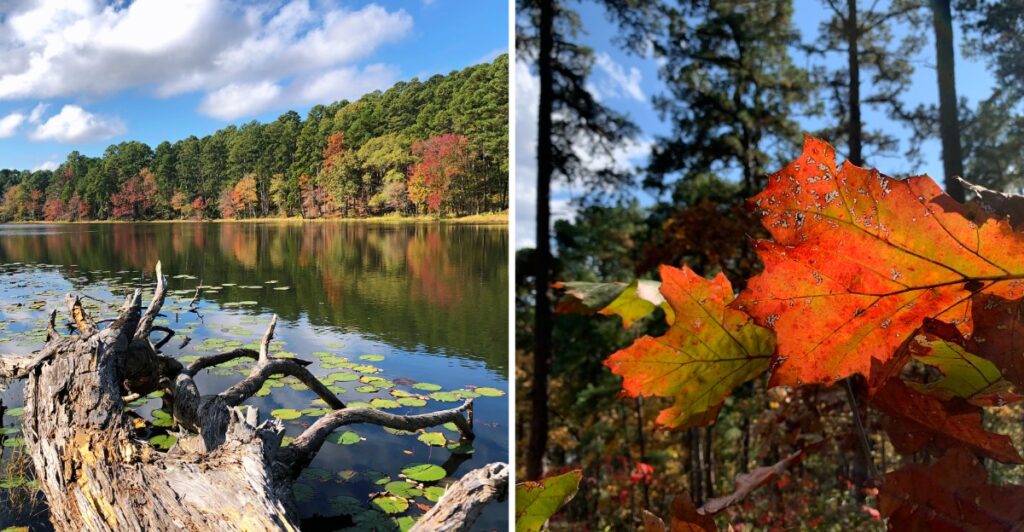
By October, hardwoods around the lake begin changing while the pines stay stubbornly green. Fall arrives in patches instead of one perfect sweep.
Honestly, I prefer it that way.
You are not driving out here for one famous viewpoint. You are seeing what the weather has done and letting the color show up where it wants.
I would aim for a cool morning and keep the day loose. Save the steeper walking for later.
By early November, the contrast can be especially good.
Texas does not exactly scream “autumn road trip,” which is probably why this one is so much fun to spring on people.
Hardwoods Bring Fall Color Into The Pineywoods
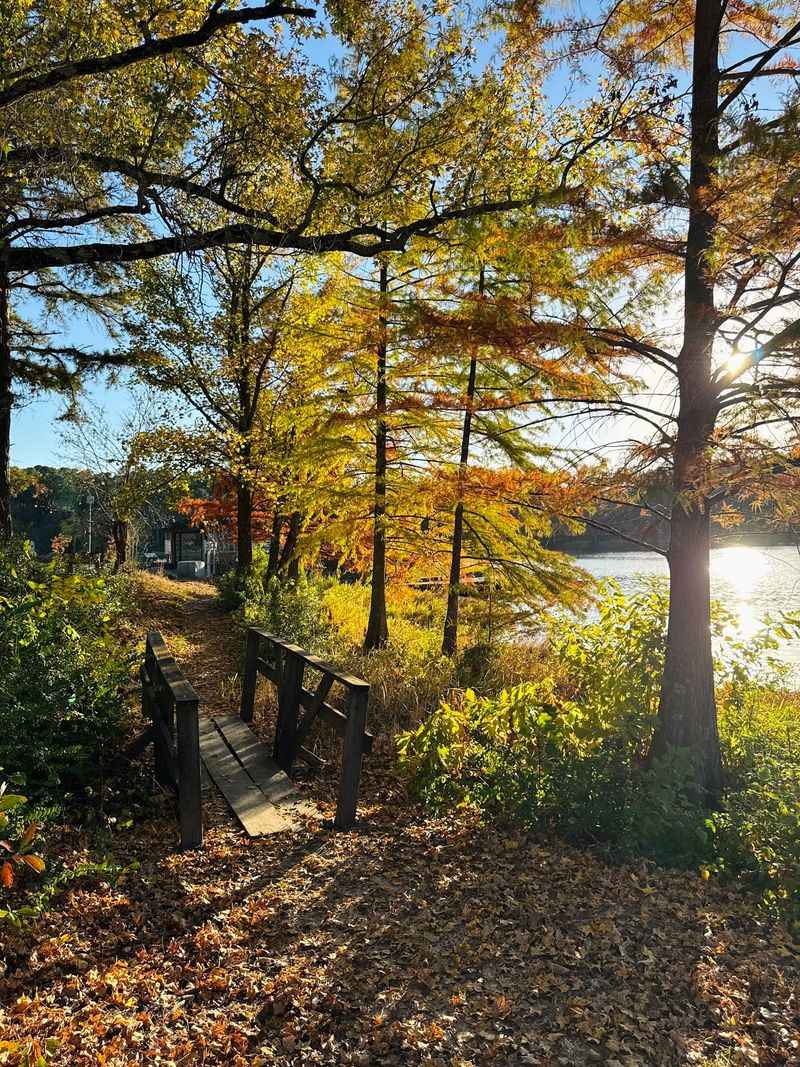
Daingerfield sits in the Pineywoods, but the forest is not a wall of evergreen. Sweetgums, oaks, maples, and elms grow among loblolly and shortleaf pines, creating the contrast that gives the park its fall character.
The pines hold their green while deciduous trees shift through yellow, orange, red, and russet tones. That mix can make one bend in the trail look completely different from the next.
Fall color here does not follow a fixed calendar. Historically, some of the stronger displays have arrived in late October and early November, but rainfall, temperature, wind, and cold fronts can move the timing around.
That makes a flexible visit more useful than chasing a single peak-color date. If the trees near the entrance are still mostly green, another part of the park may already be changing.
By the 1930s, heavy timber use had stripped much of the surrounding land, and Civilian Conservation Corps crews replanted large sections with native trees. Today, those woods give a fall walk more layers than color alone.
Little Pine Lake Puts The Color Right On The Water
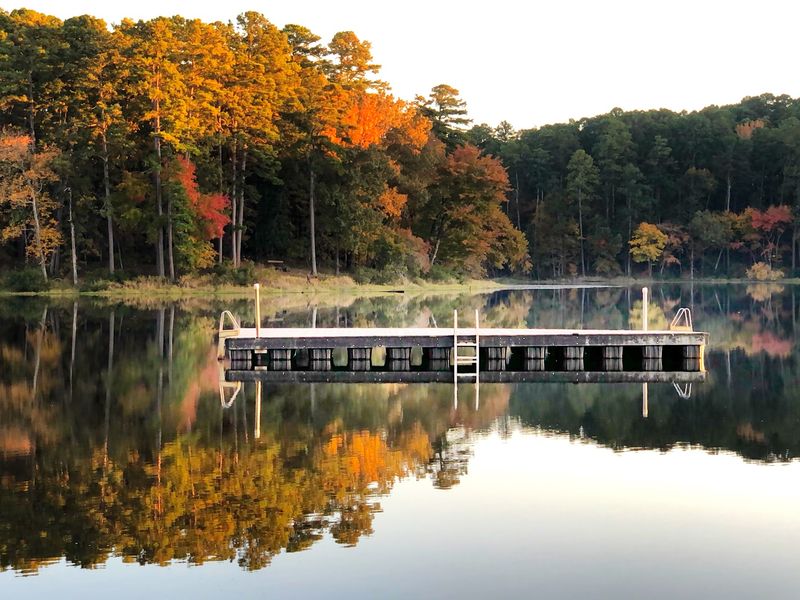
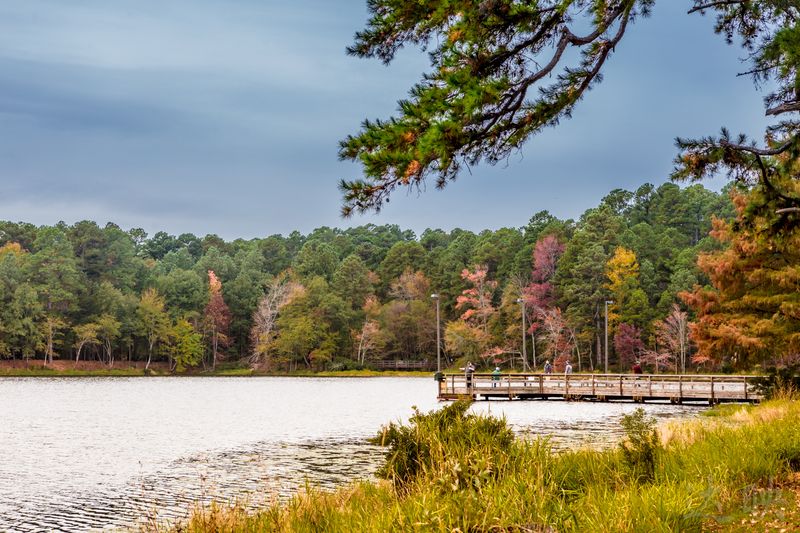
Little Pine Lake covers 74 acres and sits at the center of the park. Springs and creeks feed the water, while forest wraps much of the shoreline.
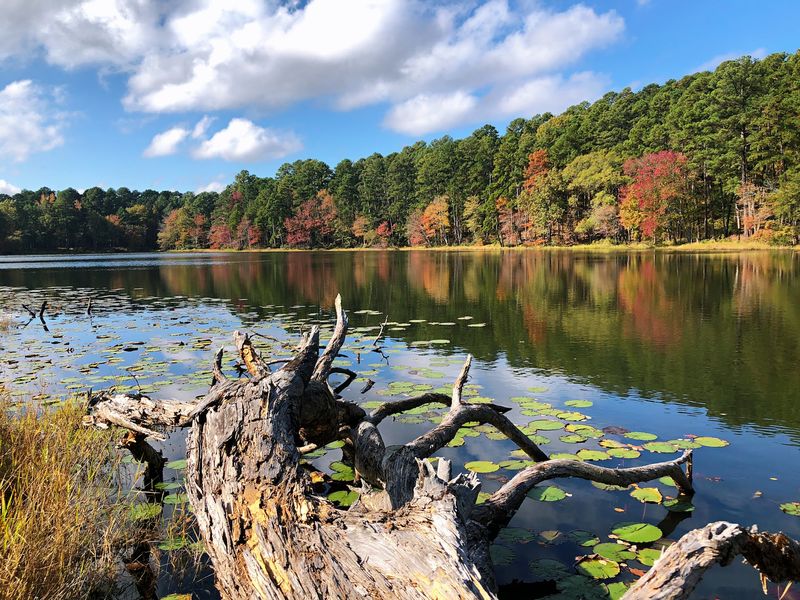
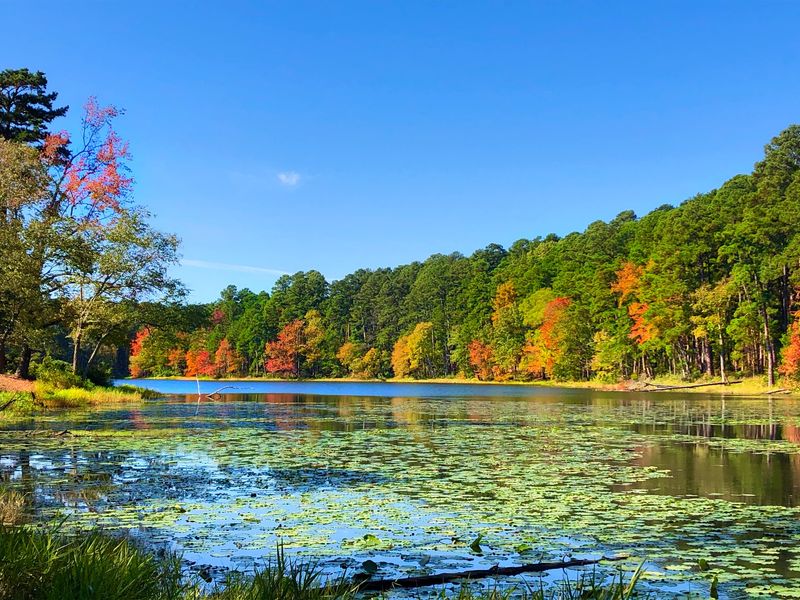
On a calm morning, the lake can turn the trees into a second layer of color. The reflection changes quickly once wind picks up, so earlier hours are a good choice if smooth water matters for photos or a quiet paddle.
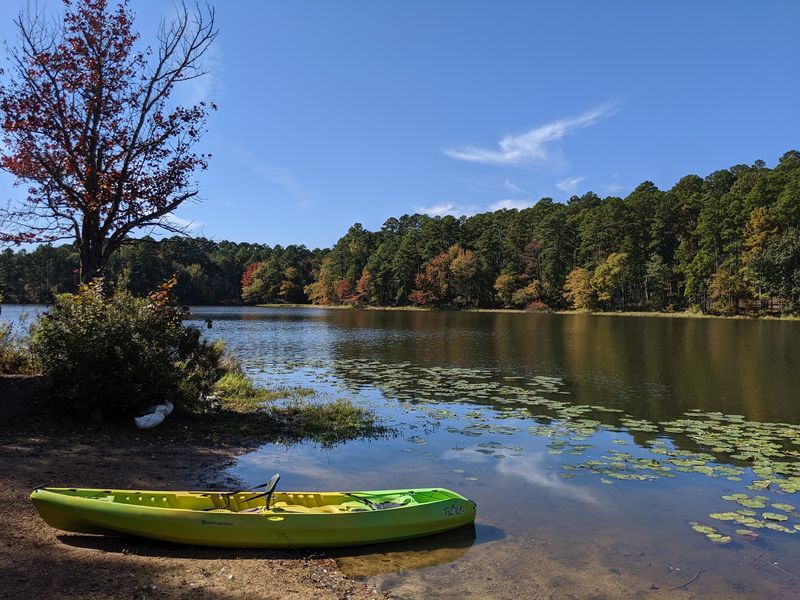
You can bring your own boat or rent one at the park. Canoes, single and tandem kayaks, paddle boats, paddle boards during their seasonal rental period, and flat-bottom boats are among the options. Motors are allowed, but the lake carries a 5 mph speed limit.
Fishing gives you another reason to linger. Crappie, bass, catfish, sunfish, and chain pickerel live in the lake, and you do not need a fishing license when fishing from shore or from a boat inside the park. A fishing pier and boat ramp keep access straightforward.
If you are not paddling or fishing, pack a snack, find a quiet place near the water, and let the light change before moving on.
The lake stays closely framed by forest, so water and changing leaves remain in view at the same time.
Rustling Leaves Trail Circles The Lake
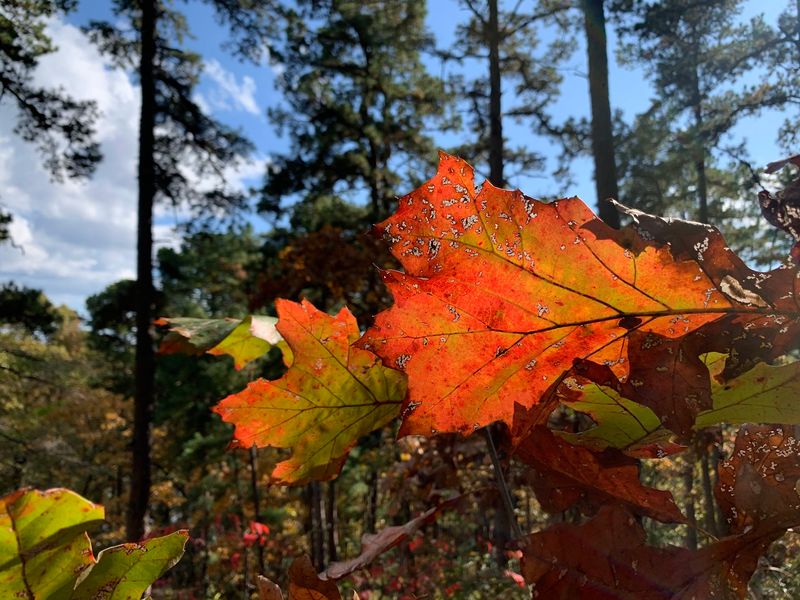
Rustling Leaves Trail gives you the longer, gentler hiking option. The 2.4-mile route circles Little Pine Lake and is rated moderate, with an estimated hiking time of about an hour and a half.
The trail passes through the “Cathedral of the Trees,” where tall pines create one of the park’s most recognizable forest sections. In fall, hardwood color works its way between those trunks while pine needles and fallen leaves collect underfoot.
Because the route stays close to the lake for much of the loop, the scenery keeps changing between water and forest. One section may give you a clear view across the lake, while the next closes in beneath trees.
The CCC picnic area on the peninsula adds another useful pause along the route. If you are not trying to set a hiking pace, that is a good place to stop before continuing the loop.
Allow more time than the mileage suggests if photography is part of the day. Reflections, changing leaves, or wildlife can turn a short pause into several minutes.
Start near the water, walk the loop before midday, then decide whether your legs want the steeper Mountain View Trail afterward. One complete lake loop already gives you a strong look at the park.
Mountain View Trail Adds A Shorter, Steeper Climb
Mountain View Trail is only 0.8 mile, but the short distance does not make it the easy option. The route is rated challenging, and portions are steep as it climbs toward one of the higher points in the area.
Near the higher point, the trail opens to pine-covered bluffs and rolling terrain beyond them. In fall, that higher angle can show how scattered the color really is, with evergreen ridges broken by changing hardwoods rather than one solid band of red or orange.
Give the climb its own pace. The trail is short enough to tempt a quick push to the top, but cooler weather does not erase the grade.
Sturdy shoes and water make more sense here than treating it like a quick roadside viewpoint. If the ground is damp from recent rain, extra care on steeper sections is useful too.
This trail works nicely after a lake stop because it changes both the elevation and the perspective. Rustling Leaves keeps you close to the water. Mountain View moves you into the higher pine-covered terrain.
If you only have time for one trail, choose by mood rather than mileage. Pick Rustling Leaves for a longer lake-and-forest loop. Choose Mountain View when a compact climb sounds better.
The Park Sits Just Outside Daingerfield
Daingerfield State Park is at 455 Park Road 17, Daingerfield, TX 75638, about two miles east of town off State Highway 49.
The gates are open daily from 6 a.m. to 10 p.m. The park often reaches capacity, so reserving a day pass or campsite before a busy fall weekend can save an unnecessary change of plans.
An adult day-use fee applies, while children 12 and younger enter free. Camping and facility charges are separate from the daily entrance fee unless otherwise noted.
The park store operates on a more limited schedule than the gates, so do not build the morning around buying supplies after an early arrival. Bring water, hiking basics, and anything you know you will need before heading onto the trails.
Fall can also mean quick temperature swings between morning and afternoon. A light layer that can disappear into a backpack is more useful than dressing for only the first hour.
If accessibility matters for your group, the park has an all-terrain wheelchair available by request. Facilities and individual trail conditions vary, so planning around the specific activity is still important.
Reserve ahead when needed, arrive with daylight, and decide whether the lake or trail gets the first part of the day.
Civilian Conservation Corps Crews Built The Park’s Core
Daingerfield State Park owes much of its basic shape to the Civilian Conservation Corps. Private owners deeded the land to the state in 1935, and two CCC companies worked on the park between 1935 and 1939.
Those crews created the lake and dam, replanted much of the pine forest, built the scenic road, developed trails, and constructed features such as Bass Lodge, retaining walls, culverts, tables, benches, and other park structures.
Local timber, stone, and concrete shaped the design. Some surviving buildings use a more modern concrete style than the rustic stonework people often associate with CCC parks.
The Combination Building remains one of the clearest examples. Once used as a bathhouse and concession stand, it now serves as a day-use recreation hall and park store.
A historic entrance sign, the repurposed Boat House, bridge and spillway, and other CCC-era elements give you several chances to notice the park’s earlier design without turning the visit into a history lesson.
The lake, the forest, and many of the routes you use today were shaped by work completed nearly a century ago. Fall color may bring you in, but the CCC footprint is quietly present almost everywhere you look.
Camping And Paddling Can Turn The Day Into A Weekend
If one fall afternoon feels too short, the park has several ways to stay longer. Campsites range from tent-only sites with water to full-hookup back-in and pull-through sites, while historic cabins offer another option for visitors who want a roof and kitchen.
Bass Lodge can accommodate a larger group, and the smaller cabins include bathrooms and kitchens. Cabin rules and amenities differ, so checking the exact unit before packing matters more than assuming every lodging option is identical.
An overnight stay changes how you can use the lake. Early morning paddling becomes easier when you do not have a drive before sunrise, and an evening walk can happen without watching the clock quite as closely.
Boat rentals also give you flexibility if bringing equipment is not practical. Canoes, kayaks, paddle boats, flat-bottom boats, and seasonal paddle boards open the lake to different comfort levels.
Keep the final plan simple. A morning lake loop, an afternoon paddle, and a campsite beneath tall pines is already enough for one fall day.
If you stay a second morning, use it for whatever you skipped the first time. Mountain View can wait. Fishing can wait.
Even the best fall color looks better when you are not racing it back to the parking lot.