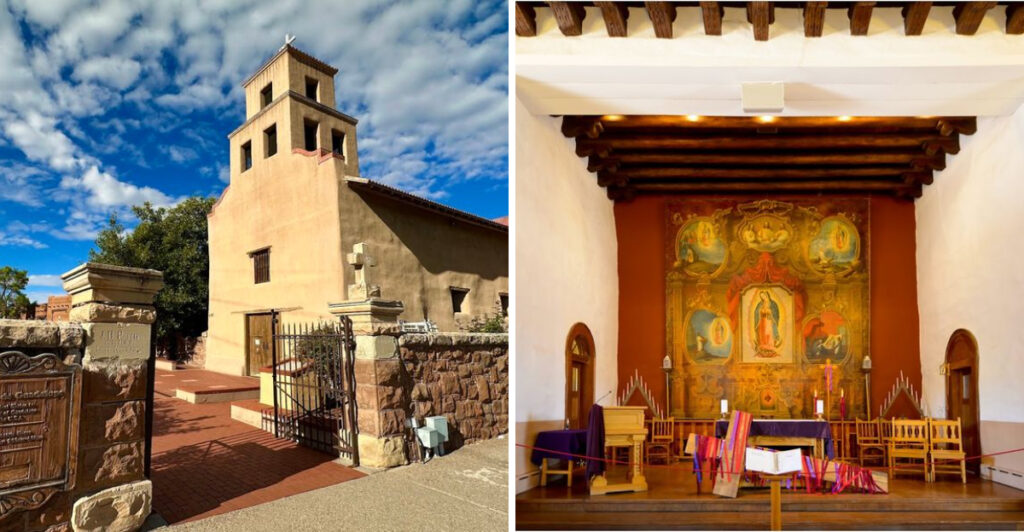
I thought I would spend ten minutes here, maybe take a few photos, then move on with the day. That plan disappeared almost immediately.
The moment I walked inside, everything felt calm in a way that is hard to find anymore. Thick adobe walls muted the outside world, while warm light stretched across worn wooden floors and faded religious artwork.
The scent of old timber and candle wax lingered in the air. Every detail felt lived in instead of preserved behind glass.
I kept noticing small things, carved doors, weathered textures, quiet corners filled with shadows and sunlight at the same time. Even the courtyard carried a stillness that made people slow their steps without realizing it.
Centuries of New Mexico history sit inside these walls, yet the place never feels heavy or formal. It simply feels peaceful.
I left with that rare feeling that I had stepped into another era for a little while and did not want to leave yet.
Adobe Walls & Quiet Courtyards
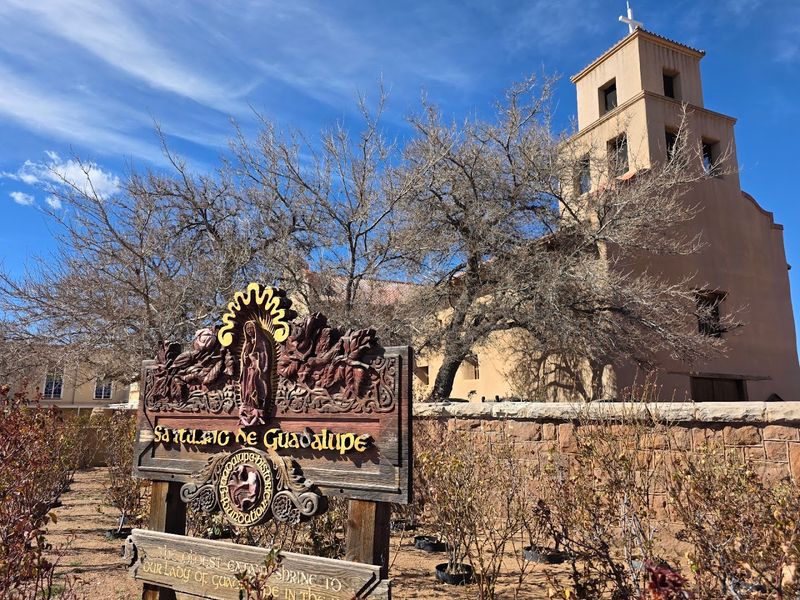
Few materials carry history quite like adobe, especially when centuries of weather, prayer, and daily life have shaped every surface.
At Santuario de Guadalupe, the adobe construction is not just a visual feature but a living record of the region’s earliest builders.
The walls in the history room at the back of the sanctuary are among the oldest sections, and visitors can still see the original texture and layers preserved there.
Run your hand along the surface and the texture feels uneven, layered, and deeply personal, like something shaped patiently by human hands rather than machines.
The courtyards surrounding the building carry that same unhurried energy, with rose gardens adding soft color against the earthy tones of the structure.
I spent a long stretch of time simply sitting in one of these outdoor spaces, watching the light shift across the walls and listening to the city hum quietly in the distance.
Few architectural materials speak as honestly as adobe, and here it does so with remarkable dignity.
Santuario de Guadalupe at 100 S Guadalupe St, Santa Fe, NM 87501 preserves this craftsmanship in a way that feels both intentional and deeply respectful of its origins.
Sunlight Through Centuries-Old Windows
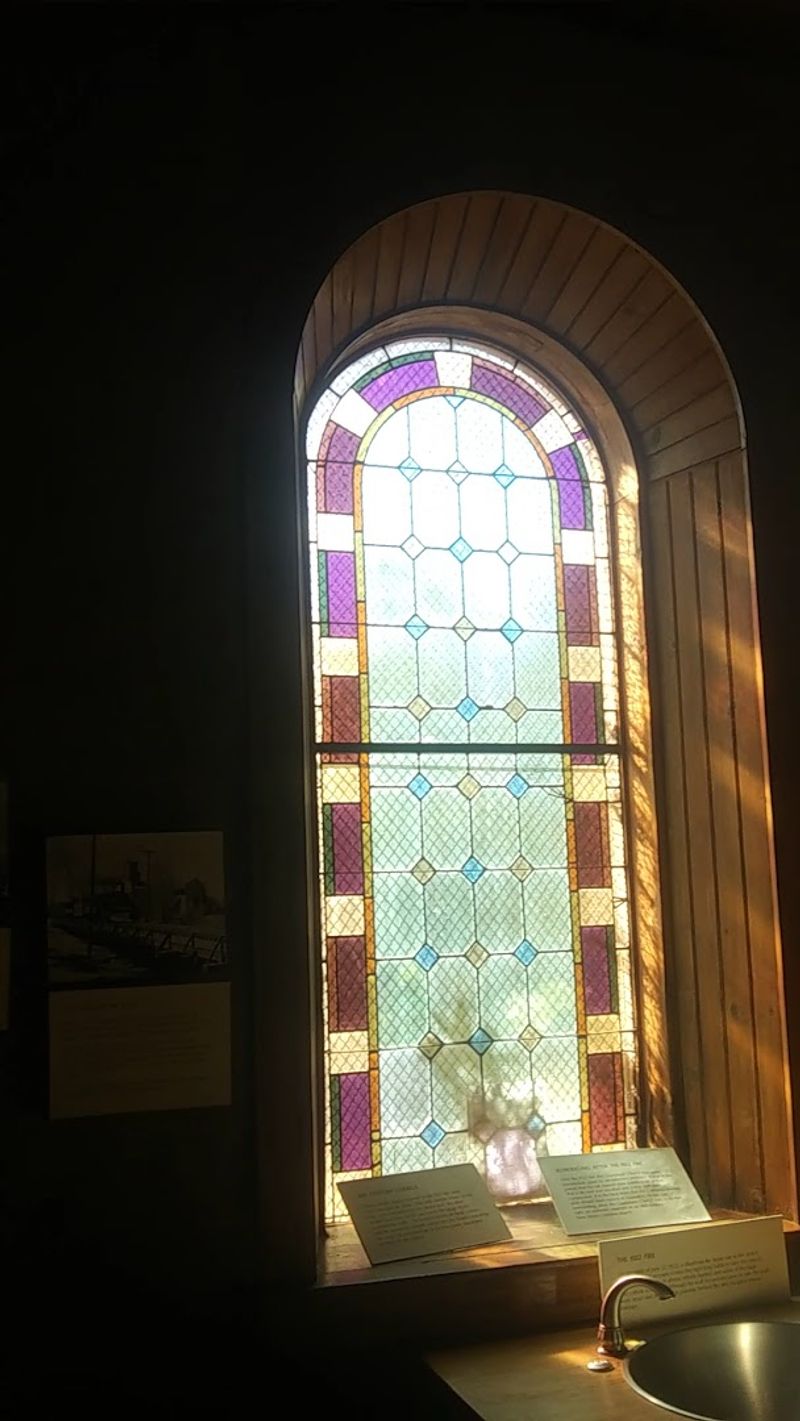
Light drifting through old windows is one of those small travel experiences people rarely talk about enough.
Inside Santuario de Guadalupe, the windows are modest in size, framed in weathered wood, and positioned in a way that draws natural light across the interior at angles that feel almost deliberate.
By mid-morning, a soft golden glow settles across the wooden pews and painted surfaces, creating an atmosphere that feels both warm and contemplative.
The sanctuary and gift shop welcome visitors Monday through Saturday from 10 AM to 4 PM and Sunday from 9 AM to 3 PM, though earlier hours still offer the most flattering light inside.
That particular quality of New Mexico sunlight, dry and clean and bright, transforms the interior in ways that artificial lighting simply cannot replicate.
The famous oil painting above the altar, dated 1783, looks especially striking when natural light reaches it at just the right hour.
Photography here feels almost secondary to the experience of simply standing still and letting the light do what it has done for generations of visitors before you.
Every window in this place earns its place on the wall.
The Soft Colors Of Old Santa Fe
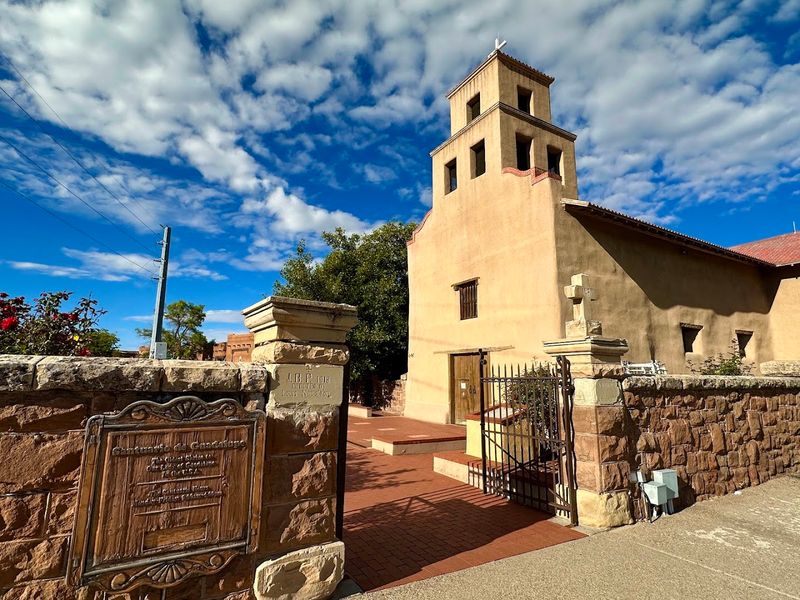
Santa Fe has a color palette that feels entirely its own, built from the earth itself rather than from any designer’s mood board.
Approaching Santuario de Guadalupe, those colors appear immediately through the sandy beige of the adobe exterior, the muted terracotta of surrounding surfaces, and the deep green of the rose bushes lining the property.
Against the brilliant blue of a New Mexico sky, the whole scene looks like something a landscape painter would have composed with careful intention.
Inside, the tones shift to warmer ochres and creamy whites, with painted decorative details that reflect the regional folk art tradition known locally as santero work.
The building has been carefully restored to reflect what parishioners would have experienced generations ago, and the color choices throughout that restoration feel historically sensitive rather than commercially polished.
Nothing here screams for attention, and that restraint is precisely what makes every shade and surface so satisfying to look at.
I kept pausing at different spots just to notice how the colors changed with the shifting light throughout my visit.
Old Santa Fe speaks quietly, and its palette is part of that language.
Hidden Details Inside The Sanctuary
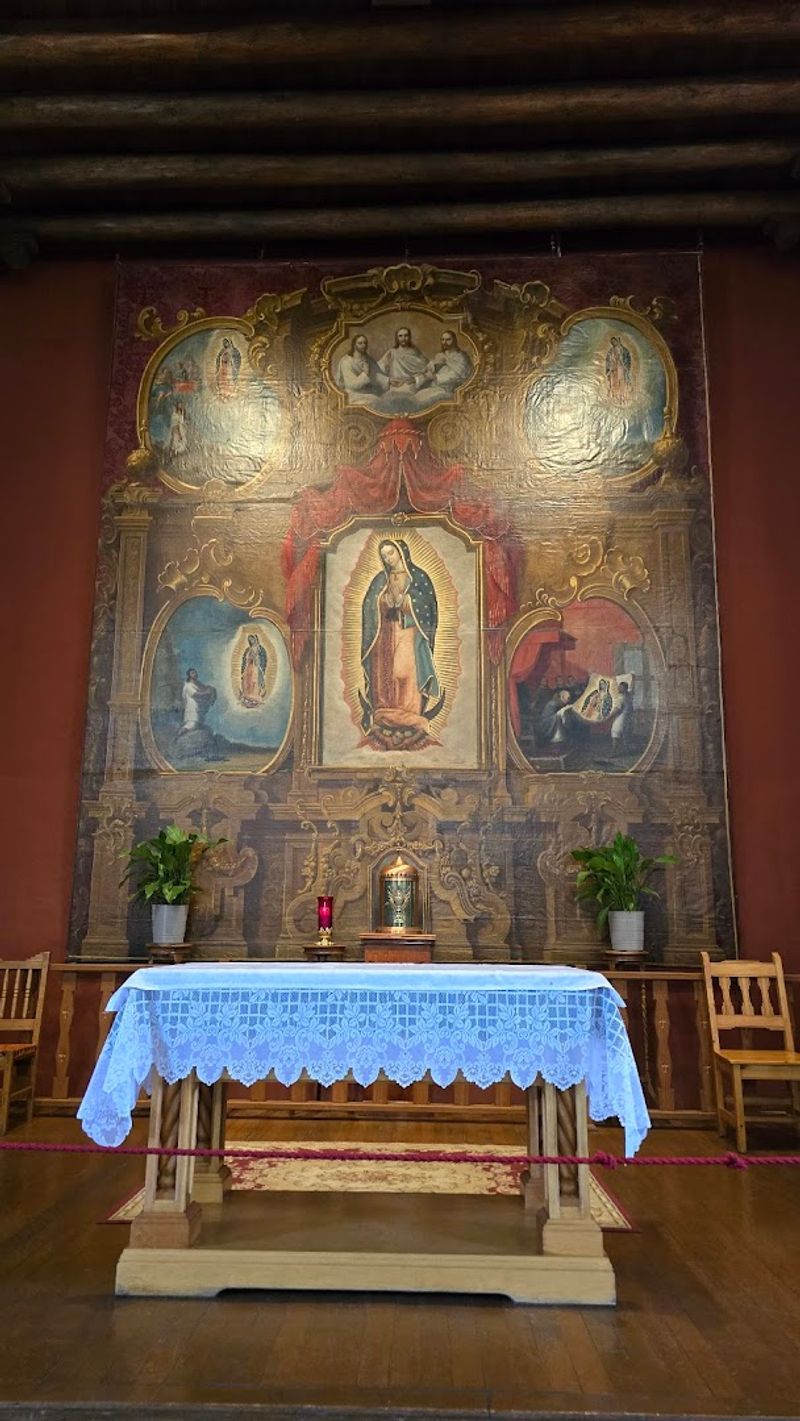
Most visitors arrive expecting a beautiful church and leave having discovered something far more layered than they anticipated.
Santuario de Guadalupe rewards people who slow down and look closely, because the details tucked into corners and along the walls tell stories that a quick walk-through would completely miss.
The altar holds a large oil canvas painting dated 1783, and its scale and presence inside this relatively modest space feels surprisingly dramatic in person.
Decorative folk art elements appear throughout the sanctuary, reflecting the deep tradition of New Mexican religious artistry that dates back to the Spanish colonial period.
The history room at the back of the building is a particular highlight, housing exhibits and original adobe sections that give real context to what you are seeing throughout the rest of the church.
Small details throughout the sanctuary reveal themselves gradually, especially once your eyes adjust to the softer interior lighting and weathered textures.
The gift shop nearby offers locally inspired religious items and traditional keepsakes that fit naturally with the atmosphere of the church itself.
Every square foot of this sanctuary holds something worth noticing if you give it the time it deserves.
Desert Light Along Historic Streets
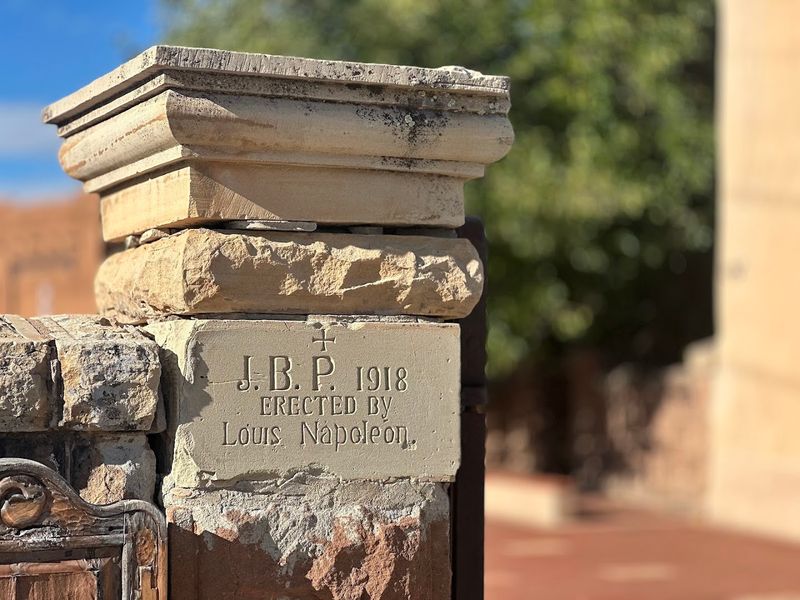
Guadalupe Street carries its own atmosphere, blending the quiet presence of the sanctuary into the broader rhythm of old Santa Fe.
The surrounding neighborhood shares that same unhurried character, with low adobe buildings, narrow sidewalks, and a feeling that the area never rushed to modernize itself.
Desert light in New Mexico behaves differently than sunlight in most other places, arriving at a sharper angle and painting everything in tones that range from pale gold to deep amber depending on the hour.
Late afternoon is when the street outside the sanctuary looks most cinematic, with long shadows stretching across the walkways and the warm tones of the buildings glowing softly against the sky.
Arriving on foot feels especially rewarding here, since the walk through central Santa Fe gives you time to absorb the rhythm of the neighborhood before reaching the church entrance.
The surrounding area also makes the visit feel complete, since the church does not exist in isolation but as part of a living historic district.
Desert light has a way of making even ordinary streets feel significant, and on this particular block, the streets are anything but ordinary.
Weathered Textures & Sacred Spaces
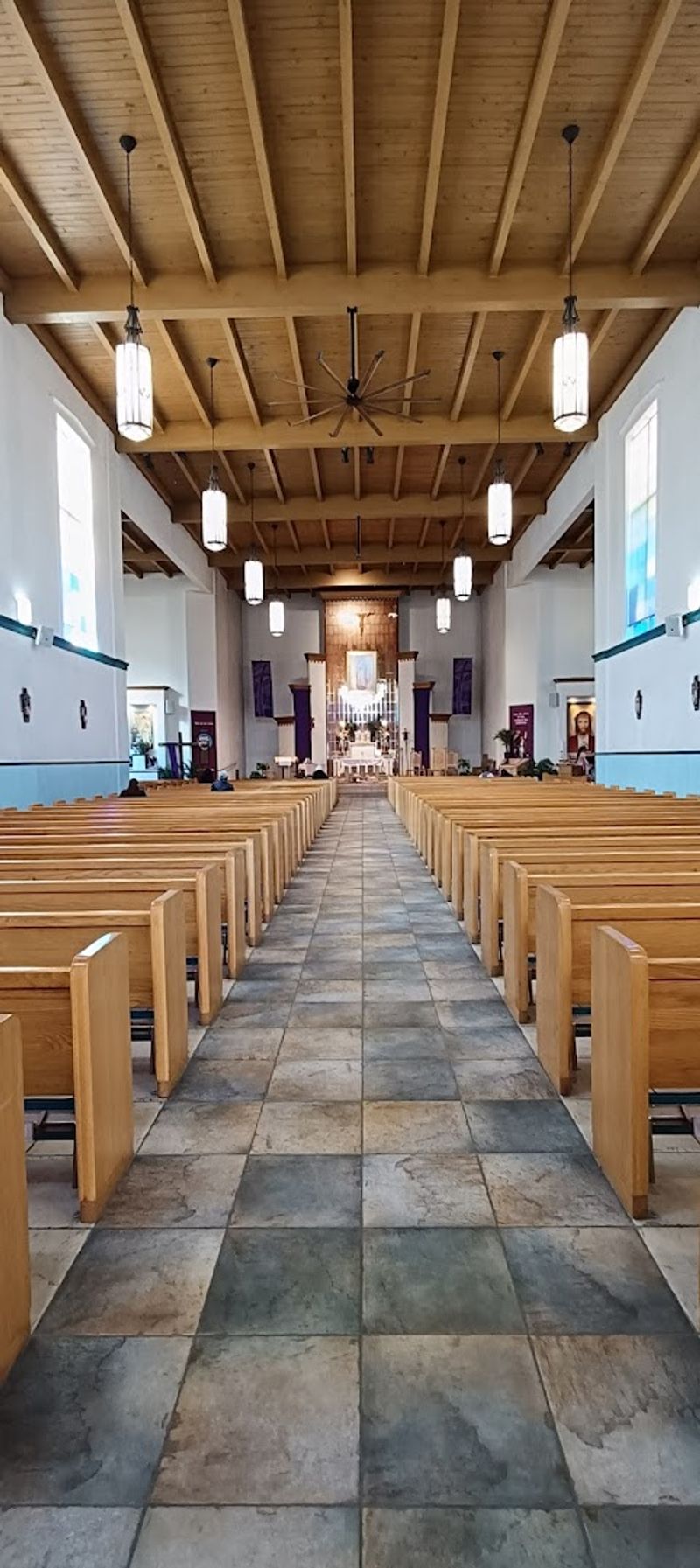
Few things communicate age and meaning as honestly as a surface that has been worn smooth by time and human presence.
At Santuario de Guadalupe, the textures throughout the building carry that kind of weight, from the uneven plaster of the oldest adobe walls to the polished wood of long-used pews and the rough stone of outdoor pathways.
These are not decorative choices made to look old but actual surfaces shaped by generations of use, weather, and care.
The sanctuary has been described by visitors as quiet, reverent, and simple, and those three words feel exactly right when you are standing inside and running your eyes across the walls and ceiling.
Sacred spaces often earn their atmosphere through accumulated time rather than grand design, and this one has had centuries to accumulate exactly that.
The restoration work here is notable for how carefully it preserves original materials while making the space accessible and comfortable for modern visitors.
Even the outdoor areas, where a large rosary made of stepping stones circles around the property, carry a textural richness that connects the physical experience to the spiritual one.
Walking that path slowly is one of the more grounding things I did during my entire trip to Santa Fe.
A Peaceful Corner Frozen In Time
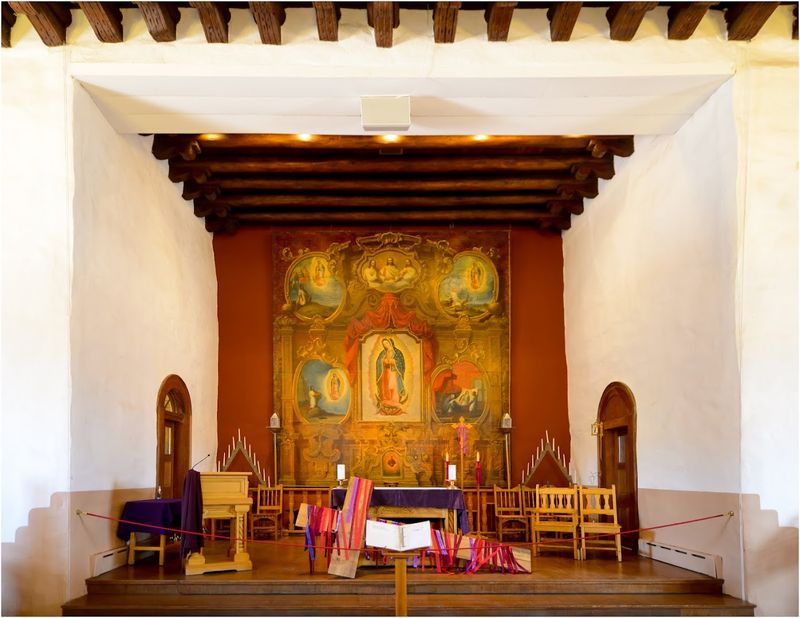
Not every historic site manages to hold onto its atmosphere when visitors arrive, but this one does so with remarkable consistency.
Reviewers with a wide range of backgrounds, Catholic and non-Catholic alike, describe the sanctuary as peaceful, clearly well-loved, and easy to simply sit in for a while without feeling rushed or out of place.
The church is not crowded in the way that more famous Santa Fe landmarks can be, which means you often have significant stretches of the interior to yourself.
That quietness is not accidental but the result of a space that has been maintained with a specific intention toward prayer and contemplation rather than tourism performance.
I sat in one of the wooden pews for a good twenty minutes during my visit, not doing anything in particular, just absorbing the stillness and the faint smell of old wood and candle wax.
Time genuinely felt slower inside those walls, and I left feeling more settled than when I arrived, which is not something I can say about every historic site I have visited.
Places like this are increasingly rare in a world that prizes speed and spectacle above all else.
Finding one that has stayed true to its original purpose is worth celebrating quietly.
Rustic Architecture Beneath New Mexico Skies
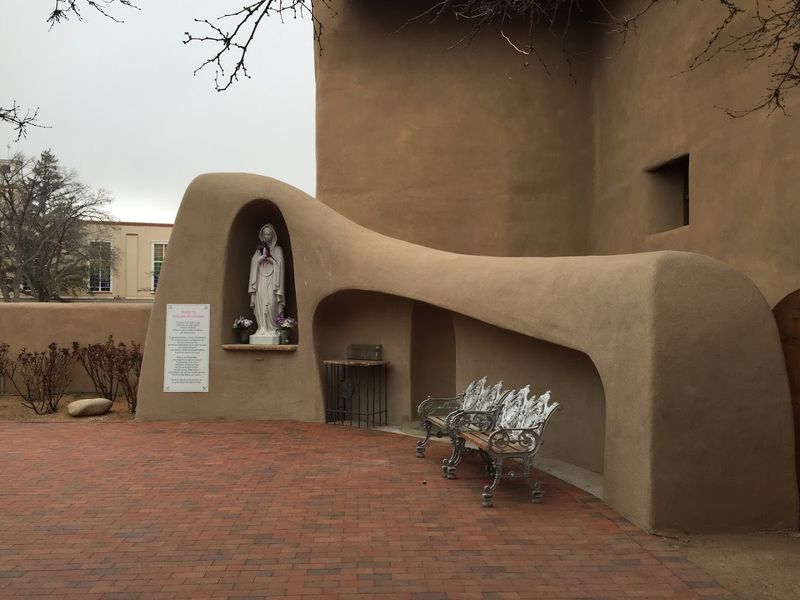
The church presents itself with a kind of quiet confidence that only buildings with real age and purpose tend to project.
The roofline is low and unpretentious, the facade carries the warm sandy tones of traditional New Mexican adobe construction, and the whole structure sits in its landscape as though it grew there naturally rather than being built.
A large stone rosary path circles the property outside, and the rose gardens bordering the grounds add seasonal color that softens the earthen tones of the building without competing with them.
The architecture here belongs to a tradition that predates modern construction methods entirely, relying on materials sourced from the land and techniques passed down through communities over generations.
Standing back and taking in the full exterior against a wide New Mexico sky is one of those travel moments that photographs reasonably well but feels far more powerful in person.
The sanctuary dates back to the late eighteenth century, and the sense of age becomes obvious in the proportions, materials, and handcrafted details visible throughout the property.
Everything about the building, from its proportions to its placement, reflects a time when construction was an act of devotion as much as craft.
Santuario de Guadalupe stands as one of the most quietly powerful historic sites in the American Southwest.