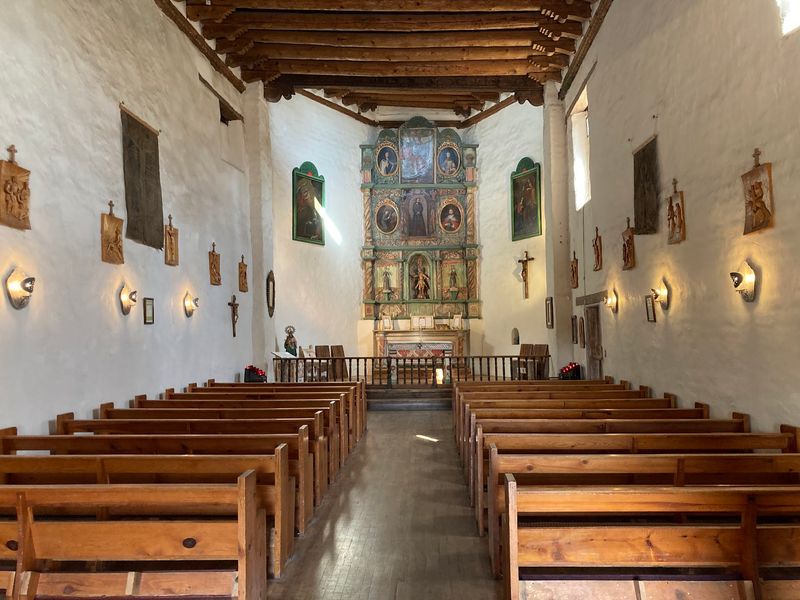
Some of the best surprises in New Mexico come wrapped in humble adobe walls that most people walk right past. Tucked into a quiet corner, there’s a small chapel that looks unassuming from the street but holds centuries of secrets inside.
Behind its altar hide painted treasures so old and so unusual that they feel unlike anything you’ve ever seen in a church. Step inside, and you’re standing in one of the oldest sacred spaces in the entire country.
An Ancient Adobe Landmark on the Old Santa Fe Trail
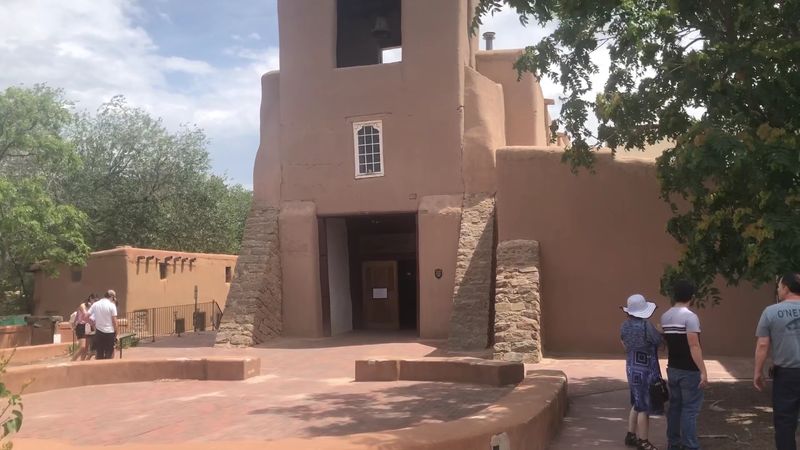
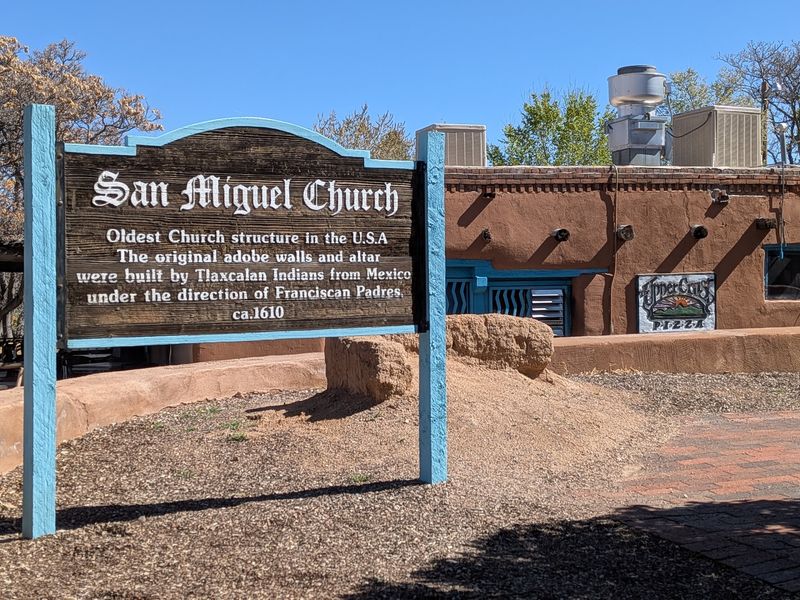
Right at the crossroads of the Old Santa Fe Trail and the historic Camino Real sits a modest brown building that has watched Santa Fe grow up around it. San Miguel Chapel, at 401 Old Santa Fe Trail, is widely recognized as the oldest church building in the continental United States.
Construction began around 1610, shaped by Tlaxcalan Indian laborers working under Franciscan friars. What makes the spot even more remarkable is what lies beneath it, since the chapel rests on the foundation of a Tewa pueblo dwelling dating back to roughly 1300.
The current structure was rebuilt in 1710 after taking damage during the events of 1680. Its thick adobe walls, aged wooden beams, and simple lines feel worlds away from grand cathedrals.
Visitors often mention that you could stroll by and nearly miss it, since it blends so quietly into its surroundings. It sits a short walk from the Santa Fe Plaza and near the New Mexico Capitol, making it an easy addition to any day spent wandering the city’s oldest streets.
The Rediscovered Painting of Christ the Nazarene
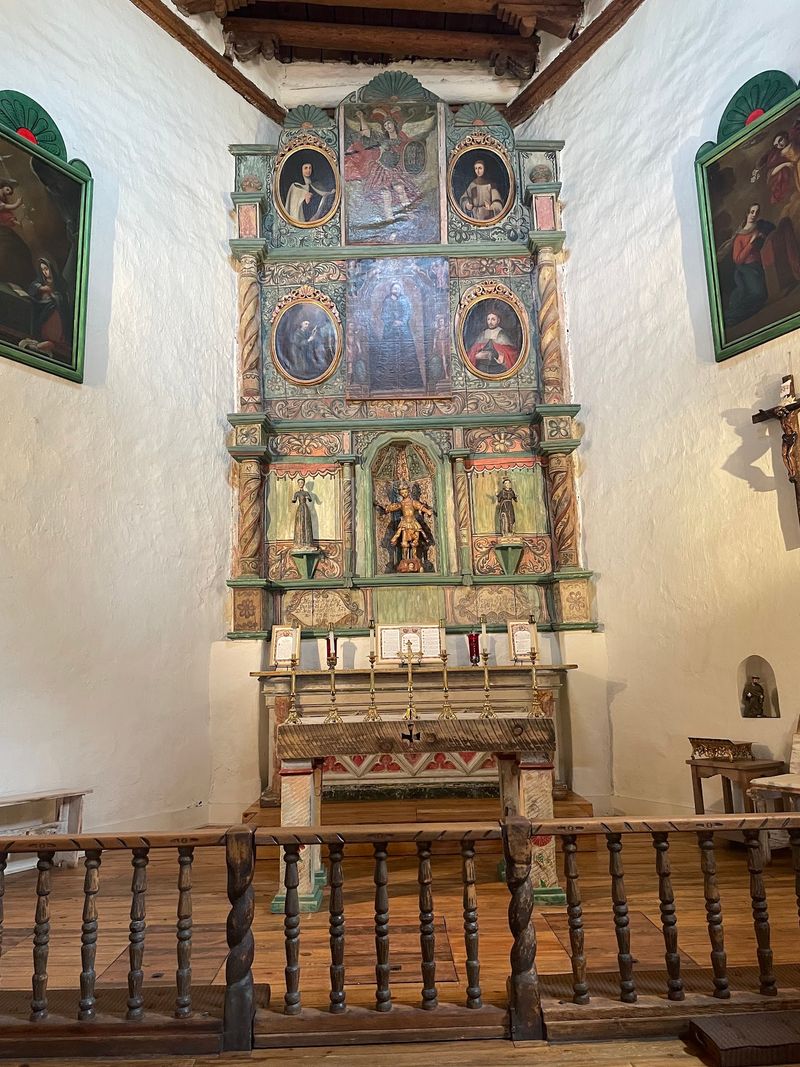
Hidden from view for who knows how long, one of the chapel’s most striking pieces waited quietly behind the altar screen until modern hands uncovered it. A large painting of Christ the Nazarene, created in the mid-18th century, was rediscovered by archaeologists in 1955 tucked away behind the reredos.
Imagine the moment of finding centuries-old artwork that had been sealed out of sight, its colors and brushwork preserved by the very screen that concealed it. Pieces like this are exactly what gives the chapel its reputation for holding art that feels unlike anything else.
Guests frequently point out how different the paintings on the back wall look compared to the church art they had seen elsewhere. There’s a raw, hand-crafted honesty to the work that many find deeply moving.
Standing before it, you’re looking at a survivor, an image that outlasted generations and only returned to daylight through careful discovery. For history lovers, few things in Santa Fe deliver the same quiet thrill as this rediscovered treasure.
St. Michael the Archangel by a Frontier Mapmaker
Layered beneath a newer image, another hidden gem revealed itself during restoration work at the chapel. A painting of St. Michael the Archangel, dating to 1745, came to light when a more recent depiction was removed to expose the original underneath.
What makes this one especially fascinating is its creator. The work is attributed to Bernardo Miera y Pacheco, who lived from 1713 to 1785 and earned fame as one of the region’s earliest cartographers as well as a skilled artist.
Picture the same hand that helped map the wild edges of the Spanish frontier also painting a heavenly guardian for this little chapel. That blend of exploration and devotion says so much about the people who shaped early New Mexico.
The piece sits above the rediscovered Christ painting, giving the altar area a layered story that rewards a close, patient look. Visitors who love the hand-carved and hand-painted details often linger here, drawn to the idea that a frontier mapmaker left his mark in paint on these very walls.
The 1798 Reredos and Its Twisting Columns
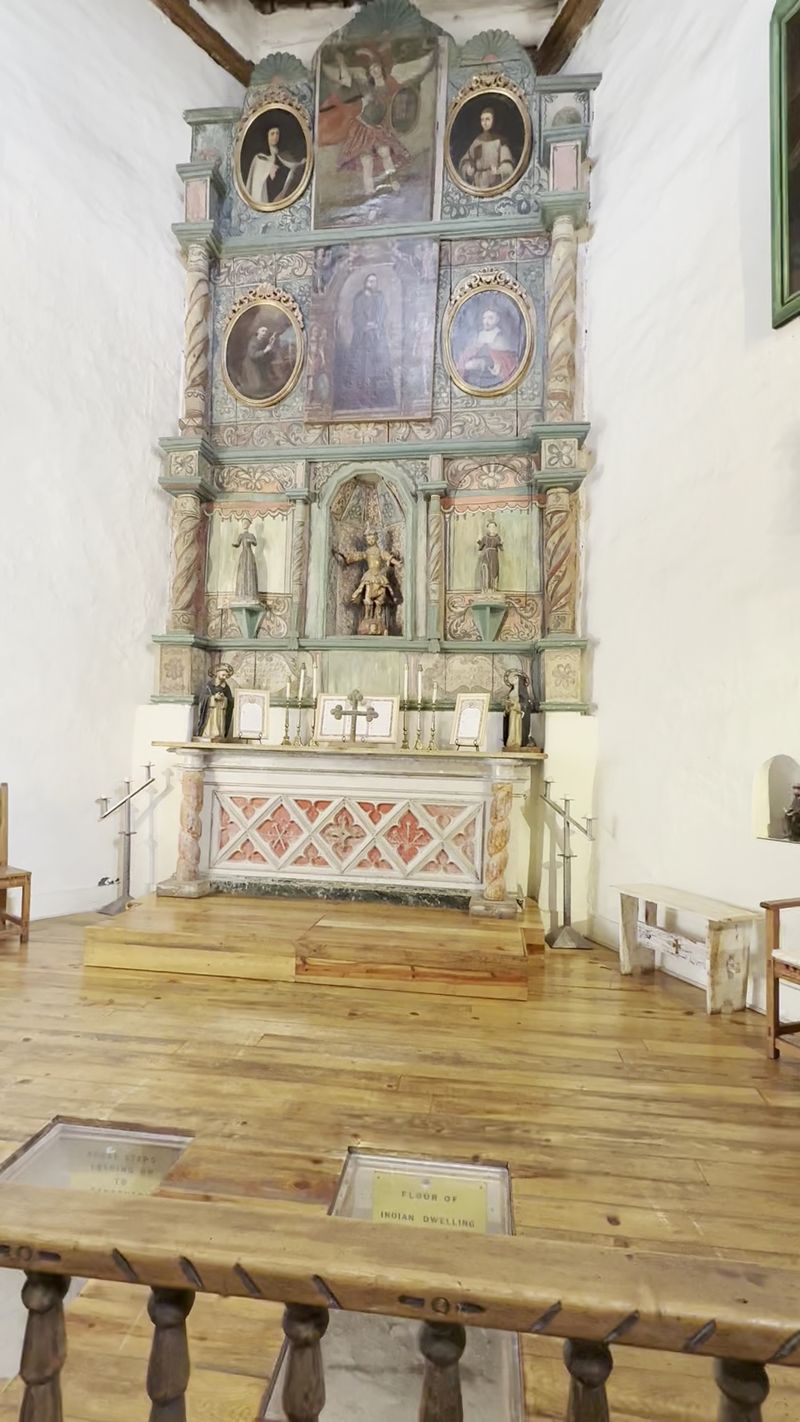
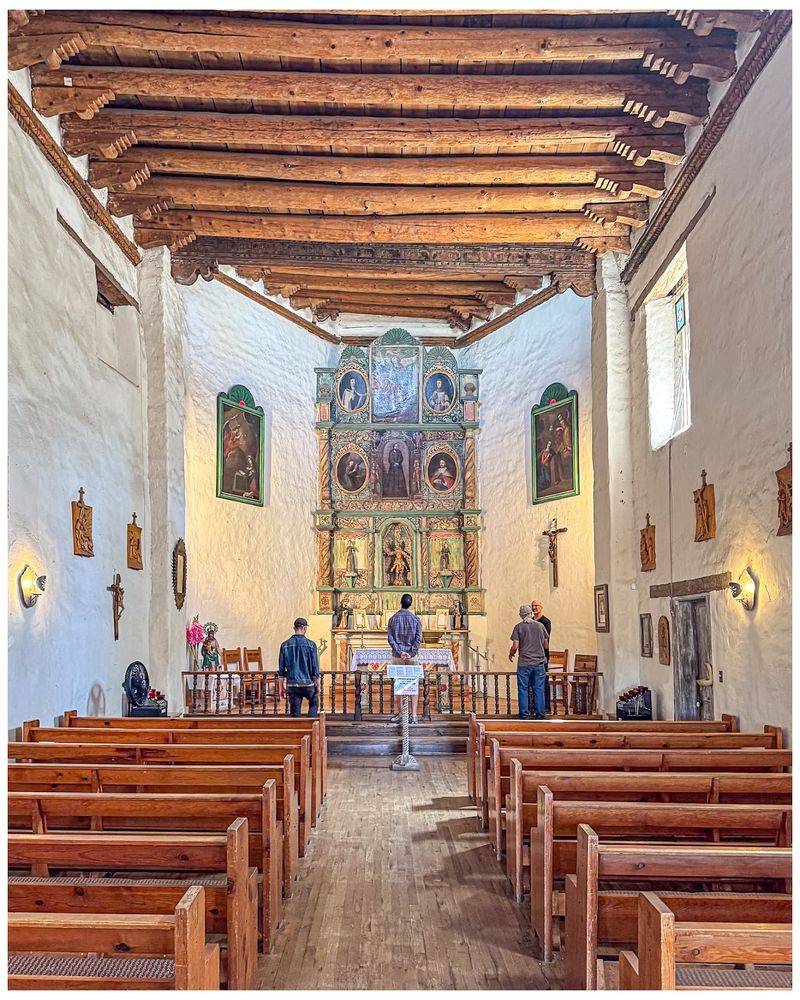
Carved wood, spiraling columns, and centuries of faith come together in the towering screen behind the altar. Known as a reredos, this elaborate wooden structure dates to 1798 and ranks among the oldest in all of New Mexico.
Its most eye-catching feature might be the twisted Solomonic columns that flank it, believed to be the first of their kind in the region. The screen is credited to a gifted but anonymous artist historians call the Laguna Santero, who worked across the area between roughly 1796 and 1808.
Set into the reredos are four oval oil paintings on canvas that traveled north from Colonial Mexico in the early 18th century. They depict St. Teresa of Avila, St. Francis of Assisi, St. Gertrude of Germany, and St. Louis IX.
People who admire hand-carved craftsmanship tend to stop and study every curve and detail. The whole assembly feels like a storybook rendered in wood and paint, and it anchors the chapel’s identity as a place where Spanish, Indigenous, and Catholic artistry all meet in one small, glowing space.
The Centuries-Old Statue of San Miguel
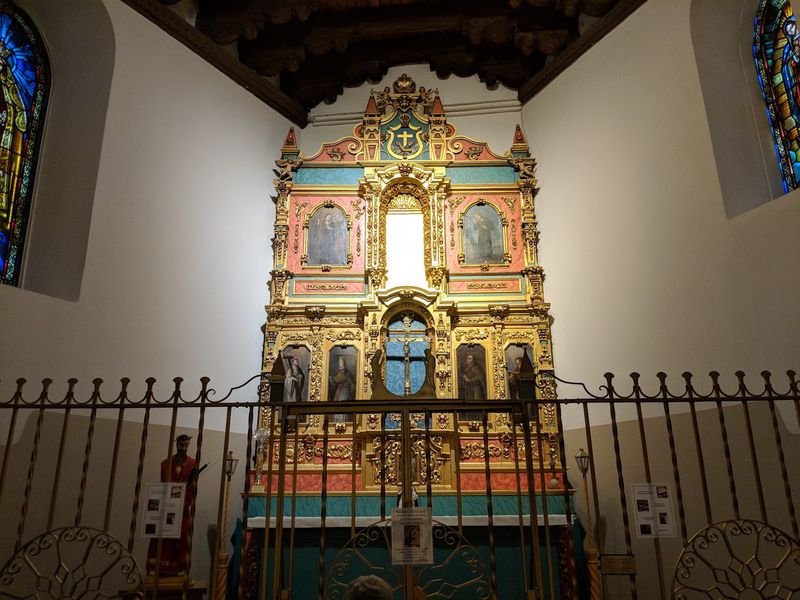
At the very heart of the reredos stands the figure the whole chapel is named for. A wooden statue of San Miguel, or St. Michael, was carved in Old Mexico around 1700 and carried north to Santa Fe by Franciscan friars.
Records show it has held its central place within the altar screen since at least 1776, making it a quiet witness to nearly 250 years of prayers and processions. The idea that this carving crossed rugged trails to reach its home here adds a sense of journey to its stillness.
Hand-carved wooden works are something guests repeatedly single out as a highlight of the visit. There’s a warmth to old carved saints that no printed image can match, a texture you can almost feel from across the room.
Placed dead center and surrounded by paintings and spiraling columns, the statue becomes the calm focal point of a very busy, very beautiful screen. For anyone drawn to craftsmanship that has endured through the centuries, San Miguel himself is the reason to slow down and look closely.
Rare Animal-Hide Paintings from the 1630s
Beyond the dazzle of the altar, two of the chapel’s rarest works hang quietly along the nave walls. Painted on animal hide and dating back to the 1630s, these pieces count among the earliest surviving religious artworks ever made in New Mexico.
One portrays Christ on the Cross, while the other is believed to show St. John the Baptist. Long ago, they served a practical purpose, acting as teaching aids to share stories of faith with Indigenous communities.
The material alone makes them extraordinary, since paintings on hide rarely survive four centuries of time. Seeing them mounted on the same adobe walls that have sheltered them for generations feels almost impossible.
Many visitors come expecting one famous altar and leave surprised by treasures like these tucked along the sides. They reward the curious traveler who takes an extra minute to look past the obvious.
For anyone who loves stories written into objects, these humble hides carry an entire chapter of the Southwest’s blended history, quietly waiting to be noticed.
Original Floors, a Restoration Story, and a Bell You Can Ring
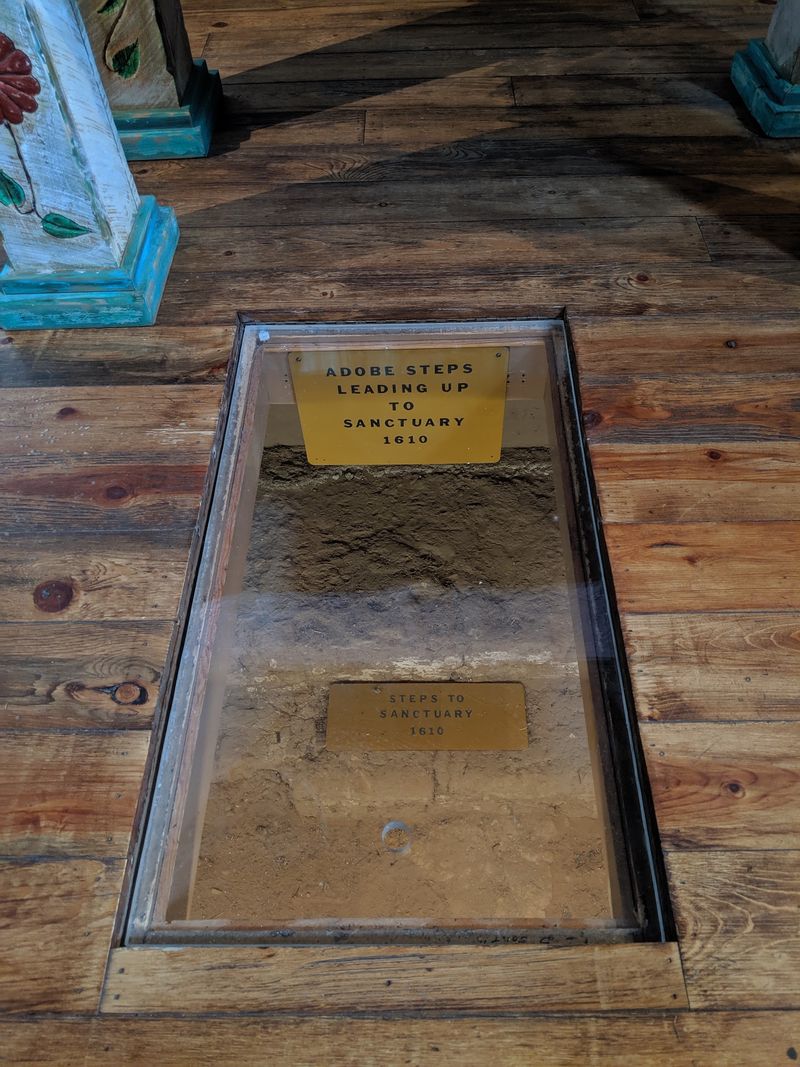
Part of the fun here is that the chapel practically invites you to peek beneath its own skin. Viewing ports set into the floor let you gaze down at the original foundation, the old altar stairs, and even the deeper Native American ground layers dating to the 1300s.
Guests love spotting the preserved section of original floor, which sits several feet below where they stand. A display of the wall as it looked before a major restoration adds even more depth to the visit.
That restoration matters. In 1955, curator E.
Boyd led the effort to strip away layers of house paint that had covered the reredos in the late 1800s, carefully cleaning and reviving the artwork to its original glow.
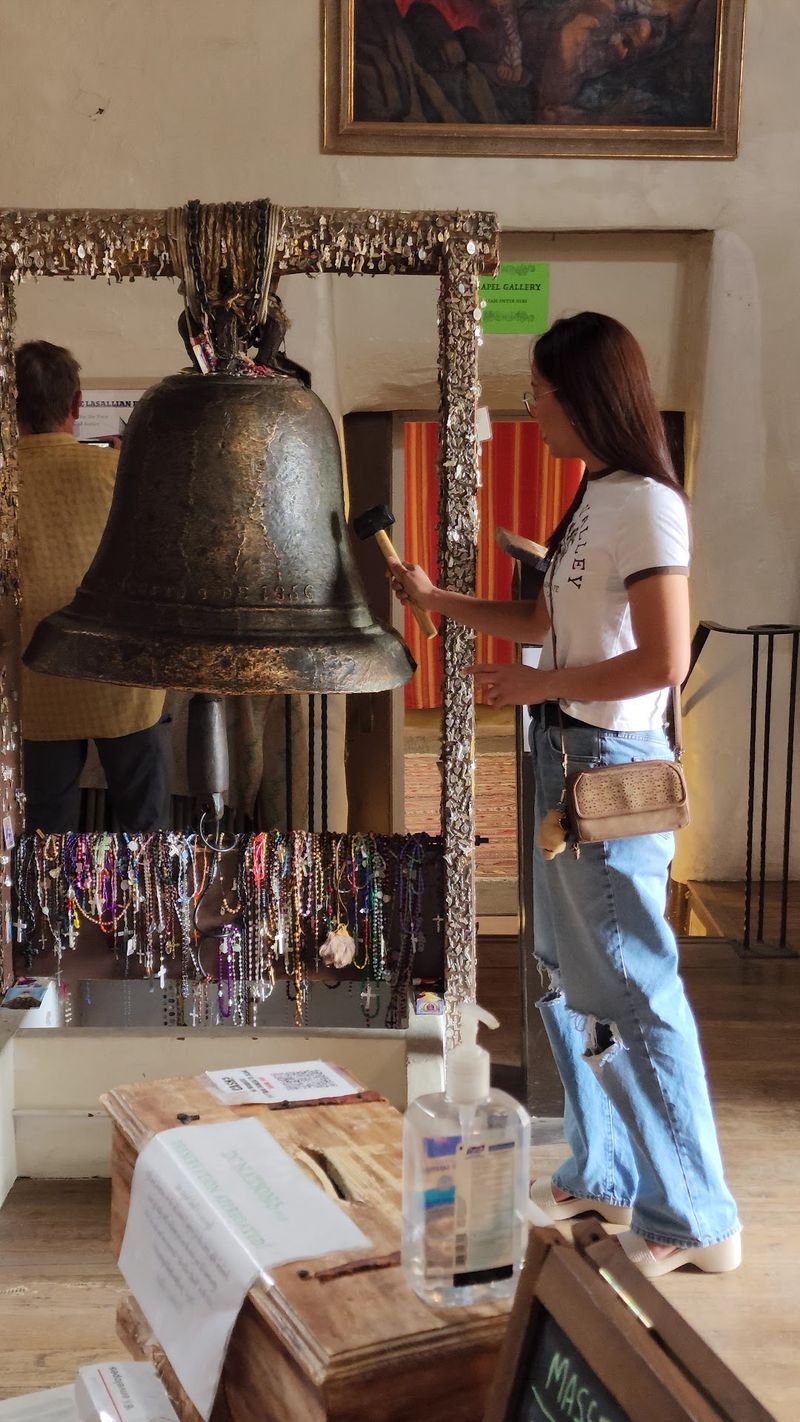
Then there’s the bell. Once perched in the tower, it now rests just inside the front doors, and staff hand you a tool so you can strike it and feel its vibrations.
Between the floor windows, the aged beams overhead, and that ringing bell, the whole place turns visitors into delighted history detectives.
Planning Your Visit and Why It Sticks With You
Timing your stop makes all the difference at this little landmark. The chapel welcomes visitors Tuesday through Saturday from 10 AM to 3 PM, Monday from 11 AM to 3 PM, and Sunday from 12 to 3 PM, so a quick check of the schedule saves disappointment.
Admission has run around 7 dollars for adults, a small fee that helps maintain this fragile 400-year-old treasure. Guests consistently say the cost feels worth it, especially when a knowledgeable docent shares the stories behind every corner.
Parking can be tricky in this older part of Santa Fe, so many travelers pay for street parking and enjoy the short walk. The plaza, the Capitol, and other historic sites all sit nearby.
Even folks who don’t consider themselves religious describe the space as peaceful, humble, and quietly powerful. It’s the kind of stop that turns a busy Santa Fe day into something reflective.
If you take pride in finding the real, storied gems of New Mexico, this tiny chapel and its hidden paintings belong high on your list. Give it more than ten minutes, and it will stay with you long after you leave.