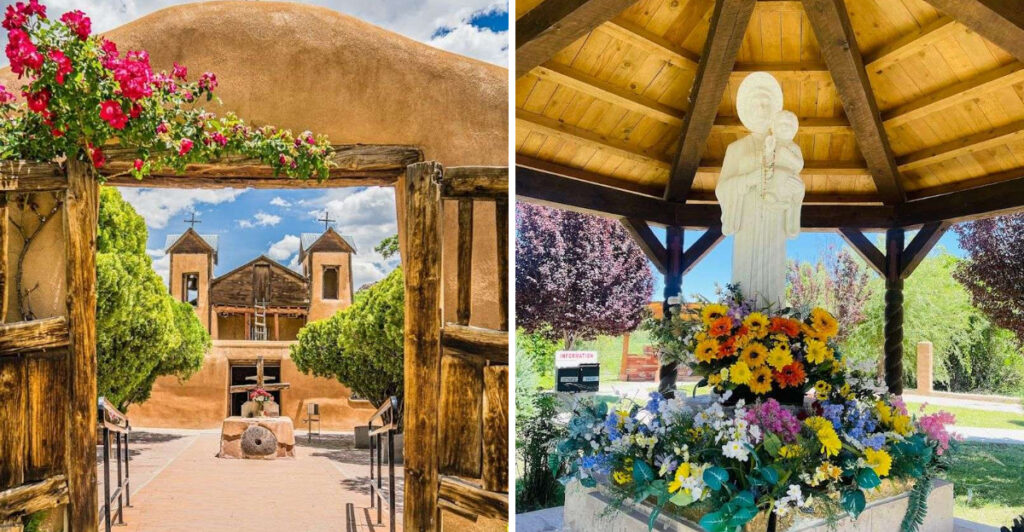
A small adobe chapel in northern New Mexico has been stopping travelers in their tracks for more than two centuries. People drive for hours across dusty highways just to see it.
Others walk for miles carrying heavy wooden crosses through the desert heat. Step inside, and the mood changes instantly.
Candles flicker against dark adobe walls. Handwritten prayers spill from every corner.
Visitors quietly gather around a small pit of reddish earth believed by many to hold healing power. Some leave with tiny bags of dirt tucked into their pockets.
Others sit silently, overwhelmed by the emotion surrounding the chapel’s long traditions and stories of recovery. The place feels deeply personal to everyone who enters, no matter where they came from.
Travelers from across the country continue making the pilgrimage every year, drawn by rumors, faith, and curiosity. Keep reading to discover why this humble chapel became one of the Southwest’s most unforgettable spiritual landmarks.
Ancient Healing Legends In Desert Foothills
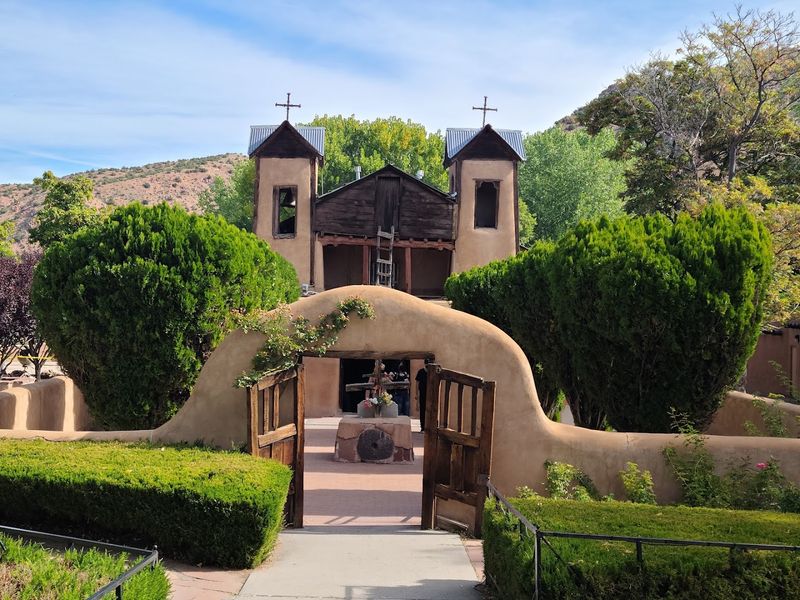
Long before tour buses and travel blogs, word spread through the high desert on foot and horseback about a place where the earth itself was said to heal.
The story behind this chapel begins around 1810, when a local man named Don Bernardo Abeyta reportedly saw a mysterious light glowing from the hillside soil during Holy Week.
He dug into the ground and uncovered a crucifix, which local tradition holds as the miraculous image of Our Lord of Esquipulas, a devotion rooted in Guatemala and carried north through centuries of faith.
Each time church leaders tried moving the crucifix to a nearby church, it reportedly returned on its own to the spot where it was found.
That persistent return convinced the community that something sacred was anchored to this particular patch of New Mexico earth.
A chapel was eventually built directly over the site, and the legend only deepened as visitors began reporting physical improvements after touching the soil from the small pit inside.
The Sangre de Cristo Mountains rising behind the site add a dramatic backdrop that makes the whole setting feel ancient, intentional, and quietly extraordinary.
Pilgrims Following A Holy Week Tradition
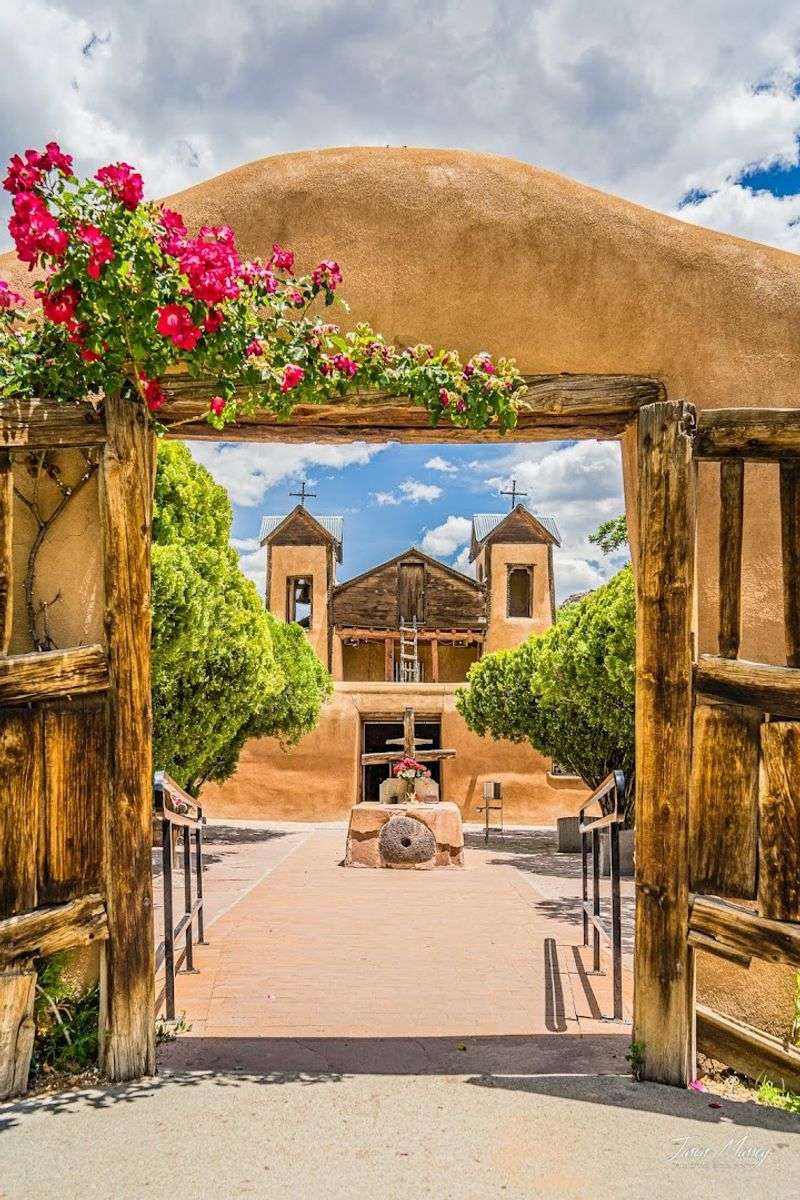
Every year as spring arrives and the desert air begins to warm, something remarkable unfolds along the roads leading into Chimayo.
Tens of thousands of pilgrims make their way on foot toward this small chapel, many starting their journey from Santa Fe, Albuquerque, or even farther away, walking through the night and into the early morning hours.
Good Friday is the peak of this annual movement, with estimates suggesting that up to 30,000 people arrive over the course of Holy Week, making it one of the largest pilgrimages in the entire United States.
Some carry wooden crosses on their shoulders as a personal act of devotion, while others walk barefoot as a sign of sacrifice and humility.
Families line the roadsides offering water, food, and encouragement to those still making the journey, turning the event into a genuine community act of care.
I watched one elderly woman complete the final stretch of her walk with steady, unhurried steps, her face showing something that looked more like relief than exhaustion.
That kind of quiet determination, repeated thousands of times over, is what transforms a road into a sacred path every single spring.
Adobe Walls Guarding Centuries Of Devotion
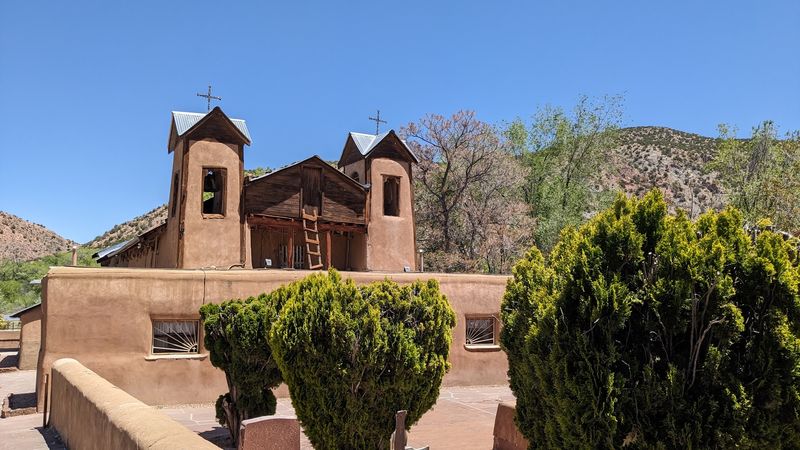
Standing in front of the chapel for the first time, I was struck by how quietly confident those thick adobe walls looked, as if they had no interest in impressing anyone and every intention of lasting forever.
Built in 1816 under the direction of Don Bernardo Abeyta, the structure is a prime example of Spanish Colonial mission architecture adapted to the high desert environment of New Mexico.
Adobe, made from sun-dried mud bricks mixed with straw, was the natural building material of the region, and the chapel’s walls are several feet thick in places, keeping the interior cool in summer and warm during cold mountain nights.
The twin bell towers flanking the entrance give the facade a symmetrical dignity that feels both humble and formal at the same time.
Wooden vigas, the traditional log beams, extend from the walls and carry the weight of the roof in a style unchanged from the colonial era.
The National Park Service designated the Santuario a National Historic Landmark in 1970, recognizing it as a rare and well-preserved example of this regional building tradition.
Running your hand along those rough plastered walls, you get the distinct sense that the building has absorbed every prayer ever spoken inside it.
The Sacred Earth Believed To Heal Illness
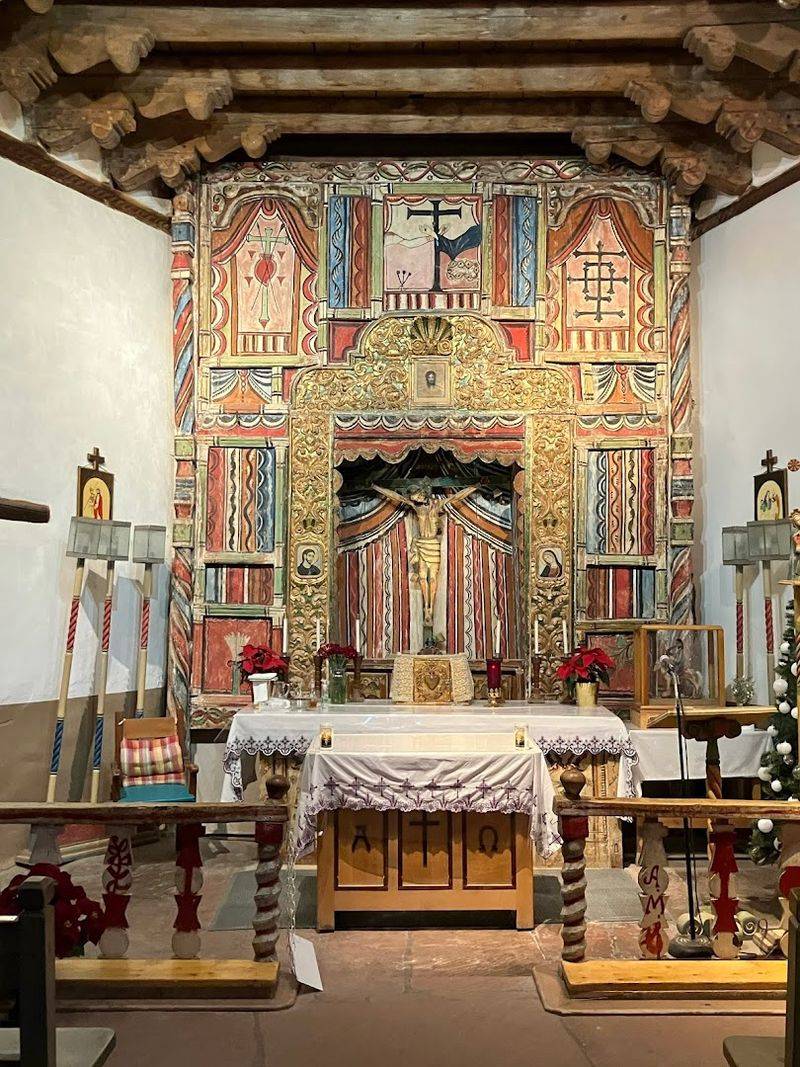
Most visitors stop in their tracks the moment they enter the small room tucked behind the main chapel altar.
Set into the floor is a shallow pit filled with fine, reddish-brown earth, and this is the famous holy dirt, called “el pocito” in Spanish, meaning the little well.
Pilgrims scoop the soil with their bare hands, rub it on painful joints, aching backs, or troubled limbs, and many take small amounts home in bags or containers to share with loved ones who could not make the journey.
The Catholic Church does not make an official claim that the dirt itself performs miracles, but it acknowledges the site as a place of devotion and spiritual significance where many people have experienced what they describe as healing.
Volunteers quietly replenish the pit with soil from nearby ground to ensure visitors can continue participating in the long standing tradition that has lasted for more than two centuries.
The moment my own hands touched that cool earth, I understood immediately why people travel such long distances for what might look, to an outsider, like a handful of dirt.
Context, history, and belief have a way of turning the ordinary into something that feels deeply transformative.
Crucifixes Covering Narrow Chapel Hallways
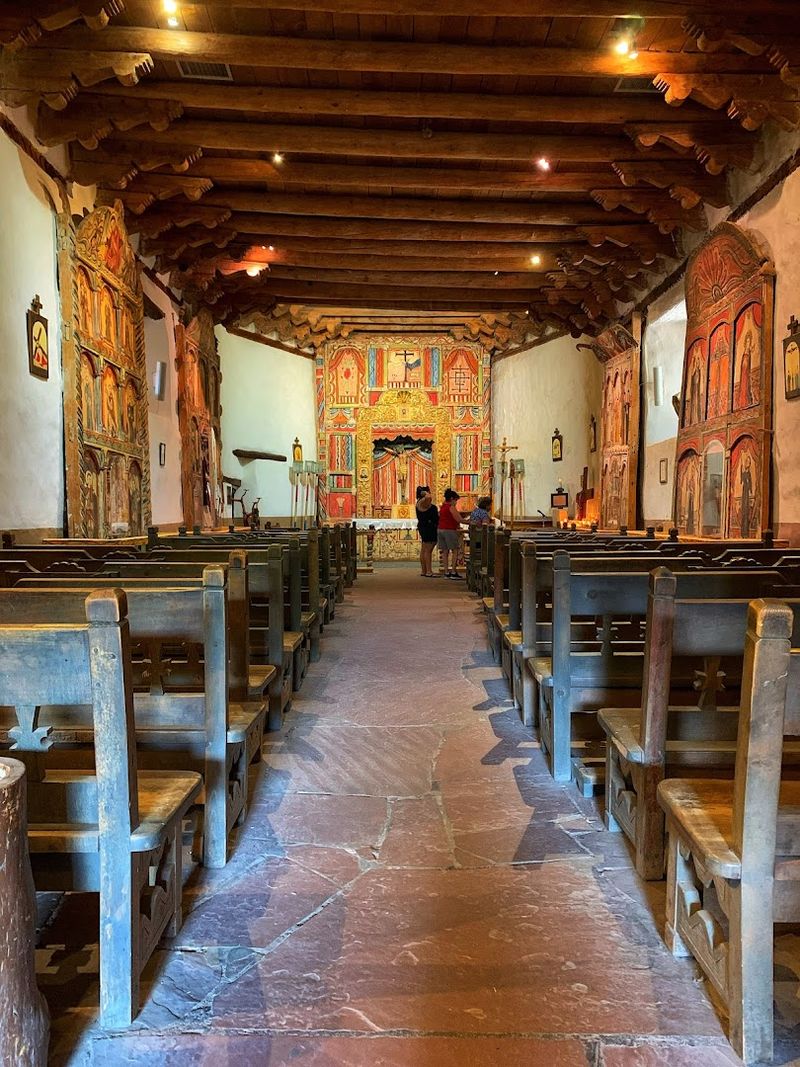
Few places I have ever visited carry as much raw human emotion as the small side rooms and hallways just off the main sanctuary at this chapel.
The walls there are covered from floor to ceiling with offerings left by visitors over decades, including wooden crucifixes, rosary beads, handwritten letters, photographs of loved ones, and medical devices like crutches, canes, and leg braces.
Each item represents a personal story, a prayer answered or still being asked, a moment of desperation or gratitude that someone felt compelled to leave behind as a permanent record.
The sheer density of these offerings creates a visual experience that no photograph can fully capture, which is partly why visitors are encouraged to remain respectful and quiet inside the chapel rooms.
As I stood in that narrow hallway, fragments of handwritten notes pulled my attention toward the kind of stillness that usually only comes after a long walk or a long cry.
The crucifixes range from simple carved wood to ornate painted pieces, some clearly handmade, some store-bought, all carrying equal weight in this context.
A powerful sense of equality fills the room, where every person who enters, regardless of background, is reduced to the same basic human act of hoping.
Spanish Colonial Faith In Mountain Country
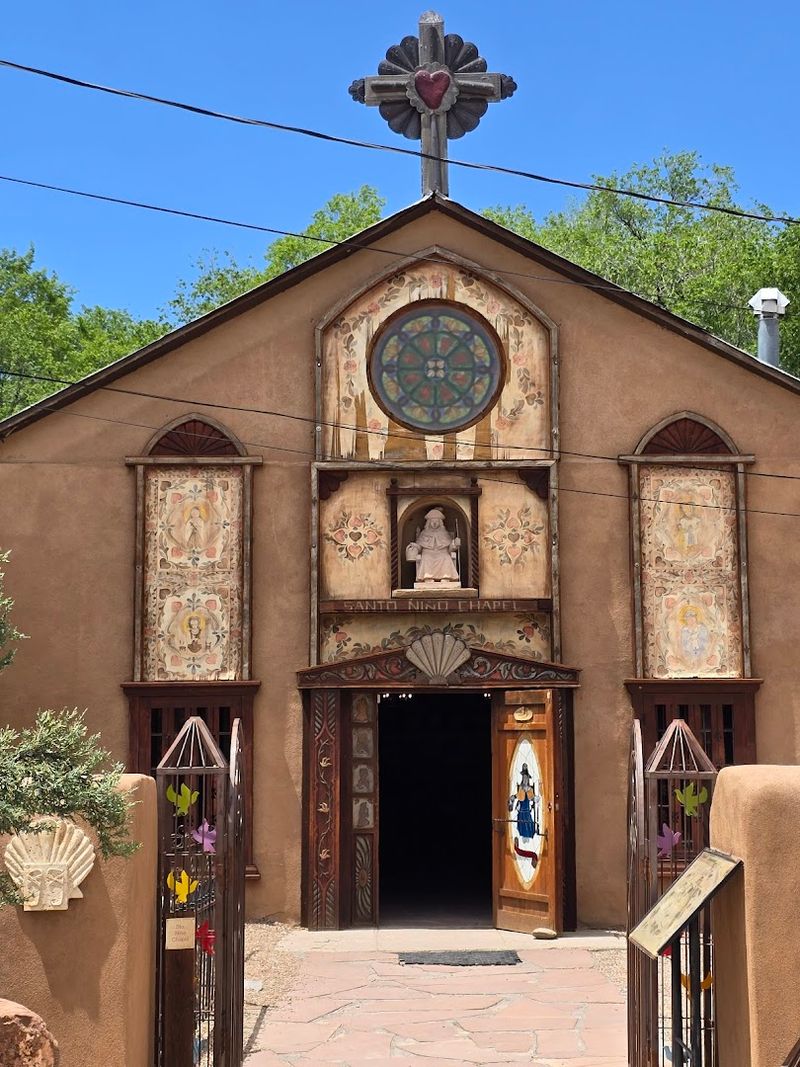
The main chapel feels less like a museum and more like a living document of faith written and rewritten across two centuries.
The interior is decorated with hand-carved wooden santos, which are carved figures of saints, and painted retablos, which are devotional panels, all created in the traditional New Mexican style that blends Spanish Catholic iconography with local artistic sensibility.
The altar piece, called a reredos, is an elaborate painted wooden structure that frames the central crucifix and fills the front wall of the chapel with color and reverence.
This style of religious art, known as Santero work, was produced by local craftsmen who had no access to imported European art and developed their own distinctive visual language instead.
The result is a chapel that feels deeply rooted in this specific landscape and this specific community rather than transplanted from somewhere else.
Wooden pews worn smooth by generations of worshippers face the altar, and the flickering of votive candles casts shifting shadows across the carved faces of the saints.
That combination of handmade devotion and mountain light gives the Santuario an atmosphere that is entirely its own, unmistakable and deeply moving to experience firsthand.
Quiet Miracles Shared By Generations Of Visitors
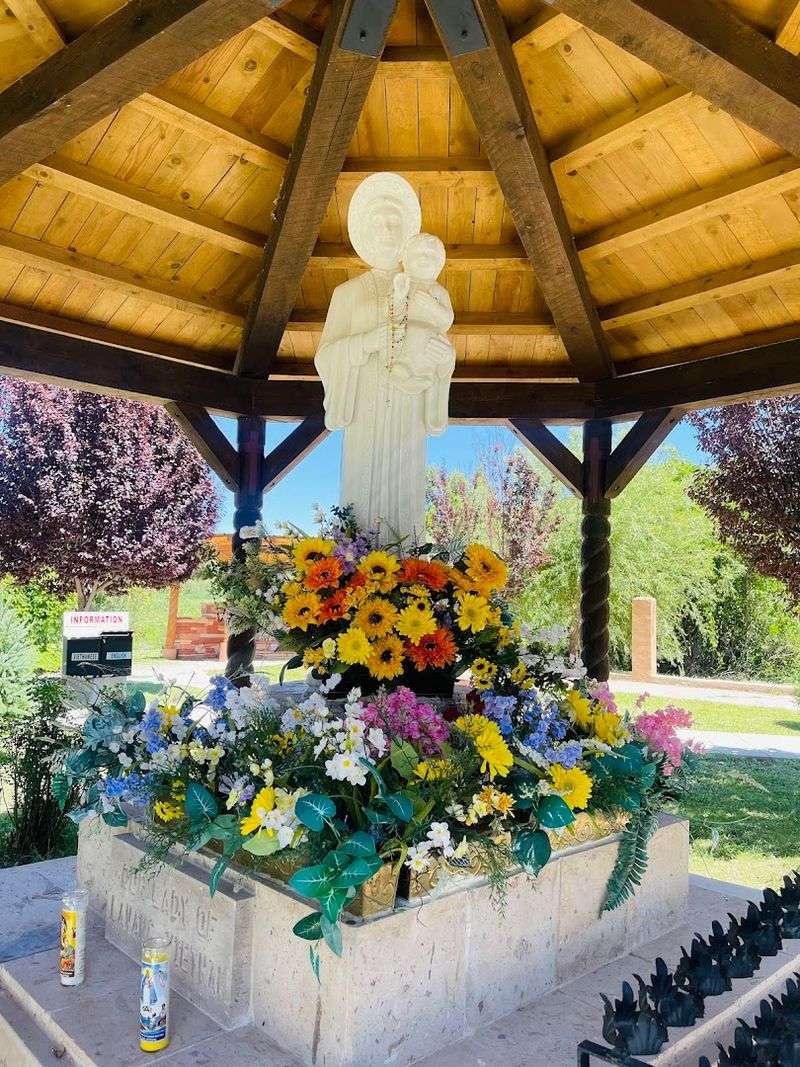
The stories do not come from brochures or official announcements but from conversations held in low voices near the entrance, scribbled on paper left on walls, and passed down through families who return year after year.
A grandmother who walked here after a diagnosis and felt her pain ease before she reached the parking lot on the way out.
A veteran who made the Good Friday pilgrimage carrying the weight of experiences he could not put into words, and who said he left some of that weight behind on the road.
A child brought here by parents who had no other options left, whose recovery afterward became a story retold at every family gathering for the next thirty years.
None of these accounts can be verified in a laboratory, and the chapel makes no promises about outcomes, but the sheer volume and consistency of these personal testimonies across such a long span of time is genuinely striking.
Visitors from all backgrounds and belief systems report feeling something shift inside the chapel, a quieting of mental noise, a sense of being held by something larger than themselves.
Whatever the explanation, the Santuario has clearly become a container for something that people find very difficult to leave behind once they have felt it.
Why This Remote Chapel Draws Thousands Yearly
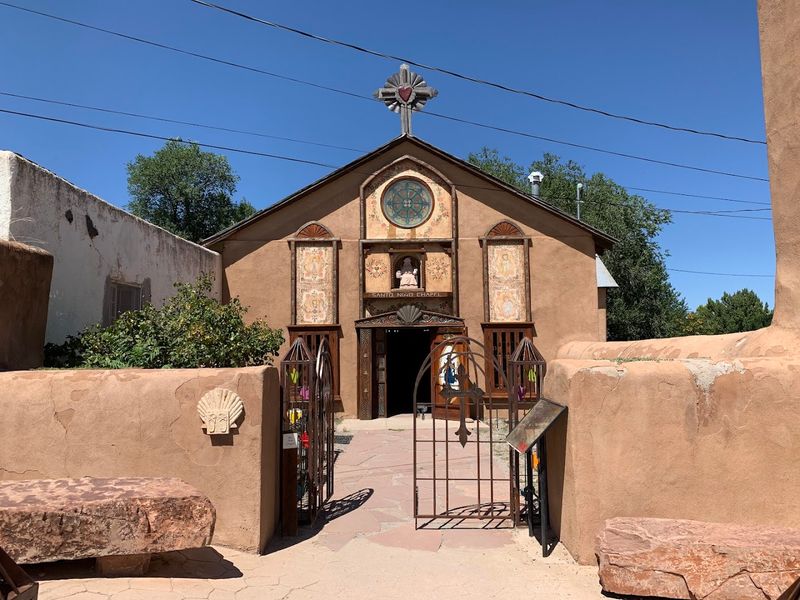
I noticed license plates from Texas, Colorado, California, Arizona, and several states I had not expected to see this far off the interstate while pulling into the parking area on a quiet Tuesday morning.
The chapel is typically open daily from 9 AM to 5 PM, admission is completely free, and no tickets or reservations are required, which keeps the experience accessible to absolutely everyone.
The surrounding compound includes two chapels, peaceful gardens, statues, a visitor center, and a gift shop where visitors can find religious items, local art, and information about the site.
Nearby food vendors and small restaurants, including spots serving traditional New Mexican dishes, make it easy to spend several hours in the area without feeling rushed.
The chapel sits along the scenic High Road to Taos, which means many visitors incorporate it into a longer drive between Santa Fe and Taos, stopping here as the first and often most memorable point of the route.
Visitors describe the atmosphere in remarkably similar ways, often saying the chapel leaves a lasting impression that feels difficult to fully explain afterward.
You can contact Santuario de Chimayo by phone or through the official holychimayo.us website to plan your visit.