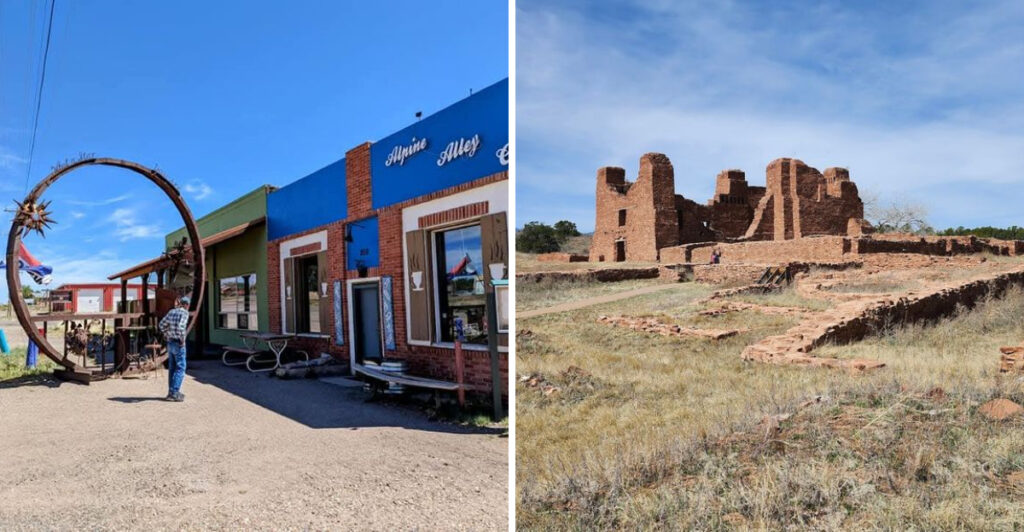
This little high desert town was supposed to be a quick stop, the kind where you stretch your legs and get back on the road. Then I looked around.
The murals had personality. The storefronts had that old road-trip pull.
The sky seemed bigger here, like it was giving the whole place room to breathe. I stayed far longer than planned, walking slowly and taking photos of corners I almost missed.
That is the thing about this place. It does not try to win you over all at once.
It works in little moments. A quiet street can do it.
So can a view past the rooftops. Nearby ruins add even more depth, giving the area a story that reaches back long before today.
Somewhere in New Mexico, this stop reminds you the best detours usually happen by accident, especially when you stop rushing past them for once, for sure.
Sunlit Streets And Painted Walls
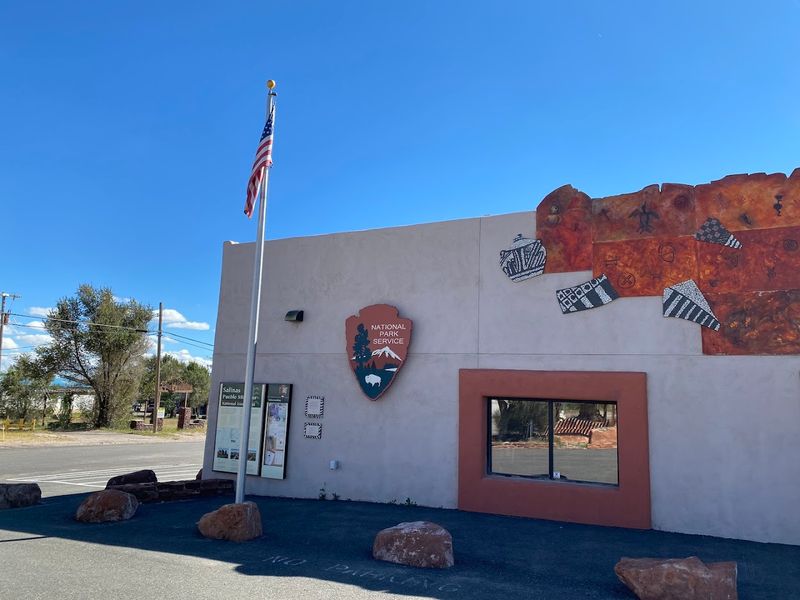
The first time I walked down the main street here, I kept stopping mid-step because every wall seemed to have something worth photographing. The painted walls carry a raw, unfiltered energy that you rarely find in bigger cities where street art feels curated or overly polished.
Local artists have turned ordinary building surfaces into bold statements of identity, pride, and imagination, mixing Southwestern motifs with personal expression in ways that feel both timeless and alive. The sunlight here plays a major role in how these murals look, and the golden desert light in the late afternoon turns every painted surface into something almost cinematic.
I noticed that the artwork is not clustered in one designated arts district but spread throughout the streets, which means discovery feels natural and unplanned. Visitors who take their time on foot will find small details in quiet corners, symbols layered under faded paint, and newer pieces sitting beside older ones.
The streets themselves become the gallery, and the town of Mountainair, New Mexico 87036, is very much the frame around all of it.
Adobe Ruins Beneath Wide Skies
A roofless stone church can feel quietly powerful when it has been open to the sky for more than three hundred years. The Salinas Pueblo Missions National Monument has its headquarters visitor center in Mountainair and preserves three remarkable mission sites across the surrounding area: Abo, Quarai, and Gran Quivira.
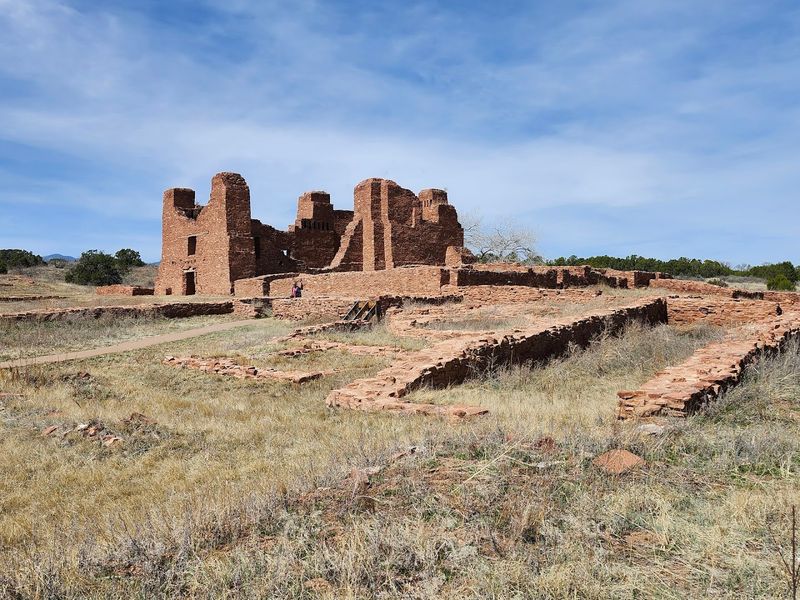
Each one offers a different glimpse into the layered history of this region. I visited Abo first, and the scale of the ruins caught me completely off guard, with red sandstone walls rising dramatically above the desert floor.
These structures were shaped by Indigenous Pueblo people and Spanish missionaries in the seventeenth century. The silence around these places is not empty but full, carrying the weight of communities that once thrived here and then disappeared under pressure of drought, conflict, and disease.
As I followed the paths between crumbled walls, I kept noticing how naturally the ruins blend into the surrounding desert, as if the land is slowly reclaiming what was always its own. Rangers at the visitor center share stories that bring the stones to life without oversimplifying the complicated history behind them.
These ruins are one of the most underrated historical experiences in the entire American Southwest.
Desert Quiet With Mountain Views
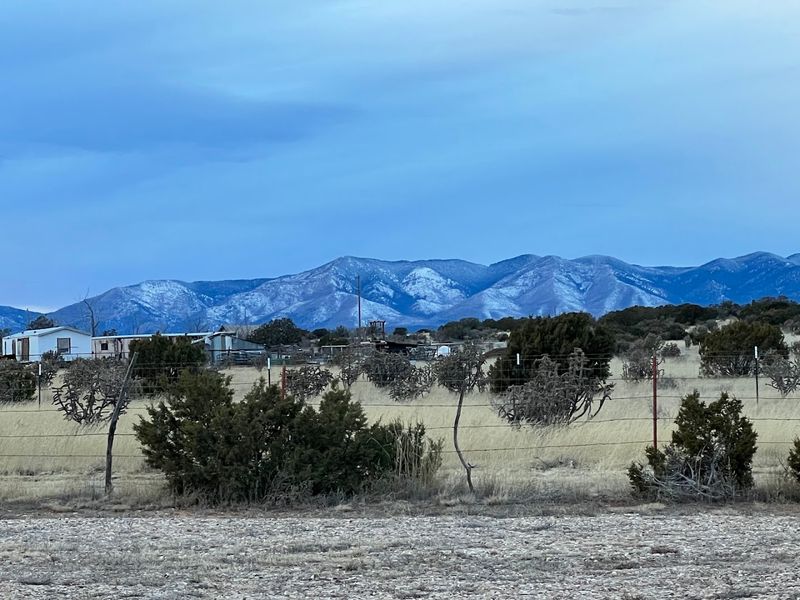
Mountainair does not earn its appeal through noise or crowds. Its quiet settles over you almost the moment you step outside.
Sitting at roughly 6,500 feet in elevation, the town enjoys a position that gives visitors sweeping views of the Manzano Mountains to the west, a long ridge of peaks that shifts from blue to purple as the afternoon light changes. I spent one morning on a low stone wall near the edge of town, watching clouds move across the mountains while a hawk circled lazily overhead, and I felt no urgency to be anywhere else.
The desert here is not the flat, featureless kind that people sometimes imagine when they think of New Mexico, but a textured landscape of juniper, pinon pine, and golden grasses that shimmer in the breeze. Hikers can access trails in Manzano Mountains State Park, close enough to town for a half-day adventure without needing much planning.
The mountain views act as a constant backdrop to everything you do here, reminding you that the landscape itself is part of the experience. Few towns this size offer scenery this generous.
Murals And Small-Town Soul
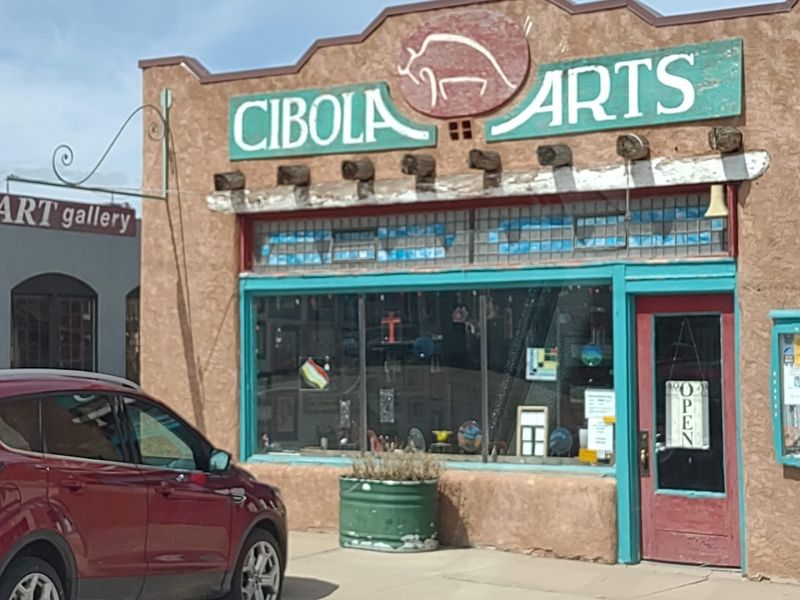
Art has a way of revealing what a community values most, and in Mountainair, the creative output scattered across walls, windows, and small gallery spaces tells a story of resilience and deep local pride.
The town has attracted artists for decades, partly because of the affordable space and partly because the landscape itself seems to demand some kind of creative response.
I wandered into one of the small galleries along the main street and ended up in a twenty-minute conversation with the artist behind the counter, who had moved here from a larger city specifically to paint the desert light.
That kind of encounter is almost impossible to manufacture, and it is the sort of thing that makes a small town feel genuinely welcoming rather than just tourist-friendly.
The murals throughout town range from large-scale historical scenes to abstract pieces that seem to capture the mood of the high desert in a single color palette.
Photography enthusiasts will find themselves constantly reaching for their cameras, and painters who visit often return, drawn back by the quality of the natural light.
Mountainair’s creative identity feels earned rather than invented, and that difference shows in every brushstroke you encounter.
Ancient Stonework In Open Air
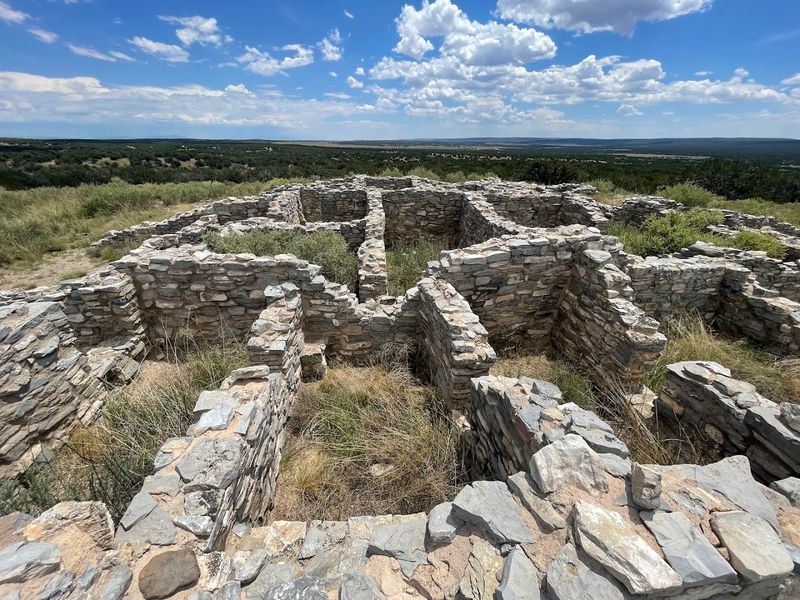
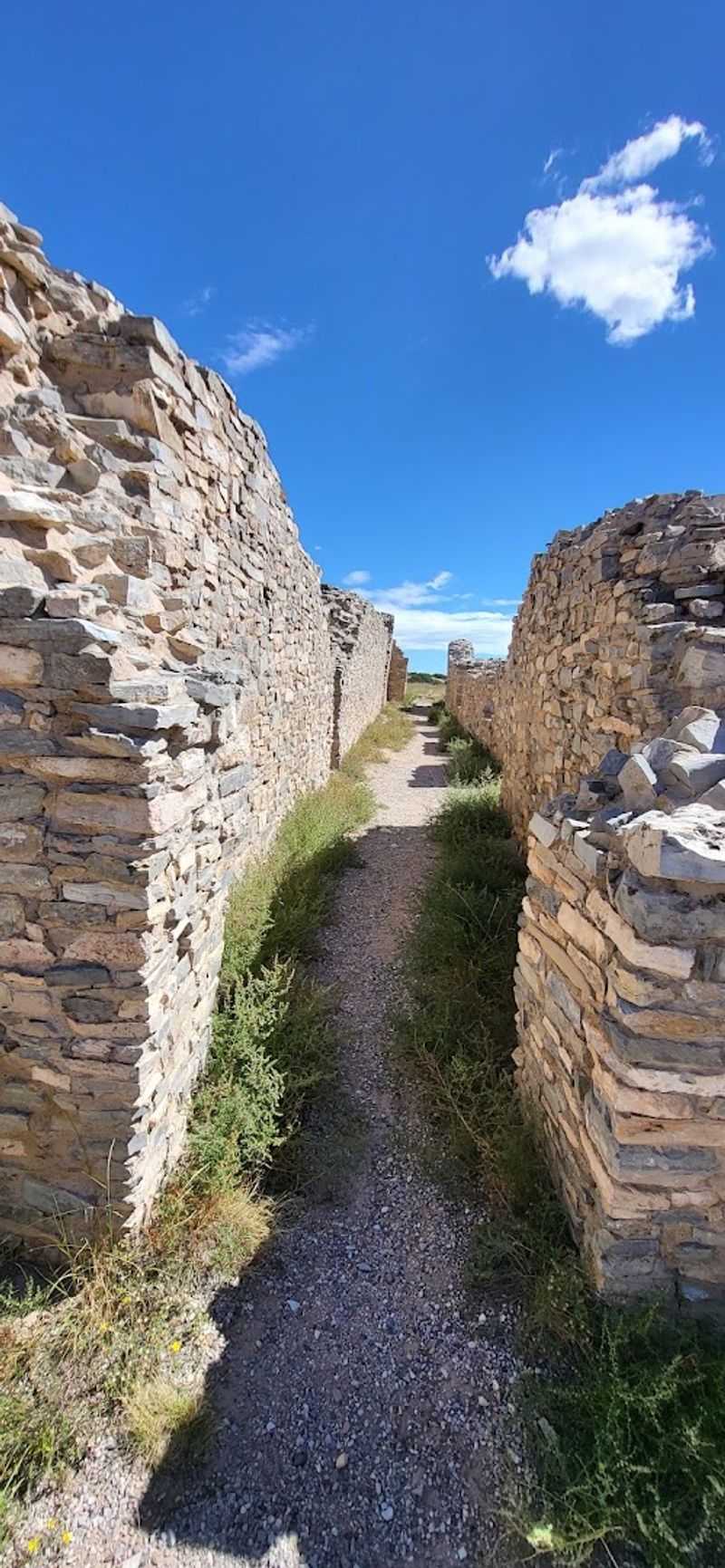
Gran Quivira is the largest of the three Salinas mission sites. It hit me differently than I expected, mostly because so much Pueblo stonework survives alongside later Spanish construction.
The craftsmanship visible in the older Pueblo structures is extraordinary, with carefully fitted stone blocks forming walls that have outlasted centuries of desert weather. Archaeologists estimate that the pueblo at Gran Quivira once housed more than a thousand people, making it one of the most significant communities in the pre-contact Southwest.
I kept pausing to study the stone surfaces from the trail and think about the skill required to build something this precise using hand tools and knowledge passed across generations. The open-air setting means you experience the ruins in full desert context, with wind, sunlight, and the scent of sage all adding to the atmosphere in ways that indoor museums simply cannot replicate.
Interpretive signs throughout the site explain both the Pueblo and Spanish layers of history without favoring one narrative over the other. Among those stones, I understood why historians consider this region one of the most culturally layered landscapes in all of North America.
Slow Afternoons Along Main Street
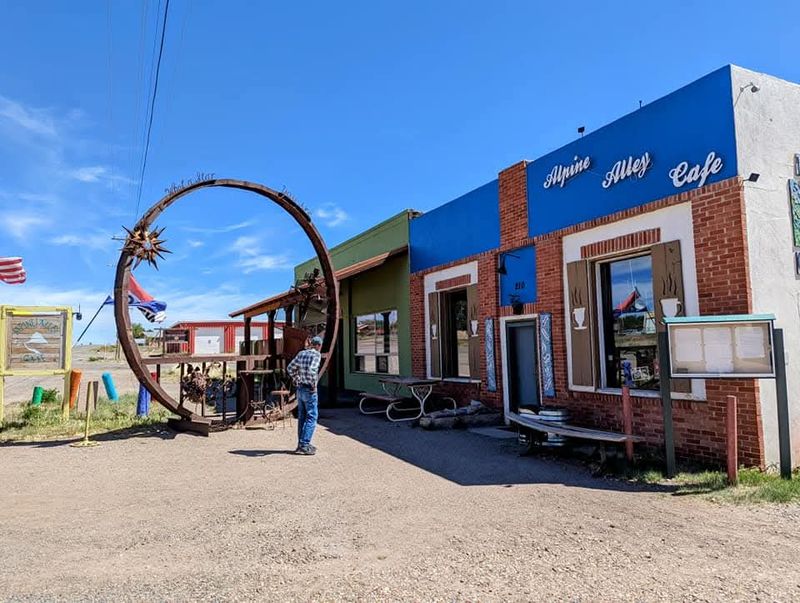
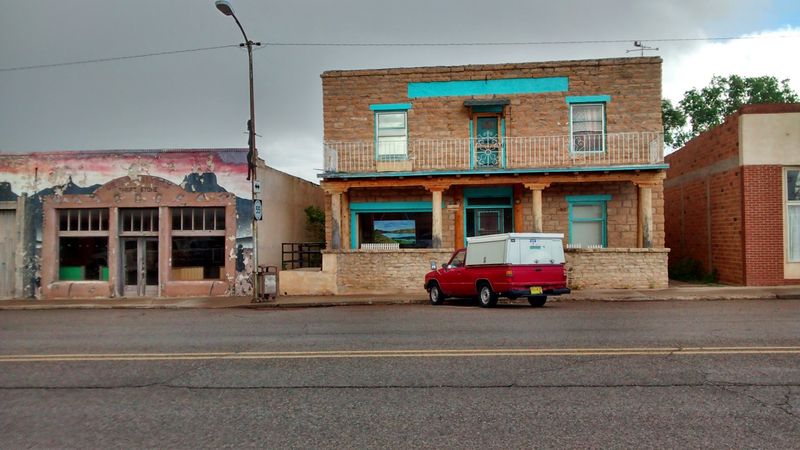
Not every great travel experience involves a bucket list landmark, and Mountainair’s main street is proof that sometimes the best moments happen when you have nowhere specific to be.
The pace here is genuinely unhurried, and I mean that as a compliment, because the slow rhythm of the street invites you to actually look at things rather than just walk past them.
Old storefronts with hand-lettered signs, a hardware store that looks like it has been in the same family for generations, a diner where the coffee comes in a heavy ceramic mug without anyone asking your name first.
I spent an entire afternoon here doing very little and came away feeling more refreshed than I had after any number of action-packed itineraries elsewhere.
The architecture along the main street reflects the town’s early twentieth century origins, with building styles that mix Territorial New Mexico character with the practical simplicity of a working ranching community.
Local residents move through their day with a friendliness that feels unperformed, stopping to chat with strangers without any apparent agenda.
If the rest of the world needs to learn one thing from Mountainair, it might simply be how to slow down without losing anything that matters.
Hidden Corners Of High Desert History
Founded in the early 1900s by local land developers, Mountainair grew quickly as a railroad town serving the farming and ranching communities of the Estancia Valley. That early energy left behind a surprising number of historic structures and stories that most visitors never hear about because they are focused entirely on the more famous ruins nearby.
I found a small historical marker near the old depot area that described Mountainair’s brief but intense boom period, when it was nicknamed the Pinto Bean Capital of the World due to the enormous bean harvests produced in the surrounding valley. That detail alone stopped me cold, because it is exactly the kind of hyper-specific local history that turns a place from a dot on a map into a real community with a real past.
The Shaffer Hotel, a historic landmark in town, adds another layer to this story, built in the 1920s and decorated with hand-carved folk art details that remain visible today. Every hidden corner of this town seems to hold a clue to a larger story about life on the edge of the American frontier.
History here is not behind glass but right under your feet.
Big Skies Over Timeless Landmarks
The skies here have a well-earned reputation for drama. In Mountainair, the horizon feels especially wide because of the elevation and the open land around town.
I watched a thunderstorm build over the Manzano Mountains one evening from the parking area near the Shaffer Hotel, and the combination of dark cloud columns, silver light, and the old building’s folk-art facade created one of the most visually striking scenes I have witnessed anywhere in the Southwest. The Shaffer Hotel itself, listed on the National Register of Historic Places, anchors the town’s identity as a place where art and history genuinely overlap rather than simply coexist.
Its handmade carvings, painted designs, and quirky decorative choices give the building a personality that no chain hotel could ever manufacture, and the structure has been carefully maintained to honor that original vision. At night, the absence of major light pollution means the stars come out in full force, turning the sky above the town into something that genuinely earns the word spectacular.
Mountainair sits quietly in Torrance County as a town that rewards anyone willing to look up, slow down, and pay attention to the details that most travelers rush past. Big skies and timeless landmarks have a way of making everything else feel small in the best possible sense.sense.