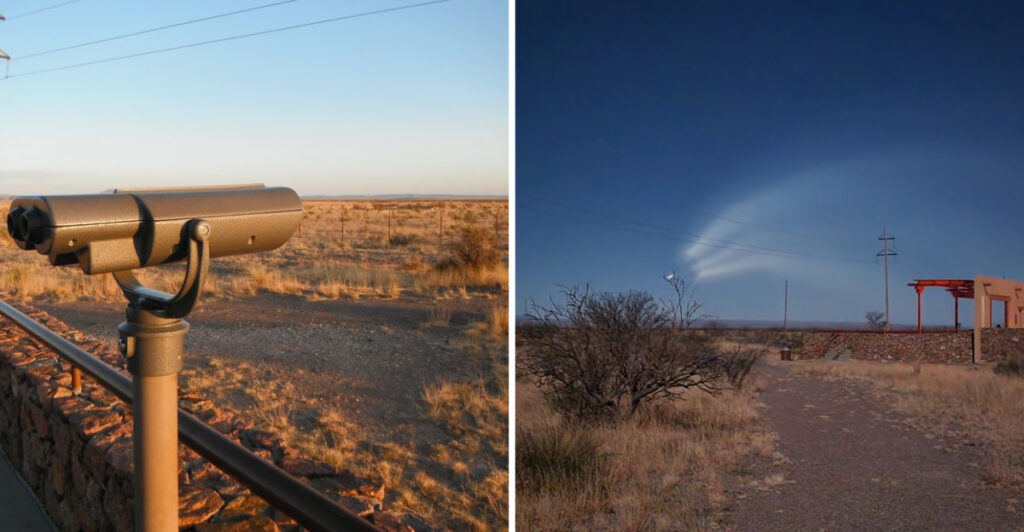
West Texas has a mystery that refuses to turn the lights off.
This tiny railroad town counted just 1,788 residents in the 2020 Census, yet its nighttime reputation reaches far beyond the desert.
For generations, strange lights have appeared on the horizon, glowing, drifting, fading, and giving curious travelers plenty to argue about after dark.
Some sightings have practical explanations. Others still live comfortably in local folklore.
That is where the fun starts.
Come for the mystery, then stay for the strange mix of desert scenery, roadside viewing, scientific curiosity, and a town that also happens to have a serious art streak.
The case has been open for more than a century.
So, what exactly keeps lighting up the West Texas horizon?
The Oldest Marfa Lights Story Begins In 1883
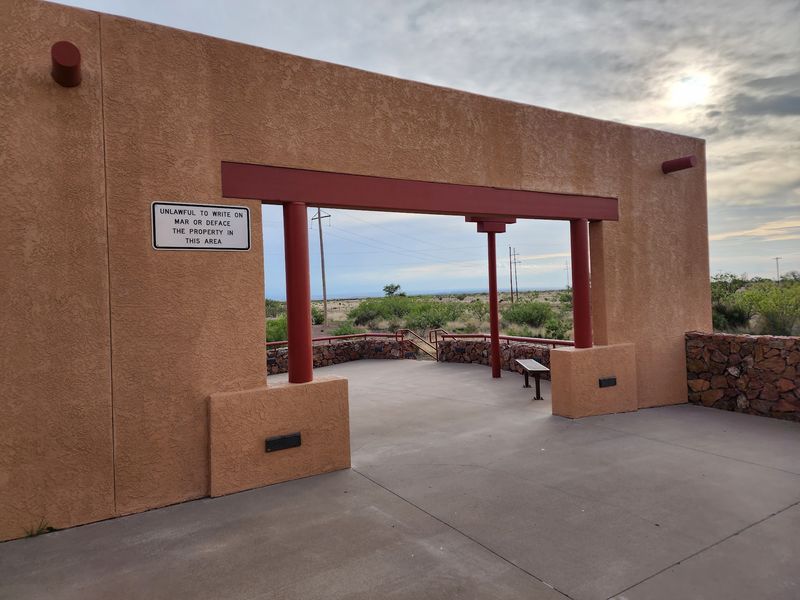
Open the file at 1883.
That is the year local tradition places one of the earliest reported sightings. The story centers on rancher Robert Reed Ellison, who reportedly saw mysterious lights while traveling through Paisano Pass.
Marfa itself was established in 1883 as a railroad water stop and freight headquarters for the Galveston, Harrisburg and San Antonio Railway. Two years later, it became the Presidio County seat.
Over time, reports described lights appearing southeast of town across the open country around Mitchell Flat and Paisano Pass. Accounts commonly describe points that change color, move, fade, split, or disappear.
The story never settled into one neat description, which is exactly why it kept growing. That report still hangs over later sightings, giving the mystery a beginning without an answer.
If every witness had reported the same thing in exactly the same place, the puzzle might have become easier.
Instead, the first clue opens more questions than it closes.
The Best View Starts With A Horizon That Looks Almost Empty
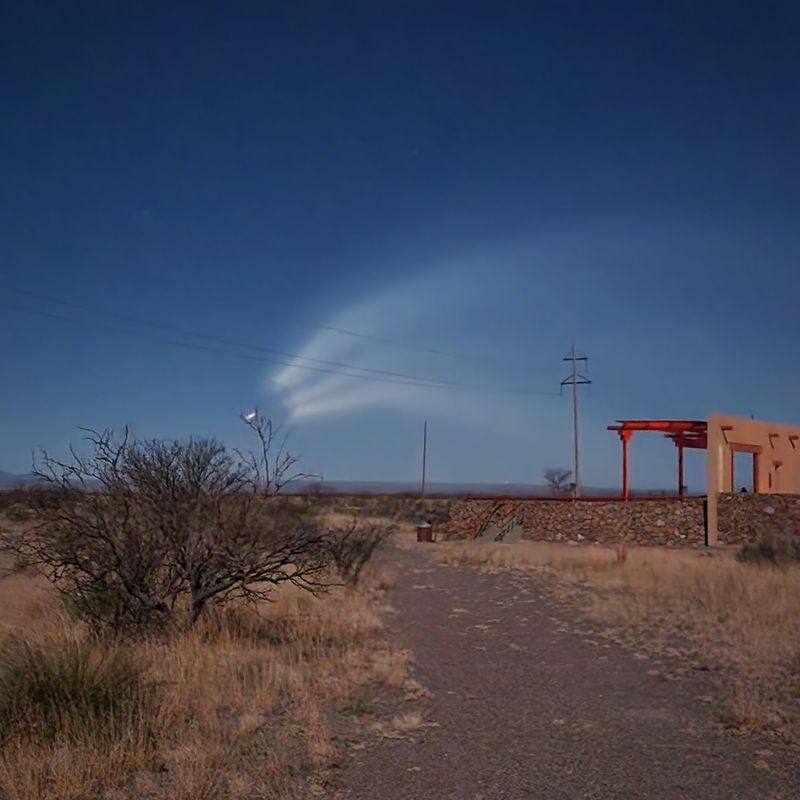
Forget haunted houses and dark alleys. This mystery needs open space.
After sunset, the country southeast of town becomes a broad, dark horizon with very little visual clutter. Reports describe red, blue, and white lights appearing at unpredictable times, sometimes moving or changing before disappearing again.
Marfa does not promise that anything unusual will appear on command.
That makes waiting part of the experience.
You may stare into darkness for several minutes and see nothing remarkable. Then a distant point can appear and immediately force the obvious question: car, ranch light, atmospheric effect, fire, or something you cannot identify from where you are standing?
The trick is resisting the urge to solve it too quickly.
With mountains reduced to silhouettes and long stretches of country disappearing into darkness, even a tiny point of light can command the entire view. The darker the horizon becomes, the easier it is to notice every flicker against empty sky.
Bring a layer for the temperature drop, give your eyes time to adjust, and look southeast.
Then let the horizon make its own argument.
The Official Viewing Area Gives The Mystery A Fixed Address
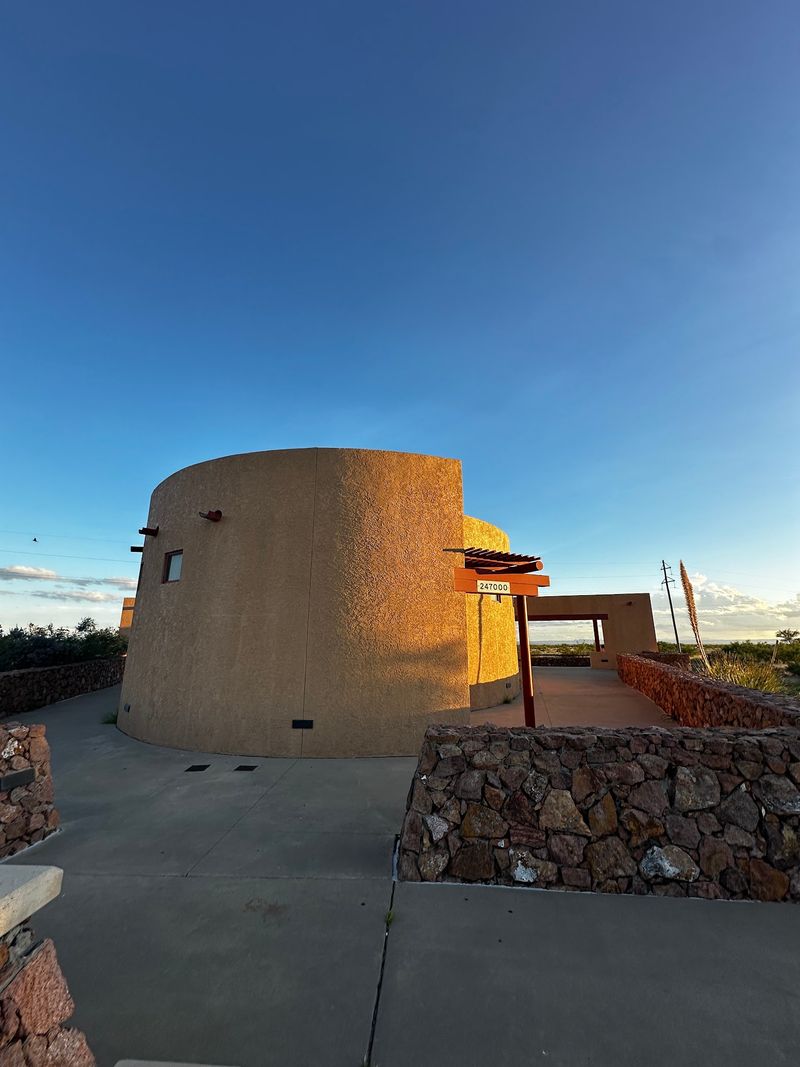
Nine miles east of town, the guessing game gets a proper observation post.
The Marfa Lights Viewing Area sits along U.S. Highway 90 toward Alpine and is the designated public place for watching the landscape where the lights are reported.
That changes the experience in a useful way.
You are no longer pulling onto an unfamiliar roadside and wondering where everyone is supposed to look. The site provides a fixed vantage point toward the open country, along with space to stop and wait after dark.
Arriving before sunset gives you an advantage that has nothing to do with paranormal skill. You can see the terrain in daylight first.
Notice the roads. Find the mountain lines. Watch where traffic moves in the distance.
Then stay as those reference points slowly disappear into darkness. Seeing the terrain before nightfall sharpens uncertainty once familiar roads and ridges disappear.
Now the same landscape becomes much harder to read.
That transformation can be more interesting than simply arriving after dark because it lets you watch certainty disappear piece by piece.
The town has built an official place to observe an unofficial mystery.
That may be the most Marfa sentence possible.
Headlights Explain Plenty But The Case Never Closes Neatly
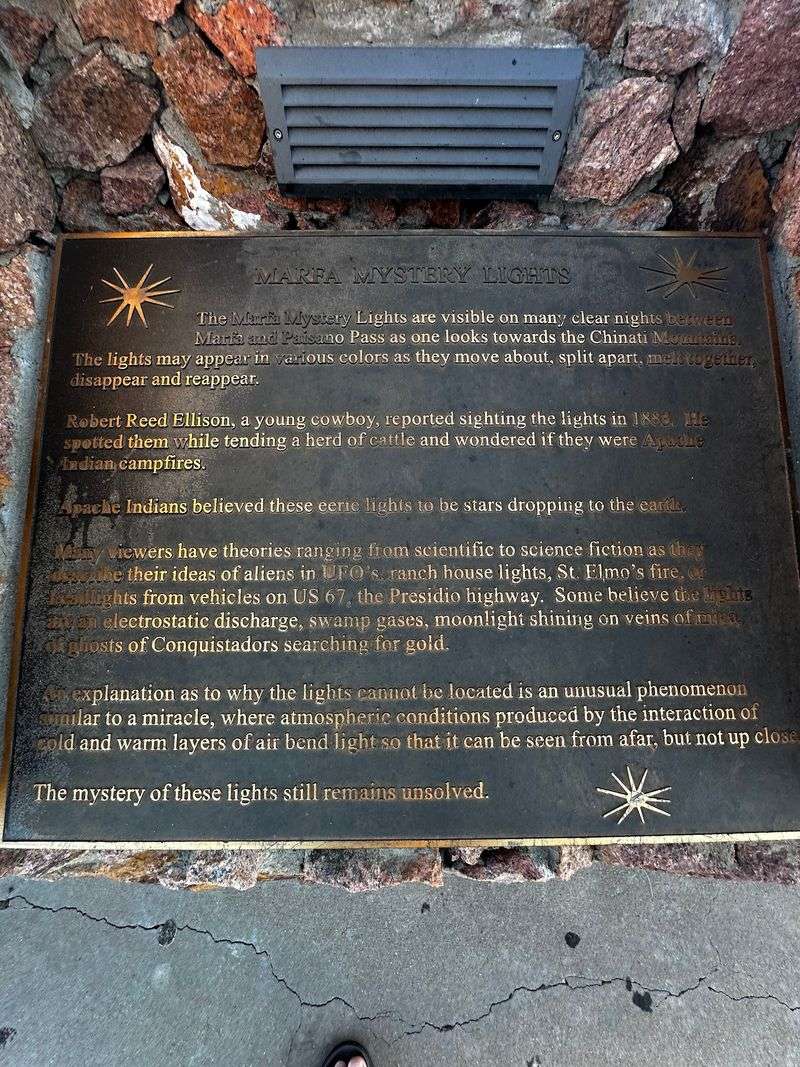
Here comes the evidence table.
A 2004 University of Texas at Dallas student investigation tested lights visible from the Marfa viewing area and found that automobile headlights on U.S. Highway 67 could reproduce sightings seen from the observation point.
A later Texas State University research project spent twenty nights using a telescope, video, directional measurements, and spectroscopy to study distant light sources.
The researchers recorded automobile headlights that could have been mistaken for lights of unknown origin and used spectroscopy to estimate their distance.
There is an important catch.
None of the objects observed during that project met all of the researchers’ criteria for a “true” unexplained Marfa light.
The famous 1883 story predates automobiles, although the details of that early account are not documented with the precision a modern investigation would require.
The experiments put at least some modern sightings on firmer ground.
Some lights can absolutely be cars or other ordinary sources. Even after those studies, distance and darkness can make ordinary lights behave strangely enough.
That still leaves plenty of room for people to stand in the dark and wonder what they are looking at.
And that is a much better mystery than simply shouting “aliens” at the desert.
The High Desert Makes The Whole Scene Hard To Ignore
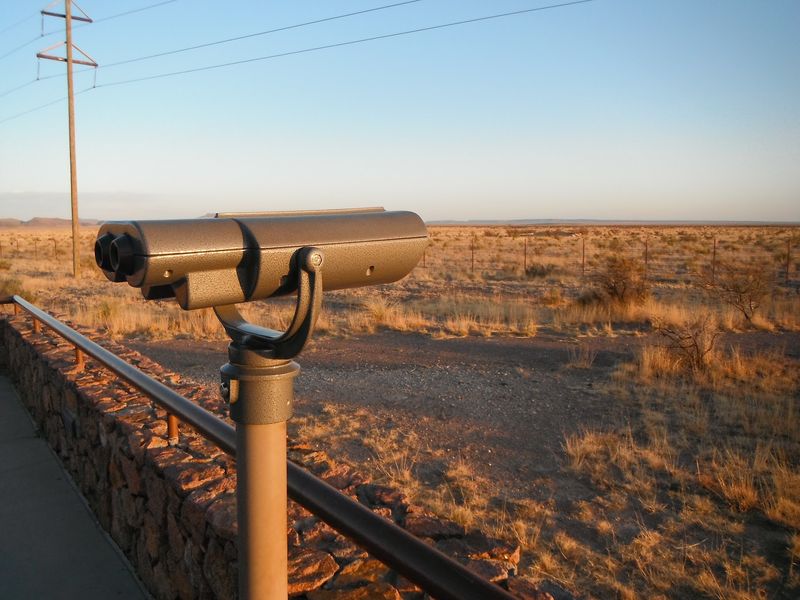
Before blaming the lights, inspect the stage.
Marfa sits on a highland plain known as the Marfa Plateau at roughly 4,830 feet above sea level. The Davis Mountains rise to the north, the Chisos lie southeast, and the Chinati Mountains sit to the southwest.
During daylight, those landmarks make the country look enormous.
After dark, many of the visual cues disappear.
A road several miles away can become nothing more than moving points of light. Mountains turn into silhouettes. Empty space between the viewer and the horizon becomes harder to judge.
The landscape also rewards arriving long before the mystery hour. High-desert light changes quickly near sunset, and the broad plateau gives the sky room to dominate almost every direction.
High elevation brings cooler evenings, turning a desert afternoon into jacket weather quickly.
You do not need a mysterious orb to notice how unusual the scale is.
Then darkness arrives and removes most of the measuring sticks. Suddenly one bright dot has an enormous amount of empty country around it.
No wonder the eye keeps returning to it.
The Marfa Lights Festival Turns The Puzzle Into A Party
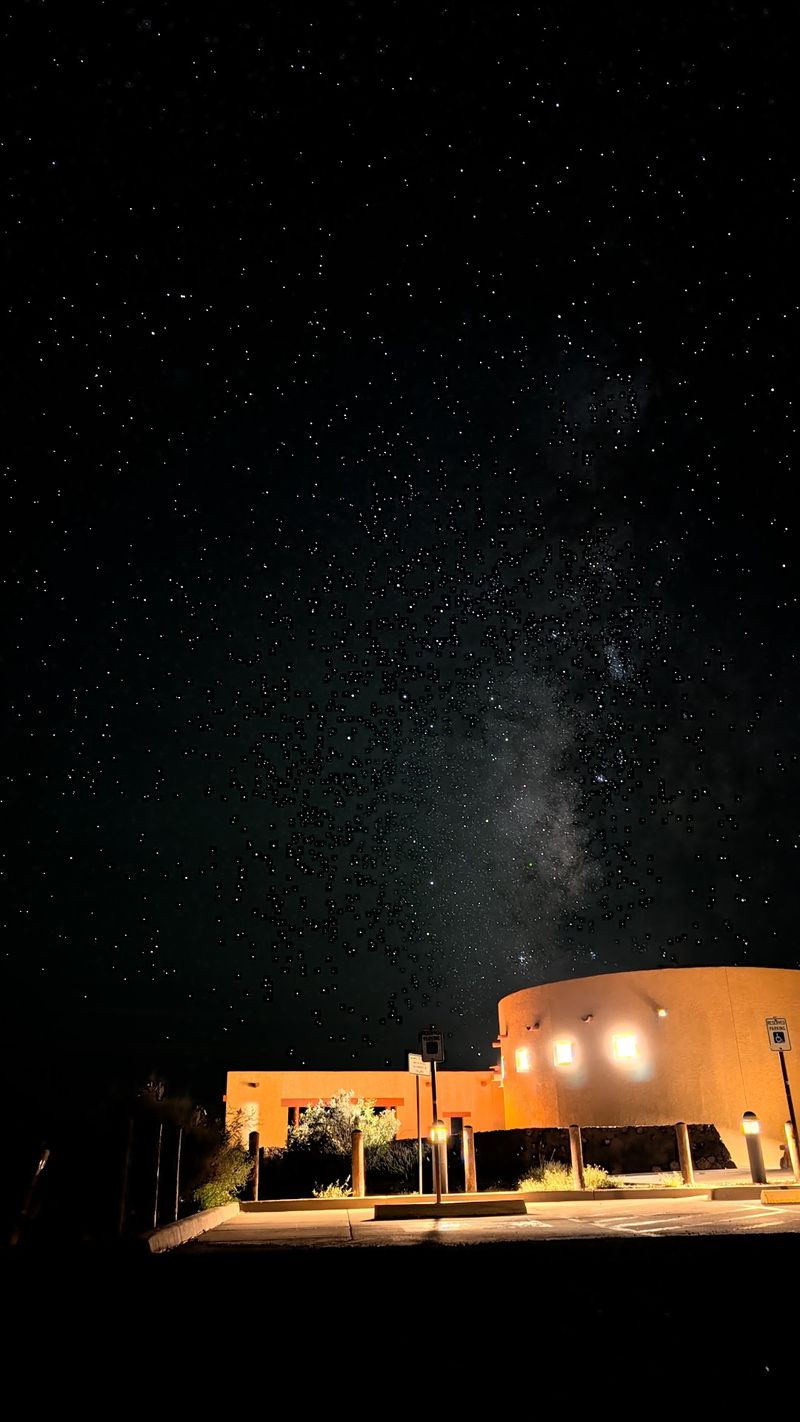
A century-old mystery eventually earned its own weekend.
The 39th Annual Marfa Lights Festival is scheduled for September 4 through September 6, 2026, with music, food, vendors, and entertainment filling the town during the three-day celebration.
The festival changes the mood completely. At the viewing area, the lights invite quiet staring and second guesses.
In town, the same mystery becomes a reason for people to gather.
That contrast says plenty about Marfa’s relationship with its most famous unexplained story. The lights are not treated only as something eerie on the horizon. They have become part of the community calendar and one of the town’s most recognizable traditions.
A festival weekend also gives you two versions of the place in the same trip. Festival nights add another layer as daytime energy gives way to quiet observation after dark.
Spend the afternoon around downtown, catch the events, then head east after dark and see what the horizon decides to do.
Nothing guarantees a sighting. That may actually improve the suspense. A scheduled mystery would be a terrible mystery.
A Railroad Stop Of 1,788 People Became Famous For Mystery And Art
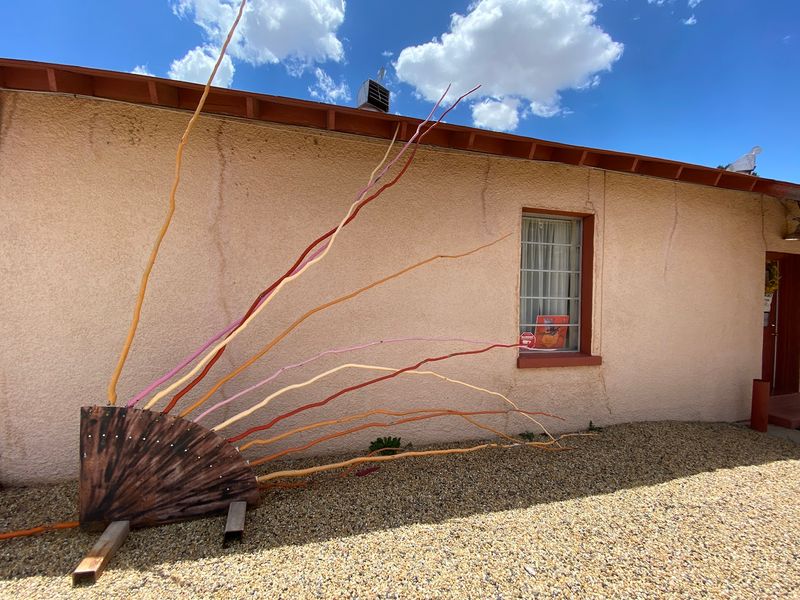
Now close the case file back where the town itself began.
The 2020 U.S. Census counted 1,788 residents in Marfa. For a community that small, its cultural footprint is enormous.
The railroad established the town in 1883, and Marfa became the Presidio County seat in 1885. Decades later, artist Donald Judd added an entirely different chapter.
Judd established himself in Marfa during the 1970s and began transforming former military buildings and other properties into spaces where art, architecture, and landscape could be experienced together.
The Chinati Foundation grew from that work and opened to the public in 1987. Today, it occupies 340 acres at the former Fort D.A. Russell and presents permanent installations by Judd and other major artists.
That creates one last twist.
People arrive in a tiny West Texas town to look at carefully installed contemporary art during the day, then drive into the darkness hoping to see a light nobody scheduled.
Precision and uncertainty share the same zip code. Marfa stays unusual without a sighting, offering something by day and unresolved at night.
Marfa sits at the junction of U.S. Highways 90 and 67, surrounded by more open country than its population would ever suggest.
The town is small enough to cross quickly. Its biggest question has taken generations.