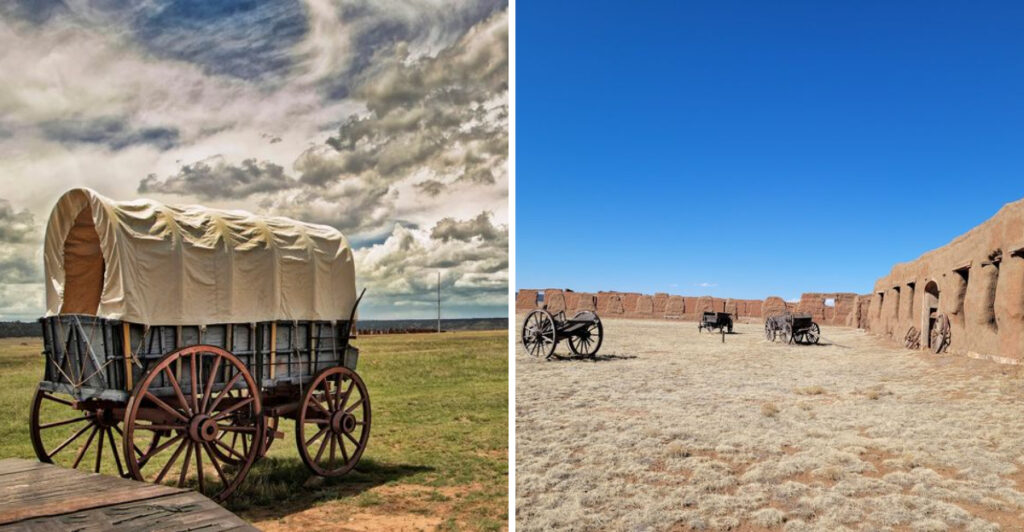
The road does not build suspense with neon signs or big roadside promises. It lets the plains handle that part.
One minute you are driving through open country, and the next you are looking at adobe walls that have been holding their ground for generations. New Mexico has many historic stops, but this one feels different because so much of the story is still sitting in the soil.
The wagon ruts are real. The chimneys are still standing.
The wind never seems to stop moving through what used to be a busy army post. I expected ruins.
I did not expect the place to feel so present. Keep reading for fascinating facts that explain why this high-plains landmark can make the 1800s feel startlingly close, especially when you are standing there with nothing but grass and sky around you, miles from the usual noise outside.
Adobe Walls Against The Open Plains
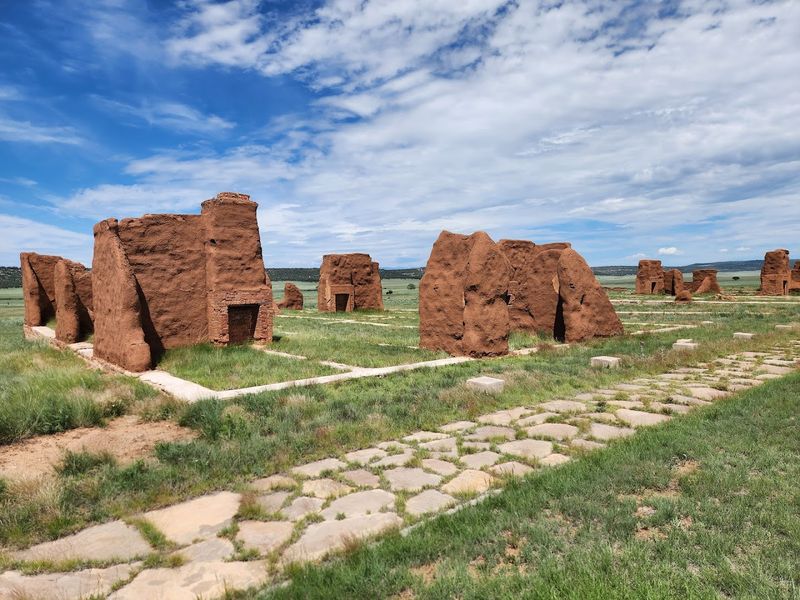
Few things stop you in your tracks quite like the sight of centuries-old earthen walls rising from an empty prairie with no modern skyline to compete with them.
The adobe walls at this frontier site are not just ruins but the largest collection of 19th-century adobe structures in the entire country, a fact that genuinely surprised me when I first read the trailhead marker.
Preservation crews return every summer to apply fresh layers of adobe plaster using traditional methods, fighting wind, snow, and rain to keep these walls standing.
The erosion gives some sections a softened, almost sculpted look, as if the earth itself has slowly been reclaiming what was built from it.
Walking past them, I kept pausing to run my eyes along the irregular surfaces, noticing how each worn edge carries the texture of real time passing.
The territorial-style architecture, roofless but still commanding, creates a visual rhythm across the landscape that feels genuinely unlike anything you will find at a reconstructed historic site.
Standing beside those quiet, enduring walls, you begin to understand why people traveled hundreds of miles to reach a place like Fort Union National Monument at 3115 NM-161, Watrous, NM 87753.
Prairie Views That Stretch Past The Ruins
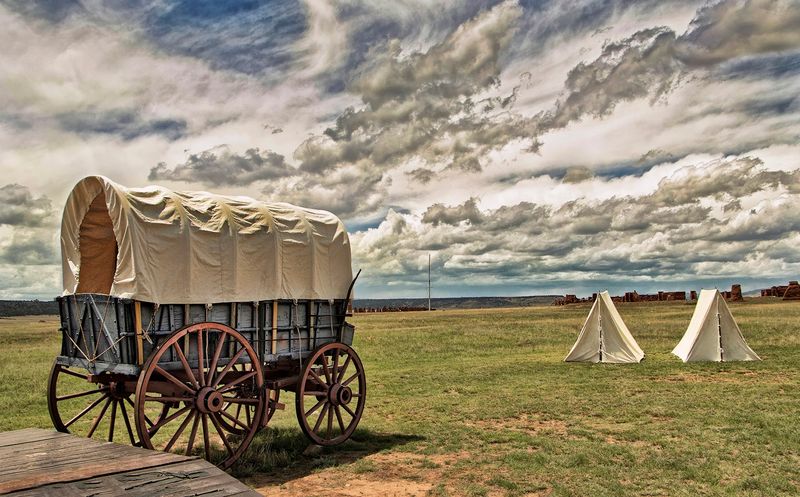
The moment I stepped beyond the visitor center and onto the trail, the sheer openness of the landscape hit me like a quiet, unhurried wave.
Rolling shortgrass prairie extends in every direction from the ruins, with mountains rising softly on the western horizon to frame the whole scene in a way that feels almost too cinematic to be real.
What makes this view genuinely powerful is that it has changed very little since the 1800s, meaning soldiers stationed here and travelers on the Santa Fe Trail looked out at nearly the same unbroken panorama you see today.
That continuity between past and present is something you feel in your chest rather than just observe with your eyes.
The natural openness also served a practical military purpose, since unobstructed sightlines across the flat terrain gave the fort a clear view of anyone approaching from a distance.
On the afternoon I visited, the light shifted constantly across the grass, turning the plains from gold to pale green and back again as clouds moved overhead.
It is the kind of view that makes you stand still longer than you planned and forget entirely about wherever you were headed next.
Old Military Roads Fading Into The Grasslands
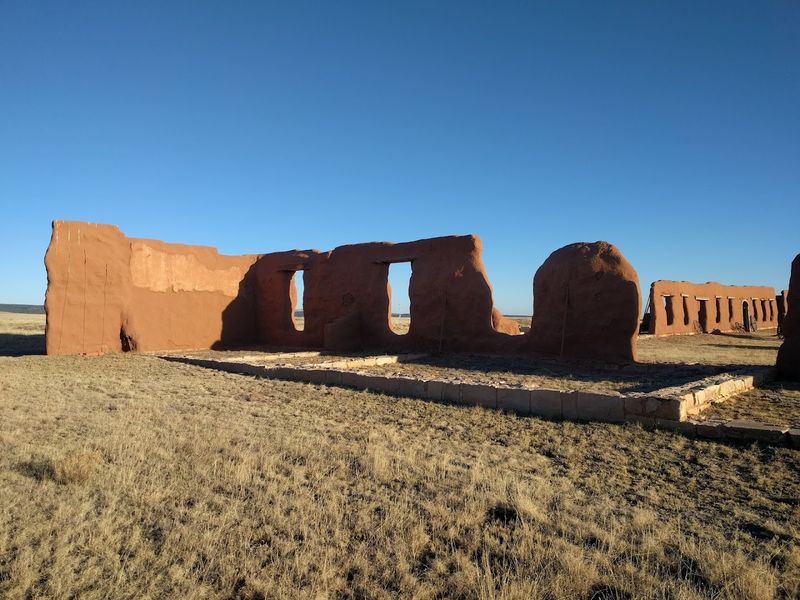
Just outside the main ruins, the ground itself becomes a document, marked by shallow indentations pressed into the soil by countless wagon wheels and hooves over decades of heavy use.
These are the actual ruts of the historic Santa Fe Trail, still visible in the prairie sod after more than 150 years, and seeing them in person carries a quiet kind of power that photographs simply cannot replicate.
The trail was the main artery for commerce, military supply lines, and westward migration throughout the mid-1800s, and Fort Union sat at a critical junction along its route.
I walked alongside the ruts for a stretch, trying to imagine the noise and motion that once filled this now-silent corridor of grass.
The scale of movement that passed through here, wagons loaded with goods, troops on horseback, and civilian settlers heading west, is almost hard to process when you are standing in such utter quiet.
Informational markers along the trail help connect the physical landscape to the historical record, so even first-time visitors can follow the story without feeling lost.
Those fading grooves in the earth are a reminder that some journeys leave marks that outlast the travelers who made them.
Brick Chimneys Rising From A Quiet Frontier Landscape
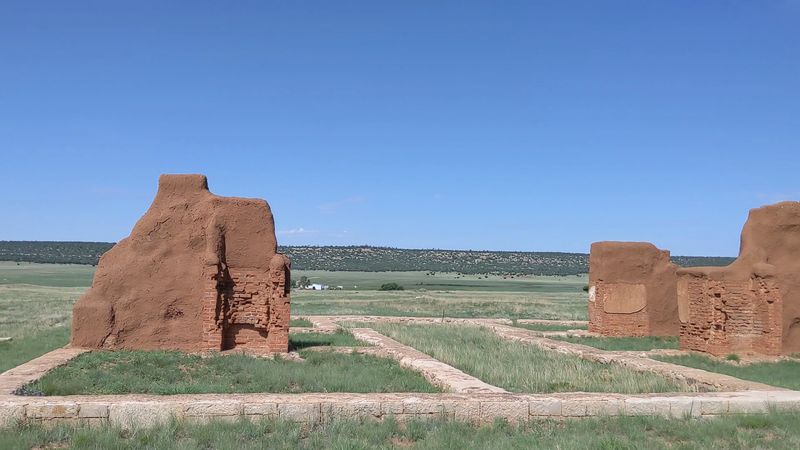
Scattered across the site like punctuation marks in a very old sentence, the brick chimneys of the third fort rise above the low adobe ruins with a striking vertical energy.
These structures were built with more architectural ambition than the earlier forts, featuring adobe brick on stone foundations with red brick detailing that gave the post a more permanent, established character.
Now stripped of the walls that once surrounded them, the chimneys stand alone, and the effect is both eerie and oddly elegant.
Each one was once the center of a functioning room, a barracks hearth, an officers’ fireplace, or a kitchen stove, and standing near them you get a vivid sense of the domestic rhythms that played out in these spaces.
The contrast between the rough adobe surroundings and the more refined brickwork is a small but telling detail about the ambitions of the people who built this place.
I spent more time than I expected just circling a few of these chimneys, studying the craftsmanship and imagining the warmth they once pushed into cold frontier nights.
They are quiet monuments to ordinary life in an extraordinary place, and they deserve more attention than most visitors give them.
Wide-Open Walkways Through A Former Army Post
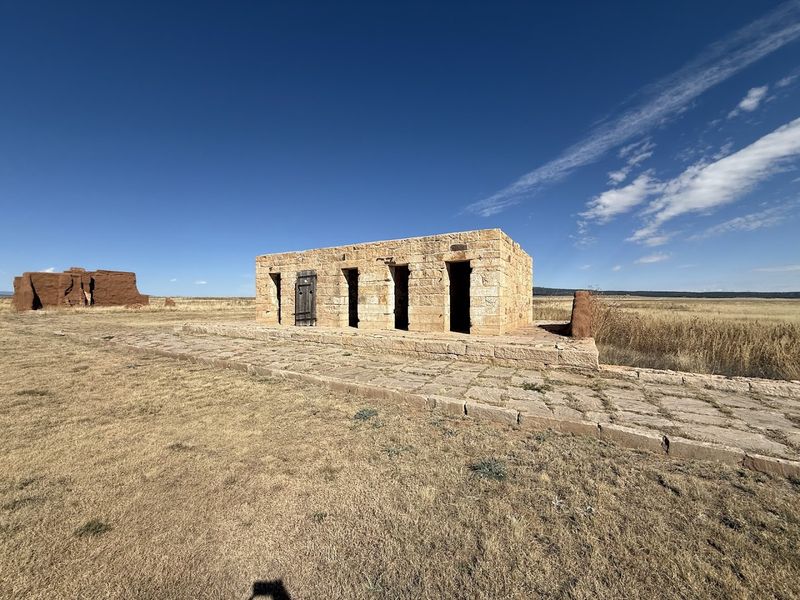
A self-guided trail of roughly 1.2 miles loops through what was once the largest military post in the American Southwest, and the scale of the place only becomes clear as you start walking it.
Passing between the remnants of barracks, officers’ quarters, a hospital, storehouses, and corrals, I kept recalibrating my mental map of how large this operation actually was.
Informational markers at each structure explain its original function and connect the physical layout to the broader story of frontier military life, making the walk genuinely educational without feeling like a lecture.
Original sandstone slab sidewalks once crisscrossed the entire installation, guiding foot traffic through the busy post, and a few sections of those slabs are still visible beneath your feet if you look carefully.
The trail is accessible and relatively flat, which means visitors of most mobility levels can take in the full sweep of the site without too much difficulty.
I found myself slowing down at each ruin cluster, reading every marker and trying to picture the daily schedules, the drills, the meals, and the long stretches of waiting that defined life here.
The walkways guide you through history one step at a time, and the ground beneath you has stories pressed into every inch.
Sun-Baked Ruins With Old West Atmosphere
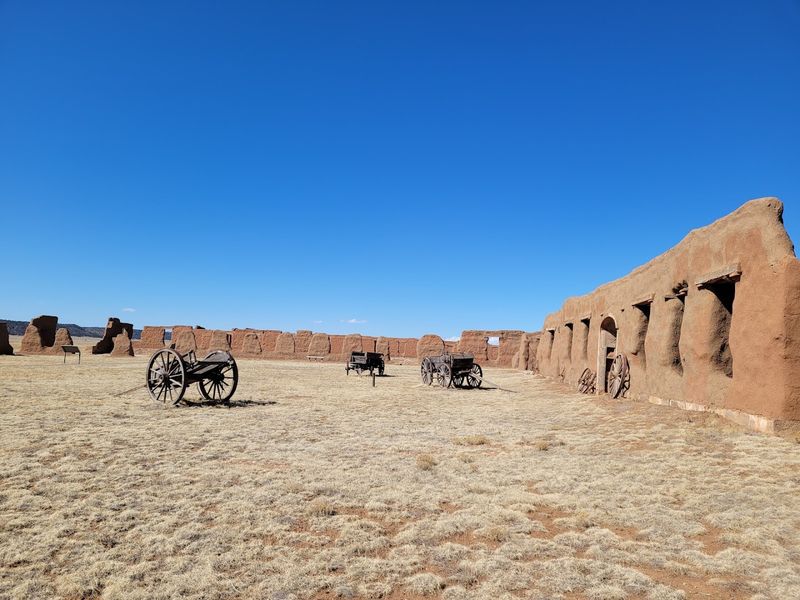
There is a particular quality to the light in northeastern New Mexico that turns every adobe surface into something that glows from within, and the ruins here catch that light in a way that feels almost theatrical.
The fort was abandoned in 1891, left to the mercy of the sun, wind, and seasonal rains, and over the following decades it settled into the evocative, eroded state visitors encounter today.
What makes this site especially layered is that it preserves the remains of three distinct forts built consecutively from the 1850s onward, each one reflecting a different chapter in the region’s frontier history.
The result is a kind of compressed timeline spread across the landscape, where different building techniques, scales, and purposes exist side by side in various states of preservation.
Walking through it feels less like visiting a museum and more like reading a very long letter written in mud and stone.
The atmosphere is genuinely Old West in a way that no reconstruction could manufacture, because the authenticity here is inseparable from the decay.
Every sun-baked wall and crumbling doorway carries the weight of real history, and that weight is exactly what makes the place so quietly unforgettable.
A Windswept Landmark Beneath New Mexico Sky
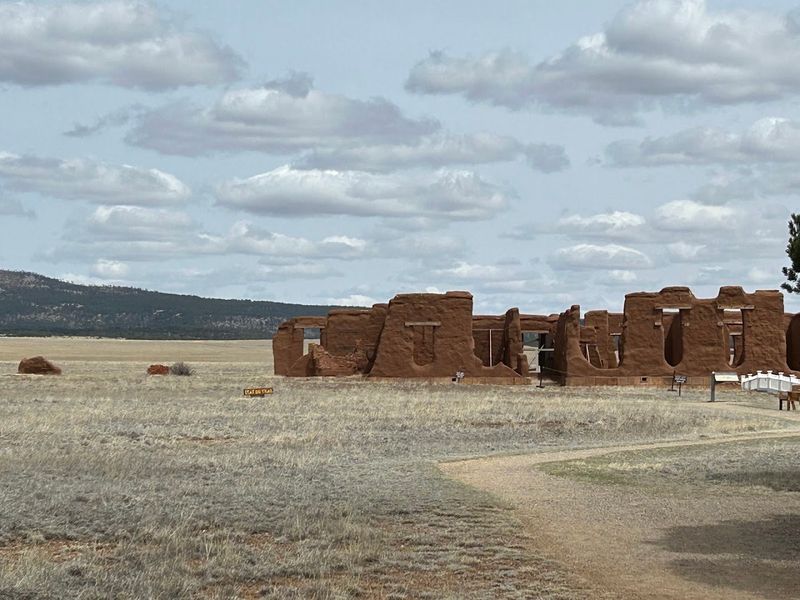
Regulars and rangers have taken to calling this place Fort Windy, and after spending an afternoon here with the breeze pushing steadily across the open plains, I completely understood why.
The site sits in an exposed position with nothing to slow the wind down, so it moves through the ruins constantly, carrying the dry scent of grass and dust and something harder to name.
That same remote, wide-open setting offers an unexpected bonus for anyone willing to stay past sunset, because Fort Union National Monument was designated an International Dark Sky Park in 2019.
The lack of nearby city light pollution means the night sky above the ruins is among the least obstructed in the region, and the Milky Way can appear so vividly overhead that it feels almost close enough to touch.
I did not get to experience the night sky on my visit, but the rangers spoke about it with the kind of enthusiasm that made me immediately start planning a return trip.
Even in full daylight, the sky above New Mexico here feels enormous, the kind of sky that makes you aware of exactly how much open space surrounds you.
The wind and the sky together give this landmark a dramatic, elemental quality that sets it apart from any other historic site I have visited.
Historic Stone Remnants With A Quiet Timeworn Feel
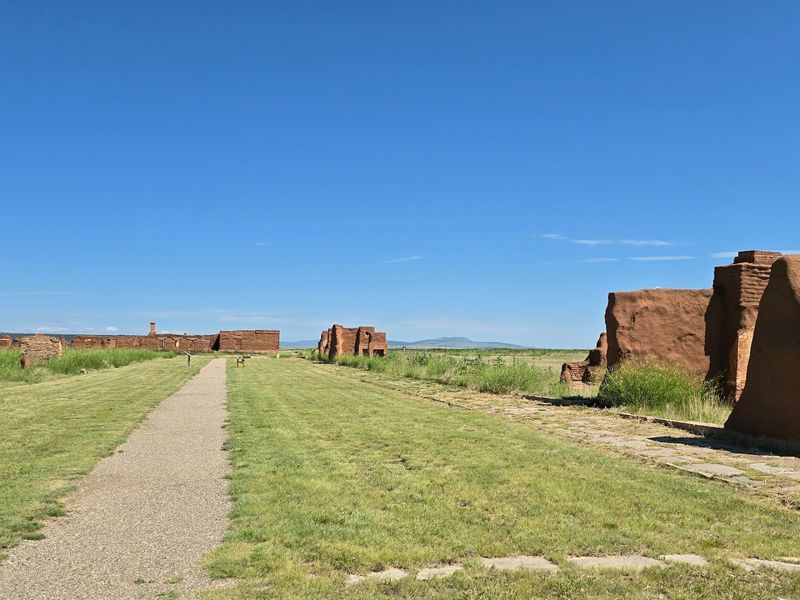
Beneath the adobe walls, stone foundations anchor the ruins to the earth with a solidity that has outlasted everything built above them, and those stones carry a quiet authority all their own.
The third fort was constructed with more durability in mind, using stone bases beneath the adobe to give the structures a firmer footing against the seasonal extremes of the high plains.
Today, the site is classified as a stabilized ruin, meaning preservation efforts focus on preventing further decay rather than reconstructing what has been lost, a philosophy that keeps the historic integrity fully intact.
That approach is evident in the texture of the place, where you see careful repairs sitting alongside original materials in a way that respects the age of everything around you.
I appreciated how the site does not try to dress itself up or smooth over the evidence of time, because the worn surfaces and fragmented walls are precisely what make it feel honest.
Each stone in those foundations was placed by hand more than a century and a half ago, and the fact that they are still here, still holding their position, is its own kind of quiet achievement.
The timeworn feel of this place is not a flaw but the whole point, and it lingers with you long after the drive home.