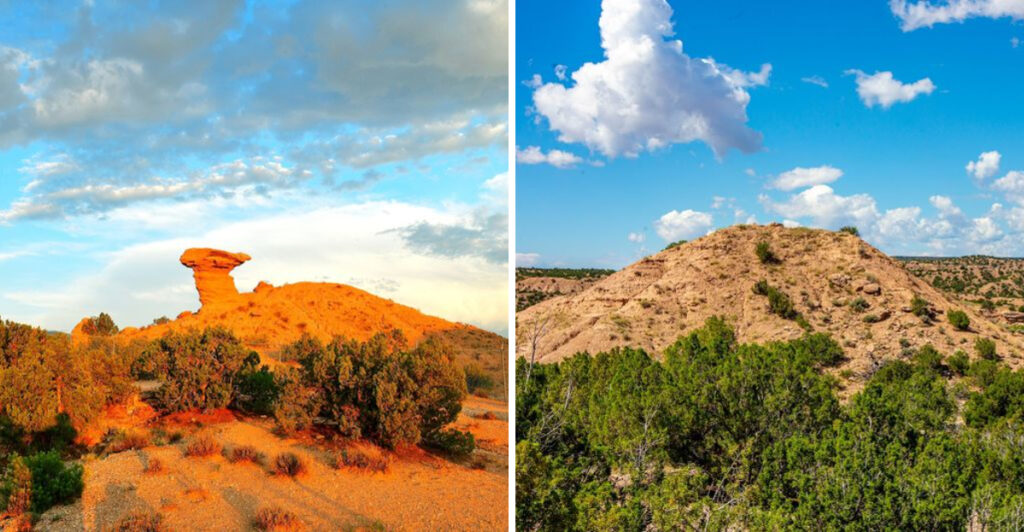
Some places make you plan a stop. This one makes the decision for you.
You are rolling through the desert, watching the same wide-open views stretch ahead, when a pink sandstone shape suddenly appears and looks so much like a resting camel that people may start pointing before anyone says a word.
It is not a statue or a roadside trick. It is a real rock formation, shaped so clearly that travelers have been slowing down for generations just to make sure their eyes are not messing with them.
That is the fun of it. The drive feels ordinary for miles, and then this strange shape shows up like the desert decided to surprise everyone paying attention.
Keep reading for the story behind this New Mexico favorite, and why a rock shaped by time still makes drivers tap the brakes on an otherwise quiet stretch of desert road today, too.
Desert Stone Against The Sky
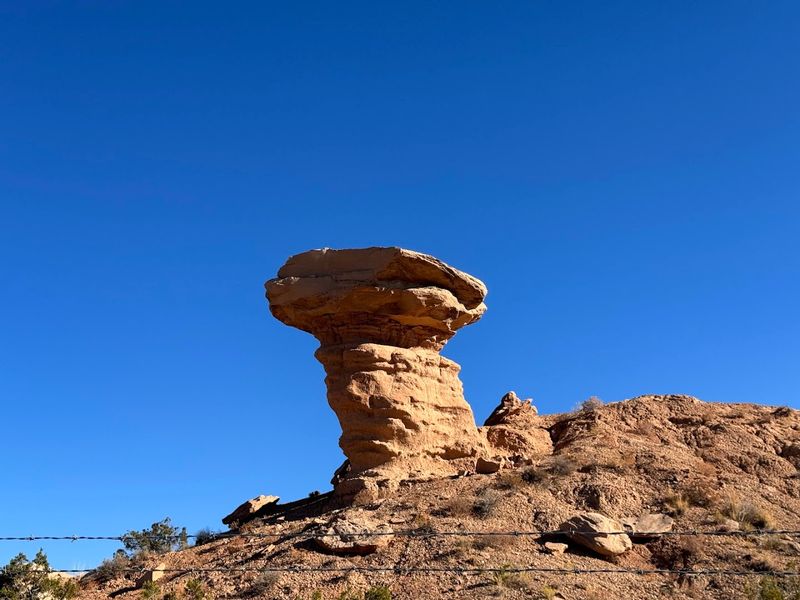
At roughly 40 feet high and about 100 feet long, this formation commands attention the moment it appears on the horizon.
The rock is composed of pink sandstone, and that warm rosy color shifts beautifully depending on the time of day and how the sunlight hits it.
Morning light gives it a soft peachy glow, while midday sun brings out sharper contrasts in the layered stone.
What makes this formation so visually striking is the way it rises almost abruptly from the relatively flat desert floor, with nothing nearby competing for your attention.
The sky behind it acts like a natural backdrop, and on days with scattered clouds, the whole scene looks almost too dramatic to be real.
Photographers who visit often talk about how the formation photographs differently depending on the season, the weather, and the angle from which you approach it.
You can find Camel Rock near Exit 175 off U.S. 84/285, along the highway corridor north of Santa Fe.
A Roadside View With Ancient Energy
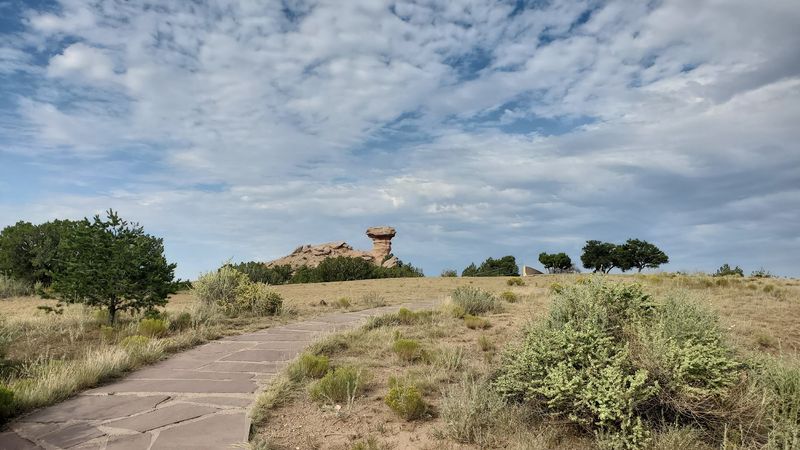
Long before road-trippers started pulling over for selfies, this formation held deep meaning for the people who have lived near it for generations.
Camel Rock sits on the land of the Tesuque Pueblo, one of the nineteen Pueblo communities in New Mexico, and the site carries genuine cultural significance for those communities.
The Tesuque Pueblo has maintained a presence in this region for centuries, and the rock formation is part of a landscape that has shaped their identity and traditions over time.
When you visit, you will notice informational signs near the parking area that share background about the Tesuque Pueblo, giving visitors a small but meaningful window into the history of the land.
That context transforms the stop from a simple photo opportunity into something that feels more layered and worth reflecting on.
I found myself reading every sign carefully, appreciating that the space invites curiosity rather than rushing you back to your car.
Once you understand that the formation belongs to a living community, not just a roadside novelty, the whole visit carries a quiet sense of respect that stays with you long after you drive away.
Wind-Carved Rock And Open Horizons
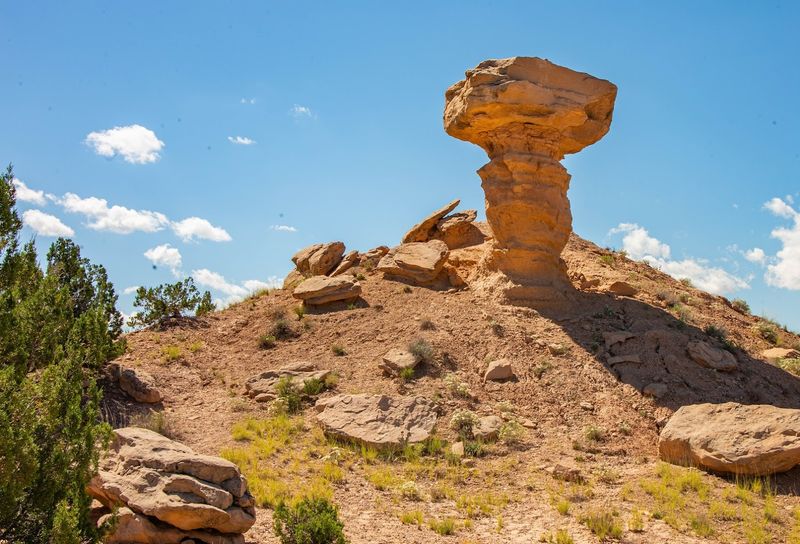
Millions of years of wind and weather did the sculpting here, and the results are genuinely hard to believe when you see them up close.
The camel shape was not carved by human hands but formed through natural erosion, with softer layers of sandstone wearing away over millennia while harder sections held their shape.
That slow geological process produced a silhouette so recognizable that almost every visitor immediately sees the same animal without being told what to look for.
The texture of the rock surface tells its own story, with ridges, grooves, and subtle color variations that speak to countless seasons of sun, rain, and wind.
The paved walking path makes it easy to get close enough to appreciate those surface details, which is part of what makes the stop feel worthwhile.
A fence surrounds the formation itself, which means climbing is not permitted, but the path brings you near enough to study the stone with real curiosity.
At the base, looking up at all that layered pink rock, it becomes easy to understand why geologists and casual visitors alike find sedimentary formations so endlessly fascinating to observe.
Where The Desert Turns Surreal
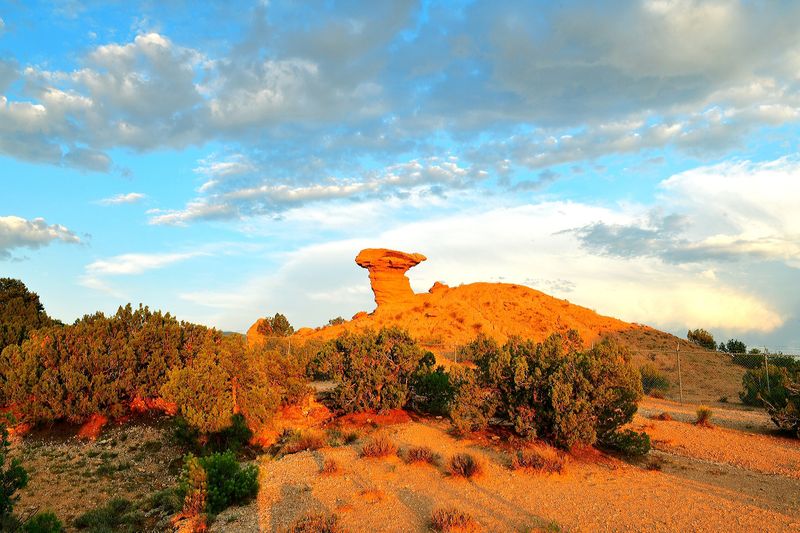
When the light drops low, the desert around Camel Rock takes on a quality that feels almost dreamlike.
The pink sandstone deepens to a richer amber, the scrubby vegetation around the base goes still, and the whole scene looks like something painted rather than photographed.
Sunset can be one of the best times to visit, especially because the colorful silhouettes that form against the evening sky feel so different from the brighter daytime view.
That surreal quality is not just about the light, though. The shape of the rock itself, a massive natural sculpture sitting quietly in the middle of an open desert landscape, creates a visual experience that feels genuinely otherworldly.
I visited on a clear afternoon and found myself standing longer than I expected, not quite ready to get back in the car.
Places like this can stop you mid-thought and make you just look, without reaching for your phone or planning your next move.
Camel Rock has that rare quality, the kind that turns a five-minute highway break into a memory you actually keep.
A Quiet Stop With Big Southwest Drama
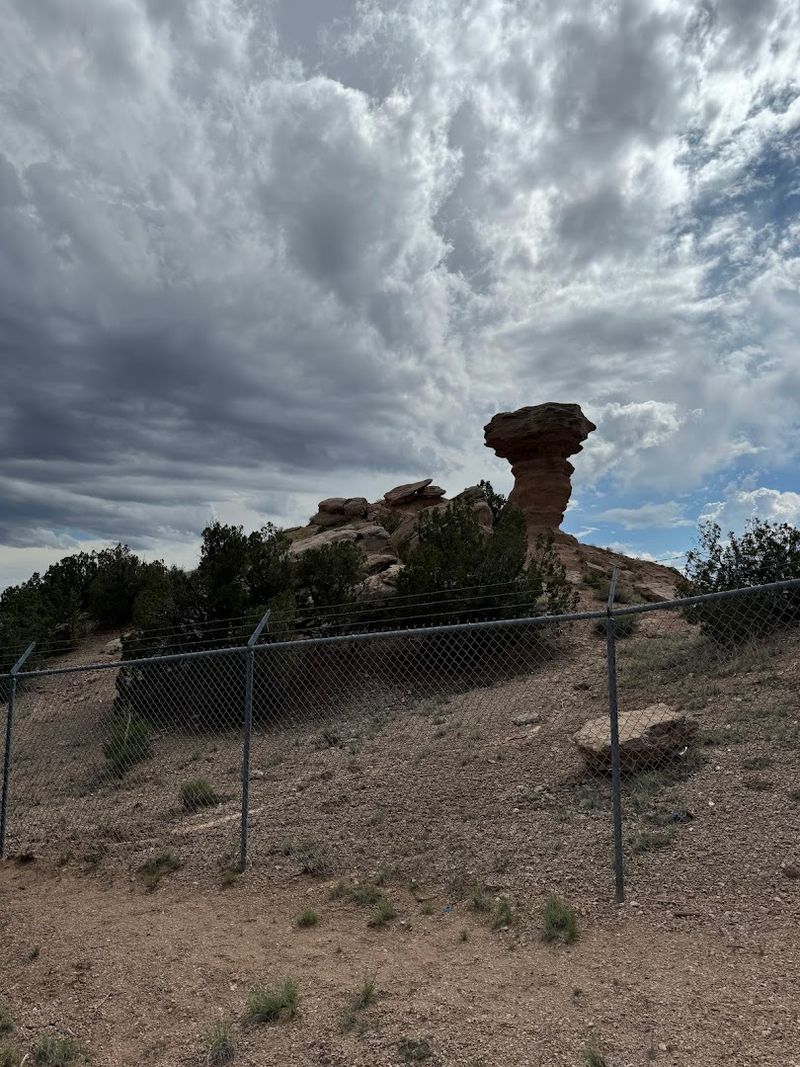
For a roadside stop, Camel Rock is surprisingly well set up for visitors who want more than a thirty-second look-and-go experience.
The parking area is open and easy to navigate, with covered picnic tables and trash cans available for anyone who wants to sit down, eat something, and take in the view at a slower pace.
A short paved path leads from the parking area toward the formation, making it accessible for a wide range of visitors, including those with limited mobility.
The whole loop takes about five minutes at a relaxed walking pace, which is honestly perfect for a highway break where you want to stretch your legs without committing to a full hike.
It works well as a place to stop, take a break from driving, eat something simple, and enjoy the view without turning the pause into a full outing.
There is no admission fee or ticket booth, and the area often feels calm enough that you can take in the best angles without feeling rushed.
The combination of easy access, free entry, and genuinely dramatic scenery makes this one of the most satisfying low-effort stops you can make on a drive through northern New Mexico.
Golden Light On Sculpted Stone
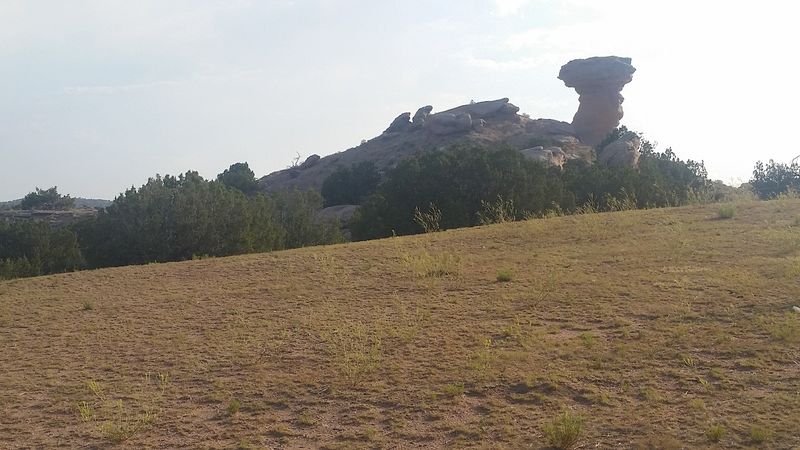
Morning light at Camel Rock is something photographers and casual visitors often appreciate, and after seeing it firsthand, that enthusiasm makes complete sense.
When the sun is still low in the eastern sky, it hits the pink sandstone at an angle that brings out every surface detail with extraordinary clarity.
Shadows settle into the natural ridges and grooves of the rock, and the warm golden tones of early light blend with the rosy hue of the stone to produce a color palette that feels almost too rich to be natural.
That early light also lines up with what many landscape photographers look for when shooting sandstone formations in the Southwest.
The contrast between the warm rock and the cool blue of a clear New Mexico morning sky adds another layer of visual interest that afternoon light simply cannot replicate.
Arriving early also means a quieter parking area and more space to move around the path without other visitors crowding your shots.
That golden morning window, brief as it is, transforms a striking formation into something that genuinely stops you in your tracks.
A Strange And Beautiful Desert Silhouette
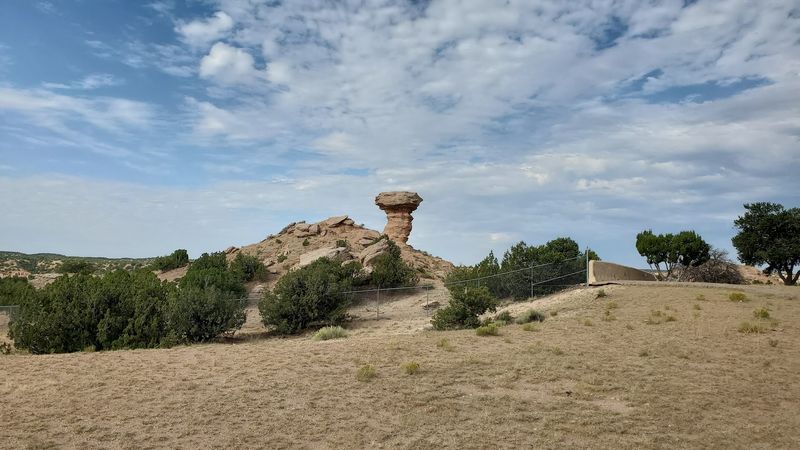
In 2017, a notable chunk of sandstone broke off the formation, taking with it what had been a more prominent snout that made the camel profile even more convincing.
That loss changed the silhouette somewhat, and some visitors who remember the rock from earlier years notice the difference right away.
Even so, the remaining shape is still remarkably readable as a camel, particularly when viewed from the right angle along the highway approach.
The camel profile sits in a reclining pose, with the hump clearly defined against the skyline and the overall mass of the rock giving it a sense of settled, unhurried presence.
The shape still comes across quickly and clearly, which is part of why the formation remains so recognizable even after the natural change it experienced.
Nature constantly reshapes its own creations, and Camel Rock is a quiet reminder that even the most permanent-looking landmarks are always slowly becoming something slightly different.
A rock can lose pieces of itself for millennia and still somehow look exactly like what everyone says it looks like.
Wide-Open Views Beyond The Road
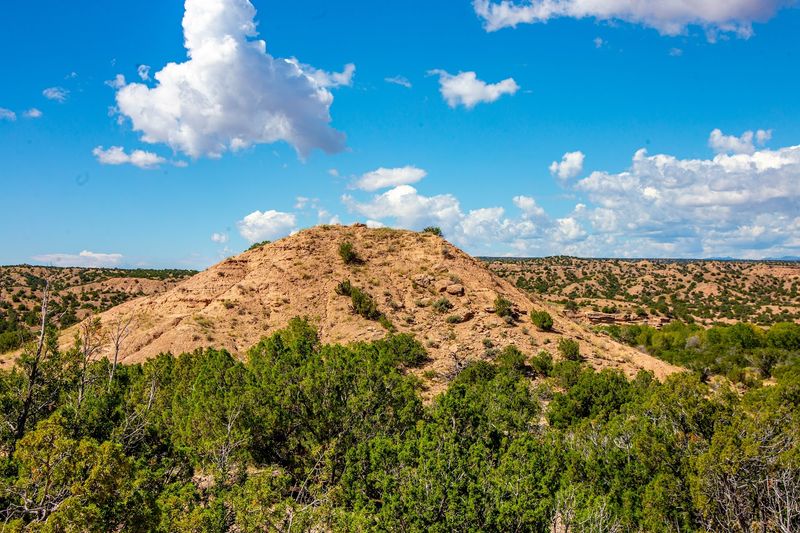
A stop at Camel Rock does not just give you the rock itself. It gives you the full sweep of the northern desert landscape that surrounds it.
The Tesuque Valley stretches out in multiple directions, with low desert scrub, distant ridgelines, and an enormous sky that makes you feel very small in the best possible way.
That sense of open space is part of what makes the stop feel like more than a quick tourist checkbox.
A map near the parking area points out local landmarks and points of interest, which is a small but thoughtful detail that encourages visitors to look beyond the rock and take in the broader geography.
The formation has also earned a place in pop culture over the decades, appearing in the 1955 film “The Man From Laramie” and the animated series “Bojack Horseman,” and lending its name to the former Camel Rock Casino, which closed in 2018, and to Camel Rock Studios, developed in the former casino building as the country’s first Indigenous-owned film and television production facility.
All of that history and cultural reach flows outward from one pink sandstone shape sitting beside a desert highway.
Wide-open views and deep roots rarely come packaged this neatly, and that is exactly what makes Camel Rock worth every second of the detour.