An SR-71 Blackbird sits parked indoors, and you can walk right up to it without paying a cent. Admission is free, and so is parking.
I still can’t quite believe that.
The Blackbird isn’t alone either. More than 90 aircraft, missiles, and aerospace vehicles fill the indoor galleries and an outdoor airpark.
A B-17, a B-29, a stealth fighter, and an F-22 Raptor all share the guest list.
This place sits in northern Utah, right beside an active Air Force base. Yet you don’t need base access to get in.
I like how it skips the hassle and hands you history at full scale.
One gallery alone covers 91,000 square feet and opened in 2024. So how many hours should you actually plan for?
More Than 90 Flying Machines Are Waiting For Your Attention

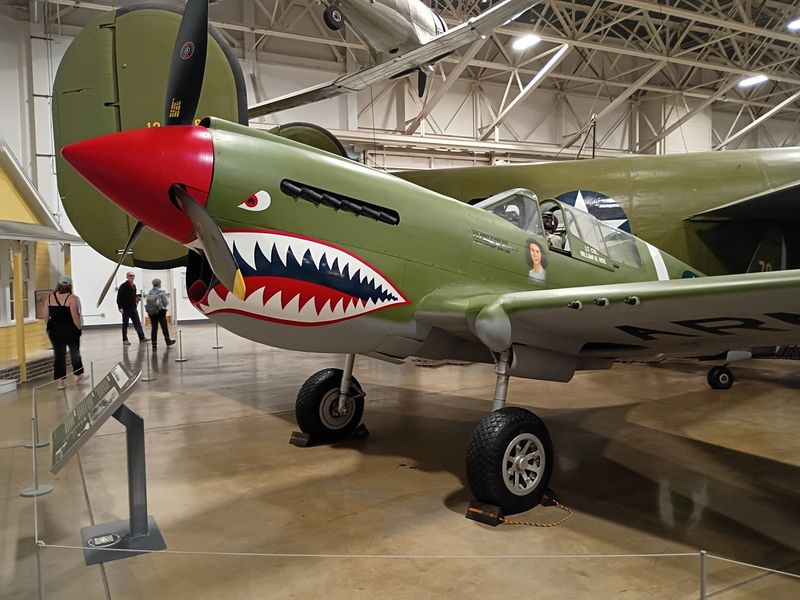
Ninety-plus aircraft, missiles, and aerospace vehicles is a lot of metal to meet in one afternoon. The Hill Aerospace Museum spreads that collection across several indoor galleries and a big outdoor airpark.
The total artifact count tops 4,000 objects. That means the planes get plenty of company from engines, uniforms, ordnance, and ground equipment.
Range is the real star here. The story starts with a replica of the 1903 Wright Flyer and ends with an F-22 Raptor.
Everything between those two covers more than a century of flight. You get propellers, early jets, bombers, cargo haulers, and stealth designs, all in one stop.
Exhibits are grouped by era for easy browsing. Look for sections called The Beginnings, World War II, Dawn of the Jet Age, The Cold War, and Keeping the Peace.
That layout helps your brain keep up. You can follow aviation as it grows from wood and fabric into sleek, radar-dodging machines.
My tip is simple. Pick a few must-see aircraft first, then wander freely once you’ve checked them off.
Otherwise, you might spend an hour in the first room. Honestly, that wouldn’t be the worst problem to have in Utah.
The Blackbird Steals The Show Without Even Trying
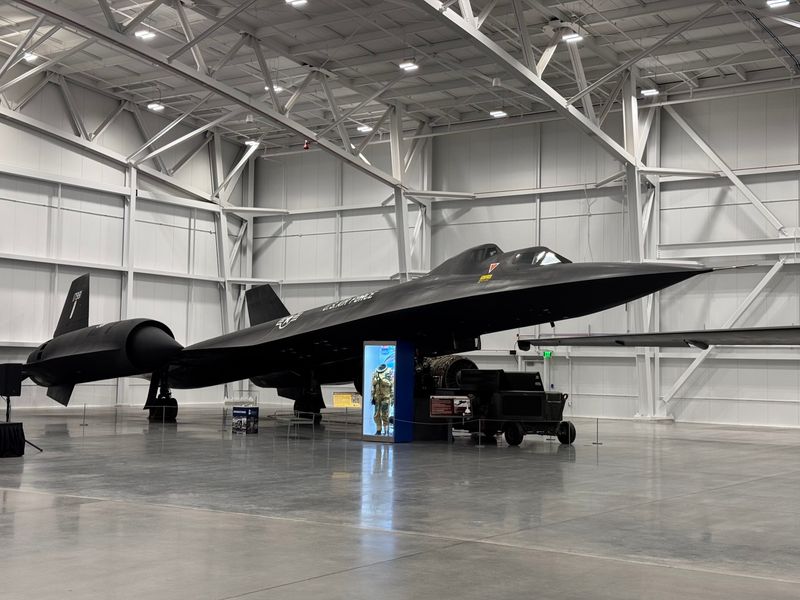
Long, black, and shaped like something from a movie, the SR-71 Blackbird looks fast even while parked. It’s one of the most famous aircraft at the museum.
The Blackbird was a Cold War reconnaissance plane built by Lockheed. Its job was to fly high and fast while gathering information.
Seeing one in person helps you understand its strange design. The long body and sharp edges look nothing like the older planes nearby.
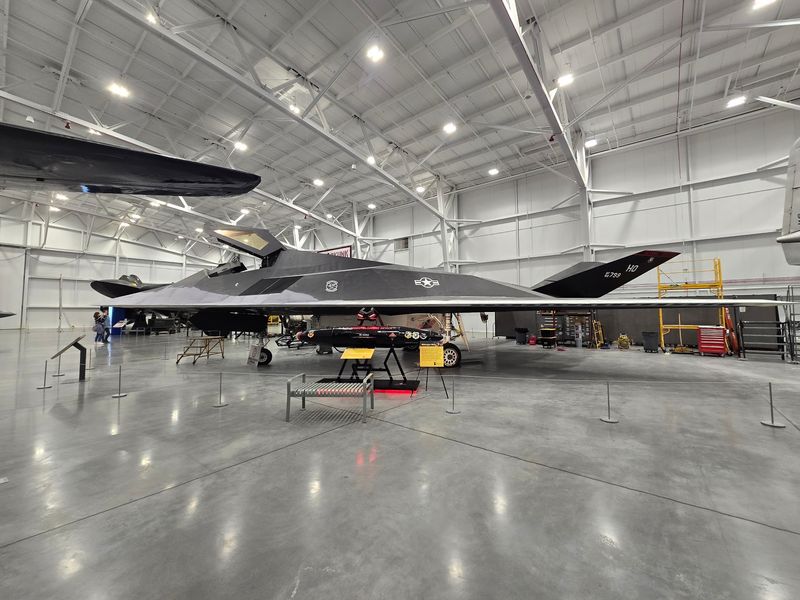
Nearby, the F-117 Stealth Fighter brings its own odd style. Its flat, angled panels were designed to make radar detection harder.
Put these two together and you get a fun lesson in sneaky engineering. One focused on speed and height, while the other focused on staying hidden.
Bring a curious kid along if you can. Questions like why is it so pointy make great conversation starters.
Take your time with the signs around these aircraft. They help explain how designers solved big problems with clever shapes.
Photos are allowed for personal use. Just know that fitting the full Blackbird into one picture may take a few steps backward and a little patience.
Bombers From The 1940s Still Command The Room

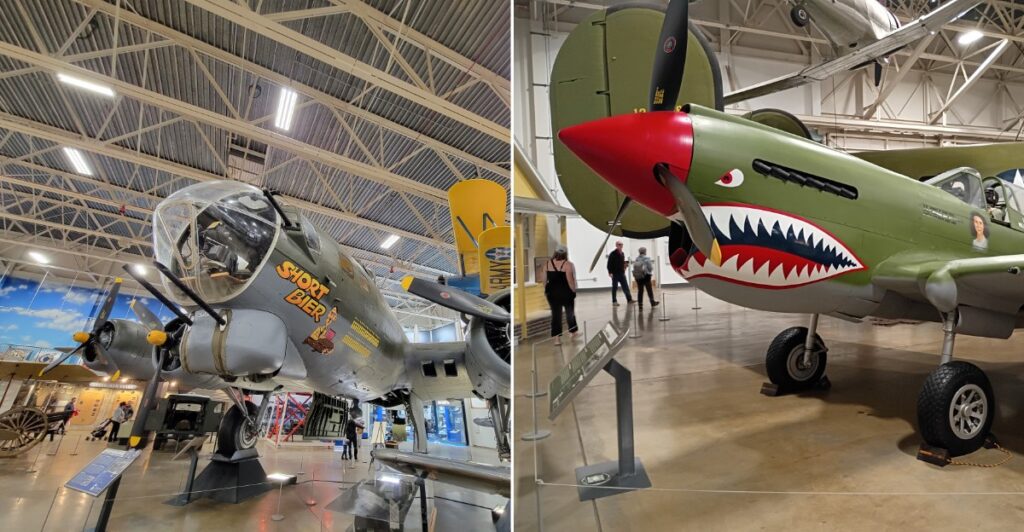
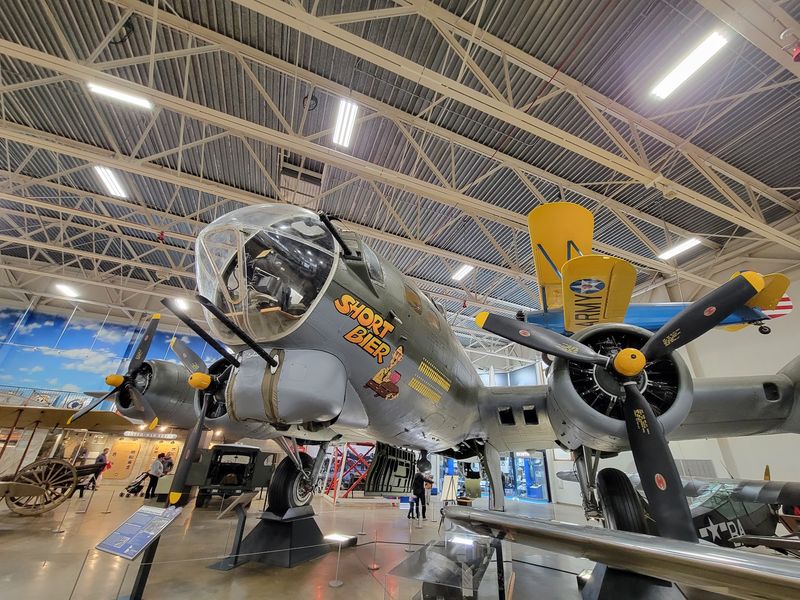
Silver wings and four big engines give the World War II bombers a serious presence. The Boeing B-17G Flying Fortress and Boeing B-29 Superfortress are both part of the collection.
These aircraft are giant pieces of 1940s history. Standing near them makes the scale of that era feel real.
The B-17 earned its Flying Fortress nickname for good reason. It was built tough and carried crews on long missions.
The B-29 came later with bigger ambitions. It introduced features like a pressurized cabin, which was a major step forward at the time.
The World War II section gives these planes helpful context. You can learn about the people, equipment, and teamwork behind each flight.
It’s a good spot to slow down. These aren’t just machines, since each one connects to real crews and real stories.
Volunteers are stationed around the galleries, and many have Air Force backgrounds. Friendly questions are welcome, so ask about the details that catch your eye.
History books are useful, but nothing beats standing under a wing that big. Your neck may get a workout from looking up so much.
A Brand-New Hangar Made The Whole Place Even Bigger
May 2024 brought a big upgrade with the opening of the L.S. Skaggs Gallery.
This newest hangar covers 91,000 square feet.
That’s a huge amount of room for aircraft. It’s also the museum’s third hangar, joining the Hadley Gallery and the Lindquist-Stewart Fighter Gallery.
The expansion began in 2021 and included a new restoration facility too. Funding came from the state of Utah along with private donations.
So the community clearly showed up for this project. More space means more aircraft can be protected and displayed indoors.
Each gallery has its own personality, so plan to see all three. The Lindquist-Stewart Fighter Gallery focuses on fighter jets, as the name suggests.
One small timing detail matters here. The Lindquist-Stewart Gallery closes at 3:45 PM, a little before the rest of the museum.
If fighters are your favorite, start there or reach it early. That way, the clock won’t cut your visit short.
The newest aircraft, an F-22 Raptor, gives you one more reason to explore carefully. It’s a modern addition to a story that started over a century ago.
Outside, The Airpark Plays Host To The Real Heavyweights
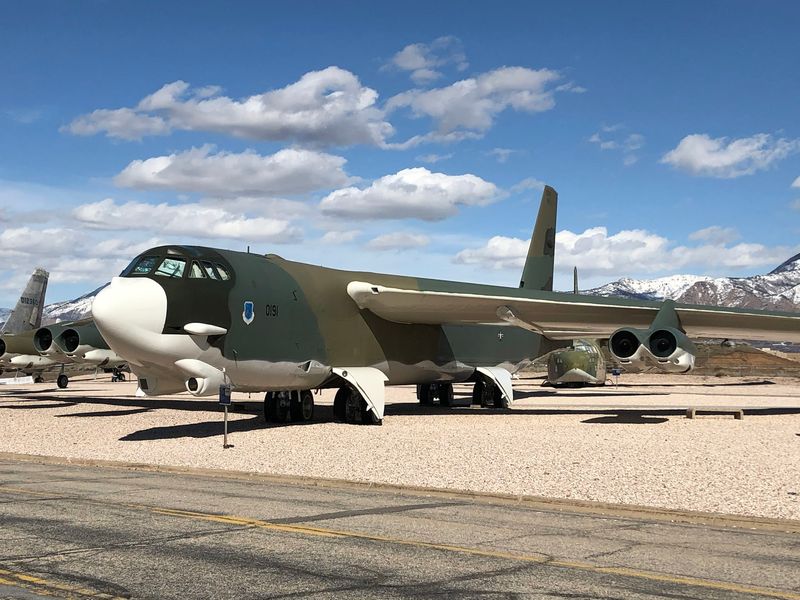
Some aircraft are simply too big to bring inside. That’s where the outdoor airpark comes in.
Large military planes rest outside under the open Utah sky. The space gives you a different view than the indoor galleries.
Out here, you can see how massive these machines really are. Walking around them shows their full length and wingspan.
The museum also displays missiles and aerospace vehicles across the grounds. It’s a good change of pace after time spent indoors.
Weather matters for this part of the visit. Northern Utah summers can be warm, and winter brings colder days.
Dress for the season and wear comfortable shoes. There’s a fair bit of ground to cover between aircraft.
Picnic tables are available outside for visitors. Since food and drinks aren’t allowed inside, they make a handy place for a lunch break.
From May through September, water in clear containers is allowed inside. That small rule can make a warm-weather visit much more comfortable.
Save the airpark for a time when you still have energy. You’ll want enough steam left to appreciate the giants.
Kids Get Scavenger Hunts And A Virtual Cockpit Thrill
Young pilots-in-training have plenty to do here. Family-friendly activities include scavenger hunts that turn a gallery walk into a mission.
That gives kids a reason to look closely. Searching for clues keeps them engaged instead of simply rushing past each plane.
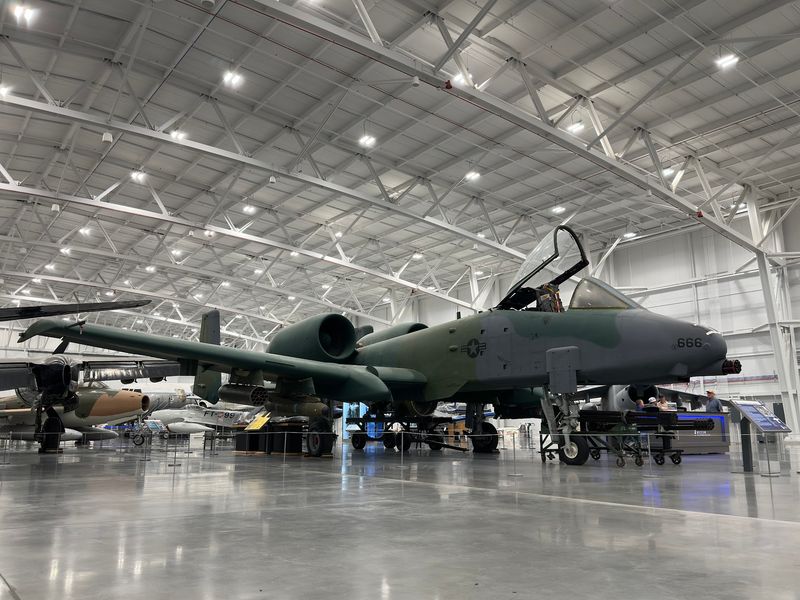
There’s also an A-10 Virtual Reality Flight Experience. It’s a fun way to bring the excitement of flight a little closer.
Interactive exhibits and rare artifacts add even more variety. Kids can learn through seeing, touching where allowed, and asking questions.
Education is a big part of the mission. The Reynolds Aerospace Center for Education offers programs focused on STEM and history.
Those programs connect aviation to science, engineering, and real-world problem solving. It’s a smart way to make classroom ideas feel exciting.
Teachers and group leaders can schedule guided tours. Groups need 10 to 100 people and must book at least two weeks ahead.
Parents should know that complimentary wheelchairs and mobility scooters are offered first-come, first-served. Accessible restrooms and lifts help more people enjoy the full collection.
A museum that welcomes everyone earns extra points. Plenty of future engineers might start right here.
Utah Aviators Get Their Own Spotlight Inside
Behind every great plane stands a person who flew, built, or improved it. The Hill Aerospace Museum is home to the Utah Aviation Hall of Fame.
That adds a local layer to the visit. You can learn how people connected to Utah helped shape aviation history.
It’s easy to focus only on the giant aircraft. The Hall of Fame reminds you that human skill made those machines matter.
The collection supports that story with uniforms and personal items. These details make history feel more personal and relatable.
The museum itself has deep roots. It was founded in the early 1980s through the United States Air Force Heritage Program.
It opened to the public in 1987 and moved to its current location in 1991. The Aerospace Heritage Foundation of Utah, formed in 1983, provides important support.
Here’s a bragging point worth knowing. The museum is accredited by the American Alliance of Museums.
Only six museums in Utah hold that distinction. That’s a strong sign of careful work behind the scenes.
Spend a few minutes reading the stories here. They may become the part of the visit you remember most.
Your Wallet Can Stay Pretty Relaxed On This Trip

Free admission is a rare treat for a museum this large. Parking is free too, which makes the deal even sweeter.
Donations are gratefully accepted. If you enjoy the visit, chipping in helps support the collection and its future.
Finding the museum is easier than you might expect. The address is 7961 Cottonwood Street, Building 1955, Hill Air Force Base, UT 84056.
The museum sits off base near the North/Roy Gate. That means visitors don’t need base access to get inside.
It’s on the northwest corner of Hill Air Force Base. You’ll be about five miles south of Ogden and roughly 31 miles north of Salt Lake City.
Hours run Tuesday through Saturday, from 9 AM to 4 PM. The museum is closed Sundays, Mondays, and several major holidays.
Those holidays include Thanksgiving, Christmas Eve, Christmas Day, and New Year’s Day. Plan around them so you don’t arrive to locked doors.
Registered service dogs are welcome, but other pets need to stay home. Personal photography is allowed, so charge your phone before you leave.
Leave Room For A Souvenir Before You Taxi Home
Model airplanes make excellent proof that you saw the real thing. The Flight Line Gift Shop sells aviation-themed books, models, and clothing.
It’s a fitting final stop. After hours with full-size aircraft, a tiny version on your shelf feels like a smart souvenir.
Books are a great pick for curious readers. They let you keep learning about the aircraft that caught your attention.
Clothing works for anyone who wants to show off their love of flight. Plus, it’s easier to pack than a B-29.
Before heading out, think about what you missed. With three hangars and an airpark, catching everything in one trip is tough.
That’s not a flaw. It’s simply a good excuse to plan another Utah outing later.
Arriving soon after opening gives you the most time. You’ll have a better chance to explore without feeling rushed by the 4 PM close.
The Hill Aerospace Museum packs more than a century of flight into one free visit. Few places let you go from the Wright brothers to an F-22 before lunch.
That’s quite a trip for zero admission.