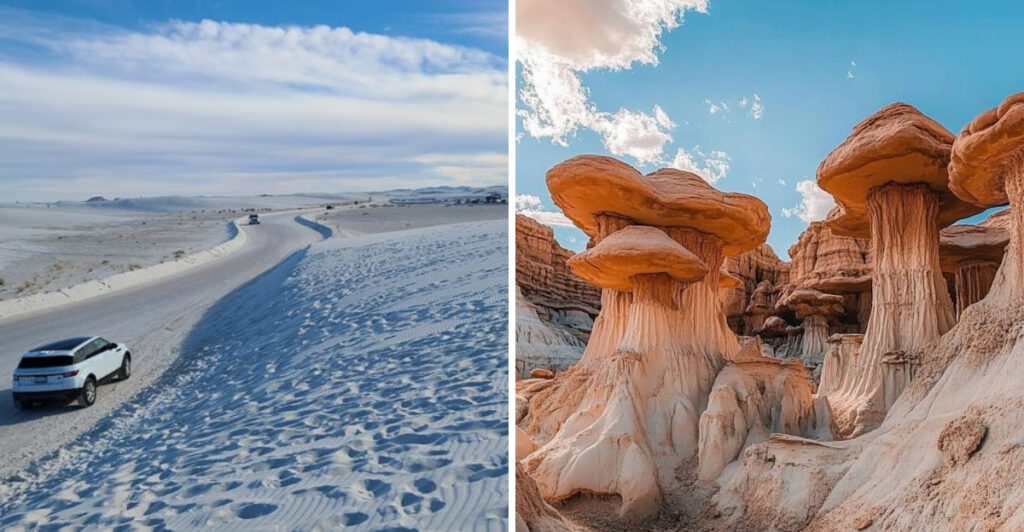
New Mexico has road trip energy that feels almost unfair. You start driving, thinking you know what desert scenery looks like, and then the view changes your mind before lunch.
The white dunes are the first shock. They do not look real, especially when the light hits them and the whole place starts glowing.
Later, the road leads underground, where the caves feel huge enough to swallow every normal thought you brought with you. That is the thing about this route.
It does not give you one big moment and call it a day. It keeps raising the bar.
You will want to stop more than you planned. You will take too many photos and still feel like the best parts did not fit in the frame.
If you like drives with a little drama and a lot of “are you seeing this?” energy, this one earns the gas money.
1. White Sands Visitor Center, Alamogordo, NM
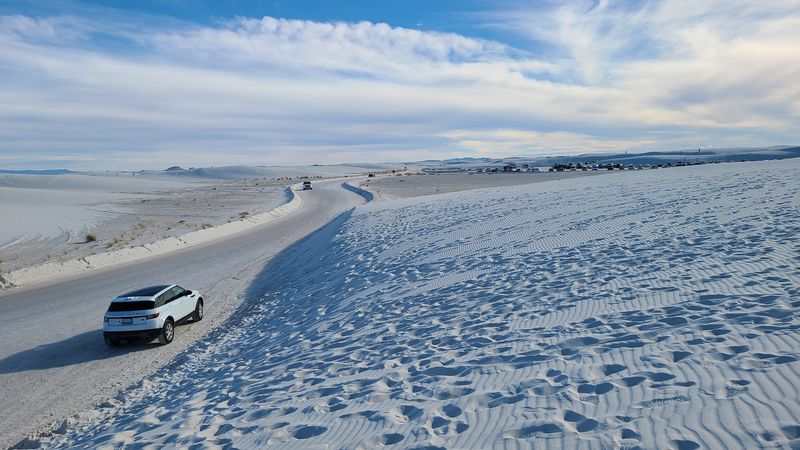
At the edge of the White Sands Visitor Center parking lot, I genuinely thought I had driven onto the surface of another planet.
The visitor center is located at 19955 Highway 70 West, Alamogordo, NM 88310, sitting right at the gateway to the largest gypsum dune field on Earth.
The dunes stretch across 275 square miles of the Tularosa Basin in southern New Mexico, and the color is so blindingly white that sunglasses are an absolute must before you even step out of your car.
What makes this place so special is that the sand here is not actually sand in the traditional sense; it is made of gypsum crystals, which stay cool to the touch even under the blazing desert sun.
The Dune Life Nature Trail gives visitors a memorable look at the dunes and the ecosystem hiding beneath that snowy surface, though the one-mile loop is better described as moderate than gentle.
Ranger-led walks are offered at select times. They are worth joining because guides explain how the dunes shift and reshape themselves with every windstorm.
One of the quirkiest highlights is spotting the white lizards. Their lighter coloring helps them blend into the gypsum, making them a real-life example of adaptation right in front of you.
If you time your visit right, the sunset here transforms the dunes into shades of pink, peach, and gold that no photograph can fully do justice to.
Dune sledding is also a wildly popular activity, and sleds are usually available at the visitor center gift shop for anyone who wants to channel their inner kid on a snowy hill.
I left White Sands with gypsum dust on my boots and a full memory card on my camera. Before I even reached the road, I was already wondering when I could come back for another golden sunset.
2. Carlsbad Caverns National Park, Carlsbad, NM
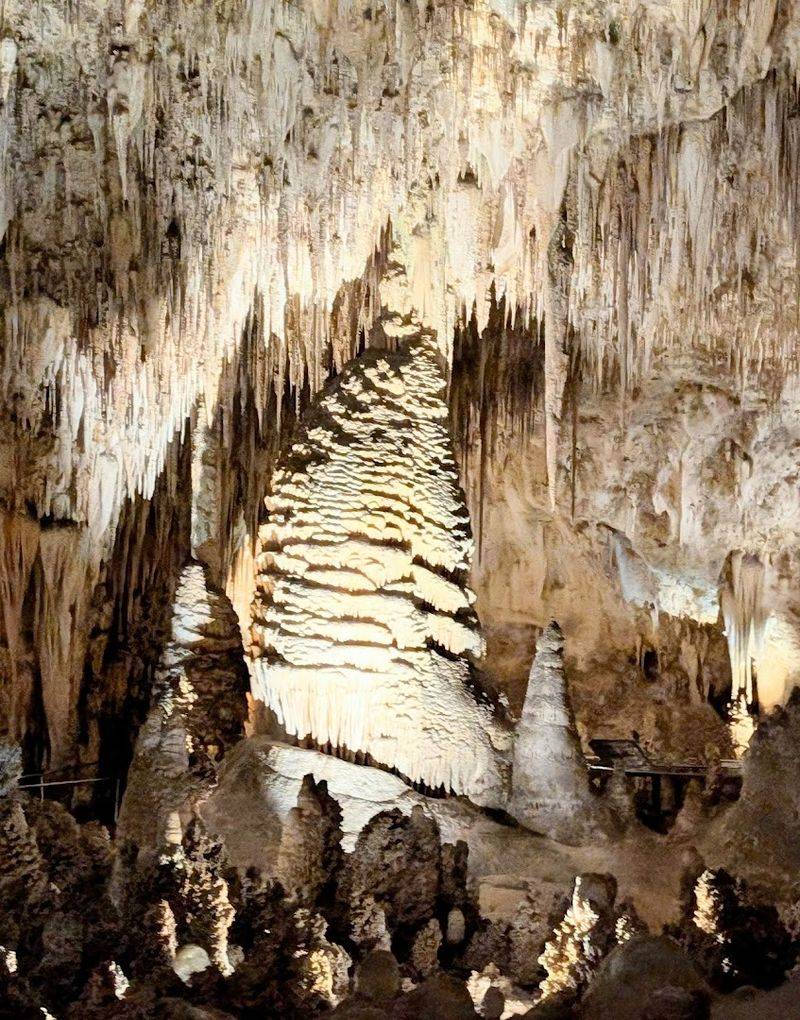
Some places earn their reputation honestly, and Carlsbad Caverns National Park at 727 Carlsbad Caverns Highway, Carlsbad, NM 88220 is absolutely one of them.
Tucked into the Guadalupe Mountains of southeastern New Mexico, this park protects more than 119 known caves carved out over millions of years by sulfuric acid dissolving the surrounding limestone.
The Natural Entrance Trail feels like the start of a living science fiction novel, dropping 750 feet underground through a winding path that grows cooler and more dramatic with every step.
The Big Room is the crown jewel of the experience, stretching nearly 4,000 feet in length and standing as one of the largest accessible cave chambers in North America.
Limestone formations hang from the ceiling in shapes that resemble chandeliers, frozen waterfalls, and draped curtains. Each one formed drop by drop over an almost impossible stretch of time.
I spent nearly two hours on the paved 1.25-mile loop trail inside the Big Room, and I still felt like I had only scratched the surface of what this underground world has to offer.
From April through October, the caverns host one of nature’s most dramatic seasonal performances. At dusk, thousands of Brazilian free-tailed bats spiral out of the cave entrance in a swirling column.
The Chihuahuan Desert setting above ground adds its own rugged beauty to the visit, with scrubby desert plants and wide limestone ridges framing the park entrance beautifully.
Temperatures inside the caves stay consistently cool year-round, so bringing a light jacket is smart no matter what the thermometer says on the surface.
Carlsbad Caverns has a way of making you feel both incredibly small and endlessly curious, which is honestly the best combination any natural wonder can offer a traveler.
3. Bisti/De-Na-Zin Wilderness, Farmington
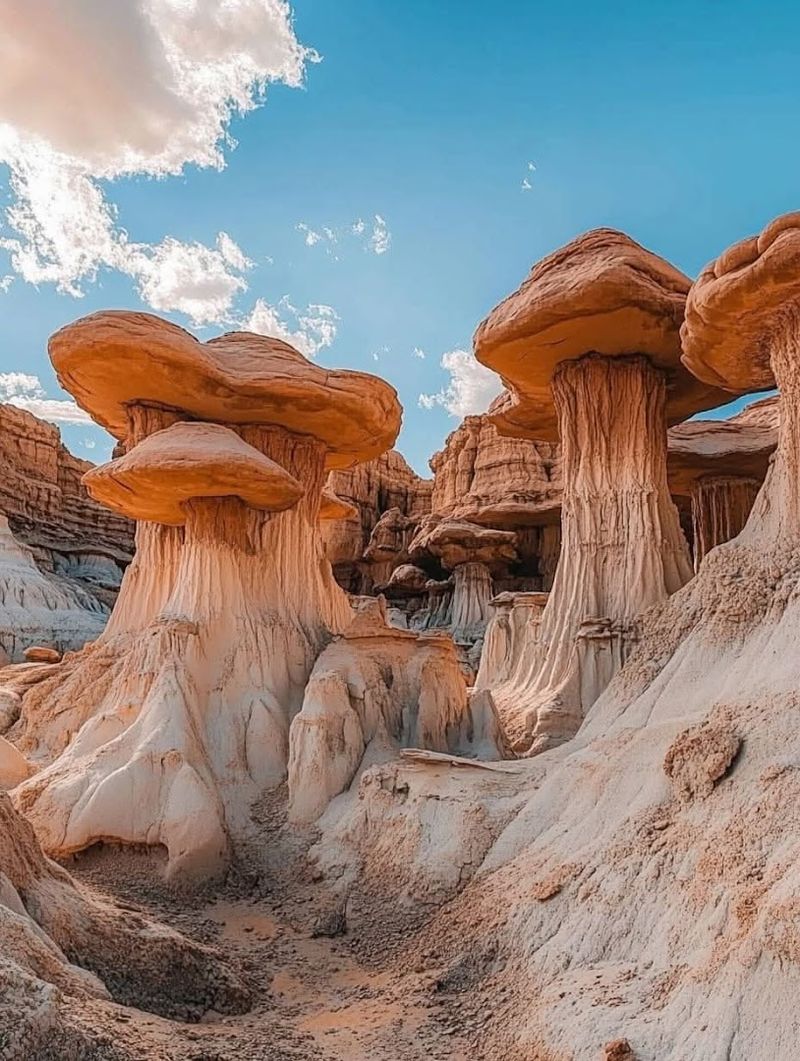
Bisti/De-Na-Zin Wilderness feels like the kind of place that should come with a warning: your sense of scale may never fully recover.
Located in northwestern New Mexico, south of Farmington, this 45,000-acre wilderness protects one of the strangest and most beautiful badlands landscapes in the Four Corners region.
The scenery here is shaped by wind, water, and time, with layers of sandstone, shale, mudstone, coal, and silt carved into hoodoos, pinnacles, spires, and caprocks that look almost imagined.
The formations date back to the Late Cretaceous period, and the area is known for fossil-bearing layers, petrified wood, and strange stone shapes that make every turn feel like a discovery.
Unlike a developed park with paved paths and easy signs, Bisti/De-Na-Zin is a true wilderness area, so exploring it feels quiet, open, and wonderfully unpolished.
The best part of a visit is wandering carefully among the formations, watching the colors shift from soft gray and tan to orange, gold, and lavender as the light changes.
Photographers love this place at sunrise and sunset, when the hoodoos throw long shadows and the whole badlands floor starts to look almost theatrical.
Because trails are not clearly marked, offline maps, GPS, plenty of water, sun protection, and sturdy shoes are essential rather than optional.
The landscape can feel disorienting fast, especially when similar ridges and washes start repeating in every direction, so turning around before you are tired is a smart move.
Bisti/De-Na-Zin Wilderness gives this road trip a wilder edge, replacing mountain cliffs with a surreal desert maze that feels ancient, silent, and completely unforgettable.
4. Fourth Of July Canyon, Tajique
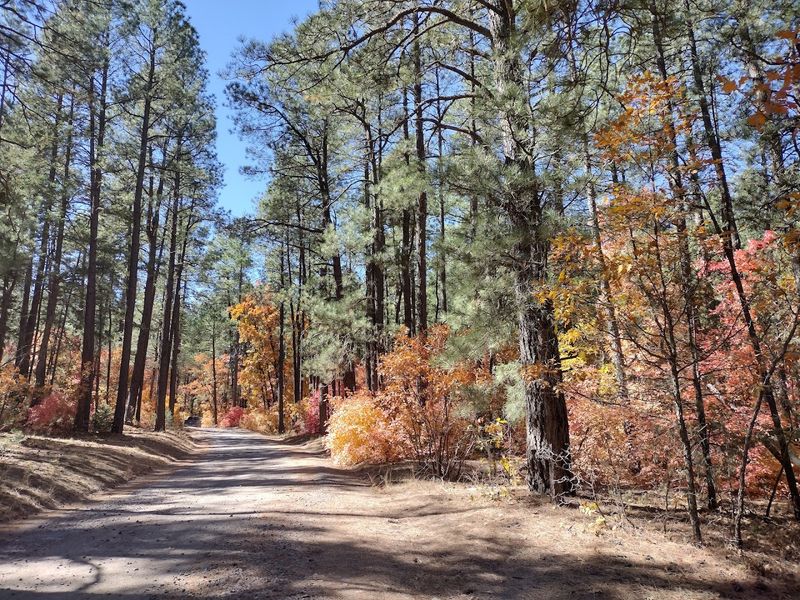
The name alone had me curious before I ever turned onto Fourth of July Road. Also known as Forest Road 55, it sits near Tajique, NM 87016, tucked inside the Manzano Mountains.
This hidden canyon is best known for its spectacular autumn color, when the hillsides can look like a living fireworks display of red, orange, and gold.
Autumn is when Fourth of July Canyon truly earns its reputation as one of the state’s most beloved fall foliage destinations, with bigtooth maples and oaks putting on a color show that rivals far more famous leaf-peeping spots.
The drive up Forest Road 55 is an experience in itself, winding through the Cibola National Forest with views that open and close dramatically as the road curves around each new ridge.
A short hiking trail leads into the canyon and offers close-up views of the foliage along a shaded path that feels completely removed from the heat and dust of the desert below.
I visited on a weekday morning in early October. The canyon was quiet, cool, and glowing with amber and crimson leaves that made the sunlight feel almost magical.
Birders will find this spot particularly rewarding, as the canyon attracts a wide variety of migratory species that use the Manzano Mountains as a natural corridor during their seasonal journeys.
Picnic areas are available near the trailhead, making this an ideal spot to pack a lunch and spend a slow, unhurried afternoon surrounded by the sounds of wind moving through the trees.
Cell service disappears quickly once you head up into the canyon, so downloading offline maps before your visit is a genuinely good idea rather than a suggestion you can safely ignore.
Fourth of July Canyon rewards anyone willing to seek it out with the kind of quiet, colorful beauty that stays with you long after the leaves have fallen.
5. Cibola National Forest, Albuquerque
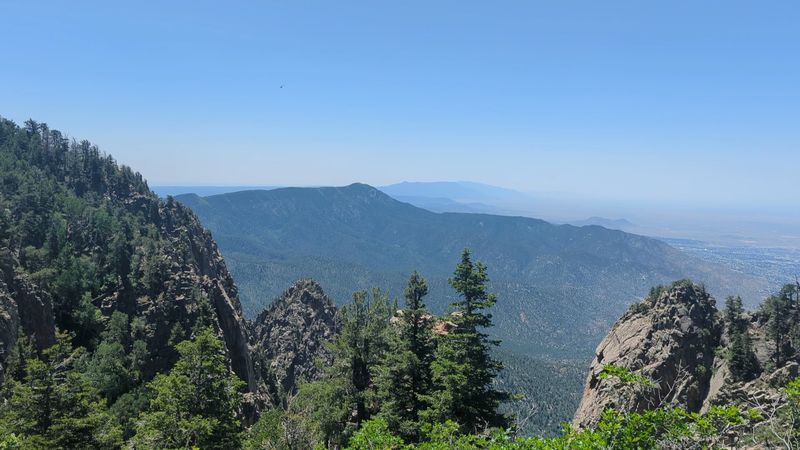
Cibola National Forest is headquartered at 2113 Osuna Road NE in Albuquerque, NM 87113. Its mountain landscapes offer a refreshing contrast to the desert terrain that defines much of the state.
The forest and its associated grasslands cover nearly two million acres, with mountain districts that include Sandia, Mountainair, Mount Taylor, and Magdalena, each with its own distinct character and set of attractions.
My visit focused on the Sandia Mountains unit east of Albuquerque. It rises dramatically above the city and turns from sandy tan to watermelon pink at sunset.
Trails here range from casual nature walks through piñon and juniper woodland to strenuous ridge routes that climb through ponderosa pine forests into cooler high-elevation terrain.
The Sandia Crest, accessible by both trail and a scenic byway road, offers a panoramic view that stretches across the Rio Grande Valley and into the desert basin on a clear day.
Mountain bikers will find plenty to like throughout the forest, with a trail network that is well maintained in many popular areas and generally easy to follow with a good map.
Wildlife sightings are common here, with black bears, mule deer, wild turkeys, and a wide variety of raptors making regular appearances along the forest trails.
Winter transforms Cibola into a completely different kind of destination, with cross-country skiing and snowshoeing becoming popular activities in the higher elevations of the Sandia and Manzano areas.
Several developed campgrounds and dispersed backcountry options give visitors real flexibility in how they choose to experience the land.
Cibola National Forest is the kind of place that proves this state is far more than desert, offering layers of green, cool, and wild that most visitors never expect to find this close to a major city.
6. Rio Grande Gorge Bridge, Taos County

A stop off U.S. Route 64 in Taos County, NM 87529 brings you right to the Rio Grande Gorge Bridge.
The first view is the kind of moment that makes your knees register the drop before your brain fully catches up.
The bridge stretches across the Rio Grande Gorge, a massive canyon carved by the river through ancient lava flows. The drop to the water below is a genuinely dizzying 650 feet.
As one of the highest bridges in the United States, this structure draws visitors from around the world, and yet the surrounding landscape is so vast and open that it never feels crowded or claustrophobic.
You can walk across the bridge for free, and the views from the pedestrian walkway are simply extraordinary in every direction, from the ribbon of river far below to the volcanic plateau stretching out toward the horizon.
The gorge walls are made of dark basalt lava rock, and the contrast between that deep stone and the water threading through the bottom is a color combination I was not prepared for.
Wildlife enthusiasts will want to linger near the gorge rim, as mountain bluebirds, red-tailed hawks, and bighorn sheep have all been spotted in this area by patient observers.
Junipers and piñon pines, some of them hundreds of years old, dot the plateau around the bridge approach, adding a sense of ancient permanence to the already dramatic scene.
A small parking area and a few interpretive signs near the bridge entrance provide helpful context about the geology and history of the gorge without overwhelming the visitor with information.
Sunrise and sunset visits are particularly rewarding here, when the low-angle light paints the gorge walls in deep amber and the river below catches the color.
The Rio Grande Gorge Bridge is one of those rare spots where standing still and simply looking feels like more than enough.
7. Devisadero Loop Trail 108 Trailhead, Taos
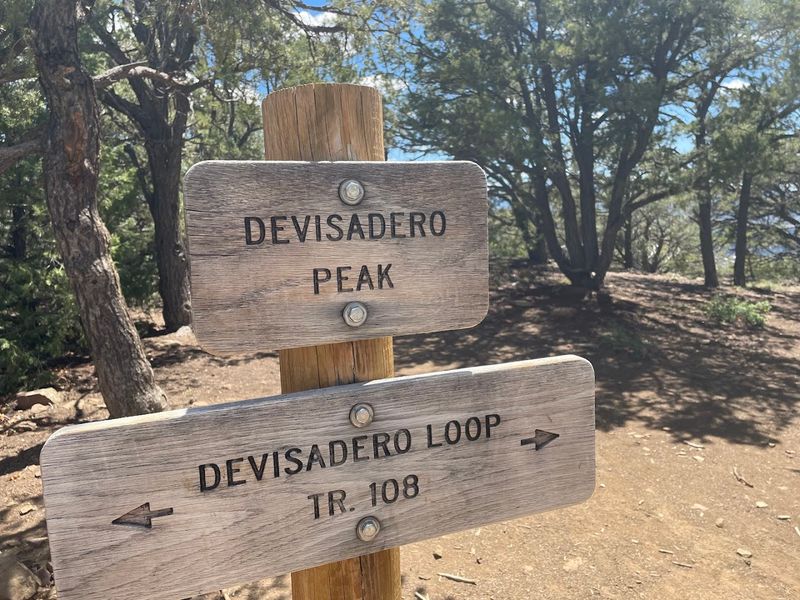
The Devisadero Loop Trail 108 Trailhead sits on the outskirts of Taos, NM 87571. It offers one of the most satisfying and underrated hikes in the northern part of the state.
The trail climbs through a landscape of piñon pine, juniper, and scrub oak, gaining elevation steadily as it winds toward the rocky ridgeline that gives the loop its dramatic payoff views.
Devisadero Peak, which the trail skirts near its highest point, translates roughly to “lookout” in Spanish, and once you reach the upper sections of the loop, that name makes complete sense.
From the ridgeline, the views sweep across the Taos Valley, the Sangre de Cristo Mountains, and on clear days, all the way to the flat plateau where the Rio Grande Gorge cuts its path through the volcanic rock below.
The full loop covers about 5.7 miles with more than 1,400 feet of elevation gain, making it a solid choice for hikers with moderate fitness who want a genuine workout paired with outstanding scenery.
I started the hike in the early morning when the air was still cool and the light was just beginning to warm the rocky slopes, and the golden glow on the piñon trees made the whole landscape feel quietly theatrical.
Trail markers are generally reliable throughout the loop, though carrying a downloaded map is still a smart move because a few junction points can be slightly ambiguous for first-time visitors.
The rocky terrain requires sturdy footwear, and trekking poles are worth considering for anyone who finds descending loose gravel slopes a little tricky on the knees.
The route feels rugged enough to be exciting without becoming overwhelming, especially if you start early and give yourself plenty of time for the climb.
Devisadero Loop Trail is the kind of hike that earns its views honestly, and every step of the climb feels worth it when you finally stand on that ridge and let Taos spread out below you.