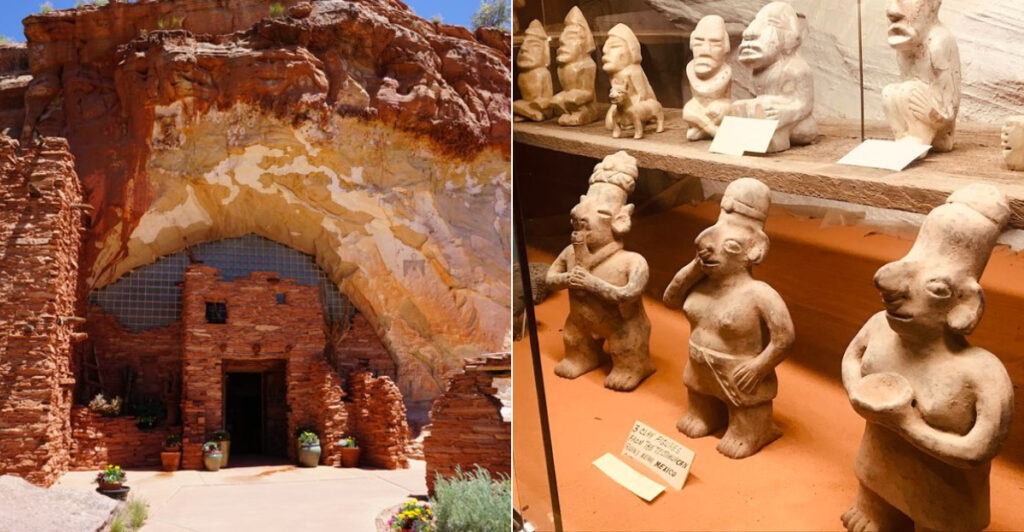
Most drivers speed past this Utah sandstone cave without a second glance. Every single one of them is missing out.
Carved right into a cliff face along a highway, a natural cave has been transformed into one of the most unexpectedly fascinating roadside museums in the entire state.
Dinosaur fossils, glowing minerals, ancient Native American artifacts, and a history wild enough to make the whole stop feel like a genuine discovery rather than a tourist detour.
The cave stays cool even on the hottest summer days. That alone makes pulling over an easy decision in the middle of a long desert drive.
Everything inside makes staying much longer than planned an even easier one.
Families, road trippers, and curious wanderers all walk out saying the same thing. So glad they stopped.
That consensus is not a coincidence.
Utah is full of remarkable places and this sandstone cave earns its spot among the very best roadside stops in the state.
A Cave With Wild History
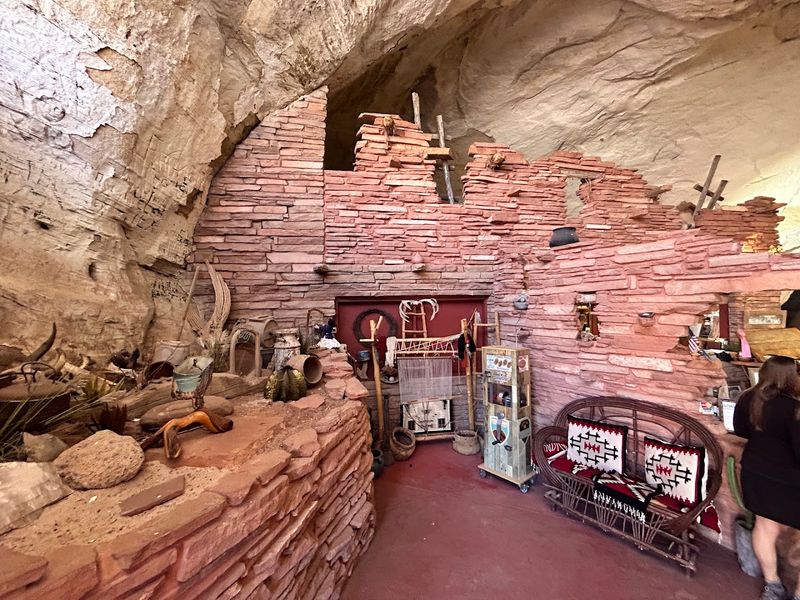
Not many roadside stops come with a story that includes ancient peoples, a speakeasy, a dance hall, and Hollywood legends all rolled into one address.
Long before it became a museum, the Anasazi people used Moqui Cave for shelter and food storage. That is roughly 1,200 years of human history baked right into the rock walls.
Fast forward to the 1920s, and the cave was operating as a speakeasy during Prohibition. People were sneaking in for a good time inside a literal cave.
Can you picture that?
In 1951, Garth and Laura Chamberlain bought the property. By 1952, they had opened Southern Utah’s first dance hall inside the cave.
Movie stars like John Wayne visited, and the original bar top and bar stools from that era are still on display today.
Garth Chamberlain was not just a businessman. He was a self-taught geologist, archaeologist, and paleontologist who spent decades building the collections now on display.
The Chamberlain family still owns and operates Moqui Cave today. Current owner Lee Anne Chamberlain and her grandson Tanner Chamberlain keep that family legacy alive with every visitor who walks through the cave entrance.
Few places in Utah carry this many layers of history in such a compact, cool, and completely unexpected space.
Natural Cool Inside
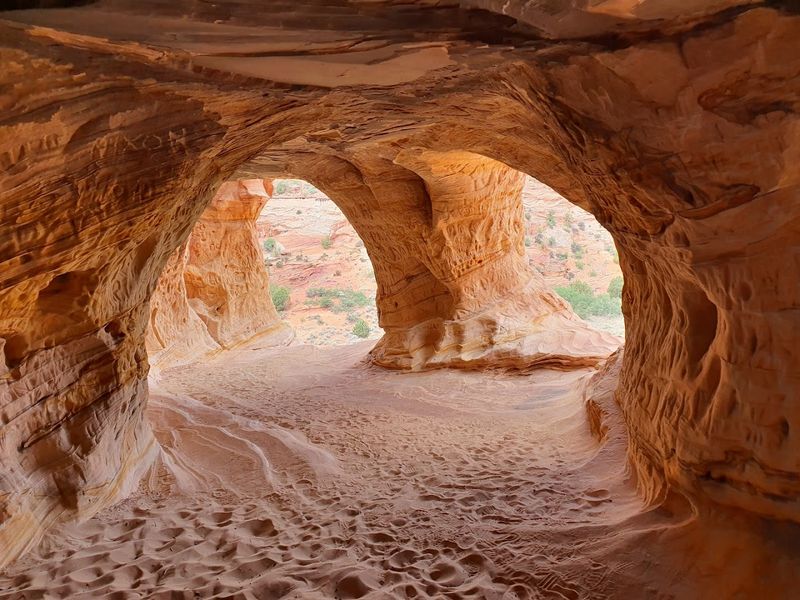
The cave maintains a steady interior temperature that never climbs above 65 to 70 degrees Fahrenheit.
That is not a small detail. Southern Utah summers can push well past 100 degrees outside, and the cave offers a genuinely refreshing escape without any electricity-powered cooling.
The cave itself is a natural sandstone erosion cave, shaped over millions of years by wind and water working slowly through the red rock. The walls have that rough, textured quality that only real geology can produce.
Visitors often pause just inside the entrance to feel the temperature drop before they even start exploring the collections. That first breath of cool cave air has a way of making everyone slow down and actually look around.
The cave stretches about 200 feet in length, which gives it a real sense of depth and discovery. There are turns and corners that reveal new displays as you move further in.
What is the best part about a place that nature itself keeps cool? You can linger as long as you want without melting.
Families with kids especially appreciate having a shaded, comfortable space to explore in the middle of a long road trip through the Utah desert.
Dinosaur Fossils Up Close
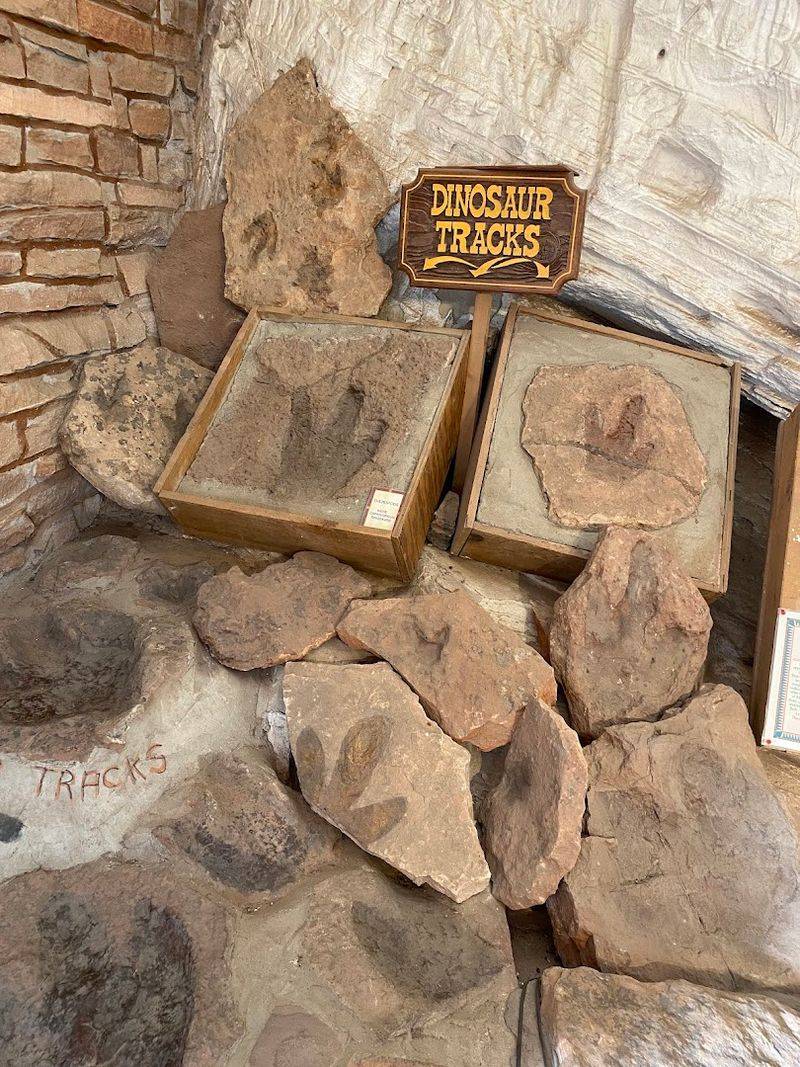
Over 180 dinosaur tracks and fossils are housed inside Moqui Cave, and many of them were discovered right in the surrounding Utah landscape. That number alone should make any fossil fan stop the car immediately.
Some of these tracks are estimated to be more than 140 million years old. Paleontologist Jim Jenson classified many of the specimens, lending serious scientific credibility to what might otherwise look like a quirky roadside collection.
Standing next to a footprint made by a creature that walked this earth 140 million years ago is a genuinely humbling experience. These are not replicas or casts.
Many are the real thing, pulled from local ground.
The collection includes dinosaur bones and imprints, and visitors have mentioned spotting mammoth teeth and shark teeth among the displays. The variety is surprising for a cave museum tucked along a highway.
Kids who think museums are boring tend to change their minds fast in this section. How often do you get to stand this close to a dinosaur track without a velvet rope in the way?
The fossil displays are arranged so that even visitors with no background in paleontology can follow along and understand what they are looking at. Clear labels and helpful staff make the experience accessible for all ages.
This is the kind of hands-on history that textbooks simply cannot replicate.
Glowing Minerals Display
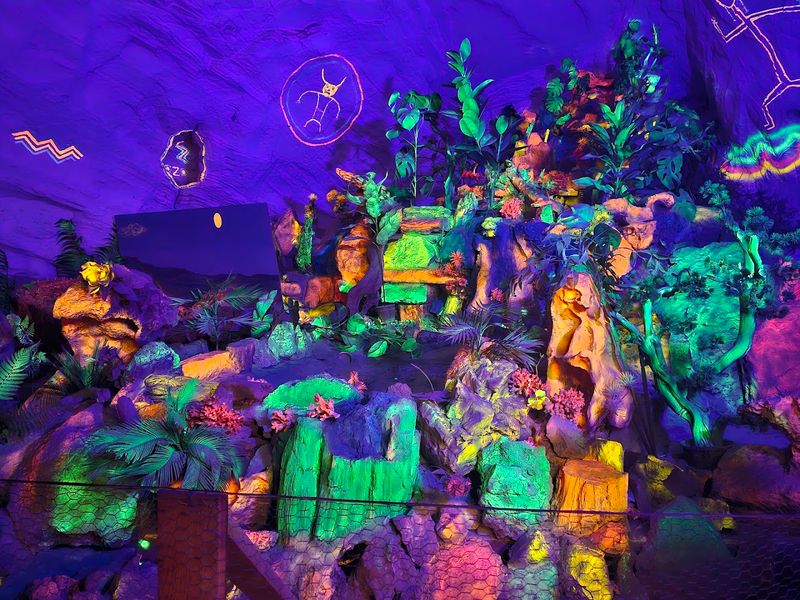
Picture a dark corner of a cave suddenly exploding with neon greens, vivid oranges, and electric pinks. That is exactly what happens when ultraviolet light hits the fluorescent mineral collection at Moqui Cave.
This display is considered one of the largest fluorescent mineral exhibits in the entire United States. That is not a small claim for a roadside stop along a Utah highway.
Visitors who describe themselves as not being into rocks at all consistently say this section surprises them the most. The transformation that happens under UV light turns ordinary-looking stones into something that looks almost unreal.
The science behind it is fascinating. Certain minerals absorb ultraviolet light and re-emit it as visible light, producing those vivid colors.
What looks like a dull grey rock in daylight can glow brilliant yellow or red under the right light.
One tip that visitors pass along: use your phone camera to look at the rocks throughout the cave, not just in the UV section. The camera sensor picks up colors and details that the human eye misses in the cave lighting.
You will be genuinely surprised by what shows up on your screen.
The fluorescent mineral display is one of those rare moments where science and spectacle meet in a completely unexpected place.
It is the kind of thing that makes adults and children equally wide-eyed, and that shared reaction is what great travel memories are made of.
Ancient Artifacts Inside
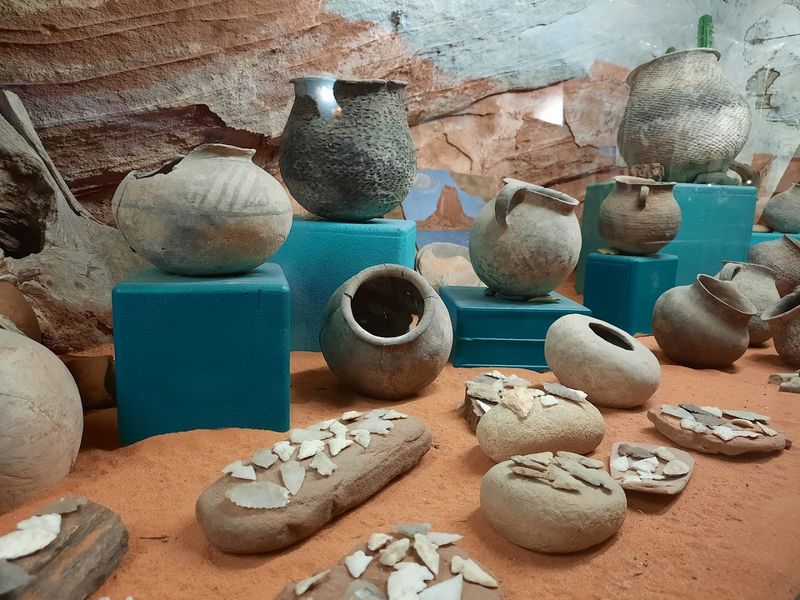
Long before Highway 89 existed, the Anasazi people knew this cave well. The Native American artifact collection at Moqui Cave connects visitors directly to that ancient presence in a way that feels personal and immediate.
The collection features arrowheads, ceremonial points, jugs, pots, bowls, and tools from the Puebloan Era. Some of these items date back 1,200 years, and they were found in the surrounding region of southern Utah.
Holding your gaze on a hand-shaped pot that someone made over a thousand years ago in this same landscape is a different kind of travel experience. It is quiet and grounding in a way that is hard to describe but easy to feel.
The variety of the collection is impressive. Ceremonial points sit alongside everyday tools, showing that the people who used this cave lived full and complex lives.
They were not just surviving. They were creating.
Garth Chamberlain spent years carefully gathering and cataloging these items, treating them with the respect they deserved rather than simply piling them on shelves. That care shows in how the collection is presented.
Staff members are happy to answer questions about specific pieces, and visitors say the owners genuinely enjoy sharing the history behind each artifact. When was the last time a museum felt that personal?
The artifact collection alone makes Moqui Cave worth the admission price.
The Original Bar Survives
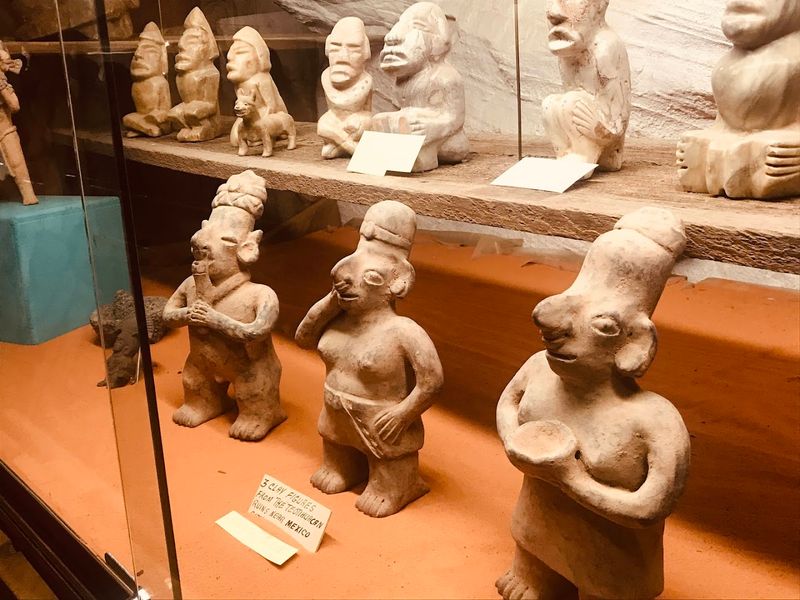
Most museums preserve paintings or pottery. Moqui Cave preserved its entire original bar top and bar stools from the 1950s, still sitting right there inside the cave where they have always been.
When Garth and Laura Chamberlain opened their dance hall and tavern in 1952, this cave was the liveliest spot in southern Utah. Movie stars passing through on film shoots would stop in, and the bar became a kind of social hub in a region that did not have many of those.
The bar top itself is a mosaic, hand-crafted and colorful, and it has survived decades of changing ownership and evolving purposes without being replaced or hidden away. It is a genuine piece of mid-century American roadside culture.
Autographed photos of visiting movie stars line the walls nearby, adding a layer of nostalgic atmosphere that transports visitors back to a very different era of American travel and entertainment.
There is something charming about seeing that old bar still standing in a cave that now houses dinosaur fossils and glowing minerals. The contrast is part of what makes Moqui Cave so hard to categorize and so easy to love.
Visitors often spend extra time in this section just reading the names on the photos and imagining what the cave sounded like on a busy Saturday night in 1953.
History has a way of feeling more real when the furniture is still in the room.
Gift Shop Worth Exploring
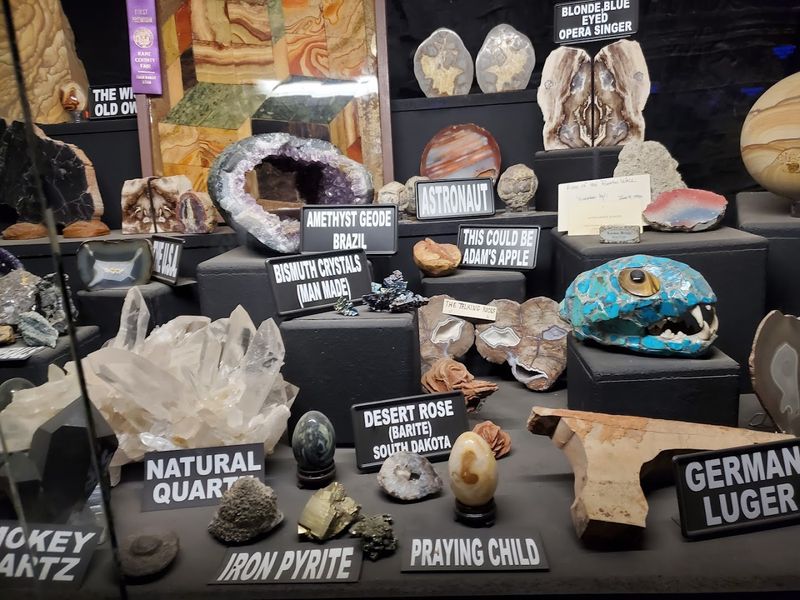
The gift shop at Moqui Cave is not an afterthought. Visitors consistently say it is one of the best gift shops they found anywhere in the Kanab area, and that is saying something in a region full of tourist stops.
Crystals, stones, jewelry, and unique souvenirs fill the shelves from floor to ceiling. The selection leans heavily into the geological theme of the cave, so rock collectors and mineral enthusiasts will find things here they cannot easily find elsewhere.
The staff in the gift shop are notably friendly and knowledgeable. One visitor mentioned that the gentleman working the shop gave their two children a small gift to remember the stop by, completely unprompted.
That kind of personal touch is rare.
Beyond rocks and crystals, the shop carries an eclectic mix of items that reflects the cave’s layered personality. Early pioneer antiquities, local artwork, and oddities from various corners of history all share shelf space in a way that rewards slow browsing.
Plan to spend more time here than you expect. The shop is large, and there are surprises tucked into every corner.
What looks like a quick browse often turns into a 20-minute exploration.
Right next door, a food truck cafe with picnic tables offers a great spot to sit and enjoy the view of the cave entrance after shopping. The paninis and coffee have gotten enthusiastic praise from visitors who stumbled onto the stop by chance.
Planning Your Visit Right
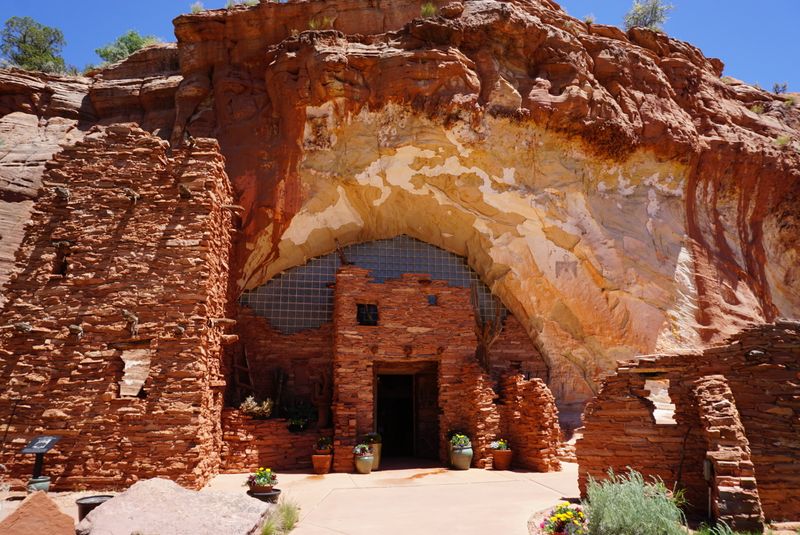
Moqui Cave sits at 4581 US-89, about five to six miles north of Kanab, Utah, right along Highway 89. The parking lot is large enough to handle RVs and buses, which makes it an easy stop for road trippers traveling with big vehicles.
During the summer season, running from Memorial Day through Labor Day, the cave is open Monday through Saturday from 9 a.m. to 7 p.m.
Admission is very reasonable, running around seven dollars for adults and six dollars for seniors as of the most recent pricing. For everything packed inside that cave, visitors consistently say it is worth every dollar.
Dogs are not permitted inside the cave, so plan accordingly if you are traveling with pets. The outdoor area near the parking lot still offers photo opportunities and a chance to stretch your legs.
One important note: do not confuse Moqui Cave with the nearby Moqui Caverns or Kanab Sand Caves. Those are man-made sand mines from the 1970s and are a completely separate free attraction.
The cave museum at this address charges admission and is a very different experience.
More information is available at moqui-cave.com, where you can check current hours and plan your stop. A visit here fits perfectly into any road trip through southern Utah connecting Zion National Park and the Arizona border.