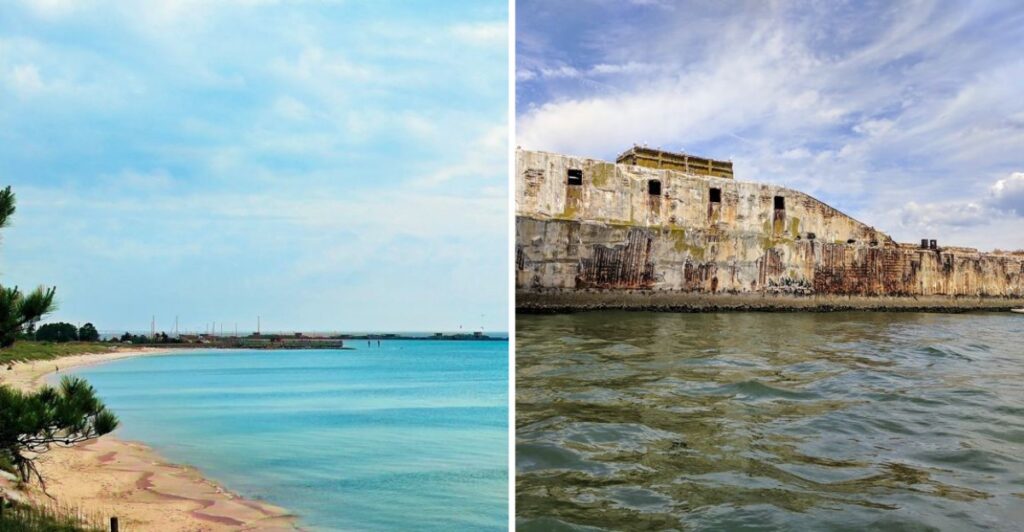
For a second, this shoreline looks like it took a wrong turn and ended up in the Caribbean.
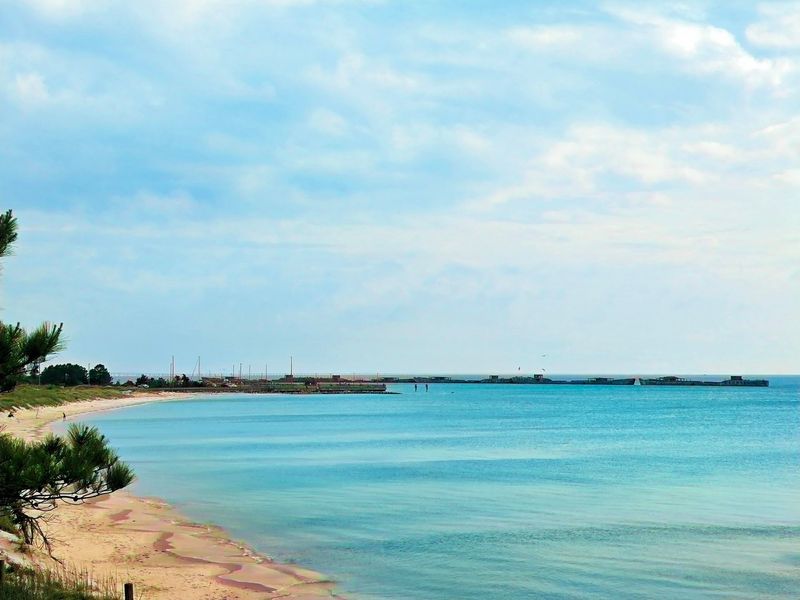
The water can flash a bright blue on clear days, which makes this Virginia beach stand out before you even notice the nine concrete ships offshore.
Those ships have been resting in the bay since 1948, adding one strange silhouette after another to an already unusual view.
You can keep the day simple with the sand and water, or move toward fishing, trails, and the boardwalk once you want a change of pace.
I’d need a minute before doing anything else. Water that blue with concrete ships in the distance is a lot for one beach to explain.
Start With The Northern Swimming Beach
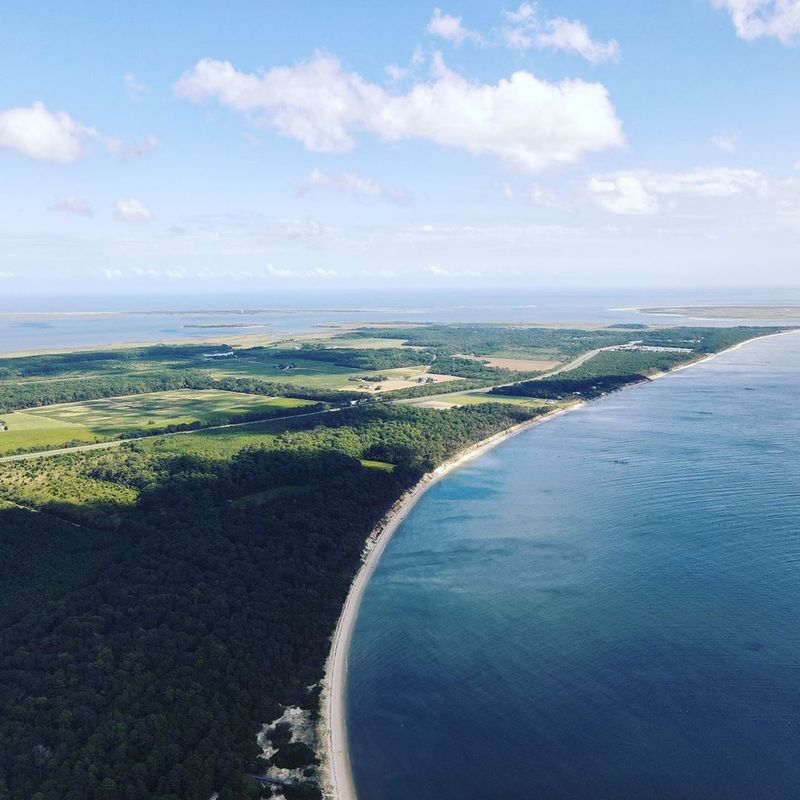
Kiptopeke has two unguarded beaches on the Chesapeake Bay, and the northern beach is the place to start when swimming is the main plan.
The sandy stretch is nearly half a mile long and serves as the park’s designated swimming beach from Memorial Day through Labor Day.
Swimming here is unguarded, so everyone enters the water at their own risk. The beach is open from sunrise to dusk during its summer swimming season, and conditions can occasionally affect whether swimming is available.
This section of shoreline is reserved for swimming and beach use. Pets are not allowed on the northern beach, and neither are fishing, crabbing, jet skis, canoes, kayaks, paddleboards, or other boats.
Those rules keep the area focused on swimmers instead of mixing several kinds of water recreation in one place.
A beach bathhouse, picnic areas, and playgrounds add practical options nearby.
If swimming is the priority, plan around the Memorial Day-to-Labor Day season and bring the usual beach basics. Shade, drinking water, towels, and sun protection matter more here because there is no lifeguard watching the water.
South Beach Makes Room For More Activities
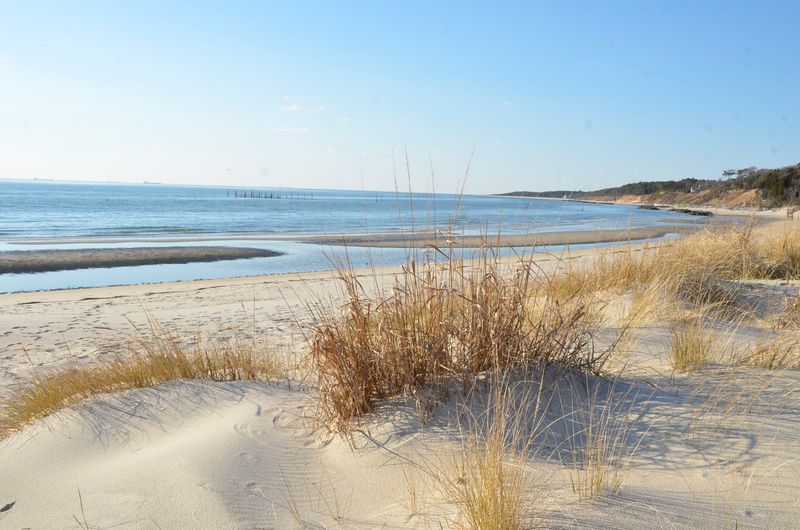
The southern beach follows a different set of rules. Swimming is allowed, but so are fishing, crabbing, boating, and pets kept on a leash no longer than six feet. That makes this shoreline useful when everyone in the group has a different idea of what a bay day should include.
Anglers can fish from the south beach, while crabbers can work the shoreline where permitted. Licensing and registration requirements still apply, so fishing should be planned with Virginia’s saltwater rules in mind rather than treated as an informal add-on.
Kayaks can launch from the south beach or the park’s designated kayak launch. The boat ramp serves motorboats, while the south beach gives paddlers another route onto the Chesapeake.
Kayak rentals are not available, so anyone planning to paddle should arrive with their own equipment.
Pets can join you on this beach, but the leash rule stays in effect throughout the park. Dogs are not allowed on the northern designated swimming beach, so South Beach is the better shoreline choice for a day that includes a pet.
Swimmers who want a designated summer beach should head north. Fishing, crabbing, paddling, or a leashed dog point the day south.
Nine Concrete Ships Sit Just Offshore
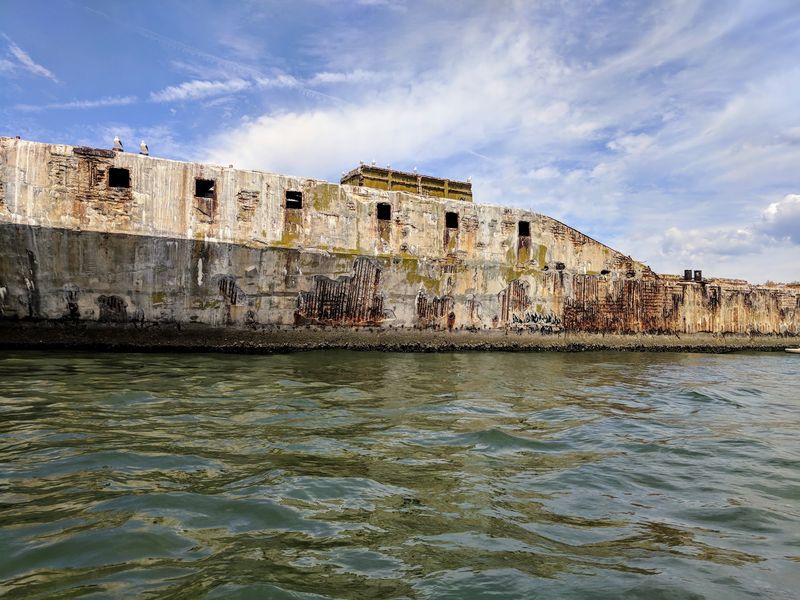
Look west from the beach and Kiptopeke’s most unusual feature comes into view. Nine concrete ships rest offshore, forming a breakwater that has been part of this shoreline since 1948.
The vessels were built in 1944 during World War II, when steel shortages made concrete a practical alternative for certain ships. The nine now at Kiptopeke served as transport and training vessels in the South Pacific before returning to domestic waters after the war.
They reached the Eastern Shore for a very different job. In 1948, the ships were scuttled to create a breakwater for the ferry terminal that once operated here. By reducing wave action, the line of vessels helped create a more protected harbor for the ferry operation.
That ferry connection faded after the Chesapeake Bay Bridge-Tunnel opened in 1964. The ships stayed behind and continue serving as a breakwater while also providing habitat for aquatic life and places for birds to roost and nest.
The safest view is from shore or the fishing pier. Paddlers and boaters must remain at least 50 feet from the vessels, and traveling between the ships is not permitted. Binoculars or a camera with a longer lens can bring the details closer without crossing that boundary.
Trails And Boardwalks Lead Away From The Sand
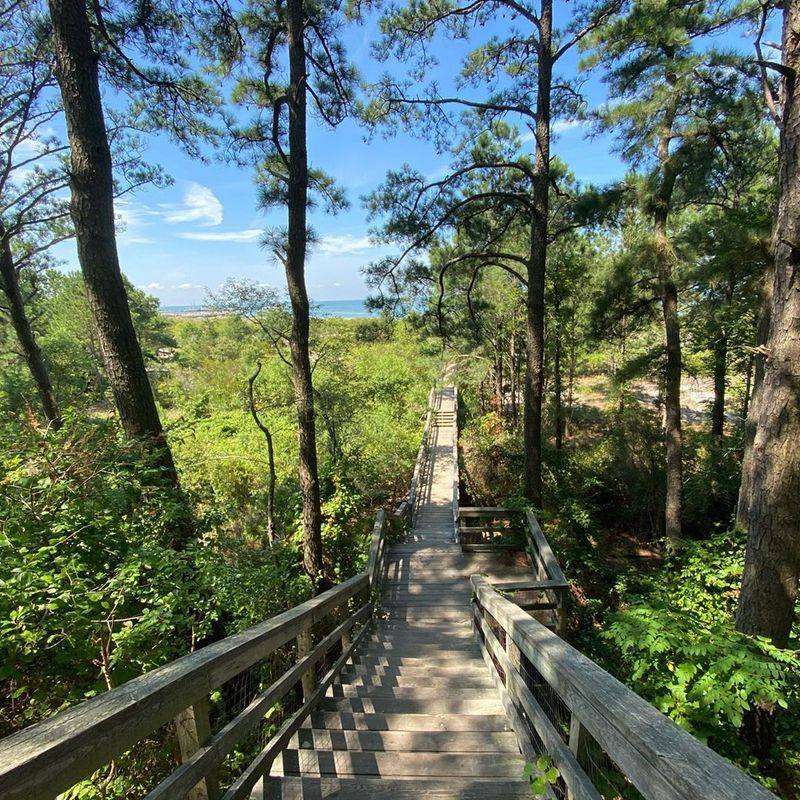
A beach towel is only one way to use Kiptopeke. The park has 5.1 miles of hiking and biking trails, including routes through forest, open habitat, and areas linked by boardwalks.
Baywoods Trail explores upland woodland, while the southern beach connects with the upland trail system through extensive boardwalks crossing the park’s dune landscape.
Other routes include Raptor Trail, Brown Pelican Trail, Chickadee Trail, Mockingbird Trail, Songbird Loop, Wren Trail, and Taylor Pond Trail.
Several of the main trails allow both hiking and biking. Short boardwalks such as Bald Eagle, Osprey, Peregrine, and Wood Warbler add walking connections and overlooks without requiring a long hike.
The southern end of the park protects an upland maritime forest, a coastal habitat that gives the inland part of Kiptopeke a very different character from the open beach. Taylor Pond adds freshwater habitat, along with wildlife-viewing blinds and a native species garden.
Choose the route by how much time remains after the beach. A short boardwalk can fit between swimming and dinner, while a longer trail works better when walking is one of the main reasons for visiting.
Closed-toe shoes make sense if the plan extends beyond sand and boardwalks into the trail system.
Fall Brings A Major Bird Migration Stop
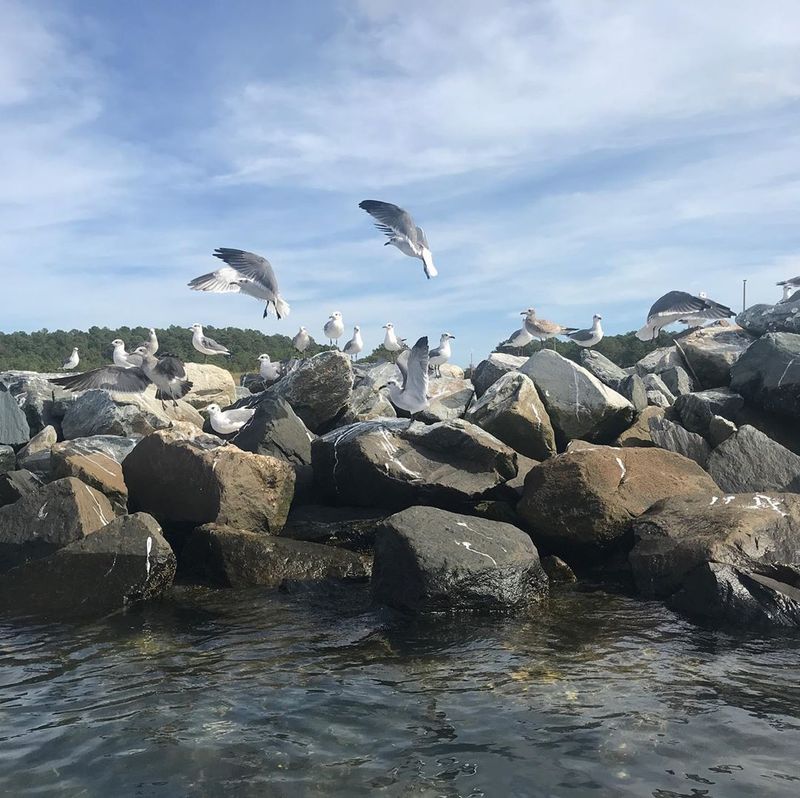
Kiptopeke’s location near the southern tip of Virginia’s Eastern Shore puts it directly in the path of migrating birds. The park is the largest migratory stopover on the Atlantic Flyway, with songbirds and raptors moving through in especially noticeable numbers during fall.
The Hawk Observatory gives birders a dedicated place to watch the sky, while forest edges, trails, ponds, shoreline, and the concrete ships create several different habitats within a relatively small park.
Pelicans, gulls, and terns can be seen around the bay and concrete fleet. The park also offers interpretive and educational programming focused on birding, natural history, and Chesapeake Bay ecology.
You do not need an elaborate birding setup to take advantage of the location. Binoculars are useful, but simply slowing down around the observation areas and forest edges can reveal activity that is easy to miss while moving quickly.
Fall visitors can combine the migration season with cooler walking weather. Start near the hawk observation area, follow one of the easier trails, and then return toward the bay to see what is using the shoreline and offshore structures.
For a park with swimming, camping, and boating, bird migration adds a completely different reason to return after summer beach season winds down.
Staying Overnight Opens Up More Of The Park
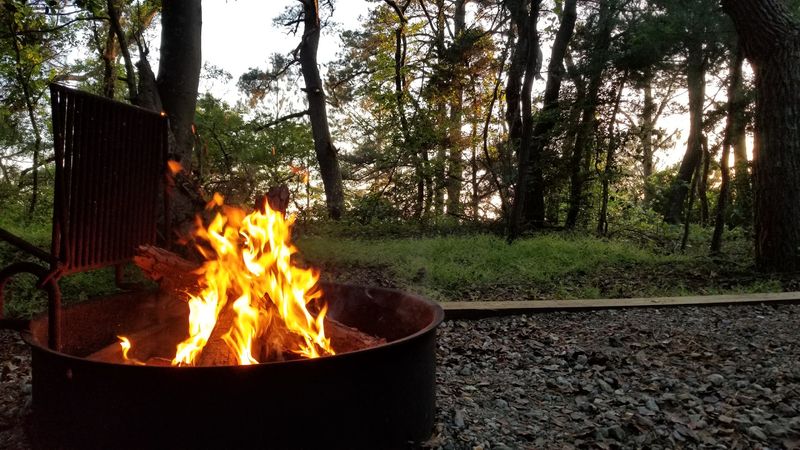
A single afternoon covers the beach or a few trails, but Kiptopeke also has several overnight options. The park offers tent and RV camping, yurts, a bunkhouse, two- and three-bedroom cabins, and six-bedroom lodges.
The full-service campground includes sites with water and electric hookups, with some sites also offering sewer connections.
A separate tent-only area provides sites without hookups. Campground bathhouses have hot showers and restrooms, and each campsite includes a picnic table and fire ring.
Cabins and lodges give groups another option when sleeping in a tent is not part of the plan. Pets are permitted in Virginia State Park cabins under the applicable pet rules and fees, while standard yurts do not allow pets.
Kiptopeke State Park is at 3540 Kiptopeke Dr., Cape Charles, VA 23310. The park sits about three miles from the northern end of the Chesapeake Bay Bridge-Tunnel, making it an easy addition to an Eastern Shore trip or a longer drive north after crossing the bay.
Day-use access generally runs from 6 a.m. to 10 p.m. The lighted fishing pier extends the day further for anglers and is open around the clock from April 1 through December 31.
Plan The Day Around Water, Trails Or Both
Kiptopeke is easier to plan when you decide what matters most before filling the day.
Summer swimmers can make the northern beach the anchor and add a picnic, playground stop, or short boardwalk.
Travelers with a dog, fishing gear, crab lines, or a kayak should look toward the southern beach instead.
The ships remain visible from the shoreline, so you can work that view into a beach walk, a visit to the fishing pier, or the end of a trail outing. Keep the 50-foot safety boundary in mind if the day takes you onto the water.
Hikers and birders have more than five miles of trails to spread across several hours. Fall changes the emphasis from swimming toward migration, forest walks, and the hawk observation area.
The campground and overnight accommodations make it possible to start the next morning again.
Check park conditions before a swimming-focused visit because beach access can change with weather or other circumstances.
The designated northern swimming area follows its seasonal schedule, while South Beach continues to serve several kinds of shoreline recreation.
One park can give you sand, Chesapeake Bay water, maritime forest, migratory birds, a fishing pier, and nine concrete ships without requiring a drive between each stop. Isn’t that exactly what a good getaway should do?