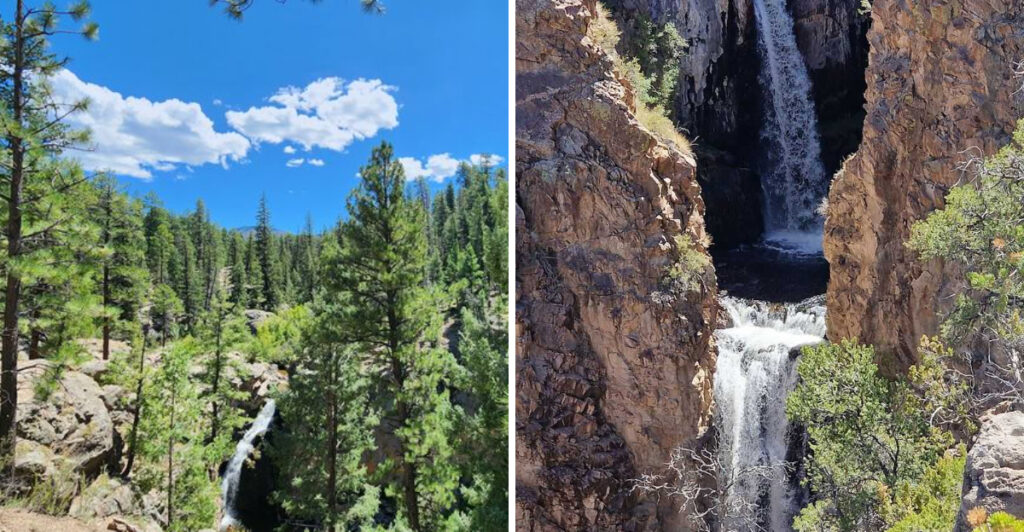
New Mexico has a way of making people do a double take. One minute, you are staring at dusty hills through the windshield.
The next, you are standing near a waterfall that sounds like it is shaking the canyon. That is the energy behind this seven-stop road trip.
It follows water through places most travelers do not expect, starting around Jemez Springs and stretching toward the wide-open Taos area. Some stops are made for quick photos.
Others pull you in longer, especially when the sound of rushing water bounces off the rock. I like this route because it feels playful and keeps switching moods without trying too hard.
Wear shoes that can get wet. Give yourself extra time, because the best stops are the ones that make you say, “okay, we need a minute here” before moving on and wondering why you waited this long and talk about it later.
1. Jemez Falls
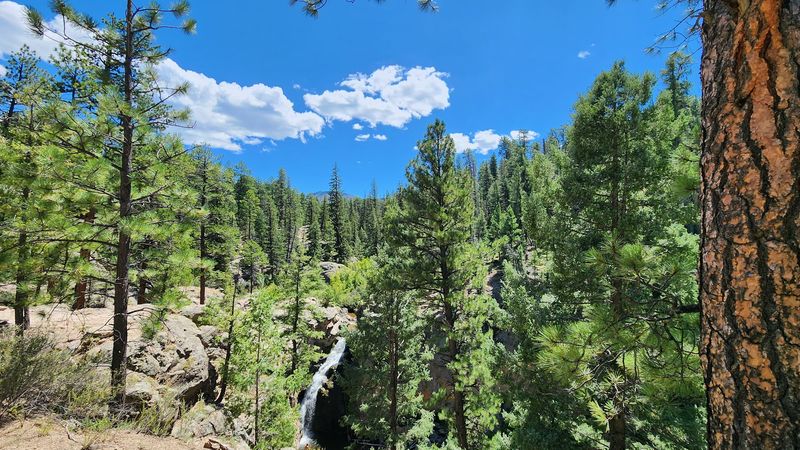
At the Jemez Falls overlook, the cool mist reaches you before the water comes fully into view.
Located in the Santa Fe National Forest, Jemez Falls sits near Jemez Falls Road in Jemez Springs, NM 87025, and it earns every bit of its reputation as one of New Mexico’s most beloved waterfalls.
The hike to the overlook is a short, approachable walk from the trailhead, making it manageable for families, casual hikers, and anyone who wants a rewarding payoff without a brutal climb.
From the overlook, you get a sweeping view of the falls dropping into the canyon below, framed by towering ponderosa pines that seem to lean in for a closer look themselves.
If you are feeling adventurous, stay on marked paths and enjoy the different views safely, because the rocks near the falls can be slick and risky.
The Santa Fe National Forest setting means you are surrounded by some seriously beautiful high-country scenery, and the air up here carries that sharp, clean pine scent that instantly resets your mood.
I recommend arriving in the morning when the light filters through the trees at an angle that makes the mist glow, turning the whole scene into something that looks almost painted.
A small campground nearby makes it easy to turn this stop into an overnight stay if you want to linger and explore the trails after the day visitors head home.
Jemez Falls has a way of making you slow down, breathe deeply, and remember exactly why this road trip is worth every mile of the drive.
2. Soda Dam
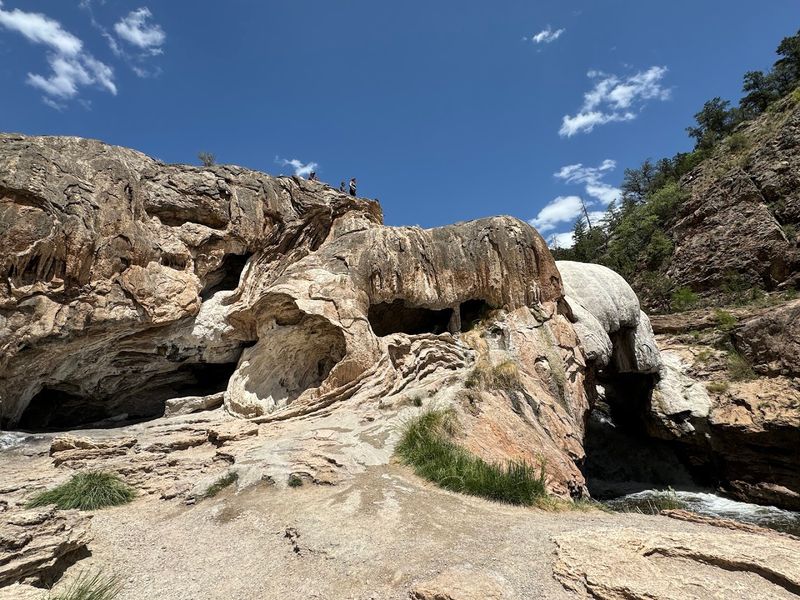
Soda Dam proves that not every stop on a waterfall road trip needs a long hike.
This roadside wonder sits right along NM-4 in Jemez Springs, NM 87025, and it shows off one of the most unusual geological formations in the entire Southwest.
The dam was built up over thousands of years by calcium-rich hot spring water depositing minerals layer by layer into a natural barrier across the Jemez River.
The colors here are genuinely wild, with swirling shades of orange, tan, rust, and cream coating the rocky surface in patterns that look like something an artist dreamed up rather than something nature quietly assembled over millennia.
A short roadside stop is all you need to get a good look at the formation and watch water pushing through cracks and gaps in the mineral crust.
The Jemez River below the dam moves with enough force that swimming is not a safe option, but standing nearby and watching the water churn is a completely satisfying experience on its own.
Hot spring water seeps and trickles from multiple spots along the formation, and you can feel the warmth radiating from certain sections if you get close enough.
Geologists often describe the dam as thousands of years old, with mineral layers slowly building as hot spring water moved through this stretch of canyon.
I always tell people to budget at least 30 minutes here because the first instinct is to glance and move on, but the more you look, the more fascinating details keep revealing themselves.
Soda Dam is the kind of quirky, one-of-a-kind water stop that makes a road trip feel like a genuine adventure rather than just a series of destinations on a map.
3. Nambé Falls And Lake Recreation Area
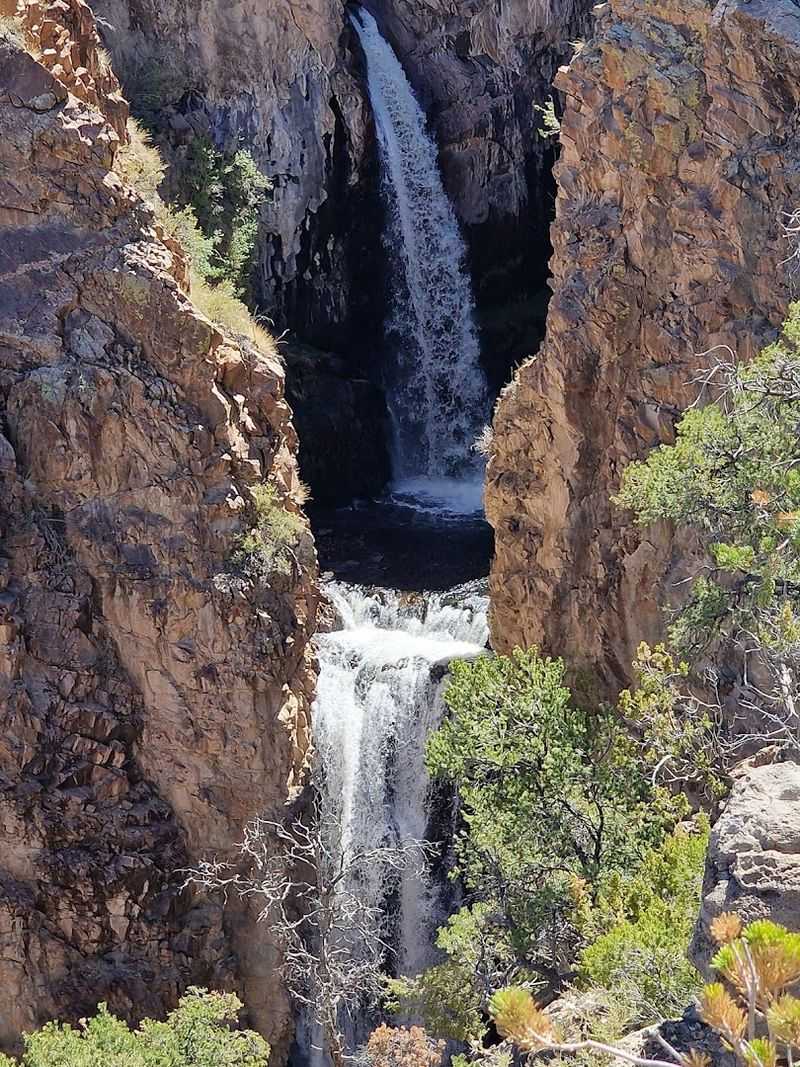
Nambé Falls feels quiet at first.
Then the double cascade reminds you that this water has been moving through Pueblo land for far longer than most roads in the state have existed.
The Nambé Falls and Lake Recreation Area is located at 544 Poechunu Poe, Santa Fe, NM 87506, nestled in the foothills of the Sangre de Cristo Mountains on the land of the Pueblo of Nambe, just a short drive north of Santa Fe.
Two trail options give visitors a choice in how they experience the falls: a dry trail that climbs to a bird’s-eye overlook, and a wet trail that takes you right down to the lowest pool where the water collects in a stunning turquoise basin.
Water shoes are a smart call for the wet trail because the rocks are slippery and the experience of standing next to the base of a double waterfall is absolutely worth a little careful footing.
The falls drop roughly 100 feet, and on a clear day, the contrast between the dark canyon walls, the white rushing water, and the bright blue sky above creates a view that genuinely stops you mid-step.
Day-use and camping fees support the Pueblo of Nambe, so check the current rates before you go because prices can change by season and campsite type.
The recreation area also includes a lake that sits above the falls, offering a peaceful spot to sit quietly after the hike and watch the reflections of the mountains ripple across the surface.
A visit here carries a sense of respect and gratitude, knowing that the land, the water, and the history all belong to a community that has called this canyon home for generations.
4. Taos Ski Valley
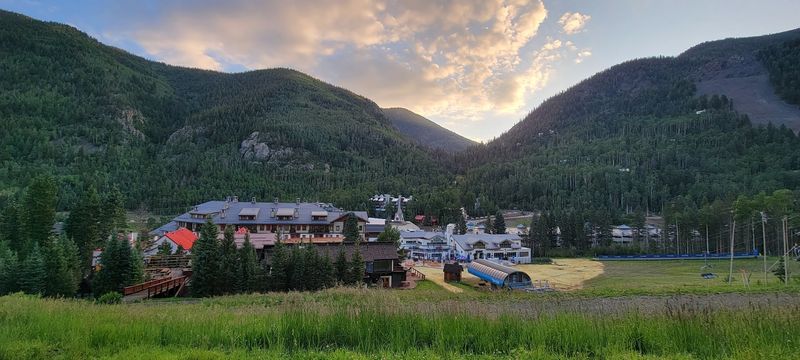
Most people think of Taos Ski Valley as a winter destination, but summer feels like discovering a secret the ski crowd forgot to mention.
Taos Ski Valley sits at 116 Sutton Place, Taos Ski Valley, NM 87525, tucked into a dramatic alpine bowl carved out by centuries of glacial and river activity in the Sangre de Cristo Mountains.
When the snow melts, the slopes transform into wildflower meadows threaded with hiking trails, and the sound of rushing snowmelt streams fills the entire valley with a steady, calming background hum.
The village itself is small and walkable, with a handful of restaurants, gear shops, and cozy spots to sit and take in the towering peaks that rise sharply on every side of the bowl.
Summer visitors use Taos Ski Valley as a base camp for exploring the surrounding high-alpine trails, and the elevation here means temperatures stay pleasantly cool even on the hottest July afternoons down in the desert below.
The nearby Twining Campground is a primitive overnight option for hikers who want to get an early start, though visitors should check current conditions and services before planning a stay.
I found that following the main stream through the valley floor was one of the most relaxing parts of my visit, with the cold, clear water moving fast over smooth stones in a way that feels genuinely refreshing.
Wildlife sightings are common here, and a family of mule deer near the tree line can turn an ordinary sunset walk into one of those small mountain moments you remember later.
Taos Ski Valley in summer is a mountain escape that rewards anyone willing to trade the crowds for clean air and a jaw-dropping alpine backdrop.
5. Williams Lake Trail
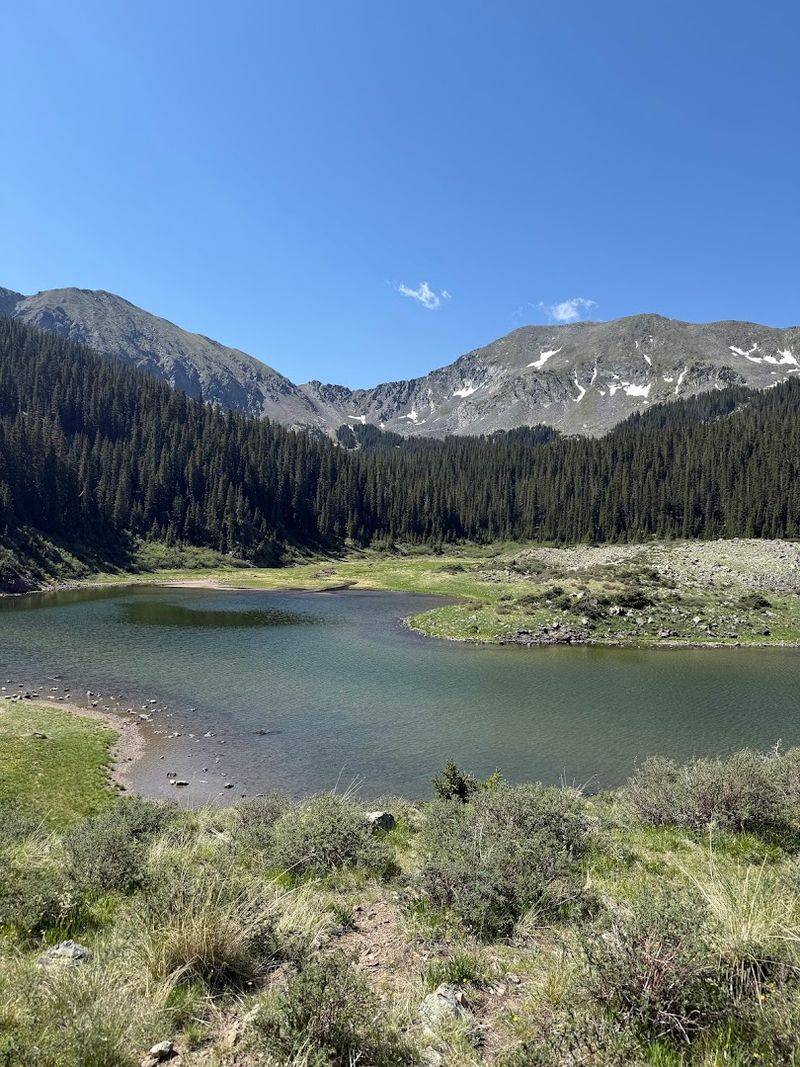
Few trails in New Mexico reward effort like Williams Lake Trail.
The path pulls you upward through dense forest before opening into one of the state’s most dramatic alpine landscapes.
The trailhead begins at Williams Lake Trail in Taos Ski Valley, NM 87525, and the path climbs roughly two miles through a mix of spruce and fir forest before reaching the shimmering lake tucked beneath a sheer mountain wall.
Along the way, a slender waterfall or seasonal cascade appears near the route, dropping down a rocky cliff face and giving hikers a peaceful excuse to pause before continuing toward the lake.
The waterfall is modest in size but makes up for it entirely in setting, surrounded by old-growth conifers, the sound of birds calling through the canopy, and the kind of mountain quiet that you can almost feel pressing against your ears.
The trail is often treated as moderate, though the elevation gain and high altitude can make your legs work well before you reach the top, so trekking poles and proper footwear are genuinely useful companions here.
The lake itself feels like stepping into a postcard, with the water reflecting the jagged ridgeline above and snowfields sometimes lingering on the upper slopes well into summer.
I sat near the waterfall for nearly an hour on my visit, eating a late lunch and watching the light shift across the canyon walls in colors that moved from gold to deep amber as the afternoon wore on.
Williams Lake Trail is the kind of hike that earns its reputation through every step of the climb, and the waterfall along the way is the perfect excuse to pause, breathe, and soak in exactly where you are.
6. Bandelier National Monument Visitor Center
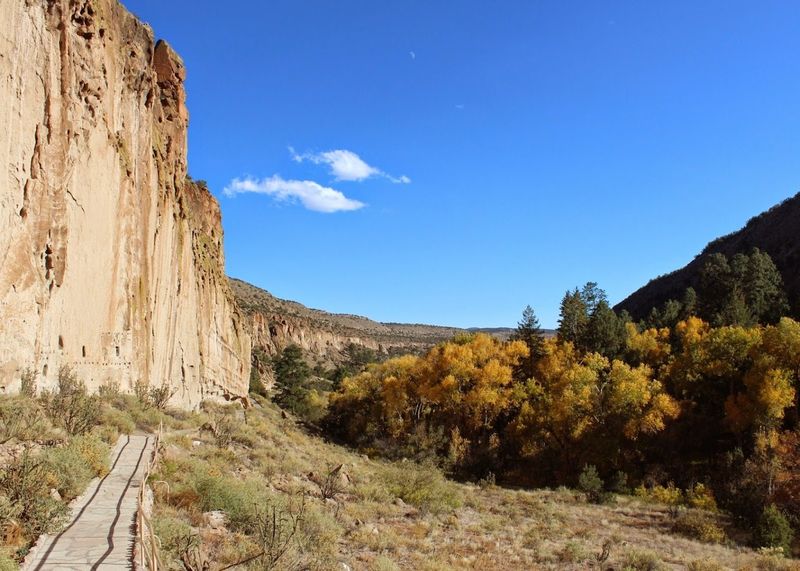
Bandelier National Monument takes a few minutes to fully register. The visitor center at 15 Entrance Road, Los Alamos, NM 87544 is the perfect starting point for understanding just how extraordinary this place really is.
The monument sits in Frijoles Canyon, a dramatic slot in the Pajarito Plateau formed by volcanic activity and carved deeper over centuries by the Rio de los Frijoles, a small stream that still runs through the canyon floor today.
The visitor center does a remarkable job of setting the historical context before you head out onto the trails, with exhibits covering the Ancestral Puebloan people who carved homes directly into the soft volcanic tuff walls of the canyon hundreds of years ago.
Upper Frijoles Falls is the waterfall highlight here, reached by a trail that starts near the visitor center parking area and descends about 1.5 miles into the canyon, rewarding hikers with a view of water tumbling through the layered rock formations.
The trail is accessible year-round, though winter visits require extra caution because icy patches can form on the shadier sections of the path heading down into the canyon.
Beyond the waterfall, the canyon offers a walking tour past the ruins and cliff dwellings that feels both humbling and genuinely fascinating, connecting you to a story of human ingenuity that stretches back many generations.
Seasonal shuttle and parking rules can change, especially during busy periods, so checking the National Park Service website before your visit will save you from an unwelcome surprise at the entrance.
I left Bandelier with my hiking legs tired, my camera full, and a strong sense that this canyon holds more history and beauty per square mile than almost anywhere else I have visited in the American Southwest.
7. White Rock Overlook Park
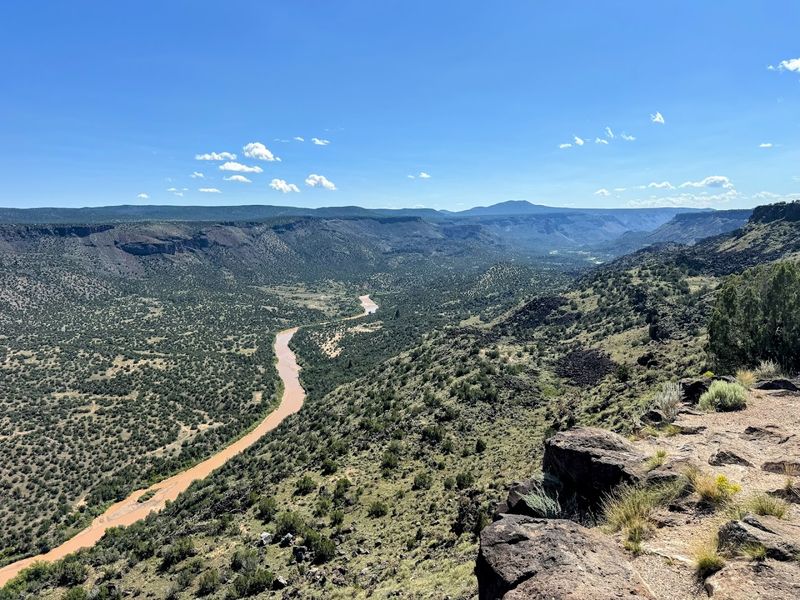
White Rock Overlook Park caught me off guard right away.
The canyon edge waits just a short walk from the parking area at 580 Overlook Road, White Rock, NM 87547.
The overlook sits high above the Rio Grande, which has spent an unimaginable amount of time carving its way through layers of volcanic basalt and red rock to create the deep, narrow canyon that stretches out below your feet.
While this stop leans more toward canyon drama than a traditional waterfall experience, the Rio Grande itself moves with real force through the canyon, and seasonal runoff can sometimes bring thin temporary cascades down the canyon walls.
The park is small and well-maintained, with paved paths leading to several different overlook points that each offer a slightly different angle on the canyon and the river snaking through its floor far below.
Sunrise and sunset visits here are genuinely unforgettable, with the low-angle light painting the canyon walls in deep reds, burnt oranges, and purples that shift in color every few minutes as the sun moves across the sky.
White Rock itself is a quiet community tucked between Los Alamos and the canyon, and the park feels like a neighborhood treasure that the rest of the state has not quite caught on to yet.
Birdwatchers will find the overlook particularly rewarding because raptors ride the thermals rising off the canyon walls throughout the day, and a few circling hawks can make the whole scene feel even bigger.
White Rock Overlook Park is the kind of final stop that sends you home with a full heart, a tired pair of legs, and a long list of reasons to plan your next New Mexico road trip as soon as possible.